
How Much Does a Porsche 911 Cost?

The Porsche 911 starts around $107,000 for the base Carrera, but prices can exceed $300,000 for top-tier models like the GT3 RS or Turbo S. With optional packages, dealer markups, and long-term ownership costs, the total investment goes beyond the sticker price.
Key Takeaways
- Base Price Range: The 2024 Porsche 911 starts at approximately $107,000 for the Carrera and can exceed $300,000 for high-performance variants like the GT3 RS or Turbo S.
- Model Variants Affect Cost: Each trim—Carrera, T, S, GTS, Turbo, and GT3—offers different performance levels and price points, with significant jumps between tiers.
- Optional Packages Add Up: Popular add-ons like the Sport Chrono Package, premium audio, and carbon-ceramic brakes can increase the price by $10,000 to $30,000 or more.
- Dealer Markups and Waitlists: High demand often leads to dealer markups, especially for limited-edition or track-focused models, adding thousands to the final cost.
- Financing and Leasing Options: Porsche Financial Services offers competitive rates, but monthly payments vary widely based on down payment, loan term, and model choice.
- Insurance and Maintenance Costs: Expect higher premiums and service fees due to the 911’s performance nature, with annual maintenance averaging $1,500–$3,000.
- Depreciation and Resale Value: While the 911 holds value better than most sports cars, depreciation still occurs, especially in the first few years.
📑 Table of Contents
How Much Does a Porsche 911 Cost?
If you’ve ever dreamed of sliding into the driver’s seat of a Porsche 911—engine roaring, wind in your hair, and the open road ahead—you’re not alone. The 911 is more than just a car; it’s an icon. Since its debut in 1963, this rear-engine sports car has become a symbol of precision engineering, timeless design, and driving passion. But with such prestige comes a price tag that can make even seasoned car enthusiasts pause.
So, how much does a Porsche 911 really cost? The short answer? It depends. The 911 lineup is vast, with multiple trims, body styles, and performance levels—each with its own price. Whether you’re eyeing the entry-level Carrera or the track-dominating GT3 RS, the cost can range from just over $100,000 to well beyond $300,000. And that’s before you consider options, taxes, dealer fees, and long-term ownership expenses.
In this guide, we’ll break down the full cost of owning a Porsche 911 in 2024. We’ll explore base prices, optional upgrades, financing options, insurance, maintenance, and even resale value. Whether you’re a first-time buyer or a seasoned Porsche fan, this article will help you understand what it really takes to make that dream a reality.
Porsche 911 Base Prices by Model (2024)
Let’s start with the basics: the manufacturer’s suggested retail price (MSRP) for each 911 model. Keep in mind that these are starting prices for the base configuration. Once you start adding options, the cost can climb quickly.
Entry-Level: Porsche 911 Carrera
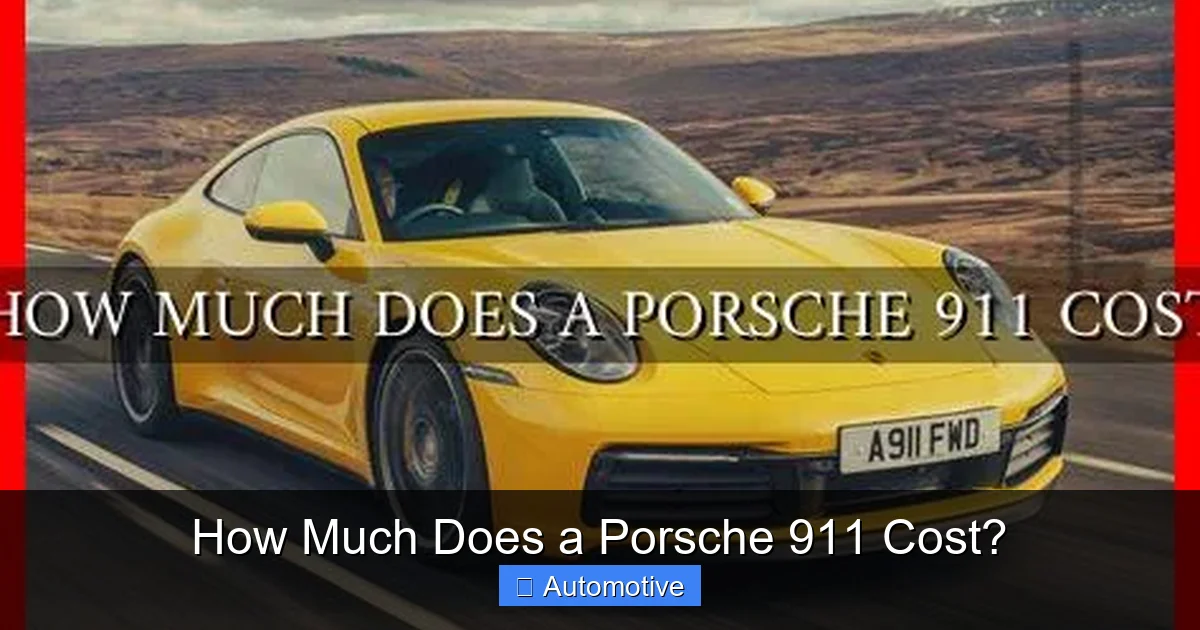
The 2024 Porsche 911 Carrera is the gateway to the 911 family. With a starting MSRP of $107,500, it’s the most accessible model in the lineup. Powered by a 3.0-liter twin-turbo flat-six engine producing 379 horsepower, the Carrera delivers thrilling performance while maintaining everyday usability. It comes standard with rear-wheel drive, an eight-speed PDK dual-clutch transmission, and a host of driver-assistance features.
Visual guide about How Much Does a Porsche 911 Cost?
Image source: en.wadaef.net
Porsche 911 Carrera T
For drivers who want a purer, more engaging experience, the Carrera T (Touring) is a great middle ground. Starting at $118,000, it adds sportier suspension, a mechanical limited-slip differential, and lighter components like a rear-seat delete and reduced sound insulation. It’s about $10,500 more than the base Carrera but offers a more focused driving feel.
Porsche 911 Carrera S
Step up to the Carrera S, and you get a significant performance boost. The 3.0-liter engine is tuned to deliver 443 horsepower, and the starting price jumps to $124,400. You also get wider rear tires, upgraded brakes, and optional all-wheel drive (which adds about $4,000). The Carrera S strikes a perfect balance between daily drivability and track-ready performance.
Porsche 911 Carrera GTS
The GTS trim is where things start to get serious. With 473 horsepower and a sport-tuned suspension, the Carrera GTS starts at $143,300. It includes features like the Sport Chrono Package, PASM adaptive suspension, and a sport exhaust system as standard. Many enthusiasts consider the GTS the sweet spot in the 911 lineup—offering near-Turbo performance without the steep price tag.
Porsche 911 Turbo and Turbo S
For those who crave maximum power and all-weather capability, the Turbo models are the ultimate expression of the 911. The 911 Turbo starts at $174,200 and features a 532-horsepower engine, all-wheel drive, and advanced aerodynamics. The Turbo S takes it further with 640 horsepower and a starting price of $204,800. These cars can accelerate from 0 to 60 mph in under 2.6 seconds—faster than many supercars.
Porsche 911 GT3 and GT3 RS
If track performance is your priority, the GT3 models are in a league of their own. The 911 GT3, with its naturally aspirated 4.0-liter flat-six engine producing 502 horsepower, starts at $169,700. It’s lighter, more aerodynamic, and built for precision handling. The GT3 RS, the most extreme road-legal 911, starts at $225,300 and features active aerodynamics, carbon-fiber body panels, and a race-derived suspension. Limited production and high demand often push real-world prices even higher.
Optional Packages and Upgrades: The Real Cost Driver
While the base prices give you a starting point, the true cost of a Porsche 911 often comes from optional packages and individual upgrades. Porsche is famous for its extensive customization menu, and it’s easy to add $20,000 or more in extras.
Popular Optional Packages
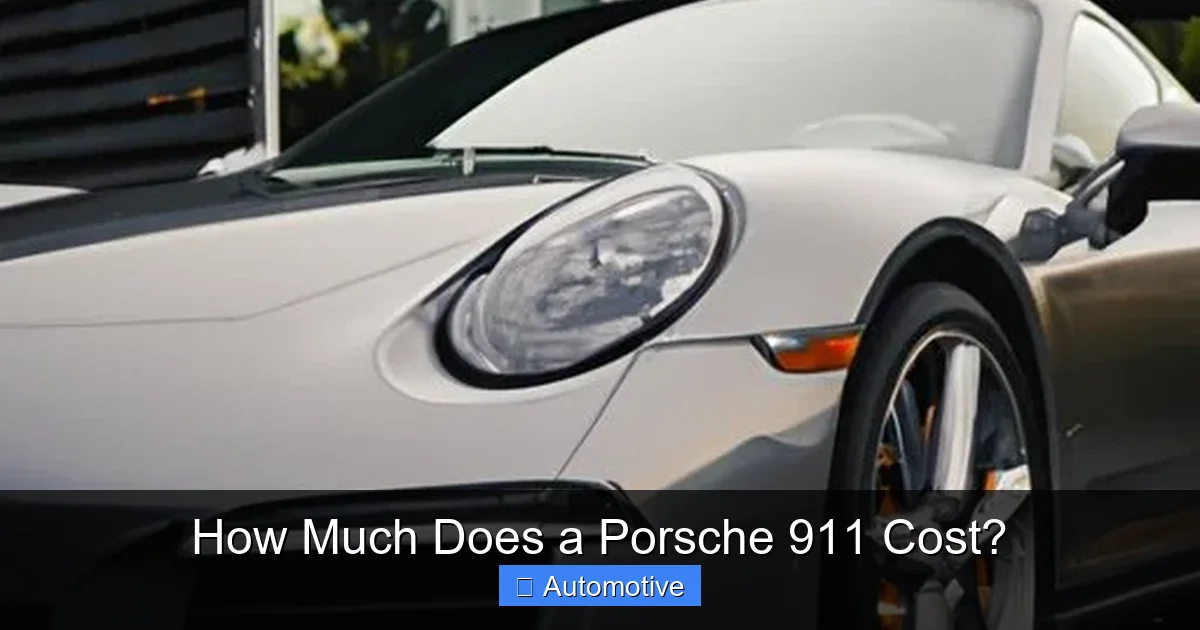
One of the most popular add-ons is the Sport Chrono Package, which costs around $3,000. It includes a performance display, dynamic engine mounts, and a mode switch on the steering wheel for different driving modes (Normal, Sport, Sport Plus, and Individual). For track enthusiasts, it also adds a lap timer and performance data logging.
Visual guide about How Much Does a Porsche 911 Cost?
Image source: lihpao.com
The Porsche Communication Management (PCM) system is standard, but upgrading to the Premium Package (around $4,500) adds features like a 12-speaker Bose surround sound system, heated and ventilated seats, and a head-up display. The Sport Package (approx. $5,000) includes sport seats, a sport steering wheel, and upgraded interior trim.
Performance and Handling Upgrades
For better braking performance, the Porsche Ceramic Composite Brakes (PCCB) are a must-have for serious drivers. These carbon-ceramic rotors resist fade during hard driving and look stunning behind the wheels. However, they come at a steep price: $9,000 to $12,000 depending on the model.
The Adaptive Suspension Management (PASM) system, which adjusts damping in real time, is standard on many trims but can be added to base models for around $2,000. For even sharper handling, the Rear-Axle Steering option (approx. $3,500) improves low-speed maneuverability and high-speed stability.
Wheels, Paint, and Interior Customization
Porsche offers a wide range of wheel options, from 19-inch alloys to 20-inch forged wheels. Upgrading from standard wheels can cost $2,000 to $6,000. Paint choices also impact the price—while standard colors are included, metallic and special colors (like Carmine Red or Shark Blue) can add $1,500 to $3,000.
Inside, you can customize nearly everything. Leather upholstery upgrades, carbon-fiber trim, and personalized stitching can add $3,000 to $8,000. The Porsche Exclusive Manufaktur program allows for bespoke interiors, custom embroidery, and even monogrammed floor mats—perfect for those who want a truly unique 911.
Real-World Example: Building a 911 Carrera S
Let’s say you start with a 2024 911 Carrera S at $124,400. You add the Sport Chrono Package ($3,000), PCCB brakes ($10,000), Premium Package ($4,500), and 20-inch wheels ($3,000). You also choose a special paint color ($2,000) and upgraded leather seats ($2,500). Your total now sits at $149,400—over $25,000 more than the base price.
Dealer Markups, Waitlists, and Market Factors
Even if you know the MSRP and options, the final price you pay may be higher due to market conditions. The Porsche 911 is in high demand, and supply can be limited—especially for high-performance or limited-edition models.
Dealer Markups and Market Adjustments
In recent years, many Porsche dealers have added “market adjustments” or “dealer markups” to the 911, particularly for the GT3, Turbo, and Targa models. These markups can range from $10,000 to $50,000 or more, depending on location and demand. For example, a GT3 RS with a $225,300 MSRP might sell for $275,000 or higher in competitive markets.
Visual guide about How Much Does a Porsche 911 Cost?
Image source: lihpao.com
These markups are not officially sanctioned by Porsche but are common in the luxury car world. Dealers argue they reflect supply and demand, while buyers often feel pressured to pay more to secure a vehicle.
Waitlists and Production Delays
Some 911 models, especially the GT3 and GT3 RS, have long waitlists. It’s not uncommon for buyers to wait 12 to 18 months for delivery. During this time, prices may rise due to inflation or increased demand. Additionally, limited-edition models like the 911 Sport Classic or 911 Dakar often sell out within hours of announcement.
If you’re set on a specific model, it’s wise to place a deposit early and work with a reputable dealer. Some buyers even travel to other states or countries to avoid markups or find better availability.
Negotiating the Price
While Porsche vehicles are less negotiable than mainstream brands, there’s still room for discussion—especially on base models or slower-selling trims. You may be able to negotiate on dealer fees, trade-in value, or included services like free maintenance for the first year.
Tips for negotiating:
- Research local inventory and pricing trends.
- Be prepared to walk away if the dealer insists on a high markup.
- Ask about incentives, such as loyalty discounts or financing deals.
- Consider certified pre-owned (CPO) 911s, which can offer significant savings.
Financing, Leasing, and Ownership Costs
Buying a Porsche 911 is one thing—affording it over time is another. Let’s break down the financial side of ownership.
Financing a Porsche 911
Porsche Financial Services offers competitive financing rates, often starting around 3.9% APR for qualified buyers. For a $130,000 911 Carrera S with a 20% down payment ($26,000), a 60-month loan at 3.9% would result in monthly payments of approximately $1,950.
Keep in mind that interest rates vary based on credit score, loan term, and down payment. A larger down payment reduces monthly costs and total interest paid. Some buyers opt for shorter terms (36 or 48 months) to pay off the car faster, though monthly payments will be higher.
Leasing a Porsche 911
Leasing can be a smart option if you enjoy driving new cars every few years. Porsche leases typically run 24 to 36 months with mileage limits of 10,000 to 15,000 miles per year. For a 911 Carrera, monthly lease payments might range from $1,200 to $1,800, depending on the model and terms.
Pros of leasing:
- Lower monthly payments than financing.
- Warranty coverage for the entire lease term.
- Ability to upgrade to a newer model at the end of the lease.
Cons of leasing:
- No ownership at the end of the term.
- Mileage restrictions and potential excess wear fees.
- Customization options may be limited.
Insurance Costs
Insuring a Porsche 911 is significantly more expensive than a typical sedan. Due to its high value, performance capabilities, and repair costs, annual premiums can range from $3,000 to $6,000 or more, depending on your location, driving record, and coverage level.
Tips to reduce insurance costs:
- Bundling with other policies (home, life).
- Taking a defensive driving course.
- Choosing a higher deductible.
- Installing a tracking device or anti-theft system.
Maintenance and Repairs
Porsche recommends regular maintenance every 10,000 miles or annually. A typical service visit might cost $500 to $1,000, while major services (like at 30,000 or 60,000 miles) can run $2,000 to $4,000. Annual maintenance costs average $1,500 to $3,000.
Common maintenance items include:
- Oil and filter changes.
- Brake pad and rotor replacements.
- Tire rotations and replacements (high-performance tires wear faster).
- Fluid flushes (coolant, transmission, brake fluid).
For peace of mind, consider purchasing the Porsche Maintenance Plan, which covers scheduled services for up to 10 years or 100,000 miles. Plans start around $2,500 and can save money over time.
Fuel Economy and Running Costs
The 911 is not the most fuel-efficient car, but it’s surprisingly reasonable for a sports car. The Carrera gets around 20 mpg city / 26 mpg highway, while the Turbo and GT3 models are closer to 18 mpg combined. With gas prices averaging $3.50 per gallon, expect to spend $150 to $250 per month on fuel, depending on driving habits.
Depreciation and Resale Value
One of the biggest advantages of buying a Porsche 911 is its strong resale value. Unlike many luxury cars that lose half their value in three years, the 911 holds its worth remarkably well.
How Much Does a 911 Depreciate?
On average, a new 911 loses about 15% to 20% of its value in the first year and 10% to 15% annually after that. So a $130,000 Carrera S might be worth around $104,000 after one year and $78,000 after three years.
High-performance models like the GT3 and Turbo depreciate slower due to their desirability and limited supply. Some rare or special-edition 911s even appreciate in value over time—especially if kept in pristine condition with low mileage.
Tips to Maximize Resale Value
- Keep detailed service records.
- Avoid excessive modifications that may deter buyers.
- Store the car properly (garage, climate-controlled if possible).
- Limit mileage—low-mileage examples command higher prices.
- Consider certified pre-owned (CPO) status, which can boost resale value.
Certified Pre-Owned (CPO) 911s
If you’re looking to save money without sacrificing quality, a CPO 911 is an excellent option. These vehicles are inspected, refurbished, and backed by a warranty (typically 2 years/unlimited miles). CPO 911s can cost 15% to 30% less than new models and often come with low mileage and full service history.
Is the Porsche 911 Worth the Cost?
So, after all this—what’s the verdict? Is the Porsche 911 worth the price?
For many, the answer is a resounding yes. The 911 isn’t just a car; it’s an experience. It blends daily usability with track-ready performance, timeless design with cutting-edge technology. Whether you’re commuting to work or carving up a mountain road, the 911 delivers a sense of connection and joy that few vehicles can match.
Yes, it’s expensive. But when you consider the engineering, craftsmanship, and driving dynamics, the cost becomes more justifiable. And with strong resale value and a passionate owner community, owning a 911 can be both a financial and emotional investment.
If you’re ready to take the plunge, do your research, set a budget, and consider all costs—not just the sticker price. Whether you choose a base Carrera or a fire-breathing GT3 RS, the Porsche 911 remains one of the greatest sports cars ever made.
Frequently Asked Questions
What is the cheapest Porsche 911 you can buy?
The cheapest new Porsche 911 is the 2024 Carrera, with a starting MSRP of $107,500. This model offers a great balance of performance, luxury, and affordability within the 911 lineup.
How much does a Porsche 911 GT3 cost?
The 2024 Porsche 911 GT3 starts at $169,700. However, due to high demand and limited production, real-world prices often exceed $200,000, especially with optional upgrades and dealer markups.
Can you negotiate the price of a Porsche 911?
While Porsche vehicles are less negotiable than mainstream brands, there is some room for discussion—especially on base models or slower-selling trims. You may be able to negotiate dealer fees, trade-in value, or included services.
Is it better to lease or buy a Porsche 911?
Leasing offers lower monthly payments and the chance to drive a new 911 every few years, but you won’t own the car. Buying is better if you plan to keep the vehicle long-term and want to build equity.
How much does it cost to maintain a Porsche 911?
Annual maintenance for a Porsche 911 typically ranges from $1,500 to $3,000, depending on the model and usage. Major services and repairs can be expensive, so budget accordingly.
Do Porsche 911s hold their value?
Yes, the Porsche 911 holds its value better than most sports cars. On average, it loses 15% to 20% in the first year and 10% to 15% annually after that. High-performance and limited-edition models often depreciate even slower.
