
How Much Can a Kia Telluride Tow?

The Kia Telluride can tow up to 5,000 pounds when properly equipped, making it one of the most capable three-row SUVs in its class. With the right engine, towing package, and setup, it handles boats, trailers, and campers with confidence.
Key Takeaways
- Towing capacity up to 5,000 lbs: The Kia Telluride can tow up to 5,000 pounds when equipped with the V6 engine and optional towing package.
- Standard 3.8L V6 engine: All Telluride models come with a robust 3.8-liter V6 engine producing 291 horsepower and 262 lb-ft of torque.
- Requires towing package for max capacity: To reach the full 5,000-pound towing limit, the vehicle must have the factory-installed towing package.
- Front-wheel drive vs. all-wheel drive: Towing capacity remains the same for both FWD and AWD models, but AWD offers better traction in slippery conditions.
- Proper setup is essential: Use a weight-distribution hitch, trailer brakes, and correct tire pressure for safe towing.
- Real-world towing examples: The Telluride can handle small boats, pop-up campers, and mid-sized travel trailers with ease.
- Fuel efficiency drops when towing: Expect reduced MPG when towing near capacity—plan fuel stops accordingly.
📑 Table of Contents
How Much Can a Kia Telluride Tow?
If you’re in the market for a spacious, stylish, and capable three-row SUV that can also handle weekend adventures with a trailer in tow, the Kia Telluride deserves a serious look. One of the most common questions buyers ask is: How much can a Kia Telluride tow? The answer is impressive—especially for a vehicle that blends family-friendly comfort with rugged utility.
The Kia Telluride can tow up to 5,000 pounds when properly equipped. That’s enough to pull a small boat, a pop-up camper, a utility trailer loaded with gear, or even a mid-sized travel trailer. This towing capacity places the Telluride among the top performers in the midsize SUV segment, competing closely with heavyweights like the Toyota Highlander, Honda Pilot, and Ford Explorer.
But towing isn’t just about a number on a spec sheet. It’s about real-world performance, safety, and knowing your vehicle’s limits. In this guide, we’ll dive deep into what makes the Telluride a towing powerhouse, how to maximize its capabilities, and what you need to know before hitching up your next adventure.
Understanding the Kia Telluride’s Towing Capacity
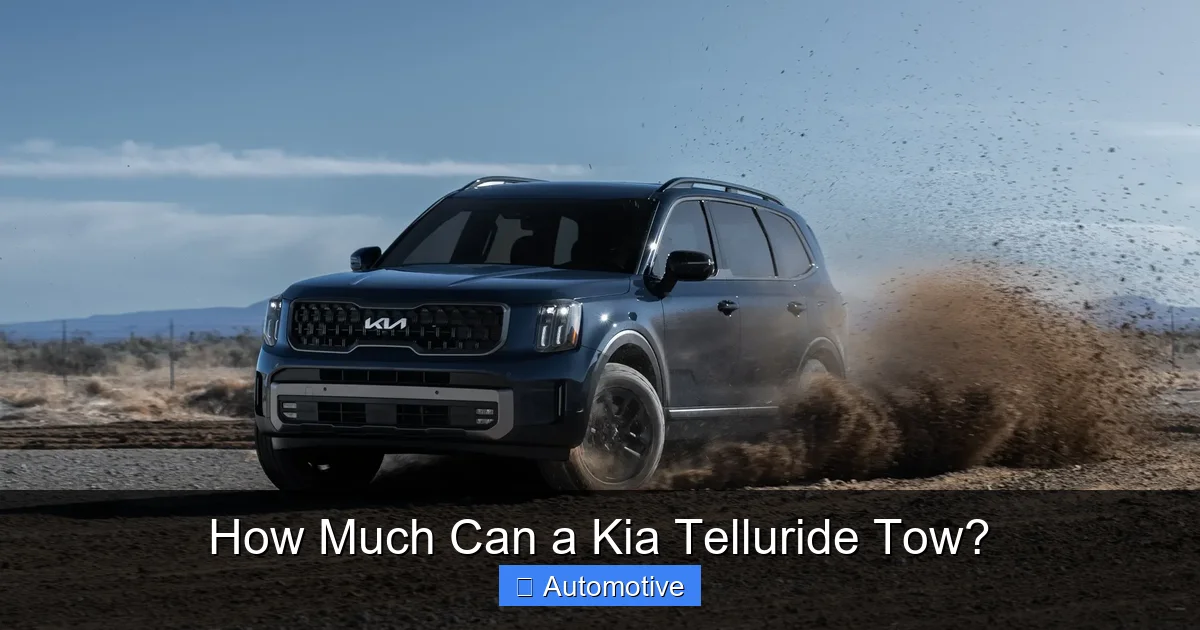
Visual guide about How Much Can a Kia Telluride Tow?
Image source: motorbiscuit.com
What Determines Towing Capacity?
Towing capacity isn’t a one-size-fits-all number. It depends on several factors, including the engine, drivetrain, suspension, cooling systems, and whether your vehicle has the right equipment. For the Kia Telluride, the maximum towing capacity of 5,000 pounds is achievable only under specific conditions.
All Telluride models come standard with a 3.8-liter V6 engine that delivers 291 horsepower and 262 lb-ft of torque. This engine is paired with an 8-speed automatic transmission, which provides smooth power delivery and strong low-end torque—ideal for pulling heavy loads from a stop.
However, the engine alone isn’t enough. To reach the full 5,000-pound towing limit, your Telluride must be equipped with the optional towing package. This package includes upgrades like a heavy-duty radiator, an integrated trailer brake controller, a 2-inch hitch receiver, and enhanced cooling systems. Without this package, the towing capacity drops significantly—often to around 2,000 to 3,000 pounds, depending on the model year and configuration.
FWD vs. AWD: Does It Matter for Towing?
One common question is whether front-wheel drive (FWD) or all-wheel drive (AWD) affects towing capacity. The good news is that both drivetrains offer the same maximum towing capacity of 5,000 pounds when properly equipped. So, if you’re choosing between FWD and AWD based solely on towing, you won’t lose any capability by going with FWD.
That said, AWD does offer advantages when towing in challenging conditions. If you’re pulling a trailer up a steep, wet, or snowy incline, AWD provides better traction and stability. It also helps with control when driving on gravel or uneven terrain. For most drivers, especially those in regions with variable weather, AWD is worth the extra cost—not for increased towing power, but for improved safety and confidence.
Model Year Variations
The Kia Telluride has been in production since 2019, and its towing capacity has remained consistent across model years. Whether you’re looking at a 2019, 2020, 2021, 2022, 2023, or 2024 model, the maximum towing capacity is 5,000 pounds with the towing package.
However, it’s always a good idea to double-check the specific trim and options on the vehicle you’re considering. Some lower trims may not include the towing package as an option, or it might be bundled with other features. Always verify the build sheet or ask the dealer for confirmation.
What You Can Tow with a Kia Telluride
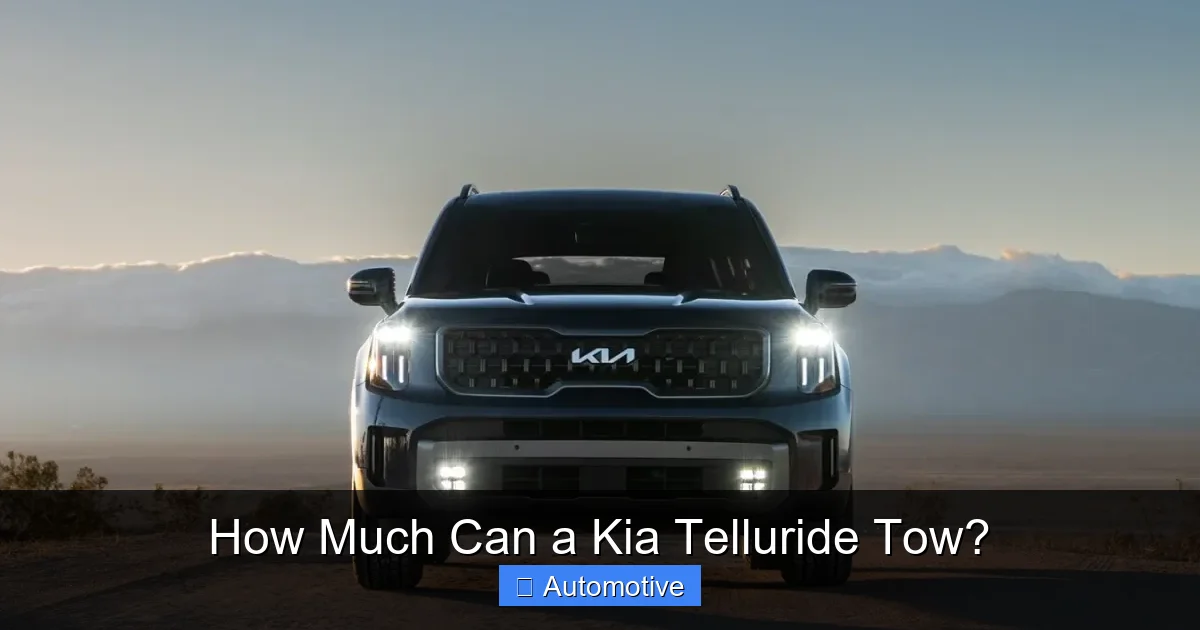
Visual guide about How Much Can a Kia Telluride Tow?
Image source: motorbiscuit.com
Now that we know the Telluride can tow up to 5,000 pounds, let’s put that number into perspective. What kinds of trailers and loads can you realistically pull with this SUV?
Small Boats and Watercraft
One of the most popular uses for a capable SUV like the Telluride is towing a boat to the lake or river. A typical small fishing boat with a trailer weighs between 2,500 and 4,000 pounds, well within the Telluride’s range. Even larger pontoon boats or small sailboats can be towed comfortably, as long as the total weight (boat + trailer + gear) stays under 5,000 pounds.
For example, a 17-foot aluminum fishing boat with a trailer might weigh around 3,200 pounds. Add in coolers, fishing gear, and a full tank of gas, and you’re still safely under the limit. The Telluride’s strong V6 engine and responsive transmission make launching and retrieving boats a breeze.
Travel Trailers and Campers
If you love camping, the Telluride opens up a world of possibilities. Pop-up campers, teardrop trailers, and lightweight travel trailers are all excellent matches for this SUV.
A typical pop-up camper weighs between 1,500 and 3,000 pounds. These are easy to tow and offer a comfortable camping experience with beds, a small kitchen, and sometimes even air conditioning. The Telluride handles these with ease, and you’ll still have room inside for passengers and gear.
For something a bit more luxurious, consider a lightweight travel trailer. Models like the Airstream Bambi or the Jayco Jay Feather can weigh between 3,500 and 4,500 pounds. These offer full beds, bathrooms, and kitchens—perfect for weekend getaways or extended trips. As long as you stay under 5,000 pounds, the Telluride can pull them confidently.
Utility and Cargo Trailers
Need to move furniture, landscaping materials, or equipment? The Telluride is more than capable of handling a loaded utility trailer. A standard 5×8 or 6×10 enclosed trailer can carry up to 3,000 pounds of cargo, and even larger 7×12 trailers can be towed if the load is kept under the limit.
For example, moving a few pieces of furniture, a lawnmower, and some boxes might total around 2,000 pounds. That’s well within the Telluride’s range, and the SUV’s smooth ride ensures your cargo arrives safely.
Horse and Livestock Trailers
While the Telluride isn’t designed for heavy-duty livestock hauling, it can handle small horse or livestock trailers—especially two-horse models with lightweight construction. A two-horse trailer with a ramp might weigh around 3,500 to 4,500 pounds when loaded. As long as you’re under 5,000 pounds and the trailer is properly balanced, the Telluride can manage the job.
However, always check the trailer’s Gross Vehicle Weight Rating (GVWR) and ensure your setup includes trailer brakes and a weight-distribution hitch for safety.
How to Maximize Your Telluride’s Towing Performance

Visual guide about How Much Can a Kia Telluride Tow?
Image source: cdn-ds.com
Towing safely and efficiently isn’t just about having a capable vehicle—it’s about proper preparation and technique. Here’s how to get the most out of your Kia Telluride when towing.
Install the Right Towing Package
As mentioned earlier, the towing package is essential for reaching the full 5,000-pound capacity. This package typically includes:
– A 2-inch Class III hitch receiver
– An integrated trailer brake controller
– A heavy-duty radiator and cooling system
– Wiring harness for trailer lights
– Upgraded suspension components
If you plan to tow regularly, this package is a must. It’s available on most Telluride trims, including the EX, SX, and SX Prestige. Some dealers may offer it as a standalone option or bundle it with other packages.
Use a Weight-Distribution Hitch
When towing near the maximum capacity, a weight-distribution hitch is highly recommended. This device helps evenly distribute the trailer’s weight across all four wheels of the SUV, improving stability and reducing sway.
Without a weight-distribution hitch, the rear of the Telluride can sag, affecting steering and braking. This is especially important when towing travel trailers or larger loads. A good hitch can make a big difference in how the vehicle handles, especially on highways or in windy conditions.
Check Trailer Brakes
Any trailer over 1,500 pounds should have its own brakes. The Telluride’s integrated brake controller allows you to adjust brake force from inside the cabin, giving you better control when slowing down or stopping.
Always test the trailer brakes before hitting the road. Make sure they engage smoothly and don’t lock up. If your trailer doesn’t have brakes, consider upgrading—especially if you’re towing close to 5,000 pounds.
Mind Your Tire Pressure
Proper tire inflation is critical when towing. Underinflated tires can overheat, wear unevenly, and even blow out under heavy loads. Check your Telluride’s tire pressure before every tow, and adjust it according to the manufacturer’s recommendations—usually found on a sticker inside the driver’s door.
Many drivers increase tire pressure slightly when towing to improve stability and reduce rolling resistance. However, don’t overinflate—this can reduce traction and make the ride harsh.
Distribute Weight Properly
How you load your trailer matters just as much as how much you load. Aim to place about 60% of the weight in the front half of the trailer, near the axle. This helps prevent sway and ensures the trailer tracks smoothly behind the SUV.
Avoid overloading the rear of the trailer, as this can cause fishtailing—a dangerous situation where the trailer pushes the vehicle side to side. Also, never exceed the trailer’s GVWR or the Telluride’s towing capacity.
Drive Smoothly and Allow Extra Space
Towing changes how your vehicle handles. Acceleration, braking, and turning all take longer. Here are some tips for safe driving:
– Accelerate and brake gradually.
– Leave extra following distance—at least 4-6 seconds behind the vehicle in front.
– Use lower gears on hills to reduce strain on the engine and brakes.
– Avoid sudden lane changes or sharp turns.
– Be extra cautious in windy conditions, as trailers can catch crosswinds.
If you’re new to towing, practice in an empty parking lot before hitting the highway. Get a feel for how the Telluride responds with a load behind it.
Fuel Economy and Towing: What to Expect
One of the trade-offs of towing is reduced fuel efficiency. The Kia Telluride gets around 20-26 MPG on the highway when driving unloaded. But when towing near capacity, that number can drop significantly.
Expect to see fuel economy in the range of 12 to 16 MPG when towing a heavy trailer. The exact number depends on factors like speed, terrain, wind, and how well the load is balanced.
For example, towing a 4,500-pound travel trailer on a flat highway at 60 mph might yield around 14 MPG. But if you’re climbing mountain passes or driving into a headwind, that could drop to 10-12 MPG.
To minimize fuel costs:
– Drive at moderate speeds (55-65 mph).
– Use cruise control on flat terrain.
– Avoid unnecessary idling.
– Plan your route to avoid steep grades when possible.
Also, keep in mind that frequent towing can increase wear on the engine, transmission, and brakes. Regular maintenance—like oil changes, brake inspections, and transmission fluid checks—is essential to keep your Telluride running smoothly.
Real-World Towing Experiences
To give you a better sense of how the Telluride performs in real life, here are a few examples from owners and reviewers:
– Family Camping Trip: One owner towed a 3,800-pound pop-up camper from Atlanta to the Smoky Mountains. They reported smooth handling, good stability, and no issues with hills or winding roads. Fuel economy averaged 15 MPG.
– Boat Hauling: A fisherman in Florida uses his Telluride to tow a 3,500-pound bass boat to various lakes. He uses a weight-distribution hitch and trailer brakes and says the SUV “pulls like a truck” with no strain.
– Moving Day: A homeowner rented a 4,200-pound enclosed trailer to move furniture across state lines. The Telluride handled the load well, though they noted increased stopping distance and reduced acceleration.
These stories highlight the Telluride’s versatility and reliability when towing. With proper setup and driving habits, it’s a trustworthy partner for all kinds of adventures.
Conclusion: Is the Kia Telluride a Good Towing SUV?
So, how much can a Kia Telluride tow? The answer is clear: up to 5,000 pounds when properly equipped. That’s a strong number for a midsize SUV, and it opens up a wide range of possibilities for outdoor enthusiasts, families, and anyone who needs to haul gear.
The Telluride combines a powerful V6 engine, available towing package, and thoughtful design to deliver a towing experience that’s both capable and comfortable. Whether you’re pulling a boat, a camper, or a utility trailer, this SUV handles the job with confidence.
Of course, towing safely requires more than just a capable vehicle. It demands proper equipment, smart driving, and respect for your vehicle’s limits. But if you take the time to set up your Telluride correctly and drive responsibly, you’ll find it’s one of the most well-rounded SUVs on the market.
In the end, the Kia Telluride proves that you don’t need a full-size truck to tow like one. With the right setup, it’s a true all-arounder—perfect for daily driving, family road trips, and weekend adventures with a trailer in tow.
Frequently Asked Questions
What is the maximum towing capacity of a Kia Telluride?
The Kia Telluride can tow up to 5,000 pounds when equipped with the optional towing package and the standard 3.8L V6 engine. This capacity applies to both front-wheel drive and all-wheel drive models.
Do I need a special package to tow with my Telluride?
Yes, to reach the full 5,000-pound towing capacity, your Telluride must have the factory-installed towing package. This includes a hitch receiver, trailer brake controller, and enhanced cooling systems.
Can the Kia Telluride tow a travel trailer?
Absolutely. The Telluride can safely tow lightweight travel trailers, pop-up campers, and teardrop trailers as long as the total weight stays under 5,000 pounds and the trailer is properly equipped with brakes.
Does towing reduce the Telluride’s fuel economy?
Yes, towing significantly reduces fuel efficiency. Expect 12-16 MPG when towing near capacity, compared to 20-26 MPG during normal driving.
Can I tow with a front-wheel drive Telluride?
Yes, both FWD and AWD Telluride models can tow up to 5,000 pounds when properly equipped. AWD offers better traction in slippery conditions but doesn’t increase towing capacity.
What kind of hitch does the Kia Telluride use?
The Telluride uses a 2-inch Class III hitch receiver, which is standard with the towing package. This is compatible with most weight-distribution hitches and trailer couplers.
