
How Much Did a Bentley Cost in 1920

In 1920, a Bentley cost around £1,050—roughly equivalent to $5,250 at the time—making it one of the most expensive and exclusive cars available. Adjusted for inflation, that’s over £50,000 or $65,000 today, reflecting the brand’s elite status and hand-built excellence.
Key Takeaways
- Original Price: In 1920, a Bentley 3 Litre cost approximately £1,050, or about $5,250, placing it far beyond the reach of average consumers.
- Inflation Adjustment: Adjusted for inflation, that price equals over £50,000 ($65,000+) in today’s money, highlighting its luxury positioning.
- Hand-Built Craftsmanship: Each Bentley was custom-built by skilled artisans, contributing to the high cost and long production times.
- Target Market: The car was aimed at wealthy aristocrats, industrialists, and racing enthusiasts who valued performance and prestige.
- Racing Heritage: Bentleys gained fame through motorsport success, especially at Le Mans, boosting their desirability and value.
- Comparison to Competitors: Priced higher than Rolls-Royce and other luxury brands, Bentley emphasized speed and engineering over pure comfort.
- Legacy of Exclusivity: The 1920s Bentley set the foundation for the brand’s enduring reputation for high-performance luxury vehicles.
📑 Table of Contents
The Birth of a Legend: Bentley in the 1920s
Imagine the roar of a powerful engine echoing through the English countryside, the gleam of polished brass and hand-stitched leather catching the sunlight, and the pride of owning one of the most advanced automobiles of the era. This was the world of Bentley in 1920—a time when automobiles were not just machines, but symbols of status, innovation, and ambition. Founded in 1919 by Walter Owen Bentley, the company quickly established itself as a force to be reckoned with in the world of high-performance luxury cars.
The 1920s were a transformative decade for the automotive industry. World War I had just ended, and the world was entering a period of rapid technological advancement and cultural change. Cars were no longer just utilitarian vehicles; they were becoming expressions of personal identity and social standing. In this context, Bentley emerged as a brand that combined raw power with refined craftsmanship. The company’s first production model, the Bentley 3 Litre, was introduced in 1919 and began deliveries in 1921, but its development and pricing were firmly rooted in the 1920 landscape.
What made the 1920 Bentley so special? It wasn’t just the engine or the design—it was the philosophy behind it. W.O. Bentley, an engineer with a passion for performance, believed that a car should be built to go fast, handle well, and endure the rigors of both road and track. This ethos set Bentley apart from competitors like Rolls-Royce, which focused more on comfort and silence. Bentley cars were loud, fast, and thrilling to drive—qualities that appealed to a new breed of wealthy motorists who wanted more than just a chauffeur-driven limousine.
How Much Did a Bentley Cost in 1920?
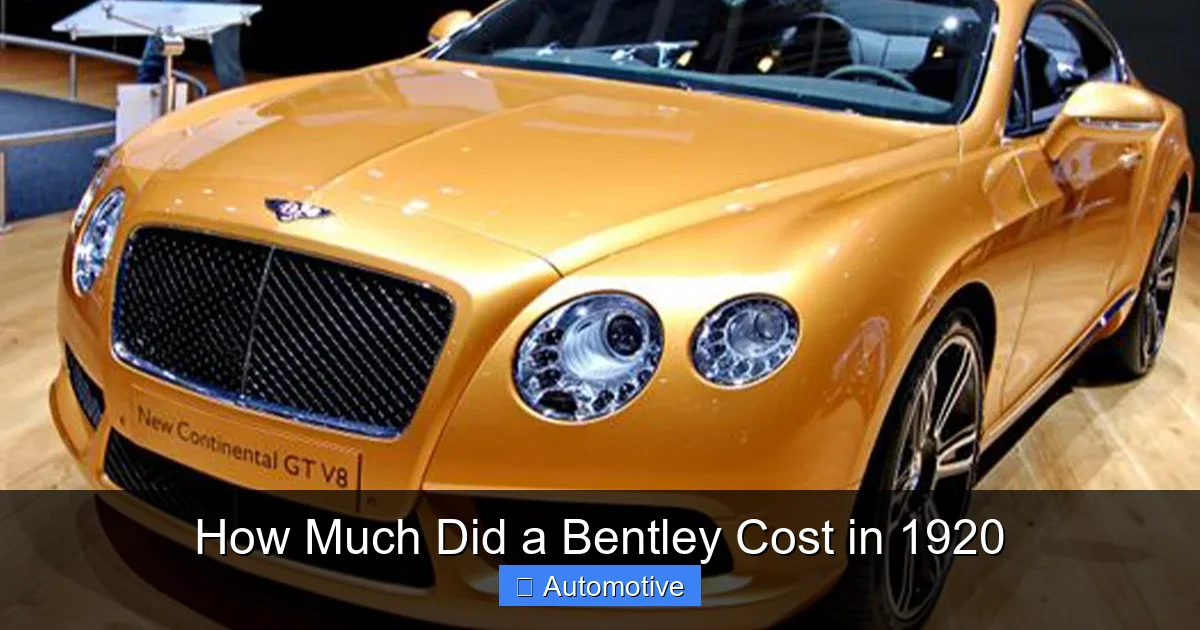
Visual guide about How Much Did a Bentley Cost in 1920
Image source: costhack.com
So, how much did a Bentley cost in 1920? The answer is both simple and complex. The base price for a Bentley 3 Litre chassis in 1920 was approximately £1,050. At the time, the British pound was strong, and £1,050 equated to about $5,250 in U.S. dollars, based on the exchange rate of the era. To put this into perspective, the average annual income in the UK in 1920 was around £200–£300. That means a single Bentley cost as much as three to five years’ worth of salary for the typical worker.
This price tag made the Bentley one of the most expensive cars available. For comparison, a Rolls-Royce Silver Ghost chassis in the same period cost around £1,000, while a high-end American luxury car like a Packard Twin Six could be had for under $5,000. Even so, the Bentley was often seen as a better value for performance enthusiasts, thanks to its superior engine and racing pedigree.
It’s important to note that the £1,050 price was for the bare chassis—the rolling frame with engine, transmission, and suspension. The final cost of a complete Bentley depended heavily on the body style and coachbuilder chosen. Wealthy buyers would select custom bodies from renowned coachbuilders like Vanden Plas, Gurney Nutting, or Mulliner. These handcrafted bodies could add hundreds—or even thousands—of pounds to the total price. A fully equipped Bentley with a luxurious touring body might cost £1,500 or more, pushing the price well beyond the reach of all but the wealthiest individuals.
Breaking Down the 1920 Bentley Price
To better understand the cost, let’s break down what £1,050 represented in 1920:
– **Engine and Drivetrain:** The heart of the Bentley 3 Litre was its 3.0-liter, four-cylinder engine, producing around 60 horsepower. This was a significant amount of power for the time, especially in a car weighing over 1.5 tons. The engine featured overhead valves and a robust crankshaft, designed for durability at high speeds.
– **Chassis and Suspension:** The chassis was built from high-quality steel and featured advanced suspension for the era, including semi-elliptic leaf springs and rigid axles. This provided a surprisingly comfortable ride, even on rough roads.
– **Brakes and Steering:** Early Bentleys had drum brakes on the rear wheels only, with mechanical actuation. Steering was manual and required significant effort, but it offered precise control—a hallmark of W.O. Bentley’s engineering.
– **Interior and Trim:** The base chassis came with minimal interior fittings. Buyers would select their own upholstery, wood trim, and accessories, often adding luxury touches like wool carpets, brass fittings, and custom instrumentation.
All of this was assembled by hand in Cricklewood, North London, in a small but dedicated factory. Each car was built to order, with meticulous attention to detail. This level of craftsmanship justified the high price, but it also meant long wait times—sometimes up to a year or more from order to delivery.
Inflation and Modern Equivalents
To grasp the true value of a 1920 Bentley, it helps to adjust the price for inflation. Using historical inflation calculators, £1,050 in 1920 is equivalent to approximately £52,000–£55,000 in today’s British pounds (as of 2024). In U.S. dollars, that’s around $65,000–$70,000. However, this inflation adjustment only tells part of the story.
A more meaningful comparison is to look at what that money could buy in 1920 versus today. In 1920, £1,050 could purchase a large country house, a small farm, or fund a year of university education for several students. Today, $65,000 might buy a high-end SUV or a year of college tuition—but not a luxury sports car from a prestigious brand like Bentley.
In fact, a new Bentley today—such as the Bentley Continental GT—starts at around $250,000. This means that, relatively speaking, the 1920 Bentley was even more exclusive and expensive in its time than modern Bentleys are today. The brand has maintained its elite status, but the gap between the average person and a Bentley owner has narrowed slightly due to broader wealth distribution and mass production.
Who Could Afford a Bentley in 1920?

Visual guide about How Much Did a Bentley Cost in 1920
Image source: bentleybaths.com
Owning a Bentley in 1920 was not just about having money—it was about having the right kind of money. The typical Bentley buyer was a member of the British aristocracy, a successful industrialist, or a wealthy entrepreneur. These individuals didn’t just want a car; they wanted a statement. A Bentley was a symbol of success, taste, and a love for engineering excellence.
One famous early Bentley owner was Woolf Barnato, a financier and member of the “Bentley Boys”—a group of wealthy enthusiasts who raced and promoted the brand. Barnato not only owned several Bentleys but also famously raced one against the famous Orient Express train from Cannes to Calais, winning the bet and cementing Bentley’s reputation for speed and reliability.
Other buyers included military officers, colonial administrators, and even royalty. The cars were often customized to reflect the owner’s personality—some preferred elegant limousine bodies for city driving, while others opted for sporty two-seater racers for weekend adventures.
It’s also worth noting that many Bentley owners were actively involved in motorsport. The brand’s success at the 24 Hours of Le Mans in the 1920s—winning five times between 1924 and 1930—was driven by private owners who raced their own cars. This racing pedigree added to the brand’s allure and justified the high cost for performance-minded buyers.
The Social Status of Bentley Ownership
In the 1920s, car ownership was still relatively rare, especially for high-end models. A Bentley wasn’t just a vehicle—it was a social marker. Driving one through London or the countryside turned heads and signaled membership in an exclusive club. The car’s distinctive exhaust note, aggressive styling, and racing heritage made it instantly recognizable.
Owning a Bentley also came with certain expectations. Owners were expected to maintain their cars meticulously, often employing personal mechanics or sending them back to Cricklewood for servicing. The cars were not designed for daily commuting; they were weekend toys, long-distance tourers, or race cars.
This exclusivity contributed to the brand’s mystique. Unlike today, when luxury cars are more accessible (relatively speaking), a 1920 Bentley was truly out of reach for the vast majority of people. It was a dream car for many, but a reality for only a fortunate few.
Bentley vs. the Competition: Price and Performance

Visual guide about How Much Did a Bentley Cost in 1920
Image source: carglassadvisor.com
To fully appreciate the cost of a Bentley in 1920, it’s helpful to compare it to other luxury cars of the era. The main competitors included Rolls-Royce, Hispano-Suiza, and Daimler.
Rolls-Royce: The Quiet Rival
Rolls-Royce was Bentley’s closest competitor, and the two brands represented different philosophies. Rolls-Royce focused on silence, smoothness, and comfort. Their cars were often described as “the best car in the world” and were favored by dignitaries and the ultra-wealthy. The Rolls-Royce Silver Ghost, for example, cost around £1,000 for the chassis—slightly less than a Bentley—but offered a more refined, quieter ride.
However, the Bentley was faster and more agile. While the Silver Ghost was built for cruising at a dignified pace, the Bentley was designed to be driven hard. This made it more appealing to younger, more adventurous buyers who wanted both luxury and performance.
Hispano-Suiza and Daimler: Continental and British Alternatives
Hispano-Suiza, a Spanish-French manufacturer, produced some of the most beautiful and advanced cars of the 1920s. Models like the H6B were powered by aircraft-derived engines and featured luxurious interiors. Prices were comparable to or higher than Bentley, often exceeding £1,500 for a complete car.
Daimler, another British luxury brand, offered cars like the 25/50 hp model, which cost around £800–£1,000. While Daimler cars were well-built and elegant, they lacked the racing pedigree and raw power of the Bentley.
In this competitive landscape, Bentley carved out a unique niche: high-performance luxury with a sporting edge. The price reflected this positioning—higher than some, but justified by engineering excellence and motorsport success.
The Legacy of the 1920 Bentley
The Bentley of 1920 was more than just a car—it was the foundation of a legacy. The 3 Litre model, with its robust engine and racing success, established Bentley as a serious contender in the world of high-performance automobiles. It also set the template for future models, including the legendary 4½ Litre and the iconic Speed Six.
The high cost of these early Bentleys was a reflection of their quality, exclusivity, and innovation. They were not mass-produced; they were hand-built masterpieces that combined British craftsmanship with cutting-edge engineering. This commitment to excellence continues to define the Bentley brand today.
Even now, when you see a modern Bentley—whether it’s the Mulsanne, the Flying Spur, or the Bentayga—you can trace its DNA back to those early 1920s models. The emphasis on performance, luxury, and bespoke customization remains unchanged. And while the price tags have grown, the spirit of the original Bentleys lives on.
Collectibility and Value Today
Today, original 1920s Bentleys are highly sought after by collectors. A well-preserved Bentley 3 Litre in original condition can fetch anywhere from $150,000 to $300,000 at auction, depending on provenance, body style, and racing history. Cars with documented Le Mans participation or ownership by famous Bentley Boys can command even higher prices.
Restoring a 1920 Bentley is a labor of love—and a significant investment. Parts are rare, and skilled restorers are few. But for enthusiasts, the reward is a piece of automotive history that still runs, drives, and turns heads.
Conclusion: The Price of Prestige
So, how much did a Bentley cost in 1920? Around £1,050—a staggering sum at the time, equivalent to over £50,000 today. But the price wasn’t just about the money; it was about what the car represented. A Bentley was a symbol of engineering prowess, social status, and a passion for driving.
In an era when cars were still a novelty for most people, the Bentley stood out as a beacon of innovation and exclusivity. It was built for those who demanded more—more speed, more power, more craftsmanship. And while few could afford it, those who did became part of a legendary legacy.
Today, as we look back on the roaring twenties and the birth of one of the world’s most iconic car brands, the 1920 Bentley remains a testament to the enduring appeal of luxury, performance, and timeless design. It wasn’t just a car—it was a dream on wheels, and its price was a reflection of that dream.
Frequently Asked Questions
How much did a Bentley cost in 1920 in today’s money?
In 1920, a Bentley 3 Litre chassis cost about £1,050, which is roughly equivalent to £52,000–£55,000 (or $65,000–$70,000) in today’s currency after adjusting for inflation. This reflects its status as a luxury item far beyond the reach of average buyers.
Was a Bentley more expensive than a Rolls-Royce in 1920?
Yes, a Bentley was slightly more expensive than a Rolls-Royce Silver Ghost, which cost around £1,000 for the chassis. However, Bentley emphasized performance and racing, while Rolls-Royce focused on comfort and refinement.
What made the 1920 Bentley so expensive?
The high cost was due to hand-built craftsmanship, advanced engineering, custom coachwork, and limited production. Each car was built to order with premium materials and attention to detail, justifying the premium price.
Who typically bought a Bentley in the 1920s?
Bentleys were purchased by wealthy aristocrats, industrialists, financiers, and racing enthusiasts—often members of the “Bentley Boys” group. These buyers valued performance, prestige, and exclusivity.
Could an average person afford a Bentley in 1920?
No. With an average annual income of £200–£300 in the UK, most people could not afford a Bentley, which cost as much as three to five years’ salary. It was strictly a luxury for the elite.
Are 1920 Bentleys valuable today?
Yes, original 1920s Bentleys are highly collectible. Well-preserved models can sell for $150,000 to $300,000 or more at auction, especially if they have racing history or famous ownership.
