
How Much Is a 2004 Honda Civic Worth

The 2004 Honda Civic typically ranges from $2,500 to $6,000 depending on condition, mileage, and trim. Well-maintained models with low mileage can fetch higher prices, while high-mileage or damaged cars sell for less. This guide breaks down everything you need to know about pricing, value factors, and how to get the best deal.
If you’re wondering, “How much is a 2004 Honda Civic worth?” you’re not alone. This compact car has been a staple on American roads for decades, known for its reliability, fuel efficiency, and low cost of ownership. Even nearly 20 years after its release, the 2004 Honda Civic remains a popular choice for budget-conscious drivers, first-time car buyers, and those looking for a dependable daily commuter.
But pricing a 20-year-old car isn’t as simple as checking a sticker. Unlike new vehicles, used cars—especially those from the early 2000s—come with a wide range of variables that affect their market value. Mileage, condition, trim level, location, and even the time of year can influence how much a 2004 Honda Civic is worth today. Whether you’re buying, selling, or just curious, understanding these factors will help you make a smart decision.
In this guide, we’ll walk you through everything you need to know about the 2004 Honda Civic’s value. From average price ranges to tips for maximizing resale, we’ll cover the essentials in a clear, easy-to-follow format. By the end, you’ll have a solid grasp of what your Civic is worth—and how to get the best deal, no matter which side of the transaction you’re on.
Key Takeaways
- Market Value Range: Most 2004 Honda Civics sell between $2,500 and $6,000, with clean, low-mileage examples reaching up to $7,000.
- Mileage Matters: Vehicles under 100,000 miles hold significantly more value than those over 150,000 miles.
- Trim Level Impact: Higher trims like the EX and Si command premium prices due to added features and performance.
- Condition is Key: Rust, mechanical issues, or poor maintenance can reduce value by thousands of dollars.
- Geographic Influence: Prices vary by region—urban areas and states with harsh winters may see lower values due to salt damage.
- Private vs. Dealer Sales: Private sellers often get more money, but dealers offer convenience and buyer protection.
- Documentation Boosts Value: Complete service records and clean titles increase buyer confidence and resale price.
📑 Table of Contents
Understanding the 2004 Honda Civic’s Market Position
The 2004 Honda Civic was part of the seventh generation of the Civic lineup, which ran from 2001 to 2005. This generation marked a shift toward more modern styling, improved safety features, and better fuel economy compared to earlier models. It was available in several body styles, including a sedan, coupe, and a unique hybrid version—the first mass-produced hybrid in the U.S. market at the time.
During its production years, the Civic was praised for its practicality and efficiency. It earned high marks from critics and consumers alike, often appearing on “best buys” lists from publications like Consumer Reports and Kelley Blue Book. Its reputation for longevity meant that even as newer models rolled out, the 2004 Civic remained in demand—especially among buyers looking for affordability without sacrificing quality.
Today, the 2004 Civic occupies a unique space in the used car market. It’s no longer a “new” used car, but it’s also not quite a classic or collector vehicle. Instead, it’s a proven workhorse that still delivers value. Many of these cars are still on the road, thanks to Honda’s engineering and the Civic’s simple, durable design. That said, age brings challenges. Rust, wear and tear, and outdated technology can affect desirability—and price.
Why the 2004 Civic Still Holds Value
Despite being nearly two decades old, the 2004 Honda Civic continues to hold value better than many of its competitors. One reason is its legendary reliability. Hondas from this era are known for lasting well beyond 200,000 miles with proper maintenance. This longevity gives buyers confidence that they’re getting a car that can still serve them for years.
Another factor is fuel efficiency. The 2004 Civic averages around 30–35 miles per gallon on the highway, depending on the engine and transmission. In an era of rising gas prices, that kind of efficiency is still appealing—especially for students, commuters, or anyone on a tight budget.
Additionally, parts for the 2004 Civic are widely available and relatively inexpensive. Whether you need a new alternator, brake pads, or a timing belt, you won’t have to hunt far or pay a fortune. This ease of maintenance adds to the car’s overall value proposition.
Factors That Influence Depreciation
Like all vehicles, the 2004 Civic has depreciated significantly since its original MSRP of around $14,000–$18,000. However, depreciation isn’t uniform. Some models hold their value better than others due to factors like trim level, condition, and market demand.
For example, a well-maintained 2004 Civic EX with low mileage and a clean title will depreciate slower than a base-model DX with high mileage and a history of accidents. Similarly, coupe models—especially the sportier Si trim—tend to retain more value than sedans due to their enthusiast appeal.
Geographic location also plays a role. In states with mild climates and low road salt usage, Civics are less likely to suffer from rust damage, which helps preserve their value. In contrast, cars from the Rust Belt or coastal areas may show more corrosion, lowering their market price.
Average Price Range for a 2004 Honda Civic
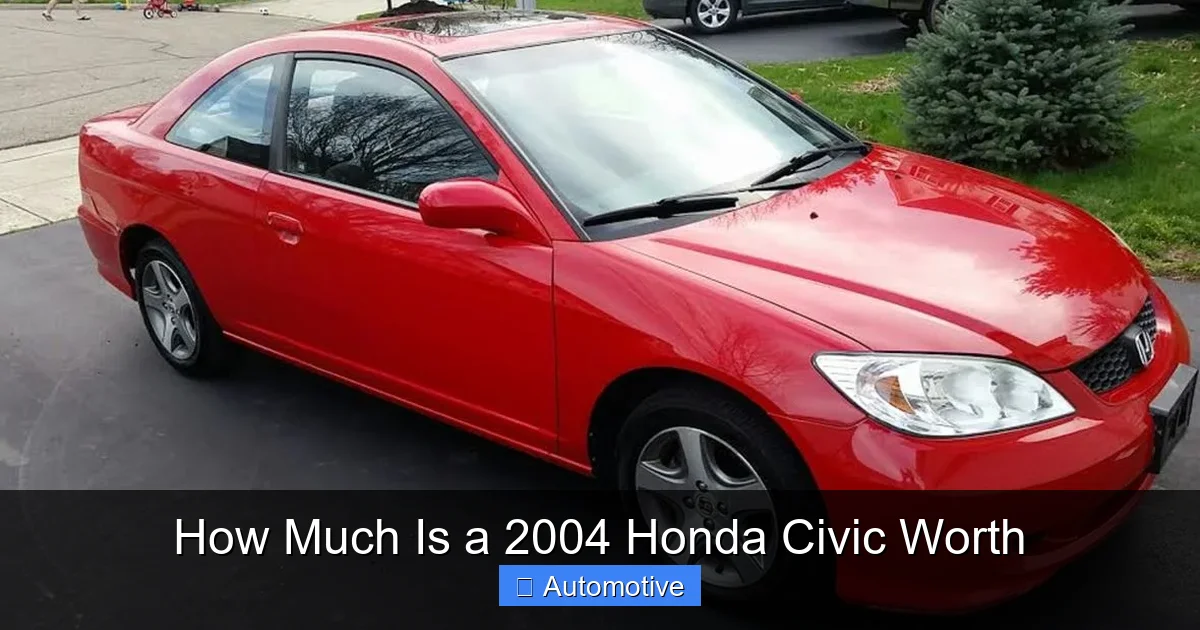
Visual guide about How Much Is a 2004 Honda Civic Worth
Image source: bestcarfinder.com
So, how much is a 2004 Honda Civic worth in 2024? The short answer: it depends. But based on current market data from sources like Kelley Blue Book (KBB), Edmunds, and recent private sale listings, most 2004 Civics fall within a price range of $2,500 to $6,000.
This broad range reflects the wide variation in condition, mileage, and features. A base-model sedan with 180,000 miles and minor cosmetic flaws might sell for as little as $2,000–$2,500. On the other hand, a low-mileage EX or Si coupe with full service records and no accidents could command $6,000 or more—especially in a competitive market.
Price Breakdown by Trim and Condition
To give you a clearer picture, let’s break down typical prices by trim level and condition:
– DX (Base Model): $2,000–$3,500
These are the most affordable options, often with high mileage and basic features. Ideal for buyers who just need reliable transportation.
– HX (Coupe, Fuel-Efficient): $2,500–$4,000
The HX trim was designed for maximum fuel economy, featuring a manual transmission and lightweight components. It’s popular among eco-conscious drivers.
– EX (Mid-Range): $3,500–$5,500
The EX adds power windows, locks, a sunroof (on some models), and upgraded audio. It’s the most common trim in good condition and offers the best balance of features and value.
– Si (Sport Trim): $4,500–$7,000+
The Si is the performance version, with a 160-horsepower engine, sport suspension, and unique styling. Low-mileage examples in excellent condition can fetch top dollar, especially among Honda enthusiasts.
– Hybrid: $3,000–$5,000
The 2004 Civic Hybrid was ahead of its time, offering excellent fuel economy (up to 48 mpg). However, battery degradation over time can affect value. A well-maintained hybrid with a healthy battery may still be worth $4,000 or more.
How Mileage Affects Value
Mileage is one of the biggest factors in determining a used car’s worth. For the 2004 Civic, here’s a general guideline:
– Under 100,000 miles: These are considered low-mileage for a 20-year-old car. Expect to pay a premium—often 20–30% more than average.
– 100,000–150,000 miles: This is the sweet spot for many buyers. The car has been driven, but not excessively. Prices are typically in the middle of the range.
– Over 150,000 miles: High-mileage Civics are still valuable, but prices drop significantly. Buyers will want proof of regular maintenance, especially timing belt replacements and transmission service.
For example, a 2004 Civic EX with 85,000 miles might sell for $5,500, while the same model with 160,000 miles might go for $3,800—even if both are in good condition.
Key Factors That Affect a 2004 Honda Civic’s Value
Now that you know the average price range, let’s dive into the specific factors that can push a Civic’s value up or down. Understanding these will help you assess any listing—or prepare your own car for sale.
Vehicle Condition and Maintenance History
A car’s physical and mechanical condition is the single biggest determinant of its value. A 2004 Civic with a clean exterior, intact interior, and no major mechanical issues will always be worth more than one with dents, stains, or warning lights on the dashboard.
Buyers look for signs of regular maintenance. A complete service history—especially records of oil changes, brake jobs, and timing belt replacements—can increase value by hundreds of dollars. The timing belt, in particular, is critical. On the 2004 Civic, it should be replaced every 90,000–105,000 miles. If it hasn’t been done, buyers will factor in the $500–$800 replacement cost.
Rust is another red flag. While the 2004 Civic isn’t especially prone to rust, cars from snowy regions may have corrosion on the undercarriage, wheel wells, or door sills. Even minor rust can scare off buyers and lower the price.
Title Status and Accident History
A clean title is essential for maximum value. Cars with salvage, rebuilt, or flood-damaged titles can lose 20–40% of their worth—even if they’re in good running condition. Always check the vehicle history report (using services like Carfax or AutoCheck) before buying or selling.
Accident history also matters. A Civic that was in a minor fender bender and properly repaired may still be a good buy, but one with frame damage or airbag deployment will be harder to sell and less valuable.
Transmission Type
The 2004 Civic was available with either a 5-speed manual or a 4-speed automatic transmission. Manual transmissions are generally more desirable among enthusiasts and can add $500–$1,000 to the value, especially on the Si trim. Automatics are more common and appeal to a broader audience, but they may depreciate slightly faster.
Geographic Location
Where a car is located can significantly impact its price. In rural areas with low demand, you might find Civics priced lower. In urban centers or college towns, where students and commuters seek affordable cars, prices can be higher.
Climate also plays a role. Civics from Arizona or California—where rust is rare—often command higher prices than those from Michigan or New York. A rust-free undercarriage can be a major selling point.
Modifications and Aftermarket Parts
While some modifications (like upgraded suspension or performance exhaust) may appeal to enthusiasts, most buyers prefer stock vehicles. Aftermarket parts can actually reduce value if they suggest the car was driven hard or poorly maintained. If you’re selling, consider removing non-original parts and returning the car to factory condition.
How to Determine the Exact Value of Your 2004 Honda Civic
If you’re trying to price your own 2004 Civic—or evaluate a potential purchase—here’s a step-by-step approach to get an accurate estimate.
Use Online Valuation Tools
Start with trusted resources like Kelley Blue Book (KBB), Edmunds, and NADA Guides. These tools allow you to input your car’s VIN, mileage, trim, condition, and location to generate a fair market value.
For example, a 2004 Honda Civic EX sedan with 110,000 miles, excellent condition, and a clean title in Atlanta, GA, might be valued at $4,800 (private party) or $4,200 (trade-in). Always check multiple sources, as they can vary by a few hundred dollars.
Compare Recent Sales
Look at completed listings on sites like Craigslist, Facebook Marketplace, Autotrader, and Cars.com. Filter for 2004 Civics in your area and note the final sale prices (not just asking prices). This gives you a real-world sense of what buyers are actually paying.
Pay attention to how long listings stay active. A Civic that’s been listed for months may be overpriced, while one that sells quickly might indicate strong demand.
Get a Professional Inspection
If you’re serious about selling or buying, consider hiring a mechanic to perform a pre-purchase inspection. This typically costs $100–$150 but can reveal hidden issues like transmission wear, engine leaks, or suspension problems. For sellers, addressing these issues upfront can justify a higher asking price.
Adjust for Local Market Conditions
Finally, factor in your local market. If gas prices are high, fuel-efficient cars like the Civic may be in higher demand. If the economy is tight, buyers may be looking for budget options, boosting interest in older models.
Seasonality also matters. Convertibles and coupes often sell better in spring and summer, while demand for practical sedans may rise in the fall as students return to school.
Tips for Selling Your 2004 Honda Civic
If you’re planning to sell your 2004 Civic, a little preparation can go a long way in maximizing your return.
Clean and Detail the Car
First impressions matter. Wash the exterior, vacuum the interior, and clean the windows. Consider professional detailing if the car has stains or odors. A clean car looks well-cared-for and can increase buyer confidence.
Fix Minor Issues
You don’t need to overhaul the engine, but addressing small problems—like burnt-out bulbs, cracked windshield wipers, or a sticky door handle—can make a big difference. These are inexpensive fixes that show you’ve maintained the car.
Gather Documentation
Compile all service records, the owner’s manual, and any warranty information. If you’ve replaced major components like the timing belt or water pump, include those receipts. Buyers love transparency.
Take High-Quality Photos
Use good lighting and shoot from multiple angles. Include close-ups of the engine, interior, trunk, and undercarriage (to show rust-free condition). Avoid cluttered backgrounds and shadows.
Price It Right
Don’t overprice. Even if you’ve invested in repairs, the market determines value. Price your Civic competitively based on comparable listings. If you’re unsure, start slightly higher and be open to negotiation.
Choose the Right Platform
Private sales typically yield the highest prices. Use platforms like Facebook Marketplace, Craigslist, or OfferUp. For convenience, consider trading in at a dealership, though you’ll likely get less money.
Tips for Buying a 2004 Honda Civic
If you’re in the market for a 2004 Civic, here’s how to find a great deal without getting burned.
Set a Budget
Decide how much you’re willing to spend, including taxes, registration, and potential repairs. Stick to it—even if a shiny coupe catches your eye.
Research the Trim You Want
Know the differences between DX, HX, EX, and Si trims. Decide which features matter most to you—sunroof, manual transmission, sport suspension—and focus your search accordingly.
Inspect the Car Thoroughly
Check for rust, especially around the wheel wells and under the car. Test all lights, locks, and electronics. Take it for a test drive and listen for unusual noises.
Verify the Vehicle History
Always run a vehicle history report. Look for accidents, title issues, and odometer discrepancies. If the seller can’t provide a report, consider it a red flag.
Negotiate Smartly
Use your research to negotiate. If the car has high mileage or needs repairs, point that out. Most sellers expect some haggling—don’t be afraid to make a reasonable offer.
Conclusion
So, how much is a 2004 Honda Civic worth? The answer isn’t one-size-fits-all, but with the right information, you can make a confident decision. Most models sell between $2,500 and $6,000, with condition, mileage, and trim level being the biggest factors.
The 2004 Civic remains a smart choice for anyone seeking affordability, reliability, and efficiency. Whether you’re buying your first car or selling one you’ve owned for years, understanding its value ensures you get a fair deal. Take the time to research, inspect, and prepare—and you’ll be driving (or selling) with confidence.
Frequently Asked Questions
What is the average mileage for a 2004 Honda Civic?
The average mileage for a 2004 Honda Civic is around 120,000 to 150,000 miles. Many well-maintained examples have surpassed 200,000 miles, thanks to Honda’s reliable engineering.
Is a 2004 Honda Civic reliable?
Yes, the 2004 Honda Civic is known for its reliability. With regular maintenance, these cars often last 200,000 miles or more. Common issues include aging suspension components and, in some cases, transmission wear.
How much does it cost to maintain a 2004 Honda Civic?
Maintenance costs are generally low. Routine services like oil changes, brake pads, and tire rotations typically cost $100–$300 per year. Major repairs, such as timing belt replacement, may cost $500–$800.
Can a 2004 Honda Civic still be driven daily?
Absolutely. Many 2004 Civics are still used as daily drivers. Their fuel efficiency, low operating costs, and durability make them ideal for commuting and city driving.
What should I look for when buying a 2004 Honda Civic?
Check for rust, especially on the undercarriage and wheel wells. Verify the timing belt has been replaced, inspect the transmission, and review the vehicle history report for accidents or title issues.
Is the 2004 Honda Civic Hybrid worth buying?
The 2004 Civic Hybrid can be a great buy if the battery is in good condition. Look for models with documented battery health. If the battery needs replacement, factor in a $1,500–$2,500 cost.
