
What Is Toyota A-trac?

Toyota A-TRAC (Active Traction Control) is an advanced off-road system that automatically manages wheel slip without needing a traditional locking differential. It uses the vehicle’s braking system to simulate differential lock, giving drivers better control on slippery or uneven surfaces like mud, sand, and rocks.
Key Takeaways
- What Is A-TRAC? A-TRAC stands for Active Traction Control and is Toyota’s electronic off-road traction system designed to improve grip on low-traction surfaces.
- How It Works: It uses the vehicle’s ABS and brake system to apply braking force to spinning wheels, sending power to wheels with better traction.
- No Locking Differential Needed: Unlike mechanical lockers, A-TRAC works electronically, making it seamless and automatic during off-road driving.
- Vehicles That Use It: Found in models like the Toyota Land Cruiser, 4Runner, Tacoma TRD Off-Road, and Sequoia.
- Benefits Off-Road: Improves stability, reduces wheel spin, and helps maintain momentum on challenging terrain like mud, snow, and loose gravel.
- Driver Assistance: Works alongside other systems like Crawl Control and Multi-Terrain Select for a complete off-road package.
- Limitations: Best used on low-speed off-road conditions; not a replacement for proper tires or driving skill.
📑 Table of Contents
What Is Toyota A-TRAC?
If you’ve ever driven a Toyota off-road—whether it’s crawling over rocks in a 4Runner or powering through mud in a Land Cruiser—you’ve probably benefited from a hidden hero under the hood: Toyota A-TRAC. But what exactly is it? And how does it help you conquer tough terrain without breaking a sweat?
A-TRAC stands for **Active Traction Control**, and it’s Toyota’s smart solution to one of the biggest challenges in off-roading: wheel slip. When one or more wheels lose grip—say, on a muddy slope or a sandy dune—your vehicle can get stuck, spin out, or lose momentum. That’s where A-TRAC steps in. Instead of relying on mechanical locking differentials, which require manual engagement and can be tricky to use, A-TRAC uses the vehicle’s existing braking and electronic systems to automatically manage traction.
Think of it like having a co-pilot for your wheels. When A-TRAC detects that a wheel is spinning freely, it gently applies the brake to that wheel. This action tricks the differential into sending more power to the wheels that still have grip. The result? Better control, smoother progress, and less chance of getting stuck. It’s like having a built-in off-road assistant that works silently in the background, helping you maintain forward momentum even when the going gets tough.
How Does Toyota A-TRAC Work?
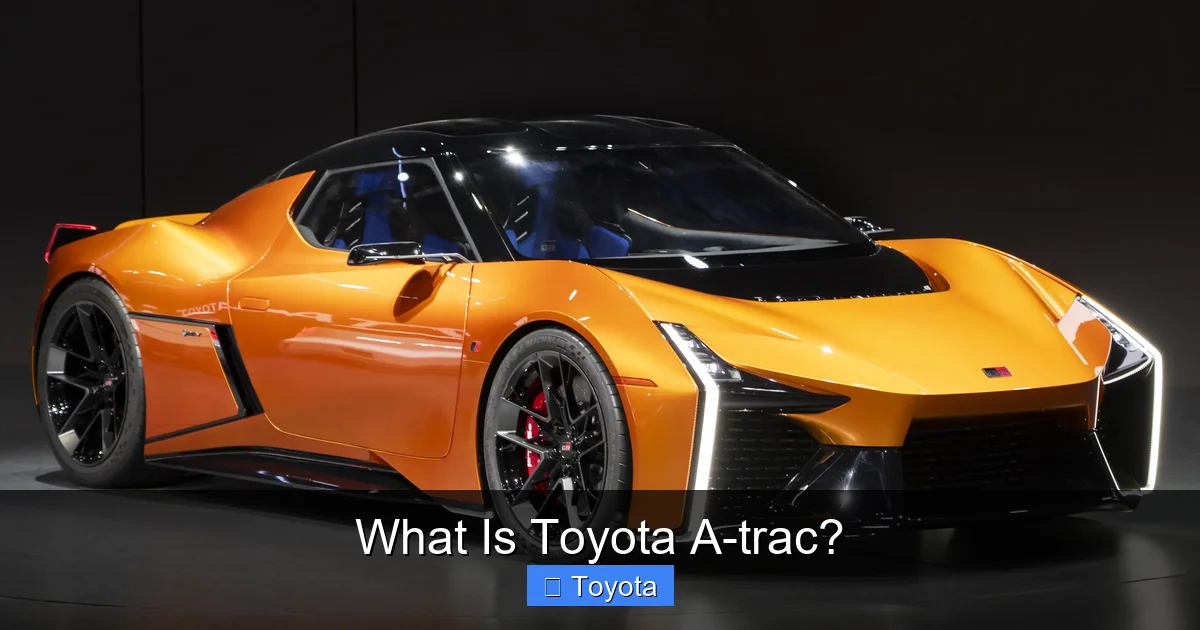
Visual guide about What Is Toyota A-trac?
Image source: soymotor.com
To truly appreciate A-TRAC, it helps to understand the basics of how traction works in a 4WD vehicle. In a traditional setup, power from the engine goes through the transmission and transfer case to the front and rear axles. Each axle has a differential, which allows the wheels to rotate at different speeds—essential when turning corners. But off-road, that same feature can be a weakness. If one wheel loses traction, the differential sends most of the power to that spinning wheel, leaving the grounded wheels with little to no power.
That’s where A-TRAC comes in. Instead of locking the differential mechanically, A-TRAC uses the vehicle’s **Anti-lock Braking System (ABS)** and **Electronic Brakeforce Distribution (EBD)** to control wheel spin. Here’s how it works step by step:
Step 1: Detecting Wheel Slip
Sensors in each wheel monitor rotational speed. If one wheel begins to spin faster than the others—indicating loss of traction—the system instantly recognizes the imbalance. This happens in milliseconds, long before the driver even notices.
Step 2: Applying Brake Force
Once slip is detected, A-TRAC applies a small amount of braking force to the spinning wheel. This resistance slows it down, which in turn causes the differential to redirect torque to the wheels that still have grip. It’s a clever workaround that mimics the effect of a locked differential without the mechanical complexity.
Step 3: Maintaining Momentum
By preventing excessive wheel spin, A-TRAC helps the vehicle maintain forward momentum. This is especially useful in situations like climbing a muddy hill or driving over loose gravel, where losing traction for even a second can mean getting stuck.
Step 4: Working Automatically
One of the best things about A-TRAC is that it operates automatically. There’s no need to flip a switch or engage a locker manually. It’s always on and ready, making it ideal for drivers who want off-road capability without the hassle of complex controls.
For example, imagine you’re driving your Toyota Tacoma TRD Off-Road up a steep, muddy trail. One of your rear wheels starts to slip. Without A-TRAC, that wheel would spin freely, and you might lose forward progress. But with A-TRAC, the system detects the slip and applies brake pressure to that wheel. Power is then sent to the other rear wheel (and potentially the front wheels), helping you keep moving forward smoothly.
Vehicles That Feature Toyota A-TRAC
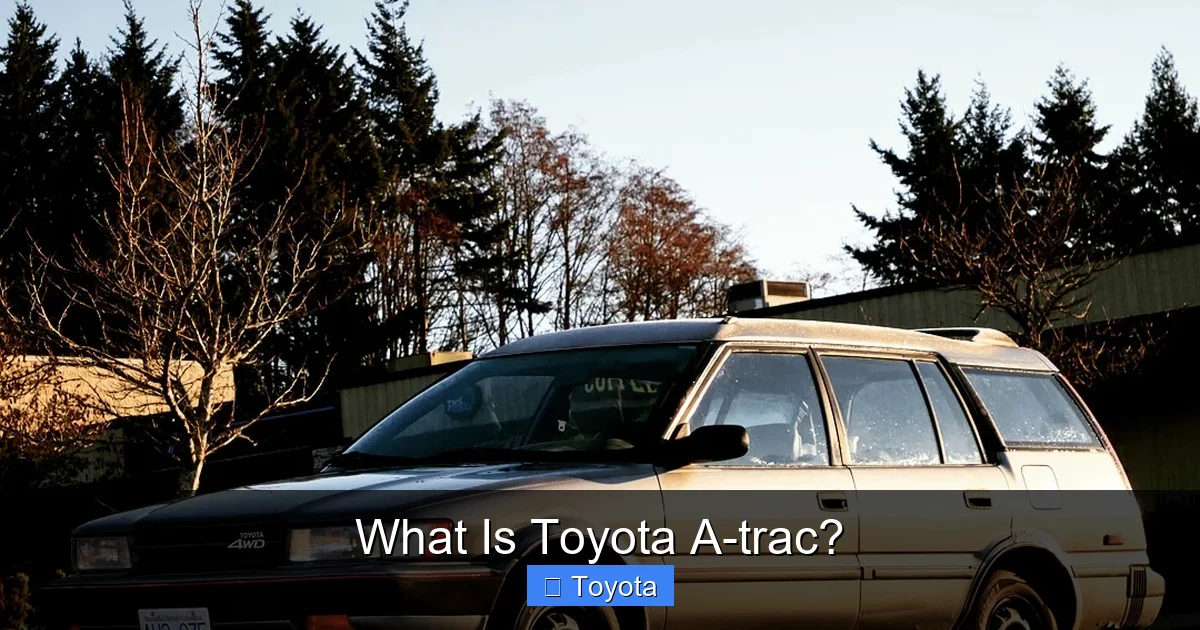
Visual guide about What Is Toyota A-trac?
Image source: oldmotors.net
A-TRAC isn’t available on every Toyota model—it’s primarily found in vehicles designed for serious off-road use. These are typically part of Toyota’s 4WD or AWD lineup with robust suspension, high ground clearance, and off-road-tuned features.
Toyota Land Cruiser
The Land Cruiser is Toyota’s flagship off-roader, and A-TRAC is a standard feature. Whether you’re crossing deserts or navigating mountain trails, the Land Cruiser uses A-TRAC alongside other advanced systems like Crawl Control and Kinetic Dynamic Suspension System (KDSS) to deliver unmatched capability.
Toyota 4Runner
The 4Runner, especially in TRD Off-Road and TRD Pro trims, comes equipped with A-TRAC. It’s a favorite among overlanders and weekend warriors thanks to its rugged body-on-frame construction and reliable off-road tech.
Toyota Tacoma
The Tacoma TRD Off-Road and TRD Pro models include A-TRAC as part of their off-road package. It’s a key reason why the Tacoma remains one of the most popular midsize trucks for off-roading.
Toyota Sequoia
The full-size Sequoia, particularly in TRD Off-Road trim, also features A-TRAC. While it’s a family SUV at heart, it doesn’t shy away from tough terrain, thanks in part to this smart traction system.
Toyota Tundra (Certain Models)
Some off-road-focused Tundra models, especially those with the TRD Off-Road package, include A-TRAC. It helps the full-size truck maintain grip when hauling or towing over uneven ground.
It’s worth noting that A-TRAC is often bundled with other off-road technologies. For instance, in the 4Runner TRD Pro, you’ll find A-TRAC working alongside Multi-Terrain Select, which lets you choose driving modes for mud, sand, or rocks. This combination creates a powerful off-road system that adapts to nearly any environment.
Benefits of Toyota A-TRAC
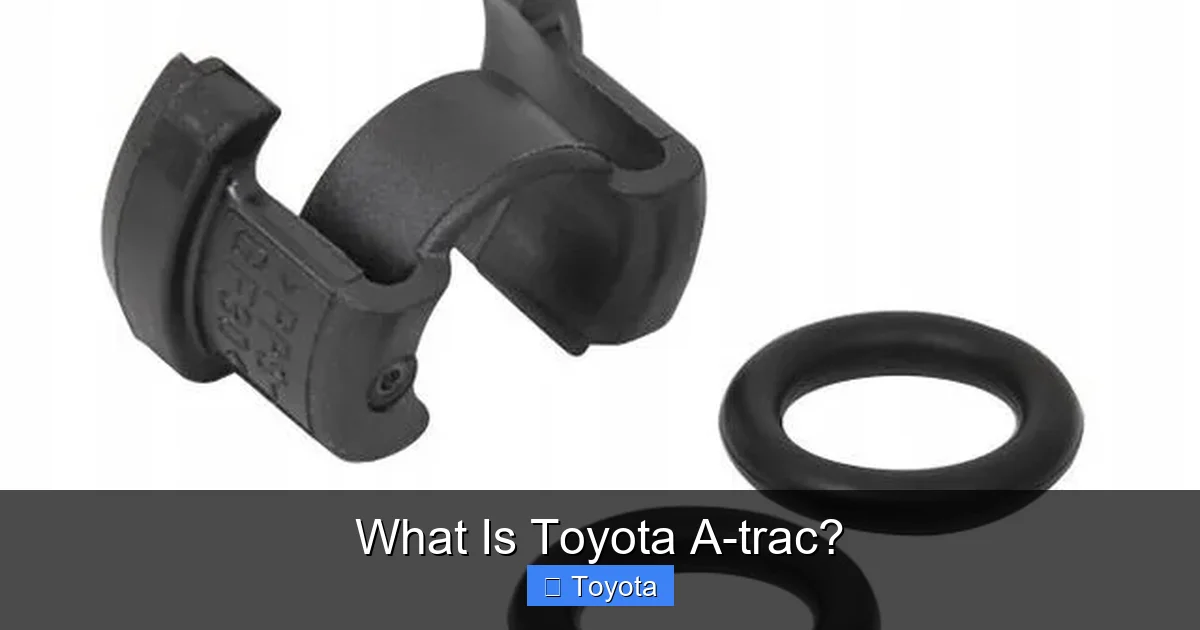
Visual guide about What Is Toyota A-trac?
Image source: s3.amazonaws.com
So why should you care about A-TRAC? If you’re not planning to go off-road, does it even matter? The answer is: it depends. But for anyone who enjoys outdoor adventures, lives in a rural area, or simply wants more confidence in bad weather, A-TRAC offers real advantages.
Improved Traction on Low-Grip Surfaces
The primary benefit of A-TRAC is better traction. Whether you’re driving on snow-covered roads, muddy trails, or sandy beaches, A-TRAC helps prevent wheel spin and keeps your vehicle moving forward. This is especially helpful in situations where one wheel is off the ground or on a slippery patch.
No Need for Manual Locking Differentials
Traditional locking differentials require the driver to engage them manually, often by flipping a switch or pulling a lever. This can be inconvenient and requires knowledge of when to use them. A-TRAC eliminates this hassle by working automatically. You get the benefits of a locked diff without the complexity.
Enhanced Safety and Stability
By reducing wheel slip, A-TRAC improves vehicle stability. This is crucial when driving on uneven terrain or during sudden maneuvers. It helps prevent skidding, fishtailing, or loss of control—especially in wet or icy conditions.
Better Performance in Adverse Weather
Even if you’re not off-roading, A-TRAC can be useful in everyday driving. Snow, ice, and heavy rain can reduce traction on paved roads. A-TRAC helps maintain grip, making your Toyota safer and more predictable in bad weather.
Supports Other Off-Road Systems
A-TRAC doesn’t work in isolation. It’s part of a broader suite of off-road technologies. For example, in the Land Cruiser, it works with Crawl Control—a system that automatically manages speed and braking on steep or technical terrain. Together, these systems create a seamless off-road experience.
Low Maintenance and High Reliability
Because A-TRAC uses existing braking and electronic components, there are no extra mechanical parts to maintain or repair. It’s a durable, reliable system that’s built to last, even in harsh conditions.
Let’s say you’re driving your 4Runner through a forest trail after a heavy rain. The ground is soft, and one of your wheels starts to slip in a puddle. Without A-TRAC, you might need to stop, engage a locker, or try to rock the vehicle free. With A-TRAC, the system handles it automatically—keeping you moving without interruption.
A-TRAC vs. Other Traction Systems
When comparing off-road traction systems, it’s easy to get confused. There are mechanical lockers, electronic limited-slip differentials (eLSD), and various traction control systems. So how does A-TRAC stack up?
A-TRAC vs. Mechanical Locking Differentials
Mechanical lockers physically lock the left and right wheels on an axle together, forcing them to turn at the same speed. This is great for extreme off-roading but can make on-road driving harsh and difficult to handle. A-TRAC, on the other hand, is smoother and automatic. It doesn’t lock the wheels completely but simulates the effect by using brakes. This makes it better for mixed driving—off-road and on-road.
A-TRAC vs. Electronic Limited-Slip Differentials (eLSD)
Some vehicles use eLSDs, which use clutches to transfer torque between wheels. These can be effective but are often more complex and expensive. A-TRAC is simpler and relies on existing brake hardware, making it more cost-effective and reliable.
A-TRAC vs. Standard Traction Control
Standard traction control systems (like those in most cars) are designed for on-road use. They reduce engine power or apply brakes to prevent wheel spin during acceleration. A-TRAC is more advanced—it’s specifically tuned for off-road conditions and works at low speeds where traditional systems might not be effective.
A-TRAC vs. Jeep’s Selec-Trac or Quadra-Trac
Jeep uses similar systems like Selec-Trac and Quadra-Trac, which offer different drive modes and traction management. While these systems are effective, A-TRAC stands out for its seamless integration and automatic operation. It doesn’t require driver input, making it more user-friendly for casual off-roaders.
In short, A-TRAC is a smart, efficient, and reliable solution that strikes a balance between performance and ease of use. It’s not the most extreme system out there, but it’s one of the most practical for real-world off-roading.
Limitations and Considerations
While A-TRAC is a powerful tool, it’s not a magic fix. Like any technology, it has limitations—and understanding them is key to using it effectively.
Best for Low-Speed Off-Roading
A-TRAC is designed for slow, technical off-road driving. It works best when you’re crawling over rocks, climbing hills, or navigating muddy trails. At higher speeds, especially on pavement, it’s less effective and not needed.
Not a Replacement for Proper Tires
No traction system can overcome the limits of your tires. If you’re driving on bald all-season tires, even the best A-TRAC system won’t help you much in deep snow or mud. Always use appropriate off-road or all-terrain tires for serious adventures.
Doesn’t Replace Driver Skill
A-TRAC helps, but it doesn’t drive for you. Proper technique—like choosing the right line, maintaining momentum, and using low-range gearing—is still essential. Relying solely on technology can lead to overconfidence and risky decisions.
May Reduce Fuel Efficiency Slightly
Because A-TRAC uses the braking system to manage traction, it can create minor drag or resistance. This might lead to a small decrease in fuel economy, especially during frequent off-road use. However, the difference is usually negligible.
Not Available on All Models
As mentioned earlier, A-TRAC is only available on certain Toyota models and trims. If you’re shopping for a used Toyota, make sure to check the specs to see if A-TRAC is included.
For example, if you’re considering a used 2018 Toyota Tacoma, only the TRD Off-Road and TRD Pro trims have A-TRAC. The SR or SR5 trims do not. So if off-road capability is important to you, choose wisely.
Tips for Using Toyota A-TRAC Effectively
To get the most out of A-TRAC, here are some practical tips:
Use Low-Range 4WD When Off-Roading
A-TRAC works best in low-range 4WD mode. This gives you more torque and better control at slow speeds. Always shift into 4L when tackling steep or technical terrain.
Keep Your Speed Low
A-TRAC is designed for low-speed situations. Avoid high speeds on loose or uneven surfaces. Slow and steady wins the off-road race.
Combine with Other Systems
Use A-TRAC alongside Crawl Control or Multi-Terrain Select when available. These systems work together to optimize performance for different conditions.
Maintain Your Brakes
Since A-TRAC relies on the braking system, make sure your brakes are in good condition. Worn brake pads or low fluid can reduce effectiveness.
Practice in Safe Environments
If you’re new to off-roading, practice using A-TRAC in a safe, controlled area like a dirt parking lot or mild trail. Get familiar with how it feels when the system activates.
Don’t Over-Rely on It
Use A-TRAC as a helper, not a crutch. Always assess the terrain, choose the right gear, and drive responsibly.
Conclusion
Toyota A-TRAC is a smart, reliable, and user-friendly off-road traction system that makes challenging terrain more manageable. By using the vehicle’s braking system to simulate a locked differential, it prevents wheel spin and helps maintain momentum—without requiring driver input. Found in models like the Land Cruiser, 4Runner, and Tacoma TRD Off-Road, A-TRAC is a key part of Toyota’s off-road legacy.
While it’s not a replacement for proper tires, driving skill, or mechanical lockers in extreme conditions, A-TRAC offers a great balance of performance and convenience. It’s perfect for weekend adventurers, overlanders, and anyone who wants more confidence on slippery or uneven surfaces.
So the next time you’re climbing a muddy hill or driving through snow, remember: that smooth, steady progress might just be thanks to A-TRAC working quietly behind the scenes. It’s not the flashiest feature, but it’s one of the most useful—and a great example of how Toyota puts smart engineering to work for real-world drivers.
Frequently Asked Questions
What does A-TRAC stand for?
A-TRAC stands for Active Traction Control. It’s Toyota’s electronic system designed to improve traction on low-grip surfaces by managing wheel slip.
Is A-TRAC the same as a locking differential?
No, A-TRAC is not a mechanical locking differential. Instead, it uses the vehicle’s brakes to simulate the effect of a locked diff by applying brake force to spinning wheels.
Can I turn off A-TRAC?
A-TRAC typically operates automatically and cannot be manually turned off in most models. It’s designed to work seamlessly in the background during off-road driving.
Does A-TRAC work on pavement?
A-TRAC is optimized for off-road use and low-traction conditions. It’s less effective on dry pavement and is not needed during normal highway driving.
Which Toyota models have A-TRAC?
A-TRAC is available on the Toyota Land Cruiser, 4Runner (TRD Off-Road and TRD Pro), Tacoma (TRD Off-Road and TRD Pro), Sequoia (TRD Off-Road), and some Tundra models.
Do I still need off-road tires if my Toyota has A-TRAC?
Yes. A-TRAC helps manage traction, but it can’t overcome the limits of poor tires. Always use appropriate all-terrain or mud-terrain tires for serious off-roading.
