
Are Toyota 4runners Awd

Yes, many Toyota 4Runners come with AWD, but not all models are created equal. While some trims offer full-time or part-time four-wheel drive (4WD), others feature an AWD system designed for on-road stability and light off-roading. Understanding the differences helps you pick the right 4Runner for your lifestyle.
[FEATURED_IMAGE_PLACEHODEL]
Key Takeaways
- Most 4Runners use 4WD, not traditional AWD: The majority of 4Runner models come with a part-time or full-time four-wheel drive system, which is more robust for off-road use than typical AWD.
- AWD is available on select trims: The 4Runner TRD Sport and Limited trims offer an AWD system that enhances traction on slippery roads but isn’t built for serious off-roading.
- 4WD is better for off-roading: If you plan to tackle trails, rocks, or mud, the 4WD system in TRD Off-Road and TRD Pro models is the superior choice.
- AWD improves on-road handling: AWD models provide better grip in rain, snow, and icy conditions, making them ideal for daily driving in variable weather.
- Fuel economy varies by drivetrain: AWD models tend to be slightly more fuel-efficient than 4WD models due to reduced mechanical drag and weight.
- Maintenance differs between systems: 4WD systems require more upkeep, including transfer case fluid changes, while AWD systems are generally lower maintenance.
- Choose based on your driving needs: City drivers may prefer AWD for comfort and efficiency, while adventurers should opt for 4WD for capability and durability.
📑 Table of Contents
- Are Toyota 4Runners AWD? The Complete Breakdown
- Understanding AWD vs. 4WD in the Toyota 4Runner
- Which 4Runner Models Come with AWD?
- How the 4Runner’s 4WD System Works
- AWD vs. 4WD: Which Is Right for You?
- Real-World Performance: AWD and 4WD in Action
- Maintenance and Longevity of AWD and 4WD Systems
- Conclusion: Making the Right Choice
Are Toyota 4Runners AWD? The Complete Breakdown
If you’re in the market for a rugged, reliable SUV that can handle both city streets and mountain trails, the Toyota 4Runner is likely on your shortlist. But one question keeps popping up among buyers: *Are Toyota 4Runners AWD?* The answer isn’t as simple as a yes or no. While many people assume all 4Runners come with all-wheel drive (AWD), the reality is more nuanced. Some models do offer AWD, but the majority are equipped with a more capable four-wheel drive (4WD) system.
Understanding the difference between AWD and 4WD is crucial when choosing the right 4Runner for your needs. AWD is typically designed for improved traction on paved roads in wet or snowy conditions, while 4WD is built for serious off-road performance. In this guide, we’ll dive deep into the drivetrain options available on the Toyota 4Runner, explain how each system works, and help you decide which one fits your lifestyle.
Whether you’re commuting through snowy winters, exploring backcountry trails, or just want peace of mind on rainy highways, knowing whether your 4Runner has AWD or 4WD will shape your driving experience. Let’s break it all down.
Understanding AWD vs. 4WD in the Toyota 4Runner
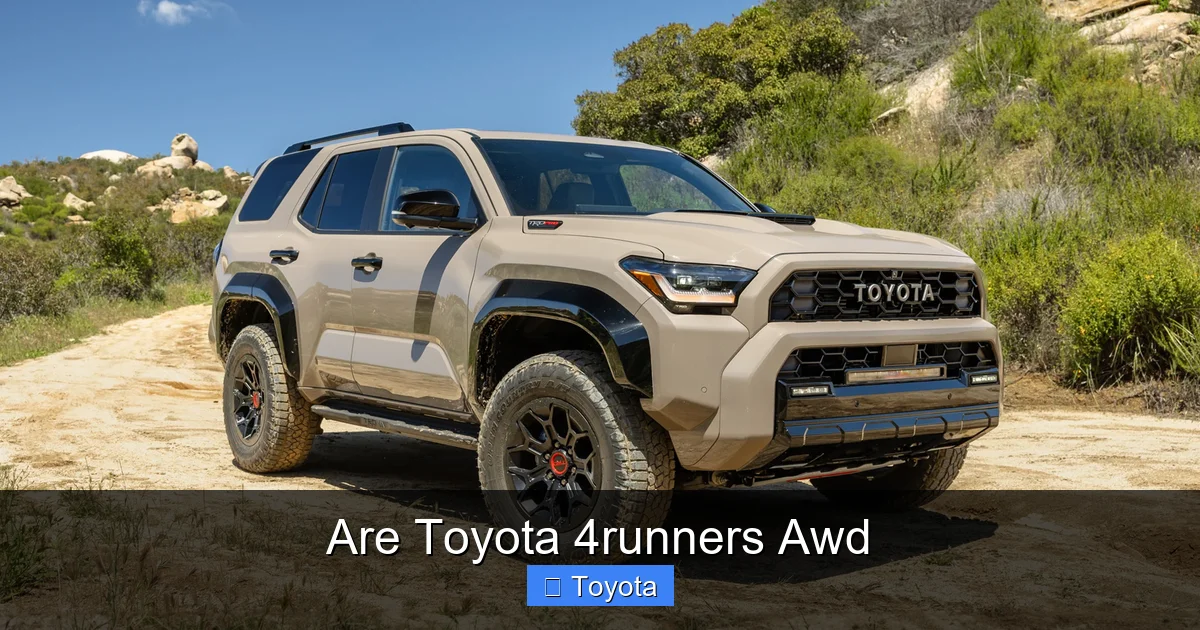
Visual guide about Are Toyota 4runners Awd
Image source: motortrend.com
Before we get into which 4Runners have AWD, it’s important to understand the key differences between all-wheel drive (AWD) and four-wheel drive (4WD). These terms are often used interchangeably, but they refer to very different technologies.
AWD systems are typically automatic and always active. They send power to all four wheels as needed, using sensors to detect wheel slip and redistribute torque. AWD is great for improving traction on slippery roads—like during rain, snow, or light gravel driving. It’s common in crossovers and passenger vehicles designed for comfort and daily use.
On the other hand, 4WD systems are more robust and often manually engaged. They lock the front and rear axles together, ensuring equal power distribution to all four wheels. This makes 4WD ideal for off-road conditions like mud, sand, rocks, and steep inclines. Most 4WD systems also include low-range gearing, which provides extra torque for tough terrain.
Now, here’s where it gets interesting with the 4Runner: Toyota doesn’t use a traditional AWD system on most of its models. Instead, the 4Runner leans heavily into its off-road heritage with 4WD. However, in recent years, Toyota introduced AWD on select trims to appeal to drivers who want better on-road performance without sacrificing the 4Runner’s iconic look and capability.
So, are Toyota 4Runners AWD? Technically, some are—but most are 4WD. Let’s explore which models offer which system.
Which 4Runner Models Come with AWD?
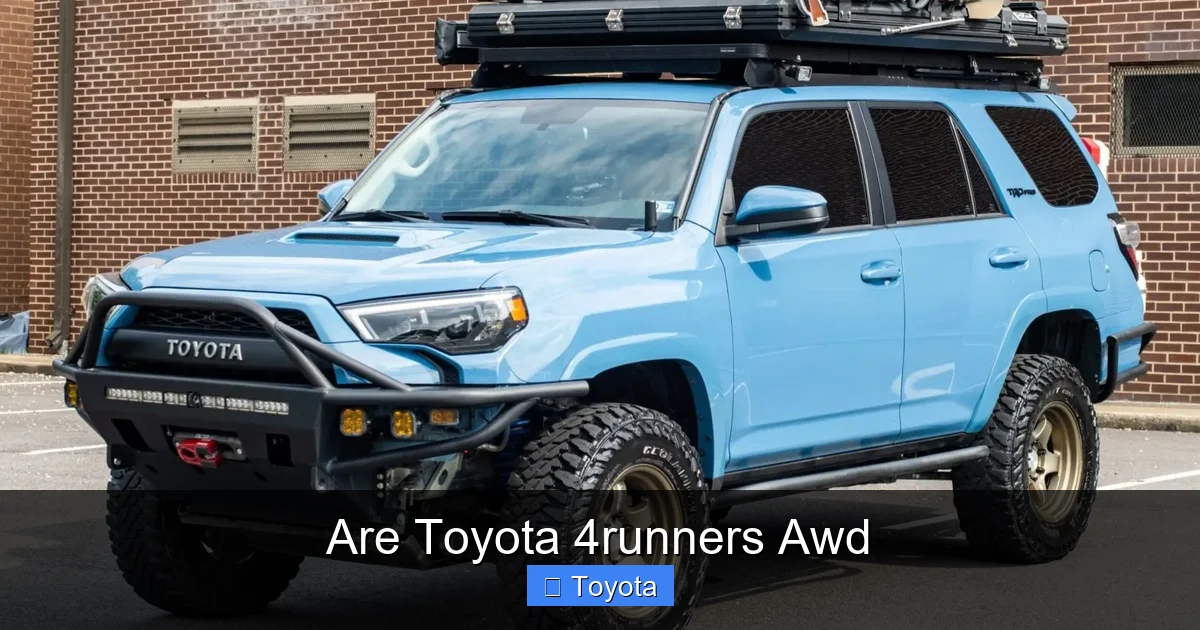
Visual guide about Are Toyota 4runners Awd
Image source: bringatrailer.com
As of the latest model year, only two 4Runner trims are available with an AWD system: the **TRD Sport** and the **Limited**. These models are designed for drivers who want the 4Runner’s bold styling and SUV presence but prioritize on-road comfort and handling over extreme off-roading.
The AWD system in these trims is a full-time AWD setup, meaning it’s always active and doesn’t require driver input. It uses a center differential to split power between the front and rear axles, with torque vectoring to improve cornering and stability. This makes the TRD Sport and Limited excellent choices for drivers in regions with frequent rain, snow, or icy conditions.
For example, if you live in the Pacific Northwest or the Northeast, where winter weather can make roads treacherous, the AWD system in the 4Runner Limited can provide added confidence. It automatically adjusts power to the wheels with the most grip, reducing the chance of skidding or losing control.
However, it’s important to note that this AWD system is not designed for serious off-roading. Unlike 4WD, it lacks low-range gearing and locking differentials. So while it can handle light trails or snowy backroads, it won’t perform well in deep mud, rock crawling, or steep inclines.
In contrast, the **TRD Off-Road**, **TRD Pro**, and **Nightshade** trims come standard with a part-time 4WD system. This system allows drivers to switch between two-wheel drive (2WD) and 4WD High or 4WD Low, depending on conditions. The 4WD Low setting multiplies torque, making it ideal for slow, technical off-road driving.
So, if you’re asking, “Are Toyota 4Runners AWD?” the answer depends on the trim. The TRD Sport and Limited offer AWD, while the rest rely on 4WD. This distinction is key when choosing the right model for your needs.
How the 4Runner’s 4WD System Works
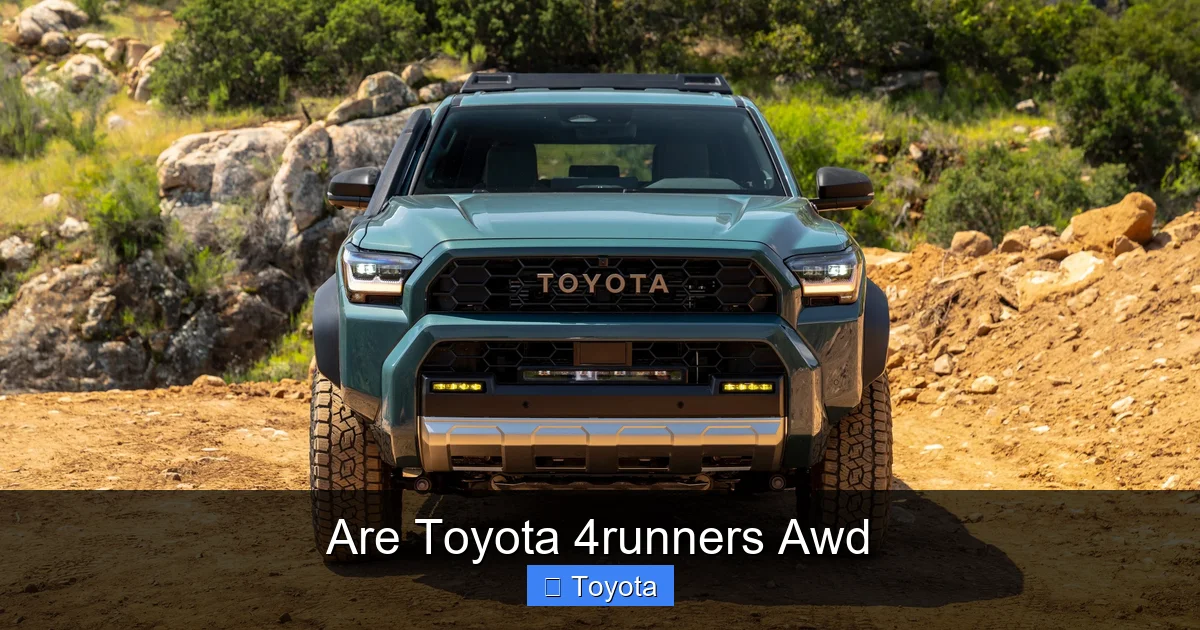
Visual guide about Are Toyota 4runners Awd
Image source: hdcarwallpapers.com
Now that we’ve established that most 4Runners use 4WD, let’s take a closer look at how this system functions and why it’s so highly regarded among off-road enthusiasts.
The 4Runner’s 4WD system is a part-time setup, meaning it’s not always engaged. In normal driving conditions, the vehicle runs in rear-wheel drive (RWD) to improve fuel efficiency and reduce wear on the drivetrain. When traction is needed—like on a muddy trail or snowy road—the driver can manually engage 4WD High using a dial or lever inside the cabin.
In 4WD High, power is sent equally to all four wheels, providing better grip and stability. This mode is ideal for slippery paved roads, gravel, or light off-roading. However, it should not be used on dry pavement, as it can cause drivetrain binding and damage the vehicle.
For more challenging terrain, the 4Runner offers 4WD Low. This mode reduces the vehicle’s speed while significantly increasing torque, allowing it to crawl over rocks, climb steep hills, or power through deep snow. The low-range gearing is what sets true 4WD systems apart from AWD—it gives the 4Runner the muscle to tackle obstacles that would stop most SUVs in their tracks.
One of the standout features of the 4Runner’s 4WD system is the available **locking rear differential** on the TRD Off-Road and TRD Pro trims. When engaged, this locks the rear wheels together, ensuring both turn at the same speed even if one loses traction. This is a game-changer when one wheel is in the air or on a slippery surface.
Another key component is the **Multi-Terrain Select** system, which allows drivers to choose from different driving modes (like Mud & Sand, Loose Rock, or Rock) to optimize traction control and throttle response. Combined with **Crawl Control**—a low-speed cruise control for off-roading—the 4Runner becomes a true trail conqueror.
So while AWD models offer convenience and on-road refinement, the 4WD system in the 4Runner is what makes it a legend among off-road SUVs. It’s built to last, perform, and get you out of (and back from) just about anywhere.
AWD vs. 4WD: Which Is Right for You?
Now that you know which 4Runners have AWD and which have 4WD, the next question is: which one should you choose? The answer depends on how and where you plan to drive.
If you live in a city or suburban area with mild weather and occasional rain or snow, the **AWD-equipped TRD Sport or Limited** might be the better fit. These models offer a smoother ride, better fuel economy, and enhanced stability on wet or icy roads. They’re also quieter and more comfortable for daily commuting, thanks to their focus on on-road performance.
For example, imagine driving through a sudden downpour on the highway. The AWD system in the 4Runner Limited will automatically send more power to the wheels with grip, helping you maintain control without any input from you. It’s like having a co-pilot that’s always watching the road.
On the other hand, if you enjoy weekend adventures—hiking, camping, or exploring unpaved roads—the **4WD models** are the way to go. The TRD Off-Road and TRD Pro are built for rugged terrain, with features like skid plates, reinforced suspension, and advanced traction systems.
Let’s say you’re planning a trip to Moab, Utah, to tackle the famous Hell’s Revenge trail. A 4Runner with 4WD Low, locking differentials, and Crawl Control can handle the steep climbs and rocky descents with ease. An AWD model, while capable on mild trails, would struggle in such extreme conditions.
Fuel economy is another factor to consider. AWD models tend to be slightly more efficient because they don’t have the extra weight and mechanical drag of a transfer case and low-range gears. The 4Runner Limited AWD, for instance, gets around 17 mpg city and 21 mpg highway, while the 4WD models typically achieve 16 mpg city and 19 mpg highway.
Maintenance is also different. AWD systems are generally simpler and require less upkeep—mostly just regular fluid checks. 4WD systems, however, need more attention, including transfer case and differential fluid changes every 30,000 to 60,000 miles.
Ultimately, the choice comes down to your lifestyle. If you value comfort, efficiency, and all-weather confidence, go with AWD. If you crave adventure and need serious off-road capability, 4WD is the clear winner.
Real-World Performance: AWD and 4WD in Action
To truly understand the difference between AWD and 4WD in the 4Runner, let’s look at how each performs in real-world scenarios.
**Scenario 1: Winter Driving in the Mountains**
You’re driving up a snowy mountain pass to a ski resort. The roads are icy, and visibility is low. In a 4Runner Limited with AWD, the system automatically detects wheel slip and redirects power to maintain traction. You feel confident and in control, even on steep, winding roads. The AWD system works seamlessly in the background, giving you peace of mind without requiring any action.
Now, imagine the same drive in a 4Runner TRD Off-Road with 4WD. You manually engage 4WD High before hitting the snow. The vehicle feels more planted, but you must be careful not to use it on dry pavement. The 4WD system provides excellent grip, but it’s less refined than AWD for on-road use. Still, if the road turns to deep snow or slush, the 4WD model will have the edge.
**Scenario 2: Off-Road Adventure**
You’re exploring a remote trail with rocky sections, mud pits, and steep inclines. The 4Runner TRD Pro with 4WD Low and locking differentials crawls over boulders with ease. Crawl Control keeps the speed steady, allowing you to focus on steering. When one wheel lifts off the ground, the locked rear differential ensures the other wheel keeps turning, maintaining forward momentum.
An AWD 4Runner would struggle here. Without low-range gearing or locking differentials, it might get stuck or lose traction. The AWD system is smart, but it’s not built for this level of punishment.
**Scenario 3: Daily Commute**
You’re driving to work on a rainy Tuesday morning. Traffic is heavy, and the roads are slick. The 4Runner TRD Sport with AWD handles the conditions smoothly, with no drama. The system adjusts torque instantly, preventing wheel spin during acceleration. You arrive at the office dry and stress-free.
A 4WD model would also get you there safely, but it might feel heavier and less responsive in stop-and-go traffic. Plus, running in 4WD on dry pavement can cause damage over time.
These examples show that both systems have their strengths. AWD excels in everyday driving and light adverse conditions, while 4WD dominates in off-road and extreme environments.
Maintenance and Longevity of AWD and 4WD Systems
Another important consideration is how well each drivetrain holds up over time. Both AWD and 4WD systems in the 4Runner are built to last, but they require different levels of care.
The AWD system in the TRD Sport and Limited is relatively low maintenance. Toyota recommends checking the transfer case and differential fluids every 30,000 miles, but there are no complex components like a low-range gearbox. This makes AWD models easier and cheaper to maintain in the long run.
The 4WD system, while more durable off-road, requires more attention. The transfer case, front and rear differentials, and driveshafts all need regular fluid changes. Toyota suggests servicing these components every 30,000 to 60,000 miles, depending on driving conditions. Off-road use accelerates wear, so frequent adventurers should stick to the lower end of that range.
Additionally, 4WD systems have more moving parts, which means more potential points of failure. However, Toyota’s reputation for reliability means that with proper maintenance, a 4Runner’s 4WD system can last well over 200,000 miles.
One tip for 4WD owners: always disengage 4WD when returning to paved roads. Running in 4WD on dry pavement can cause “wind-up” in the drivetrain, leading to noise, vibration, and damage. Most drivers switch back to 2WD as soon as they’re back on smooth roads.
For AWD drivers, the system is always active, so there’s no need to worry about engagement. Just keep up with routine maintenance, and the system will serve you well for years.
Conclusion: Making the Right Choice
So, are Toyota 4Runners AWD? The answer is: some are, but most are not. The TRD Sport and Limited trims offer AWD for improved on-road performance and all-weather confidence, while the TRD Off-Road, TRD Pro, and Nightshade models come with a robust 4WD system built for off-road adventures.
Your choice should depend on how you plan to use your 4Runner. If you’re a city dweller who occasionally drives in snow or rain, the AWD models provide a great balance of capability and comfort. But if you’re an outdoor enthusiast who loves exploring trails, camping in remote areas, or tackling challenging terrain, the 4WD models are the clear winner.
Both systems are reliable, well-engineered, and backed by Toyota’s reputation for durability. Whether you choose AWD or 4WD, you’re getting a vehicle that’s built to last and designed to perform.
In the end, the Toyota 4Runner isn’t just about drivetrain technology—it’s about freedom, adventure, and the confidence to go anywhere. Choose the one that matches your journey.
Frequently Asked Questions
Do all Toyota 4Runners have AWD?
No, not all Toyota 4Runners have AWD. Only the TRD Sport and Limited trims come with an AWD system. Most other models, including the TRD Off-Road and TRD Pro, use a 4WD system instead.
Is the 4Runner’s AWD system good for snow?
Yes, the AWD system in the 4Runner TRD Sport and Limited is excellent for snow and icy conditions. It automatically adjusts power to the wheels with the most grip, improving stability and control.
Can you drive a 4Runner with 4WD on the highway?
Yes, but only in 4WD High mode on slippery or unpaved roads. Never use 4WD High or Low on dry pavement, as it can damage the drivetrain. Switch back to 2WD when roads are clear.
Which 4Runner is best for off-roading?
The TRD Off-Road and TRD Pro are the best choices for off-roading. They come with 4WD, low-range gearing, locking differentials, and advanced traction systems designed for tough terrain.
Does AWD improve fuel economy in the 4Runner?
Yes, slightly. AWD models like the Limited tend to be a bit more fuel-efficient than 4WD models because they lack the extra weight and mechanical drag of a transfer case and low-range gears.
How often should I service the 4Runner’s 4WD system?
Toyota recommends servicing the transfer case and differential fluids every 30,000 to 60,000 miles. Off-road drivers should service more frequently, around every 30,000 miles.
