
How Much Does a Dodge Ram 1500 Weigh?

The Dodge Ram 1500 weighs between 4,798 and 5,370 pounds depending on trim, engine, cab style, and bed length. Understanding its weight helps with fuel efficiency, towing, and payload planning for work or recreation.
If you’re eyeing a Dodge Ram 1500—or already own one—you’ve probably wondered: *How much does this thing actually weigh?* It’s not just a curiosity. Knowing your truck’s weight matters for everything from fuel economy and tire wear to towing safely and staying legal on the road. Whether you’re hauling lumber to a job site, towing a camper across state lines, or just trying to understand why your gas mileage dipped after adding a bed liner and toolbox, weight plays a central role.
The good news? The Ram 1500 is engineered to be surprisingly efficient for a full-size pickup, thanks in part to smart design choices and advanced materials. But “efficient” doesn’t mean “light.” This is still a robust, capable truck built to handle serious workloads. And because the Ram 1500 comes in so many configurations—different cabs, beds, engines, drivetrains, and trim levels—its weight isn’t a one-size-fits-all number. A base-model Tradesman with a short bed and V6 will feel noticeably lighter than a loaded Limited with a crew cab, long bed, and Hemi V8. So let’s break it all down, trim by trim, feature by feature, so you can understand exactly what you’re working with.
Key Takeaways
- Weight varies by configuration: The Ram 1500’s curb weight ranges from about 4,800 to over 5,300 pounds based on cab size, bed length, drivetrain, and optional features.
- Engine choice affects weight: Larger engines like the 5.7L HEMI V8 add more weight than the standard 3.6L Pentastar V6, impacting overall vehicle mass.
- Four-wheel drive adds pounds: 4WD models are typically 100–200 pounds heavier than their 2WD counterparts due to additional components like transfer cases and axles.
- Payload capacity is key: Despite its weight, the Ram 1500 offers impressive payload ratings—up to 2,300 pounds—making it ideal for hauling tools, gear, or equipment.
- Towing capacity depends on setup: Heavier configurations may reduce towing ability; always check the specific build’s Gross Combined Weight Rating (GCWR).
- Lightweight materials improve efficiency: Ford and GM use aluminum bodies, but Ram uses high-strength steel strategically to balance durability and weight.
- Know your numbers: Always verify your truck’s actual weight via the door jamb sticker or owner’s manual before loading or towing.
📑 Table of Contents
- Understanding Curb Weight vs. Gross Vehicle Weight
- How Trim Level and Options Affect Weight
- Engine and Drivetrain Impact on Weight
- Cab and Bed Configurations: Size Matters
- Payload and Towing: Why Weight Knowledge Is Critical
- How Ram Compares to Competitors
- Tips for Managing Your Ram 1500’s Weight
- Conclusion
Understanding Curb Weight vs. Gross Vehicle Weight
Before diving into specific numbers, it’s important to clarify two key terms: **curb weight** and **gross vehicle weight (GVW)**. These aren’t interchangeable—and confusing them can lead to overloading your truck or underestimating its capabilities.
**Curb weight** is the weight of the truck when it’s sitting empty, with a full tank of gas, all fluids topped off, and standard equipment installed—but no passengers, cargo, or trailer. Think of it as the “ready-to-drive” weight. For the Ram 1500, this typically ranges from **4,798 pounds** (for a lightweight 2WD Quad Cab with the 3.6L V6) to **5,370 pounds** (for a heavy-duty 4WD Crew Cab with the 5.7L HEMI and max options).
**Gross Vehicle Weight (GVW)**, on the other hand, is the total weight of the truck *plus* everything you load into it—passengers, tools, fuel, groceries, dog, cooler, etc. Your truck’s **Gross Vehicle Weight Rating (GVWR)** is the maximum safe weight it’s designed to handle, as specified by the manufacturer. Exceeding this can damage suspension, brakes, or tires—and void your warranty.
For example, a Ram 1500 with a GVWR of 6,800 pounds and a curb weight of 5,100 pounds has a **payload capacity** of about 1,700 pounds. That’s how much you can safely carry inside the cab and bed. Always check your door jamb sticker (usually on the driver’s side) for your truck’s exact GVWR and curb weight—it’s the most reliable source.
How Trim Level and Options Affect Weight
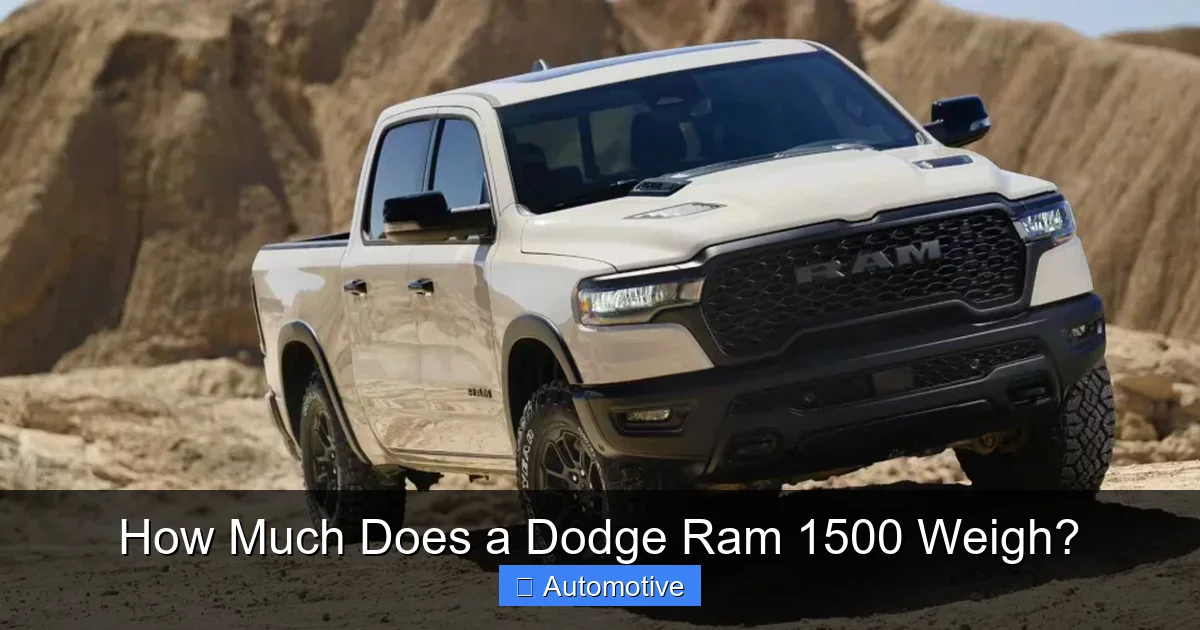
Visual guide about How Much Does a Dodge Ram 1500 Weigh?
Image source: dealerinspire-image-library-prod.s3.us-east-1.amazonaws.com
You might think all Ram 1500s are basically the same under the skin—but options packages, tech features, and trim levels can add significant weight. Let’s look at how different builds stack up.
Base Models: Tradesman and Big Horn
The **Tradesman** is the workhorse of the lineup—no frills, just function. With a 3.6L Pentastar V6, 2WD, and Quad Cab, it’s one of the lightest Rams you can buy. Expect a curb weight around **4,798 to 4,950 pounds**. Step up to the **Big Horn** (essentially a more comfortable Tradesman), and you might add 50–100 pounds due to upgraded interior materials, larger wheels, and extra sound insulation.
Mid-Tier Trims: Laramie and Rebel
The **Laramie** brings luxury touches—leather seats, premium audio, dual-zone climate control—which all add mass. A Laramie Crew Cab 4WD with the 5.7L HEMI can weigh **5,200 to 5,300 pounds**. The **Rebel**, designed for off-roading, includes skid plates, all-terrain tires, and a lifted suspension. These rugged additions push its weight closer to **5,350 pounds**, even without the Hemi.
Top-Tier Trims: Limited and TRX
The **Limited** is the pinnacle of comfort, with massaging seats, panoramic sunroofs, and advanced driver aids—all of which add pounds. A fully loaded Limited can easily hit **5,370 pounds**. Then there’s the **TRX**, the high-performance beast with a supercharged 6.2L HEMI V8. At nearly **6,000 pounds**, the TRX is in a league of its own—but it’s technically a separate model, not a standard Ram 1500 trim.
Optional Features That Add Weight
Even within the same trim, options matter. Here’s what tends to increase weight:
– **4WD system**: Adds 100–200 lbs.
– **Long bed (6’4″) vs. short bed (5’7″)**: ~50–75 lbs more.
– **Crew Cab vs. Quad Cab**: Crew Cabs are heavier due to larger rear doors and extended frame.
– **Sunroof or panoramic roof**: Can add 30–50 lbs.
– **Towing packages**: Include heavier-duty cooling, brakes, and sometimes a reinforced frame—adding 50–100 lbs.
– **Premium audio systems**: Subwoofers and amplifiers aren’t light!
So if you’re comparing two seemingly identical trucks, always check the build sheet. That “premium convenience group” might look nice—but it could be costing you payload capacity.
Engine and Drivetrain Impact on Weight
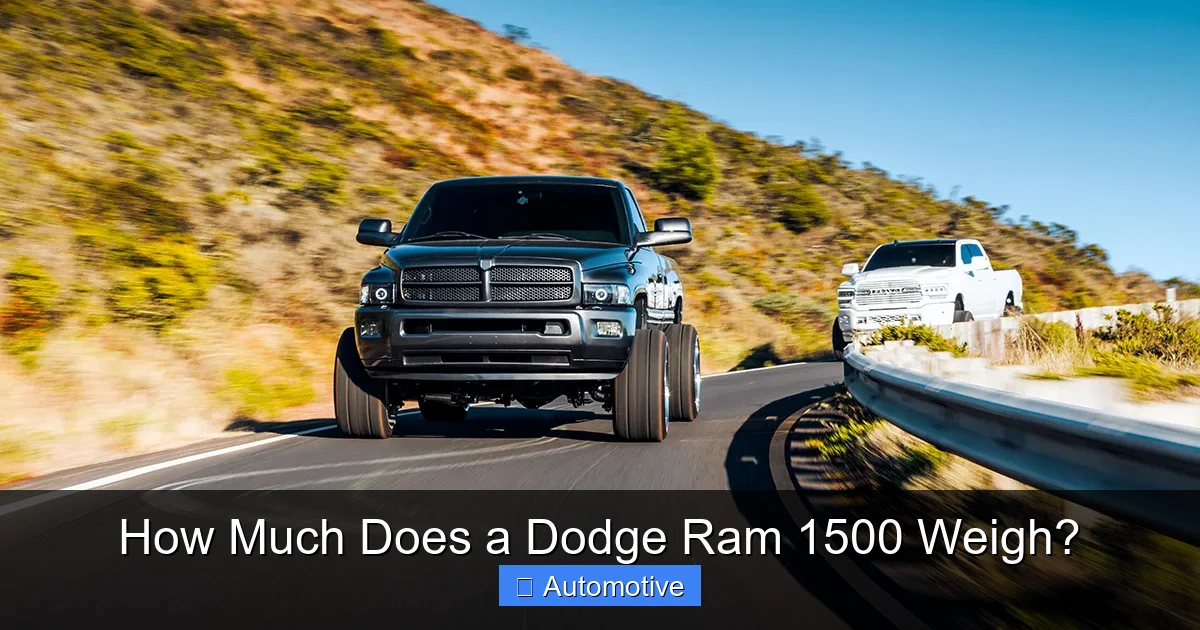
Visual guide about How Much Does a Dodge Ram 1500 Weigh?
Image source: agtauto.com
Your engine choice isn’t just about power—it directly affects how much your Ram 1500 weighs.
3.6L Pentastar V6 (Standard)
This is the base engine, producing 305 horsepower. It’s relatively lightweight and helps keep the truck’s overall mass down. Most V6 models sit comfortably under 5,000 pounds, especially in 2WD configurations.
5.7L HEMI V8 (Optional)
The legendary Hemi adds serious muscle—395 horsepower—but also significant weight. The engine itself is heavier, and it often comes paired with heavier-duty transmissions and cooling systems. Expect a **100- to 150-pound increase** compared to the V6. That might not sound like much, but it eats into your payload and can slightly reduce fuel economy.
3.0L EcoDiesel V6 (Discontinued but Still Relevant)
Ram offered a diesel option for several years, which delivered excellent torque and highway mileage. However, diesel engines are inherently heavier due to reinforced blocks and emissions equipment. A diesel Ram 1500 could weigh **50–100 pounds more** than its gas counterpart—even with the same trim and cab.
4WD vs. 2WD
This is one of the biggest weight differentiators. A 4WD system includes a transfer case, front differential, extra driveshaft, and often a heavier suspension. The result? A typical 4WD Ram 1500 is **120 to 200 pounds heavier** than an identical 2WD model. If you don’t need off-road capability, sticking with 2WD can save weight—and improve fuel efficiency.
Cab and Bed Configurations: Size Matters

Visual guide about How Much Does a Dodge Ram 1500 Weigh?
Image source: allaboutweigh.com
The Ram 1500 offers three cab styles and two bed lengths, each affecting weight and utility.
Regular Cab
Discontinued after the 2018 model year, the Regular Cab was the lightest option—ideal for fleet buyers or those who prioritized bed space over passenger room. Today, it’s rare on the used market.
Quad Cab
With smaller rear doors and limited rear legroom, the Quad Cab strikes a balance between passenger space and bed length. It’s lighter than the Crew Cab by about **80–120 pounds**, making it a smart choice if you occasionally carry passengers but want to maximize payload.
Crew Cab
The Crew Cab is the most popular configuration, offering full-size rear doors and spacious seating for five. But that comfort comes at a cost: it’s the heaviest cab style. A Crew Cab adds **100+ pounds** over a Quad Cab due to the extended frame and larger body structure.
Bed Length: 5’7″ vs. 6’4″
The standard short bed (5’7″) is lighter and improves maneuverability. The long bed (6’4″) offers more hauling space but adds **50–75 pounds** and can affect turning radius and parking ease. Choose based on your needs—not just aesthetics.
Payload and Towing: Why Weight Knowledge Is Critical
Knowing your Ram 1500’s weight isn’t just academic—it’s essential for safe and legal operation.
Payload Capacity
Payload is the difference between your truck’s GVWR and its curb weight. The Ram 1500 excels here, with payload ratings ranging from **1,600 to over 2,300 pounds**, depending on configuration. That means you can legally carry a full load of construction materials, firewood, or camping gear without stressing the chassis.
But remember: payload includes *everything*—passengers, fuel, accessories, and cargo. If you’re hauling heavy items, subtract the weight of your passengers and gear before loading the bed. Overloading can cause premature wear on shocks, springs, and tires—and increase stopping distance.
Towing Capacity
Towing is where weight gets tricky. While the Ram 1500 can tow up to **12,750 pounds** (with the right setup), heavier trucks often have *lower* towing capacities because they’re closer to their GVWR when loaded. For example, a Crew Cab 4WD with the Hemi may tow less than a lighter Quad Cab 2WD with the same engine—simply because there’s less “room” left under the weight limit.
Always consult your owner’s manual or use Ram’s online towing guide to find your specific truck’s max towing rating. And never exceed the **Gross Combined Weight Rating (GCWR)**—the total weight of truck, trailer, cargo, and passengers combined.
Real-World Example
Let’s say you have a 2023 Ram 1500 Big Horn Crew Cab 4WD with the 5.7L HEMI. Its curb weight is ~5,250 lbs, and GVWR is 6,900 lbs—so payload is ~1,650 lbs. You load two passengers (300 lbs), a toolbox (100 lbs), and 1,000 lbs of gravel in the bed. Total added weight: 1,400 lbs. You’re still under payload—but if you hook up a 9,000-lb travel trailer, you must ensure the *combined* weight (truck + trailer + cargo) doesn’t exceed the GCWR (usually around 14,000–15,000 lbs for this setup).
How Ram Compares to Competitors
So how does the Ram 1500 stack up against rivals like the Ford F-150, Chevrolet Silverado 1500, and GMC Sierra 1500?
The **Ford F-150** uses an aluminum body, making it significantly lighter—some configurations weigh under 4,500 lbs. That helps with fuel economy and payload. The **Silverado/Sierra** twins use a mix of steel and aluminum, landing them in the 4,900–5,200 lb range. The Ram 1500 sits squarely in the middle—heavier than the F-150 but often more refined in ride quality and interior design.
Interestingly, Ram’s use of high-strength steel allows it to maintain strength without going overboard on weight. While it may not be the lightest, it’s not the heaviest either—and many owners appreciate the solid, planted feel on the road.
Tips for Managing Your Ram 1500’s Weight
Whether you’re buying new or optimizing your current truck, here are practical tips:
– **Check the door jamb sticker**: This lists your exact curb weight, GVWR, and tire pressures. Keep it handy.
– **Weigh your loaded truck**: Visit a truck stop or landfill with scales to confirm real-world weight.
– **Avoid unnecessary options**: Skip the sunroof or premium audio if you prioritize payload.
– **Distribute weight evenly**: Place heavy items low and centered in the bed to maintain stability.
– **Upgrade tires if needed**: Higher-load-range tires can handle more weight safely.
– **Consider a weight distribution hitch**: For heavy trailers, this improves control and reduces sway.
Conclusion
So, how much does a Dodge Ram 1500 weigh? The short answer: **between 4,800 and 5,370 pounds**, depending on how it’s built. But the real story is in the details—engine, drivetrain, cab, bed, and options all play a role. Understanding your truck’s weight helps you maximize its capabilities while staying safe and legal.
Whether you’re using your Ram for work, play, or daily driving, knowing these numbers empowers smarter decisions. From choosing the right configuration at the dealership to loading your bed responsibly, weight awareness is a hallmark of a knowledgeable truck owner. And with the Ram 1500’s blend of strength, comfort, and innovation, you’re driving one of the most capable pickups on the road—just make sure you know what it’s carrying.
Frequently Asked Questions
What is the lightest Ram 1500 configuration?
The lightest Ram 1500 is typically a 2WD Quad Cab with the 3.6L V6 engine and short bed, weighing around 4,798 pounds. This setup minimizes weight while maintaining core functionality.
Does 4WD make the Ram 1500 much heavier?
Yes—4WD adds roughly 100 to 200 pounds due to the transfer case, front axle, and additional drivetrain components. This reduces payload slightly but improves traction.
Can I increase my Ram 1500’s payload capacity?
Not legally. Payload is determined by factory engineering. However, you can optimize by removing unnecessary accessories, using lighter materials, or upgrading to higher-capacity suspension (if compliant with regulations).
Why does my Ram 1500 feel heavier than my friend’s F-150?
The Ford F-150 uses an aluminum body, making it lighter than the steel-bodied Ram 1500. Even with similar specs, the Ram may feel more substantial—and that’s by design.
How do I find my exact Ram 1500’s weight?
Check the tire and loading information sticker on the driver’s door jamb. It lists curb weight, GVWR, and recommended tire pressures specific to your truck.
Does the Ram 1500 TRX weigh more than a standard Ram 1500?
Absolutely. The TRX weighs nearly 6,000 pounds due to its supercharged V8, reinforced chassis, and off-road upgrades—making it significantly heavier than any standard Ram 1500 trim.
