
Where Are Toyota Rav4 Made

The Toyota RAV4 is manufactured in multiple countries worldwide, including the U.S., Japan, Canada, and China, ensuring global availability and high-quality standards. Each plant follows Toyota’s rigorous production system, contributing to the RAV4’s reputation for reliability and performance across different markets.
If you’ve ever shopped for a Toyota RAV4—or even just admired one on the road—you might have wondered: *Where are Toyota RAV4s actually made?* It’s a great question, especially in today’s globalized automotive industry, where cars are designed in one country, engineered in another, and assembled in a third. The RAV4, Toyota’s best-selling SUV, is a perfect example of this international collaboration. From its humble beginnings in Japan to its current status as a global icon, the RAV4’s manufacturing footprint spans multiple continents.
What makes the RAV4 so special isn’t just its rugged design, fuel efficiency, or advanced safety features—it’s also the fact that it’s built with care in some of the world’s most advanced automotive plants. Whether you’re driving a RAV4 in Los Angeles, Toronto, Tokyo, or Shanghai, chances are it rolled off an assembly line that follows Toyota’s legendary production system. This system, known as the Toyota Production System (TPS), emphasizes efficiency, quality, and continuous improvement—principles that have made Toyota a leader in the automotive world for decades.
In this article, we’ll take you on a journey across the globe to explore exactly where the Toyota RAV4 is manufactured. We’ll dive into the key production facilities, discuss how regional demand influences where your RAV4 is built, and explain what it means for quality, pricing, and availability. Whether you’re a potential buyer, a car enthusiast, or just curious about global manufacturing, this guide will give you a clear picture of the RAV4’s origins.
Key Takeaways
- Global Manufacturing Network: The Toyota RAV4 is produced in several countries, including the United States, Japan, Canada, and China, allowing Toyota to meet regional demand efficiently.
- U.S. Production Hub: The majority of North American RAV4s are built at Toyota’s plant in Georgetown, Kentucky, one of the company’s largest and most advanced facilities.
- Japanese Craftsmanship: The original RAV4 was developed and first produced in Japan, and some models—especially hybrid variants—are still manufactured there for global export.
- Canadian Contribution: Toyota’s plant in Woodstock, Ontario, plays a key role in producing RAV4s for the Canadian and U.S. markets, emphasizing North American integration.
- Chinese Production for Local Demand: In China, the RAV4 is assembled through a joint venture with FAW Group, tailored specifically for the Chinese automotive market.
- Quality Consistency: Despite being made in different countries, all RAV4s adhere to Toyota’s strict global quality standards, ensuring reliability and durability.
- Hybrid Model Variations: Hybrid RAV4s are primarily manufactured in Japan and the U.S., with some components sourced globally to support electrified vehicle production.
📑 Table of Contents
Global Manufacturing Strategy of Toyota
Toyota doesn’t just build cars—it builds them *everywhere*. The company’s global manufacturing strategy is one of the most sophisticated in the automotive industry. Rather than relying on a single production hub, Toyota operates a network of over 50 manufacturing facilities in more than 27 countries. This decentralized approach allows the company to respond quickly to regional market demands, reduce shipping costs, and minimize supply chain disruptions.
The RAV4, as one of Toyota’s flagship models, benefits greatly from this strategy. By producing the SUV in multiple countries, Toyota ensures that customers in North America, Asia, Europe, and beyond can get their hands on a RAV4 without long wait times or excessive import fees. This also helps Toyota maintain competitive pricing and meet local regulations—such as emissions standards or safety requirements—more effectively.
One of the core principles behind Toyota’s global production is *localization*. This means building vehicles close to where they’ll be sold. For example, RAV4s sold in the U.S. are primarily made in Kentucky, while those in Canada come from Ontario. In China, the RAV4 is produced locally through a joint venture, allowing Toyota to cater to Chinese consumer preferences and avoid high import tariffs.
This strategy also supports Toyota’s sustainability goals. By reducing the need for long-distance shipping, the company lowers its carbon footprint. Additionally, local production often means using regional suppliers, which strengthens local economies and reduces logistical complexity.
Why Multiple Production Locations Matter
Having multiple production locations isn’t just about convenience—it’s a smart business move. When a natural disaster, political issue, or supply chain disruption affects one plant, Toyota can shift production to another facility. For instance, during the 2011 earthquake in Japan, Toyota temporarily increased RAV4 production in North America to meet global demand.
Moreover, different markets have different preferences. North American buyers often prefer larger vehicles with V6 engines (though the RAV4 now uses four-cylinder engines), while European and Asian markets lean toward smaller, more fuel-efficient models. By producing region-specific versions, Toyota can tailor features, trim levels, and even design elements to local tastes.
For example, the RAV4 Hybrid is especially popular in the U.S. and Japan, so those markets receive a higher volume of hybrid models. In contrast, China’s RAV4 may include different infotainment systems or interior materials to align with local consumer expectations.
United States: The Heart of RAV4 Production

Visual guide about Where Are Toyota Rav4 Made
Image source: suvtale.com
When it comes to RAV4 production, the United States plays a starring role—especially for North American customers. The majority of RAV4s sold in the U.S. and Canada are manufactured at Toyota’s sprawling plant in Georgetown, Kentucky. This facility, often referred to as “Toyota Motor Manufacturing, Kentucky” (TMMK), is one of the largest and most advanced automotive plants in the world.
Opened in 1988, TMMK has grown into a powerhouse of efficiency and innovation. It currently employs over 8,000 people and produces several Toyota models, including the Camry, Avalon, and—most importantly—the RAV4. In fact, the RAV4 is one of the top-selling vehicles at this plant, with hundreds of thousands of units rolling off the assembly line each year.
Georgetown, Kentucky: A Production Powerhouse
The Georgetown plant is a marvel of modern manufacturing. It covers over 8 million square feet and features state-of-the-art robotics, quality control systems, and lean production techniques. The facility is designed to minimize waste and maximize output, aligning perfectly with Toyota’s philosophy of continuous improvement.
One of the standout features of TMMK is its commitment to sustainability. The plant uses solar panels, recycles nearly all of its waste, and has achieved zero landfill status. It also employs a closed-loop water system, reducing water consumption significantly. These eco-friendly practices reflect Toyota’s broader goal of achieving carbon neutrality by 2050.
In terms of RAV4 production, the Kentucky plant handles everything from stamping and welding to painting and final assembly. The process is highly automated but still relies on skilled human workers for quality checks and complex tasks. Each RAV4 undergoes rigorous testing before it leaves the plant, ensuring it meets Toyota’s high standards.
Why the U.S. Is a Key Production Hub
There are several reasons why Toyota chose the U.S.—and specifically Kentucky—as a major RAV4 production site. First, proximity to the North American market reduces shipping costs and delivery times. Second, the U.S. has a strong automotive supply chain, making it easier to source parts locally. Third, American consumers have a strong preference for SUVs, and the RAV4 fits perfectly into that demand.
Additionally, producing vehicles in the U.S. helps Toyota avoid import tariffs and trade restrictions. This is especially important given the complex trade relationships between the U.S., China, and other countries. By manufacturing in Kentucky, Toyota can offer competitive pricing while maintaining profitability.
Japan: The Birthplace of the RAV4
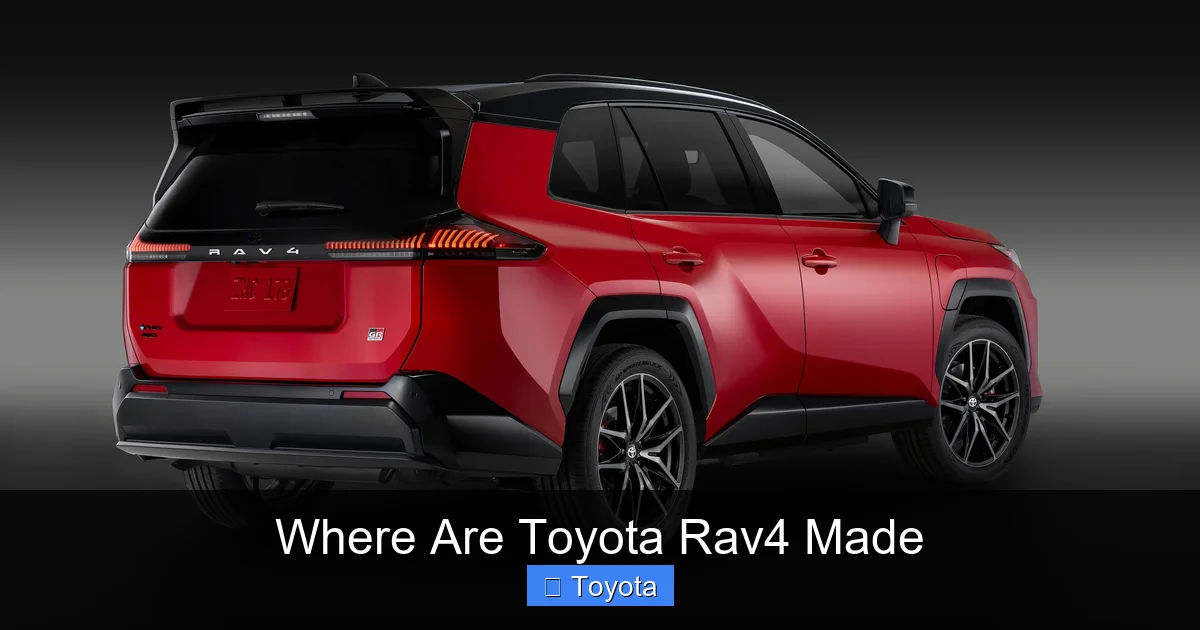
Visual guide about Where Are Toyota Rav4 Made
Image source: images.caricos.com
While the U.S. is a major production hub, we can’t talk about where the Toyota RAV4 is made without paying homage to its roots: Japan. The RAV4 was first introduced in 1994 as a compact crossover SUV, and it was developed and initially produced in Japan. The name “RAV4” stands for “Recreational Active Vehicle with 4-wheel Drive,” a nod to its versatile, adventure-ready design.
Toyota’s headquarters and primary R&D facilities are located in Toyota City, Aichi Prefecture, Japan. This is where the RAV4 was conceived, engineered, and first built. Even today, Japan remains a critical production site—especially for hybrid and high-end RAV4 models.
Toyota City and the Tahara Plant
The main RAV4 production facility in Japan is the Tahara plant, located in Aichi Prefecture. This plant is known for its precision engineering and high-quality output. It produces a wide range of Toyota vehicles, including the Lexus LS and the RAV4, often for export to global markets.
The Tahara plant is particularly important for hybrid RAV4 production. Many of the hybrid components—such as the electric motor and battery pack—are manufactured in Japan and then shipped to other plants or assembled locally. This ensures consistency in hybrid technology and performance.
The Role of Japanese Craftsmanship
Japanese manufacturing is renowned for its attention to detail, and the RAV4 is no exception. Even as production has expanded globally, the core design and engineering principles remain rooted in Japanese craftsmanship. This includes rigorous quality control, meticulous assembly processes, and a focus on long-term durability.
For example, every RAV4 built in Japan undergoes extensive testing, including simulated driving conditions, climate resistance checks, and safety evaluations. This level of scrutiny ensures that even the smallest defect is caught before the vehicle reaches the customer.
Moreover, Japan serves as a testing ground for new RAV4 features and technologies. Innovations like Toyota Safety Sense, advanced infotainment systems, and hybrid powertrains are often developed and refined in Japan before being rolled out globally.
Canada: Supporting North American Demand
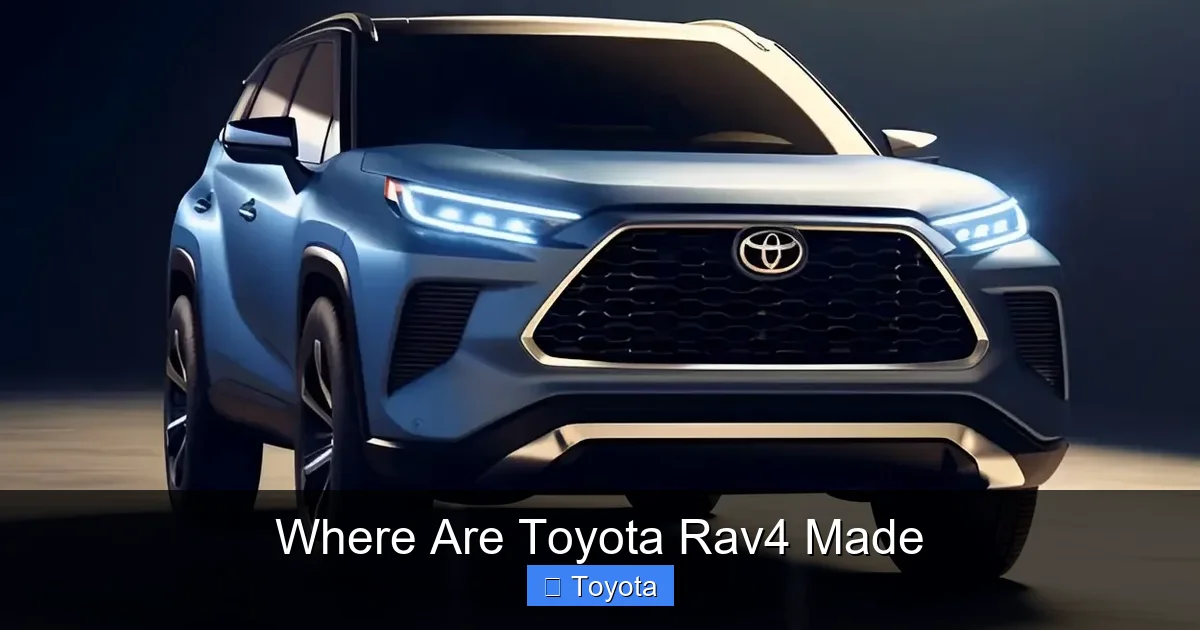
Visual guide about Where Are Toyota Rav4 Made
Image source: i0.wp.com
Canada may be smaller than the U.S., but it plays a vital role in Toyota’s North American production strategy. The Toyota Motor Manufacturing Canada (TMMC) plant in Woodstock, Ontario, is one of the most efficient and respected automotive facilities in the region. It has been producing the RAV4 since 2008 and currently builds hundreds of thousands of units annually.
Woodstock, Ontario: A Model of Efficiency
The Woodstock plant is known for its lean manufacturing processes and high employee satisfaction. It employs around 3,000 workers and operates with a strong focus on quality and teamwork. The facility uses advanced robotics and real-time data monitoring to optimize production and minimize downtime.
One of the unique aspects of the Woodstock plant is its flexibility. It can quickly switch between different RAV4 trim levels and configurations based on market demand. This agility allows Toyota to respond to changing consumer preferences—such as increased demand for hybrid models or all-wheel drive—without major disruptions.
Cross-Border Integration
The Woodstock plant works closely with the Georgetown facility in Kentucky. Parts and components are often shared between the two plants, and vehicles produced in Canada are regularly sold in the U.S. This cross-border integration strengthens Toyota’s North American supply chain and ensures a steady flow of RAV4s to dealerships across the continent.
Additionally, producing RAV4s in Canada helps Toyota meet Canadian content requirements and avoid import duties under trade agreements like the USMCA (United States-Mexico-Canada Agreement). This makes the RAV4 more affordable for Canadian buyers while supporting local jobs and the economy.
China: Local Production for a Growing Market
China is the world’s largest automotive market, and Toyota has made significant investments to capture a share of it. To meet local demand and comply with Chinese regulations, Toyota produces the RAV4 in China through a joint venture with FAW Group (First Automobile Work). This partnership allows Toyota to build vehicles locally while navigating China’s complex automotive policies.
FAW-Toyota Joint Venture
The FAW-Toyota joint venture operates several plants across China, with RAV4 production centered in Tianjin. These facilities are equipped with modern assembly lines and follow Toyota’s global quality standards. However, the Chinese RAV4 may include region-specific features, such as different infotainment systems, interior materials, or even slight design tweaks to appeal to Chinese consumers.
For example, Chinese buyers often prioritize luxury features and advanced technology, so the RAV4 sold in China may come with larger touchscreens, premium audio systems, or enhanced connectivity options. These adaptations show how Toyota tailors its vehicles to local tastes without compromising on core quality.
Why Local Production Matters in China
Producing the RAV4 in China offers several advantages. First, it avoids high import tariffs, making the vehicle more affordable for Chinese consumers. Second, it allows Toyota to respond quickly to market trends and regulatory changes. Third, it supports local employment and strengthens Toyota’s presence in a highly competitive market.
Moreover, local production helps Toyota build stronger relationships with Chinese suppliers and government agencies. This is crucial for long-term success in a market that values domestic manufacturing and technological innovation.
Quality and Consistency Across All Plants
One of the most impressive aspects of Toyota’s global production network is the consistency of quality across all facilities. Whether your RAV4 is made in Kentucky, Ontario, Tahara, or Tianjin, it undergoes the same rigorous testing and quality control processes.
Toyota Production System (TPS)
At the heart of this consistency is the Toyota Production System (TPS), a manufacturing philosophy that emphasizes efficiency, waste reduction, and continuous improvement. TPS is implemented in every Toyota plant worldwide, ensuring that every vehicle—regardless of location—meets the same high standards.
Key elements of TPS include *just-in-time* production, where parts are delivered exactly when needed, and *jidoka*, which allows machines to detect defects and stop production automatically. These principles help prevent errors, reduce waste, and maintain quality.
Global Quality Standards
Toyota also uses a global quality management system that monitors performance across all plants. Regular audits, employee training, and customer feedback loops ensure that any issues are identified and corrected quickly. This commitment to quality is one reason why the RAV4 consistently ranks high in reliability surveys and customer satisfaction reports.
For example, J.D. Power and Consumer Reports often place the RAV4 among the top SUVs for dependability. This reputation is built on the foundation of consistent manufacturing practices, no matter where the vehicle is made.
Hybrid and Electric Future of the RAV4
As the automotive industry shifts toward electrification, Toyota is adapting its RAV4 production to meet new demands. The RAV4 Hybrid is now one of the most popular variants, and Toyota is investing heavily in hybrid and plug-in hybrid technology.
Hybrid Production Focus
Hybrid RAV4s are primarily manufactured in Japan and the U.S., where the necessary components—like batteries and electric motors—are readily available. The Kentucky plant, for instance, has been upgraded to handle hybrid assembly, including specialized training for workers and new equipment for battery installation.
Toyota is also developing a plug-in hybrid version of the RAV4, known as the RAV4 Prime. This model offers over 40 miles of all-electric range and is produced in limited quantities, primarily in the U.S. and Japan. As demand grows, Toyota may expand plug-in hybrid production to other facilities.
Future Manufacturing Plans
Looking ahead, Toyota plans to increase its focus on electrified vehicles. The company aims for 50% of its global sales to come from electrified models by 2025. This means more hybrid and electric RAV4s will be produced in the coming years, with potential new plants or upgrades to existing facilities.
Additionally, Toyota is exploring battery production in the U.S. to support its electrification goals. This could lead to even more localized production of hybrid RAV4s, reducing reliance on imported components and further strengthening the North American supply chain.
Conclusion
So, where are Toyota RAV4s made? The answer is: *all over the world*. From the advanced plants in Kentucky and Ontario to the precision facilities in Japan and China, the RAV4 is a truly global vehicle. Each production site brings its own strengths—whether it’s American efficiency, Japanese craftsmanship, Canadian reliability, or Chinese market savvy—but all are united by Toyota’s commitment to quality, innovation, and customer satisfaction.
When you drive a RAV4, you’re not just driving a car—you’re experiencing the result of a global collaboration. Whether it was built in the U.S., Japan, Canada, or China, your RAV4 carries the same promise of durability, safety, and performance. And as Toyota continues to evolve with the times—embracing hybrids, plug-ins, and sustainable manufacturing—the RAV4’s legacy as a global icon is only set to grow.
So the next time you see a RAV4 on the road, take a moment to appreciate its journey. From design studios in Japan to assembly lines in Kentucky, from supplier networks in China to dealerships in your hometown—it’s a testament to what’s possible when innovation meets global teamwork.
Frequently Asked Questions
Where is the Toyota RAV4 primarily manufactured?
The Toyota RAV4 is primarily manufactured in the United States at the Georgetown, Kentucky plant, which produces the majority of RAV4s for North America. Additional production occurs in Japan, Canada, and China to meet regional demand.
Are RAV4s made in the USA reliable?
Yes, RAV4s made in the USA are highly reliable. The Georgetown, Kentucky plant follows Toyota’s strict global quality standards, ensuring that vehicles built there meet the same high levels of durability and performance as those made elsewhere.
Is the RAV4 Hybrid made in Japan?
Many RAV4 Hybrids are manufactured in Japan, especially for export to global markets. However, hybrid models are also produced in the U.S., particularly at the Kentucky plant, to meet North American demand.
Does Toyota make RAV4s in Canada?
Yes, Toyota produces the RAV4 at its Woodstock, Ontario plant. This facility supplies RAV4s to both the Canadian and U.S. markets, playing a key role in Toyota’s North American production strategy.
Why does Toyota make the RAV4 in multiple countries?
Toyota produces the RAV4 in multiple countries to meet regional demand, reduce shipping costs, avoid import tariffs, and respond quickly to market changes. This global strategy also enhances supply chain resilience and supports local economies.
Are RAV4s made in China different from those made in the U.S.?
While all RAV4s meet Toyota’s global quality standards, those made in China may include region-specific features like different infotainment systems or interior materials to suit local preferences. The core design and reliability remain consistent.