How Much Is a 2003 Honda Civic Worth?

The value of a 2003 Honda Civic depends on trim, mileage, condition, and location, typically ranging from $1,500 to $4,500. Well-maintained models with low mileage can fetch higher prices, while high-mileage or damaged cars sell for less. Knowing what affects value helps buyers and sellers make smart decisions.
[FEATURED_IMAGE_PLACEHolder]
If you’ve ever shopped for a used car—or even just browsed online listings—you’ve probably noticed that prices can vary wildly for the same model year. Take the 2003 Honda Civic, for example. You might see one listed for $2,000 and another for $4,200, both claiming to be in “great condition.” So, how much is a 2003 Honda Civic really worth?
The short answer? It depends. But don’t worry—we’re here to break it all down. Whether you’re looking to buy, sell, or just curious about your current Civic’s value, this guide will walk you through everything that affects pricing. From trim levels and mileage to maintenance records and regional market trends, we’ll cover the key factors so you can make an informed decision.
The 2003 Honda Civic is a classic example of Japanese reliability and practicality. Launched during a time when compact cars were gaining popularity for their fuel efficiency and low ownership costs, the seventh-generation Civic (1996–2000) gave way to the eighth generation in 2001, with the 2003 model benefiting from refinements in design, safety, and technology. It came in several body styles—sedan, coupe, and even a hybrid version starting in 2003—making it versatile for different lifestyles.
But beyond its reputation, the real question is: what’s it worth today? With over 20 years on the road, many 2003 Civics have racked up serious mileage. Yet, thanks to Honda’s legendary durability, plenty are still running strong. That longevity is both a blessing and a challenge when it comes to pricing. On one hand, a well-cared-for Civic can be a bargain. On the other, high mileage, wear and tear, and outdated tech can drag down its value.
Key Takeaways
- Price Range: Most 2003 Honda Civics sell between $1,500 and $4,500, depending on condition and mileage.
- Mileage Matters: Lower mileage (under 100,000 miles) significantly increases value, while high mileage (over 150,000) lowers it.
- Trim Level Impact: Higher trims like the EX and LX hold more value than base DX models due to added features.
- Maintenance History: A documented service record boosts resale value and buyer confidence.
- Market Trends: Demand for fuel-efficient, reliable used cars keeps Civic values relatively stable.
- Location Influence: Prices vary by region—urban areas and mild climates often see higher values.
- Modifications Hurt Value: Aftermarket parts or non-factory upgrades usually reduce resale potential.
📑 Table of Contents
Understanding the 2003 Honda Civic’s Market Value
So, how do you figure out how much a 2003 Honda Civic is worth? The first step is understanding the typical price range. According to recent data from Kelley Blue Book (KBB), Edmunds, and private sale listings, most 2003 Honda Civics fall between $1,500 and $4,500. That’s a wide window—and it’s intentional. This range reflects the huge variation in condition, mileage, and features.
For example, a base-model DX sedan with 180,000 miles, minor cosmetic flaws, and no service history might sell for around $1,500 privately. Meanwhile, a well-maintained EX coupe with 85,000 miles, a clean title, and full maintenance records could easily command $4,000 or more. The difference isn’t just about age—it’s about how the car has been treated over two decades.
One of the biggest factors in determining value is the vehicle’s condition. A Civic that’s been garaged, regularly serviced, and driven gently will always be worth more than one that’s been neglected or used as a daily commuter in harsh conditions. Rust, especially in snowy regions where road salt is used, can significantly reduce value. Similarly, interior wear—like cracked dashboards, worn seats, or malfunctioning electronics—can turn off buyers and lower offers.
Another key element is the title status. A clean title means the car hasn’t been declared a total loss by an insurance company. Salvage or rebuilt titles, often resulting from accidents or flood damage, can cut a car’s value in half—even if it runs perfectly. Always check the vehicle history report (like Carfax or AutoCheck) before buying or pricing your Civic.
Private Sale vs. Trade-In vs. Dealer Retail
It’s also important to understand the different pricing contexts. The value of a 2003 Honda Civic isn’t a single number—it changes based on who’s buying or selling.
When you sell privately, you typically get the highest return. Private buyers are often looking for reliable, low-cost transportation and are willing to pay more for a well-maintained car. For instance, a 2003 Civic with 100,000 miles in good condition might sell for $3,200 privately.
Trade-in values, on the other hand, are usually lower. Dealerships need to make a profit when they resell the car, so they’ll offer less—often 10% to 20% below private sale prices. The same Civic might get a $2,500 trade-in offer.
Dealer retail prices are the highest, but that’s because the car has been inspected, reconditioned, and comes with a limited warranty. You might see a 2003 Civic listed at a dealership for $4,500, but that includes prep work and overhead costs.
Knowing these differences helps you set realistic expectations. If you’re selling, a private sale usually nets the most money—but it requires more effort. If you’re buying, a private seller might offer better value than a dealer, but you’ll need to do more due diligence.
Factors That Affect the Value of a 2003 Honda Civic
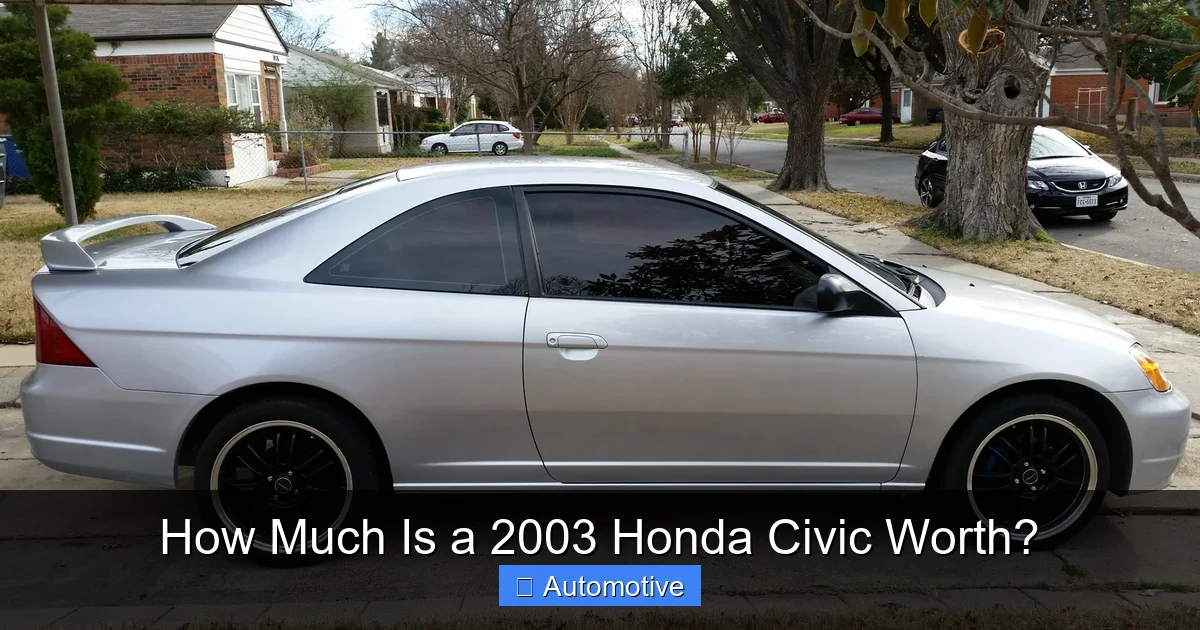
Visual guide about How Much Is a 2003 Honda Civic Worth?
Image source: static.cargurus.com
Now that we’ve covered the basics, let’s dive into the specific factors that influence how much a 2003 Honda Civic is worth. These aren’t just details—they’re the real drivers of price.
Mileage: The Biggest Price Determinant
Mileage is arguably the most important factor. The average driver puts about 12,000 to 15,000 miles on a car each year. So, a 2003 Civic with 120,000 miles is considered average. But every mile over that starts to chip away at value.
Here’s a rough breakdown:
– Under 80,000 miles: Excellent condition, high demand, premium pricing.
– 80,000–120,000 miles: Good condition, fair market value.
– 120,000–150,000 miles: Moderate wear, lower pricing.
– Over 150,000 miles: High mileage, significant depreciation.
For example, a 2003 Civic EX with 75,000 miles might sell for $4,200, while the same model with 160,000 miles might only get $2,000—even if both are running well. That’s because buyers worry about upcoming repairs, such as timing belt replacements, transmission issues, or engine wear.
Honda Civics are known for lasting 200,000+ miles with proper care, but most buyers prefer a car with lower mileage to extend its life. So, if your Civic has low miles, highlight that in your listing. It’s a major selling point.
Trim Level and Features
Not all 2003 Civics are created equal. Honda offered several trim levels, and they impact value significantly.
The base DX model came with manual windows, manual locks, and minimal features. It’s the most affordable but also the least desirable for many buyers.
The LX added power windows, power locks, and sometimes air conditioning—making it a popular choice for budget-conscious buyers.
The EX was the top trim, featuring a sunroof, upgraded stereo, cruise control, and sometimes alloy wheels. These features make the EX more valuable, especially if they’re still functional.
There was also a hybrid version introduced in 2003, which offered excellent fuel economy (around 45–50 mpg). While rare, hybrid models can command higher prices due to their efficiency and lower emissions—especially in eco-conscious markets.
For example, a 2003 Civic EX with 100,000 miles might be worth $3,500, while a DX with the same mileage might only fetch $2,200. The difference? Features and perceived quality.
Vehicle Condition and Maintenance History
A car’s condition goes beyond mileage. A 2003 Civic with 130,000 miles but a full service history, new tires, and a clean interior can outsell a lower-mileage car that’s been neglected.
Buyers want proof that the car has been cared for. A documented maintenance record—showing oil changes, brake jobs, timing belt replacements, and transmission service—builds trust and justifies a higher price.
Common issues with the 2003 Civic include:
– Cracked engine mounts
– Faulty ignition coils
– Rust on wheel wells and undercarriage
– Worn suspension components
If these have been addressed, mention it. For example, “Timing belt and water pump replaced at 90,000 miles” is a strong selling point.
Cosmetic condition matters too. A car with faded paint, dents, or a stained interior will sell for less. A weekend spent washing, waxing, and cleaning the interior can boost value by hundreds of dollars.
Location and Regional Demand
Where you live affects how much a 2003 Honda Civic is worth. In urban areas with high gas prices and traffic congestion, fuel-efficient cars like the Civic are in higher demand. Cities like Portland, Seattle, and Austin often see stronger prices.
Conversely, in rural areas or regions with harsh winters, rust and wear can reduce value. A Civic from Minnesota might have significant undercarriage rust, lowering its price compared to one from Arizona.
Climate also plays a role. Cars from dry, warm climates tend to have less corrosion and longer-lasting interiors. A sun-damaged dashboard or cracked leather seats can be a red flag for buyers.
Additionally, state emissions standards and registration costs can influence demand. In states with strict inspections, a well-maintained Civic is more valuable because it’s likely to pass.
Accident History and Title Status
A clean title is essential for maximum value. A salvage or rebuilt title can reduce a car’s worth by 30% to 50%, even if it’s mechanically sound.
Accident history also matters. A minor fender bender with cosmetic damage is less concerning than a major collision that affected the frame or airbags. Always disclose accidents honestly—buyers will find out, and dishonesty kills trust.
A vehicle history report (VHR) is a must. It shows accidents, title issues, odometer discrepancies, and service records. Providing a free VHR with your listing can increase buyer confidence and justify a higher price.
How to Determine the Exact Value of Your 2003 Honda Civic

Visual guide about How Much Is a 2003 Honda Civic Worth?
Image source: bringatrailer.com
Now that you know the factors, how do you find the exact value? Here’s a step-by-step approach.
Use Online Valuation Tools
Start with trusted sources like Kelley Blue Book (KBB), Edmunds, and NADA Guides. These tools let you input your car’s details—trim, mileage, condition, options, and location—to get an estimated value.
For example, on KBB, select “Private Party Value” for the most accurate estimate if you’re selling yourself. Be honest about condition: “Good” means no major flaws, while “Excellent” means near-perfect.
Keep in mind, these tools provide estimates. Actual sale prices can vary based on local demand and negotiation.
Check Recent Listings
Search online marketplaces like Craigslist, Facebook Marketplace, Autotrader, and Cars.com for similar 2003 Civics in your area. Look for cars with:
– Similar mileage (±10,000 miles)
– Same trim level
– Comparable condition
Note the asking prices, but also check if they’ve sold. A listing that’s been up for months might be overpriced.
For example, if three 2003 Civic LX sedans with 110,000 miles are listed at $3,000, $3,200, and $3,400, your target price should be in that range.
Get a Professional Inspection
If you’re selling, consider getting a pre-sale inspection from a trusted mechanic. They can identify hidden issues and provide a report that reassures buyers.
For buyers, always get an independent inspection before purchasing. A $100 inspection can save you thousands in repairs.
Adjust for Upgrades or Modifications
Aftermarket parts like new tires, a stereo system, or performance exhaust might seem like value-adds—but they rarely increase resale value. In fact, modifications can scare off buyers who prefer stock vehicles.
Only factory-original or dealer-installed options (like a sunroof or navigation) typically add value.
Tips for Selling Your 2003 Honda Civic for Top Dollar
If you’re ready to sell, here’s how to maximize your return.
Clean and Detail the Car
First impressions matter. Wash the exterior, wax it, and clean the interior thoroughly. Remove personal items, vacuum the carpets, and wipe down surfaces. A $50 detailing job can increase perceived value by $200 or more.
Fix Minor Issues
Replace burnt-out bulbs, fix cracked windshields, and repair small dents. These are low-cost fixes that show you care about the car.
Take High-Quality Photos
Use natural light and shoot from multiple angles. Include close-ups of the engine, interior, tires, and any flaws. Avoid shadows and clutter.
Write a Compelling Listing
Be honest but highlight positives. Mention low mileage, recent maintenance, and features. Use keywords like “well-maintained,” “clean title,” and “runs great” to attract buyers.
Price Competitively
Set your price slightly above your target to allow room for negotiation. For example, if you want $3,000, list it at $3,200.
Be Responsive and Flexible
Answer messages quickly and be willing to meet at convenient times. A smooth buying experience can lead to a quicker sale.
Is a 2003 Honda Civic Still a Good Buy?
Despite its age, the 2003 Honda Civic remains a solid choice for budget-minded buyers. It’s reliable, fuel-efficient (25–35 mpg), and cheap to insure and maintain. Parts are widely available, and many mechanics are familiar with the model.
However, consider the downsides. Safety features are outdated—no side airbags or electronic stability control on most trims. The interior feels dated, and technology is minimal. For daily commuting or short trips, it’s fine. For long drives or families, a newer car might be safer.
If you find a well-maintained 2003 Civic with low mileage and a clean history, it can be a great deal. Just budget for upcoming maintenance, like a timing belt replacement (recommended every 90,000–100,000 miles).
Conclusion
So, how much is a 2003 Honda Civic worth? The answer isn’t one-size-fits-all. It depends on mileage, trim, condition, location, and market demand. Most sell between $1,500 and $4,500, with well-maintained, low-mileage models at the higher end.
Whether you’re buying or selling, do your homework. Use valuation tools, check comparable listings, and be honest about the car’s condition. A little effort can make a big difference in price.
The 2003 Honda Civic may not be flashy, but it’s a testament to Honda’s reputation for reliability. With proper care, it can still serve you well for years to come. And if you’re lucky enough to find one in great shape, it might just be the best $3,000 you’ve ever spent.
Frequently Asked Questions
What is the average price of a 2003 Honda Civic?
The average price ranges from $1,500 to $4,500, depending on condition, mileage, and trim. Well-maintained models with low mileage sell for more.
Is a 2003 Honda Civic reliable?
Yes, the 2003 Civic is known for its reliability. With proper maintenance, many have surpassed 200,000 miles. Regular oil changes and timely repairs are key.
What trim is most valuable?
The EX trim is the most valuable due to added features like a sunroof, upgraded stereo, and cruise control. The LX is also popular for its balance of features and affordability.
Does the hybrid version cost more?
Yes, the 2003 Civic Hybrid can be worth more due to its excellent fuel economy (45–50 mpg) and lower emissions. However, battery replacement costs may affect long-term value.
How do I check if my Civic has a clean title?
Use a vehicle history report from Carfax or AutoCheck. These reports show title status, accident history, and odometer readings.
Can I sell my 2003 Civic if it has high mileage?
Yes, but expect a lower price. High-mileage Civics (over 150,000 miles) sell for less, especially if maintenance records are missing. Focus on condition and transparency to attract buyers.