
Who Makes Toyota Wheel Bearings?

Toyota wheel bearings are made by a mix of in-house divisions and trusted global suppliers like NSK, NTN, and Aisin. These components are engineered to meet strict OEM standards for safety, durability, and performance. Whether you’re replacing worn bearings or upgrading, knowing the source helps ensure reliability and compatibility.
Key Takeaways
- Toyota uses both in-house and third-party manufacturers: While Toyota produces some parts internally, many wheel bearings are made by leading automotive suppliers like NSK, NTN, and Aisin.
- OEM-quality matters: Original Equipment Manufacturer (OEM) bearings meet Toyota’s exact specifications for fit, function, and longevity.
- Aftermarket options exist: Brands like Timken, SKF, and Mevotech offer high-quality alternatives, often at lower prices, but quality can vary.
- Signs of failing wheel bearings: Listen for humming, grinding, or wobbling noises—especially at higher speeds—and check for uneven tire wear.
- Replacement requires precision: Proper installation tools and torque specs are essential to avoid premature failure or safety risks.
- Warranty and certification matter: Always choose bearings with proper certifications (like ISO/TS 16949) and manufacturer warranties for peace of mind.
- Regular maintenance extends life: Keeping wheels clean, avoiding deep potholes, and addressing suspension issues early can prolong bearing life.
📑 Table of Contents
- Who Makes Toyota Wheel Bearings? A Deep Dive into the Supply Chain
- Toyota’s In-House Manufacturing: The Aisin Connection
- Global Suppliers: NSK, NTN, and the World of Precision Engineering
- Aftermarket Options: Who Makes Replacement Toyota Wheel Bearings?
- Signs Your Toyota Wheel Bearings Are Failing
- Replacing Toyota Wheel Bearings: What You Need to Know
- How to Choose the Right Wheel Bearing for Your Toyota
- Conclusion: Trust, Quality, and Peace of Mind
Who Makes Toyota Wheel Bearings? A Deep Dive into the Supply Chain
When your Toyota starts making strange noises at highway speeds—like a low hum or a rhythmic grinding—it’s often a sign that your wheel bearings may be wearing out. But before you rush to replace them, it’s worth asking: who actually makes Toyota wheel bearings? The answer isn’t as simple as “Toyota does it all.” In fact, the production of these critical components involves a complex network of in-house engineering and global partnerships with some of the world’s most respected automotive suppliers.
Wheel bearings are small but mighty parts that allow your wheels to spin smoothly with minimal friction. They’re packed with grease, sealed to keep out dirt and moisture, and built to handle immense loads and high speeds. Because they play such a vital role in vehicle safety and performance, Toyota doesn’t leave their quality to chance. Instead, the company relies on a blend of internal manufacturing and trusted external partners to ensure every bearing meets its rigorous standards.
Understanding who makes Toyota wheel bearings isn’t just about curiosity—it’s about making informed decisions when it comes time for repairs or upgrades. Whether you’re a DIY mechanic, a fleet manager, or just a careful Toyota owner, knowing the source of your parts can help you choose the right components, avoid costly mistakes, and keep your vehicle running safely for years to come.
Toyota’s In-House Manufacturing: The Aisin Connection
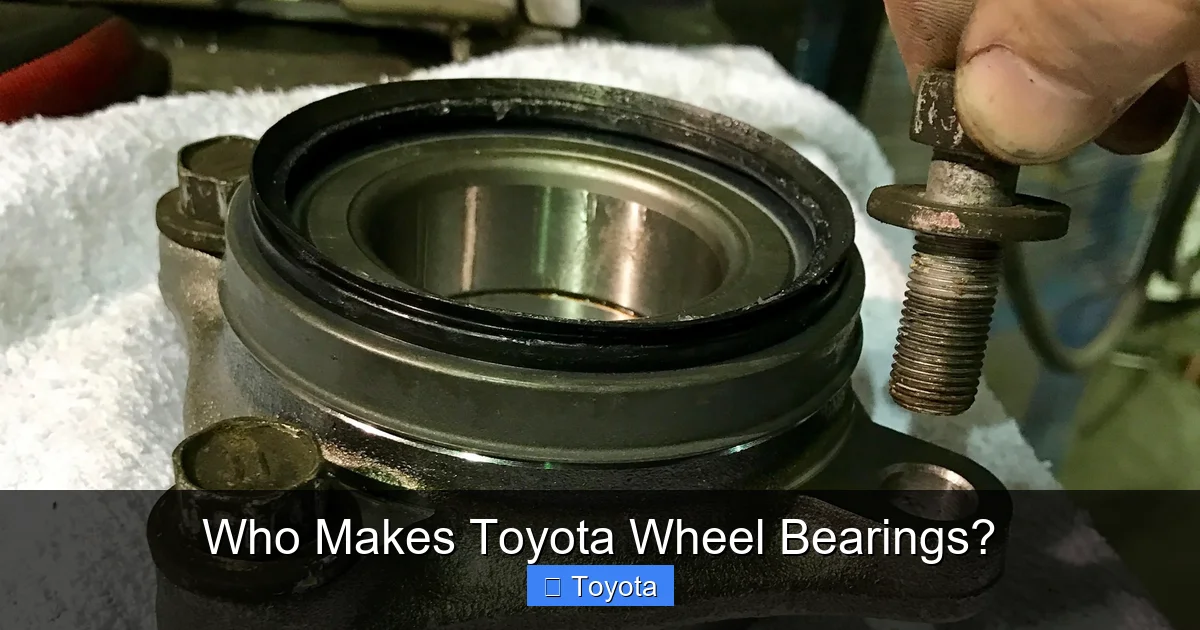
Visual guide about Who Makes Toyota Wheel Bearings?
Image source: img.toyotask.com
One of the most important things to know about Toyota wheel bearings is that the company doesn’t rely solely on outside suppliers. In fact, Toyota has a long-standing tradition of vertical integration—meaning it produces many of its own parts through subsidiaries and affiliated companies. The most prominent of these is Aisin Seiki Co., Ltd., often simply called Aisin.
Aisin is a Japanese automotive parts manufacturer that’s been part of the Toyota Group since the 1940s. It’s one of the largest suppliers in the world for components like transmissions, brake systems, and—yes—wheel bearings. Many Toyota vehicles, especially those built in Japan and other Asian markets, use wheel bearings produced by Aisin. These bearings are designed and tested to meet Toyota’s exact specifications, ensuring a perfect fit and reliable performance.
What sets Aisin-made bearings apart is their integration with Toyota’s broader engineering philosophy. Because Aisin works so closely with Toyota’s R&D teams, its products are optimized not just for durability, but for harmony with other systems—like suspension, steering, and ABS. This means that when you install an Aisin bearing on your Toyota, you’re getting a part that was literally designed with your car in mind.
Why Aisin Matters for Toyota Owners
For Toyota owners, the Aisin connection is a big deal. It means that many OEM (Original Equipment Manufacturer) wheel bearings in Toyotas aren’t just “compatible”—they’re purpose-built. This level of integration reduces the risk of compatibility issues, noise, or premature failure that can happen with generic or low-quality aftermarket parts.
For example, if you drive a Toyota Camry or RAV4 built in the last decade, there’s a strong chance your front wheel bearings were made by Aisin. These bearings are often sealed units that include the hub and bearing assembly, making them easier to install and more reliable over time. They’re also designed to last upwards of 100,000 miles under normal driving conditions—though harsh environments or poor maintenance can shorten that lifespan.
Global Suppliers: NSK, NTN, and the World of Precision Engineering
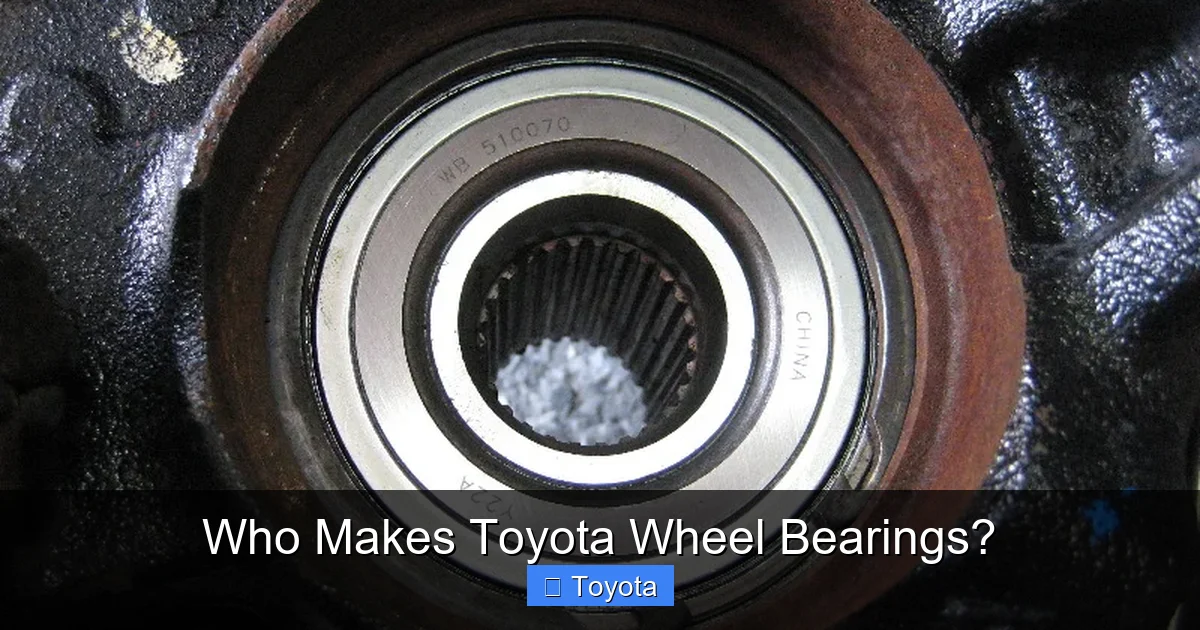
Visual guide about Who Makes Toyota Wheel Bearings?
Image source: paulstravelpictures.com
While Aisin plays a major role, Toyota also sources wheel bearings from other world-class manufacturers. Two of the most prominent are NSK Ltd. and NTN Corporation—both Japanese companies with global reputations for precision and quality.
NSK is known for its advanced bearing technology and is a major supplier to automakers worldwide, including Toyota. Their wheel bearings are engineered for low friction, high load capacity, and long service life. NSK uses proprietary materials and sealing technologies to protect against contamination, which is a leading cause of bearing failure. Many Toyota models, especially those exported to North America and Europe, use NSK bearings in their front and rear hubs.
NTN, another Japanese giant, is equally respected in the automotive industry. The company specializes in high-performance bearings and has a strong partnership with Toyota. NTN’s wheel bearings often feature advanced cage designs, optimized ball geometry, and enhanced grease formulations to withstand extreme temperatures and heavy loads. Like NSK, NTN supplies both OEM and aftermarket bearings, giving Toyota owners more options when it’s time for replacement.
How These Suppliers Ensure Quality
Both NSK and NTN operate under strict quality control systems that align with Toyota’s own standards. This includes rigorous testing for durability, noise levels, and resistance to wear. Each bearing is inspected multiple times during production, and only those that pass stringent checks make it into Toyota vehicles.
For instance, NSK uses computer-controlled grinding machines to ensure every bearing race is perfectly round—down to micrometer-level precision. This level of accuracy reduces vibration and extends the life of the bearing. Similarly, NTN employs advanced simulation software to model how bearings perform under real-world conditions, allowing them to refine designs before they ever reach the assembly line.
Aftermarket Options: Who Makes Replacement Toyota Wheel Bearings?
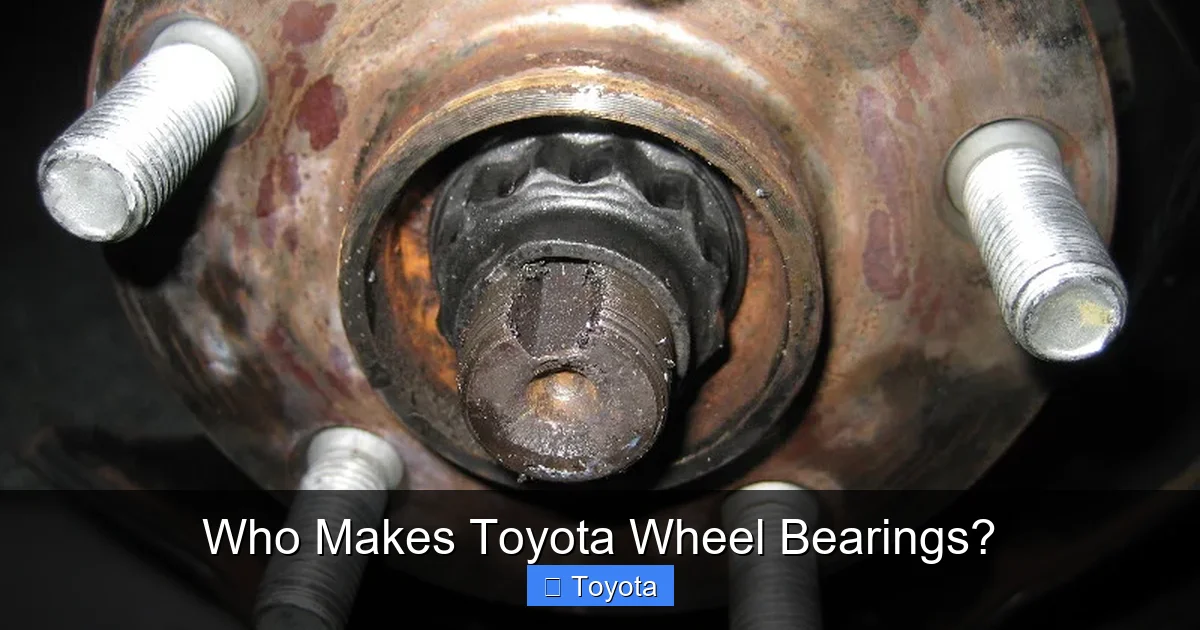
Visual guide about Who Makes Toyota Wheel Bearings?
Image source: paulstravelpictures.com
While OEM parts are ideal for many drivers, the aftermarket offers a wide range of alternatives—often at lower prices. But not all aftermarket wheel bearings are created equal. Some are excellent, while others may compromise on materials or tolerances.
One of the most trusted aftermarket brands is Timken, an American company with over a century of experience in bearing manufacturing. Timken produces high-quality wheel bearings for Toyota vehicles, often matching or exceeding OEM specs. Their products are widely available at auto parts stores and online retailers, and they come with strong warranties.
Another reputable name is SKF, a Swedish company known for innovation in bearing technology. SKF offers a full line of wheel bearings for Toyota models, including sealed hub assemblies and individual bearing kits. Their products are popular among mechanics and DIYers alike for their reliability and ease of installation.
Mevotech is another aftermarket brand worth considering. Based in Canada, Mevotech specializes in suspension and steering components, including wheel bearings. They offer “Supreme” and “X-Factor” lines that are designed for enhanced durability and performance. Many of their bearings include upgraded seals and premium grease for longer life.
How to Spot a Quality Aftermarket Bearing
When shopping for aftermarket Toyota wheel bearings, look for a few key indicators of quality:
– **Certifications:** Reputable brands will have ISO/TS 16949 certification, which ensures consistent quality in automotive manufacturing.
– **Warranty:** A good warranty (typically 1–3 years) shows the manufacturer stands behind its product.
– **Reviews:** Check customer and mechanic reviews on sites like Amazon, RockAuto, or forums like ToyotaNation.
– **Packaging:** OEM-quality bearings often come in branded boxes with part numbers, torque specs, and installation guides.
Avoid ultra-cheap bearings from unknown brands—these are more likely to fail prematurely and could even pose a safety risk.
Signs Your Toyota Wheel Bearings Are Failing
Knowing who makes your wheel bearings is one thing—but recognizing when they’re going bad is just as important. Ignoring a failing bearing can lead to wheel lockup, loss of control, or even a detached wheel in extreme cases.
Here are the most common signs to watch for:
– **Humming or growling noise:** This is the classic symptom. The noise usually gets louder as you speed up and may change when you turn (e.g., louder when turning left suggests a right-side bearing issue).
– **Vibration in the steering wheel:** Especially at highway speeds, a wobble or shake can indicate bearing wear.
– **Uneven tire wear:** If one tire is wearing down faster than the others, it could be due to a misaligned or damaged bearing.
– **Play in the wheel:** Jack up the vehicle and try to wiggle the tire side-to-side. Excessive movement suggests bearing wear.
– **ABS or traction control warnings:** Modern Toyotas use wheel speed sensors built into the bearing hub. A failing bearing can disrupt the sensor signal, triggering dashboard lights.
DIY Diagnosis Tips
If you suspect a bad bearing, you can do a quick check at home:
1. **Listen while driving:** Have a passenger listen for noise while you drive at different speeds and during turns.
2. **Feel for vibration:** Pay attention to steering wheel or seat vibrations.
3. **Inspect visually:** Look for grease leakage around the hub—this can indicate a broken seal.
4. **Check for heat:** After a drive, carefully feel the wheel hubs (use gloves). A hotter-than-normal hub may signal friction from a failing bearing.
If you’re unsure, it’s always best to have a professional mechanic inspect it. They can use tools like stethoscopes or vibration analyzers to confirm the issue.
Replacing Toyota Wheel Bearings: What You Need to Know
Replacing a wheel bearing isn’t a simple job—it requires the right tools, knowledge, and patience. On many modern Toyotas, the bearing is integrated into the hub assembly, which means you’ll need a hydraulic press or specialized puller to remove it.
Tools and Equipment
Here’s what you’ll typically need:
– **Jack and jack stands:** Never work under a vehicle supported only by a jack.
– **Lug wrench and torque wrench:** To remove wheels and tighten bolts to spec.
– **Socket set:** Usually 19mm, 21mm, or 24mm for axle nuts.
– **Bearing puller or press:** Essential for removing and installing the bearing.
– **Torque wrench:** Critical for tightening axle nuts and hub bolts to Toyota’s specifications.
– **Grease and sealant:** For reassembly (if not using a pre-greased unit).
Step-by-Step Overview
1. **Lift and secure the vehicle:** Use jack stands on level ground.
2. **Remove the wheel and brake components:** Take off the caliper and rotor to access the hub.
3. **Remove the axle nut:** This is often large and tightly torqued—use a breaker bar.
4. **Disconnect the hub assembly:** Unbolt it from the steering knuckle.
5. **Press out the old bearing:** Use a press or puller to remove the bearing from the hub.
6. **Install the new bearing:** Press it in evenly to avoid damage.
7. **Reassemble everything:** Reinstall the hub, rotor, caliper, and wheel.
8. **Torque all bolts:** Follow Toyota’s specs—over-tightening can damage threads, under-tightening can cause failure.
Professional vs. DIY
While some experienced DIYers can handle this job, many prefer to leave it to a professional. A certified Toyota technician will have the right tools, access to service manuals, and knowledge of torque specs and alignment procedures. Plus, they can often source OEM parts directly from the dealer.
That said, if you’re confident in your skills and have the right equipment, replacing a wheel bearing yourself can save hundreds of dollars. Just be sure to follow safety protocols and double-check your work.
How to Choose the Right Wheel Bearing for Your Toyota
With so many options available, choosing the right wheel bearing can feel overwhelming. Here’s a simple guide to help you decide:
OEM vs. Aftermarket: Which Is Better?
– **OEM (Original Equipment Manufacturer):** Best for peace of mind, exact fit, and warranty coverage. Ideal if you plan to keep your Toyota long-term.
– **Aftermarket:** Can offer better value and sometimes improved performance. Look for reputable brands like Timken, SKF, or Mevotech.
Consider Your Driving Conditions
– **City driving:** Standard OEM or quality aftermarket bearings are usually sufficient.
– **Off-road or heavy loads:** Consider heavy-duty or sealed hub assemblies designed for tough conditions.
– **Cold climates:** Look for bearings with low-temperature grease and enhanced seals.
Check Compatibility
Always verify the part number matches your Toyota’s year, make, and model. Use online catalogs like ToyotaPartsDeal.com or RockAuto to cross-reference. Even small differences (like 4WD vs. 2WD) can affect compatibility.
Warranty and Support
Choose a brand that offers a solid warranty and customer support. If something goes wrong, you’ll want to be able to get a replacement quickly and easily.
Conclusion: Trust, Quality, and Peace of Mind
So, who makes Toyota wheel bearings? The answer is a blend of Toyota’s own engineering prowess through Aisin and partnerships with global leaders like NSK and NTN. These companies don’t just supply parts—they collaborate with Toyota to create components that meet the highest standards of safety, performance, and durability.
Whether you’re replacing a worn bearing or upgrading for better performance, knowing the source of your parts helps you make smarter choices. OEM parts offer the best fit and reliability, while quality aftermarket options can provide excellent value. Just be sure to avoid cheap, no-name brands that could compromise your safety.
Ultimately, your Toyota’s wheel bearings are a small but critical part of what keeps you safe on the road. By choosing the right components and maintaining them properly, you can enjoy smooth, quiet, and reliable driving for hundreds of thousands of miles.
Frequently Asked Questions
Are Toyota wheel bearings made by Toyota?
Not entirely. While Toyota produces some parts in-house through subsidiaries like Aisin, many wheel bearings are made by trusted external suppliers such as NSK and NTN. These companies follow Toyota’s strict engineering standards.
Can I use aftermarket wheel bearings on my Toyota?
Yes, you can use aftermarket bearings, but quality varies. Stick with reputable brands like Timken, SKF, or Mevotech that meet or exceed OEM specifications for safety and performance.
How long do Toyota wheel bearings last?
Most Toyota wheel bearings last between 80,000 and 150,000 miles, depending on driving conditions, maintenance, and quality of the part. Harsh environments or poor alignment can shorten their lifespan.
What happens if I ignore a bad wheel bearing?
Ignoring a failing bearing can lead to wheel wobble, vibration, uneven tire wear, or even wheel lockup. In extreme cases, the wheel could detach, posing a serious safety risk.
Do I need special tools to replace a Toyota wheel bearing?
Yes, replacing a wheel bearing typically requires a hydraulic press or bearing puller, torque wrench, and socket set. Many modern Toyotas use sealed hub assemblies that are difficult to service without proper equipment.
Can a bad wheel bearing cause ABS lights to come on?
Yes. Many Toyota wheel bearings include integrated wheel speed sensors. If the bearing wears out or the sensor is damaged, it can disrupt the signal and trigger ABS or traction control warning lights.
