
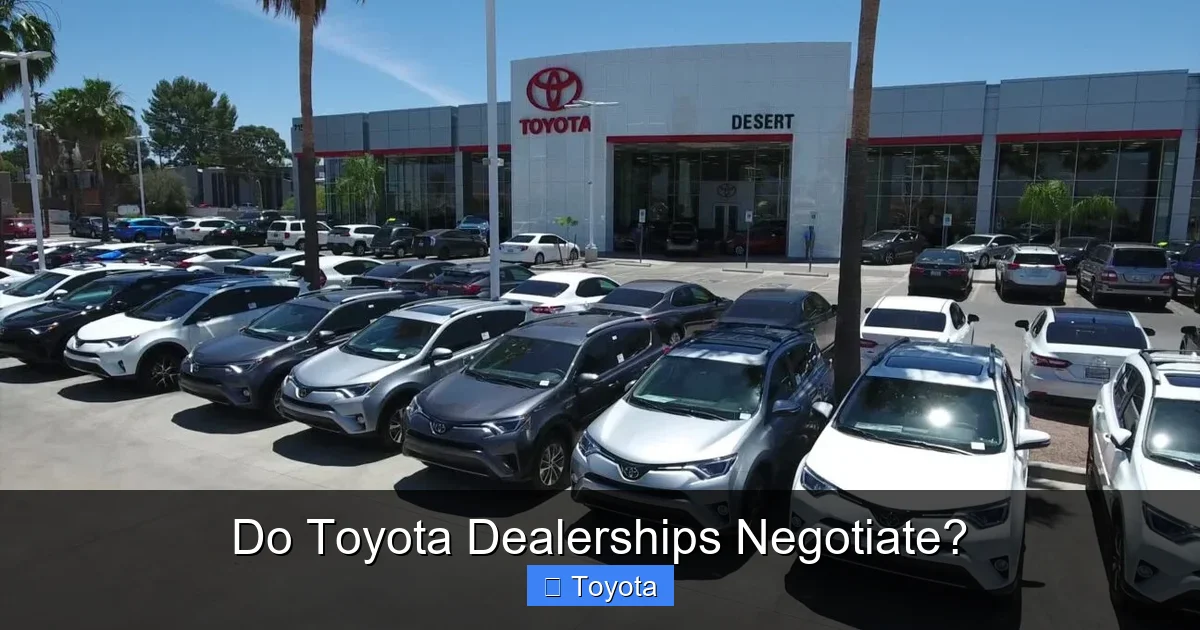
Do Toyota Dealerships Negotiate?

Yes, Toyota dealerships do negotiate—but not always in the way you might expect. While Toyota vehicles hold their value well and often have strong demand, there’s still room to haggle on price, financing, add-ons, and trade-ins if you’re prepared and strategic.
Key Takeaways
- Toyota dealerships do negotiate: Despite popular belief, most Toyota dealers are open to negotiation on price, financing terms, and incentives—especially at month-end or during slow sales periods.
- Timing matters: Shopping at the end of the month, quarter, or year increases your leverage, as dealers push to meet sales targets.
- Know your invoice price: Understanding the dealer’s cost helps you negotiate from a position of knowledge, not guesswork.
- Leverage competing offers: Get quotes from multiple dealerships and use them to negotiate better terms.
- Negotiate more than just price: Focus on out-the-door price, financing rates, trade-in value, and included extras like maintenance or accessories.
- Be ready to walk away: The most powerful negotiation tool is your willingness to leave if the deal isn’t right.
- Use online tools and research: Websites like Edmunds, Kelley Blue Book, and TrueCar provide valuable pricing data to strengthen your position.
📑 Table of Contents
- Do Toyota Dealerships Negotiate? The Truth Behind the Haggle
- Why People Think Toyota Dealerships Don’t Negotiate
- How Toyota Dealerships Work: Understanding the Incentives
- Where You Can Negotiate at a Toyota Dealership
- Best Times to Negotiate with a Toyota Dealer
- Proven Strategies to Negotiate Like a Pro
- Common Mistakes to Avoid
- Real-Life Example: How One Buyer Saved $3,000
- Conclusion: Yes, You Can Negotiate—and You Should
Do Toyota Dealerships Negotiate? The Truth Behind the Haggle
If you’re in the market for a new Toyota—whether it’s a fuel-efficient Corolla, a rugged Tacoma, or a family-friendly Highlander—you’ve probably asked yourself: *Do Toyota dealerships negotiate?* It’s a fair question, especially when you’re about to spend tens of thousands of dollars.
Many buyers assume that because Toyota vehicles are known for reliability, strong resale value, and high demand, dealers won’t budge on price. And while it’s true that Toyotas don’t depreciate as quickly as some other brands, that doesn’t mean negotiation is off the table. In fact, with the right approach, you can still save hundreds—or even thousands—of dollars.
The key is understanding how Toyota dealerships operate, what motivates their sales teams, and where the real opportunities for negotiation lie. This guide will walk you through everything you need to know to walk into a Toyota dealership with confidence, armed with the knowledge and tactics to get the best possible deal.
Why People Think Toyota Dealerships Don’t Negotiate

Visual guide about Do Toyota Dealerships Negotiate?
Image source: uploads.dailydot.com
There’s a common myth floating around: “Toyota dealers don’t negotiate because their cars sell themselves.” And to be fair, there’s some truth to that. Toyota has built a reputation for building dependable, long-lasting vehicles. Models like the Camry and RAV4 consistently rank at the top of reliability lists, and demand often outpaces supply—especially for hybrids and trucks.
Because of this strong brand loyalty and consistent demand, some dealerships may act as if they’re doing you a favor by selling you a car. You might hear phrases like, “This is the last one we have,” or “We’ve had three people looking at this model today.” While that might be true, it doesn’t mean you can’t negotiate.
Another reason people believe Toyota dealers don’t negotiate is that Toyota Motor Corporation maintains strict control over pricing and incentives. Unlike some brands that offer massive dealer discounts or rebates, Toyota tends to keep pricing more consistent across regions. This can make it seem like there’s no wiggle room.
But here’s the reality: every dealership is a business. They have monthly sales goals, inventory to move, and overhead to cover. Even if a Toyota is in high demand, dealers still need to make a profit—and they’re often willing to adjust terms to close a sale.
How Toyota Dealerships Work: Understanding the Incentives

Visual guide about Do Toyota Dealerships Negotiate?
Image source: autolist.com
To negotiate effectively, you need to understand what drives a Toyota dealer’s decisions. It’s not just about selling cars—it’s about hitting targets, managing inventory, and maximizing profit per vehicle.
Monthly and Quarterly Sales Goals
Like most car dealerships, Toyota dealers operate on monthly and quarterly sales quotas. These goals are set by both the dealership and Toyota Motor Sales. When a dealer is behind on their numbers—especially toward the end of the month or quarter—they become much more willing to negotiate.
Salespeople and managers earn bonuses based on how many vehicles they sell. If they’re close to hitting a bonus threshold, they may be more flexible on price or financing to push one more sale across the finish line. That’s your opportunity.
Inventory Management and Overstock
Even popular models can sit on the lot for weeks, especially if a dealer over-ordered or if a new model year is about to launch. Dealers don’t like having too much inventory—it ties up capital and increases holding costs.
If you’re looking at a current-year model in late summer or fall, when the next year’s models are arriving, dealers may be eager to clear out older inventory. That’s a prime time to negotiate.
Dealer Holdback and Incentives
Toyota dealers receive financial incentives directly from the manufacturer. These include:
– **Holdback:** A percentage of the vehicle’s invoice price (usually 2–3%) that Toyota holds back and pays to the dealer after the sale is complete.
– **Dealer Cash:** Bonus money paid to dealers for selling specific models or hitting certain sales targets.
– **Advertising Reimbursements:** Payments to help cover local marketing costs.
These incentives mean that even if a dealer sells a car at or near invoice price, they can still make a profit. Knowing this gives you leverage—because the dealer doesn’t need to sell at MSRP to make money.
Where You Can Negotiate at a Toyota Dealership
Visual guide about Do Toyota Dealerships Negotiate?
Image source: timewiremag.com
Now that you understand the dealer’s motivations, let’s talk about *what* you can actually negotiate. It’s not just about the sticker price—there are several areas where you can save money or get better value.
The Out-the-Door Price
This is the total amount you’ll pay, including taxes, fees, and any add-ons. Always negotiate the out-the-door price, not just the monthly payment. Dealers can manipulate monthly payments by extending the loan term, which might seem like a better deal but costs you more in interest over time.
For example, a $35,000 RAV4 might be advertised with “low monthly payments,” but if the loan is stretched to 72 months, you could end up paying thousands more in interest. Focus on the total cost.
Invoice Price vs. MSRP
The Manufacturer’s Suggested Retail Price (MSRP) is what’s listed on the window. The invoice price is what the dealer paid Toyota for the vehicle. The difference between the two is the dealer’s gross profit—but remember, they also have holdback and incentives.
Use tools like Edmunds, Kelley Blue Book (KBB), or TrueCar to find the average invoice price in your area. Aim to negotiate a price at or slightly above invoice, especially if you’re buying a high-demand model.
Trade-In Value
If you’re trading in a vehicle, don’t let the dealer lowball you. Research your car’s value using KBB or Edmunds, and get offers from multiple sources—including CarMax, Carvana, or even private buyers.
You can negotiate your trade-in value separately from the purchase price. Some dealers will offer a higher trade-in value to make the deal look better, but then inflate the new car price. Keep the two discussions separate to avoid confusion.
Financing and Interest Rates
Even if you’re not negotiating the car price, you can negotiate the financing terms. Toyota Financial Services often offers promotional rates (like 0.9% APR for 36 months), but dealers may try to mark up the rate to earn extra profit.
Get pre-approved for a loan from your bank or credit union before visiting the dealership. Then, compare that rate to what the dealer offers. If your bank’s rate is lower, use it as leverage.
Add-Ons and Accessories
Dealers often try to sell you extras like extended warranties, paint protection, fabric coatings, or VIN etching. These can add hundreds or even thousands to your bill—and most are overpriced.
You can negotiate these down or decline them entirely. For example, if a dealer offers a $2,000 extended warranty, ask if they’ll include it for $500 or bundle it with other services. Or simply say no—many of these products aren’t worth the cost.
Maintenance and Service Packages
Some dealers offer prepaid maintenance plans or free oil changes for a year. These can be valuable, especially if you plan to keep the car long-term. But again, negotiate the price or ask for them as a free add-on if you’re buying at or near invoice.
Best Times to Negotiate with a Toyota Dealer
Timing can make or break your negotiation. Here are the best times to shop for a Toyota:
End of the Month, Quarter, or Year
As mentioned earlier, dealers are under pressure to meet sales goals. The last week of the month—especially the last few days—is prime time for negotiation. The same goes for the end of the quarter (March, June, September, December) and the end of the calendar year.
Holiday Sales Events
Toyota often runs special promotions during holidays like Memorial Day, Independence Day, Labor Day, and Black Friday. These events may include cash rebates, low APR financing, or bonus cash for trade-ins.
Even if the promotion seems small, it gives you a reason to ask for additional discounts. For example: “I see you’re offering $500 cash back—can you also throw in free floor mats and a full tank of gas?”
New Model Year Arrivals
When the next year’s models arrive (usually in late summer or early fall), dealers want to clear out the previous year’s inventory. This is a great time to negotiate on current-year models, especially if they’ve been on the lot for a while.
Weekdays and Off-Peak Hours
Avoid weekends and evenings when dealerships are busiest. Salespeople are more rushed and less likely to spend time negotiating. Instead, go on a Tuesday or Wednesday afternoon when things are quieter—you’ll get more attention and better service.
Proven Strategies to Negotiate Like a Pro
Now that you know *when* and *what* to negotiate, here’s *how* to do it effectively.
Do Your Homework
Before stepping foot in a dealership, research the exact model and trim you want. Know the MSRP, invoice price, available incentives, and average selling price in your area. Use websites like:
– Edmunds.com (True Price)
– KelleyBlueBook.com
– TrueCar.com
– Toyota.com (for current offers)
Print out quotes or save them on your phone. This shows the dealer you’re informed and serious.
Get Multiple Quotes
Contact at least three Toyota dealerships in your area. Email or call them with your desired vehicle and ask for their best out-the-door price. Use the lowest quote to negotiate with the others.
For example: “Dealer A offered me $32,500 out the door. Can you match or beat that?” This creates competition and gives you leverage.
Be Polite but Firm
Negotiation isn’t a battle—it’s a conversation. Be respectful, but don’t be afraid to stand your ground. If a dealer says, “That’s the best we can do,” respond with, “I understand, but I’ve got other offers. I’d prefer to buy here, but only if we can get closer to my target price.”
Negotiate in Person
While email and phone quotes are helpful, the real negotiation happens face-to-face. Sit down with a sales manager (not just a salesperson) and go over the numbers. Managers have more authority to approve discounts.
Use the “Four Square” Method
Some dealers use a worksheet called the “Four Square” to break down the deal into four areas: purchase price, trade-in value, down payment, and monthly payment. This can confuse buyers, so always ask for a full breakdown and focus on the out-the-door price.
Be Ready to Walk Away
The most powerful tool in negotiation is your willingness to leave. If the dealer won’t meet your price, thank them for their time and walk out. Often, they’ll call you back within hours with a better offer.
Common Mistakes to Avoid
Even experienced buyers make errors that cost them money. Here are some pitfalls to avoid:
Focusing Only on Monthly Payments
Dealers can make any car seem affordable by stretching the loan term. Always look at the total cost, including interest.
Not Reading the Fine Print
Make sure you understand all fees, taxes, and charges. Ask for a breakdown of the out-the-door price before signing.
Accepting the First Offer
The first price a dealer gives you is rarely their best. Always counter with a lower offer.
Letting Emotions Take Over
It’s easy to fall in love with a car and rush into a deal. Stay calm, stick to your budget, and don’t let excitement cloud your judgment.
Ignoring Online Reviews
Check reviews of the dealership on Google, Yelp, and the Better Business Bureau. A dealer with a history of shady practices may not honor their word after the sale.
Real-Life Example: How One Buyer Saved $3,000
Let’s look at a real-world scenario. Sarah wanted a 2024 Toyota RAV4 Hybrid XLE. The MSRP was $36,500. She used TrueCar to find the average selling price in her area: $35,200.
She emailed three dealerships and got quotes ranging from $35,100 to $35,800. She chose the lowest and scheduled a visit.
At the dealership, she asked to speak with the sales manager. She presented her research and said, “I’m ready to buy today if we can do $34,500 out the door.”
The manager countered with $35,000. Sarah said, “I’ve got another offer for $34,800. I’d prefer to buy here, but I need to be closer to my target.”
After 20 minutes of back-and-forth, they agreed on $34,600—$1,900 below the average selling price. Plus, the dealer threw in free all-weather floor mats and a full tank of gas.
Sarah saved nearly $2,000 on the price and got extras worth over $300. All because she was prepared, polite, and willing to negotiate.
Conclusion: Yes, You Can Negotiate—and You Should
So, do Toyota dealerships negotiate? The answer is a resounding *yes*. While Toyota vehicles are in high demand and hold their value well, dealerships are still businesses that need to meet sales goals and move inventory.
By understanding dealer incentives, knowing the right time to buy, and using proven negotiation tactics, you can save significant money on your next Toyota purchase. Whether you’re buying a compact Corolla or a full-size Tundra, the principles are the same: do your research, stay calm, and be ready to walk away.
Don’t let the myth of the “non-negotiable Toyota” stop you from getting a great deal. With the right approach, you can drive off the lot in your dream car—at a price that makes you smile.
Frequently Asked Questions
Do Toyota dealerships really negotiate on price?
Yes, most Toyota dealerships are open to negotiation, especially at the end of the month or during slow sales periods. While Toyotas are in high demand, dealers still need to meet quotas and manage inventory, which creates room for negotiation.
What’s the best way to negotiate with a Toyota dealer?
Start by researching the invoice price and getting quotes from multiple dealerships. Focus on the out-the-door price, not monthly payments, and be ready to walk away if the deal isn’t right. Negotiating in person with a sales manager often yields the best results.
Can I negotiate the trade-in value of my current car?
Absolutely. Research your car’s value using Kelley Blue Book or Edmunds, and get offers from other buyers or dealers. Negotiate your trade-in separately from the new car price to avoid confusion and get the best deal.
Are Toyota financing rates negotiable?
Yes, even if Toyota offers promotional rates, dealers may mark up the interest rate. Get pre-approved by your bank or credit union and use that rate to negotiate better terms with the dealer.
When is the best time to buy a Toyota to get a discount?
The end of the month, quarter, or year is ideal, as dealers push to meet sales targets. Holiday sales events and new model year arrivals are also great times to negotiate.
Should I accept dealer add-ons like extended warranties?
Most add-ons are overpriced. You can negotiate them down or decline them entirely. Only consider them if they offer real value and fit your budget.
