
How Much Is a 2013 Subaru Outback Worth

The 2013 Subaru Outback typically ranges from $8,000 to $14,000 depending on mileage, condition, and trim. This reliable wagon offers strong resale value thanks to its all-wheel drive, safety features, and long-lasting build.
If you’re shopping for a used car—or trying to sell one—you’ve probably asked yourself: *How much is a 2013 Subaru Outback worth?* It’s a fair question. The 2013 Outback isn’t just another used wagon; it’s a well-built, all-wheel-drive workhorse that’s earned a loyal following over the years. Whether you’re eyeing one for weekend adventures, daily commuting, or hauling kids and gear, understanding its market value helps you make a smart, informed decision.
Subaru has long been known for building vehicles that last. The 2013 Outback continues that tradition with a reputation for reliability, practicality, and safety. It blends the comfort of a sedan with the capability of an SUV, making it a favorite among families, outdoor enthusiasts, and anyone who lives where the weather doesn’t always cooperate. But like any used car, its worth depends on more than just the model year. Factors like mileage, trim level, maintenance history, and even where you live can significantly influence the price.
In this guide, we’ll break down everything you need to know about the 2013 Subaru Outback’s value. We’ll look at average pricing, what affects cost, how to assess condition, and tips for buying or selling. By the end, you’ll have a clear picture of what to expect—and how to get the best deal.
Key Takeaways
- Price Range: Most 2013 Subaru Outbacks sell between $8,000 and $14,000, with lower-mileage models commanding higher prices.
- Mileage Matters: Vehicles under 80,000 miles often fetch $10,000+, while those over 120,000 may drop below $9,000.
- Trim Level Impact: Higher trims like the Limited and 3.6R can add $1,500–$3,000 to the base price.
- Condition is Key: Well-maintained cars with full service records sell for 10–15% more than average.
- Geographic Variation: Prices are often 10–20% higher in snowy or rural areas where AWD is in demand.
- Private vs. Dealer: Private sellers usually offer better deals, but certified pre-owned (CPO) vehicles provide peace of mind.
- Future Value: The 2013 Outback holds its value better than most competitors due to Subaru’s reputation for durability.
📑 Table of Contents
Understanding the 2013 Subaru Outback’s Market Value
When it comes to pricing a used car, the 2013 Subaru Outback sits in a sweet spot. It’s old enough to be affordable but new enough to still feel modern and reliable. According to data from Kelley Blue Book (KBB), Edmunds, and recent private sale listings, the average price for a 2013 Outback ranges from $8,000 to $14,000. That’s a wide window, but it reflects real-world variation based on key factors.
Let’s start with the basics. The 2013 Outback came in several trim levels: Base, Premium, Limited, and the performance-oriented 3.6R. The base model started around $24,000 new, while the top-tier 3.6R could push past $30,000. Today, those trims translate into different used prices. A base model with high mileage might go for $7,500, while a well-kept Limited with low miles could fetch $13,500 or more.
One of the biggest reasons the 2013 Outback holds value well is its standard all-wheel drive (AWD). Unlike many competitors that offer AWD as an expensive option, Subaru includes it on every trim. This makes the Outback especially appealing in regions with snow, rain, or rough terrain. In states like Colorado, Minnesota, or Vermont, you’ll often see prices 10–20% higher than the national average because demand is strong.
Another factor is the engine. The 2013 Outback offered two options: a 2.5-liter four-cylinder (170 horsepower) and a 3.6-liter six-cylinder (256 horsepower). The 2.5L is more common and fuel-efficient, while the 3.6L delivers more power and towing capacity. The 3.6R trim, which uses the larger engine, typically commands a premium—often $1,500 to $3,000 more than a comparable 2.5L model.
Average Pricing by Trim and Condition
To give you a clearer idea, here’s a rough breakdown of what you might expect to pay based on trim and condition:
– **Base (2.5i):** $7,500–$10,000
Best for budget buyers. These models often have higher mileage (100,000+ miles) but can still be solid if well-maintained.
– **Premium (2.5i):** $9,000–$11,500
Adds features like alloy wheels, upgraded audio, and optional navigation. A good balance of value and features.
– **Limited (2.5i):** $10,500–$13,000
Includes leather seats, dual-zone climate control, and a sunroof. Popular with families and commuters.
– **3.6R Base/Premium/Limited:** $11,000–$14,000+
The six-cylinder engine makes these models more desirable for towing and highway driving. Low-mileage examples can exceed $14,000.
Keep in mind that these are averages. A car with a clean title, full service records, and no accidents will always sell for more than one with a spotty history. For example, a 2013 Outback Limited with 75,000 miles and a documented maintenance schedule might sell for $12,500 privately, while a similar car with 130,000 miles and no records might struggle to hit $9,000.
Geographic Differences in Pricing
Where you live plays a big role in how much a 2013 Subaru Outback is worth. In urban areas with mild weather and public transit options, AWD vehicles like the Outback may not be as in demand. But in rural or mountainous regions, where snow and gravel roads are common, the Outback’s capabilities shine—and so does its price.
For instance, a quick search on Autotrader or Cars.com shows that 2013 Outbacks in Denver, CO, often list for $1,000–$2,000 more than similar models in Phoenix, AZ. That’s not because the cars are better—it’s because buyers in Colorado value AWD more. Similarly, in the Pacific Northwest, where rain and wet roads are frequent, the Outback’s traction and stability are major selling points.
Even within the same state, prices can vary. A car in a small town might be priced lower due to less competition, while the same model in a major city could attract multiple offers. If you’re buying, consider expanding your search radius. You might find a better deal just a few hours away.
Factors That Affect the 2013 Subaru Outback’s Worth
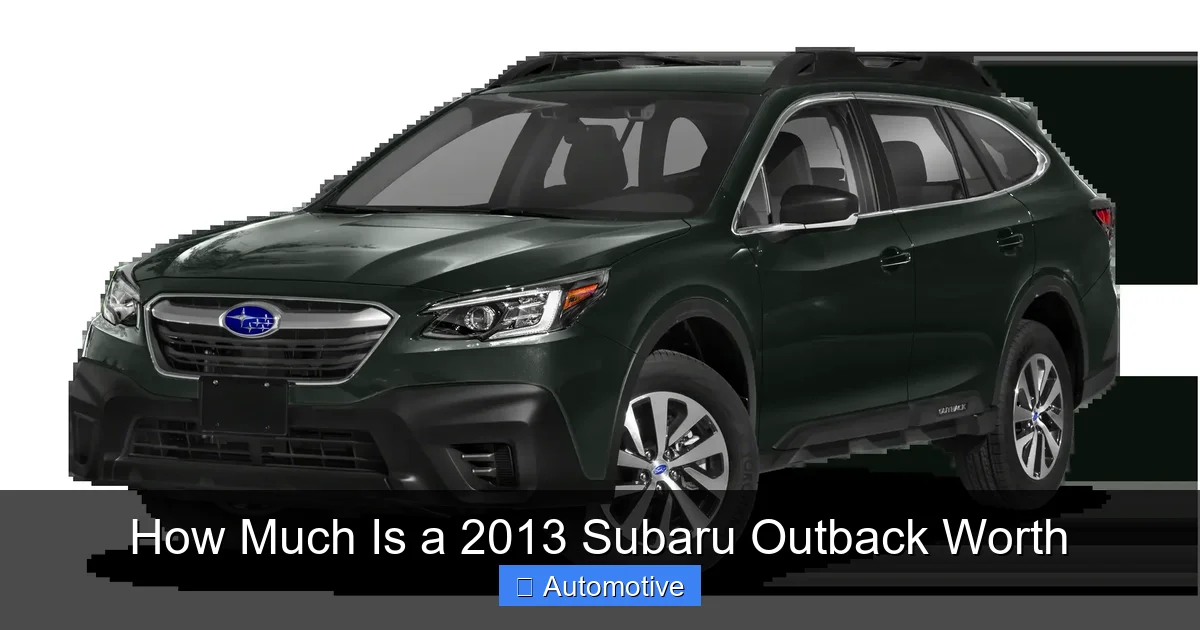
Visual guide about How Much Is a 2013 Subaru Outback Worth
Image source: platform.cstatic-images.com
Now that you know the general price range, let’s dive into the details that can push a car’s value up or down. Understanding these factors helps you evaluate listings, negotiate confidently, and avoid overpaying.
Mileage: The Biggest Price Driver
Mileage is one of the most straightforward indicators of a car’s value. The 2013 Outback was built to last, but like any vehicle, it wears over time. On average, a car is driven about 12,000 to 15,000 miles per year. So a 2013 model with 100,000 miles is right on track, while one with 60,000 miles is considered low-mileage for its age.
Here’s how mileage typically affects pricing:
– **Under 70,000 miles:** These are rare and highly desirable. Expect to pay $11,000–$14,000, especially for higher trims.
– **70,000–100,000 miles:** The sweet spot for most buyers. Prices range from $9,500 to $12,000.
– **100,000–130,000 miles:** Still solid, but prices drop to $8,000–$10,000. Look for good maintenance records.
– **Over 130,000 miles:** These cars are budget options. Prices often fall below $8,500, but they can be great buys if well cared for.
For example, a 2013 Outback Premium with 68,000 miles and a clean history might list for $11,800. The same car with 125,000 miles might go for $9,200—even if both are in similar condition. That’s a $2,600 difference just for mileage.
Vehicle Condition and Maintenance History
A car’s condition matters more than its age or mileage. A 2013 Outback with 120,000 miles that’s been babied—regular oil changes, timely repairs, garage-kept—can be a better buy than a low-mileage example that’s been neglected.
Look for these signs of good care:
– Full service records (especially timing belt and head gasket work)
– No rust or body damage
– Clean interior with minimal wear
– Recent brake, tire, and fluid replacements
Subaru’s 2.5-liter engine is known for head gasket issues, especially in earlier models. While the 2013 model year improved reliability, it’s still wise to check if the head gasket has been replaced or inspected. A car with a documented head gasket repair can actually be *more* valuable because the major risk has been addressed.
Similarly, the timing belt should be replaced every 105,000 miles. If it hasn’t been done, factor in a $600–$900 repair cost when negotiating.
Accident History and Title Status
Always check the vehicle history report using services like Carfax or AutoCheck. A clean title with no accidents is ideal. Even minor fender benders can affect resale value, especially if structural repairs were needed.
A salvage or rebuilt title can slash a car’s value by 20–40%. These cars may be safe to drive, but they’re harder to insure and resell. If you’re considering one, have it inspected by a trusted mechanic and verify that all repairs were done correctly.
Optional Features and Upgrades
Features like a sunroof, navigation system, leather seats, and upgraded audio can add value—but not always as much as you’d think. Buyers appreciate these extras, but they rarely pay full price for them.
For example, a Limited trim with a sunroof and navigation might list for $12,500, while a similar Premium without those features goes for $10,800. That’s a $1,700 difference, but the actual cost of those options when new was closer to $3,000. So while they add appeal, they don’t fully translate into higher resale value.
Aftermarket upgrades like roof racks, all-terrain tires, or a hitch can be a plus for some buyers, but they may turn off others who prefer a stock vehicle. It’s a mixed bag.
How to Determine the Fair Market Value
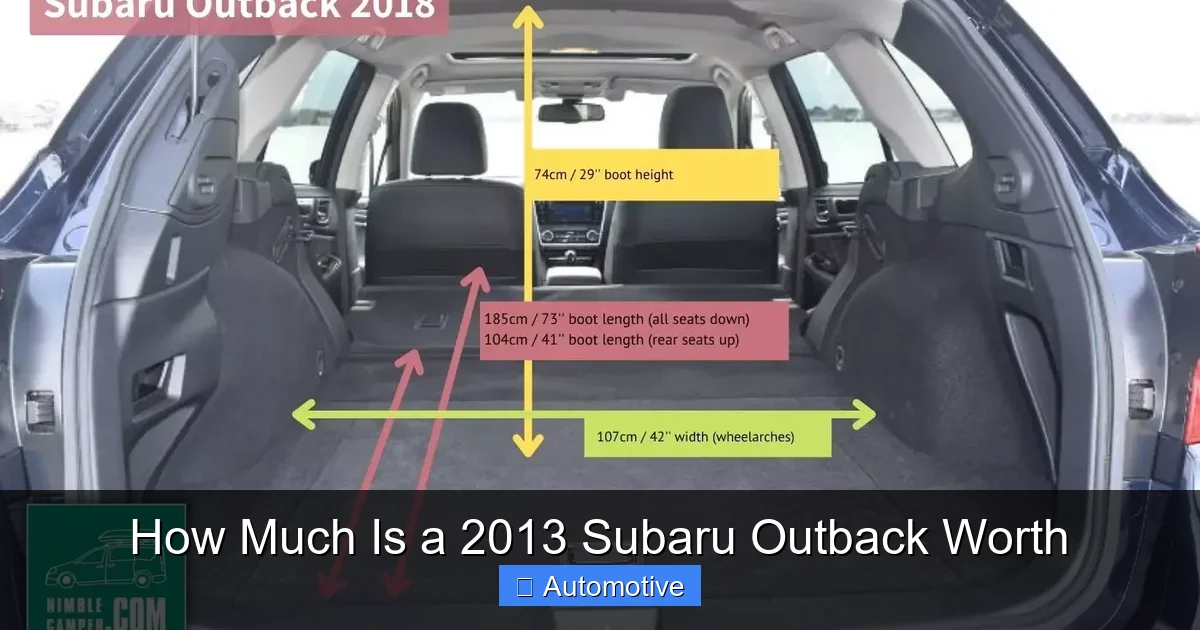
Visual guide about How Much Is a 2013 Subaru Outback Worth
Image source: nimblecamper.com
So how do you figure out what a specific 2013 Subaru Outback is really worth? Start with online pricing tools, but don’t rely on them alone. Here’s a step-by-step approach:
Use Multiple Valuation Sources
Check at least three sources:
– **Kelley Blue Book (KBB):** Great for private party and trade-in values. Enter the VIN for the most accurate estimate.
– **Edmunds True Market Value (TMV):** Considers local market data and recent sales.
– **NADA Guides:** Often used by dealers; tends to be slightly higher than KBB.
For example, a 2013 Outback Limited with 85,000 miles might show:
– KBB Private Party: $11,200
– Edmunds TMV: $10,900
– NADA Clean Retail: $12,100
The average of these is around $11,400—a good starting point for negotiation.
Compare Similar Listings
Search sites like Autotrader, Cars.com, and Craigslist for 2013 Outbacks in your area. Filter by trim, mileage, and price. Look for cars with similar features and condition.
If you find five Outback Limiteds with 80,000–90,000 miles priced between $11,000 and $12,500, that’s your market range. A listing at $13,500 might be overpriced—unless it has exceptionally low miles or rare features.
Factor in Local Demand
As mentioned earlier, location matters. If you’re in a snowy state, expect higher prices. If you’re in a warm, urban area, you might find better deals.
Also, consider seasonal trends. Convertibles sell for more in spring, while AWD vehicles like the Outback often peak in late fall and winter. Buying in summer might save you a few hundred dollars.
Buying vs. Selling: Tips for Getting the Best Deal
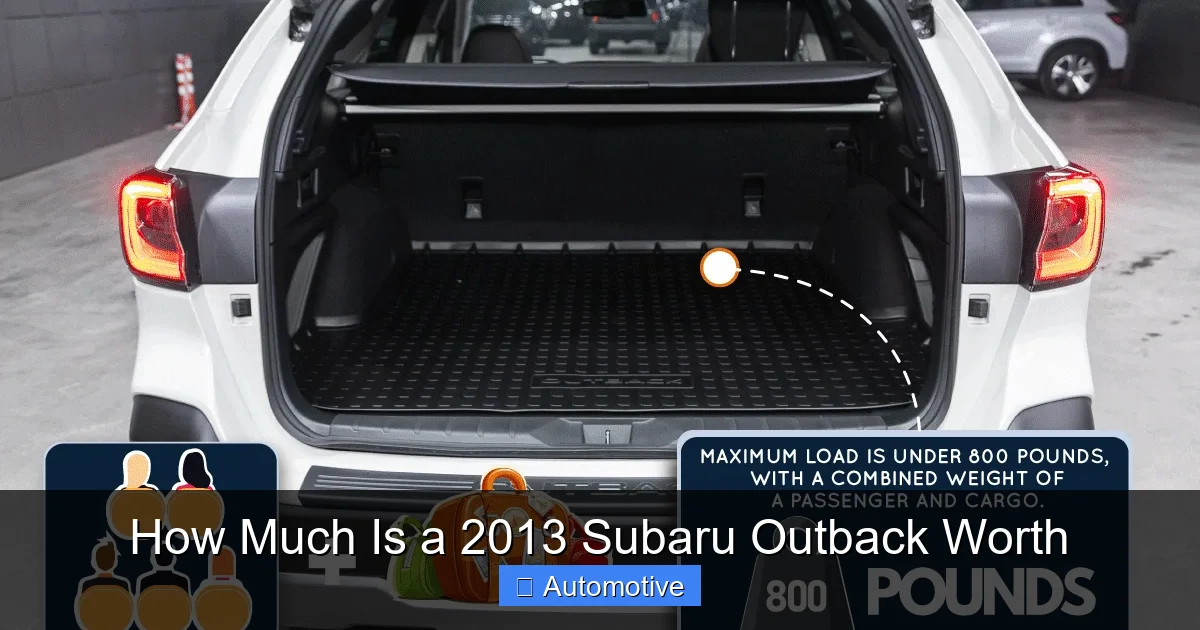
Visual guide about How Much Is a 2013 Subaru Outback Worth
Image source: vehq.com
Whether you’re buying or selling, knowing how much a 2013 Subaru Outback is worth helps you make smarter choices.
If You’re Buying
– **Set a budget:** Include taxes, registration, and potential repairs.
– **Get a pre-purchase inspection (PPI):** Spend $100–$150 to have a mechanic check the car. It can save you thousands.
– **Negotiate based on condition:** If the car needs tires or a timing belt, use that as leverage.
– **Consider CPO:** Some dealers offer certified pre-owned Outbacks with extended warranties. They cost more but reduce risk.
If You’re Selling
– **Clean and detail the car:** A $200 detail can increase perceived value by $500 or more.
– **Gather service records:** Show buyers you’ve taken care of the car.
– **Price competitively:** Check local listings and price slightly below similar cars to attract interest.
– **Be honest about flaws:** Disclose issues upfront to build trust and avoid returns.
Is the 2013 Subaru Outback a Good Value in 2024?
Absolutely—if you find the right one. The 2013 Outback offers a lot for the money: standard AWD, a spacious interior, strong safety ratings, and a reputation for longevity. It’s not the newest or flashiest wagon on the road, but it’s practical, reliable, and built to last.
Compared to competitors like the 2013 Toyota RAV4 or Honda CR-V, the Outback often holds its value better. It also offers more cargo space and a more car-like ride. And unlike many SUVs, it doesn’t sacrifice fuel efficiency—expect 22–28 mpg depending on the engine and driving conditions.
Of course, no car is perfect. The 2.5-liter engine can feel underpowered when fully loaded, and the infotainment system is outdated by today’s standards. But for buyers who prioritize function over flash, the 2013 Outback remains a smart choice.
Conclusion
So, how much is a 2013 Subaru Outback worth? The answer depends on several factors, but most models fall between $8,000 and $14,000. Mileage, trim, condition, and location all play a role. A well-maintained Limited with low miles can fetch top dollar, while a high-mileage base model might be a budget-friendly option.
The key is doing your homework. Use pricing guides, compare local listings, and always inspect the car before buying. Whether you’re shopping for adventure or daily reliability, the 2013 Outback offers solid value—and a proven track record of getting you where you need to go.
Frequently Asked Questions
What is the average price of a 2013 Subaru Outback?
The average price ranges from $8,000 to $14,000, depending on mileage, trim, and condition. Lower-mileage models with higher trims tend to be on the higher end of that range.
Is the 2013 Subaru Outback reliable?
Yes, the 2013 Outback is known for its reliability, especially with proper maintenance. The 2.5-liter engine had some head gasket issues in earlier years, but the 2013 model improved significantly.
How many miles can a 2013 Subaru Outback last?
With good care, a 2013 Outback can easily reach 200,000 miles or more. Regular oil changes, timing belt replacement, and addressing issues early are key to longevity.
What trim should I buy for the best value?
The Premium trim offers the best balance of features and price. It includes upgrades like alloy wheels and better audio without the higher cost of the Limited.
Should I buy a 2013 Outback with high mileage?
It depends on the condition. A high-mileage Outback with full service records and no major issues can be a great buy. Just budget for upcoming maintenance like timing belt or suspension work.
Is the 3.6R engine worth the extra cost?
If you need more power for towing or highway driving, yes. The 3.6R offers 256 horsepower and better acceleration, but it uses more fuel and costs more upfront.