
What Is Rsca on a Toyota Tacoma?

RSCA (Roll Sensing Curtain Shield Airbags) on a Toyota Tacoma is a critical safety feature designed to protect occupants during rollover and side-impact collisions. It deploys side curtain airbags from the roof lining to shield passengers’ heads, reducing injury risk and enhancing overall vehicle safety.
If you’ve ever looked at the safety features of a Toyota Tacoma—especially in newer models—you might have come across the term “RSCA.” It sounds technical, maybe even a little mysterious, but it’s actually one of the most important safety systems in your truck. Whether you’re a weekend off-roader, a daily commuter, or someone who just values peace of mind on the road, understanding what RSCA is and how it works can make a big difference in how you view your vehicle’s safety.
The Toyota Tacoma has long been praised for its durability, reliability, and off-road capability. But beyond its rugged exterior and powerful engine options, Toyota has consistently invested in advanced safety technology. One of those key innovations is RSCA, which stands for Roll Sensing Curtain Shield Airbags. This system is designed to protect you and your passengers in the event of a rollover or a severe side-impact collision. Unlike traditional airbags that focus on front-end crashes, RSCA specifically targets side and rollover scenarios—situations where head injuries are especially common.
In this article, we’ll break down everything you need to know about RSCA on a Toyota Tacoma. From how it works and when it activates, to why it matters for your safety, we’ll cover it all in simple, easy-to-understand terms. Whether you’re considering buying a used Tacoma or just want to better understand your current truck, this guide will give you the knowledge you need to drive with confidence.
Key Takeaways
- RSCA stands for Roll Sensing Curtain Shield Airbags: A safety system that deploys side curtain airbags during rollovers or severe side impacts to protect occupants’ heads.
- It’s standard on most modern Tacomas: Found in models from 2005 onward, especially in higher trims and newer generations.
- Works with other safety systems: Integrates with sensors, seatbelt pretensioners, and stability control for comprehensive protection.
- Uses advanced sensors to detect rollover risk: Monitors vehicle angle, speed, and motion to determine when to deploy airbags.
- Airbags deploy from the roof lining: Covers side windows to prevent head contact with windows, pillars, or external objects.
- Requires professional inspection after deployment: Once triggered, the system must be reset and components replaced by a certified technician.
- Enhances safety in off-road and highway driving: Especially valuable for Tacoma owners who drive on uneven terrain or in high-risk conditions.
📑 Table of Contents
What Does RSCA Stand For?
RSCA stands for Roll Sensing Curtain Shield Airbags. Let’s break that down. “Roll Sensing” means the system can detect when the vehicle is at risk of rolling over. “Curtain Shield” refers to the airbags themselves, which are long, inflatable cushions that drop down from the roof lining like a curtain. And “Airbags” are, of course, the protective cushions that inflate rapidly during a crash to prevent injury.
This system is part of Toyota’s broader commitment to occupant safety, especially in vehicles like the Tacoma that are often used for off-roading, towing, or driving on uneven terrain—activities that increase the risk of rollovers. Unlike standard side airbags that only protect the torso, RSCA focuses on head protection, which is crucial in side impacts and rollovers where the roof or windows may come into contact with the ground or other objects.
It’s important to note that RSCA is not a standalone feature. It’s part of a larger safety suite that includes front airbags, side airbags, seatbelt pretensioners, and electronic stability control. But what makes RSCA unique is its ability to respond specifically to rollover conditions, which many other airbag systems don’t address as effectively.
How Does RSCA Work on a Toyota Tacoma?
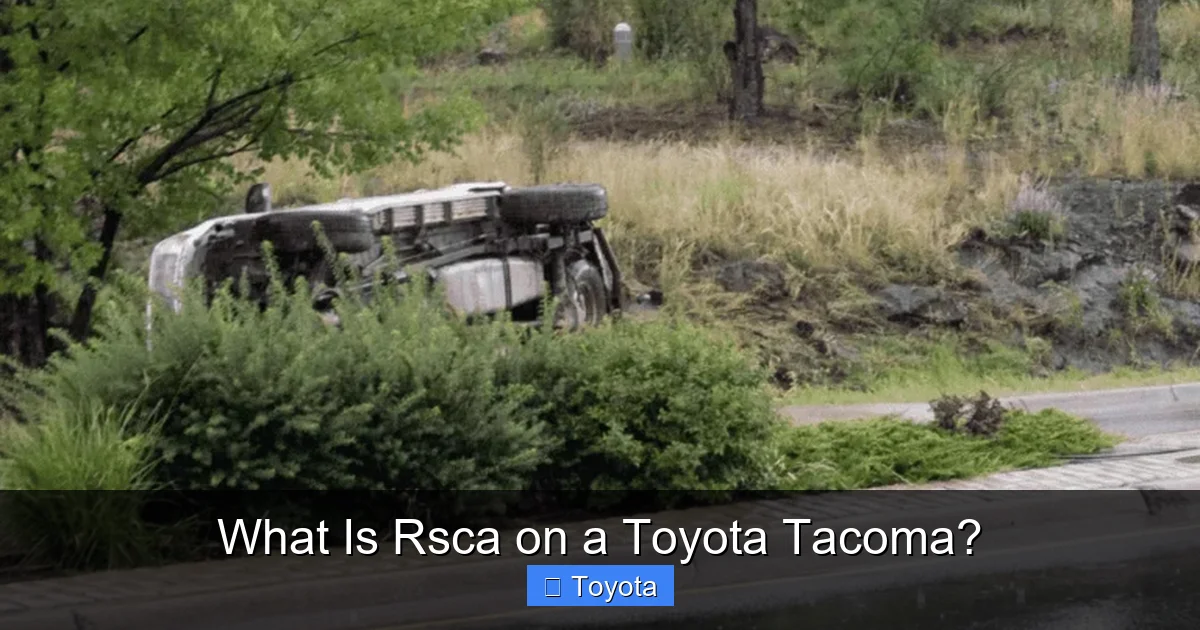
Visual guide about What Is Rsca on a Toyota Tacoma?
Image source: tacomaexplorer.com
So, how exactly does RSCA work? It’s a sophisticated system that relies on a network of sensors, control modules, and inflators to detect and respond to dangerous driving conditions in real time.
Sensor Detection and Monitoring
The RSCA system uses a combination of sensors located throughout the vehicle to monitor its motion and orientation. These include:
– **Yaw rate sensors:** Measure how quickly the vehicle is rotating around its vertical axis.
– **Lateral acceleration sensors:** Detect side-to-side movement, such as when the truck is sliding or tipping.
– **Roll angle sensors:** Track the angle of the vehicle relative to the ground.
– **Impact sensors:** Located in the doors and pillars to detect sudden side impacts.
These sensors constantly feed data to the vehicle’s airbag control module (also known as the SRS—Supplemental Restraint System—module). The module analyzes the data in milliseconds to determine whether a rollover or severe side impact is imminent.
Deployment Triggers
RSCA doesn’t deploy every time you take a sharp turn or drive over a bump. It only activates under specific conditions that indicate a real risk of injury. These include:
– A rollover event, where the vehicle begins to tip onto its side or roof.
– A severe side-impact collision, such as being T-boned by another vehicle.
– A combination of high lateral force and rapid changes in vehicle angle.
When the system detects such conditions, it sends a signal to the inflators in the curtain airbags. These inflators use a chemical reaction to rapidly fill the airbags with gas—usually within 20 to 30 milliseconds. That’s faster than the blink of an eye.
Airbag Deployment and Coverage
Once deployed, the curtain airbags drop down from the roof lining along the side windows. They cover the front and rear side windows, depending on the Tacoma’s configuration. Some models even have dual-stage airbags that can adjust their inflation force based on the severity of the impact.
The airbags are made of a strong, tear-resistant fabric that stays inflated for several seconds—long enough to protect occupants during a rollover, which can involve multiple impacts as the vehicle tumbles. This extended inflation time is a key advantage over front airbags, which deflate quickly after deployment.
Integration with Other Safety Systems
RSCA doesn’t work in isolation. It’s designed to work alongside other safety features for maximum protection. For example:
– **Seatbelt pretensioners** tighten the seatbelts instantly to keep occupants securely in place.
– **Electronic Stability Control (ESC)** helps prevent rollovers by automatically applying brakes to individual wheels if it detects loss of control.
– **Side airbags** protect the torso and chest during side impacts.
When RSCA deploys, it often triggers these other systems as well, creating a coordinated response that gives occupants the best possible chance of avoiding serious injury.
Why Is RSCA Important for Toyota Tacoma Owners?
Visual guide about What Is Rsca on a Toyota Tacoma?
Image source: tacomaexplorer.com
You might be wondering: “Do I really need RSCA? My Tacoma feels safe enough as it is.” The truth is, while the Tacoma is built tough, no vehicle is immune to accidents—especially rollovers, which are more common in taller, narrower vehicles like trucks and SUVs.
Rollover Risk in Trucks
Trucks like the Tacoma have a higher center of gravity compared to sedans or compact cars. This makes them more prone to tipping over during sharp turns, sudden maneuvers, or off-road driving. According to the National Highway Traffic Safety Administration (NHTSA), rollovers account for a significant percentage of fatal crashes involving light trucks.
RSCA directly addresses this risk by providing head protection when it’s needed most. Without it, occupants are more likely to suffer head injuries from contact with the roof, windows, or external objects during a rollover.
Off-Road and Recreational Use
Many Tacoma owners use their trucks for off-roading, camping, or hauling gear. These activities often involve driving on uneven terrain, steep inclines, or loose surfaces—conditions that increase the chance of a rollover. RSCA gives drivers added confidence knowing that their vehicle is equipped to protect them even in challenging environments.
For example, imagine you’re driving up a rocky trail and your truck starts to tilt sideways. Without RSCA, your head could hit the window or roof. But with RSCA, the curtain airbag deploys instantly, cushioning your head and reducing the risk of concussion or skull fracture.
Family and Passenger Safety
If you regularly drive with passengers—especially children or elderly family members—RSCA is even more important. Children are particularly vulnerable to head injuries in side impacts and rollovers because their heads are closer to the windows. RSCA helps create a safer environment for everyone in the vehicle.
Moreover, many insurance companies and safety organizations consider vehicles with advanced airbag systems like RSCA to be lower risk, which could potentially lead to lower insurance premiums.
Which Toyota Tacoma Models Have RSCA?
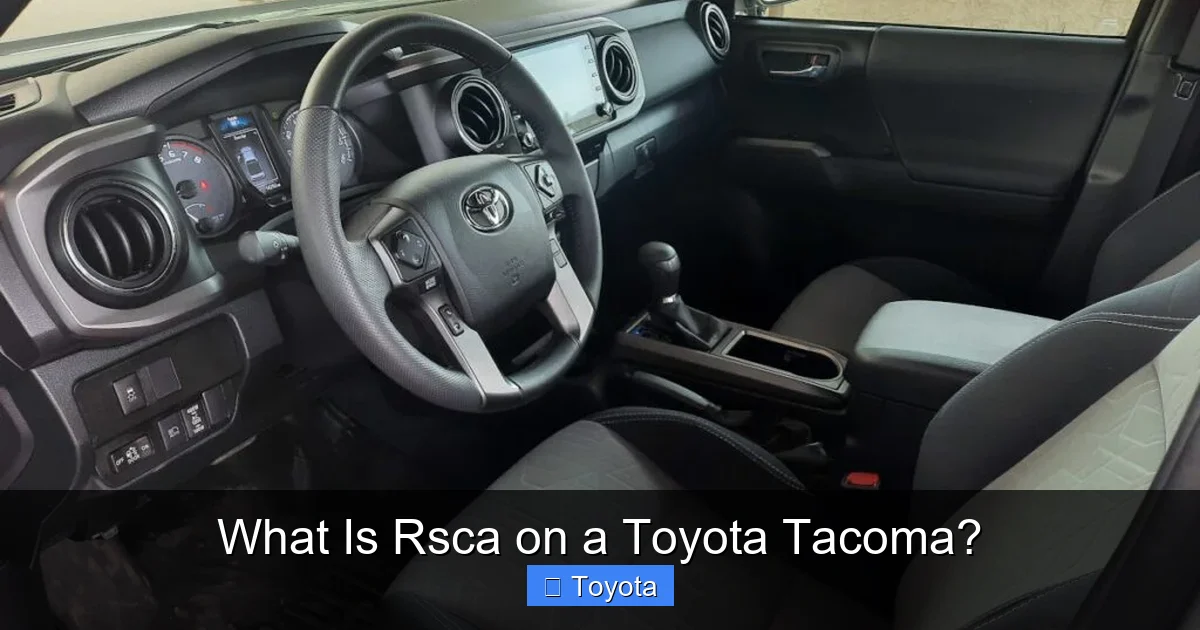
Visual guide about What Is Rsca on a Toyota Tacoma?
Image source: tacomaexplorer.com
RSCA has been a standard or available feature on Toyota Tacomas for many years, but its availability depends on the model year and trim level.
Model Years and Availability
– **2005–2015 (Second Generation):** RSCA was introduced in the 2005 model year and became standard on most trims, especially the SR5, TRD Off-Road, and TRD Sport packages. Base models (like the Work Truck) sometimes had it as an optional upgrade.
– **2016–2023 (Third Generation):** RSCA is standard on all Tacoma models, including the SR, SR5, TRD Sport, TRD Off-Road, Limited, and TRD Pro. Toyota made it a core safety feature across the lineup.
– **2024 and Beyond (Fourth Generation):** The latest Tacoma models continue to include RSCA as standard, now integrated with Toyota’s updated Safety Sense suite, which includes additional driver-assist technologies.
How to Check if Your Tacoma Has RSCA
If you’re unsure whether your Tacoma is equipped with RSCA, here are a few ways to check:
– **Look for airbag labels:** Check the side pillars (B-pillars) and roof lining near the windows. You may see labels that say “SRS Airbag” or “Curtain Shield Airbag.”
– **Review the owner’s manual:** The manual will list all safety features, including RSCA, and explain how they work.
– **Use the VIN decoder:** Enter your Vehicle Identification Number (VIN) on Toyota’s official website or a trusted VIN decoder tool to see the original equipment list.
– **Ask a dealer or technician:** A certified Toyota service center can quickly confirm whether your truck has RSCA.
It’s worth noting that even if your Tacoma doesn’t have RSCA, it likely has other side airbags. However, RSCA offers superior head protection in rollover scenarios, so it’s a valuable feature to have.
Maintenance and What to Do After Deployment
Like any safety system, RSCA requires proper maintenance and attention—especially after it’s been used.
Regular Inspections
While RSCA doesn’t need routine maintenance like oil changes, it’s important to have it inspected during regular service visits. A technician can check the sensors, wiring, and control module to ensure everything is functioning correctly.
Signs that your RSCA system may need attention include:
– The SRS warning light on the dashboard staying on.
– Unusual noises from the roof lining or pillars.
– Previous accident damage to the side of the vehicle.
If any of these occur, have your truck inspected by a certified Toyota technician as soon as possible.
After Airbag Deployment
If your RSCA airbags have deployed, the system must be reset and the components replaced. This is not a DIY job. Here’s what happens:
1. **The vehicle is taken to a certified repair center.** Only trained technicians with the right tools can safely handle airbag systems.
2. **The deployed airbags are removed and replaced.** This includes the curtain airbags, inflators, and sometimes the control module.
3. **The system is recalibrated.** The new components are programmed to work with the vehicle’s safety network.
4. **A final inspection ensures everything is working.** This includes testing the sensors and confirming the SRS light is off.
Attempting to reset or repair the system yourself can be dangerous and may void your warranty. Always rely on professionals.
Cost Considerations
Replacing RSCA components can be expensive—typically ranging from $1,000 to $2,500, depending on the model and labor costs. However, this is a necessary investment for safety. Some insurance policies may cover the cost if the deployment was due to an accident.
Common Misconceptions About RSCA
Despite its importance, there are several myths and misunderstandings about RSCA that are worth clearing up.
Myth: RSCA Only Works in Rollovers
While rollover protection is a key function, RSCA also activates during severe side impacts. If your Tacoma is hit from the side with enough force, the system will deploy the curtain airbags to protect your head.
Myth: Airbags Are Dangerous
Some people worry that airbags can cause injury. While it’s true that airbags deploy with great force, they are designed to cushion occupants, not harm them. The risk of injury from not having an airbag far outweighs the risk from deployment.
Myth: RSCA Can Be Disabled
Unlike some driver-assist features, RSCA cannot be turned off. It’s a critical safety system that operates automatically. Disabling it would compromise your safety and likely violate safety regulations.
Myth: Older Tacomas Don’t Have It
While RSCA became more widespread in the mid-2000s, many older Tacomas (2005 and later) do have it—especially higher trims. Always check your specific model to be sure.
Conclusion
RSCA on a Toyota Tacoma is more than just a technical acronym—it’s a life-saving safety feature that protects you and your passengers during some of the most dangerous driving scenarios. By deploying side curtain airbags during rollovers and severe side impacts, RSCA helps prevent head injuries and gives you greater peace of mind on and off the road.
Whether you’re navigating city streets, cruising down the highway, or exploring rugged trails, your Tacoma’s RSCA system is working silently in the background, ready to respond in an instant. Understanding how it works, why it matters, and how to maintain it ensures that you’re getting the full benefit of this advanced safety technology.
So the next time you see “RSCA” listed in your Tacoma’s features, you’ll know exactly what it means—and why it’s one of the smartest safety investments Toyota has made in its iconic pickup truck.
Frequently Asked Questions
What does RSCA stand for on a Toyota Tacoma?
RSCA stands for Roll Sensing Curtain Shield Airbags. It’s a safety system that deploys side curtain airbags during rollovers or severe side impacts to protect occupants’ heads.
Is RSCA standard on all Toyota Tacomas?
RSCA is standard on most Tacoma models from 2005 onward, especially in higher trims. Since 2016, it has been standard across all trims in the third and fourth generations.
Can RSCA be turned off or disabled?
No, RSCA cannot be disabled. It’s an automatic safety system designed to activate when needed and is essential for occupant protection.
What should I do if my RSCA airbags deploy?
Take your Tacoma to a certified Toyota service center immediately. The deployed airbags and related components must be professionally replaced and the system reset.
Does RSCA only work in rollover accidents?
No, RSCA also activates during severe side-impact collisions. It’s designed to protect heads in both rollover and side crash scenarios.
How can I tell if my Tacoma has RSCA?
Check for “SRS Airbag” labels near the roof lining, review your owner’s manual, or use your VIN on Toyota’s website to confirm the original equipment.
