
How Much Is a 2004 Dodge Durango Worth?

The value of a 2004 Dodge Durango depends on trim, mileage, condition, and location. On average, expect to pay between $2,500 and $5,500, with well-maintained models reaching up to $7,000.
Key Takeaways
- Trim Level Matters: Higher trims like the SLT and Limited hold more value than base models due to added features and comfort.
- Mileage Is a Major Factor: Low-mileage Durangos (under 100,000 miles) command higher prices, while high-mileage units drop significantly in value.
- Condition Drives Price: A well-maintained vehicle with service records can sell for thousands more than one needing repairs.
- Engine Type Affects Value: The 4.7L V8 and 5.7L Hemi engines are more desirable and valuable than the base 3.7L V6.
- Location Impacts Market Price: Prices vary by region due to demand, climate, and local market trends.
- Private vs. Dealer Pricing: Private sellers often offer better deals than dealerships, but with less buyer protection.
- Use Multiple Valuation Tools: Check Kelley Blue Book, Edmunds, and NADA Guides for accurate pricing estimates.
📑 Table of Contents
- How Much Is a 2004 Dodge Durango Worth in 2024?
- Understanding the 2004 Dodge Durango: A Quick Overview
- Factors That Determine the Value of a 2004 Dodge Durango
- How to Determine the Exact Value of Your 2004 Dodge Durango
- Real-World Pricing Examples
- Tips for Buying or Selling a 2004 Dodge Durango
- Common Problems with the 2004 Dodge Durango
- Is a 2004 Dodge Durango Worth Buying in 2024?
- Final Thoughts: How Much Is a 2004 Dodge Durango Worth?
How Much Is a 2004 Dodge Durango Worth in 2024?
If you’re shopping for a used SUV or considering selling your 2004 Dodge Durango, you’re probably wondering: How much is a 2004 Dodge Durango worth? It’s a fair question. This mid-size SUV was a popular choice in the early 2000s, offering a blend of rugged capability, family-friendly space, and V8 power. But after two decades on the road, its value has shifted dramatically.
The short answer? A 2004 Dodge Durango typically ranges from $2,500 to $5,500 in today’s used car market. However, that’s just the average. Some models—especially low-mileage, well-maintained examples with desirable features—can fetch up to $7,000 or more. On the flip side, high-mileage, neglected vehicles might struggle to break $2,000.
But pricing isn’t one-size-fits-all. The real value of your Durango depends on a mix of factors: trim level, engine size, mileage, condition, location, and even color. In this guide, we’ll break down everything you need to know to determine how much your 2004 Dodge Durango is truly worth—whether you’re buying, selling, or just curious.
Understanding the 2004 Dodge Durango: A Quick Overview
Visual guide about How Much Is a 2004 Dodge Durango Worth?
Image source: s1.cdn.autoevolution.com
Before diving into pricing, let’s take a quick look at what made the 2004 Dodge Durango stand out—and why it still holds some appeal today.
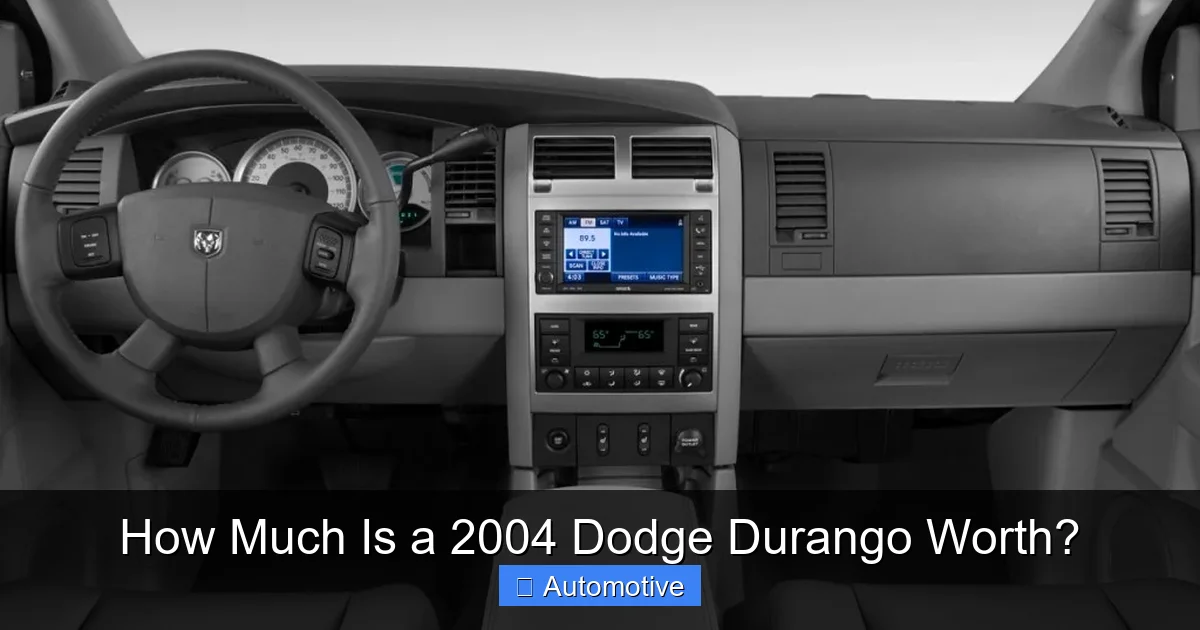
The 2004 Durango was part of the second generation of this popular SUV, which ran from 1998 to 2003 and was refreshed in 2004 with updated styling, improved interiors, and better safety features. It was built on the same platform as the Dodge Dakota pickup truck, giving it a solid, truck-based foundation that delivered strong towing capacity and off-road potential.
Available in rear-wheel drive (RWD) or four-wheel drive (4WD), the Durango was offered in three main trim levels: the base SXT, the mid-range SLT, and the luxury-oriented Limited. Each trim came with different standard features, from basic cloth seats to leather upholstery, power accessories, and premium audio systems.
Under the hood, buyers could choose from three engines:
– A 3.7L V6 (210 hp) – standard on SXT
– A 4.7L V8 (235 hp) – available on SLT and Limited
– A 5.7L Hemi V8 (345 hp) – optional on higher trims, especially in 4WD models
With seating for up to eight passengers and a towing capacity of up to 8,000 pounds (with the Hemi), the Durango was a versatile choice for families, outdoor enthusiasts, and anyone needing serious hauling power.
Why the 2004 Model Year Stands Out
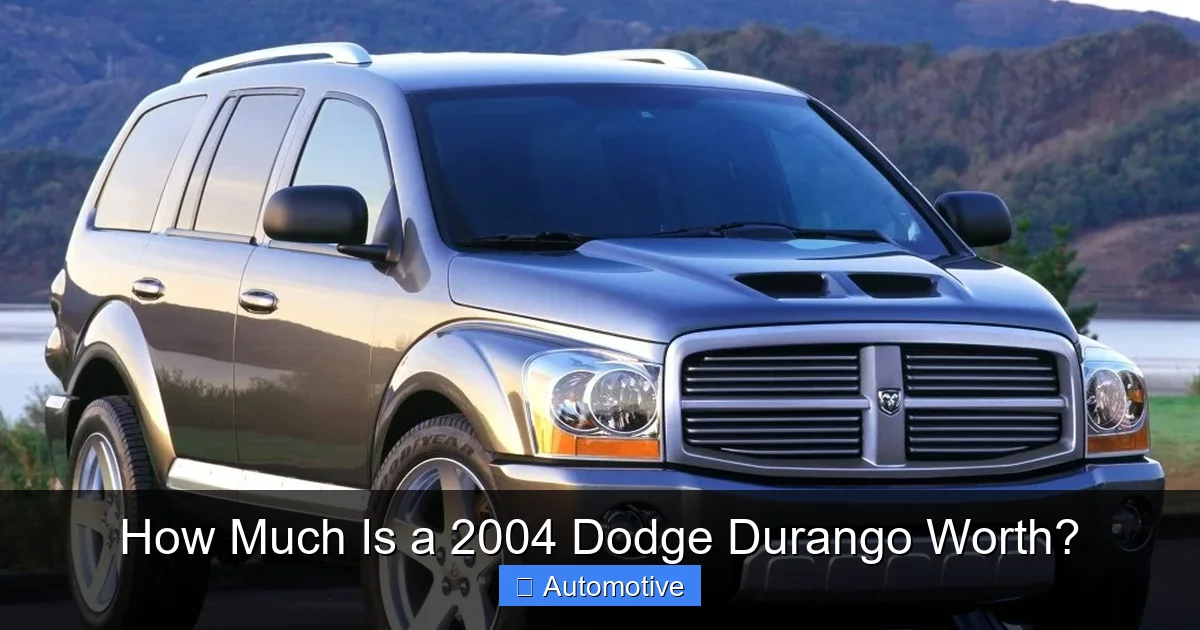
The 2004 model year was significant because it marked a mid-cycle refresh for the Durango. Dodge gave the SUV a more modern look with a revised front grille, updated headlights, and a redesigned interior with better materials and improved ergonomics. Safety was also improved, with standard dual front airbags and optional side airbags.
This refresh helped the 2004 Durango feel more contemporary than its predecessors, which can positively impact its resale value. Additionally, the 2004 model avoided some of the earlier reliability issues that plagued the first-generation Durango, making it a more attractive option for used car buyers.
Factors That Determine the Value of a 2004 Dodge Durango
Visual guide about How Much Is a 2004 Dodge Durango Worth?
Image source: s1.cdn.autoevolution.com
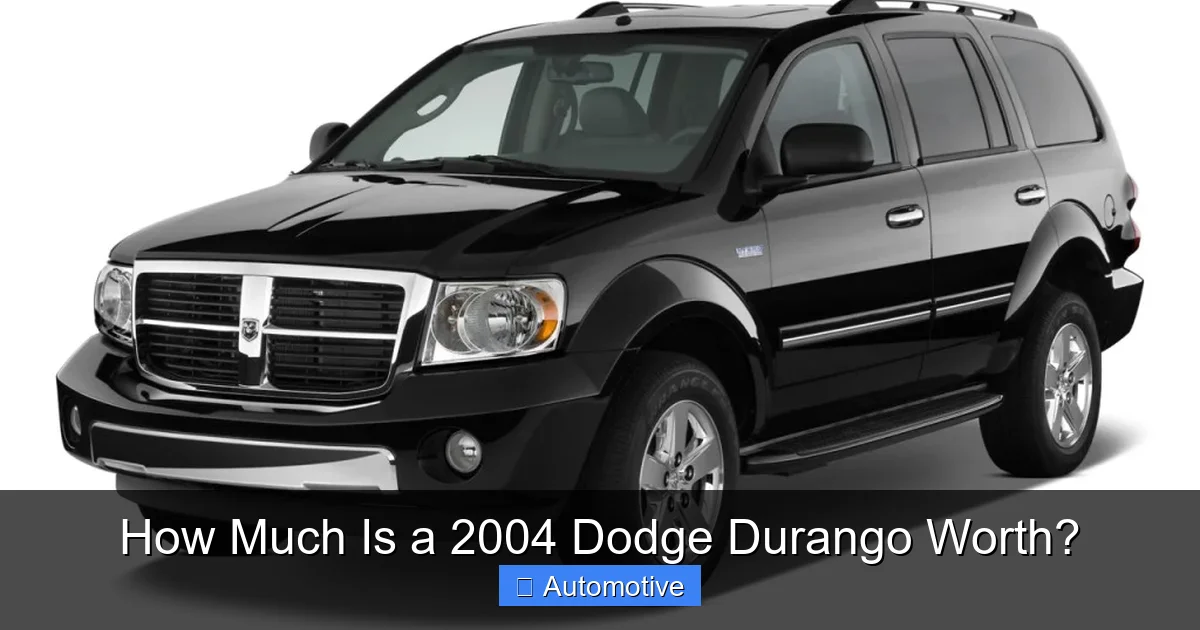
Now that you know what the 2004 Durango is all about, let’s explore the key factors that influence its market value. Understanding these will help you assess whether you’re getting a fair deal—or if your Durango is worth more than you think.
1. Trim Level and Features
Not all 2004 Durangos are created equal. The trim level plays a major role in determining value.
– SXT: The base model comes with the 3.7L V6, cloth seats, manual windows (on some), and minimal tech. These are the least valuable, often priced at the lower end of the spectrum.
– SLT: A step up, the SLT includes the 4.7L V8 (in most cases), power windows and locks, air conditioning, and upgraded interior materials. This is the most common trim on the used market and holds decent value.
– Limited: The top-tier model features leather seats, a premium sound system, power-adjustable front seats, and additional chrome accents. Limited models with the Hemi engine are the most desirable and can command premium prices.
For example, a 2004 Durango Limited with the 5.7L Hemi, low mileage, and a clean history might sell for $6,500–$7,000. Meanwhile, a high-mileage SXT with the V6 might barely break $2,500.
2. Engine Type and Performance
Engine choice is a big deal—especially for buyers who want power and towing capability.
– The 3.7L V6 is adequate for daily driving but lacks the punch of the V8s. It’s also less desirable in the used market, which lowers resale value.
– The 4.7L V8 is a sweet spot for many buyers. It offers strong acceleration, better towing (up to 7,000 lbs), and improved highway passing power. Durangos with this engine typically sell for $500–$1,000 more than V6 models.
– The 5.7L Hemi V8 is the performance king. With 345 horsepower, it transforms the Durango into a capable hauler and weekend warrior. These models are rare and highly sought after, especially in 4WD configurations.
If you’re selling, highlighting the Hemi engine can significantly boost your asking price. Buyers know it’s a powerful, fun-to-drive option—and they’re willing to pay for it.
3. Mileage and Wear
Mileage is one of the most straightforward indicators of value. The lower the miles, the higher the price—generally.
– Under 100,000 miles: These are considered low-mileage for a 20-year-old vehicle. Expect to see prices in the $4,500–$7,000 range, depending on condition.
– 100,000–150,000 miles: This is average mileage for a 2004 Durango. Prices typically fall between $3,000 and $5,000.
– Over 150,000 miles: High-mileage Durangos are common, but they come with risks. Unless meticulously maintained, these vehicles may need major repairs soon. Expect prices under $3,000, often closer to $2,000.
But mileage isn’t the whole story. A 140,000-mile Durango with full service records, new suspension components, and a recent transmission service can be a better buy than a 90,000-mile example with unknown maintenance history.
4. Vehicle Condition and Maintenance History
A clean, well-cared-for Durango will always be worth more than a neglected one—even if the mileage is similar.
Look for signs of good maintenance:
– Regular oil changes (every 3,000–5,000 miles)
– Transmission fluid changes (critical for the 45RFE and 545RFE automatics)
– Brake and suspension inspections
– Rust prevention (especially in snowy climates)
Rust is a common issue on older Durangos, particularly around the wheel wells, rocker panels, and undercarriage. A vehicle with minimal rust will command a higher price than one with visible corrosion.
Interior condition also matters. Stains, tears, or a musty smell can turn buyers away. A clean, odor-free cabin with intact upholstery adds value.
5. Location and Market Demand
Where you live affects how much a 2004 Durango is worth.
In rural or mountainous areas, 4WD Durangos with V8 engines are in higher demand due to their off-road and towing capabilities. You might see prices 10–15% higher in these regions.
In urban areas, fuel efficiency becomes more important, which can make the V6 models slightly more appealing—though still less valuable overall.
Climate also plays a role. Durangos from the southern U.S. (Texas, Florida, Arizona) often have less rust and wear than those from the Northeast or Midwest, where road salt accelerates corrosion.
6. Transmission and Drivetrain
The 2004 Durango came with either a 4-speed automatic (with the V6) or a 5-speed automatic (with the V8s). The 5-speed is more robust and desirable, especially for towing.
4WD models are generally worth more than RWD, particularly in regions with harsh winters or off-road terrain. However, 4WD adds complexity and potential maintenance costs, so some buyers prefer simpler RWD setups.
How to Determine the Exact Value of Your 2004 Dodge Durango
Visual guide about How Much Is a 2004 Dodge Durango Worth?
Image source: s1.cdn.autoevolution.com
So, how do you figure out how much your specific Durango is worth? Here’s a step-by-step guide.
Step 1: Use Online Valuation Tools
Start with trusted sources:
– Kelley Blue Book (KBB): Enter your VIN, trim, mileage, condition, and location. KBB gives a “Private Party” and “Dealer Retail” value.
– Edmunds True Market Value (TMV): Offers a detailed breakdown based on recent sales data.
– NADA Guides: Often used by dealers, NADA tends to be slightly higher than KBB.
For example, a 2004 Durango SLT with 110,000 miles, 4.7L V8, 4WD, and good condition might show:
– KBB Private Party: $4,200
– Edmunds TMV: $4,000
– NADA Clean Retail: $5,100
These tools give you a solid baseline.
Step 2: Check Recent Sales
Search for similar Durangos on:
– Facebook Marketplace
– Craigslist
– Autotrader
– Cars.com
Look at completed listings (not just active ones) to see what people actually paid. Filter by year, trim, mileage, and location to get accurate comparisons.
For instance, you might find a 2004 Durango Limited with 95,000 miles selling for $6,200 in Colorado, while a similar model in Ohio goes for $5,400.
Step 3: Assess Your Vehicle’s Condition
Be honest about your Durango’s condition. Use the following scale:
– Excellent: Like new, no mechanical issues, minimal wear.
– Good: Minor wear, runs well, may need small repairs.
– Fair: Noticeable wear, needs some work, but drivable.
– Poor: Major issues, not roadworthy, or high repair costs.
Adjust your price accordingly. A “Good” condition Durango might be worth 10–15% less than an “Excellent” one.
Step 4: Consider Modifications and Upgrades
Aftermarket modifications can affect value—positively or negatively.
– Positive: New tires, upgraded suspension, performance exhaust, or a quality stereo system can add value if done professionally.
– Negative: Overly aggressive lifts, loud exhausts, or poorly installed electronics can turn off buyers.
Stick to tasteful, functional upgrades if you want to maximize resale value.
Real-World Pricing Examples
Let’s look at a few real-world examples to illustrate how these factors play out.
Example 1: 2004 Durango SXT, 3.7L V6, 145,000 miles, RWD, Fair Condition
– Trim: Base model, minimal features
– Engine: Underpowered V6
– Mileage: High
– Condition: Needs new brakes, interior stains
– Location: Midwest (rust concerns)
– Estimated Value: $2,200–$2,800
Example 2: 2004 Durango SLT, 4.7L V8, 105,000 miles, 4WD, Good Condition
– Trim: Mid-level with power options
– Engine: Strong V8 with good towing
– Mileage: Low for age
– Condition: Clean, recent oil change, minor wear
– Location: Texas (dry climate, low rust)
– Estimated Value: $4,800–$5,500
Example 3: 2004 Durango Limited, 5.7L Hemi, 88,000 miles, 4WD, Excellent Condition
– Trim: Top-tier with leather, sunroof, premium audio
– Engine: High-performance Hemi
– Mileage: Very low
– Condition: Garage-kept, full service records
– Location: Arizona (no rust)
– Estimated Value: $6,500–$7,200
These examples show how small differences in specs can lead to big price gaps.
Tips for Buying or Selling a 2004 Dodge Durango
Whether you’re in the market to buy or ready to sell, here are some practical tips to get the best deal.
For Buyers: What to Look For
– Get a Pre-Purchase Inspection (PPI): Have a trusted mechanic check the engine, transmission, suspension, and frame. This can save you from costly surprises.
– Check for Recalls: The 2004 Durango had a few recalls, including issues with the ignition switch and airbags. Make sure they’ve been addressed.
– Test the 4WD System: If buying a 4WD model, engage all modes (2H, 4H, 4L) to ensure they work properly.
– Ask for Maintenance Records: A well-documented service history is a strong indicator of a cared-for vehicle.
For Sellers: How to Maximize Value
– Clean It Thoroughly: A detailed wash, wax, and interior cleaning can make a big difference. Consider professional detailing.
– Fix Minor Issues: Replace burnt-out bulbs, fix door locks, or patch small tears. These small touches show pride of ownership.
– Gather Documentation: Have your service records, owner’s manual, and any repair receipts ready.
– Price Competitively: Research similar listings and price yours slightly below to attract quick interest.
Common Problems with the 2004 Dodge Durango
No vehicle is perfect, and the 2004 Durango has its share of known issues. Being aware of these can help you avoid trouble—or negotiate a better price.
Transmission Issues
The 45RFE and 545RFE automatic transmissions are prone to failure if not properly maintained. Symptoms include slipping, harsh shifts, or failure to engage gears. Regular fluid changes every 30,000–50,000 miles are critical.
Electrical Problems
Some owners report issues with the Powertrain Control Module (PCM), instrument cluster, or wiring harnesses. These can cause erratic behavior or warning lights.
Suspension and Steering Wear
With age, ball joints, tie rods, and control arms wear out. Listen for clunking noises over bumps or uneven tire wear.
Engine Oil Consumption
The 4.7L and 5.7L V8 engines can burn oil over time, especially with high mileage. Check the dipstick regularly and top off as needed.
Rust and Corrosion
As mentioned, rust is a common issue. Inspect the undercarriage, wheel wells, and frame rails carefully.
Is a 2004 Dodge Durango Worth Buying in 2024?
So, after all this, is the 2004 Durango still a good buy?
For the right buyer, absolutely.
If you need a rugged, capable SUV with V8 power, towing ability, and three rows of seating—and you’re okay with higher fuel costs and older technology—the Durango can be a solid choice. It’s especially appealing if you find a well-maintained example with low mileage and a strong service history.
However, it’s not for everyone. Fuel economy is poor (13–17 mpg combined), and modern safety features like blind-spot monitoring or automatic emergency braking are absent. Reliability can be hit-or-miss without diligent maintenance.
But for under $6,000, you can get a lot of vehicle—especially if you’re handy with repairs or plan to keep it for several more years.
Final Thoughts: How Much Is a 2004 Dodge Durango Worth?
So, how much is a 2004 Dodge Durango worth?
The answer depends on a combination of factors: trim, engine, mileage, condition, and location. On average, expect to pay between $2,500 and $5,500. Exceptional examples—especially Hemi-powered Limited models with low mileage—can reach $7,000 or more.
Whether you’re buying or selling, do your homework. Use valuation tools, compare similar vehicles, and don’t overlook the importance of maintenance history and overall condition.
The 2004 Durango may be two decades old, but with the right care, it still has plenty of life left. And for the right person, it’s a rugged, capable SUV that offers great value in today’s used market.
Frequently Asked Questions
What is the average price of a 2004 Dodge Durango?
The average price ranges from $2,500 to $5,500, depending on trim, mileage, and condition. Well-maintained, low-mileage models with V8 engines can exceed $6,000.
Is the 2004 Dodge Durango reliable?
The Durango can be reliable with proper maintenance, but it has known issues like transmission wear and electrical problems. Regular servicing is key to longevity.
Which engine is best in the 2004 Durango?
The 5.7L Hemi V8 is the most powerful and desirable, offering 345 horsepower and strong towing. The 4.7L V8 is a good balance of power and efficiency.
How many miles will a 2004 Dodge Durango last?
With proper care, a 2004 Durango can last 200,000 miles or more. However, major components like the transmission may need rebuilding around 150,000 miles.
Should I buy a 2004 Durango with high mileage?
Only if it has a strong maintenance history and passes a pre-purchase inspection. High-mileage Durangos can be risky without documented care.
Can a 2004 Dodge Durango tow a trailer?
Yes, especially with the 4.7L or 5.7L V8. Towing capacity ranges from 6,000 to 8,000 pounds, depending on configuration and equipment.
