
Does Toyota Make a 3/4 Ton Pickup

No, Toyota does not currently offer a true 3/4 ton pickup truck. While the Toyota Tundra is a capable full-size pickup with impressive towing and payload ratings, it falls short of the traditional 3/4 ton classification. For buyers needing that level of heavy-duty performance, Ford, Chevrolet, GMC, and Ram remain the go-to brands.
If you’re in the market for a heavy-duty pickup truck and you’re a loyal Toyota fan, you might be wondering: Does Toyota make a 3/4 ton pickup? It’s a fair question—Toyota has built a reputation for building some of the most reliable, long-lasting trucks on the road. From the rugged Tacoma to the powerful Tundra, the brand is known for durability and off-road prowess. But when it comes to the heavy-hitting 3/4 ton category—the kind of truck that can tow a large camper, haul a loaded trailer, or pull a horse trailer with ease—Toyota’s lineup falls short.
The short answer? No, Toyota does not currently produce a 3/4 ton pickup truck. The company’s flagship full-size truck, the Toyota Tundra, is classified as a half-ton pickup. That doesn’t mean it’s weak—far from it. In fact, the Tundra is one of the most capable half-ton trucks available today. But in the world of pickup classifications, “3/4 ton” refers to a specific level of engineering, payload, and towing strength that the Tundra, despite its improvements, doesn’t quite reach.
So why does this distinction matter? And what does it mean for buyers who need serious hauling power but still want the reliability Toyota is known for? Let’s dive deep into what defines a 3/4 ton truck, how the Tundra stacks up, and whether Toyota might ever enter the heavy-duty arena.
Key Takeaways
- Toyota does not manufacture a 3/4 ton pickup: The brand’s only full-size truck, the Tundra, is classified as a half-ton pickup, despite its strong capabilities.
- The Toyota Tundra offers robust towing and payload: With up to 12,000 pounds of towing capacity and a payload over 1,900 pounds, it rivals some 3/4 ton trucks in real-world use.
- 3/4 ton trucks are built for heavier workloads: These vehicles typically feature stronger frames, axles, and suspension systems designed for frequent heavy hauling and towing.
- Toyota focuses on reliability and refinement: Instead of competing on brute strength, Toyota emphasizes durability, fuel efficiency, and advanced safety features in its trucks.
- Aftermarket upgrades can enhance Tundra performance: Owners can modify suspension, tires, and drivetrains to better handle heavier loads, though this may affect warranty and longevity.
- Consider your actual needs before choosing a truck class: Many drivers overestimate their towing requirements—half-ton trucks like the Tundra often meet or exceed everyday demands.
- Toyota may expand its truck lineup in the future: Rumors and market trends suggest Toyota could introduce a heavier-duty model, but nothing has been confirmed yet.
📑 Table of Contents
- Understanding Truck Classifications: What Is a 3/4 Ton Pickup?
- The Toyota Tundra: Toyota’s Answer to Full-Size Trucks
- Why Toyota Doesn’t Make a 3/4 Ton Pickup
- Can the Tundra Handle 3/4 Ton Tasks?
- Should You Buy a Tundra or Look Elsewhere?
- The Future: Will Toyota Ever Make a 3/4 Ton Pickup?
- Conclusion: The Tundra Is Capable—But Not a 3/4 Ton
Understanding Truck Classifications: What Is a 3/4 Ton Pickup?
Before we can answer whether Toyota makes a 3/4 ton pickup, we need to understand what that term actually means. Truck classifications like “half-ton,” “3/4 ton,” and “one-ton” originated decades ago and were based on payload capacity. A half-ton truck could carry 1,000 pounds, a 3/4 ton could carry 1,500 pounds, and a one-ton truck could handle 2,000 pounds. While modern trucks far exceed those numbers, the terms stuck—and they’re still used today to help buyers understand a truck’s intended use.
A 3/4 ton pickup is designed for heavier workloads than a standard half-ton. These trucks typically feature:
– A reinforced frame and chassis
– Heavy-duty suspension systems
– Larger axles and brakes
– Higher towing and payload ratings
– Dual rear wheels (DRW) on some models for added stability
Brands like Ford (F-250), Chevrolet (Silverado 2500), GMC (Sierra 2500), and Ram (2500) dominate this segment. These trucks are built for people who regularly tow large trailers, haul heavy equipment, or work in industries like construction, agriculture, or ranching.
In contrast, half-ton trucks like the Toyota Tundra, Ford F-150, Chevrolet Silverado 1500, and Ram 1500 are designed for everyday driving, light to moderate towing, and general utility. They’re more fuel-efficient, easier to maneuver, and often more comfortable for daily use.
The Toyota Tundra: Toyota’s Answer to Full-Size Trucks
Visual guide about Does Toyota Make a 3/4 Ton Pickup
Image source: i.redd.it
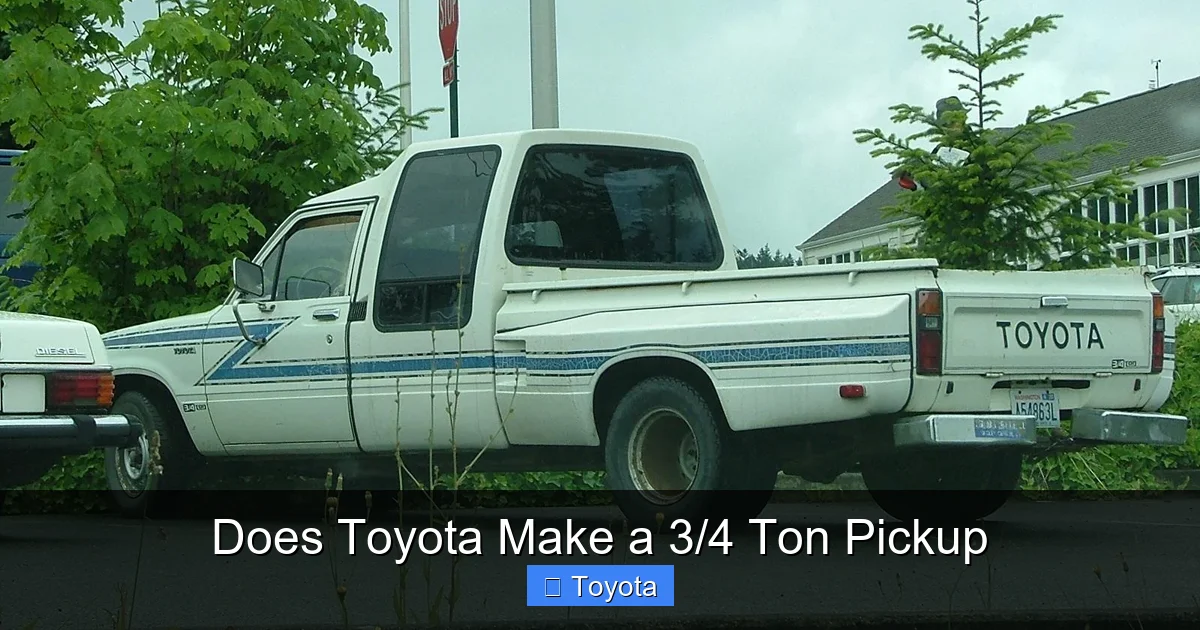
So where does the Toyota Tundra fit in? As Toyota’s only full-size pickup, the Tundra is the closest thing the brand has to a heavy-duty truck. And while it’s not a 3/4 ton, it’s no slouch.
The latest generation Tundra, introduced in 2022, represents a major leap forward for Toyota. It features a completely redesigned platform, a new twin-turbocharged V6 engine, and a host of modern tech and safety features. The standard engine is a 3.5-liter i-FORCE V6 that produces 389 horsepower and 479 lb-ft of torque. There’s also an optional hybrid version, the i-FORCE MAX, which bumps output to 437 horsepower and 583 lb-ft of torque.
But how does that translate to real-world performance?
Towing and Payload Capacity
One of the most important metrics for any truck is its towing and payload capacity. The Tundra shines here, especially for a half-ton truck.
– Maximum Towing Capacity: Up to 12,000 pounds when properly equipped (with the i-FORCE MAX engine and tow package).
– Maximum Payload: Up to 1,940 pounds, depending on configuration.
To put that in perspective, 12,000 pounds is enough to tow a large travel trailer, a medium-sized boat, or even a small horse trailer. Many 3/4 ton trucks offer towing capacities in the 15,000 to 18,000-pound range, but the Tundra’s 12,000-pound rating is competitive with some entry-level 3/4 ton models.
For example, the base Ford F-250 can tow around 12,500 pounds, while the base Ram 2500 can handle about 12,750 pounds. So while the Tundra doesn’t surpass these numbers, it’s in the same ballpark—especially when you consider that most drivers don’t regularly tow near their truck’s maximum capacity.
Engine and Drivetrain Options
The Tundra’s engine lineup is another area where Toyota has made significant improvements. The old 5.7-liter V8 is gone, replaced by the more efficient and powerful twin-turbo V6. This engine not only delivers strong performance but also improves fuel economy—something that’s increasingly important for truck buyers.
The i-FORCE MAX hybrid system is particularly impressive. It uses an electric motor sandwiched between the engine and transmission to provide instant torque and smoother acceleration. This setup also helps with towing, as the electric motor can assist during low-speed maneuvers like backing up a trailer.
All Tundras come with a 10-speed automatic transmission and either rear-wheel drive (RWD) or four-wheel drive (4WD). The 4WD system includes multiple drive modes, including a low-range transfer case for off-road use, making the Tundra a versatile choice for both work and play.
Suspension and Chassis Design
One reason the Tundra doesn’t qualify as a 3/4 ton truck is its suspension and chassis design. While it uses a robust body-on-frame construction, it doesn’t have the reinforced components found in true heavy-duty trucks.
For example, 3/4 ton trucks often feature:
– Leaf springs with more leaves or helper springs
– Larger shock absorbers
– Heavy-duty rear axles (often Dana 60 or equivalent)
– Dual rear wheels on some models for increased stability
The Tundra uses a traditional leaf spring rear suspension, but it’s not as heavy-duty as what you’d find on an F-250 or Silverado 2500. It’s designed for comfort and everyday use, not constant heavy hauling.
That said, Toyota has made efforts to improve the Tundra’s ride quality. The new model features a coil-spring rear suspension on some trims (a first for the Tundra), which provides a smoother ride and better handling. This is great for daily driving but may not hold up as well under extreme loads over time.
Why Toyota Doesn’t Make a 3/4 Ton Pickup
Visual guide about Does Toyota Make a 3/4 Ton Pickup
Image source: vehiclerides.com
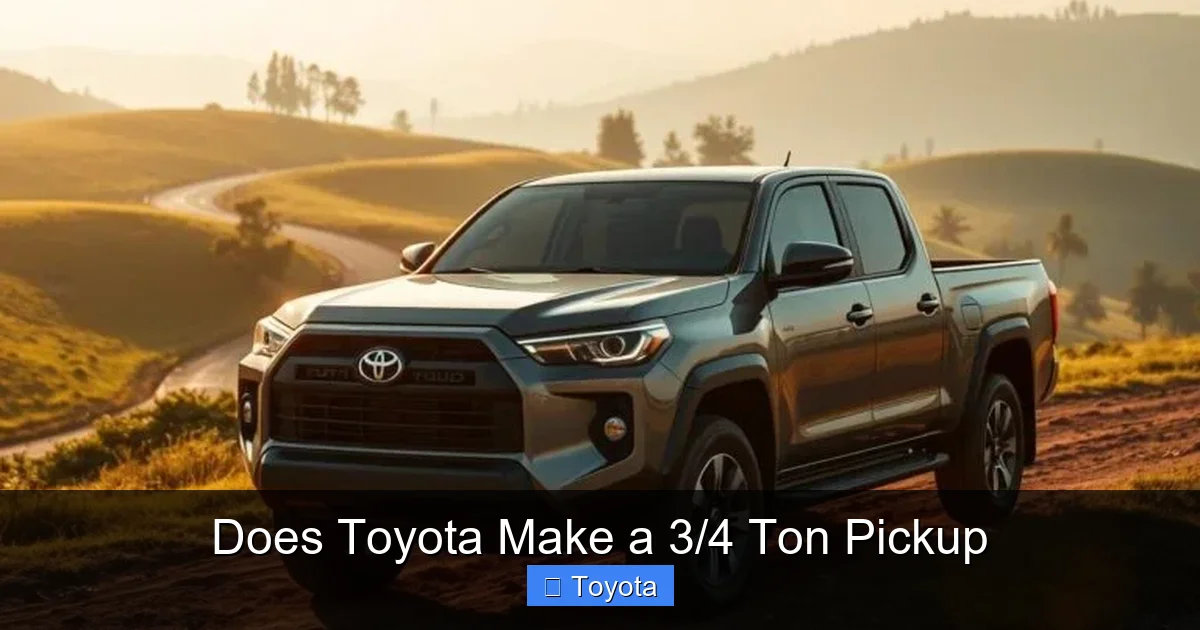
Given Toyota’s engineering expertise and global presence, you might wonder why the company hasn’t entered the 3/4 ton market. After all, competitors like Ford, GM, and Ram have dominated this space for decades. So what’s holding Toyota back?
Market Strategy and Brand Focus
Toyota’s truck strategy has always been different from American automakers. While Ford and GM have long offered a full range of trucks—from light-duty to heavy-duty—Toyota has focused on a smaller, more targeted lineup.
The Tacoma dominates the mid-size truck market, known for its off-road capability and legendary reliability. The Tundra serves as Toyota’s full-size offering, but it’s positioned more as a premium, refined alternative to the F-150 or Silverado 1500, rather than a workhorse like the F-250.
Toyota’s brand identity centers on reliability, fuel efficiency, and long-term value. Heavy-duty trucks, by contrast, are often associated with high fuel consumption, frequent maintenance, and rugged, no-frills design. By avoiding the 3/4 ton segment, Toyota can maintain its reputation for quality and efficiency without competing in a market that values raw power over refinement.
Global Market Considerations
Another factor is Toyota’s global presence. In many international markets, full-size pickup trucks—especially heavy-duty ones—are less common. Instead, consumers prefer smaller pickups, SUVs, or commercial vehicles.
For example, in Europe and Asia, Toyota sells models like the Hilux and Land Cruiser, which are built for durability and off-road use but aren’t classified as full-size trucks. The Tundra is primarily sold in North America, where the pickup market is dominated by American brands.
Introducing a 3/4 ton truck would require significant investment in engineering, manufacturing, and marketing—resources that Toyota may prefer to allocate to other segments, such as hybrid vehicles, SUVs, or electric trucks.
Lack of Diesel Option
One hallmark of 3/4 ton trucks is the availability of diesel engines. Diesel powerplants offer superior torque, better fuel economy under load, and longer engine life—ideal for towing and hauling.
The Tundra does not offer a diesel engine. While the i-FORCE MAX hybrid provides strong torque, it doesn’t match the low-end grunt of a diesel. Ford, GM, and Ram all offer diesel options in their 3/4 ton trucks, giving them an edge in heavy-duty applications.
Toyota has been slow to adopt diesel technology in its U.S. trucks, likely due to emissions regulations and a focus on hybrid and electric powertrains. Without a diesel option, it’s harder for the Tundra to compete in the heavy-duty space.
Can the Tundra Handle 3/4 Ton Tasks?
Visual guide about Does Toyota Make a 3/4 Ton Pickup
Image source: carandmotor.gr
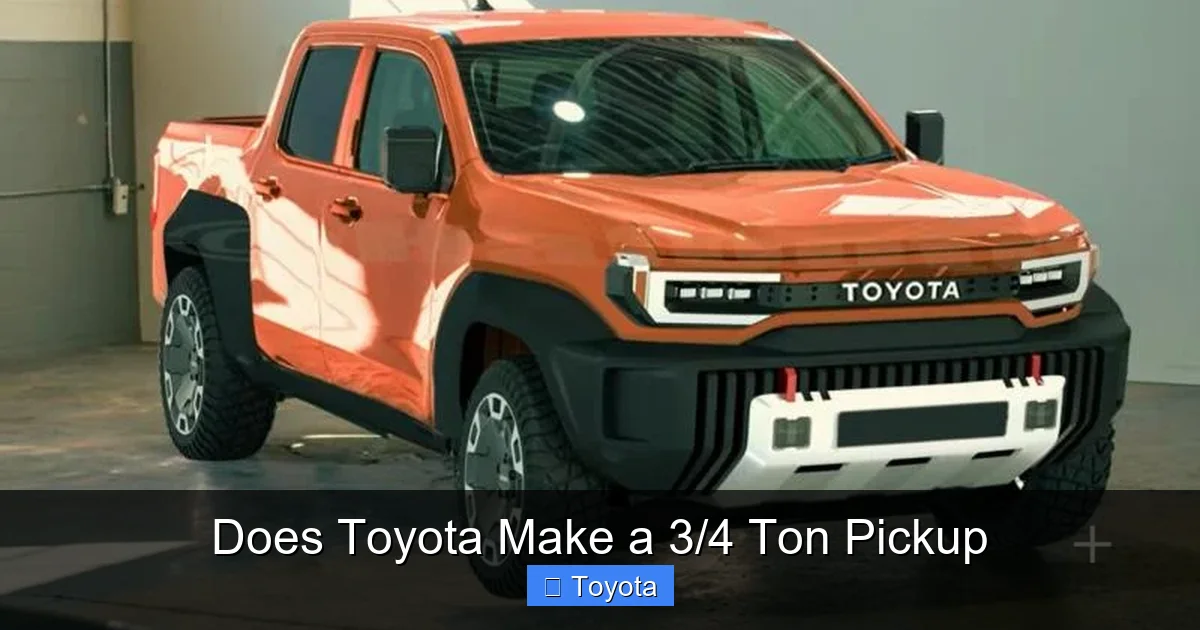
So, even though the Tundra isn’t a 3/4 ton truck, can it still handle the jobs that typically require one? The answer is: it depends.
For many drivers, the Tundra’s capabilities are more than sufficient. If you’re towing a 10,000-pound trailer a few times a year or hauling a few thousand pounds of gear on weekends, the Tundra will do the job with ease—and likely with better fuel economy and a more comfortable ride than a true 3/4 ton truck.
But if you’re regularly towing near the 12,000-pound limit, hauling heavy loads daily, or working in extreme conditions (like mountainous terrain or muddy job sites), a 3/4 ton truck may be a better fit. These vehicles are built to handle constant stress without breaking down.
Real-World Examples
Let’s look at a few scenarios:
– Weekend Camper: You tow a 9,000-pound travel trailer to the mountains every other weekend. The Tundra can handle this with room to spare. Its advanced towing features, like trailer sway control and integrated brake controller, make the experience smooth and safe.
– Ranch Work: You need to haul hay bales, livestock feed, or equipment across rough terrain. A 3/4 ton truck with a stronger suspension and higher payload would be more durable over time. The Tundra could manage, but it might wear out faster under constant heavy use.
– Construction Contractor: You’re towing a 14,000-pound equipment trailer daily. The Tundra’s 12,000-pound max towing capacity isn’t enough. You’d need an F-250, Silverado 2500, or similar.
In short, the Tundra is a great all-around truck, but it’s not designed for the relentless demands of heavy-duty work.
Aftermarket Upgrades: Pushing the Limits
Some Tundra owners choose to modify their trucks to handle heavier loads. Common upgrades include:
– Heavy-duty suspension kits (like those from Fox or Icon)
– Upgraded shocks and springs
– Larger tires with higher load ratings
– Reinforced bumpers and hitches
These modifications can improve towing stability and payload capacity, but they come with trade-offs. They may void parts of your warranty, reduce ride comfort, and increase wear on other components. Plus, they don’t change the fundamental design limitations of the truck.
If you’re considering modifications, consult a professional and understand the risks. It’s often better to choose the right tool for the job from the start.
Should You Buy a Tundra or Look Elsewhere?
If you’re set on a Toyota but need heavy-duty capability, the Tundra is still a strong contender—especially if your needs fall within its limits. But if you truly require a 3/4 ton truck, you’ll need to look at other brands.
Pros of the Tundra
– Excellent reliability and resale value
– Smooth, comfortable ride
– Advanced safety features (Toyota Safety Sense 2.5 standard)
– Strong towing for a half-ton truck
– Hybrid option for better efficiency
Cons of the Tundra
– Not a true 3/4 ton truck
– No diesel engine option
– Limited payload compared to heavy-duty competitors
– Higher starting price than some rivals
Alternatives to Consider
If you need a 3/4 ton truck, here are some top options:
– Ford F-250 Super Duty: Best-in-class towing, available diesel, rugged build.
– Chevrolet Silverado 2500HD: Strong V8 and diesel options, comfortable interior.
– Ram 2500: Luxurious cabin, excellent ride quality, available Cummins diesel.
– GMC Sierra 2500HD: Premium features, strong towing, refined design.
These trucks are built for heavy work and will outperform the Tundra in extreme conditions.
The Future: Will Toyota Ever Make a 3/4 Ton Pickup?
It’s possible—but not guaranteed. Toyota has been expanding its truck lineup in recent years, and the success of the new Tundra shows the brand is serious about competing in the full-size segment.
There have been rumors of a “Tundra HD” or a heavier-duty version of the truck, possibly with a diesel engine or even a hydrogen fuel cell option (Toyota is investing heavily in hydrogen technology). However, no official plans have been announced.
Market trends also play a role. As electric trucks gain popularity, Toyota may focus on developing an electric heavy-duty truck rather than a traditional 3/4 ton model. The company has already shown concepts like the Toyota Electric Tacoma and is working on hydrogen-powered prototypes.
For now, Toyota seems content to let American brands dominate the heavy-duty space while it focuses on reliability, innovation, and sustainability.
Conclusion: The Tundra Is Capable—But Not a 3/4 Ton
So, does Toyota make a 3/4 ton pickup? The answer remains no. The Toyota Tundra is a powerful, well-built full-size truck that punches above its weight in many areas, but it doesn’t meet the engineering and performance standards of a true 3/4 ton pickup.
That doesn’t make it a bad choice. For many drivers, the Tundra offers the perfect balance of capability, comfort, and reliability. It can handle most towing and hauling tasks with ease, and it does so with a level of refinement that many competitors can’t match.
But if your work or lifestyle demands the extra strength, durability, and towing power of a 3/4 ton truck, you’ll need to look beyond Toyota. Brands like Ford, Chevrolet, GMC, and Ram have spent decades perfecting their heavy-duty offerings, and they remain the best choice for serious hauling.
Ultimately, the right truck depends on your needs. Don’t let brand loyalty cloud your judgment—choose the vehicle that fits your lifestyle, not just your preferences. And if you do go with the Tundra, know that you’re getting a capable, dependable truck that’s built to last—just not one that’s officially a 3/4 ton.
Frequently Asked Questions
Does Toyota make a 3/4 ton pickup?
No, Toyota does not currently manufacture a 3/4 ton pickup truck. The Toyota Tundra is classified as a half-ton truck, despite its strong towing and payload capabilities.
What is the towing capacity of the Toyota Tundra?
The Toyota Tundra can tow up to 12,000 pounds when properly equipped with the i-FORCE MAX hybrid engine and tow package. This makes it one of the strongest half-ton trucks on the market.
Can the Tundra handle heavy-duty towing like a 3/4 ton truck?
The Tundra can handle many heavy towing tasks, but it’s not built for constant extreme loads. For frequent heavy hauling, a true 3/4 ton truck like the Ford F-250 or Ram 2500 is a better choice.
Why doesn’t Toyota offer a 3/4 ton pickup?
Toyota focuses on reliability, fuel efficiency, and refinement rather than competing in the heavy-duty segment. The company also lacks a diesel engine option and has a different global market strategy.
Will Toyota ever make a 3/4 ton truck?
There are rumors, but no official plans. Toyota may explore electric or hydrogen-powered heavy-duty trucks in the future, but a traditional 3/4 ton model is not currently in production.
What are the best alternatives to the Tundra for heavy-duty use?
Top 3/4 ton alternatives include the Ford F-250 Super Duty, Chevrolet Silverado 2500HD, GMC Sierra 2500HD, and Ram 2500—all of which offer higher towing, payload, and durability for heavy work.
