
How Much Is a 1998 Jeep Wrangler Worth?

The value of a 1998 Jeep Wrangler depends on condition, mileage, trim, and modifications. On average, expect to pay between $8,000 and $18,000, with pristine or lifted models fetching higher prices. Whether you’re buying or selling, knowing what affects worth helps you make smart decisions.
[FEATURED_IMAGE_PLACEOLDER]
If you’re thinking about buying or selling a 1998 Jeep Wrangler, you’re probably wondering: *How much is a 1998 Jeep Wrangler worth?* It’s a fair question—and one that doesn’t have a single, simple answer. Unlike new cars with fixed MSRPs, the value of a nearly 30-year-old vehicle depends on a mix of factors, from its mechanical condition to its history, location, and even how much someone else wants it.
The 1998 Jeep Wrangler is part of the TJ generation, which ran from 1997 to 2006. This model year is especially notable because it was the first to feature the now-iconic coil-spring suspension, replacing the older leaf-spring setup. That change gave the TJ a smoother ride and better off-road performance, making it a favorite among Jeep lovers. But even with its popularity, not all 1998 Wranglers are created equal. Some are barely running, while others have been lovingly restored or upgraded into trail-ready machines.
So, how do you figure out what yours—or one you’re eyeing—is actually worth? The short answer: it depends. But don’t worry. In this guide, we’ll walk you through everything that affects the value of a 1998 Jeep Wrangler, from average price ranges to insider tips for buyers and sellers. Whether you’re a first-time Jeep owner or a seasoned off-roader, this breakdown will help you understand the real market value and make a confident decision.
Key Takeaways
- Condition is king: A well-maintained 1998 Jeep Wrangler with low mileage and no rust will command a much higher price than one in poor shape.
- Trim level matters: The Sahara and Sport trims typically hold more value than the base model due to added features and desirability.
- Modifications can help or hurt: Lift kits and off-road upgrades may increase appeal to enthusiasts but can lower value for buyers seeking stock vehicles.
- Mileage plays a big role: Jeeps under 100,000 miles are rare and more valuable; high-mileage models may still be worth it if properly maintained.
- Location impacts pricing: Prices vary by region—rust-free Jeeps in dry climates (like Arizona) often sell for more than those in snowy areas.
- Originality adds value: Unmodified, factory-original Wranglers with documentation are increasingly sought after by collectors.
- Market trends shift: Classic and vintage Jeeps are gaining popularity, pushing values up for clean, drivable examples.
📑 Table of Contents
Average Market Value of a 1998 Jeep Wrangler
When it comes to pricing, the 1998 Jeep Wrangler typically falls into a range of $8,000 to $18,000, depending on condition and specs. That’s a wide window—and for good reason. A base-model Wrangler with high mileage, body rust, and mechanical issues might sell for as little as $5,000, especially if it’s been sitting in a snowy state for years. On the flip side, a low-mileage, rust-free Sahara with a clean title and full service history could easily fetch $20,000 or more, especially if it’s unmodified and original.
Let’s break that down with some real-world examples. A 1998 Wrangler Sport with 150,000 miles, minor cosmetic wear, and no major mechanical problems might list for around $9,500. That’s a fair price for a dependable daily driver or weekend trail rig. Meanwhile, a 1998 Sahara with only 70,000 miles, a factory hardtop, and a documented maintenance record could command $16,000 or more—especially if it’s never been lifted or heavily modified.
It’s also worth noting that the used car market has seen a surge in demand for older, simpler vehicles like the TJ Wrangler. With modern SUVs becoming more complex and expensive, many buyers are turning to classic Jeeps for their reliability, simplicity, and off-road capability. This trend has helped stabilize—and in some cases, increase—the value of well-kept 1998 models.
Price Ranges by Condition
To give you a clearer picture, here’s a general breakdown of what you might expect to pay based on the Jeep’s overall condition:
– Project or parts vehicle: $3,000–$6,000. These are typically non-running, rusty, or heavily damaged Jeeps best suited for restoration or salvage.
– Fair condition: $6,000–$9,000. Functional but showing signs of wear—think faded paint, minor rust, higher mileage, and maybe a few mechanical quirks.
– Good condition: $9,000–$13,000. Runs well, drives smoothly, and has been maintained. May have some cosmetic flaws but no major issues.
– Excellent condition: $13,000–$18,000. Low mileage, minimal wear, clean title, and strong maintenance history. Often includes desirable features like a hardtop or factory options.
– Showroom or collector condition: $18,000–$25,000+. Rare, pristine examples with original parts, low miles, and full documentation. These are becoming harder to find.
Keep in mind that these are averages. A lifted Wrangler with a custom suspension, winch, and off-road tires might sell for more to the right buyer—even if it’s not “original.” But for most buyers, especially those looking for a reliable daily driver, condition and originality still reign supreme.
Factors That Affect the Value of a 1998 Jeep Wrangler
Visual guide about How Much Is a 1998 Jeep Wrangler Worth?
Image source: cdn.dealeraccelerate.com
Now that you have a ballpark figure, let’s dig into the details. Several key factors can push a 1998 Jeep Wrangler’s value up or down. Understanding these will help you assess any listing—and negotiate wisely.
Mileage and Mechanical Condition
Mileage is one of the first things buyers look at—and for good reason. The 1998 Wrangler’s 4.0L inline-six engine is known for its durability, but even the toughest engines wear out over time. A Jeep with under 100,000 miles is considered low mileage for its age and will naturally command a premium. Anything under 80,000 miles is rare and highly desirable.
But mileage alone doesn’t tell the whole story. A high-mileage Jeep that’s been well-maintained—with regular oil changes, timing chain replacements, and suspension work—can be a better buy than a low-mileage one that’s been neglected. Always ask for service records and consider getting a pre-purchase inspection (PPI) from a trusted mechanic, especially if you’re buying privately.
Body and Frame Condition
Rust is the enemy of any older Jeep—and the 1998 Wrangler is no exception. The frame, floor pans, rocker panels, and wheel wells are common rust spots, especially in areas that use road salt in winter. A little surface rust might be manageable, but structural rust can be costly to repair and significantly reduce value.
Look for signs of previous rust repair, such as uneven paint, weld marks, or filler. A clean, rust-free frame is a major selling point and can add thousands to the price. In dry climates like Arizona or Nevada, rust-free TJs are more common—and often priced higher—than in the Midwest or Northeast.
Trim Level and Features
Not all 1998 Wranglers are built the same. The three main trims—Sport, Sahara, and the rare Rio Grande—offer different levels of equipment and appeal.
The Sport is the base model, usually equipped with a soft top, manual windows, and minimal amenities. It’s the most common and typically the least expensive.
The Sahara comes with upgrades like alloy wheels, power steering, air conditioning, and premium interior trim. It’s more desirable and holds its value better.
The Rio Grande is a limited-edition trim with unique badging, two-tone paint, and extra features. It’s rare and can fetch a higher price among collectors.
Other features that boost value include a factory hardtop, cruise control, air conditioning, and a manual transmission (which many enthusiasts prefer over the automatic).
Modifications and Aftermarket Upgrades
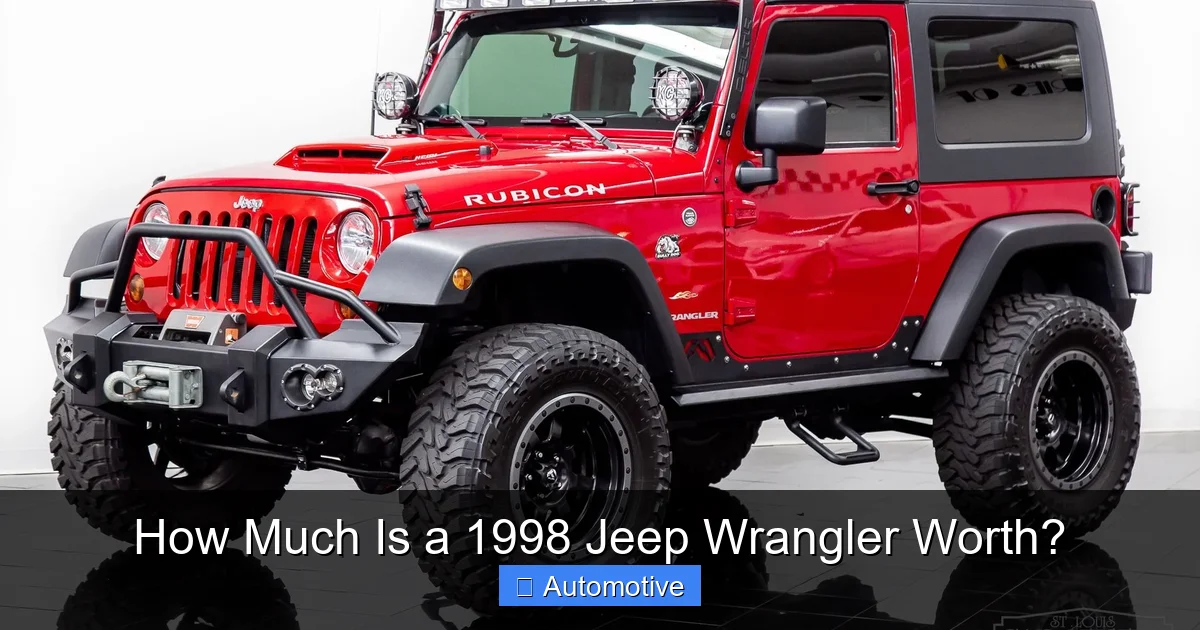
This is where things get tricky. Some buyers love a lifted Wrangler with big tires, a winch, and a custom bumper. Others want a stock, factory-original Jeep. Modifications can increase appeal—but they can also lower value if they’re poorly done or compromise reliability.
A professionally installed 2-inch lift with quality shocks and properly aligned wheels might add value. But a botched lift with worn-out components, uneven tire wear, or suspension noise could be a red flag. Similarly, aftermarket stereos, lighting, or engine mods can be fun, but they may not appeal to everyone.
If you’re selling, be honest about modifications and provide receipts. If you’re buying, ask why the mods were done and whether they were installed correctly. And remember: a modified Jeep might be harder to resell later.
Title Status and Accident History
A clean title is essential. Salvage, rebuilt, or flood-damaged titles can slash a Jeep’s value by 20–40%, even if it’s been repaired. Always run a vehicle history report (like Carfax or AutoCheck) to check for accidents, title issues, or odometer discrepancies.
A Jeep with a clean title and no major accidents will always be more valuable—and easier to insure—than one with a questionable past.
Regional Differences in Pricing
Visual guide about How Much Is a 1998 Jeep Wrangler Worth?
Image source: adventurejeep.com
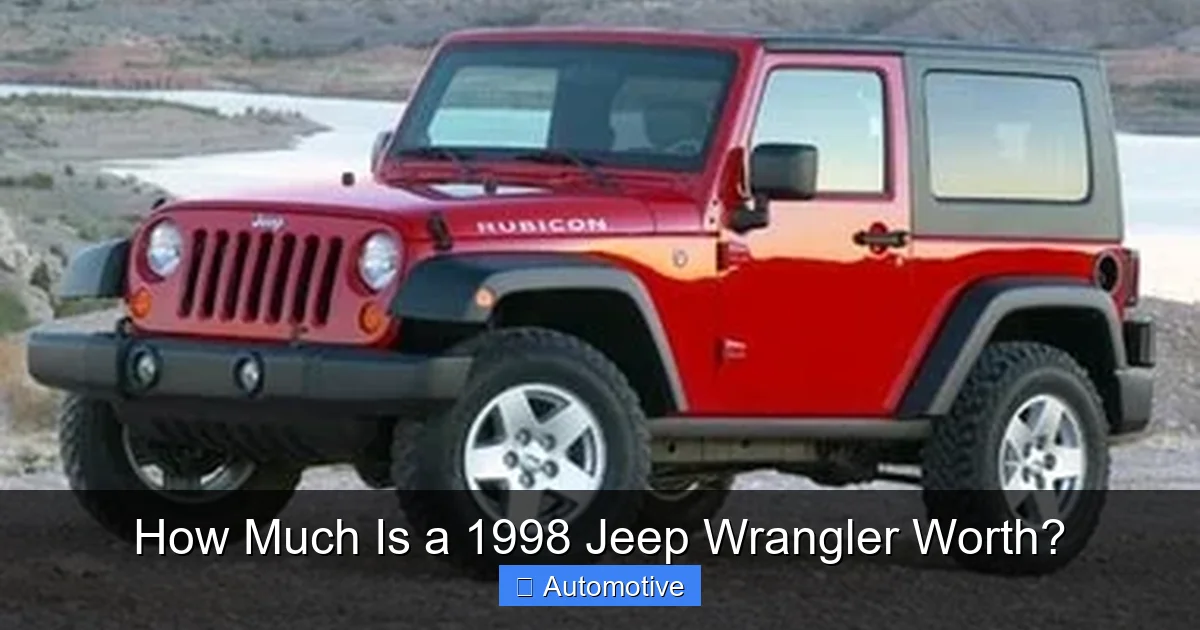
Believe it or not, where a 1998 Jeep Wrangler is located can have a big impact on its price. In dry, warm climates like the Southwest, rust is rare, and Jeeps tend to stay in better shape. As a result, clean TJs in Arizona, California, or Texas often sell for more than similar models in snowy or coastal areas.
For example, a 1998 Sahara with 120,000 miles might list for $11,000 in Michigan but $14,500 in Nevada. That’s a $3,500 difference—just because of location. Buyers in rust-prone areas often travel to buy cleaner Jeeps from the South or West, driving up demand (and prices) in those regions.
Additionally, off-road culture varies by region. In states like Colorado, Utah, or North Carolina, where trail riding is popular, modified Wranglers may sell faster and for more money. In urban areas, stock Jeeps with good fuel economy and comfort features might be more appealing.
If you’re selling, consider advertising in multiple regions or using online platforms like Bring a Trailer, which attract nationwide buyers. If you’re buying, be willing to travel for the right Jeep—it could save you money in the long run.
Originality vs. Modifications: What Buyers Want
Visual guide about How Much Is a 1998 Jeep Wrangler Worth?
Image source: cdn.dealeraccelerate.com
This is a hot topic in the Jeep community: should you keep your 1998 Wrangler stock, or go all-in on mods? The answer depends on your goals—and who you’re selling to.
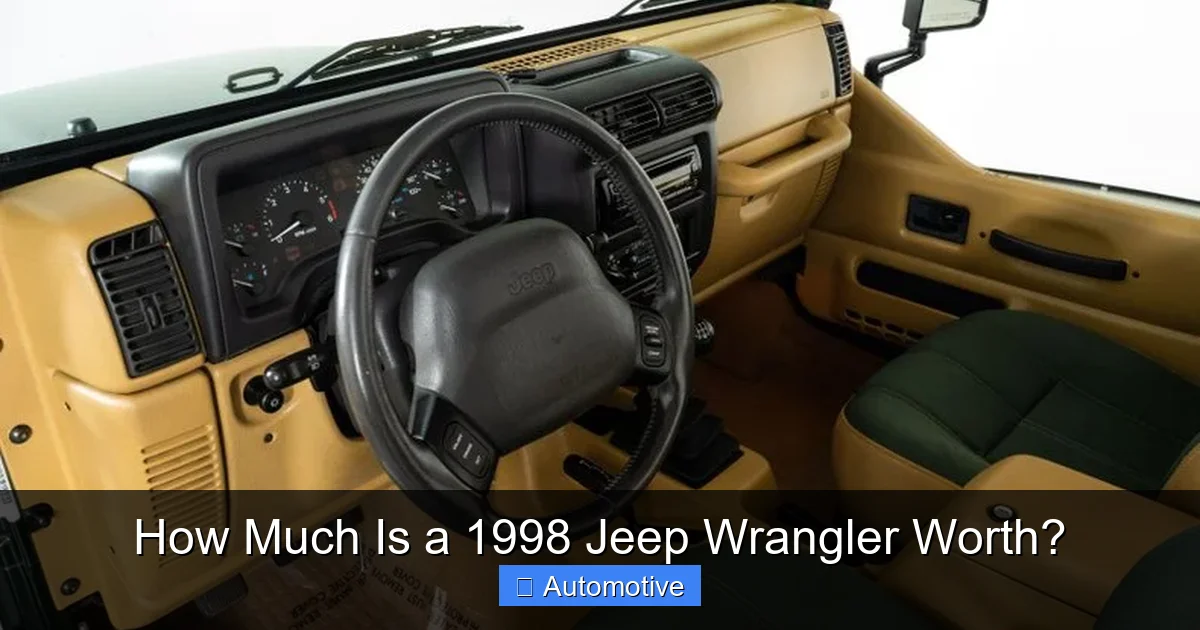
Original, unmodified Jeeps are becoming increasingly rare and valuable. Collectors and purists love factory-correct TJs with original paint, interior, and mechanicals. These vehicles often appreciate in value over time, especially if they have low mileage and documentation. A 1998 Sahara with original soft top, factory wheels, and no lift can be a smart investment.
On the other hand, modified Jeeps appeal to off-road enthusiasts who want a ready-to-rock trail machine. A well-built lifted Wrangler with a snorkel, lockers, and beadlock wheels can be a dream come true for weekend warriors. But modifications can limit your buyer pool and make resale harder.
The sweet spot? A Jeep that’s been tastefully upgraded with quality parts and maintained properly. Think: a 2-inch lift, all-terrain tires, and a winch—but still drivable on the street and free of major issues. These Jeeps often strike the best balance between functionality and value.
Tips for Sellers
If you’re selling your 1998 Wrangler, here are a few tips to maximize its value:
– Clean it thoroughly: Wash the exterior, vacuum the interior, and detail the engine bay. First impressions matter.
– Fix minor issues: Replace burnt-out bulbs, fix loose trim, and address small mechanical problems. These small fixes can boost perceived value.
– Gather documentation: Have service records, owner’s manual, and any receipts for repairs or upgrades ready to show buyers.
– Be honest about mods: Disclose all modifications and provide photos of the installation process if possible.
– Price competitively: Research similar listings in your area and price your Jeep fairly. Overpricing can scare off buyers.
Tips for Buyers
If you’re in the market for a 1998 Wrangler, keep these tips in mind:
– Set a budget: Include not just the purchase price, but also potential repairs, registration, and insurance.
– Inspect carefully: Look for rust, leaks, uneven tire wear, and signs of previous damage.
– Test drive: Listen for clunks, vibrations, or transmission issues. Try all gears and check the 4WD system.
– Get a PPI: A mechanic familiar with Jeeps can spot hidden problems.
– Negotiate: Use any issues you find as leverage to lower the price.
The 1998 Jeep Wrangler as an Investment
While most people buy a 1998 Wrangler for fun or utility, it’s worth considering its potential as an investment. Classic cars and trucks are gaining popularity, and well-preserved TJs are no exception. Unlike modern vehicles that depreciate the moment you drive them off the lot, a clean, original 1998 Wrangler can hold or even increase in value over time.
Factors that make it a good candidate for appreciation include:
– Iconic design: The TJ’s round headlights and coil-spring suspension set it apart from earlier models.
– Strong community: Jeep enthusiasts are passionate and willing to pay a premium for quality.
– Limited supply: Rust, age, and wear are thinning out the number of good TJs on the road.
– Cultural relevance: Jeeps are symbols of adventure, freedom, and American ingenuity.
Of course, not every 1998 Wrangler will become a collector’s item. But if you find one in excellent condition with low miles and a clean history, holding onto it could pay off down the road.
Conclusion
So, how much is a 1998 Jeep Wrangler worth? The answer isn’t fixed—it depends on a mix of condition, mileage, trim, location, and market trends. On average, expect to pay between $8,000 and $18,000, with the best examples reaching $20,000 or more.
Whether you’re buying or selling, the key is to do your homework. Look beyond the listing price and assess the Jeep’s true condition. A few hundred dollars spent on a pre-purchase inspection or detailing can save you thousands in the long run.
And remember: the 1998 Wrangler isn’t just a vehicle—it’s a piece of automotive history. With its rugged design, capable off-road performance, and timeless appeal, it’s no wonder these Jeeps are still in demand nearly three decades later. Whether you’re hitting the trails or cruising downtown, a well-chosen TJ can deliver years of adventure—and maybe even a return on your investment.
Frequently Asked Questions
What is the average price of a 1998 Jeep Wrangler?
The average price ranges from $8,000 to $18,000, depending on condition, mileage, and trim. Pristine, low-mileage models can exceed $20,000.
Is a 1998 Jeep Wrangler a good buy?
Yes, if it’s in good condition. The 4.0L engine is reliable, and the TJ platform is highly capable off-road. Just watch for rust and mechanical issues.
Do modifications increase the value of a 1998 Wrangler?
It depends. Quality, functional mods may appeal to off-road buyers, but over-modified or poorly installed parts can lower value for others.
How many miles is too many for a 1998 Jeep Wrangler?
Under 100,000 miles is ideal. Over 150,000 miles isn’t necessarily bad if the Jeep has been well-maintained and serviced regularly.
Are 1998 Jeep Wranglers reliable?
Generally, yes—especially the 4.0L inline-six engine. Regular maintenance is key to longevity, and the simple design makes repairs easier.
Where can I find a clean 1998 Jeep Wrangler for sale?
Check online marketplaces like Craigslist, Facebook Marketplace, Bring a Trailer, and Jeep-specific forums. Dry climates often have rust-free examples.
