
How Much Oil Does a Dodge Ram 1500 Take?

Knowing how much oil your Dodge Ram 1500 needs is essential for engine health and performance. This guide breaks down oil capacities by engine type, model year, and driving conditions, plus expert tips for proper oil changes and maintenance.
Key Takeaways
- Oil capacity varies by engine: The Dodge Ram 1500 uses different amounts of oil depending on the engine—ranging from 5.5 to 7 quarts, including the oil filter.
- Common engines and their capacities: The 3.6L V6 takes about 5.5 quarts, the 5.7L V8 requires 7 quarts, and the 3.0L EcoDiesel needs approximately 6.5 quarts.
- Always use the correct oil type: Follow manufacturer recommendations—typically 5W-20 or 5W-30 for gasoline engines and 15W-40 or 5W-40 for diesel variants.
- Check oil level regularly: Even if you’re not due for a change, inspect oil levels monthly to prevent low oil conditions that can damage the engine.
- Oil filter matters: Always replace the oil filter during an oil change—it holds about 0.5 quarts of oil and ensures clean circulation.
- Consider driving habits: Frequent towing, off-roading, or extreme temperatures may require more frequent oil changes, even if mileage hasn’t been reached.
- Use synthetic oil for best results: Full synthetic oil offers better protection, especially in high-stress conditions and extreme climates.
📑 Table of Contents
How Much Oil Does a Dodge Ram 1500 Take?
If you own a Dodge Ram 1500—or you’re thinking about buying one—you’ve probably asked yourself: *How much oil does a Dodge Ram 1500 take?* It’s a simple question, but the answer isn’t always straightforward. The amount of oil your Ram 1500 needs depends on several factors, including the engine size, model year, and even the type of oil you’re using. Getting it right is crucial. Too little oil, and your engine could overheat or suffer serious damage. Too much, and you risk foaming, reduced lubrication, and potential seal leaks.
Whether you’re a DIY mechanic or just want to stay informed before your next service appointment, understanding your truck’s oil requirements helps you maintain peak performance and extend engine life. In this guide, we’ll walk you through everything you need to know about oil capacity, oil types, and best practices for oil changes in your Dodge Ram 1500. We’ll cover the most common engines, explain how to check your oil level, and share tips to keep your truck running smoothly for years to come.
Understanding Oil Capacity in the Dodge Ram 1500

Visual guide about How Much Oil Does a Dodge Ram 1500 Take?
Image source: vehiclerides.com
When it comes to engine oil, capacity refers to the total volume of oil the engine holds when fully filled—including the oil in the oil pan, oil filter, and oil galleries. For the Dodge Ram 1500, this number isn’t one-size-fits-all. Different engines have different designs, oil pump capacities, and cooling needs, which directly affect how much oil they require.
The oil capacity listed in your owner’s manual includes the oil filter. That means when you perform an oil change, you’ll need to account for the oil that remains in the old filter and the new one you install. Most oil filters hold about 0.5 quarts of oil, so if your engine takes 6 quarts total, you’ll typically add around 5.5 quarts of fresh oil and let the filter fill the rest.
It’s also important to note that oil capacity can vary slightly between model years, even for the same engine. For example, a 2019 Ram 1500 with a 5.7L V8 might have a slightly different oil capacity than a 2023 model due to minor engineering updates. Always double-check your specific vehicle’s manual or consult a trusted mechanic if you’re unsure.
Why Oil Capacity Matters
You might think, “As long as there’s oil in there, I’m fine,” but that’s not the case. Oil does more than just lubricate moving parts—it cools the engine, cleans internal components, prevents corrosion, and helps maintain proper pressure. If your engine doesn’t have enough oil, these functions are compromised. Low oil levels can lead to increased friction, overheating, and eventually, engine failure.
On the flip side, overfilling can be just as dangerous. Excess oil can cause the crankshaft to whip the oil into a foam, reducing its ability to lubricate effectively. This condition, known as aeration, can lead to poor oil pressure and increased wear on bearings and other components.
So, knowing exactly how much oil your Dodge Ram 1500 takes isn’t just a detail—it’s a critical part of vehicle maintenance.
Oil Capacity by Engine Type
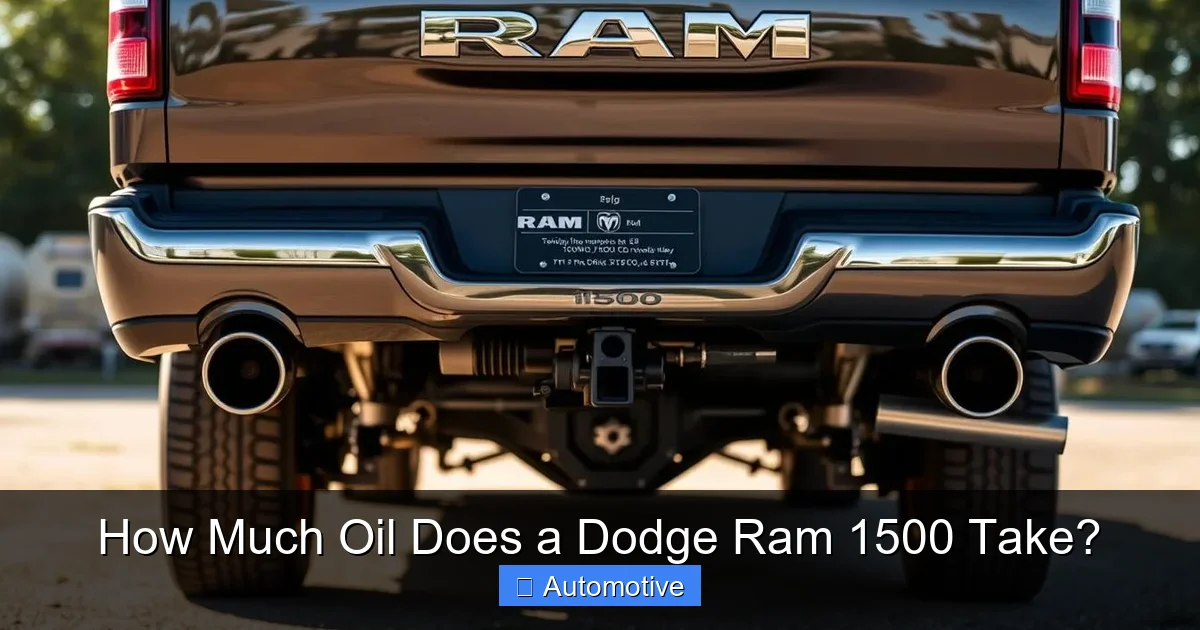
Visual guide about How Much Oil Does a Dodge Ram 1500 Take?
Image source: vehiclerides.com
The Dodge Ram 1500 has been offered with several engine options over the years, and each has its own oil capacity. Let’s break down the most common engines and how much oil they require.
3.6L Pentastar V6 Engine
The 3.6L V6 is one of the most popular engines in the Ram 1500, especially in base and mid-level trims. Known for its reliability and fuel efficiency, this engine is found in models from 2011 onward.
– **Oil Capacity:** Approximately 5.5 quarts (including oil filter)
– **Recommended Oil Type:** 5W-20 full synthetic or synthetic blend
– **Oil Change Interval:** Every 7,500 to 10,000 miles under normal driving conditions
This engine is relatively compact and efficient, which is why it requires less oil than the larger V8s. However, it still benefits from high-quality synthetic oil, especially if you drive in hot climates or frequently tow light loads.
For example, if you own a 2020 Ram 1500 Big Horn with the 3.6L V6, you’ll need about 5.5 quarts of 5W-20 oil during an oil change. Always reset the oil life monitor after servicing to keep track of your next change.
5.7L HEMI V8 Engine
The 5.7L HEMI V8 is the heart of many Ram 1500 models, especially those built for towing and performance. This powerful engine delivers impressive torque and is a favorite among truck enthusiasts.
– **Oil Capacity:** 7 quarts (including oil filter)
– **Recommended Oil Type:** 5W-20 or 5W-30 full synthetic
– **Oil Change Interval:** Every 6,000 to 8,000 miles, or sooner if towing or driving in extreme conditions
The 5.7L V8 has a larger oil pan and more internal components, which is why it needs a full 7 quarts of oil. This engine generates more heat and stress, so using high-quality synthetic oil is strongly recommended.
Let’s say you have a 2022 Ram 1500 Laramie with the 5.7L HEMI. During an oil change, you’ll drain the old oil, replace the filter, and add about 6.5 quarts of fresh 5W-20 synthetic oil. The remaining 0.5 quarts will fill the new filter as you start the engine.
3.0L EcoDiesel V6 Engine
The 3.0L EcoDiesel V6 is a turbocharged diesel engine known for its excellent fuel economy and strong low-end torque. It’s a great choice for long-distance driving and heavy towing.
– **Oil Capacity:** Approximately 6.5 quarts (including oil filter)
– **Recommended Oil Type:** 15W-40 or 5W-40 full synthetic diesel oil (must meet Chrysler MS-9602 or API CK-4 standards)
– **Oil Change Interval:** Every 10,000 miles under normal conditions, but check every 5,000 if towing or driving in dusty environments
Diesel engines operate under higher compression and temperatures, so they require specialized oil that can handle soot, heat, and contaminants. The 3.0L EcoDiesel uses more oil than the gasoline V6 but less than the V8.
For instance, a 2021 Ram 1500 EcoDiesel will need about 6.5 quarts of 5W-40 synthetic diesel oil. Always use a high-quality diesel-specific filter and ensure the oil meets the manufacturer’s specifications to avoid warranty issues.
2.7L I4 Engine (Older Models)
While less common today, some earlier Ram 1500 models (mainly from the late 2000s) were equipped with a 2.7L inline-4 engine. This engine is now discontinued but still found in older trucks.
– **Oil Capacity:** About 5 quarts (including oil filter)
– **Recommended Oil Type:** 5W-30 conventional or synthetic blend
– **Oil Change Interval:** Every 3,000 to 5,000 miles
This smaller engine was designed for fuel efficiency but lacked the power of the V6 and V8 options. If you own an older Ram 1500 with this engine, stick to regular oil changes and monitor oil levels closely, as older engines may burn or leak oil over time.
How to Check Your Oil Level

Visual guide about How Much Oil Does a Dodge Ram 1500 Take?
Image source: vehiclerides.com
Knowing how much oil your Dodge Ram 1500 takes is only half the battle—you also need to know how to check if it’s at the right level. Checking your oil regularly is one of the simplest and most effective ways to protect your engine.
Step-by-Step Oil Check
1. **Park on a level surface:** Make sure your truck is on flat ground. This ensures an accurate reading.
2. **Turn off the engine and wait:** Let the engine cool for at least 5–10 minutes. Hot oil expands and can give a false reading.
3. **Locate the dipstick:** Open the hood and find the oil dipstick—it usually has a bright yellow or orange handle labeled “Engine Oil.”
4. **Pull out and wipe clean:** Remove the dipstick, wipe it with a clean cloth or paper towel, then reinsert it fully.
5. **Remove and read:** Pull the dipstick out again and check the oil level. There should be two marks—“Full” and “Add.” The oil should be between these two lines.
6. **Check oil condition:** Look at the color and consistency. Fresh oil is amber and translucent. Dark, gritty, or milky oil indicates it’s time for a change or there’s a problem.
If the oil level is below the “Add” mark, you’ll need to top it off. Add oil gradually—about 1 quart at a time—and recheck the level. Never overfill.
When to Check Your Oil
– **Monthly:** Even if you’re not due for an oil change, check your oil level once a month.
– **Before long trips:** Always check oil before hitting the road for a long drive.
– **After towing or heavy use:** High-stress driving can increase oil consumption.
– **If you notice warning lights:** The oil pressure or check engine light could indicate low oil or other issues.
Regular checks help you catch problems early—like leaks, burning oil, or contamination—before they become expensive repairs.
Choosing the Right Oil for Your Ram 1500
Using the correct oil type is just as important as using the right amount. The wrong oil can reduce engine efficiency, increase wear, and even void your warranty.
Gasoline Engines: 5W-20 vs. 5W-30
Most modern Ram 1500 gasoline engines (3.6L V6 and 5.7L V8) are designed to use 5W-20 oil. This thinner oil flows easily in cold weather and provides excellent protection at operating temperature.
However, some older models or high-mileage engines may benefit from 5W-30, which offers slightly better protection under heavy loads. Always check your owner’s manual—Chrysler often specifies 5W-20 for optimal performance and fuel economy.
Diesel Engines: Specialized Oil Requirements
The 3.0L EcoDiesel requires diesel-specific oil that meets strict standards. Look for oils labeled with API CK-4 or CJ-4 and Chrysler MS-9602 approval. These oils are formulated to handle soot, high temperatures, and the unique demands of diesel combustion.
Using regular gasoline oil in a diesel engine can cause sludge buildup, reduced lubrication, and engine damage. Always use the correct diesel oil and filter.
Synthetic vs. Conventional Oil
Full synthetic oil is recommended for all Ram 1500 models, especially if you drive in extreme temperatures, tow frequently, or want longer oil change intervals. Synthetic oil offers:
– Better cold-start protection
– Improved high-temperature stability
– Longer engine life
– Reduced engine wear
While synthetic oil costs more upfront, it often pays for itself in reduced maintenance and improved performance.
DIY Oil Change Tips
Changing your own oil can save you money and give you peace of mind knowing the job was done right. Here’s how to do it safely and effectively.
What You’ll Need
– Correct type and amount of oil
– New oil filter (specific to your engine)
– Oil filter wrench
– Socket wrench and drain pan
– Funnel
– Gloves and safety glasses
– Jack and jack stands (if needed)
Step-by-Step Oil Change
1. **Warm up the engine:** Run the engine for a few minutes to thin the oil and help it drain faster.
2. **Lift the vehicle:** Use a jack and jack stands to safely lift the front of the truck. Never work under a vehicle supported only by a jack.
3. **Drain the oil:** Place the drain pan under the oil pan, remove the drain plug, and let the oil drain completely.
4. **Replace the filter:** Remove the old oil filter, apply a thin layer of oil to the new filter’s gasket, and screw it on by hand.
5. **Reinstall the drain plug:** Once drained, reinstall the drain plug and tighten it to the manufacturer’s torque specification.
6. **Add new oil:** Use a funnel to pour the correct amount of oil into the engine. Start with about 1 quart less than the total capacity, then check the level.
7. **Start the engine:** Run the engine for 10–15 seconds to circulate oil, then turn it off and recheck the level. Add more oil if needed.
8. **Dispose of old oil properly:** Take used oil and filters to a recycling center or auto parts store.
Safety Tips
– Always wear gloves and eye protection.
– Never over-tighten the drain plug or oil filter.
– Use jack stands—never rely on a jack alone.
– Dispose of oil responsibly—never pour it down drains or on the ground.
Common Mistakes to Avoid
Even experienced DIYers can make mistakes during an oil change. Here are some common pitfalls and how to avoid them.
Overfilling the Engine
Adding too much oil is a frequent error. It can cause foaming, reduced lubrication, and damage to seals and gaskets. Always add oil gradually and check the dipstick frequently.
Using the Wrong Oil Filter
Not all oil filters are created equal. Using a cheap or incorrect filter can lead to poor filtration, oil leaks, or even engine damage. Always use a filter recommended by the manufacturer or a high-quality aftermarket equivalent.
Skipping the Oil Filter Change
Some people try to save money by reusing the old filter. This is a bad idea. The filter traps contaminants and loses efficiency over time. Always replace it with every oil change.
Ignoring the Oil Life Monitor
Modern Ram 1500s have an oil life monitoring system that tracks driving conditions and alerts you when it’s time for a change. Don’t ignore it—reset it after each service to keep accurate records.
Conclusion
So, how much oil does a Dodge Ram 1500 take? The answer depends on your engine, but most models require between 5.5 and 7 quarts, including the oil filter. The 3.6L V6 takes about 5.5 quarts, the 5.7L V8 needs 7 quarts, and the 3.0L EcoDiesel uses around 6.5 quarts. Using the correct oil type—whether 5W-20, 5W-30, or diesel-specific oil—is just as important as the quantity.
Regular oil checks, timely changes, and high-quality synthetic oil will keep your Ram 1500 running strong for hundreds of thousands of miles. Whether you’re a weekend warrior or a daily driver, taking care of your engine starts with something as simple as knowing how much oil it needs.
By following the guidelines in this guide, you’ll protect your investment, improve performance, and avoid costly repairs down the road. Your Dodge Ram 1500 is built to last—give it the care it deserves.
Frequently Asked Questions
How often should I change the oil in my Dodge Ram 1500?
For most models, oil changes are recommended every 6,000 to 10,000 miles, depending on driving conditions. Use the oil life monitor in your dashboard and consult your owner’s manual for specific intervals.
Can I use 5W-30 instead of 5W-20 in my Ram 1500?
It’s not recommended unless specified in your owner’s manual. Using the wrong viscosity can affect fuel economy and engine performance. Stick to the manufacturer’s recommendation.
What happens if I overfill my Ram 1500 with oil?
Overfilling can cause oil foaming, reduced lubrication, and potential damage to seals and gaskets. Always check the dipstick after adding oil and remove excess if needed.
Do I need to replace the oil filter every time?
Yes. The oil filter should be replaced with every oil change to ensure proper filtration and prevent contaminants from circulating in the engine.
Can I mix synthetic and conventional oil in my Ram 1500?
While it won’t cause immediate damage, it’s best to use one type consistently. Full synthetic oil offers superior protection and is recommended for all Ram 1500 models.
How do I reset the oil change light on my Dodge Ram 1500?
Turn the ignition to “ON” without starting the engine, press the gas pedal three times within 10 seconds, then turn the ignition off. The light should reset. Refer to your owner’s manual for model-specific instructions.
