
How Much Is a 2013 Subaru Outback Worth?

The 2013 Subaru Outback typically ranges from $8,000 to $14,000 depending on mileage, condition, trim level, and location. With its reputation for reliability and all-wheel drive capability, it remains a strong used car choice for families and outdoor enthusiasts.
Key Takeaways
- Price Range: A 2013 Subaru Outback generally sells for $8,000 to $14,000, with lower-mileage, well-maintained models at the higher end.
- Mileage Matters: Vehicles under 100,000 miles command higher prices, while those over 150,000 may fall below $9,000 unless in excellent condition.
- Trim Levels Impact Value: Higher trims like Limited and Touring add $1,500–$3,000 to the price due to upgraded features and interiors.
- Maintenance History Counts: A documented service record can increase resale value by up to 10% and reassure buyers of long-term reliability.
- Location Affects Pricing: Prices vary by region—rural and mountainous areas often see higher demand and prices due to the Outback’s AWD appeal.
- Private vs. Dealer Sales: Private sellers usually offer better deals than dealerships, but dealers provide warranties and inspections.
- Seasonal Trends: Demand (and prices) often rise in fall and winter when buyers seek capable all-weather vehicles.
📑 Table of Contents
- How Much Is a 2013 Subaru Outback Worth? A Complete Guide
- Understanding the 2013 Subaru Outback’s Market Value
- Trim Levels and Their Impact on Value
- Mileage and Condition: The Biggest Price Determinants
- Geographic and Seasonal Influences on Pricing
- Private Sale vs. Dealer Purchase: Which Is Better?
- Tips for Getting the Best Deal
- Long-Term Value and Reliability of the 2013 Outback
- Conclusion: Is the 2013 Subaru Outback Worth It?
How Much Is a 2013 Subaru Outback Worth? A Complete Guide
If you’re thinking about buying or selling a 2013 Subaru Outback, one of the first questions on your mind is probably: “How much is it really worth?” The answer isn’t a single number—it depends on several factors, from mileage and condition to trim level and where you live. But don’t worry, we’ve got you covered.
The 2013 Subaru Outback holds a special place in the hearts of many drivers. It’s not flashy, but it’s practical, dependable, and built to handle everything from school drop-offs to weekend camping trips. With standard all-wheel drive, a roomy interior, and a reputation for longevity, it’s no surprise that this model year remains popular in the used car market.
In this guide, we’ll break down everything you need to know about pricing a 2013 Subaru Outback. Whether you’re shopping for one or trying to sell your own, understanding the value will help you make a smart, confident decision.
Understanding the 2013 Subaru Outback’s Market Value
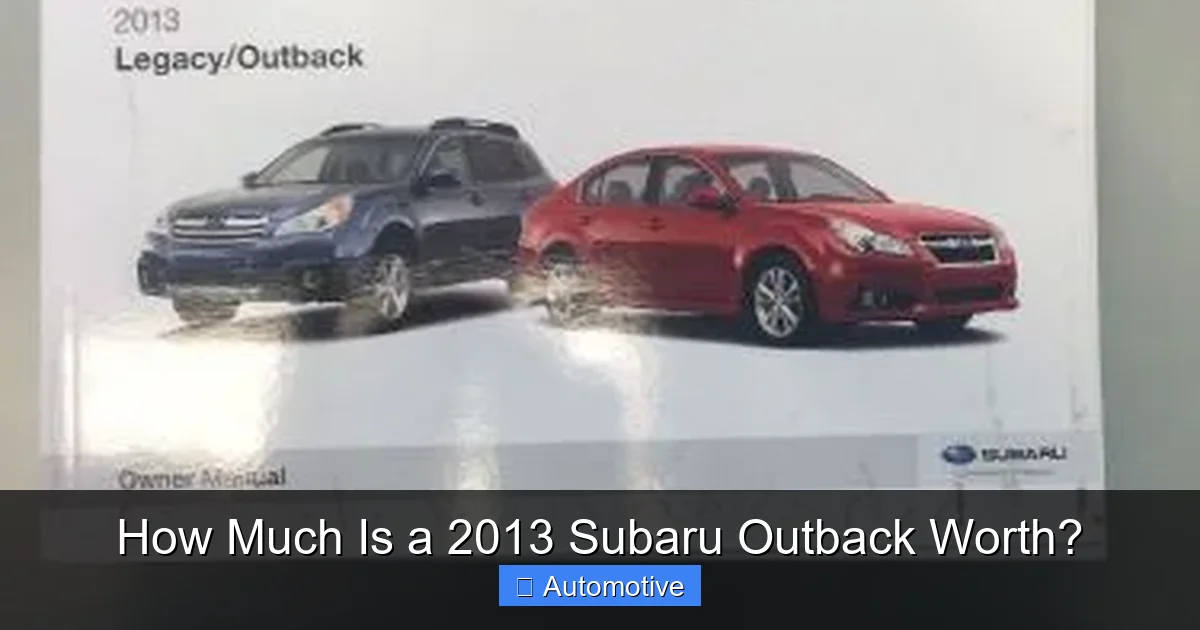
Visual guide about How Much Is a 2013 Subaru Outback Worth?
Image source: 2040-parts.com
The 2013 Subaru Outback sits in a sweet spot for used car buyers. It’s old enough to be affordable, but not so old that it’s outdated. Most models still have modern features like Bluetooth, USB ports, and available navigation. Plus, Subaru’s reputation for durability means many of these vehicles are still on the road—and running strong.
According to data from Kelley Blue Book (KBB), Edmunds, and NADA Guides, the average retail price for a 2013 Subaru Outback ranges from $8,000 to $14,000. That’s a wide range, but it reflects real-world variations in condition, mileage, and location.
For example, a base model 2.5i with over 150,000 miles and minimal service history might sell for around $7,500 privately. On the other hand, a well-maintained 3.6R Limited with under 80,000 miles could fetch $13,500 or more—especially if it comes with a clean title and full maintenance records.
Factors That Influence Pricing
Several key factors determine how much a 2013 Subaru Outback is worth. Let’s look at the biggest ones.
Mileage is the most obvious. Lower mileage usually means higher value. A car with 70,000 miles will almost always be worth more than one with 120,000 miles—even if both are in good shape. Most buyers expect a 2013 model to have between 100,000 and 130,000 miles by now, so anything below that is a plus.
Condition matters just as much. A car with minor cosmetic flaws but a solid mechanical record can still hold value. But dents, rust, or interior wear can knock hundreds—or even thousands—off the price. A clean, well-cared-for Outback with no accidents will always command a premium.
Trim Level plays a big role. The 2013 Outback came in several trims: 2.5i, 2.5i Premium, 2.5i Limited, 3.6R Limited, and the rare 3.6R Touring. The higher the trim, the more features—and the higher the price. A Limited or Touring model with leather seats, sunroof, and upgraded audio will naturally cost more than a base model.
Service History is a hidden value booster. A car with regular oil changes, timing belt replacements, and transmission services documented can sell for 5–10% more than a similar car with no records. Buyers love proof that the car has been looked after.
Location also affects pricing. In snowy or rural areas where all-wheel drive is a must, the Outback is in higher demand—and prices reflect that. In warmer, urban areas, you might see lower prices due to less need for AWD capability.
Trim Levels and Their Impact on Value
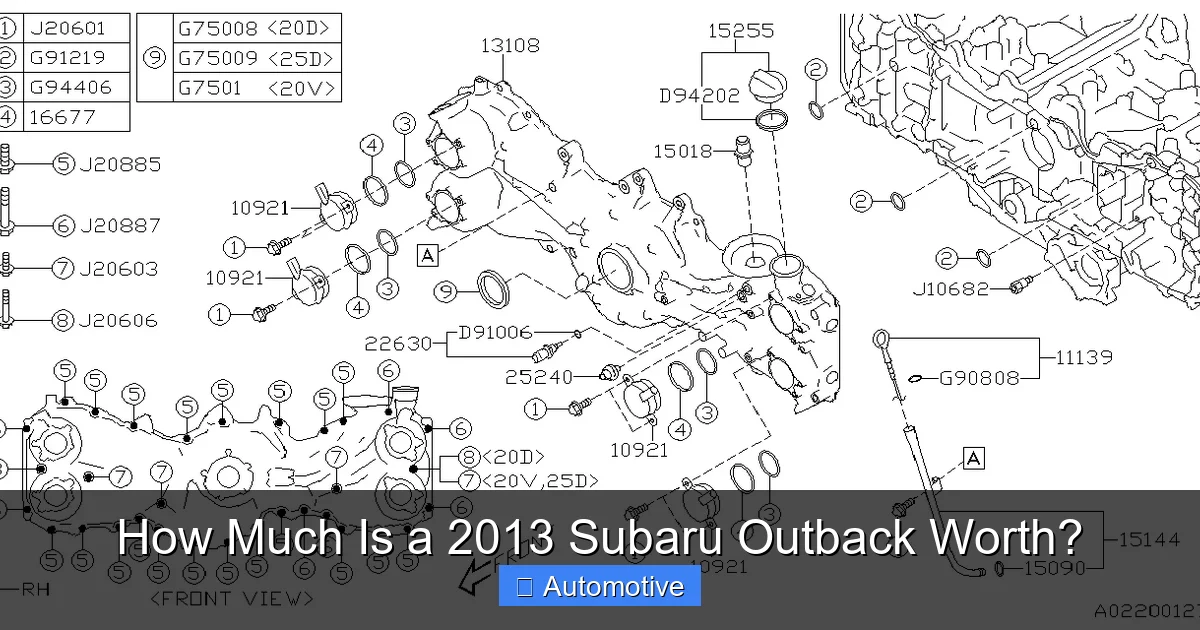
Visual guide about How Much Is a 2013 Subaru Outback Worth?
Image source: images.simplepart.com
The 2013 Subaru Outback wasn’t just one car—it was a lineup. Understanding the different trim levels helps explain why prices can vary so much.
2.5i (Base Model)
The 2.5i is the most basic version, powered by a 2.5-liter 4-cylinder engine with 170 horsepower. It comes with standard AWD, cloth seats, and basic infotainment. It’s reliable and fuel-efficient (around 22 mpg city / 29 mpg highway), but it lacks the luxury touches of higher trims.
Because it’s the most common, base models tend to be the most affordable. Expect to pay between $8,000 and $10,500 for a well-maintained 2.5i with average mileage (100,000–130,000 miles).
2.5i Premium
The Premium trim adds features like alloy wheels, a power driver’s seat, upgraded audio, and optional navigation. It’s a popular choice for buyers who want more comfort without breaking the bank.
Prices for the 2.5i Premium typically range from $9,000 to $11,500, depending on condition and mileage. The added features make it a better value than the base model for many buyers.
2.5i Limited
The Limited trim steps up the luxury with leather-trimmed seats, dual-zone automatic climate control, a sunroof, and a premium Harman Kardon sound system. It’s the most popular high-end option for those who want comfort and capability.
A 2.5i Limited in good condition usually sells for $10,500 to $13,000. The leather interior and extra features justify the higher price, especially for families or long-distance drivers.
3.6R Limited and 3.6R Touring
These top-tier models come with a 3.6-liter 6-cylinder engine producing 256 horsepower—much more power than the 4-cylinder. They also include all the Limited features, plus upgraded suspension, larger wheels, and in the Touring model, a navigation system and rear-seat entertainment.
Because they’re less common and more powerful, 3.6R models hold their value well. Expect to pay $11,500 to $14,000+ for a well-maintained 3.6R, especially if it has low mileage and a clean history.
Special Editions and Options
Some 2013 Outbacks came with optional packages like the Moonroof & Navigation Package or the All-Weather Package (heated seats, mirrors, and windshield wiper de-icers). These can add $500–$1,000 to the value, especially in colder climates.
Mileage and Condition: The Biggest Price Determinants
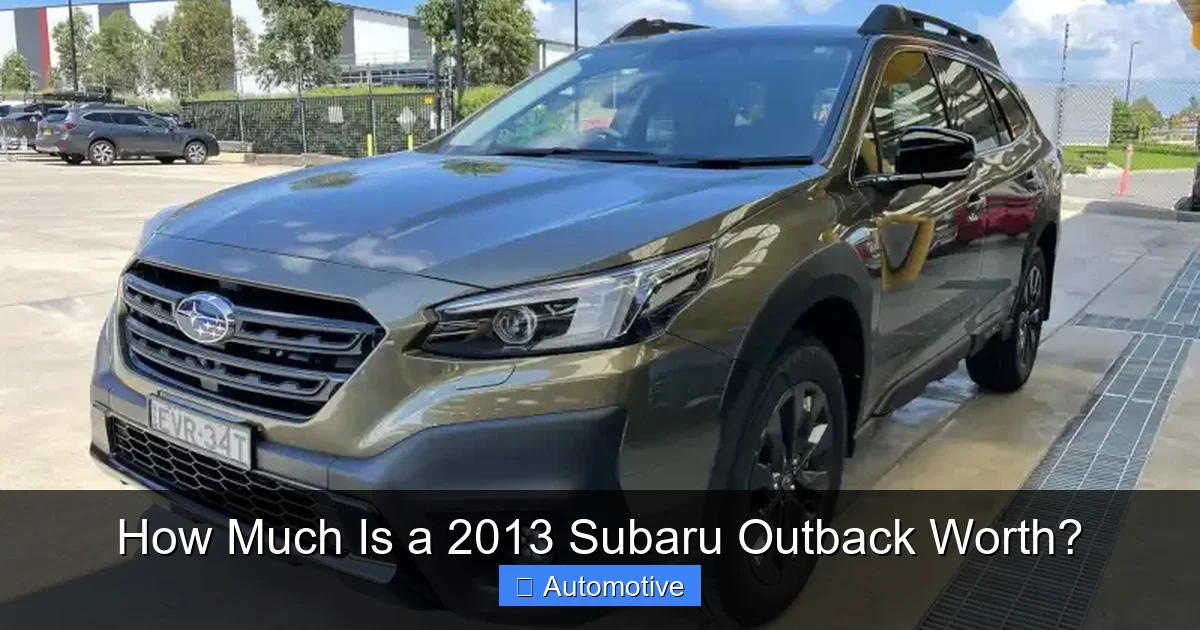
Visual guide about How Much Is a 2013 Subaru Outback Worth?
Image source: onlineauto.com.au
When it comes to used cars, mileage and condition are king. For the 2013 Subaru Outback, these two factors can make or break a deal.
How Mileage Affects Value
Subaru engines are known for lasting 200,000+ miles with proper care, but buyers still prefer lower mileage. Here’s a rough guide:
– Under 80,000 miles: High demand, premium pricing ($12,000–$14,000)
– 80,000–100,000 miles: Still strong value ($10,500–$12,500)
– 100,000–130,000 miles: Average range, fair market price ($8,500–$11,000)
– 130,000–150,000 miles: Lower end, but still viable ($7,500–$9,500)
– Over 150,000 miles: Requires inspection; price drops unless impeccably maintained
Keep in mind that a high-mileage car with a full service history can still be a great buy. But a low-mileage car with no records? That’s a red flag.
Assessing Condition: What to Look For
When evaluating a 2013 Outback, look beyond the surface. A clean exterior doesn’t guarantee a healthy engine.
Start with the exterior. Check for rust, especially around wheel wells, door sills, and under the car. Subarus are prone to rust in snowy areas where road salt is used. Dents and scratches are cosmetic, but deep paint damage or mismatched panels could indicate past accidents.
Inside, inspect the interior. Look for worn seats, cracked dashboards, or musty smells (a sign of water leaks). Test all electronics—windows, locks, radio, AC, and power seats. A malfunctioning feature can cost hundreds to fix.
Under the hood, check the engine bay for leaks, corrosion, or worn belts. The 2.5-liter engine is generally reliable, but the timing belt should be replaced every 105,000 miles. If it hasn’t been done, that’s a $500–$800 expense.
Finally, take it for a test drive. Listen for unusual noises, feel for vibrations, and test the transmission shifts. The CVT (continuously variable transmission) in some 2013 models can be sensitive—jerky shifts or hesitation are warning signs.
The Value of a Clean Title
Always check the vehicle history report (Carfax or AutoCheck). A clean title with no accidents or flood damage adds peace of mind—and value. A salvage or rebuilt title can cut the price in half, even if the car runs well.
Geographic and Seasonal Influences on Pricing
Believe it or not, where and when you buy a 2013 Subaru Outback can affect how much you pay.
Regional Demand and Pricing
The Outback’s standard all-wheel drive makes it especially popular in regions with harsh winters or rugged terrain. In states like Colorado, Minnesota, or Vermont, demand is high—and so are prices.
For example, a 2013 Outback with 110,000 miles might sell for $11,500 in Denver but only $9,800 in Phoenix. That’s a $1,700 difference just because of location.
In contrast, warmer, urban areas like Florida or California may have lower prices due to less need for AWD and higher competition among sellers.
Seasonal Trends
Like snow tires and shovels, the Outback sees seasonal demand. Prices often rise in fall and winter as buyers prepare for snowy roads. Spring and summer may see a slight dip, especially in northern states.
If you’re buying, consider shopping in late spring or early summer for better deals. If you’re selling, listing in October or November could attract more buyers—and higher offers.
Private Sale vs. Dealer Purchase: Which Is Better?
When shopping for a 2013 Subaru Outback, you’ll likely encounter two main options: private sellers and dealerships. Each has pros and cons.
Buying from a Private Seller
Private sales usually offer the best prices. Sellers aren’t paying overhead, so they can price lower than dealers. You might find a great deal—say, $9,500 for a well-kept Limited model.
But there are risks. Private sellers don’t offer warranties, and you’ll need to handle inspections and paperwork yourself. Always get a pre-purchase inspection (PPI) from a trusted mechanic—it’s worth the $100–$150 cost.
Buying from a Dealer
Dealerships charge more—often $1,000–$2,000 above private sale prices—but they offer benefits like certified pre-owned (CPO) programs, warranties, and financing options.
A CPO 2013 Outback might cost $12,000 but come with a 12-month/12,000-mile warranty and a full inspection. For buyers who want peace of mind, it’s often worth the extra cost.
Selling Your 2013 Outback
If you’re selling, private sales typically yield higher profits. You avoid dealer markups and can price competitively. Use platforms like Craigslist, Facebook Marketplace, or Cars.com to reach buyers.
Be honest about the car’s condition, provide photos, and include maintenance records. A well-presented ad can attract serious buyers quickly.
Tips for Getting the Best Deal
Whether you’re buying or selling, a few smart moves can help you get the best value.
For Buyers:
– Get a pre-purchase inspection. It’s the best $150 you’ll spend.
– Check vehicle history reports. Look for accidents, title issues, and service records.
– Negotiate based on condition. Use any flaws (tires, brakes, interior wear) as leverage.
– Compare prices online. Use KBB, Edmunds, and local listings to gauge fair market value.
– Consider certified pre-owned. If buying from a dealer, CPO adds value and protection.
For Sellers:
– Clean the car thoroughly. A detailed interior and waxed exterior make a great first impression.
– Gather maintenance records. Organize receipts and service logs to show care.
– Price competitively. Research similar listings and price slightly below market to attract buyers.
– Be transparent. Disclose any issues upfront to build trust and avoid disputes.
Long-Term Value and Reliability of the 2013 Outback
One reason the 2013 Subaru Outback holds its value so well is its reputation for reliability. According to Consumer Reports and J.D. Power, this model year scores well above average for dependability.
The 2.5-liter engine is known for longevity, and the AWD system is robust. Common issues—like CVT hesitation or minor oil consumption—are usually manageable with proper maintenance.
With regular oil changes, timely belt replacements, and attention to suspension components, a 2013 Outback can easily reach 200,000 miles. That long lifespan adds to its resale value and makes it a smart investment.
Conclusion: Is the 2013 Subaru Outback Worth It?
So, how much is a 2013 Subaru Outback worth? The answer depends, but in today’s market, you can expect to pay between $8,000 and $14,000 for a well-maintained model.
It’s not the newest or flashiest SUV, but it’s practical, reliable, and built for real life. Whether you’re hauling kids, gear, or both, the Outback delivers. And with its strong resale value and loyal fan base, it’s a used car that keeps on giving.
If you’re buying, do your homework—check the history, inspect the car, and compare prices. If you’re selling, highlight the care you’ve taken and price it fairly. Either way, the 2013 Subaru Outback remains a smart, sensible choice in the used car world.
Frequently Asked Questions
What is the average price of a 2013 Subaru Outback?
The average price ranges from $8,000 to $14,000, depending on mileage, condition, trim, and location. Lower-mileage, higher-trim models command the top end of this range.
Is the 2013 Subaru Outback reliable?
Yes, the 2013 Outback is known for its reliability, especially with proper maintenance. The 2.5-liter engine and AWD system are durable and can last over 200,000 miles.
What trim should I buy for the best value?
The 2.5i Premium offers the best balance of features and price. It includes upgrades like alloy wheels and a power seat without the higher cost of the Limited or 3.6R trims.
How much does mileage affect the value?
Mileage has a big impact. Cars under 100,000 miles are worth significantly more than those over 130,000. Every 10,000 miles can reduce value by $500–$1,000.
Can I negotiate the price of a used 2013 Outback?
Yes, negotiation is common. Use any flaws, high mileage, or needed repairs as leverage. Private sellers are often more flexible than dealerships.
Should I buy a 2013 Outback with over 150,000 miles?
It depends on maintenance history. If it has a clean title, full service records, and no major issues, it can still be a good buy—just budget for upcoming repairs.
