
How Much Does an Oil Change Cost at Toyota?

How much does an oil change cost at Toyota? On average, expect to pay between $40 and $70 for a conventional oil change and $60 to $100 for synthetic oil at a Toyota dealership. Prices vary by location, model, and service type, but regular oil changes are essential for engine health and long-term performance.
If you own a Toyota, you already know you’re driving one of the most reliable, long-lasting vehicles on the road. From the compact Corolla to the rugged Tacoma and the family-friendly Highlander, Toyotas are built to go the distance. But like any machine, they need regular maintenance to keep running smoothly—and one of the most essential services is the oil change.
So, how much does an oil change cost at Toyota? It’s a question every Toyota owner asks at some point. The answer isn’t one-size-fits-all. Prices depend on several factors: the type of oil your car needs, whether you go to a dealership or an independent shop, your location, and even the model of your vehicle. But don’t worry—we’re here to break it all down so you can make an informed decision without breaking the bank.
In this guide, we’ll walk you through everything you need to know about Toyota oil change costs. We’ll cover average pricing, what affects the final bill, the pros and cons of different service options, and tips to save money. Whether you’re a first-time Toyota owner or a seasoned driver, this article will help you understand what to expect and how to keep your engine running like new.
Key Takeaways
- Average Cost Range: A standard oil change at a Toyota dealership typically costs between $40 and $100, depending on oil type and vehicle model.
- Conventional vs. Synthetic: Conventional oil changes are cheaper ($40–$70), while full synthetic oil changes cost more ($60–$100) but offer better engine protection.
- Model Matters: Larger engines or luxury models like the Toyota Land Cruiser or Tundra may require more oil and labor, increasing the price.
- Dealership vs. Independent Shop: Toyota dealerships offer certified technicians and OEM parts, but independent mechanics may charge less—though quality can vary.
- Service Packages: Many Toyota service centers bundle oil changes with inspections, tire rotations, or fluid top-offs, offering better value.
- DIY Option: Doing it yourself can save money, but requires tools, knowledge, and proper disposal of used oil.
- Frequency & Maintenance: Follow your owner’s manual—most Toyotas need an oil change every 5,000 to 10,000 miles, depending on driving conditions.
📑 Table of Contents
Average Oil Change Cost at Toyota Dealerships
When it comes to getting an oil change at a Toyota dealership, most owners can expect to pay between $40 and $100. That’s a pretty wide range, but it reflects the differences in oil type, vehicle size, and regional pricing. Let’s dig into the details.
For a standard conventional oil change—typically recommended for older models or vehicles with simpler engines—the cost usually falls between $40 and $70. This includes the oil, filter, labor, and basic inspection. For example, a 2015 Toyota Camry with a 4-cylinder engine might cost around $50 for a conventional oil change at a dealership in a mid-sized city.
On the other hand, if your Toyota requires synthetic oil—which is common in newer models like the 2023 RAV4 Hybrid or the 2022 Prius—the price jumps to $60–$100. Full synthetic oil is more expensive because it offers superior protection, especially under extreme temperatures and high engine stress. It also lasts longer, which is why many modern Toyotas are designed to use it.
Why the Price Difference?
The main reason for the cost gap is the oil itself. Conventional motor oil is derived directly from crude oil and works well for older engines with lower performance demands. Synthetic oil, however, is chemically engineered to provide better lubrication, resist breakdown, and improve fuel efficiency. It’s especially beneficial for turbocharged engines, hybrids, and vehicles driven in stop-and-go traffic or extreme climates.
Another factor is labor. Dealerships charge for certified technicians who are trained specifically on Toyota vehicles. They use OEM (Original Equipment Manufacturer) filters and fluids, which are designed to meet Toyota’s exact specifications. This ensures compatibility and performance, but it comes at a premium.
Regional Variations
Location plays a big role in pricing. In major metropolitan areas like New York, Los Angeles, or Chicago, expect to pay on the higher end—sometimes up to $90 for a synthetic oil change. In smaller towns or rural areas, prices may be closer to $50–$60 for the same service. This is due to higher overhead costs in cities, including rent, wages, and taxes.
For example, a Toyota dealership in Austin, Texas, might charge $65 for a synthetic oil change on a 2020 Highlander, while the same service in a smaller city like Boise, Idaho, could cost $55. Always call ahead or check online pricing tools to get an accurate quote for your area.
Service Packages and Promotions
Many Toyota dealerships offer service packages that bundle the oil change with other maintenance tasks. These can include a multi-point inspection, tire rotation, fluid top-off, and even a car wash. While the upfront cost may be higher—say, $80–$120—you’re getting more value for your money.
Some dealerships also run seasonal promotions or loyalty programs. For instance, you might find a “$39.95 conventional oil change” deal during a spring maintenance event. These offers are great for saving money, but make sure to read the fine print. Sometimes, the low price only applies to certain models or requires a coupon.
Factors That Influence Oil Change Pricing

Visual guide about How Much Does an Oil Change Cost at Toyota?
Image source: chevyoilchange.net
Now that you know the average cost, let’s look at what actually determines how much you’ll pay for an oil change at Toyota. Understanding these factors will help you avoid surprises and make smarter decisions.
Type of Oil Required
As mentioned earlier, the type of oil your Toyota needs is the biggest cost driver. Most modern Toyotas—especially those made after 2015—recommend or require synthetic oil. This is because synthetic oil performs better under high heat and stress, which is common in today’s engines.
For example, the 2023 Toyota Camry comes with a 2.5L 4-cylinder engine that uses 0W-20 full synthetic oil. A full oil change with filter replacement typically requires about 4.6 quarts, which adds to the cost. In contrast, an older 2008 Corolla might only need 4 quarts of conventional 5W-30 oil, making it cheaper to service.
Vehicle Model and Engine Size
Larger vehicles with bigger engines naturally require more oil and labor. A Toyota Tacoma with a V6 engine might need 6–7 quarts of oil, compared to 4–5 quarts for a compact Corolla. More oil means a higher material cost, and larger engines often take longer to service.
Luxury or performance models like the Toyota Land Cruiser or Sequoia also tend to be more expensive to maintain. These vehicles often have advanced engine systems, all-wheel drive components, and higher oil capacity, all of which can increase the oil change price.
Dealership vs. Independent Mechanic
One of the biggest decisions you’ll make is where to get your oil change. Toyota dealerships offer several advantages: certified technicians, OEM parts, and access to your vehicle’s service history. They also often provide loaner cars or shuttle services while your car is being serviced.
However, independent mechanics and quick-lube shops (like Jiffy Lube or Valvoline) can be significantly cheaper. You might pay $30–$50 for a conventional oil change or $50–$80 for synthetic at an independent shop. The trade-off? They may not use OEM filters or fluids, and their technicians aren’t always Toyota-specific trained.
That said, many independent shops do excellent work and use high-quality aftermarket parts. If you choose this route, ask about the brand of oil and filter they use, and make sure they dispose of used oil responsibly.
Geographic Location
As we touched on earlier, where you live affects pricing. Urban areas with high costs of living charge more for labor and parts. Rural areas may have fewer service centers, but lower overhead can mean lower prices.
For example, a Toyota oil change in San Francisco might cost $85, while the same service in Des Moines, Iowa, could be $60. Even within the same state, prices can vary. A dealership in downtown Denver might charge more than one in a suburban area 30 minutes away.
Service Frequency and Maintenance History
If your Toyota is overdue for an oil change or has been neglected, the service might cost more. Mechanics may need to flush the engine, replace additional filters, or address sludge buildup. These extra steps add time and materials to the job.
Regular maintenance, on the other hand, keeps costs predictable. Following the recommended schedule—usually every 5,000 to 10,000 miles—helps avoid expensive repairs down the road.
Conventional vs. Synthetic Oil: What’s the Difference?

Visual guide about How Much Does an Oil Change Cost at Toyota?
Image source: lihpao.com
Choosing the right oil for your Toyota isn’t just about cost—it’s about protecting your engine and ensuring optimal performance. Let’s compare conventional and synthetic oil so you can decide which is best for your vehicle.
Conventional Oil: The Traditional Choice
Conventional motor oil is the most basic type of engine oil. It’s refined from crude oil and works well for older vehicles or those with simple engine designs. It’s also the most affordable option, typically costing $20–$30 per 5-quart jug at auto parts stores.
For many older Toyotas—like a 2005 Camry or a 2007 Corolla—conventional oil is perfectly adequate. These engines don’t generate as much heat or stress, so they don’t need the advanced protection of synthetic oil.
However, conventional oil breaks down faster, especially in hot weather or under heavy use. This means you’ll need to change it more often—usually every 3,000 to 5,000 miles.
Full Synthetic Oil: The Premium Option
Full synthetic oil is engineered in a lab to provide superior performance. It offers better lubrication, resists thermal breakdown, and maintains viscosity in extreme temperatures. This makes it ideal for modern engines, hybrids, and vehicles driven in harsh conditions.
Most new Toyotas—including the 2023 RAV4, 2022 Prius, and 2021 Highlander—require or recommend full synthetic oil. It’s also the best choice if you frequently tow, drive in stop-and-go traffic, or live in a climate with very hot summers or cold winters.
Synthetic oil lasts longer, too. Many Toyota models can go 7,500 to 10,000 miles between changes when using synthetic oil. This can save you money over time, even though the upfront cost is higher.
Synthetic Blend: A Middle Ground
If you’re looking for a balance between cost and performance, consider a synthetic blend. This oil combines conventional and synthetic base oils, offering some of the benefits of full synthetic at a lower price.
Synthetic blends are a good option for older vehicles that don’t require full synthetic but could benefit from better protection. They’re also popular in trucks and SUVs that see moderate towing or off-road use.
At a Toyota dealership, a synthetic blend oil change might cost $50–$80, depending on the vehicle. It’s a smart compromise if you want improved performance without the full synthetic price tag.
DIY Oil Change: Is It Worth It?
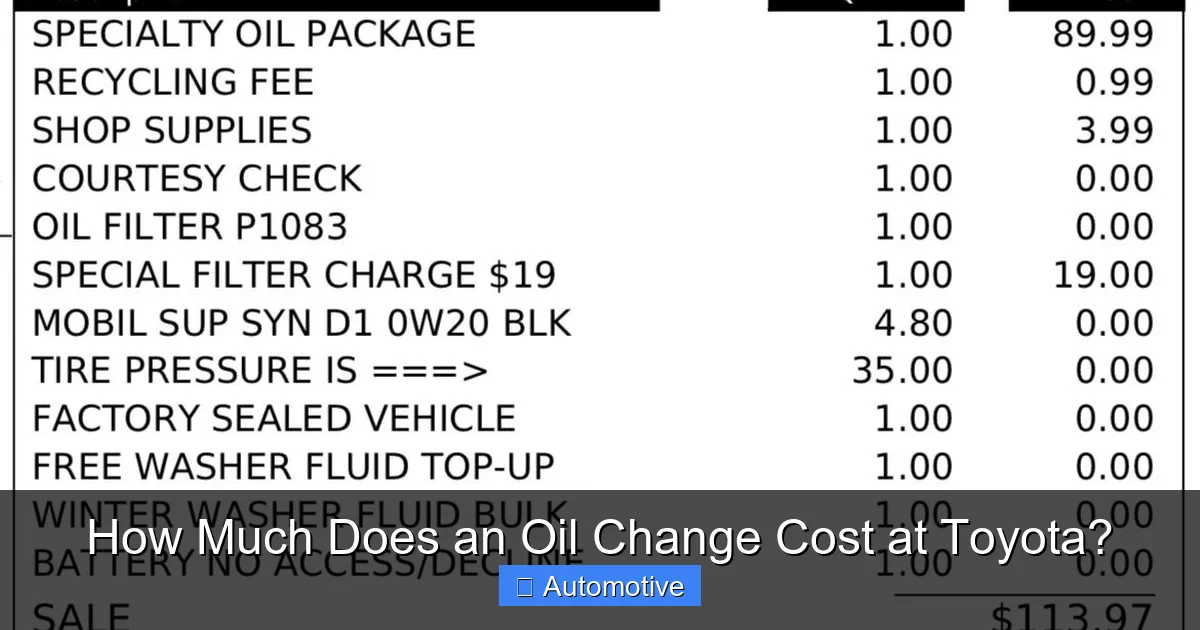
Visual guide about How Much Does an Oil Change Cost at Toyota?
Image source: i.redd.it
For the hands-on Toyota owner, doing your own oil change can be a rewarding and cost-effective option. But is it really worth it? Let’s weigh the pros and cons.
Cost Savings
The biggest advantage of a DIY oil change is cost. A 5-quart jug of conventional oil costs around $25, and a new filter is about $10. Add a few dollars for a drain pan and funnel, and your total expense is under $40. Compare that to a $60–$100 dealership visit, and the savings are clear.
Even with synthetic oil, DIY can save you money. A 5-quart jug of full synthetic oil costs $40–$60, plus $10 for the filter. You’re still paying less than at a shop, and you control the quality of the products used.
Time and Effort
Of course, DIY isn’t for everyone. Changing your own oil takes time—usually 30 to 60 minutes—and requires some basic tools: a wrench, oil filter wrench, drain pan, funnel, and jack stands or ramps. You’ll also need a safe, level place to work.
If you’re not comfortable working under your car or don’t have the right tools, it’s probably better to leave it to the pros. A mistake—like over-tightening the drain plug or using the wrong oil—can cause serious engine damage.
Environmental Responsibility
One often-overlooked aspect of DIY oil changes is disposal. Used motor oil is hazardous and must be recycled properly. Most auto parts stores (like AutoZone or O’Reilly) accept used oil for free, but you’ll need to transport it in a sealed container.
If you’re not prepared to handle this step, a professional service is more convenient. Dealerships and quick-lube shops take care of disposal as part of the service.
Warranty Considerations
If your Toyota is still under warranty, you might be concerned about DIY maintenance. But according to the Magnuson-Moss Warranty Act, you can perform your own oil changes without voiding your warranty—as long as you use the correct oil and keep records.
Just make sure to follow the manufacturer’s recommendations and document the date, mileage, and type of oil used. This way, if you ever need to make a warranty claim, you can prove you maintained the vehicle properly.
Tips to Save Money on Toyota Oil Changes
No matter where you get your oil change, there are smart ways to reduce the cost and get the best value. Here are some practical tips every Toyota owner should know.
Use Manufacturer Coupons and Promotions
Toyota dealerships frequently offer coupons for discounted oil changes. These can be found on their websites, in local mailers, or through email newsletters. A typical deal might be “$10 off any oil change” or “Free oil change with any major service.”
Sign up for your local dealership’s service alerts to stay informed about promotions. Some even offer loyalty programs that reward repeat customers with discounts or free services after a certain number of visits.
Bundle Services
Instead of just getting an oil change, consider bundling it with other maintenance tasks. Many dealerships offer package deals that include tire rotation, brake inspection, fluid top-off, and a multi-point inspection.
For example, a “Premium Maintenance Package” might cost $99 and include an oil change, tire rotation, and full vehicle inspection. Individually, these services could cost $150 or more. Bundling saves money and ensures your car gets a thorough check-up.
Compare Prices Online
Before booking an appointment, compare prices at different service centers. Use tools like Google Maps, Yelp, or the Toyota website to find dealerships and independent shops near you.
Look at customer reviews to gauge quality and reliability. A cheaper price isn’t always better—some shops use low-quality oil or rush the job. Aim for a balance of affordability and reputation.
Stick to the Recommended Schedule
Following your owner’s manual is one of the best ways to save money in the long run. Overdue oil changes can lead to sludge buildup, reduced engine efficiency, and costly repairs.
Most Toyotas need an oil change every 5,000 to 10,000 miles, depending on driving conditions. If you drive in severe conditions—like frequent short trips, extreme temperatures, or heavy traffic—you may need to change the oil more often.
Consider a Maintenance Plan
Some Toyota dealerships offer prepaid maintenance plans that cover oil changes, tire rotations, and other services for a set period. These plans can save you money if you plan to keep your car for several years.
For example, a 3-year/36,000-mile plan might cost $600 and include six oil changes, three tire rotations, and inspections. That’s $100 per service—cheaper than paying individually.
Conclusion
So, how much does an oil change cost at Toyota? The answer depends on your vehicle, location, and service preferences, but most owners can expect to pay between $40 and $100. Conventional oil changes are on the lower end, while synthetic oil changes—recommended for most modern Toyotas—cost more but offer better protection and longevity.
Choosing where to get your oil change is just as important as the cost. Toyota dealerships provide certified expertise and OEM parts, but independent shops can be more affordable. DIY is an option for the mechanically inclined, but it requires time, tools, and proper disposal.
No matter which route you take, regular oil changes are essential for keeping your Toyota running smoothly. By understanding the factors that affect pricing and following smart money-saving tips, you can maintain your vehicle without overspending.
Remember: a well-maintained engine lasts longer, performs better, and saves you money on repairs down the road. So don’t skip the oil change—your Toyota will thank you.
Frequently Asked Questions
How often should I change the oil in my Toyota?
Most modern Toyotas need an oil change every 5,000 to 10,000 miles, depending on driving conditions. Check your owner’s manual for the recommended interval, and adjust for severe driving like frequent short trips or extreme weather.
Can I use conventional oil in a newer Toyota?
It depends on the model and engine. Many newer Toyotas require full synthetic oil for optimal performance. Using conventional oil when synthetic is recommended can void your warranty and reduce engine protection.
Is it cheaper to get an oil change at a dealership or independent shop?
Independent shops are often cheaper, but dealerships use OEM parts and certified technicians. The best choice depends on your priorities—cost savings or peace of mind with factory-trained service.
Do I need to use Toyota-branded oil?
No, but you should use oil that meets Toyota’s specifications (like API SN or ILSAC GF-5). Many high-quality aftermarket brands meet these standards and are perfectly safe to use.
Can I change my own oil without voiding the warranty?
Yes, as long as you use the correct oil and keep records of the service. The Magnuson-Moss Warranty Act protects your right to perform your own maintenance.
What happens if I don’t change my oil on time?
Old oil loses its lubricating properties, leading to increased engine wear, sludge buildup, and reduced fuel efficiency. Over time, this can cause serious engine damage and costly repairs.
