
Does Toyota Negotiate Vehicle Prices?

Yes, Toyota does negotiate vehicle prices, though the process may differ from other brands. While Toyota is known for competitive pricing and strong resale value, buyers can still secure discounts through timing, preparation, and strategic negotiation. With the right approach, you can save thousands on your next Toyota.
Key Takeaways
- Toyota does allow price negotiation: Despite a reputation for fixed pricing, most Toyota dealerships are open to haggling, especially on in-stock models and during slow sales periods.
- Research is essential: Knowing the invoice price, market value, and current incentives gives you leverage during negotiations.
- Timing matters: End of month, quarter, or year are ideal times to buy, as dealers aim to meet sales targets and clear inventory.
- Leverage incentives and rebates: Toyota frequently offers manufacturer rebates, loyalty programs, and financing deals that can significantly reduce your out-the-door cost.
- Be prepared to walk away: The most powerful negotiating tool is your willingness to leave if the deal isn’t right—dealers often call back with better offers.
- Consider certified pre-owned (CPO) vehicles: These often come with warranties and can be negotiated more aggressively than new models.
- Use online tools and quotes: Getting multiple quotes from different dealers increases your bargaining power and helps you spot the best deal.
📑 Table of Contents
- Does Toyota Negotiate Vehicle Prices? The Truth Behind the Dealership Experience
- How Toyota Sets Its Vehicle Prices
- Can You Really Negotiate at a Toyota Dealership?
- Best Times to Buy a Toyota for Maximum Savings
- Proven Strategies to Negotiate the Best Toyota Deal
- Certified Pre-Owned Toyotas: A Negotiation Goldmine
- Conclusion: Yes, You Can—and Should—Negotiate Your Toyota Price
Does Toyota Negotiate Vehicle Prices? The Truth Behind the Dealership Experience
When it comes to buying a new car, one of the first questions on every shopper’s mind is: “Can I negotiate the price?” For Toyota buyers, this question carries extra weight. Toyota has built a reputation for reliability, strong resale value, and consistent pricing—qualities that might make you wonder if there’s even room to haggle. After all, if everyone pays roughly the same price, why bother negotiating?
The short answer? Yes, Toyota does negotiate vehicle prices. But the process isn’t always as straightforward as it is with some other brands. Unlike luxury automakers or brands known for high markups, Toyota operates with tighter margins and a focus on volume sales. That means dealerships often have less wiggle room—but that doesn’t mean there’s no room at all.
In fact, many Toyota buyers walk away with significant savings simply by knowing how and when to negotiate. Whether you’re eyeing a rugged Tacoma, a fuel-efficient Camry Hybrid, or a family-friendly Highlander, understanding Toyota’s pricing structure and negotiation culture can help you get the best possible deal. This guide will walk you through everything you need to know—from how Toyota sets its prices to proven strategies for saving money at the dealership.
How Toyota Sets Its Vehicle Prices
Visual guide about Does Toyota Negotiate Vehicle Prices?
Image source: 2.bp.blogspot.com
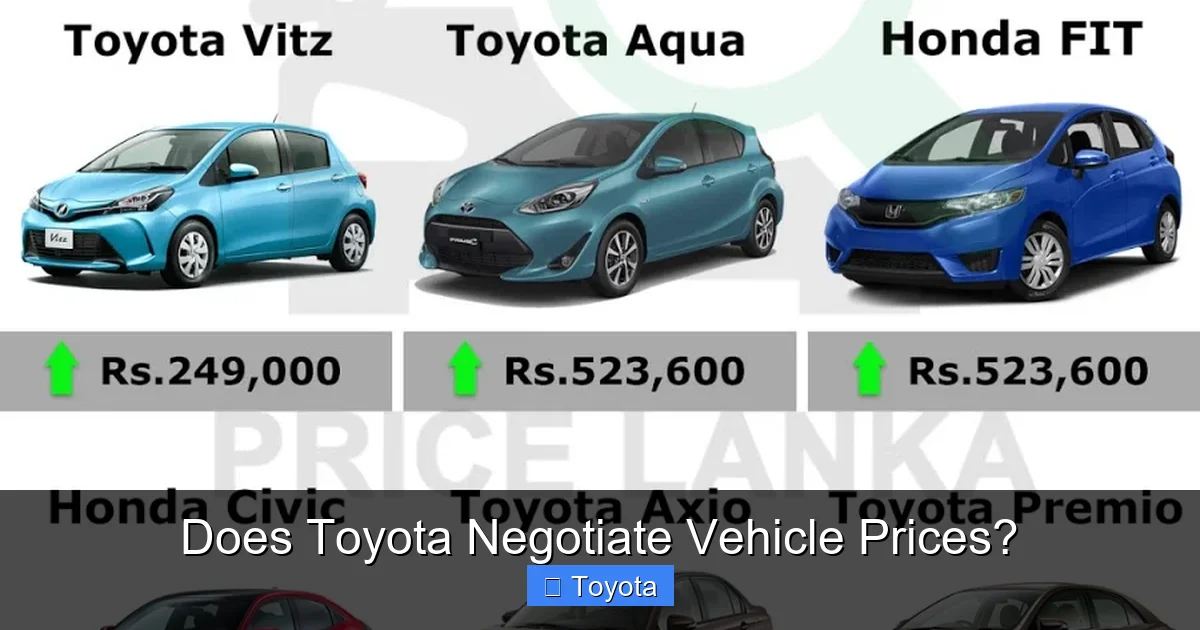
Before you even step foot in a dealership, it’s important to understand how Toyota determines the price of its vehicles. Unlike some brands that inflate MSRP (Manufacturer’s Suggested Retail Price) to create artificial negotiation room, Toyota tends to price its vehicles closer to what the market will bear. This means the sticker price is often closer to the actual selling price, but that doesn’t mean you can’t negotiate.
MSRP vs. Invoice Price: What’s the Difference?
Every new Toyota comes with an MSRP—the price suggested by the manufacturer. This is the number you’ll see on the window sticker and online listings. However, dealerships don’t pay the MSRP. Instead, they pay the invoice price, which is typically 5% to 10% lower than MSRP, depending on the model and trim.
For example, if a 2024 Toyota RAV4 LE has an MSRP of $30,000, the dealer might have paid around $27,500 to $28,500. This gap is where negotiation begins. While Toyota doesn’t publicly disclose invoice prices, tools like Edmunds, Kelley Blue Book (KBB), and TrueCar can give you a close estimate.
Dealer Holdback and Incentives
Another factor that affects pricing is dealer holdback. This is a percentage of the invoice price (usually 2% to 3%) that Toyota pays back to the dealer after the vehicle is sold. It’s essentially a built-in profit margin. Additionally, Toyota offers various incentives—such as cash rebates, low APR financing, or loyalty bonuses—that can be passed on to the buyer or used to reduce the price.
These incentives aren’t always advertised, so it’s up to you to ask about them. For instance, Toyota may offer a $1,000 rebate for recent college graduates or a $500 loyalty bonus for returning customers. These can be negotiated or combined with price reductions.
Market Demand and Inventory Levels
Toyota’s pricing also reflects market demand. Popular models like the RAV4, Camry, and Tacoma often have low inventory and high demand, which can limit negotiation room. In contrast, less popular trims or slower-selling models (like the Mirai or certain Sienna configurations) may have more room for discounts.
If a dealership has a vehicle sitting on the lot for 60+ days, they’re more likely to negotiate to move it. This is especially true at the end of a model year when dealers want to clear out old inventory to make room for new arrivals.
Can You Really Negotiate at a Toyota Dealership?
Visual guide about Does Toyota Negotiate Vehicle Prices?
Image source: static.pakwheels.com
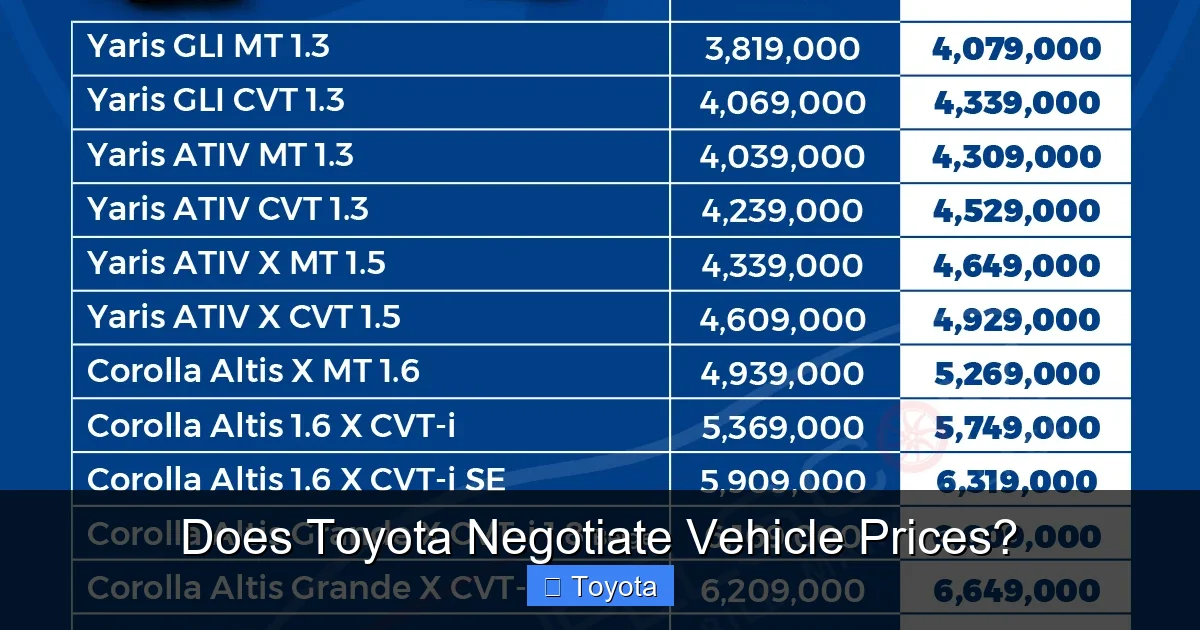
Now for the million-dollar question: Can you actually negotiate at a Toyota dealership? The answer is a resounding yes—but with some caveats.
Why Toyota Dealers Are Open to Negotiation
Despite Toyota’s reputation for fair pricing, dealerships still operate on profit margins. They want to sell cars, and they’re often willing to work with buyers to close a deal. Factors like sales quotas, inventory turnover, and competition from nearby dealers all play a role in how flexible a dealership will be.
For example, if a dealership is behind on its monthly sales target, the sales manager may authorize deeper discounts to meet goals. Similarly, if you’re comparing quotes from multiple dealers, they may lower their price to win your business.
What You Can Negotiate
When negotiating with a Toyota dealer, you’re not just haggling over the sticker price. You can also negotiate:
- The out-the-door price: This includes taxes, fees, and any add-ons. Always ask for a breakdown.
- Trade-in value: If you’re trading in a vehicle, negotiate its value separately from the new car price.
- Financing terms: Even if you’re not paying cash, you can negotiate interest rates or loan terms.
- Add-ons and accessories: Dealers often push extended warranties, paint protection, or VIN etching. You can decline or negotiate these down.
- Documentation fees: These can range from $500 to $1,000. Some states cap them, but many dealers charge the maximum.
Real-World Example: Negotiating a Toyota Camry
Let’s say you’re looking at a 2024 Toyota Camry XLE with an MSRP of $33,000. After researching, you find the invoice price is around $30,500. You also discover Toyota is offering a $750 cash rebate for all buyers.
You visit three dealerships and get quotes:
- Dealer A: $32,800 out-the-door (includes $800 in fees)
- Dealer B: $32,500 out-the-door (includes $600 in fees)
- Dealer C: $32,200 out-the-door (includes $500 in fees)
You choose Dealer C and mention the other quotes. The salesperson agrees to match the lowest price and throws in free floor mats and a full tank of gas. You’ve saved $800 compared to the MSRP and walked away with extras—all because you negotiated.
Best Times to Buy a Toyota for Maximum Savings
Visual guide about Does Toyota Negotiate Vehicle Prices?
Image source: pattersonpersonalinjury.com
Timing is one of the most powerful tools in your negotiation arsenal. Knowing when to buy can make a bigger difference than how well you haggle.
End of the Month, Quarter, or Year
Dealerships operate on sales targets. At the end of a month, quarter, or year, salespeople and managers are often under pressure to meet quotas. This is when they’re most likely to offer discounts or throw in extras to close a deal.
For example, a salesperson who’s $5,000 short of their monthly bonus might be willing to drop the price by $1,000 just to hit their goal. Similarly, at the end of the year, dealers want to clear out old inventory to make room for new models.
Holiday Sales Events
Toyota frequently runs special promotions during holidays like Memorial Day, Independence Day, Labor Day, and Black Friday. These events often include:
- Cash rebates (e.g., $1,500 off a new Tundra)
- 0% APR financing for qualified buyers
- Loyalty bonuses for returning customers
- Lease deals with low monthly payments
These promotions can be combined with negotiation, giving you even more savings.
New Model Year Arrivals
When the new model year arrives (usually in late summer or early fall), dealers begin clearing out the previous year’s inventory. This is a great time to buy a “last year’s model” at a discount. For instance, a 2023 RAV4 might be discounted by $2,000 or more when the 2024 model arrives.
Just be aware that some buyers prefer the latest features, so availability may be limited.
Slow Sales Periods
Winter months (January–March) are typically slow for car sales, especially in colder climates. Dealers may be more willing to negotiate during this time to keep sales flowing. Similarly, weekdays are generally less busy than weekends, giving you more one-on-one time with a salesperson.
Proven Strategies to Negotiate the Best Toyota Deal
Now that you know when and why Toyota prices can be negotiated, let’s dive into the tactics that will help you succeed.
Do Your Homework Before You Go
Knowledge is power. Before visiting a dealership, research:
- The invoice price of the vehicle you want
- Current Toyota incentives and rebates
- Competitive quotes from other dealers
- Your trade-in value (use KBB or Edmunds)
- Financing options (check with your bank or credit union)
Bring printouts or screenshots of your research. This shows the dealer you’re serious and informed.
Get Multiple Quotes
Contact at least three dealerships in your area and ask for a written quote. Be clear that you’re shopping around and will choose the best deal. Use email or online forms to get quotes—this creates a paper trail and prevents high-pressure tactics.
When you receive quotes, compare the out-the-door price, not just the monthly payment. A lower monthly payment might come with a longer loan term or higher interest rate.
Negotiate the Price, Not the Payment
Salespeople often focus on monthly payments to distract from the total cost. Always negotiate the vehicle price first, then discuss financing. This ensures you’re getting a fair deal on the car itself.
For example, if a dealer offers $400/month, ask: “What’s the total price of the car?” Then work backward to see if it’s a good deal.
Be Ready to Walk Away
The most powerful negotiating tool is your willingness to leave. If a dealer won’t budge on price, say, “I appreciate your time, but I need to think about it.” Often, they’ll call you back within hours with a better offer.
Don’t feel pressured to sign anything on the spot. Take your time, review the numbers, and make sure you’re comfortable.
Use Financing as Leverage
Even if you plan to pay cash, consider financing through the dealer. Toyota Financial Services often offers promotional rates (like 0.9% APR) that can save you money. You can always pay off the loan early without penalty.
If you have pre-approved financing from your bank, use it as leverage. The dealer may try to beat your rate to earn your business.
Avoid Common Add-Ons
Dealers often push extras like:
- Extended warranties (often overpriced)
- Paint protection (usually unnecessary)
- VIN etching (a $200 service that costs $5)
- Fabric protection (doesn’t last long)
Politely decline these unless you truly want them. If you do, negotiate the price down.
Certified Pre-Owned Toyotas: A Negotiation Goldmine
If you’re open to a used vehicle, Toyota Certified Pre-Owned (CPO) cars offer excellent value and strong negotiation opportunities.
What Is a Toyota CPO Vehicle?
A Toyota CPO vehicle is a used car that has passed a 160-point inspection, comes with a 12-month/12,000-mile comprehensive warranty, and includes a 7-year/100,000-mile powertrain warranty. These vehicles are typically 1–3 years old and have low mileage.
Why CPO Cars Are Easier to Negotiate
Unlike new cars, CPO vehicles don’t have MSRP. Instead, dealers set their own prices based on market value. This gives them more flexibility to negotiate. Additionally, CPO cars often have higher inventory, especially in popular models like the Corolla or RAV4.
For example, a 2022 Toyota RAV4 CPO might be listed at $28,000. After researching similar models on Autotrader or Cars.com, you might find comparable vehicles for $26,500. Use this info to negotiate a lower price.
Tips for Buying a CPO Toyota
- Check the vehicle history report (Carfax or AutoCheck)
- Ask about the original warranty and any remaining coverage
- Negotiate based on market value, not the listed price
- Consider a third-party inspection for peace of mind
CPO Toyotas offer the reliability of a new car with the savings of a used one—and they’re often the best-kept secret in the Toyota lineup.
Conclusion: Yes, You Can—and Should—Negotiate Your Toyota Price
So, does Toyota negotiate vehicle prices? Absolutely. While Toyota’s pricing is often fair and transparent, there’s still room to save—sometimes hundreds or even thousands of dollars. The key is preparation, timing, and confidence.
Start by researching the invoice price and current incentives. Get quotes from multiple dealers. Time your purchase for the end of the month or during a holiday sale. And never be afraid to walk away if the deal isn’t right.
Remember, every dollar you save is money back in your pocket. Whether you’re buying a new Camry, a rugged Tacoma, or a certified pre-owned Corolla, negotiation is not just possible—it’s expected. With the right approach, you can drive off the lot feeling confident that you got the best deal on your Toyota.
Frequently Asked Questions
Can you negotiate the price of a new Toyota?
Yes, you can negotiate the price of a new Toyota. While Toyota vehicles are priced competitively, dealerships often have room to lower the price, especially on in-stock models or during slow sales periods.
What’s the best way to negotiate with a Toyota dealer?
The best way is to research the invoice price, get multiple quotes, and be prepared to walk away. Focus on the out-the-door price, not monthly payments, and use incentives to your advantage.
Are Toyota prices fixed like at some other brands?
No, Toyota prices are not fixed. Unlike some brands with no-haggle policies, most Toyota dealers are open to negotiation, particularly when inventory is high or sales targets are at stake.
When is the best time to buy a Toyota to get a discount?
The best times are at the end of the month, quarter, or year, during holiday sales events, or when new model years arrive. These periods often bring deeper discounts and special incentives.
Can you negotiate on Toyota Certified Pre-Owned vehicles?
Yes, CPO vehicles are often easier to negotiate because dealers set their own prices. Use market comparisons to justify a lower offer and always check the vehicle history.
Do Toyota dealers offer incentives that can reduce the price?
Yes, Toyota frequently offers cash rebates, loyalty bonuses, low APR financing, and lease deals. These can be combined with price negotiations to maximize your savings.
