
Is Toyota 3.4 an Interference Engine?

The Toyota 3.4L V6 engine is indeed an interference engine, meaning a broken timing belt can cause severe internal damage. Understanding this design is crucial for owners to maintain proper timing belt service intervals and avoid catastrophic engine failure.
Key Takeaways
- The Toyota 3.4L V6 is an interference engine: If the timing belt fails, the pistons can collide with open valves, causing extensive and expensive damage.
- Timing belt replacement is critical: Toyota recommends replacing the timing belt every 90,000 to 100,000 miles to prevent failure.
- Common in popular Toyota models: This engine was used in the 4Runner, Tacoma, T100, and Land Cruiser from the early 1990s to mid-2000s.
- Signs of timing belt wear include engine misfires, difficulty starting, and unusual noises: Don’t wait for a failure—proactive maintenance saves money.
- Replacing the water pump and tensioner during timing belt service is highly recommended: These components are accessed during the same job and often fail around the same time.
- DIY vs. professional service: While possible for skilled mechanics, timing belt replacement on the 3.4L is complex and best left to professionals.
- Using OEM or high-quality aftermarket parts ensures longevity and reliability: Cutting corners on parts can lead to premature failure.
📑 Table of Contents
- Is Toyota 3.4 an Interference Engine? The Truth You Need to Know
- Understanding Interference vs. Non-Interference Engines
- The Toyota 3.4L V6 Engine: Overview and Applications
- The Risks of a Failed Timing Belt in an Interference Engine
- Timing Belt Replacement: When and How
- Tips for Maintaining Your Toyota 3.4L Engine
- Conclusion: Respect the Design, Reward Yourself with Reliability
Is Toyota 3.4 an Interference Engine? The Truth You Need to Know
If you own or are considering buying a Toyota with the 3.4-liter V6 engine—perhaps a rugged 4Runner, a dependable Tacoma, or a classic T100—you’ve probably come across the term “interference engine” in forums, repair manuals, or mechanic recommendations. But what does that really mean? And more importantly, should it change how you maintain your vehicle?
Let’s cut through the confusion. Yes, the Toyota 3.4L V6 is an interference engine. That means if the timing belt breaks while the engine is running, the pistons and valves can collide, potentially causing catastrophic internal damage. This isn’t just a theoretical risk—it’s a real and expensive possibility that every 3.4L owner should take seriously.
But don’t panic. Being an interference engine doesn’t mean your Toyota is a ticking time bomb. It simply means that proper maintenance—especially timing belt replacement—is absolutely essential. With regular care and attention, the 3.4L can deliver hundreds of thousands of miles of reliable service. In this guide, we’ll dive deep into what makes this engine an interference design, why it matters, and how you can protect your investment.
Understanding Interference vs. Non-Interference Engines
Visual guide about Is Toyota 3.4 an Interference Engine?
Image source: roadsumo.com
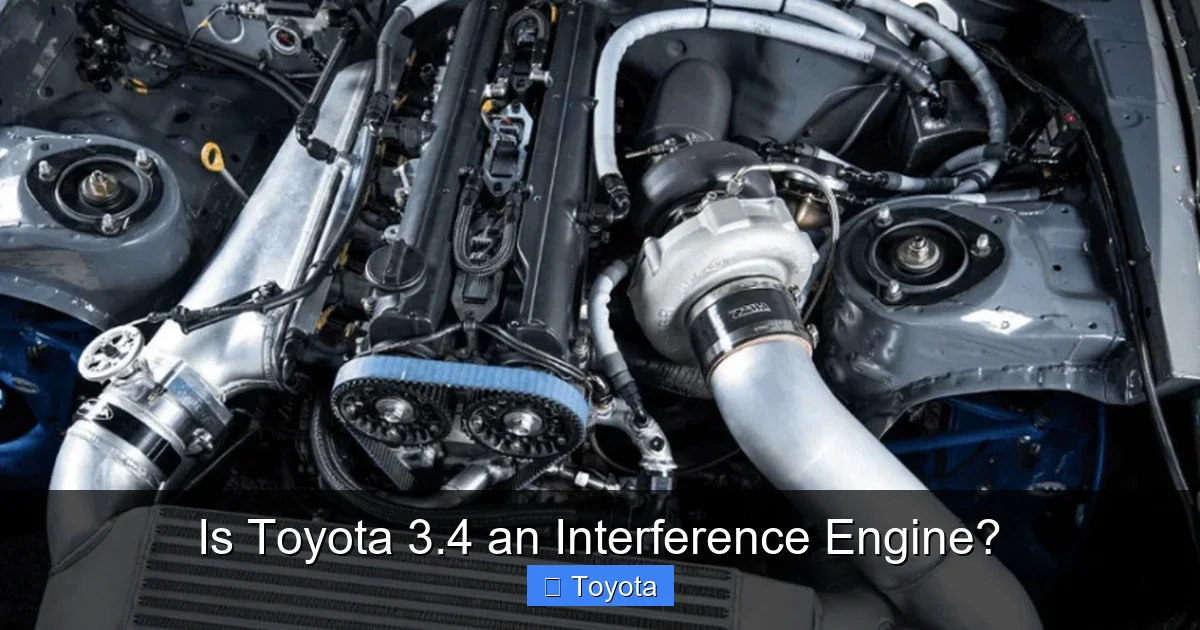
Before we get into the specifics of the Toyota 3.4, it’s important to understand what “interference” actually means in engine design.
In any internal combustion engine, the pistons move up and down in the cylinders while the valves open and close to let air and fuel in and exhaust out. The timing of these movements is controlled by the camshaft(s), which are synchronized with the crankshaft via a timing belt or chain.
In a non-interference engine, there’s enough clearance between the pistons and valves—even when the valves are fully open—that they won’t collide if the timing belt fails. This gives the engine a safety buffer. If the belt breaks, the engine simply stops running, and while it’s inconvenient, it’s not necessarily destructive.
In contrast, an interference engine has tighter tolerances. The pistons travel high enough in the cylinder that they can physically strike the valves if those valves are open at the wrong time. This typically happens when the timing belt snaps or slips, disrupting the precise synchronization between the crankshaft and camshaft.
The Toyota 3.4L V6 falls squarely into the interference category. This design allows for higher compression ratios and more efficient combustion, which improves power and fuel economy. But it comes with a trade-off: greater risk if the timing belt fails.
Why Do Manufacturers Use Interference Designs?
You might wonder why automakers would choose a design that risks engine destruction. The answer lies in performance and efficiency.
Interference engines can have higher compression ratios because the valves can open wider and longer without fear of piston contact—under normal operating conditions. This leads to better airflow, more complete combustion, and ultimately, more power and better fuel economy.
Toyota, known for building durable and efficient engines, adopted the interference design for the 3.4L to maximize performance while keeping emissions and fuel consumption low. The 3.4L was designed to be a workhorse—capable of towing, off-roading, and daily driving—without sacrificing reliability when properly maintained.
But again, that reliability hinges on one critical component: the timing belt.
The Toyota 3.4L V6 Engine: Overview and Applications
Visual guide about Is Toyota 3.4 an Interference Engine?
Image source: roadsumo.com
The Toyota 3.4-liter V6, officially known as the 5VZ-FE, was introduced in 1995 and produced through 2004. It’s a 60-degree V6 with dual overhead camshafts (DOHC), 24 valves, and electronic fuel injection. It was designed to replace the older 3VZ-E engine and offered significant improvements in power, smoothness, and efficiency.
Producing around 190 to 200 horsepower and 220 lb-ft of torque (depending on the model year and application), the 3.4L was a popular choice for mid-size trucks and SUVs. It powered some of Toyota’s most beloved vehicles, including:
– Toyota 4Runner (1996–2002)
– Toyota Tacoma (1995–2004)
– Toyota T100 (1995–1998)
– Toyota Land Cruiser (1996–1997, in some markets)
These vehicles are still on the road today, many with well over 200,000 miles. That’s a testament to Toyota’s engineering—but also a reminder that these engines are aging, and their timing belts may be overdue for replacement.
Engine Specifications at a Glance
Here’s a quick breakdown of the 5VZ-FE’s key specs:
– Displacement: 3.4 liters (3378 cc)
– Configuration: 60-degree V6
– Valvetrain: DOHC, 4 valves per cylinder
– Fuel System: Sequential multi-port fuel injection
– Timing Drive: Belt-driven (timing belt)
– Compression Ratio: 9.6:1
– Horsepower: 190–200 hp @ 4800 rpm
– Torque: 220 lb-ft @ 3600 rpm
The use of a timing belt—rather than a timing chain—is significant. Timing belts are quieter and lighter than chains, but they wear out and must be replaced periodically. Chains, by contrast, can last the life of the engine but are noisier and heavier.
Because the 3.4L uses a belt, and because it’s an interference engine, the timing belt is not just a maintenance item—it’s a critical safety component.
The Risks of a Failed Timing Belt in an Interference Engine
Visual guide about Is Toyota 3.4 an Interference Engine?
Image source: roadsumo.com
Now let’s talk about what happens when a timing belt fails in the Toyota 3.4L.
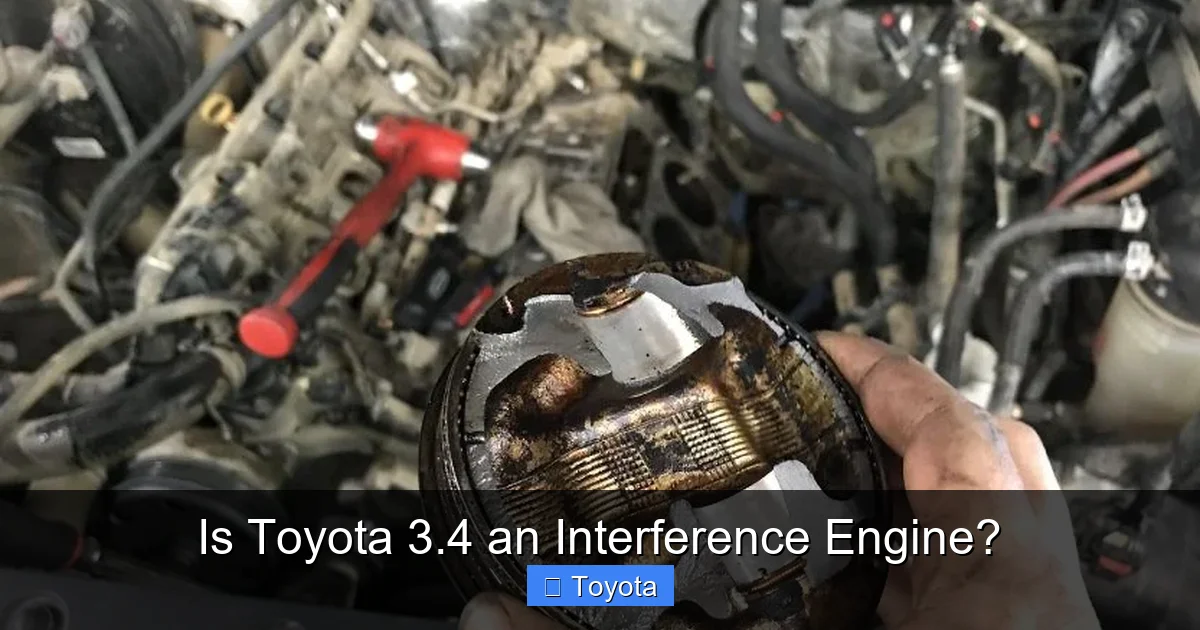
When the timing belt breaks or slips, the camshaft(s) stop turning in sync with the crankshaft. The pistons continue moving up and down due to momentum, but the valves are no longer opening and closing at the correct times. In an interference engine like the 3.4L, this means the pistons can smash into the open valves.
The result? Bent valves, damaged pistons, scored cylinder walls, and potentially destroyed cylinder heads. In severe cases, the engine may be beyond repair and require a full rebuild or replacement.
This isn’t just a theoretical scenario. There are countless stories from Toyota owners who experienced timing belt failure—often at highway speeds—and faced repair bills ranging from $3,000 to $7,000 or more. In some cases, the cost of repairs exceeded the value of the vehicle.
Real-World Example: A Cautionary Tale
Take the case of a 2001 Toyota 4Runner with 135,000 miles. The owner had been diligent about oil changes and routine maintenance but had never replaced the timing belt. One day, while driving on the freeway, the engine suddenly lost power and made a loud clattering noise. The vehicle was towed to a shop, where mechanics discovered the timing belt had snapped. Upon disassembly, they found three bent valves and a damaged piston. The repair cost: $4,200 for a head rebuild and new timing components.
This is exactly the kind of failure that could have been prevented with a $600 timing belt service at 100,000 miles.
Signs Your Timing Belt May Be Failing
Timing belts don’t usually give obvious warnings before they fail, but there are some signs to watch for:
– Engine misfires or rough idling: If the belt is slipping slightly, it can cause timing to be off, leading to poor combustion.
– Difficulty starting the engine: Incorrect valve timing can make it hard for the engine to turn over.
– Unusual noises from the engine: A whining or ticking sound from the timing cover area could indicate belt wear or tensioner issues.
– Oil leaks near the timing cover: Oil can degrade the belt over time, accelerating wear.
However, the most reliable way to prevent failure is to follow the manufacturer’s recommended replacement interval—not wait for symptoms.
Timing Belt Replacement: When and How
So, when should you replace the timing belt on a Toyota 3.4L?
Toyota officially recommends replacing the timing belt every 90,000 to 100,000 miles, or every 7 to 10 years—whichever comes first. This is a critical maintenance interval that should not be ignored.
Even if your vehicle has only 80,000 miles but is 12 years old, the belt may be brittle and prone to failure due to age. Rubber degrades over time, even if it’s not being used.
What’s Included in a Timing Belt Service?
A proper timing belt replacement on the 3.4L isn’t just about swapping the belt. It’s a comprehensive service that typically includes:
– Timing belt
– Timing belt tensioner
– Idler pulleys
– Water pump (highly recommended)
– Camshaft and crankshaft seals
– Coolant replacement
– Labor (4–6 hours for most shops)
Replacing the water pump at the same time is strongly advised. The water pump is driven by the timing belt and is accessed during the same procedure. Since it’s already apart, it makes sense to replace the pump—especially since a failing water pump can also cause overheating and engine damage.
DIY vs. Professional Service
Can you replace the timing belt yourself? Technically, yes—if you’re an experienced mechanic with the right tools and a service manual. The job requires precise alignment of timing marks, proper torque specs, and careful handling of components.
However, because the consequences of getting it wrong are so severe (a misaligned belt can cause immediate engine damage), most experts recommend having the work done by a qualified technician.
If you do attempt it yourself, make sure to:
– Use a factory service manual (not just online guides)
– Replace all related components (tensioner, idlers, water pump)
– Double-check timing marks before reassembly
– Rotate the engine by hand after installation to ensure smooth operation
Cost of Timing Belt Replacement
The cost varies by location and shop, but you can expect to pay:
– $600–$900 for a quality aftermarket kit and labor at an independent shop
– $900–$1,300 at a Toyota dealership
While this may seem expensive, it’s a fraction of the cost of engine repair after a belt failure.
Tips for Maintaining Your Toyota 3.4L Engine
Beyond the timing belt, there are several other ways to keep your 3.4L running strong for years to come.
Use High-Quality Parts
When replacing the timing belt, don’t skimp on parts. Use OEM (Original Equipment Manufacturer) or reputable aftermarket brands like Aisin, Gates, or Dayco. Cheap belts or tensioners can fail prematurely, putting your engine at risk.
Monitor Oil and Coolant Levels
The 3.4L is generally reliable, but like any engine, it needs clean oil and proper cooling. Check oil levels regularly and change it every 5,000 miles with the recommended 5W-30 or 10W-30 oil. Also, ensure the coolant is flushed every 60,000 miles to prevent corrosion and overheating.
Watch for Oil Leaks
The 3.4L is known for developing oil leaks over time, especially from the valve cover gaskets and rear main seal. While not immediately dangerous, leaks can drip oil onto the timing belt, degrading the rubber and shortening its life. Address leaks promptly.
Listen to Your Engine
Unusual noises, vibrations, or performance issues should never be ignored. A knocking sound could indicate low oil pressure, while a whine might point to a failing water pump or tensioner.
Keep Records
Maintain a log of all maintenance, especially the timing belt replacement. This not only helps you stay on schedule but also adds value if you ever sell the vehicle.
Conclusion: Respect the Design, Reward Yourself with Reliability
So, is the Toyota 3.4 an interference engine? Absolutely. And that’s not a flaw—it’s a design choice that enables better performance and efficiency. But it does come with a responsibility: diligent maintenance.
The timing belt is the lifeline of your 3.4L engine. Replace it on time, use quality parts, and don’t ignore warning signs. Do that, and your Toyota 4Runner, Tacoma, or T100 can keep running strong for decades.
Remember, the cost of prevention is always less than the cost of repair. A $700 timing belt job every 90,000–100,000 miles is a small price to pay for peace of mind and long-term reliability.
Whether you’re a weekend warrior hitting the trails or a daily driver navigating city streets, your 3.4L Toyota is built to last—as long as you give it the care it deserves.
Frequently Asked Questions
Is the Toyota 3.4L V6 an interference engine?
Yes, the Toyota 3.4L V6 (5VZ-FE) is an interference engine. If the timing belt fails, the pistons can collide with the valves, causing severe internal damage.
What happens if the timing belt breaks on a 3.4L Toyota?
A broken timing belt can cause the pistons to hit the open valves, resulting in bent valves, damaged pistons, and potentially a ruined engine. Repair costs can exceed $4,000.
How often should I replace the timing belt on a Toyota 3.4L?
Toyota recommends replacing the timing belt every 90,000 to 100,000 miles or every 7 to 10 years, whichever comes first.
Can I drive my Toyota 3.4L if the timing belt is old?
It’s not recommended. Even if the engine runs fine, an old or worn timing belt can fail unexpectedly, leading to costly engine damage.
Should I replace the water pump when changing the timing belt?
Yes, it’s highly recommended. The water pump is driven by the timing belt and is accessed during the same service. Replacing it prevents future failures and saves labor costs.
Can I replace the timing belt myself on a 3.4L Toyota?
It’s possible for experienced DIYers with the right tools and manual, but due to the risk of engine damage if done incorrectly, most experts recommend professional service.
