
How Much Is Gas for a Jeep Wrangler per Month

Owning a Jeep Wrangler is a dream for many off-road enthusiasts, but understanding monthly fuel costs is essential for budgeting. This guide breaks down average gas expenses, factors affecting consumption, and practical tips to reduce your fuel bill without sacrificing adventure.
Key Takeaways
- Monthly gas costs vary widely: Depending on driving habits and model year, expect to spend between $150 and $400 per month on gas for a Jeep Wrangler.
- Fuel economy ranges from 17 to 25 MPG: Newer models with efficient engines and automatic transmissions tend to perform better than older, manual-equipped versions.
- City driving increases fuel use: Stop-and-go traffic significantly lowers mileage compared to highway cruising, impacting your monthly fuel bill.
- Tire choice and maintenance matter: Larger off-road tires and poor alignment can reduce fuel efficiency by up to 10%.
- Seasonal changes affect consumption: Cold weather and frequent idling in winter can increase gas usage, especially in older models.
- Fuel-saving habits help: Smooth acceleration, regular maintenance, and reducing cargo weight can lower monthly fuel costs.
- Electric and hybrid options are emerging: The Jeep Wrangler 4xe plug-in hybrid offers lower fuel costs for daily commuters, blending electric and gas power.
📑 Table of Contents
How Much Is Gas for a Jeep Wrangler per Month?
So, you’ve got your eyes on a Jeep Wrangler—or maybe you already own one. It’s rugged, iconic, and built for adventure. But let’s be real: one of the first questions that pops into your head is, “How much is gas for a Jeep Wrangler per month?” After all, this isn’t your average sedan. It’s a vehicle designed for trails, mud, and mountain climbs, not fuel efficiency. But that doesn’t mean you’re stuck with sky-high fuel bills.
The truth is, monthly gas costs for a Jeep Wrangler depend on several factors—your driving style, where you live, the model year, and even the type of tires you’re running. Some Wrangler owners spend as little as $150 a month on fuel, while others might shell out $400 or more, especially if they drive frequently or live in areas with high gas prices.
In this guide, we’ll break down everything you need to know about fuel costs for the Jeep Wrangler. We’ll look at average fuel economy, real-world driving scenarios, and practical tips to keep your monthly gas bill under control. Whether you’re a weekend warrior or a daily commuter, understanding your fuel expenses will help you enjoy your Wrangler without financial stress.
Understanding Jeep Wrangler Fuel Economy
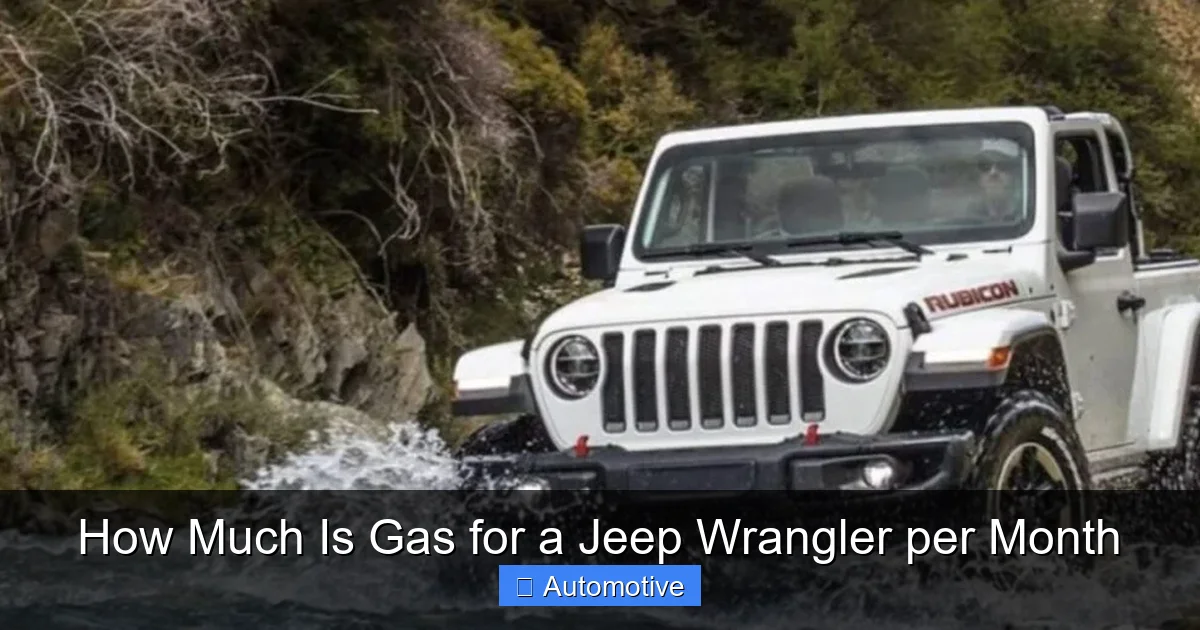
Visual guide about How Much Is Gas for a Jeep Wrangler per Month
Image source: psychoautos.com
Before we dive into monthly costs, let’s talk about fuel economy—the foundation of your gas bill. The Jeep Wrangler has evolved over the years, and so has its fuel efficiency. Older models, especially those from the 1990s and early 2000s, were notorious for guzzling gas. But newer versions have made significant improvements.
Average MPG by Model Year
Let’s start with the numbers. Fuel economy is measured in miles per gallon (MPG), and it varies depending on the engine, transmission, and drivetrain. Here’s a quick breakdown:
– **1997–2006 Wrangler (TJ and early JK):** Around 15–17 MPG combined (city and highway).
– **2007–2011 Wrangler (JK):** Improved to 15–18 MPG with the 3.8L V6 engine.
– **2012–2018 Wrangler (JK):** The introduction of the 3.6L Pentastar V6 boosted efficiency to 17–21 MPG.
– **2018–Present Wrangler (JL):** The latest generation offers even better numbers, with the 2.0L turbocharged four-cylinder and 3.6L V6 achieving 22–25 MPG on the highway and 17–20 MPG in the city.
The 2020 and newer models with the 2.0L turbo engine and eight-speed automatic transmission are among the most fuel-efficient Wranglers ever made. For example, a 2023 Wrangler Sahara with the 2.0L engine can average around 22 MPG combined under normal driving conditions.
City vs. Highway Driving
One of the biggest factors affecting your monthly gas cost is where you drive. City driving—stoplights, traffic, and frequent acceleration—kills fuel economy. Highway driving, on the other hand, allows for steady speeds and better mileage.
For a 2023 Wrangler, you might get 17 MPG in the city and 25 MPG on the highway. That’s a big difference. If you’re commuting 30 miles round-trip in the city five days a week, you’ll burn more gas than someone who drives the same distance on the highway.
Let’s do the math:
– 30 miles/day × 5 days = 150 miles/week
– 150 × 4 weeks = 600 miles/month
– At 17 MPG city: 600 ÷ 17 = ~35.3 gallons/month
– At $3.50/gallon: 35.3 × $3.50 = ~$123.55/month
Now, if that same person drove on the highway:
– 600 miles ÷ 25 MPG = 24 gallons
– 24 × $3.50 = $84/month
That’s a $40 difference just based on driving conditions. If you add weekend trips or off-roading, the numbers climb even higher.
The Impact of Off-Roading and Modifications
Let’s be honest—many Wrangler owners buy the vehicle for its off-road capability. But hitting the trails comes at a cost. Off-roading typically involves low-speed crawling, steep inclines, and rough terrain—all of which increase fuel consumption.
Additionally, common modifications like larger tires, lift kits, and heavy bumpers can reduce fuel efficiency. For example, upgrading from stock 33-inch tires to 35-inch or 37-inch tires can decrease MPG by 2–4 points. That might not sound like much, but over a month, it adds up.
Imagine you normally get 20 MPG. With larger tires, you drop to 17 MPG. If you drive 1,000 miles a month:
– 1,000 ÷ 20 = 50 gallons
– 1,000 ÷ 17 = 58.8 gallons
– Difference: 8.8 gallons
– At $3.50/gallon: $30.80 extra per month
So, while mods make your Wrangler look awesome and perform better off-road, they do impact your fuel bill. It’s a trade-off every owner should consider.
Calculating Your Monthly Gas Cost

Visual guide about How Much Is Gas for a Jeep Wrangler per Month
Image source: en.arabgt.com
Now that we understand fuel economy, let’s calculate how much gas a Jeep Wrangler costs per month. The formula is simple:
Monthly Gas Cost = (Monthly Miles Driven ÷ MPG) × Price per Gallon
Let’s walk through a few real-life examples.
Example 1: Daily Commuter (City Driving)
Sarah drives her 2020 Wrangler Rubicon to work every day. She lives in a suburban area with moderate traffic and drives 25 miles round-trip, five days a week. She also runs errands on weekends, adding about 100 miles per month.
– Total monthly miles: (25 × 5 × 4) + 100 = 600 miles
– Her Wrangler averages 18 MPG in mixed driving
– Local gas price: $3.60/gallon
Calculation:
600 ÷ 18 = 33.3 gallons
33.3 × $3.60 = $119.88
Sarah spends about $120 per month on gas.
Example 2: Weekend Adventurer (Highway + Off-Road)
Mike uses his 2015 Wrangler Sahara mostly on weekends for camping and trail riding. He drives 200 miles per month on the highway to reach trailheads and another 100 miles off-road.
– Total monthly miles: 300
– Highway MPG: 20
– Off-road MPG: ~12 (due to low speeds and rough terrain)
– Weighted average: ~16 MPG
– Gas price: $3.40/gallon
Calculation:
300 ÷ 16 = 18.75 gallons
18.75 × $3.40 = $63.75
Mike spends about $64 per month on gas—much less than Sarah, even though his driving is more intense. Why? Because he drives fewer total miles.
Example 3: High-Mileage Driver (Long Commute)
David drives his 2022 Wrangler 4xe (plug-in hybrid) 60 miles round-trip to work, five days a week. He also takes weekend trips, totaling 1,200 miles per month.
– Total monthly miles: 1,200
– His 4xe averages 49 MPGe (miles per gallon equivalent) when using electric mode for the first 21 miles, then switches to gas
– He charges at home and uses electric for most of his commute
– Gas usage: ~300 miles on gas per month
– Gas MPG: 22
– Gas price: $3.70/gallon
Calculation:
300 ÷ 22 = 13.6 gallons
13.6 × $3.70 = $50.32
David spends only $50 on gas per month—thanks to the hybrid system. If he didn’t have the 4xe, his cost would be much higher.
These examples show how driving habits, vehicle type, and fuel prices all play a role in your monthly gas bill.
Factors That Affect Your Monthly Fuel Costs
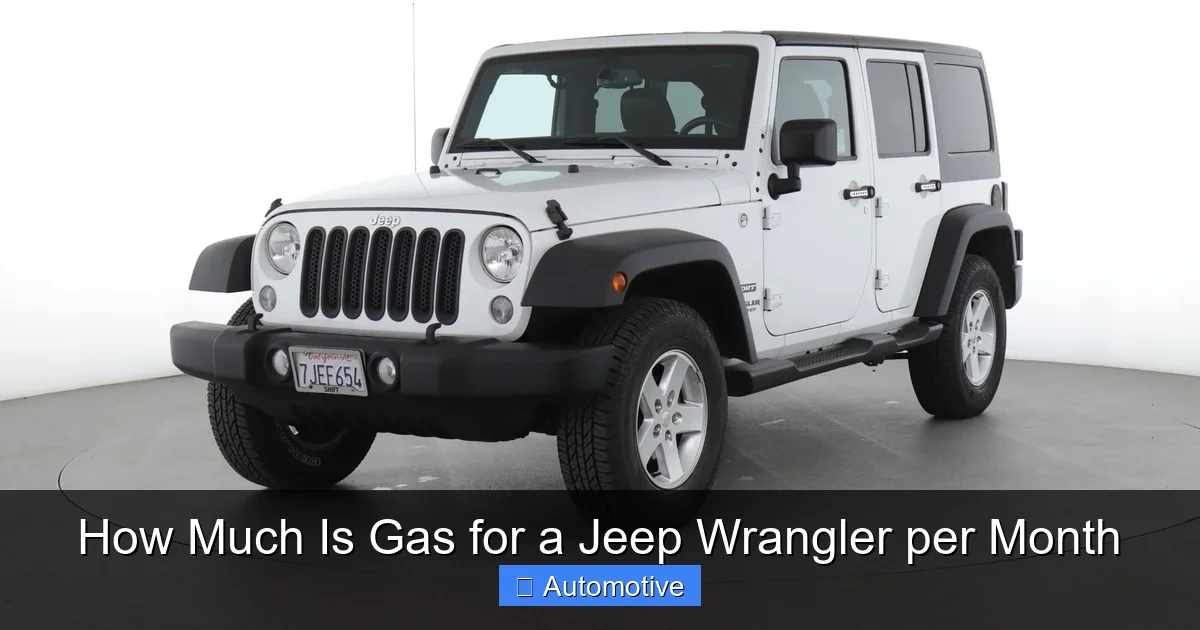
Visual guide about How Much Is Gas for a Jeep Wrangler per Month
Image source: cdn.myjeepcar.com
Now that we’ve seen how costs vary, let’s explore the key factors that influence how much gas your Jeep Wrangler uses each month.
1. Driving Habits
How you drive has a huge impact on fuel economy. Aggressive driving—rapid acceleration, hard braking, and speeding—can reduce MPG by 15–30%. Smooth, steady driving saves fuel.
For example, accelerating gently from a stoplight instead of flooring it can improve your city MPG by 2–3 points. Using cruise control on the highway also helps maintain consistent speed and reduces fuel waste.
2. Vehicle Maintenance
A well-maintained Wrangler runs more efficiently. Simple things like regular oil changes, clean air filters, and proper tire pressure can boost fuel economy.
– Tire Pressure: Underinflated tires increase rolling resistance. Check your tire pressure monthly. The recommended PSI is usually listed on the driver’s door jamb.
– Air Filter: A clogged air filter restricts airflow to the engine, reducing efficiency. Replace it every 15,000–30,000 miles.
– Spark Plugs: Worn spark plugs cause misfires and poor combustion. Replace them as recommended in your owner’s manual.
3. Load and Cargo
The heavier your Wrangler, the more fuel it uses. Roof racks, spare tires, and extra gear add weight and drag. Removing unnecessary items can improve MPG.
For example, a roof rack with a cargo box can reduce highway MPG by 5–10%. If you only use it occasionally, take it off when not needed.
4. Climate and Weather
Cold weather affects fuel economy. In winter, engines take longer to warm up, and you’re more likely to idle for heat. This increases fuel use, especially in older models.
Additionally, using the heater, defroster, and seat warmers draws power from the engine, reducing efficiency. In extreme cold, MPG can drop by 10–20%.
5. Fuel Type and Quality
Using the correct fuel is important. Most Wranglers run on regular unleaded gasoline (87 octane). Using premium fuel won’t improve performance unless your engine is designed for it (like some high-performance trims).
Also, buying gas from reputable stations ensures you’re getting clean fuel. Contaminated or low-quality gas can harm your engine and reduce efficiency.
Tips to Reduce Your Monthly Gas Bill
You love your Wrangler, but you don’t have to break the bank on gas. Here are practical tips to lower your monthly fuel costs.
1. Drive Smarter
– Accelerate gently: Avoid jackrabbit starts. Smooth acceleration saves fuel.
– Use cruise control: On long highway drives, cruise control maintains a steady speed and improves MPG.
– Anticipate traffic: Look ahead and ease off the gas early instead of braking hard.
2. Maintain Your Vehicle
– Follow the maintenance schedule: Regular oil changes, tire rotations, and inspections keep your Wrangler running efficiently.
– Check tire pressure monthly: Properly inflated tires reduce rolling resistance.
– Replace air filters: A clean filter improves airflow and combustion.
3. Reduce Weight and Drag
– Remove roof racks when not in use: They create wind resistance.
– Take off extra gear: Only carry what you need.
– Use a tonneau cover: If you have a soft top, a cover can reduce drag.
4. Plan Your Trips
– Combine errands: One long trip uses less gas than multiple short ones.
– Use GPS to avoid traffic: Apps like Waze can help you find the fastest, least congested route.
5. Consider a Hybrid or Electric Option
If you’re in the market for a new Wrangler, the 4xe plug-in hybrid is a game-changer. It offers up to 21 miles of all-electric range, perfect for daily commutes. You can charge at home and use little to no gas for short trips.
For example, if you drive 30 miles a day and charge nightly, you might only use gas once a week. That could cut your monthly fuel cost by 60–80%.
Comparing Gas Costs: Wrangler vs. Other SUVs
How does the Wrangler stack up against other SUVs in terms of fuel costs? Let’s compare.
| Vehicle | Avg. MPG | Monthly Cost (1,000 miles, $3.50/gal) |
|——–|——–|——————————-|
| Jeep Wrangler (2023) | 22 | $159 |
| Toyota 4Runner | 18 | $194 |
| Ford Bronco | 20 | $175 |
| Subaru Outback | 29 | $121 |
| Honda CR-V | 30 | $117 |
As you can see, the Wrangler is less efficient than compact SUVs like the CR-V or Outback, but it’s in the same ballpark as other body-on-frame off-roaders like the 4Runner and Bronco.
If fuel economy is your top priority, a unibody SUV might be a better fit. But if you need serious off-road capability, the Wrangler’s fuel cost is a reasonable trade-off.
Conclusion: Is the Wrangler Worth the Gas Cost?
So, how much is gas for a Jeep Wrangler per month? The answer isn’t one-size-fits-all. For most owners, monthly fuel costs range from $120 to $250, depending on driving habits, model year, and local gas prices. High-mileage drivers or those with modified vehicles may spend $300 or more.
But here’s the thing: the Wrangler isn’t just a vehicle—it’s a lifestyle. It’s about freedom, adventure, and the open trail. For many, the joy of driving a Wrangler outweighs the fuel cost.
That said, being smart about your driving and maintenance can significantly reduce your monthly bill. Whether you’re commuting daily or exploring backcountry roads, understanding your fuel usage helps you budget better and enjoy your Jeep to the fullest.
If you’re considering a Wrangler, weigh the fuel costs against your needs. And if you already own one, use the tips in this guide to save money and get the most out of every gallon.
Frequently Asked Questions
How much does it cost to fill up a Jeep Wrangler?
The cost to fill up a Jeep Wrangler depends on the fuel tank size and local gas prices. Most Wranglers have a 17- to 21-gallon tank. At $3.50 per gallon, a full tank costs between $60 and $75.
Does the Jeep Wrangler 4xe save money on gas?
Yes, the 4xe plug-in hybrid can significantly reduce gas costs. With up to 21 miles of electric range, daily commuters may use little to no gas, cutting monthly fuel expenses by 50% or more.
Why does my Wrangler get worse gas mileage than advertised?
Real-world MPG often falls short of EPA estimates due to driving conditions, modifications, and maintenance. City driving, heavy loads, and large tires can all reduce fuel efficiency.
Can I improve my Wrangler’s fuel economy?
Yes. Maintain proper tire pressure, drive smoothly, remove unnecessary weight, and follow the maintenance schedule. These steps can improve MPG by 5–15%.
Is it expensive to drive a Jeep Wrangler daily?
It can be, especially in city traffic. Daily commuters may spend $150–$250 per month on gas. However, the 4xe model offers a more economical option for regular driving.
Do lift kits and big tires really affect gas mileage?
Yes. Larger tires and lift kits increase weight and aerodynamic drag, reducing fuel economy by 2–4 MPG. This can add $20–$40 to your monthly gas bill.
