
Toyota Camry Won’t Start but Has Power

If your Toyota Camry won’t start but still has power—lights, dash, and electronics working—it’s likely not a dead battery. This frustrating issue often stems from problems with the starter, ignition switch, fuel system, or sensors. With the right diagnosis, most causes are fixable at home or with minimal professional help.
Key Takeaways
- Power without cranking usually means the battery is fine: If lights and electronics work, the issue is likely not a dead battery but something preventing the engine from turning over.
- A faulty starter motor is a top culprit: Listen for a clicking sound when turning the key—this often points to a failing starter that needs replacement.
- Ignition switch problems can mimic no-start conditions: Worn switches may send power to accessories but fail to engage the starter circuit.
- Fuel delivery issues can prevent startup: A clogged fuel filter, bad fuel pump, or empty tank (even if the gauge says otherwise) may stop fuel from reaching the engine.
- Faulty sensors like the crankshaft position sensor can halt ignition: Modern Camrys rely on precise sensor data; a malfunction can trick the ECU into not firing the engine.
- Security system glitches may block starting: The immobilizer system might误认为钥匙无效,即使它看起来正常。
- Regular maintenance prevents many no-start issues: Replacing spark plugs, checking fuses, and keeping the battery terminals clean can avoid common problems.
📑 Table of Contents
- Why Your Toyota Camry Won’t Start But Has Power: A Common But Confusing Problem
- Understanding the Starting System in a Toyota Camry
- Top Causes of a Toyota Camry That Won’t Start But Has Power
- Step-by-Step Troubleshooting Guide
- Prevention and Maintenance Tips
- When to Call a Professional
- Final Thoughts: Don’t Panic—Most Issues Are Fixable
Why Your Toyota Camry Won’t Start But Has Power: A Common But Confusing Problem
You turn the key—or press the start button—and nothing happens. No engine roar, no cranking sound. But wait: the dashboard lights up, the radio plays, and the interior lights are bright. Your Toyota Camry has power, but it just won’t start. Sound familiar?
This is one of the most frustrating experiences for any Camry owner. You’re not alone. Thousands of drivers face this exact scenario every year, especially with models from 2007 to 2020. The good news? In most cases, the problem isn’t catastrophic. It’s usually something fixable—once you know where to look.
Unlike a completely dead car (where nothing powers on), a Camry that has power but won’t start suggests the electrical system is functioning—at least partially. That means your battery, alternator, and main fuses are likely okay. Instead, the issue lies deeper in the starting or ignition system. It could be a mechanical failure, an electrical fault, or even a software glitch in the car’s computer.
In this guide, we’ll walk you through the most common reasons your Toyota Camry won’t start despite having power. We’ll cover everything from simple DIY checks to more complex diagnostics, so you can either fix it yourself or know exactly what to tell your mechanic. Whether you’re dealing with a 2010 Camry that clicks but won’t turn over or a 2018 model with a silent ignition, this article has you covered.
Understanding the Starting System in a Toyota Camry
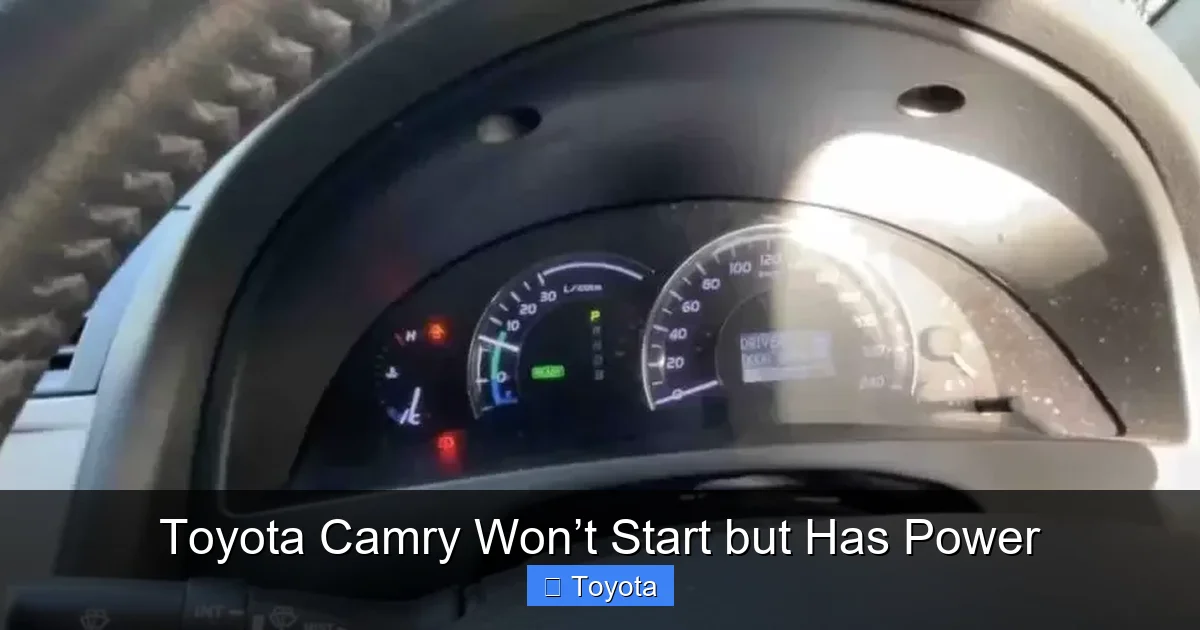
Visual guide about Toyota Camry Won’t Start but Has Power
Image source: ehcar.net
Before diving into fixes, it helps to understand how your Camry’s starting system works. When you turn the key or press the start button, a series of events must happen in perfect sequence for the engine to fire up.
First, the ignition switch sends a signal to the starter relay. This relay then sends power to the starter motor, which physically turns the engine over (cranks it). Once the engine is spinning, the fuel injectors spray fuel, the spark plugs ignite it, and—boom—your car starts.
But if any part of this chain breaks, the engine won’t start—even if the battery is fully charged. That’s why a Camry can have full power (lights, radio, A/C) but still refuse to crank. The accessories run on a different circuit than the starter, so they can work even when the starter doesn’t get the signal or power it needs.
Let’s break down the key components involved:
The Battery and Electrical System
Your Camry’s 12-volt battery powers everything when the engine is off. It sends electricity to the starter, lights, radio, and control modules. A healthy battery should read around 12.6 volts when the car is off and about 13.7–14.7 volts when the engine is running (thanks to the alternator).
But here’s the catch: just because the lights work doesn’t mean the battery has enough *cranking amps* to start the engine. Cold weather, old age, or a weak cell can reduce the battery’s ability to deliver the high burst of power the starter needs. So even if your Camry has power, the battery might still be the culprit.
The Starter Motor and Solenoid
The starter motor is a small but powerful electric motor that physically turns the engine’s flywheel. It’s usually located near the transmission. When you turn the key, the starter solenoid (a relay-like device) engages the starter gear with the flywheel and sends power to the motor.
If the starter is bad, you might hear a single loud click when you turn the key—but no cranking. Or you might hear rapid clicking, which often points to a weak battery or poor connection. A completely silent response could mean a dead starter, blown fuse, or faulty ignition switch.
The Ignition Switch and Start Button
In older Camrys (pre-2012), the ignition switch is a mechanical key tumbler. In newer models, it’s a push-button start system controlled by the smart key fob. Both systems send an electronic signal to the engine control unit (ECU) to allow starting.
If the ignition switch is worn or the start button is faulty, it may not send the “start” command—even if the dashboard lights up. This is especially common in high-mileage Camrys where the switch has been turned thousands of times.
The Fuel System
Even if the engine cranks, it won’t start without fuel. The fuel pump, located in the gas tank, sends pressurized fuel to the injectors. A failing fuel pump might not build enough pressure, or it might not run at all.
You can often hear the fuel pump prime for 2–3 seconds when you turn the key to “ON” (before starting). If you don’t hear a faint hum from the rear of the car, the pump might be dead.
The Engine Control Unit (ECU) and Sensors
Modern Camrys rely heavily on sensors to manage engine operation. The ECU uses data from sensors like the crankshaft position sensor, camshaft position sensor, and mass airflow sensor to determine when to fire the spark plugs and inject fuel.
If a critical sensor fails, the ECU may prevent the engine from starting as a safety measure. For example, if the crankshaft sensor doesn’t detect engine rotation, the ECU won’t allow fuel injection or ignition.
Top Causes of a Toyota Camry That Won’t Start But Has Power
Visual guide about Toyota Camry Won’t Start but Has Power
Image source: i2.wp.com
Now that you understand the system, let’s look at the most common reasons your Camry won’t start—even with full power.
1. Faulty Starter Motor or Solenoid
This is one of the top causes of a no-crank, power-present issue. The starter motor wears out over time, especially in high-mileage Camrys (150,000+ miles). The solenoid, which engages the starter gear, can also fail.
Symptoms:
– A single loud click when turning the key
– No cranking sound at all
– Engine won’t turn over, but lights and radio work
How to Test:
Try tapping the starter motor gently with a hammer or wrench while someone turns the key. If the car starts, the starter is likely failing. You can also use a multimeter to check for power at the starter terminal when the key is turned.
Solution:
Replace the starter motor. On most Camrys, it’s accessible from underneath the car near the transmission. Expect to pay $150–$300 for a new starter, plus labor if you don’t DIY.
2. Bad Ignition Switch or Start Button
In older Camrys, the ignition switch can wear out, causing intermittent starting issues. In newer models with push-button start, the start button or the smart key system may fail.
Symptoms:
– Dashboard lights up, but nothing happens when you turn the key or press start
– Intermittent starting—works sometimes, doesn’t others
– Key fob not recognized (in push-button models)
How to Test:
Check if the key fob battery is dead (replace it if needed). Try starting with a spare fob. For keyed models, wiggle the key while turning—if it starts, the switch is likely worn.
Solution:
Replace the ignition switch or start button. This may require programming by a dealer or locksmith, especially for smart key systems.
3. Fuel Pump Failure
A failing fuel pump won’t deliver fuel to the engine, so even if it cranks, it won’t start. But if the pump is completely dead, you might not even get cranking—because the ECU detects no fuel pressure and shuts down the starter circuit.
Symptoms:
– No humming sound from the fuel tank when turning the key to “ON”
– Engine cranks but doesn’t start
– Sudden loss of power while driving (in advanced cases)
How to Test:
Listen for the fuel pump priming when you turn the key to “ON” (don’t start). You should hear a 2–3 second hum from the rear. If not, check the fuel pump fuse and relay first.
Solution:
Replace the fuel pump. This is a more involved job, often requiring dropping the gas tank. Budget $300–$600 for parts and labor.
4. Crankshaft Position Sensor Failure
This sensor tells the ECU when the engine is rotating. If it fails, the ECU won’t allow fuel injection or spark, so the engine won’t start—even if it cranks.
Symptoms:
– Engine cranks but doesn’t fire
– Check Engine Light may be on
– Intermittent stalling or no-start
How to Test:
Use an OBD2 scanner to check for trouble codes like P0335 (Crankshaft Position Sensor Circuit Malfunction). You can also test the sensor’s resistance with a multimeter.
Solution:
Replace the crankshaft position sensor. It’s usually located near the crankshaft pulley or transmission bellhousing. Cost: $50–$150 for the part.
5. Immobilizer or Security System Glitch
Toyota’s immobilizer system prevents the car from starting unless the correct key or fob is present. If the system误认为钥匙无效,即使它看起来正常,汽车也不会启动。
Symptoms:
– Dashboard lights up, but engine won’t crank
– Security light flashing on the dash
– Key fob not recognized (in push-button models)
How to Test:
Try starting with a spare key or fob. If it works, the original key may need reprogramming. Also, check if the security light stays on or flashes.
Solution:
Reprogram the key or fob at a dealership or with a professional locksmith. In some cases, the immobilizer module may need replacement.
6. Blown Fuse or Bad Relay
Even simple electrical issues can prevent starting. A blown fuse or faulty relay in the starting circuit can cut power to the starter or fuel pump.
Symptoms:
– No cranking or fuel pump sound
– Other electrical issues (e.g., power windows not working)
How to Test:
Check the fuse box under the hood and inside the cabin. Look for blown fuses related to the starter, ignition, or fuel pump. Use a multimeter to test relays.
Solution:
Replace blown fuses or faulty relays. Most are inexpensive ($5–$20) and easy to swap.
Step-by-Step Troubleshooting Guide
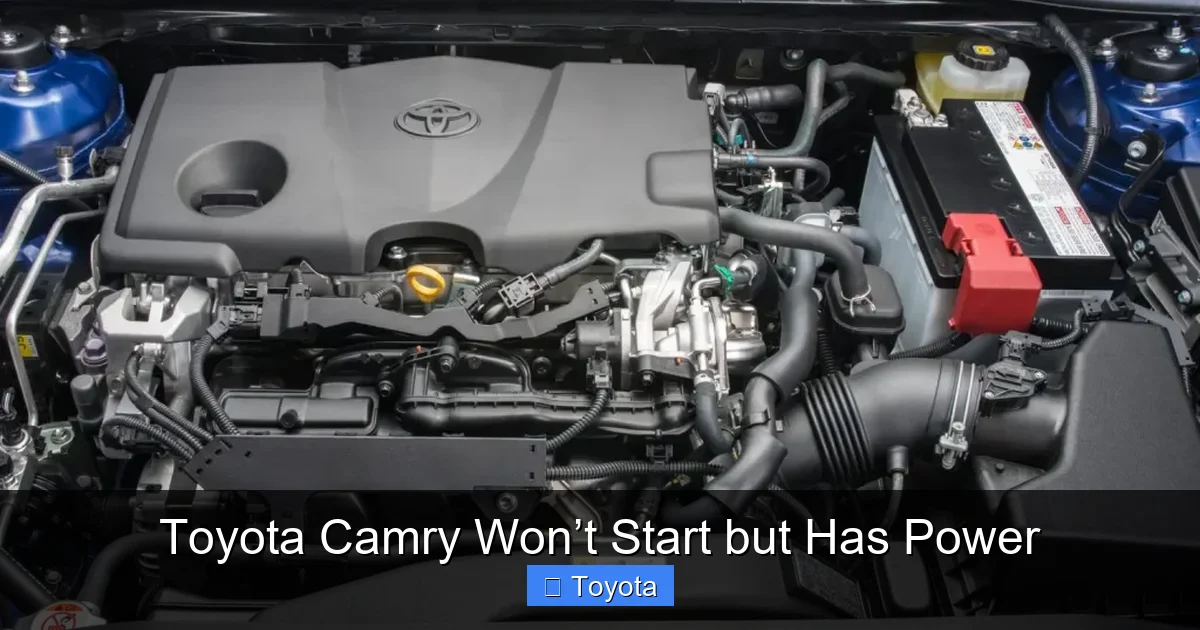
Visual guide about Toyota Camry Won’t Start but Has Power
Image source: motorbiscuit.com
Now that you know the possible causes, here’s a practical step-by-step guide to diagnosing your Camry’s no-start issue.
Step 1: Confirm the Battery Is Strong
Even if the lights work, test the battery voltage with a multimeter. It should read at least 12.4 volts when off. If it’s below 12.2 volts, charge or replace it.
Also, check the battery terminals for corrosion. Clean them with a wire brush and baking soda solution if needed.
Step 2: Listen for Sounds When Turning the Key
– No sound at all: Could be ignition switch, starter relay, or wiring.
– Single loud click: Likely a bad starter.
– Rapid clicking: Weak battery or poor connection.
– Cranking but no start: Fuel, spark, or sensor issue.
Step 3: Check the Fuel Pump
Turn the key to “ON” (don’t start). Listen for a 2–3 second hum from the rear. If you don’t hear it, check the fuel pump fuse and relay.
Step 4: Scan for Trouble Codes
Use an OBD2 scanner (available at auto parts stores for free or rent) to check for diagnostic trouble codes (DTCs). Codes like P0335, P0230, or P0617 can point directly to the problem.
Step 5: Test the Starter
If you suspect the starter, have someone turn the key while you listen near the starter (under the car). If you hear a click but no motor sound, the starter is likely bad.
You can also bypass the ignition switch by jumping the starter solenoid with a screwdriver (carefully!). If the engine cranks, the issue is upstream (ignition switch or relay).
Step 6: Try a Spare Key or Fob
If your Camry has a smart key, try starting with a spare fob. If it works, the original fob may need a new battery or reprogramming.
Prevention and Maintenance Tips
Many no-start issues can be avoided with regular maintenance. Here’s how to keep your Camry starting reliably for years.
Replace the Battery Every 4–5 Years
Even if it seems fine, batteries degrade over time. Replace yours before it fails—especially if you live in a cold climate.
Keep the Fuel Tank Above ¼ Full
Running on low fuel can overheat the fuel pump, shortening its life. Plus, it prevents sediment from clogging the pump.
Use Quality Fuel and Add Fuel System Cleaner
Dirty fuel injectors can cause hard starts. Use a quality fuel system cleaner every 5,000 miles to keep injectors clean.
Inspect and Replace Spark Plugs
Worn spark plugs can cause misfires and hard starts. Replace them every 60,000–100,000 miles, depending on the type.
Check Fuses and Relays Annually
Pop open the fuse box and visually inspect fuses. Replace any that look burnt or corroded.
Keep the Key Fob Battery Fresh
A weak fob battery can prevent the immobilizer from recognizing the key. Replace it every 2–3 years.
When to Call a Professional
While many no-start issues can be diagnosed at home, some require professional tools and expertise.
Call a mechanic or Toyota dealer if:
– You’ve tried basic checks and the car still won’t start
– The problem is intermittent or hard to reproduce
– You suspect an ECU or immobilizer issue
– You’re not comfortable working under the car or with electrical systems
A professional can perform advanced diagnostics, reprogram keys, and test components like the fuel pressure or ignition coils.
Final Thoughts: Don’t Panic—Most Issues Are Fixable
A Toyota Camry that won’t start but has power is frustrating, but it’s rarely a sign of a major engine failure. In most cases, the problem lies in the starter, ignition, fuel system, or sensors—all of which are repairable.
Start with simple checks: battery voltage, fuel pump sound, and trouble codes. Then work your way through the likely culprits. With a little patience and the right tools, you can often get your Camry running again without a costly tow or repair bill.
Remember: regular maintenance is your best defense against no-start problems. Keep up with battery checks, fuel system care, and sensor health, and your Camry will reward you with reliable starts for years to come.
Frequently Asked Questions
Why does my Toyota Camry have power but won’t start?
This usually means the battery is fine, but something is preventing the engine from cranking or firing. Common causes include a bad starter, faulty ignition switch, fuel pump failure, or a failed sensor like the crankshaft position sensor.
What does it mean if my Camry clicks but won’t start?
A single loud click typically points to a failing starter motor or solenoid. Rapid clicking often indicates a weak battery or poor electrical connection. Either way, the starter isn’t getting enough power to turn the engine over.
Can a bad fuel pump prevent my Camry from starting?
Yes. If the fuel pump isn’t working, fuel won’t reach the engine—even if it cranks. Listen for a humming sound from the rear when you turn the key to “ON.” No sound could mean a dead pump or blown fuse.
How do I know if my Camry’s ignition switch is bad?
If the dashboard lights up but nothing happens when you turn the key or press start, the ignition switch may be worn. Try wiggling the key or using a spare fob. Intermittent starting is another red flag.
Can a dead key fob battery stop my Camry from starting?
Yes, especially in push-button start models. The immobilizer system needs the fob to be recognized. Replace the fob battery if the car doesn’t start and the security light is on.
Should I replace my Camry’s starter myself?
If you’re comfortable working under the car and have basic tools, yes. The starter is usually accessible from underneath. But if you’re unsure, have a professional do it to avoid damage to wiring or components.
