
How Much Is a New Engine for a Hyundai Tucson?

Replacing a Hyundai Tucson engine can cost between $3,000 and $8,000+, depending on the model year, engine type, and whether you choose new, remanufactured, or used parts. Labor, location, and warranty options also significantly impact the final price—so it’s smart to shop around and explore alternatives before committing.
[FEATURED_IMAGE_PLACEOLDER]
If your Hyundai Tucson is making strange noises, losing power, or suddenly stalling, you might be facing one of the most stressful automotive dilemmas: a failing engine. And when that happens, the first question that pops into your mind is usually, “How much is a new engine for a Hyundai Tucson?” It’s a fair and important question—because engine replacement isn’t just a repair; it’s a major investment that can cost as much as a used car.
But here’s the good news: you’re not alone, and you’ve got options. Whether your Tucson is a 2010 model with high mileage or a 2022 hybrid, understanding the factors that influence engine replacement costs can help you make a smart, informed decision. In this guide, we’ll walk you through everything you need to know—from average pricing and engine types to labor costs, warranty considerations, and even alternatives to a full engine swap. By the end, you’ll have a clear picture of what to expect and how to navigate this challenging situation with confidence.
So, let’s dive in. Whether you’re dealing with a blown head gasket, worn piston rings, or a seized engine, knowing your options can save you thousands—and possibly extend the life of your trusted Tucson for years to come.
Key Takeaways
- Engine replacement costs vary widely: Expect to pay $3,000 to $8,000+ for a new or remanufactured engine in a Hyundai Tucson, with labor adding $1,000–$2,500.
- Model year and engine type matter: Newer Tucson models (2020+) with turbocharged or hybrid engines typically cost more to replace than older 4-cylinder versions.
- Remanufactured engines offer savings: These professionally rebuilt engines cost 30–50% less than brand-new ones and often come with strong warranties.
- Used engines are risky but affordable: You might find a used engine for under $2,500, but reliability and lifespan are uncertain without thorough inspection.
- Labor costs depend on location and shop: Independent mechanics usually charge less than dealerships, but always verify credentials and reviews.
- Warranty coverage can offset costs: Check if your vehicle is still under Hyundai’s powertrain warranty (typically 10 years/100,000 miles) to potentially get a free or discounted replacement.
- Consider alternatives before replacing: In some cases, repairing the existing engine or trading in the vehicle may be more cost-effective than a full replacement.
📑 Table of Contents
- Understanding Engine Replacement Costs for the Hyundai Tucson
- Types of Engines Available for the Hyundai Tucson
- Labor Costs and Installation Factors
- Warranty and Insurance Considerations
- Alternatives to Engine Replacement
- Tips for Saving Money on Engine Replacement
- Final Thoughts: Is a New Engine Worth It?
Understanding Engine Replacement Costs for the Hyundai Tucson
When it comes to replacing the engine in your Hyundai Tucson, there’s no one-size-fits-all price tag. The cost depends on a mix of factors, including the year and trim of your vehicle, the type of engine it uses, whether you go with a brand-new, remanufactured, or used engine, and where you have the work done. On average, though, most Tucson owners can expect to pay between $3,000 and $8,000 for a complete engine replacement—including both parts and labor.
Let’s break that down. A brand-new OEM (Original Equipment Manufacturer) engine from Hyundai will be on the higher end of that range, often costing $5,000 to $7,000 just for the part. Add another $1,500 to $2,500 for professional installation, and you’re looking at a total of $6,500 to $9,500. That’s a big chunk of change—especially if your Tucson is over 10 years old or has high mileage.
But you don’t have to go the new-OEM route. Remanufactured engines—professionally rebuilt to meet or exceed original specs—are a popular and cost-effective alternative. These typically run $3,000 to $5,000, including core exchange fees, and often come with warranties of 12 to 36 months. Used engines, pulled from salvage yards or other vehicles, can be even cheaper—sometimes under $2,500—but they come with more risk. Without knowing the full service history, you could end up with another failing engine down the road.
Labor costs also play a major role. Replacing an engine is one of the most labor-intensive jobs a mechanic can do. It involves disconnecting the transmission, removing mounts, rerouting fluids and electronics, and carefully installing the new unit. Depending on your location and the shop you choose, labor can range from $80 to $150 per hour, with the job taking 10 to 20 hours to complete.
Why Engine Replacement Is So Expensive
Engine replacement is expensive for several reasons. First, the engine itself is the heart of your vehicle—a complex assembly of hundreds of precision parts that must work in perfect harmony. Manufacturing or rebuilding one to factory standards requires advanced machinery, skilled technicians, and rigorous quality control.
Second, labor is intensive. Unlike simpler repairs like brake pads or alternators, an engine swap requires disassembling large sections of the vehicle. Mechanics must remove the intake and exhaust systems, disconnect the transmission, drain and refill fluids, and recalibrate electronic control units. Even experienced technicians can spend a full day or more on the job.
Finally, there’s the risk factor. A botched engine installation can lead to leaks, poor performance, or even catastrophic failure. That’s why reputable shops charge a premium—they’re not just selling parts and time; they’re offering expertise and peace of mind.
Factors That Influence the Final Price
Several variables can push your engine replacement cost up or down:
– **Model Year:** Newer Tucson models (especially 2020 and later) often have more advanced engines—like the 2.5L Smartstream or turbocharged 1.6L GDi—that are more complex and costly to replace.
– **Engine Type:** The Tucson has used different engines over the years, including 2.0L, 2.4L, 1.6L turbo, and hybrid powertrains. Turbo and hybrid engines are generally more expensive due to their complexity.
– **Geographic Location:** Labor rates vary by region. Urban areas with higher living costs (like Los Angeles or New York) tend to charge more than rural mechanics.
– **Shop Type:** Dealerships usually charge the most, while independent shops and specialized engine rebuilders may offer lower rates.
– **Warranty Status:** If your Tucson is still under Hyundai’s 10-year/100,000-mile powertrain warranty, you might qualify for a free or heavily discounted engine replacement.
Types of Engines Available for the Hyundai Tucson
Visual guide about How Much Is a New Engine for a Hyundai Tucson?
Image source: selfimotors.com
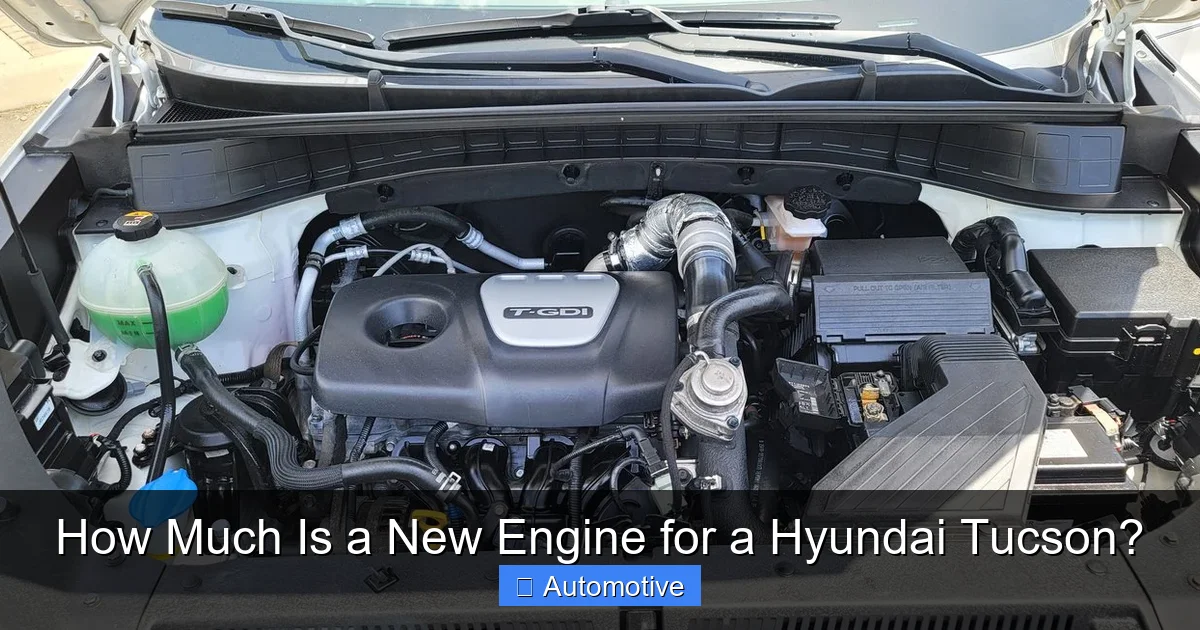
Not all engines are created equal—and the same goes for replacement options. When shopping for a new engine for your Hyundai Tucson, you’ll typically encounter three main types: new OEM, remanufactured, and used. Each has its pros and cons, and the best choice depends on your budget, timeline, and long-term plans for the vehicle.
New OEM Engines
A new OEM engine is the closest thing to what your Tucson came with from the factory. These are brand-new, never-used engines built by Hyundai or their certified suppliers. They’re the gold standard in terms of reliability and performance, and they often come with a full manufacturer warranty—usually 12 months or 12,000 miles, though some dealers offer extended coverage.
The downside? Cost. A new OEM engine for a Hyundai Tucson can run from $5,000 to $7,000, depending on the model and engine type. For example, a 2021 Tucson with a 2.5L Smartstream engine will cost significantly more than a 2012 model with a 2.4L Theta II. Plus, availability can be an issue—some newer engines may have long lead times due to supply chain delays.
Still, if you plan to keep your Tucson for many more years and want the peace of mind that comes with a factory-fresh engine, a new OEM unit is hard to beat.
Remanufactured Engines
Remanufactured engines are professionally rebuilt using original cores that have been cleaned, inspected, and restored to like-new condition. Worn parts like pistons, bearings, and gaskets are replaced with new or reconditioned components, and the engine is tested to meet OEM specifications.
These engines offer a great balance of cost, quality, and warranty. Prices typically range from $3,000 to $5,000, including a core charge (a refundable fee for returning your old engine). Most reputable rebuilders offer warranties of 12 to 36 months, and some even include roadside assistance or free diagnostics.
One major advantage of remanufactured engines is faster availability. While new OEM engines may take weeks to arrive, remanufactured units are often in stock and ready to ship. Companies like Jasper Engines, ATK, and Capital Reman specialize in high-quality remanufactured engines for Hyundai vehicles and are trusted by mechanics nationwide.
Used Engines
Used engines—also called “junkyard” or “salvage” engines—are pulled from wrecked or decommissioned vehicles. They’re the most affordable option, with prices often starting under $2,000 for older Tucson models. However, they come with significant risks.
Since used engines haven’t been professionally rebuilt, you don’t know their true condition. They could have hidden wear, oil sludge, or internal damage that won’t show up until it’s too late. Some salvage yards offer limited warranties (30 to 90 days), but coverage is usually minimal and may not include labor.
That said, if you’re on a tight budget and your Tucson is older (say, 2010–2015), a used engine might be a viable short-term solution—especially if you can inspect it in person or get a detailed history report. Just be sure to have a trusted mechanic evaluate it before installation.
Hybrid and Turbocharged Engines: Special Considerations
If your Tucson is a hybrid (like the 2022+ Tucson Hybrid) or has a turbocharged engine (such as the 1.6L GDi), replacement costs will be higher due to the added complexity. Hybrid systems include electric motors, high-voltage batteries, and sophisticated control modules that require specialized knowledge to service.
Turbocharged engines, while powerful and efficient, are more prone to heat-related wear and often require upgraded cooling systems. Replacing one means not just swapping the engine, but possibly updating intercoolers, oil lines, and software calibrations.
For these reasons, hybrid and turbo engine replacements can cost 20–40% more than standard 4-cylinder swaps. Always consult a technician experienced with Hyundai’s advanced powertrains to avoid costly mistakes.
Labor Costs and Installation Factors
Visual guide about How Much Is a New Engine for a Hyundai Tucson?
Image source: parkers-images.bauersecure.com
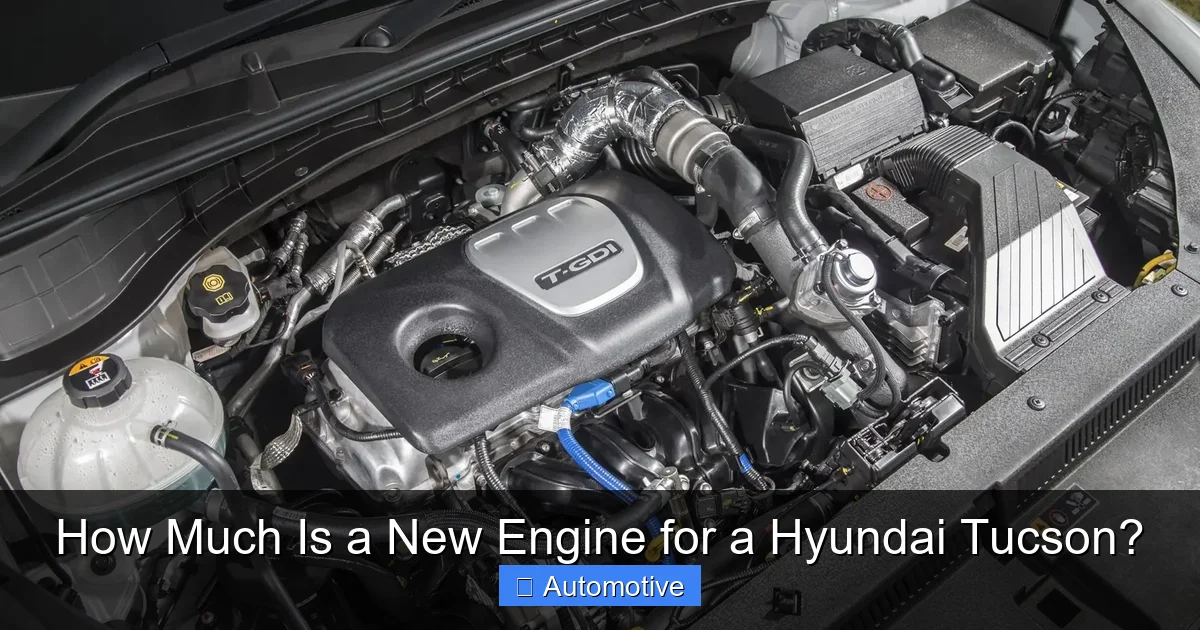
When budgeting for a new engine, don’t forget labor—it can easily add $1,000 to $2,500 (or more) to your total bill. Engine replacement is one of the most labor-intensive jobs in automotive repair, and the time required depends on several factors.
How Long Does It Take to Replace an Engine?
On average, a professional mechanic will spend 10 to 20 hours replacing a Hyundai Tucson engine. This includes:
– Draining fluids (oil, coolant, transmission fluid)
– Disconnecting the battery and electrical systems
– Removing the intake and exhaust manifolds
– Unbolting and separating the transmission
– Lifting out the old engine
– Installing and aligning the new engine
– Reconnecting all components and hoses
– Refilling fluids and performing a test drive
More complex models—like those with all-wheel drive or hybrid systems—may take longer due to additional components and calibration requirements.
Labor Rates by Shop Type
Labor costs vary widely depending on where you go:
– **Hyundai Dealerships:** $120–$180 per hour. They use factory-trained technicians and OEM parts, but charge a premium.
– **Independent Mechanics:** $80–$130 per hour. Often more affordable and just as skilled, especially if they specialize in Asian imports.
– **Specialty Engine Shops:** $90–$140 per hour. These shops focus on engine rebuilds and swaps, so they’re efficient and experienced.
Always get at least three quotes before committing. And don’t just go for the cheapest option—check reviews, ask about warranties, and verify that the shop has experience with Hyundai vehicles.
DIY vs. Professional Installation
Could you replace the engine yourself? Technically, yes—if you have advanced mechanical skills, the right tools, and a lift or engine hoist. But it’s not recommended for most DIYers. Mistakes during installation can lead to oil leaks, overheating, or engine damage, costing you more in the long run.
If you do attempt it, budget for tools (like a transmission jack and torque wrench), fluids, and possibly a scan tool to reset the ECU. And always have a professional inspect your work before driving.
Warranty and Insurance Considerations
Visual guide about How Much Is a New Engine for a Hyundai Tucson?
Image source: bparts-eu.s3-eu-west-1.amazonaws.com
Before you spend thousands on a new engine, check your warranty and insurance coverage. You might be able to get some or all of the cost covered—especially if your Tucson is still relatively new.
Hyundai Powertrain Warranty
Hyundai offers one of the best warranties in the industry: a 10-year/100,000-mile powertrain warranty on most new vehicles. This covers the engine, transmission, and drivetrain components—so if your engine fails due to a manufacturing defect, Hyundai may replace it at no cost.
Even if you’re past the 5-year/60,000-mile bumper-to-bumper warranty, the powertrain coverage could still apply. Just be sure to have the issue diagnosed by an authorized Hyundai dealer. They’ll determine if the failure is due to a defect (covered) or wear and tear (not covered).
Extended Warranties and Service Contracts
If you purchased an extended warranty or vehicle service contract, it might cover engine replacement—especially if it includes “powertrain plus” or “comprehensive” coverage. Review your contract carefully to see what’s included and whether there are deductibles or claim limits.
Some third-party providers, like CarShield or Endurance, offer engine coverage, but be cautious of fine print. Make sure the policy covers labor and doesn’t exclude common failure points like head gaskets or timing chains.
Insurance and Lemon Law Protections
Standard auto insurance typically doesn’t cover engine failure due to mechanical issues—only accidents, theft, or weather damage. However, if your engine was damaged in a collision, your collision coverage might apply.
In rare cases, lemon laws may offer protection if your Tucson has had repeated engine problems under warranty. These laws vary by state, so consult a consumer protection attorney if you believe your vehicle qualifies.
Alternatives to Engine Replacement
Before committing to a full engine swap, consider whether a repair or alternative solution might be more cost-effective.
Engine Repair vs. Replacement
Sometimes, the issue isn’t a completely failed engine—it’s a specific component like a blown head gasket, worn timing belt, or faulty fuel injectors. These problems can often be fixed for a fraction of the cost of a new engine.
For example, replacing a head gasket on a Tucson might cost $1,500 to $2,500, while a full engine swap could be $6,000+. A compression test or leak-down test can help determine if the engine block and internals are still sound.
Rebuilding the Existing Engine
If the engine block is in good condition, you might opt for a rebuild instead of a replacement. This involves disassembling the engine, replacing worn parts (pistons, rings, bearings), and reassembling it to like-new condition. A rebuild can cost $2,500 to $4,000—less than a new engine but more than a simple repair.
Rebuilding is a good middle ground if you want to keep your original engine but restore its performance and longevity.
Trading In or Selling the Vehicle
If your Tucson is old, high-mileage, or has other issues beyond the engine, it might be time to consider moving on. Trading it in or selling it “as-is” could net you $2,000 to $5,000 (depending on condition), which you can put toward a newer vehicle.
Some dealerships even accept cars with engine problems, though they’ll deduct the repair cost from your trade-in value. Private buyers may be willing to take on the project if you price it fairly.
Tips for Saving Money on Engine Replacement
Engine replacement is expensive, but there are ways to reduce the cost without sacrificing quality.
– **Shop around:** Get quotes from at least three shops—dealership, independent mechanic, and engine specialist.
– **Consider remanufactured engines:** They’re often the best value for the money.
– **Negotiate labor rates:** Some shops may offer discounts for cash payments or bundling services.
– **Check for rebates or promotions:** Some engine rebuilders offer seasonal discounts or free shipping.
– **Do some prep work yourself:** Draining fluids or removing the battery can save a few hours of labor.
– **Use OEM-quality aftermarket parts:** They’re often cheaper than genuine Hyundai parts but meet the same standards.
Final Thoughts: Is a New Engine Worth It?
Deciding whether to replace your Hyundai Tucson’s engine comes down to a simple equation: cost versus value. If your Tucson is in good condition otherwise—body, transmission, suspension—and you plan to keep it for several more years, a new engine can be a smart investment. You’ll get reliable performance, improved fuel economy, and potentially add years to the vehicle’s life.
But if the car has other major issues, high mileage, or is nearing the end of its useful life, spending $6,000+ on an engine might not make financial sense. In that case, repairing the existing engine or trading in the vehicle could be the better move.
Ultimately, the answer to “How much is a new engine for a Hyundai Tucson?” depends on your specific situation. By understanding your options, comparing quotes, and weighing the long-term value, you can make a decision that’s right for your wallet—and your peace of mind.
Frequently Asked Questions
How much does it cost to replace a Hyundai Tucson engine?
Replacing a Hyundai Tucson engine typically costs between $3,000 and $8,000+, including parts and labor. The final price depends on the engine type, model year, and whether you choose new, remanufactured, or used.
Is it cheaper to repair or replace a Tucson engine?
It depends on the issue. Minor problems like a blown head gasket can be repaired for $1,500–$2,500, while a full replacement may cost $6,000+. If the engine block is damaged, replacement is often the better long-term solution.
Does Hyundai warranty cover engine replacement?
Yes, if your Tucson is under the 10-year/100,000-mile powertrain warranty and the failure is due to a manufacturing defect, Hyundai may cover the cost of a new engine at an authorized dealer.
Can I install a used engine in my Tucson?
Yes, but it comes with risks. Used engines are cheaper (often under $2,500), but their condition is uncertain. Always have a mechanic inspect it and check for a warranty.
How long does it take to replace a Tucson engine?
Professional engine replacement usually takes 10 to 20 hours, depending on the model and shop. More complex engines (like hybrids) may take longer.
Should I replace the engine or buy a new car?
If your Tucson is in good condition otherwise and you plan to keep it for years, a new engine can be worth it. But if the car has other major issues or high mileage, trading it in may be more cost-effective.
