
How Much a Mercedes-benz C400 Costs in Nigeria

The Mercedes-Benz C400 is a premium luxury sedan that blends performance, comfort, and advanced technology. In Nigeria, its price varies widely based on condition, year, and import status, ranging from ₦45 million to over ₦85 million.
Thinking about driving a Mercedes-Benz C400 in Nigeria? You’re not alone. This sleek, powerful luxury sedan has become a symbol of success and sophistication across Nigerian cities like Lagos, Abuja, and Port Harcourt. With its refined interior, smooth ride, and impressive 3.0-liter V6 biturbo engine, the C400 offers a blend of comfort and performance that appeals to executives, entrepreneurs, and car enthusiasts alike.
But here’s the reality: owning a Mercedes-Benz C400 in Nigeria isn’t just about style—it’s also about budgeting wisely. Unlike more common models like the C200 or E-Class, the C400 sits in a higher performance tier, which directly impacts its cost. Whether you’re eyeing a brand-new unit straight from Stuttgart or a well-maintained foreign-used model imported from Europe, the price tag can be eye-watering. And that’s before you factor in import duties, insurance, maintenance, and fuel.
In this guide, we’ll walk you through everything you need to know about how much a Mercedes-Benz C400 costs in Nigeria—from upfront purchase prices to long-term ownership expenses. We’ll break down the differences between new and used models, explain why import costs are so high, and give you practical tips to make your dream of owning this luxury sedan more achievable. By the end, you’ll have a clear picture of what it really takes to drive a C400 on Nigerian roads.
Key Takeaways
- New Mercedes-Benz C400 models are rare in Nigeria: Due to high import costs and limited official dealership stock, brand-new units are seldom available and can cost upwards of ₦85 million.
- Used or foreign-used (Nigerian-used) C400s dominate the market: Most buyers opt for pre-owned models from the UK, UAE, or Germany, priced between ₦45 million and ₦70 million depending on mileage and condition.
- Import duties and clearing costs significantly affect pricing: Nigeria’s high import taxes (up to 70% on luxury vehicles) inflate the final cost of bringing a C400 into the country.
- Maintenance and spare parts are expensive: Owning a C400 means budgeting for premium servicing, specialized technicians, and imported parts, which can add ₦2–5 million annually.
- Fuel consumption is higher than average: The C400’s 3.0L V6 engine delivers strong performance but consumes more fuel—around 10–12 km/l in city driving—impacting long-term running costs.
- Resale value remains relatively strong: Despite depreciation, well-maintained C400s retain value better than many competitors due to Mercedes-Benz’s brand prestige in Nigeria.
- Financing and insurance options are limited: Few Nigerian banks offer auto loans for luxury imports, and comprehensive insurance premiums can exceed ₦1.5 million per year.
📑 Table of Contents
- Understanding the Mercedes-Benz C400: Why It Stands Out
- New vs. Used: What’s Available in Nigeria?
- Breaking Down the Cost: Import Duties and Clearing Fees
- Running Costs: Fuel, Maintenance, and Insurance
- Financing and Payment Options
- Tips for Buying a Mercedes-Benz C400 in Nigeria
- Conclusion: Is the Mercedes-Benz C400 Worth It in Nigeria?
Understanding the Mercedes-Benz C400: Why It Stands Out
The Mercedes-Benz C400 isn’t your average luxury sedan. Positioned above the C200 and C300 in the C-Class lineup, it’s designed for drivers who want more power without stepping up to the AMG variants. Under the hood, you’ll find a 3.0-liter V6 biturbo engine that delivers 333 horsepower and 354 lb-ft of torque—enough to accelerate from 0 to 100 km/h in just 5.6 seconds. That’s sports-car territory, wrapped in the elegance of a luxury saloon.
But the C400 isn’t just about speed. It comes loaded with premium features like leather upholstery, ambient lighting, a panoramic sunroof, dual-zone climate control, and the latest MBUX infotainment system with voice control and smartphone integration. Safety is also top-tier, with adaptive cruise control, lane-keeping assist, blind-spot monitoring, and automatic emergency braking.
What makes the C400 especially appealing in Nigeria is its balance. It’s not as flashy as an S-Class or as aggressive as a C63 AMG, but it still commands respect on the road. It’s spacious enough for family trips, comfortable for long commutes, and powerful enough to handle Nigeria’s mixed road conditions—from smooth expressways to potholed urban streets.
However, this level of engineering and luxury comes at a cost. And in a market like Nigeria, where import regulations and economic factors heavily influence pricing, that cost can be significantly higher than in Europe or the U.S.
New vs. Used: What’s Available in Nigeria?

Visual guide about How Much a Mercedes-benz C400 Costs in Nigeria
Image source: nigeriacarmart.com
When it comes to buying a Mercedes-Benz C400 in Nigeria, your options are limited—especially if you’re looking for a brand-new model. Official Mercedes-Benz dealerships in Nigeria, such as Stallion Motors, primarily stock more popular and affordable models like the C200, E200, and GLC. The C400, being a higher-spec variant, is rarely imported new due to low demand and high costs.
As a result, most C400s on Nigerian roads are either foreign-used (also called “Nigerian-used” or “tokunbo”) or locally used. These vehicles are typically imported from countries like the United Kingdom, Germany, the UAE, or the United States, where they were originally sold new and driven for a few years before being shipped to Nigeria.
New Mercedes-Benz C400: A Rare Find
If you manage to find a brand-new C400 in Nigeria, expect to pay a premium. Prices for new models start at around ₦85 million and can go even higher depending on customization, dealer markup, and delivery timelines. Keep in mind that importing a new C400 directly from Germany or the U.S. involves significant logistics, including shipping, customs clearance, and compliance with Nigerian vehicle standards.
Moreover, new C400s are no longer in production. Mercedes-Benz discontinued the C400 nameplate after the 2015 model year, replacing it with the C450 AMG Line and later the C43 AMG. This means any “new” C400 you see is likely a leftover stock from previous years or a reclassified model. Always verify the model year and production status before making a purchase.
Used Mercedes-Benz C400: The Practical Choice
For most Nigerian buyers, a used C400 is the only realistic option—and often the smarter one. Pre-owned models from the 2014–2015 range are widely available and offer nearly identical performance and features to new ones, but at a fraction of the cost.
Prices for used C400s in Nigeria typically range from ₦45 million to ₦70 million. Several factors influence this price range:
- Model Year: A 2015 C400 will cost more than a 2014 model, even if both have similar mileage.
- Mileage: Lower mileage (under 80,000 km) commands a higher price. High-mileage units (over 120,000 km) may be cheaper but come with higher maintenance risks.
- Condition: A well-maintained car with full service history, original paint, and no accident damage will cost more than one with wear and tear or repair history.
- Import Source: Cars from the UK or Germany often fetch higher prices due to perceived better maintenance standards compared to those from the UAE or U.S.
- Location: Prices in Lagos and Abuja tend to be higher than in other cities due to demand and availability.
For example, a 2015 Mercedes-Benz C400 with 60,000 km, full service records, and imported from the UK might sell for ₦62 million in Lagos. Meanwhile, a similar model with 100,000 km and minor body scratches could go for ₦48 million.
Breaking Down the Cost: Import Duties and Clearing Fees
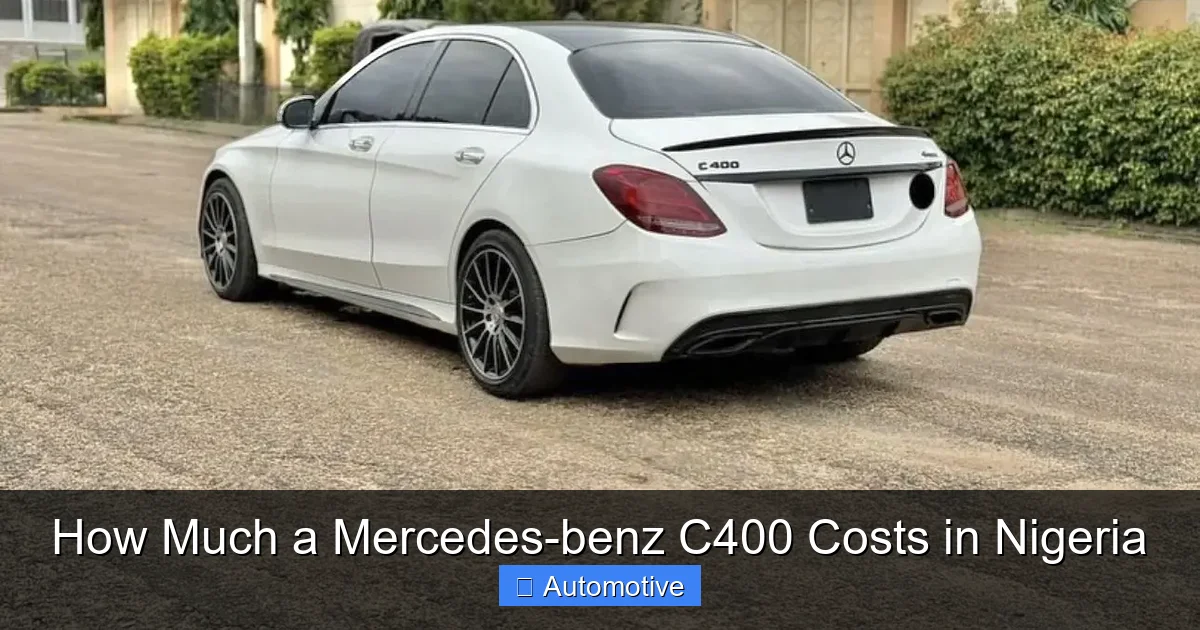
Visual guide about How Much a Mercedes-benz C400 Costs in Nigeria
Image source: nigeriacarmart.com
One of the biggest reasons the Mercedes-Benz C400 is so expensive in Nigeria is the country’s high import duties and taxes. Nigeria imposes some of the highest vehicle import tariffs in Africa, especially on luxury cars. Understanding these costs is crucial if you’re planning to import a C400 yourself or buy from a dealer who has already cleared it.
Import Duty Structure
As of 2024, Nigeria charges the following on imported vehicles:
- Import Duty: 35% of the vehicle’s CIF (Cost, Insurance, and Freight) value.
- Levy: An additional 35% levy on vehicles over 8 years old (to discourage old imports).
- Value Added Tax (VAT): 7.5% on the total landed cost (CIF + duty + levy).
- Other Fees: Port charges, terminal handling, documentation, and customs processing fees can add another ₦500,000 to ₦1.5 million.
Let’s say you’re importing a used 2015 C400 valued at $40,000 (approximately ₦60 million at current exchange rates). Here’s how the costs break down:
- CIF Value: ₦60 million
- Import Duty (35%): ₦21 million
- Levy (35%, since the car is over 8 years old): ₦21 million
- Subtotal before VAT: ₦102 million
- VAT (7.5%): ₦7.65 million
- Port and Clearing Fees: ₦1 million
- Total Landed Cost: ₦110.65 million
That’s more than double the original value of the car! And this doesn’t include the cost of shipping, insurance during transit, or any repairs needed after arrival.
Why Dealers Can Offer Lower Prices
You might wonder how some Nigerian car dealers sell C400s for “only” ₦50–60 million when the import cost seems so high. The answer lies in volume, negotiation, and sometimes, gray-market practices.
Established dealers often import multiple vehicles at once, reducing per-unit shipping and handling costs. They may also negotiate better rates with shipping lines or use bonded warehouses to delay duty payments. Some dealers import cars under special schemes or partner with clearing agents who have experience minimizing fees.
Additionally, some vehicles are imported under the “personal effects” category or through diplomatic channels, which can reduce or exempt certain duties—though this is risky and not recommended for private buyers.
Running Costs: Fuel, Maintenance, and Insurance

Visual guide about How Much a Mercedes-benz C400 Costs in Nigeria
Image source: nigeriacarmart.com
Buying a Mercedes-Benz C400 is just the beginning. The real cost of ownership comes from ongoing expenses like fuel, maintenance, insurance, and repairs. In Nigeria, these costs can add up quickly, especially for a high-performance luxury sedan.
Fuel Consumption and Costs
The C400’s 3.0L V6 engine is powerful but thirsty. In ideal conditions, it delivers around 10–12 km per liter in city driving and up to 14 km/l on highways. However, in Nigeria’s stop-and-go traffic, especially in cities like Lagos, real-world fuel economy often drops to 8–10 km/l.
With petrol prices hovering around ₦650 per liter (as of mid-2024), driving 1,500 km per month could cost you:
- At 10 km/l: 150 liters × ₦650 = ₦97,500 per month
- At 8 km/l: 187.5 liters × ₦650 = ₦121,875 per month
That’s ₦1.2 million to ₦1.5 million annually just on fuel—more than many Nigerians earn in a year.
Maintenance and Repairs
Mercedes-Benz vehicles require specialized care. The C400, with its advanced electronics, turbocharged engine, and air suspension (on some models), needs regular servicing by trained technicians.
A standard service (oil change, filter replacement, brake check) at an authorized Mercedes-Benz service center can cost ₦300,000 to ₦500,000. Major services every 20,000–30,000 km can run ₦800,000 or more.
Spare parts are another concern. Many C400 components—like turbochargers, control units, or air suspension parts—are not manufactured locally and must be imported. A single air suspension strut can cost ₦1.2 million, and a replacement turbocharger can exceed ₦2 million.
Moreover, finding qualified mechanics who understand the C400’s systems can be challenging. While there are independent Mercedes specialists in cities like Lagos and Abuja, their rates are often higher than regular garages due to expertise and tooling requirements.
Insurance Premiums
Comprehensive insurance for a C400 in Nigeria typically costs between ₦1.2 million and ₦1.8 million per year, depending on the insurer, coverage level, and driver profile. Factors that increase premiums include:
- High vehicle value
- Urban location (higher theft and accident risk)
- Lack of garage or security features
- Young or inexperienced driver
Some insurers may also require GPS tracking devices or immobilizers as a condition for coverage, adding another ₦100,000–₦200,000 upfront.
Financing and Payment Options
Given the high cost of a Mercedes-Benz C400, most Nigerian buyers cannot pay cash upfront. However, financing options for luxury imports are limited and often come with strict terms.
Bank Auto Loans
A few Nigerian banks, such as GTBank, Zenith Bank, and Access Bank, offer vehicle financing. However, these loans are typically reserved for new vehicles or popular models. Luxury imports like the C400 are often excluded or require a large down payment (40–60%).
Interest rates range from 18% to 25% per annum, and loan tenors are usually 3–5 years. For a ₦60 million C400 with a 50% down payment (₦30 million), you’d borrow ₦30 million and pay around ₦750,000 per month over 5 years.
Dealer Financing and Installment Plans
Some car dealers offer in-house financing or installment plans. These are more flexible but often come with higher interest rates or hidden fees. For example, a dealer might offer “0% interest” but inflate the car’s price by 10–15%.
Always read the fine print and compare total repayment amounts before signing any agreement.
Cash Purchase: The Safest Route
If possible, paying cash is the best option. It avoids interest, reduces risk, and gives you stronger negotiating power. Many dealers offer discounts for cash buyers, sometimes up to 5–10% off the listed price.
Tips for Buying a Mercedes-Benz C400 in Nigeria
If you’re serious about owning a C400, here are some practical tips to help you make a smart purchase:
1. Do Your Research
Before visiting any dealer, research current market prices, common issues with the C400 (e.g., turbo failures, electrical glitches), and typical mileage for the model year you want. Use online platforms like Jiji, Cars45, or Autochek to compare listings.
2. Inspect the Vehicle Thoroughly
Always inspect the car in person or hire a trusted mechanic to do it for you. Check for:
- Engine noise, smoke, or leaks
- Transmission smoothness
- Suspension performance (especially if it has air suspension)
- Interior wear, electronics functionality, and AC performance
- Accident history and paint consistency
Request a full service history and, if possible, a diagnostic scan using Mercedes-specific tools.
3. Verify Import and Documentation
Ensure the car has all required documents, including:
- Original logbook (proof of ownership)
- Customs clearance certificate
- Roadworthiness certificate
- Valid insurance
Avoid cars with missing or suspicious paperwork—they could be stolen, improperly imported, or have hidden debts.
4. Negotiate the Price
Most dealers expect negotiation. Start by offering 10–15% below the asking price and work your way up. Use comparable listings as leverage.
5. Consider a Warranty
Some dealers offer limited warranties (e.g., 6 months or 10,000 km). While not common for used imports, it’s worth asking. Alternatively, consider purchasing an extended warranty from a third-party provider.
6. Plan for Ongoing Costs
Set aside a maintenance fund of at least ₦2–3 million per year. This will cover routine servicing, unexpected repairs, and part replacements.
Conclusion: Is the Mercedes-Benz C400 Worth It in Nigeria?
The Mercedes-Benz C400 is a remarkable car—powerful, luxurious, and packed with technology. But in Nigeria, its appeal is tempered by high costs, from purchase price to daily running expenses. Whether you’re buying new or used, you’ll need a substantial budget and a long-term plan for maintenance and repairs.
For the right buyer—someone with the financial means, a passion for driving, and access to reliable service—the C400 can be a rewarding investment. It offers a level of performance and prestige that few other sedans in its class can match.
However, if you’re on a tight budget or looking for a low-maintenance daily driver, you might be better off with a more affordable Mercedes model like the C200 or a Japanese luxury sedan like the Lexus ES.
Ultimately, the decision comes down to your priorities. If you value performance, comfort, and brand image—and can afford the costs—the Mercedes-Benz C400 remains one of the finest luxury sedans you can drive in Nigeria.
Frequently Asked Questions
How much does a new Mercedes-Benz C400 cost in Nigeria?
A brand-new Mercedes-Benz C400 is extremely rare in Nigeria and can cost upwards of ₦85 million due to high import duties, limited availability, and discontinued production. Most dealers do not stock new C400s.
What is the price range for a used Mercedes-Benz C400 in Nigeria?
Used C400s typically range from ₦45 million to ₦70 million, depending on the model year, mileage, condition, and import source. A well-maintained 2015 model with low mileage may cost around ₦60–65 million.
Why are Mercedes-Benz C400s so expensive in Nigeria?
High import duties (up to 70% including levy and VAT), shipping costs, and limited supply drive up prices. Additionally, maintenance, spare parts, and insurance are costly due to the vehicle’s luxury status.
Can I finance a Mercedes-Benz C400 in Nigeria?
Financing options are limited. Some banks offer auto loans, but they often require large down payments (40–60%) and high interest rates. Dealer financing may be available but comes with strict terms.
Is the Mercedes-Benz C400 fuel-efficient?
No, the C400 is not fuel-efficient. It averages 8–12 km/l in Nigerian traffic, meaning fuel costs can exceed ₦100,000 per month depending on usage.
Where can I buy a Mercedes-Benz C400 in Nigeria?
You can find C400s at reputable car dealers in Lagos, Abuja, and Port Harcourt, or through online platforms like Jiji, Cars45, and Autochek. Always verify the dealer’s credibility and inspect the vehicle before purchase.
