
Correct Tire Pressure for Toyota Sienna

Maintaining the correct tire pressure for Toyota Sienna is essential for safe driving, optimal fuel economy, and long-lasting tires. This guide covers recommended PSI values by model year, seasonal adjustments, and practical tips to keep your minivan running smoothly.
Key Takeaways
- Check tire pressure monthly: Regular checks prevent underinflation, which can lead to poor handling and increased wear.
- Use the sticker inside the driver’s door jamb: This label lists the manufacturer-recommended PSI for your specific Sienna model and tire size.
- Adjust for load and temperature: Heavier loads or cold weather may require slight pressure increases for optimal performance.
- Don’t rely on the tire sidewall number: The max PSI on the tire is not the recommended pressure—always follow Toyota’s guidelines.
- Use a quality tire pressure gauge: Digital or analog gauges give accurate readings; avoid gas station air pumps with built-in gauges.
- Inflate when tires are cold: Check pressure before driving or after the vehicle has sat for at least 3 hours for the most accurate reading.
- Seasonal changes matter: Tire pressure drops about 1 PSI for every 10°F decrease in temperature—adjust in winter.
📑 Table of Contents
- Why Correct Tire Pressure Matters for Your Toyota Sienna
- How to Find the Recommended Tire Pressure for Your Toyota Sienna
- Tire Pressure Recommendations by Toyota Sienna Model Year
- How to Check and Adjust Tire Pressure
- Seasonal and Environmental Factors Affecting Tire Pressure
- Tire Pressure Monitoring System (TPMS) in the Toyota Sienna
- Common Mistakes to Avoid
- Conclusion
Why Correct Tire Pressure Matters for Your Toyota Sienna
You might not think about your tires until something goes wrong—like a flat or a blowout—but keeping the right tire pressure in your Toyota Sienna is one of the simplest yet most important maintenance tasks you can do. It’s not just about avoiding a roadside emergency; it’s about safety, comfort, and saving money in the long run.
Underinflated tires create more rolling resistance, which means your engine has to work harder. That leads to lower fuel efficiency—something no minivan driver wants, especially when hauling kids, gear, or towing a trailer. Overinflated tires, on the other hand, reduce the contact patch with the road, leading to a harsher ride and uneven tread wear. Both scenarios can compromise handling, especially during sudden stops or wet conditions.
The Toyota Sienna is a family workhorse. Whether you’re shuttling soccer teams, road-tripping across states, or just running errands, your tires are the only part of the vehicle touching the road. Getting the pressure right ensures maximum traction, better braking, and a smoother ride. Plus, properly inflated tires last longer, saving you from premature replacements. Think of it as a small effort with big rewards.
How to Find the Recommended Tire Pressure for Your Toyota Sienna
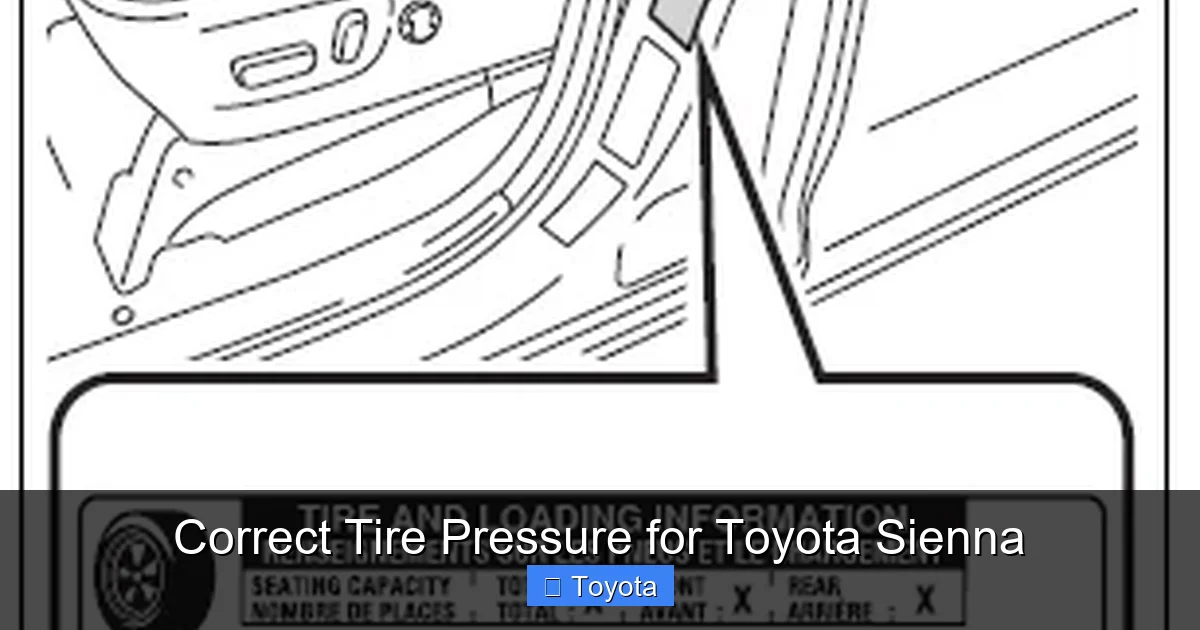
Finding the correct tire pressure for your Toyota Sienna isn’t a guessing game. Toyota provides specific recommendations based on your vehicle’s year, trim level, and tire size. The best place to look is the tire information sticker located on the driver’s side door jamb. Open the door and look for a white or yellow label—usually near the latch—that lists tire size, load index, and the recommended cold tire pressure in PSI (pounds per square inch).
Visual guide about Correct Tire Pressure for Toyota Sienna
Image source: tsienna.net
Understanding the Door Jamb Sticker
This sticker is your go-to source for accurate pressure info. It typically shows two values: one for the front tires and one for the rear. For most Toyota Sienna models, the recommended pressure ranges from 32 to 35 PSI when the tires are cold. For example, a 2020 Sienna LE with standard 17-inch wheels calls for 33 PSI in all four tires. However, higher trims with larger wheels or all-wheel drive (AWD) configurations might require slightly different pressures.
It’s important to note that the sticker lists “cold” pressure—meaning the tires haven’t been driven for at least three hours or driven less than one mile at low speed. Driving heats up the tires, increasing internal pressure and giving a false high reading. Always check and adjust when cold for accuracy.
Why Not Use the Tire Sidewall?
Many drivers mistakenly use the number printed on the tire sidewall, which shows the maximum pressure the tire can handle. For instance, a tire might say “Max Pressure: 44 PSI.” That doesn’t mean you should inflate it to 44 PSI. That number is a safety limit, not a recommendation. Using it can lead to overinflation, reduced grip, and a bumpy ride. Always follow the door jamb sticker, not the tire sidewall.
Checking Your Owner’s Manual
If you can’t find the door sticker or it’s damaged, your Toyota Sienna owner’s manual is the next best resource. Flip to the “Tires and Wheels” section, and you’ll find detailed pressure recommendations. The manual may also include guidance for different driving conditions, such as carrying heavy loads or driving in extreme temperatures.
Tire Pressure Recommendations by Toyota Sienna Model Year
Toyota has updated the Sienna several times over the years, and tire pressure recommendations can vary slightly depending on the model year and configuration. Below is a breakdown of typical recommended pressures for popular Sienna generations.
Visual guide about Correct Tire Pressure for Toyota Sienna
Image source: seventrumpet.com
2004–2010 Toyota Sienna (Second Generation)
These models typically came with 16- or 17-inch wheels and recommended a cold tire pressure of 32 PSI for all four tires. Whether you had the base CE trim or the upscale XLE, the pressure remained consistent across most trims. However, if your Sienna was equipped with the optional AWD system, double-check the door sticker—some AWD models called for 33 PSI.
2011–2020 Toyota Sienna (Third Generation)
The third-gen Sienna introduced more trim levels and wheel options, including 18-inch alloys on higher trims. Most models still recommended 33 PSI for front and rear tires. However, the 2015–2020 XLE and Limited trims with 18-inch wheels sometimes specified 35 PSI. Always verify with your door sticker, as tire size and load capacity can affect the number.
2021–Present Toyota Sienna (Fourth Generation)
The current-generation Sienna is a hybrid-only minivan with updated aerodynamics and efficiency features. It comes standard with 17-inch wheels on most trims, and Toyota recommends 33 PSI for all tires when cold. The 2023 and 2024 Limited and Platinum trims with 18-inch wheels may require 35 PSI. Again, the door jamb sticker is the final authority.
Special Cases: Towing and Heavy Loads
If you frequently tow a trailer or carry heavy cargo—common for Sienna owners—you may need to increase tire pressure slightly. Toyota often provides a “loaded” pressure recommendation on the door sticker or in the manual. For example, a 2022 Sienna might suggest increasing pressure to 36 PSI when carrying maximum load. This helps prevent sidewall flex and overheating, which can lead to tire failure.
How to Check and Adjust Tire Pressure
Checking your tire pressure is quick, easy, and takes less than five minutes. Here’s a step-by-step guide to doing it right.
Visual guide about Correct Tire Pressure for Toyota Sienna
Image source: tacomaexplorer.com
Gather the Right Tools
You’ll need a reliable tire pressure gauge. Digital gauges are easy to read and often more accurate than analog ones. Avoid using the gauges at gas station air pumps—they’re often worn out and inaccurate. A portable air compressor with a built-in gauge is also helpful for on-the-go adjustments.
Step-by-Step Pressure Check
- Park on a flat surface: Make sure your Sienna is on level ground and the tires are cold.
- Remove the valve cap: Unscrew the cap from the tire valve stem and keep it safe.
- Press the gauge onto the valve: Firmly press the gauge onto the stem. You’ll hear a brief hiss—that’s normal. Hold it steady until the reading stabilizes.
- Read the pressure: Note the PSI shown on the gauge. Compare it to the recommended value on your door sticker.
- Add or release air as needed: If the pressure is too low, use an air compressor to add air in short bursts, checking frequently. If it’s too high, press the center pin in the valve stem to release air.
- Recheck and replace the cap: Once the pressure is correct, screw the valve cap back on securely.
Tips for Accuracy
- Check all four tires, including the spare if you have one.
- Don’t forget the rear tires—they’re often overlooked but equally important.
- If you’re using a gas station air pump, bring your own gauge to verify the reading.
- Check pressure at least once a month and before long trips.
Seasonal and Environmental Factors Affecting Tire Pressure
Tire pressure isn’t a “set it and forget it” task. It changes with the weather, driving conditions, and how you use your Sienna. Understanding these factors helps you stay ahead of potential issues.
Temperature Changes
Air contracts when it’s cold and expands when it’s hot. For every 10°F drop in temperature, tire pressure decreases by about 1 PSI. That means in winter, your tires could be significantly underinflated without you realizing it. A Sienna with 33 PSI in October might drop to 29 PSI by January if temperatures fall from 70°F to 30°F.
To combat this, check your tire pressure more frequently in colder months. Many drivers find it helpful to check weekly during winter. Some even invest in a tire pressure monitoring system (TPMS) alert light reset tool, especially after seasonal tire changes.
Summer Heat and Road Temperatures
In summer, the opposite happens. Hot pavement can increase tire temperature, raising pressure beyond recommended levels. While this usually isn’t dangerous, it can lead to overinflation if you’ve already topped off your tires in cooler weather. Avoid adding extra air in summer unless you’re carrying a heavy load.
High-Altitude Driving
If you live in or travel to mountainous areas, altitude can affect tire pressure. At higher elevations, atmospheric pressure is lower, which can make your tires seem overinflated. However, the internal pressure of the tire remains the same. Stick to the recommended PSI—don’t adjust based on altitude alone.
Driving Conditions and Load
Frequent highway driving, towing, or carrying heavy cargo increases tire stress. In these cases, slightly higher pressure (within manufacturer limits) can improve stability and reduce heat buildup. Always refer to your owner’s manual for loaded vehicle recommendations.
Tire Pressure Monitoring System (TPMS) in the Toyota Sienna
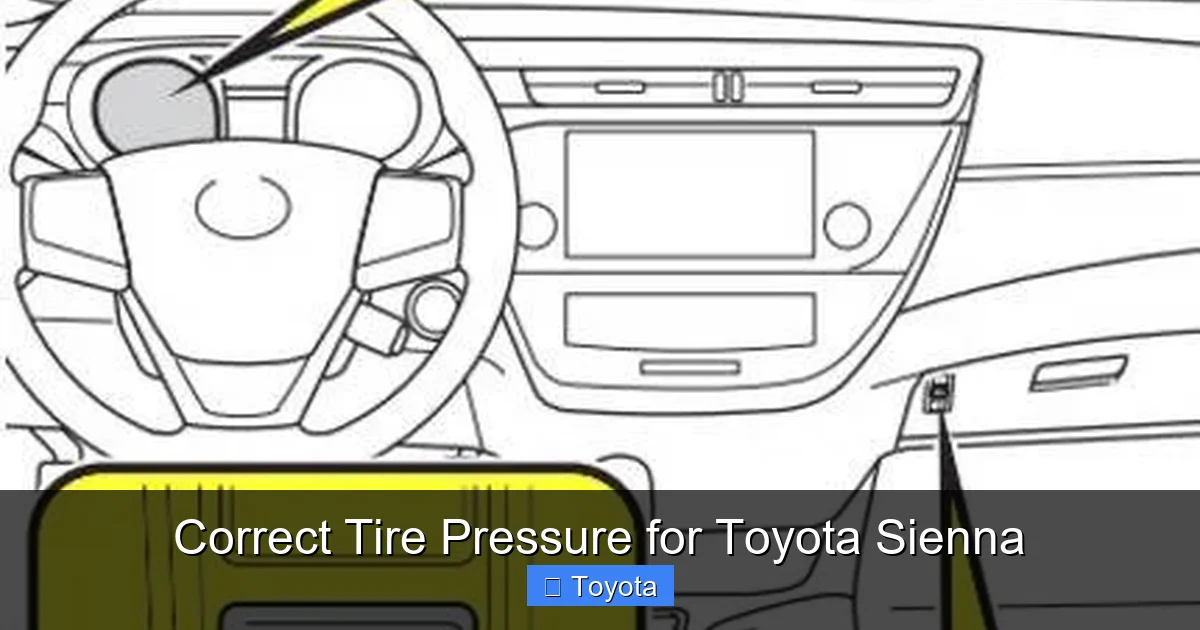
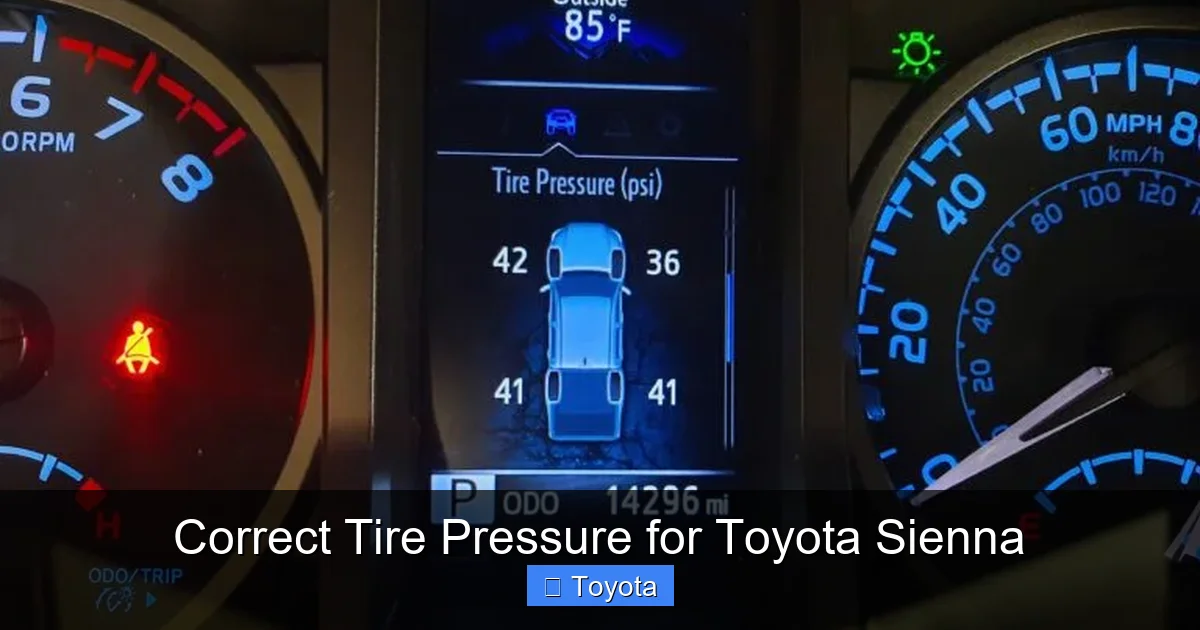
Most Toyota Siennas from 2007 onward are equipped with a Tire Pressure Monitoring System (TPMS). This system uses sensors in each wheel to monitor air pressure and alerts you via a dashboard warning light if one or more tires are significantly underinflated.
How TPMS Works
The TPMS sensors transmit real-time pressure data to the vehicle’s computer. If pressure drops below about 25% of the recommended level, the TPMS warning light—a yellow tire icon—will illuminate on your dashboard. This is your cue to check all tires immediately.
Resetting the TPMS Light
After inflating your tires to the correct pressure, the TPMS light should turn off automatically after driving a short distance (usually 10–20 minutes). If it stays on, you may need to reset the system. On most Siennas, this involves:
- Turning the ignition to “ON” (without starting the engine).
- Pressing and holding the TPMS reset button (usually under the steering wheel or in the glove box) until the light blinks three times.
- Driving the vehicle for about 10 minutes to allow the system to recalibrate.
If the light persists, there may be a sensor issue or a slow leak—visit a Toyota service center for diagnosis.
Limitations of TPMS
While TPMS is helpful, it’s not a replacement for manual checks. The system only alerts you when pressure is critically low, not when it’s slightly off. Also, TPMS sensors can fail over time due to battery depletion (typically after 5–10 years) or damage. Regular manual checks ensure you catch issues early.
Common Mistakes to Avoid
Even experienced drivers make tire pressure errors. Here are some common pitfalls and how to avoid them.
Checking Pressure When Tires Are Hot
One of the biggest mistakes is checking tire pressure after a long drive. Heat increases pressure, giving a falsely high reading. Always check when tires are cold for accuracy.
Ignoring the Spare Tire
Many people forget the spare. If you have a full-size spare, check its pressure monthly. A flat spare is no help in an emergency.
Overinflating to Improve Fuel Economy
Some drivers inflate tires beyond the recommended PSI to reduce rolling resistance and boost mileage. While this might save a tiny amount of fuel, it compromises ride quality, traction, and tire wear. Stick to the manufacturer’s recommendation.
Using the Wrong Gauge
Cheap or worn-out gauges give inaccurate readings. Invest in a quality gauge and test it occasionally by comparing it to another reliable one.
Not Adjusting for Load
If you regularly carry heavy loads, don’t ignore the loaded pressure recommendation. Underinflated tires under load can overheat and fail.
Conclusion
Maintaining the correct tire pressure for your Toyota Sienna is a simple habit that pays off in safety, comfort, and cost savings. By checking your tires monthly, using the door jamb sticker as your guide, and adjusting for temperature and load, you’ll keep your minivan running smoothly for years to come.
Remember, the right pressure isn’t just a number—it’s a key part of your vehicle’s performance. Whether you’re driving a 2005 Sienna or a brand-new 2024 hybrid model, the principles remain the same. Take a few minutes each month to check your tires, and you’ll enjoy better fuel economy, longer tire life, and peace of mind on every journey.
Frequently Asked Questions
What is the correct tire pressure for a Toyota Sienna?
The correct tire pressure for a Toyota Sienna typically ranges from 32 to 35 PSI when the tires are cold. The exact value depends on your model year, trim, and tire size. Always check the sticker on the driver’s door jamb for the most accurate recommendation.
Can I use the number on the tire sidewall as my tire pressure?
No, the number on the tire sidewall shows the maximum pressure the tire can handle, not the recommended pressure. Always follow the PSI listed on your door jamb sticker or in the owner’s manual.
How often should I check my Sienna’s tire pressure?
Check your tire pressure at least once a month and before long trips. Also, check it during seasonal changes, especially in winter when cold weather can cause pressure to drop.
Why does my TPMS light come on in cold weather?
Cold temperatures cause air inside the tires to contract, lowering pressure. If the pressure drops below the TPMS threshold, the warning light will activate. Inflate your tires to the recommended PSI to resolve the issue.
Should I increase tire pressure when towing with my Sienna?
Yes, if you’re towing or carrying a heavy load, you may need to increase tire pressure slightly. Check your owner’s manual or door sticker for the loaded vehicle recommendation, which is often 1–3 PSI higher than normal.
What happens if my Sienna’s tires are underinflated?
Underinflated tires increase rolling resistance, reduce fuel efficiency, cause uneven wear, and can overheat, leading to blowouts. They also reduce handling and braking performance, especially in wet conditions.
