
How Much Does It Cost to Lift a Subaru Outback?

Lifting a Subaru Outback can cost anywhere from $500 to $3,000 or more, depending on the type of lift, parts used, and whether you DIY or hire a professional. This guide breaks down all the costs, options, and considerations so you can make an informed decision and get the most value from your upgrade.
Key Takeaways
- Budget for $500–$1,200 for a basic 1–2 inch lift kit: Ideal for improved ground clearance and mild off-roading without major suspension changes.
- Expect $1,500–$3,000+ for a full 2–3 inch lift with upgraded components: Includes shocks, springs, and alignment adjustments for better performance and durability.
- DIY installation saves money but requires tools and skill: Labor costs can add $300–$800 if done professionally.
- Don’t forget hidden costs like alignment, tires, and gearing: Larger tires and altered suspension may require additional modifications.
- Lifting affects handling, fuel economy, and warranty: Understand the trade-offs before committing to a lift.
- Choose quality brands like LP Adventure, Primitive Racing, or Ironman 4×4: Reliable kits ensure safety and long-term performance.
- Consider your driving needs: A light lift suits weekend adventurers; heavy-duty setups are for serious off-roaders.
📑 Table of Contents
- How Much Does It Cost to Lift a Subaru Outback?
- Understanding Subaru Outback Lift Options
- Breaking Down the Cost to Lift a Subaru Outback
- Real-World Cost Examples
- Factors That Influence the Total Cost
- Pros and Cons of Lifting Your Subaru Outback
- Tips to Save Money When Lifting Your Outback
- Conclusion
How Much Does It Cost to Lift a Subaru Outback?
So, you’ve got a Subaru Outback—maybe it’s your daily driver, your weekend camping companion, or your go-to for mountain road trips. It’s reliable, comfortable, and surprisingly capable. But let’s be honest: you’ve probably looked at it and thought, “What if it could go just a little farther off the beaten path?” That’s where lifting comes in.
Lifting your Subaru Outback isn’t just about looking cool (though, let’s admit it—it does look awesome). It’s about gaining more ground clearance, fitting bigger tires, and tackling rougher terrain with confidence. Whether you’re dodging potholes in the city or navigating rocky trails in the backcountry, a lift can make a real difference.
But here’s the big question: How much does it actually cost to lift a Subaru Outback? The answer isn’t one-size-fits-all. It depends on how much you want to lift it, what kind of parts you use, whether you do it yourself or pay a shop, and what kind of driving you plan to do. In this guide, we’ll walk you through every cost factor, from budget-friendly options to full-on off-road builds. By the end, you’ll know exactly what to expect—and how to get the most bang for your buck.
Understanding Subaru Outback Lift Options
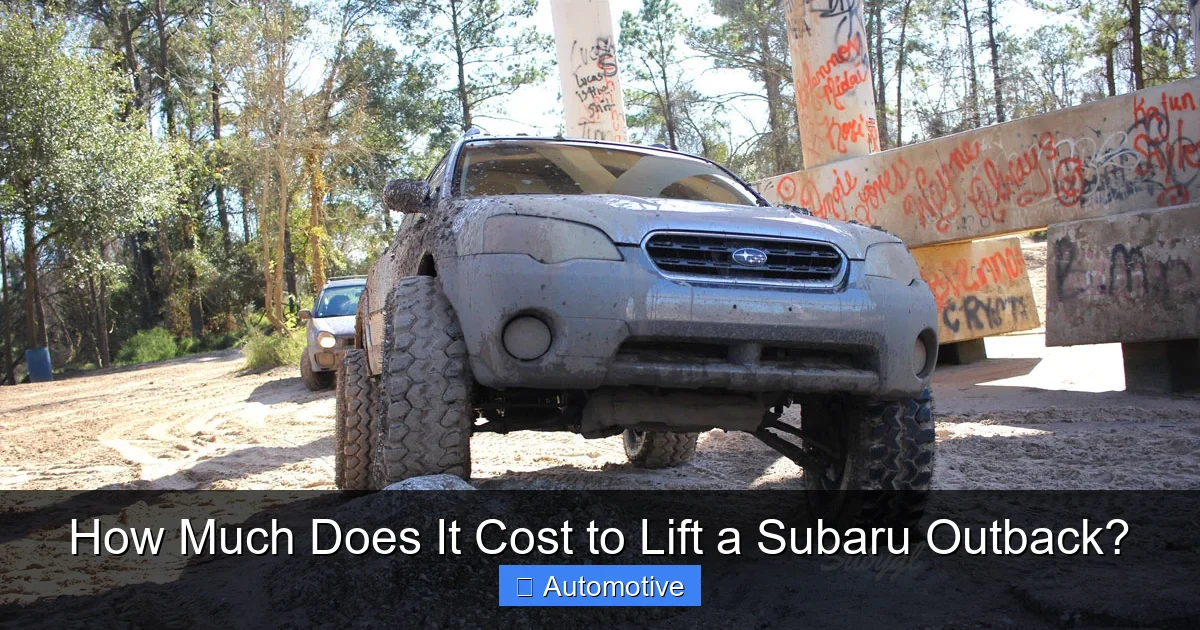
Visual guide about How Much Does It Cost to Lift a Subaru Outback?
Image source: crankshaftculture.com
Before we dive into costs, let’s talk about the different ways you can lift your Outback. Not all lifts are created equal, and each type serves a different purpose.
Spacer Lifts (Budget-Friendly Option)
Spacer lifts are the most affordable and simplest way to raise your Outback. They work by adding plastic or metal spacers between your suspension components—usually the struts and the chassis—to create extra height. Most spacer kits give you a 1 to 2-inch lift.
These kits are popular because they’re cheap (often under $200) and easy to install. You don’t need to replace any major parts, and you can usually do it in a weekend with basic tools. But there’s a catch: spacer lifts don’t improve your suspension performance. In fact, they can make your ride stiffer and less comfortable, especially on rough roads.
Also, because they don’t change the suspension geometry, you might notice more body roll or reduced handling. And if you go off-road, the added stress on your suspension could lead to premature wear. So while spacer lifts are great for a quick, low-cost boost, they’re not ideal for serious off-roading.
Coil Spring Lifts (Mid-Range Upgrade)
If you want a more substantial lift—say, 2 to 3 inches—and better performance, coil spring lifts are the way to go. These kits replace your factory coil springs with taller, stiffer ones that provide both height and improved load capacity.
Coil spring lifts are more expensive than spacer kits, typically ranging from $400 to $800 for the parts alone. But they offer a smoother ride, better off-road capability, and less stress on your suspension components. They also allow you to fit larger tires, which further improves ground clearance.
One thing to note: taller springs can change how your Outback handles, especially at highway speeds. You might need to adjust your alignment or even upgrade your shocks to maintain stability. But for most drivers, the trade-off is worth it.
Full Suspension Lift Kits (Premium Build)
For serious off-roaders, a full suspension lift kit is the gold standard. These kits include everything: taller springs, upgraded shocks, extended brake lines, sway bar links, and sometimes even new control arms or subframe spacers.
A full lift kit can give you 2.5 to 3 inches (or more) of lift and dramatically improve your Outback’s off-road performance. You’ll be able to tackle steep inclines, deep ruts, and rocky trails with ease. But this level of upgrade comes at a cost—both in price and complexity.
Expect to pay $1,200 to $2,500 or more for a high-quality full lift kit. Installation is more involved and often requires professional help, which adds to the total cost. But if you’re serious about overlanding or trail driving, this is the best way to go.
Body Lifts (Rare for Outbacks)
Body lifts involve raising the body of the vehicle off the frame using spacers. They’re common on trucks but rarely used on Subarus because the Outback is a unibody design—the body and frame are one piece. So, body lifts aren’t really an option here. Stick with suspension lifts.
Breaking Down the Cost to Lift a Subaru Outback
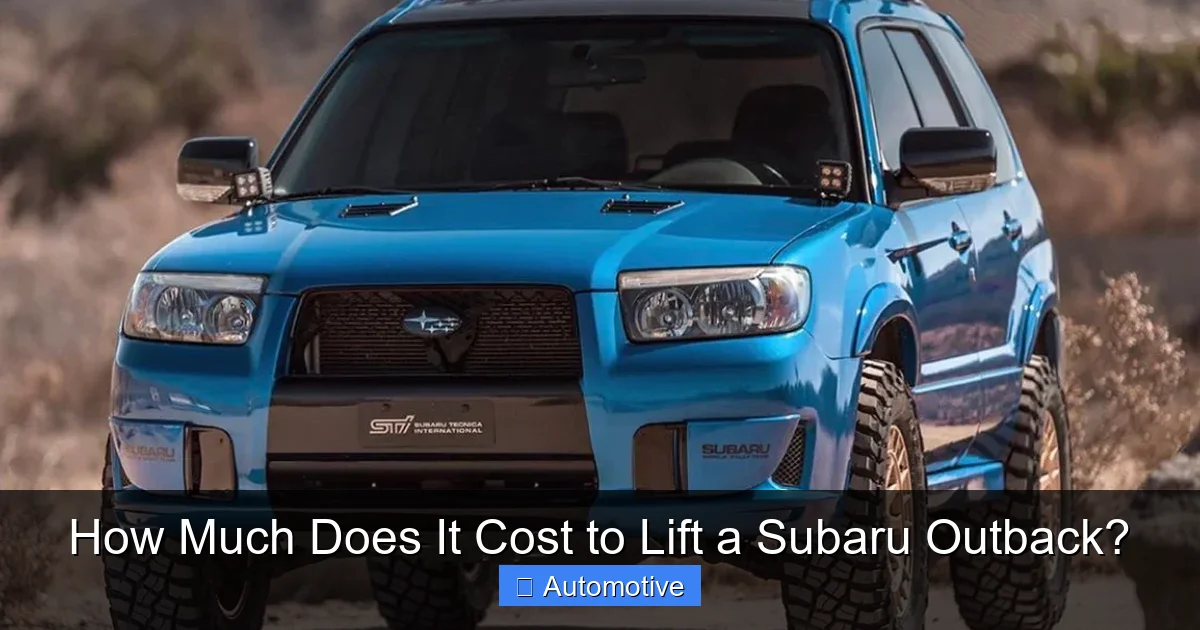
Visual guide about How Much Does It Cost to Lift a Subaru Outback?
Image source: cdn.shopify.com
Now that you know the types of lifts available, let’s talk money. The total cost to lift a Subaru Outback depends on several factors. Here’s a detailed breakdown.
Cost of Lift Kits by Type
Let’s start with the kits themselves. Prices vary widely based on brand, quality, and included components.
– Spacer Lift Kits: $100–$300
These are the cheapest option. Brands like LP Adventure and Primitive Racing offer reliable 1.5–2 inch spacer kits in this range. You’ll get the spacers, bolts, and basic instructions. No shocks or springs included.
– Coil Spring Lift Kits: $400–$800
Kits from brands like Ironman 4×4 or LP Adventure include taller coil springs and sometimes new top mounts. These are a solid mid-range choice for moderate off-roading.
– Full Suspension Lift Kits: $1,200–$2,500+
Premium kits from companies like Primitive Racing, LP Adventure, or Anderson Design & Fabrication include everything: springs, shocks, extended brake lines, sway bar links, and sometimes even differential drop kits. These are built for durability and performance.
Labor Costs: DIY vs. Professional Installation
One of the biggest cost variables is labor. If you’re handy with tools and have a good workspace, you can save hundreds by doing it yourself. But if you’re not confident, or if the job is complex, hiring a professional is the safer choice.
– DIY Installation: $0–$100 (for tools or rental)
If you already have a jack, jack stands, torque wrench, and basic hand tools, you can install a spacer or coil spring lift in a weekend. Many kits come with detailed instructions, and there are tons of YouTube tutorials for the Outback.
However, if you need to buy or rent specialty tools—like a spring compressor—you might spend $50–$100. Still, it’s far cheaper than paying a shop.
– Professional Installation: $300–$800
Labor rates vary by location and shop, but expect to pay $100–$150 per hour. A spacer lift might take 3–4 hours ($300–$600), while a full suspension lift could take 6–8 hours or more ($600–$1,200).
Some shops also charge extra for alignment or additional parts. Always get a detailed quote before agreeing to the work.
Additional Costs to Consider
Lifting your Outback isn’t just about the kit and labor. There are several hidden costs that can add up quickly.
– Wheel Alignment: $100–$150
Any suspension modification requires a wheel alignment. Your tires need to be properly aligned to prevent uneven wear and maintain handling. Most shops include this in the installation quote, but it’s worth confirming.
– Larger Tires: $600–$1,200+
A lift lets you fit bigger tires, which improve traction and ground clearance. But larger tires cost more. A set of 225/65R17 all-terrain tires might run $150–$200 each, so $600–$800 for a full set. If you go up to 235/60R18 or larger, expect to pay $1,000 or more.
Also, bigger tires can affect your speedometer accuracy and fuel economy. You might need a speedometer recalibration module ($100–$200).
– Extended Brake Lines: $100–$200
If you’re lifting more than 2 inches, your factory brake lines may be too short. Extended lines are often included in full lift kits, but if not, you’ll need to buy them separately.
– Sway Bar Links: $50–$150
Longer sway bar links are needed to maintain proper suspension articulation. Again, these are usually included in full kits but may be extra with basic lifts.
– Differential Drop Kit: $100–$200
For lifts over 2 inches, a differential drop kit can reduce stress on your CV joints by lowering the differential slightly. This helps maintain proper axle angles and prevents premature wear.
– Skid Plates: $200–$500
If you’re going off-road, skid plates protect your engine, transmission, and fuel tank from rocks and debris. They’re not required, but highly recommended for serious adventurers.
Real-World Cost Examples
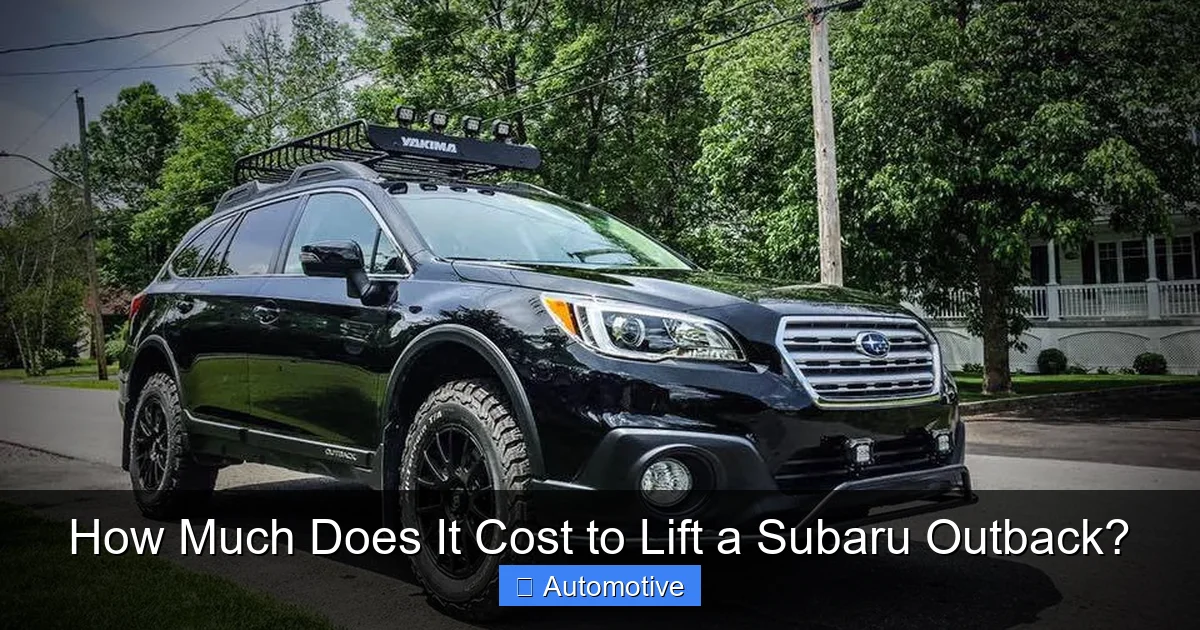
Visual guide about How Much Does It Cost to Lift a Subaru Outback?
Image source: cdn.shopify.com
To give you a clearer picture, here are a few real-world scenarios based on common lift setups.
Example 1: Weekend Warrior (1.5-Inch Spacer Lift)
You want a modest lift for better ground clearance on forest roads and gravel paths. You’re not planning extreme off-roading, but you’d like to look a little more rugged.
– Lift Kit: LP Adventure 1.5-inch spacer kit – $250
– DIY Installation: $0 (you do it yourself)
– Wheel Alignment: $120
– Total: $370
This is the most budget-friendly option. You’ll gain a little height, fit slightly larger tires, and improve approach and departure angles. Just remember: the ride may feel a bit stiffer, and you won’t see major performance gains.
Example 2: Overland Explorer (2.5-Inch Coil Spring Lift)
You’re into overlanding and want a more capable setup for long trips on rough terrain. You’re willing to spend more for comfort and durability.
– Lift Kit: Ironman 4×4 2.5-inch coil spring lift – $650
– Professional Installation: $500
– Wheel Alignment: Included
– Larger Tires (225/65R17): $700
– Extended Brake Lines: $150 (included in some kits)
– Total: $2,000
This setup gives you a noticeable improvement in off-road performance. You can handle deeper ruts, steeper hills, and rougher trails. The ride is still comfortable for daily driving, and the larger tires add to the adventure-ready look.
Example 3: Trail Beast (3-Inch Full Suspension Lift)
You’re a serious off-roader who wants maximum capability. You’re ready to invest in a top-tier setup for extreme terrain.
– Lift Kit: Primitive Racing 3-inch full suspension kit – $2,200
– Professional Installation: $800
– Wheel Alignment: Included
– Larger Tires (235/60R18): $1,000
– Differential Drop Kit: $150
– Skid Plates: $400
– Total: $4,550
This is a premium build. You’ll have the height, strength, and protection to tackle nearly any trail. But it’s a significant investment—both in cost and in how it affects your daily driving. Expect a stiffer ride and slightly lower fuel economy.
Factors That Influence the Total Cost
Beyond the kit and labor, several other factors can affect how much it costs to lift your Subaru Outback.
Your Outback’s Model Year and Trim
Older Outbacks (2000–2009) may have different suspension designs than newer models (2015–present). Some lift kits are model-specific, so make sure you’re buying one that fits your year and trim. Also, higher trims like the Wilderness or Limited may have additional components (like adaptive dampers) that complicate the lift process.
Your Location
Labor rates vary by region. In big cities like Los Angeles or New York, shop rates can be $150/hour or more. In rural areas, they might be closer to $80–$100/hour. Also, if you live in a remote area, you may need to travel to find a shop that specializes in Subarus or off-road modifications.
Your Driving Habits
If you only drive on paved roads, a small spacer lift might be all you need. But if you frequently go off-road, invest in a full suspension lift with quality components. Cutting corners on parts can lead to breakdowns or safety issues on the trail.
Future Upgrades
Think long-term. If you plan to add a roof rack, winch, or extra gear later, make sure your lift can handle the added weight. Some kits are rated for heavier loads, while others are designed for stock weight only.
Pros and Cons of Lifting Your Subaru Outback
Before you spend a dime, it’s important to weigh the benefits and drawbacks.
Pros
– Increased Ground Clearance: You’ll clear rocks, ruts, and obstacles more easily.
– Larger Tire Fitment: Bigger tires improve traction and off-road performance.
– Better Approach and Departure Angles: You can tackle steeper hills without scraping the bumper.
– Enhanced Off-Road Capability: You’ll feel more confident on trails and backcountry roads.
– Aesthetic Appeal: A lifted Outback looks rugged and adventure-ready.
Cons
– Higher Cost: Even a basic lift can cost several hundred dollars.
– Reduced Fuel Economy: Larger tires and altered aerodynamics can lower MPG by 1–3 miles per gallon.
– Altered Handling: Your Outback may feel less stable at high speeds or in windy conditions.
– Warranty Concerns: Modifications can void parts of your factory warranty, especially if they cause damage.
– Increased Wear on Components: CV joints, suspension parts, and drivetrain may wear faster.
Tips to Save Money When Lifting Your Outback
Lifting doesn’t have to break the bank. Here are some smart ways to cut costs without sacrificing quality.
– Buy During Sales: Look for Black Friday, Memorial Day, or end-of-year sales from brands like LP Adventure or Primitive Racing.
– DIY When Possible: Save $300–$800 by installing the kit yourself. Watch tutorials and take your time.
– Reuse Parts When Safe: If your shocks are still in good condition, you might not need new ones with a small lift.
– Shop Around for Labor: Get quotes from multiple shops. Some may offer package deals.
– Start Small: Begin with a spacer lift and upgrade later if needed. This spreads out the cost.
Conclusion
So, how much does it cost to lift a Subaru Outback? The short answer: anywhere from $370 for a basic spacer lift to over $4,500 for a full off-road build. The real cost depends on your goals, your budget, and how much you’re willing to do yourself.
If you’re a casual adventurer, a 1.5–2 inch lift with new tires might be perfect. But if you’re planning epic overland trips or serious trail runs, investing in a full suspension lift is worth every penny.
No matter which route you take, make sure you choose quality parts, get a proper alignment, and understand the trade-offs. A lifted Outback isn’t just a modification—it’s a transformation. It turns your reliable wagon into a true adventure machine.
So go ahead—lift it, love it, and take it where it’s never been before.
Frequently Asked Questions
How much does it cost to lift a Subaru Outback?
The cost to lift a Subaru Outback ranges from $500 to $3,000 or more, depending on the type of lift, parts used, and whether you install it yourself or hire a professional. Basic spacer lifts are the cheapest, while full suspension kits are the most expensive.
Can I lift my Subaru Outback myself?
Yes, many lift kits—especially spacer and coil spring lifts—can be installed at home with basic tools and mechanical knowledge. However, full suspension lifts are more complex and may require professional help.
Will lifting my Outback void the warranty?
Lifting your Outback can void parts of your factory warranty, especially if the modification causes damage. Check with your dealer and consider the risks before making changes.
Do I need new tires after lifting my Outback?
Not necessarily, but a lift allows you to fit larger tires, which improve off-road performance. If you want better traction and ground clearance, upgrading tires is recommended.
How much lift is safe for a Subaru Outback?
Most experts recommend a maximum of 2.5 to 3 inches of lift for daily-driven Outbacks. Going higher can stress CV joints and suspension components, leading to premature wear.
Does lifting a Subaru Outback affect fuel economy?
Yes, lifting your Outback—especially with larger tires—can reduce fuel economy by 1–3 miles per gallon due to increased weight and aerodynamic drag.
