
How Much Is a 2000 Toyota 4runner Worth?

The value of a 2000 Toyota 4Runner depends on mileage, condition, trim level, and location. Well-maintained models with low mileage can fetch $8,000–$12,000, while average examples typically range from $4,500 to $7,000.
If you’re wondering, “How much is a 2000 Toyota 4Runner worth?” you’re not alone. This rugged, boxy SUV from the early 2000s has become a cult classic among off-road enthusiasts, Toyota loyalists, and anyone who values reliability over flash. Even two decades after rolling off the assembly line, the third-generation 4Runner continues to hold its value better than most vehicles of its age—and for good reason.
Built during an era when SUVs were still true body-on-frame workhorses, the 2000 Toyota 4Runner blends old-school toughness with everyday usability. It’s not the fastest or most fuel-efficient vehicle on the road, but it’s famously durable, easy to maintain, and capable of handling everything from daily commutes to weekend trail adventures. That enduring appeal means well-cared-for examples still command respectable prices today—especially in regions where trucks and SUVs dominate the used car market.
But pricing isn’t one-size-fits-all. The value of a 2000 Toyota 4Runner can swing wildly based on a handful of key factors: how many miles are on the odometer, whether it’s been garaged or left outside in snowy climates, what trim level it is, and even where you live. A pristine Limited model with 80,000 miles in Colorado might sell for nearly double what a rusty SR5 with 200,000 miles fetches in Michigan. Understanding these variables will help you accurately assess what your 4Runner is worth—or what you should pay if you’re shopping for one.
Key Takeaways
- Mileage matters most: Lower mileage (under 100,000) significantly boosts value, with high-mileage models dropping below $5,000.
- Condition is critical: Rust-free frames, clean interiors, and documented maintenance history increase resale value.
- Trim and drivetrain impact price: Limited and SR5 4WD models command premiums over base RWD versions.
- Geographic location affects demand: 4Runners sell for more in rural or mountainous areas where off-road capability is valued.
- Market trends favor reliability: Toyota’s reputation for durability keeps 2000 4Runner values relatively stable compared to other 20-year-old SUVs.
- Private sales yield higher returns: Selling directly to a buyer often nets $1,000–$2,000 more than trading in at a dealership.
- Modifications can hurt or help: tasteful, functional upgrades (like skid plates) may add value, but excessive customizations often deter buyers.
📑 Table of Contents
- Understanding the 2000 Toyota 4Runner’s Legacy
- Factors That Determine a 2000 Toyota 4Runner’s Value
- Current Market Pricing Trends (2024)
- Common Issues to Watch For (and How They Affect Value)
- Tips for Sellers: Maximizing Your 2000 4Runner’s Value
- Tips for Buyers: Finding a Fair Deal
- Conclusion: Is a 2000 Toyota 4Runner Worth It?
Understanding the 2000 Toyota 4Runner’s Legacy
The 2000 model year marked the final iteration of the third-generation Toyota 4Runner (N180 series), which debuted in 1996. This generation was a significant step up from its predecessors, offering improved ride comfort, better interior materials, and more powerful engine options—all while retaining the rugged ladder-frame chassis that made the 4Runner famous.
Toyota offered three main trim levels in 2000: the base SR5, the mid-tier Sport Edition, and the luxury-oriented Limited. All came standard with rear-wheel drive (RWD), but four-wheel drive (4WD) was available across the board—and highly recommended if you plan to use the vehicle off-road or in harsh weather. The standard engine was a 2.7L inline-four producing 150 horsepower, but most buyers opted for the more capable 3.4L V6, which delivered 183 hp and 217 lb-ft of torque. Paired with either a 5-speed manual or 4-speed automatic transmission, the V6 provided enough grunt for towing (up to 5,000 lbs when properly equipped) and tackling moderate trails.
What truly set the 2000 4Runner apart—and why it still commands attention today—is its bulletproof reputation. Toyota’s engineering prioritized longevity, and many of these SUVs are still on the road with well over 200,000 miles. Enthusiasts praise the simplicity of the mechanical systems, the availability of aftermarket parts, and the ease of DIY repairs. Unlike modern vehicles packed with complex electronics, the 2000 4Runner feels refreshingly analog—a trait that resonates with buyers who want a dependable, no-nonsense SUV they can actually work on themselves.
Factors That Determine a 2000 Toyota 4Runner’s Value

Visual guide about How Much Is a 2000 Toyota 4runner Worth?
Image source: cdn.dealeraccelerate.com
When evaluating how much a 2000 Toyota 4Runner is worth, several interrelated factors come into play. While no single element tells the whole story, understanding each one helps you make an informed estimate—whether you’re selling, buying, or just curious.
Mileage: The Single Biggest Price Driver
Mileage is arguably the most influential factor in determining value. As a general rule, lower mileage equals higher value—but there’s nuance. For a 2000 4Runner, anything under 100,000 miles is considered low for its age, and these models often sell at a premium. Examples with 80,000–90,000 miles in good condition can easily fetch $9,000–$12,000, especially if they’re 4WD and well-maintained.
Conversely, high-mileage 4Runners (150,000+ miles) typically fall into the $4,000–$6,000 range—unless they’ve been exceptionally cared for. However, don’t dismiss high-mileage vehicles outright. A 2000 4Runner with 180,000 miles but a full service history, recent timing belt replacement, and no major mechanical issues can still be a smart buy. Toyota’s 3.4L V6 is known to last 300,000+ miles with proper maintenance, so mileage alone shouldn’t scare you off—but it should prompt extra scrutiny.
Vehicle Condition: Rust, Interior, and Mechanical Health
Condition encompasses everything from body rust to upholstery wear to engine performance. The 2000 4Runner is particularly susceptible to frame rust in regions that use road salt during winter (like the Northeast, Midwest, and parts of Canada). A rust-free frame is non-negotiable for most serious buyers—and can add thousands to a vehicle’s value. Surface rust on body panels might be manageable, but structural corrosion severely diminishes worth.
Inside, look for intact dashboards (no cracking), functional HVAC systems, and seats free of major tears or stains. Original carpet and headliners in good shape are big pluses. Mechanically, ensure the transmission shifts smoothly, the 4WD system engages properly (if equipped), and there are no check engine lights or fluid leaks. A pre-purchase inspection by a trusted mechanic is always wise—even if the seller claims everything is perfect.
Trim Level and Options
Not all 2000 4Runners are created equal. The Limited trim, with its leather seats, power everything, sunroof, and upgraded audio, typically commands the highest prices—often 15–25% more than a comparable SR5. The Sport Edition, with its sport-tuned suspension and unique styling cues, also holds value well among enthusiasts.
Options matter too. A 4Runner with factory-installed roof racks, tow packages, or upgraded audio can appeal to specific buyers and justify a higher asking price. Conversely, base models with manual windows, no A/C, or minimal features will sit at the lower end of the value spectrum.
Drivetrain: 4WD vs. RWD
Four-wheel drive isn’t just a nice-to-have—it’s a major value differentiator. In snowy or rural areas, 4WD 4Runners routinely outsell their RWD counterparts and command $1,000–$2,000 more. Even in warmer climates, the added capability makes 4WD models more desirable long-term. If you’re shopping, prioritize 4WD unless you’re on a tight budget and live in a flat, dry region.
Geographic Location and Market Demand
Where you live—or where the vehicle is located—can dramatically affect pricing. In states like Texas, Montana, or Colorado, where outdoor lifestyles are common, clean 2000 4Runners often sell quickly and at premium prices. In urban coastal areas with less demand for off-road vehicles, prices may be softer.
Additionally, local inventory matters. If there are few 4Runners for sale in your area, competition among buyers can drive prices up. Check listings on platforms like Facebook Marketplace, Craigslist, and Bring a Trailer to gauge regional trends.
Current Market Pricing Trends (2024)
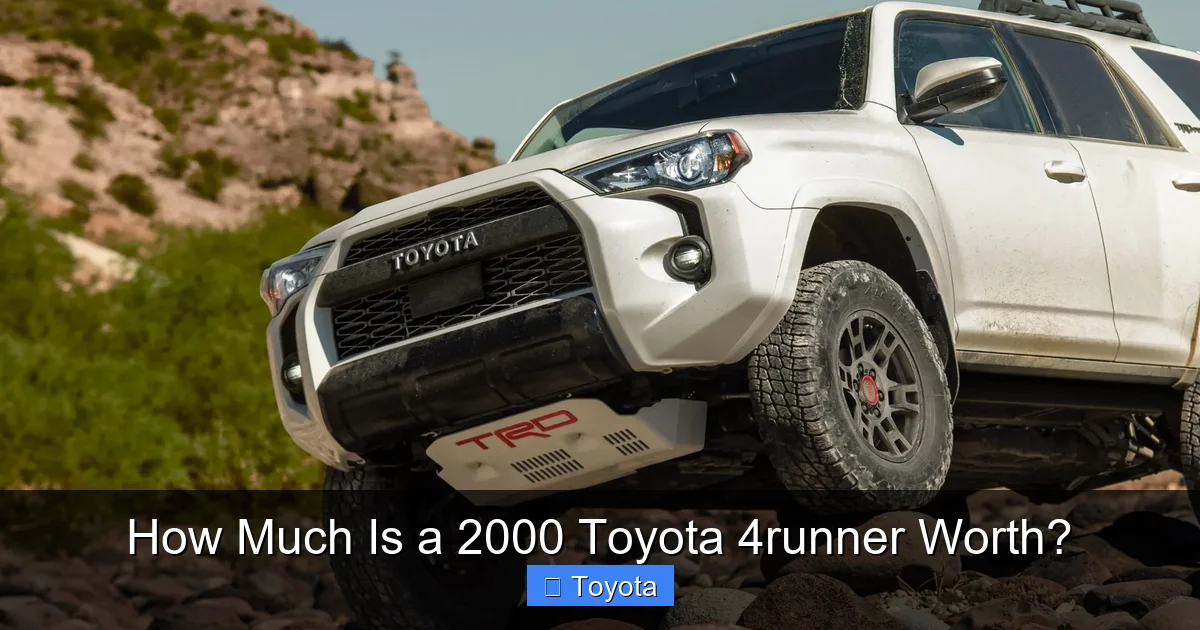
Visual guide about How Much Is a 2000 Toyota 4runner Worth?
Image source: motorbiscuit.com
As of 2024, the used car market has stabilized after the pandemic-driven price spikes, but classic Toyotas like the 2000 4Runner remain resilient. According to data from Kelley Blue Book (KBB), Edmunds, and recent private sales, here’s a realistic breakdown of current values:
– **Excellent condition, low mileage (under 100k), 4WD, Limited or Sport trim:** $9,000–$12,000
– **Good condition, moderate mileage (100k–150k), 4WD, SR5 or Sport:** $6,500–$8,500
– **Fair condition, high mileage (150k+), RWD or minor issues:** $4,000–$6,000
– **Poor condition, rust, mechanical problems, or very high mileage:** Under $4,000 (often sold for parts or project builds)
Private party sales generally yield 10–20% more than trade-in values. For example, a dealer might offer $5,000 for a clean SR5, but the same vehicle could sell for $6,500 on Craigslist. Always get multiple quotes if you’re selling, and consider listing during spring or early summer when SUV demand peaks.
It’s also worth noting that “survivor” examples—original, unmodified 4Runners with low miles and full documentation—are becoming increasingly rare and collectible. These can sometimes exceed $13,000, especially if they’re two-tone paint schemes (like the iconic white-and-gray Limited) or have interesting provenance (e.g., owned by a mechanic or stored in a garage for years).
Common Issues to Watch For (and How They Affect Value)

Visual guide about How Much Is a 2000 Toyota 4runner Worth?
Image source: motorbiscuit.com
While the 2000 4Runner is famously reliable, it’s not immune to age-related wear. Knowing what to look for can save you money—and help you negotiate a fair price.
Timing Belt and Water Pump
The 3.4L V6 requires a timing belt replacement every 90,000–100,000 miles. If it hasn’t been done, budget $800–$1,200 for the job—and factor that into your offer. A snapped timing belt can destroy the engine, so this isn’t optional maintenance.
Suspension and Steering Components
Ball joints, control arm bushings, and tie rod ends wear out over time. Listen for clunking noises over bumps or uneven tire wear—signs that suspension work is needed. Replacing these parts can cost $500–$1,000, so deduct accordingly if repairs are pending.
Electrical Gremlins
Some 2000 4Runners develop issues with the power window switches, door locks, or instrument cluster. These are usually fixable but can be annoying. Test all electronics during your inspection.
Rust (Again—It’s That Important)
Check the frame rails, rear wheel wells, and rocker panels thoroughly. Surface rust can be treated, but structural rust compromises safety and value. Walk away if you see flaking or holes in the frame.
Transmission Health
The 4-speed automatic is robust but can develop shift harshness or slipping if the fluid hasn’t been changed regularly. Ask for service records and consider a fluid flush if unsure.
Addressing these issues upfront—or pricing them into your offer—ensures you’re not overpaying for a money pit disguised as a bargain.
Tips for Sellers: Maximizing Your 2000 4Runner’s Value
If you’re selling your 2000 Toyota 4Runner, a little effort can go a long way in boosting its sale price.
First, clean it inside and out. A professional detail ($100–$200) makes a huge difference in photos and first impressions. Fix minor issues like burnt-out bulbs, cracked windshield wipers, or loose trim—these signal care and attention.
Gather all maintenance records, receipts, and the owner’s manual. Documentation proves the vehicle has been well-maintained and builds buyer confidence. If you’ve done major work (timing belt, suspension, brakes), highlight it in your listing.
Take high-quality photos in natural light, showing all angles—including under the vehicle to showcase a rust-free frame. Be honest about flaws; transparency builds trust and reduces negotiation friction.
Price competitively by researching similar listings in your area. Don’t overprice hoping for a sucker—serious buyers compare options quickly. Consider listing on multiple platforms (Facebook Marketplace, OfferUp, Autotrader) to reach more eyes.
Finally, be prepared to negotiate. Most buyers expect some wiggle room, so build a small buffer into your asking price. And remember: cash talks. Private sales move faster and net more than trade-ins.
Tips for Buyers: Finding a Fair Deal
Shopping for a 2000 4Runner? Start by defining your must-haves: 4WD? Low miles? Specific trim? Set a budget that includes potential repairs.
Always get a pre-purchase inspection (PPI) from a mechanic familiar with Toyotas. This $100–$150 investment can uncover hidden problems and give you leverage to negotiate.
Check the vehicle history report (Carfax or AutoCheck) for accidents, title issues, or odometer discrepancies. While not foolproof, it’s a useful screening tool.
Test drive the vehicle on varied roads—highways, hills, and rough terrain if possible. Pay attention to engine noise, transmission behavior, and how the 4WD engages.
Finally, be patient. The right 4Runner may take weeks to find, but rushing into a bad deal costs more in the long run. Join online forums like Toyota4Runner.org to connect with knowledgeable owners and get real-world advice.
Conclusion: Is a 2000 Toyota 4Runner Worth It?
So, how much is a 2000 Toyota 4Runner worth? The answer depends—but for the right buyer, it’s absolutely worth every penny. These SUVs offer unmatched durability, timeless styling, and a driving experience that’s increasingly rare in today’s tech-heavy automotive world.
Whether you’re seeking a reliable daily driver, a weekend adventure rig, or a project vehicle to restore, the 2000 4Runner delivers. Just remember: condition, mileage, and location are king. Do your homework, inspect thoroughly, and don’t let nostalgia cloud your judgment.
With proper care, a well-chosen 2000 4Runner can easily last another decade—proving that sometimes, the classics really are the best.
Frequently Asked Questions
What is the average price of a 2000 Toyota 4Runner in 2024?
The average price ranges from $4,500 to $8,500, depending on condition, mileage, and trim. Low-mileage, rust-free 4WD models can exceed $10,000.
Is a 2000 Toyota 4Runner reliable?
Yes—especially the 3.4L V6 models. With regular maintenance, these SUVs often surpass 250,000 miles and remain mechanically sound.
Should I buy a high-mileage 2000 4Runner?
Only if it has a documented service history, no major rust, and recent major maintenance (like timing belt replacement). High mileage isn’t a dealbreaker if the vehicle has been well cared for.
Do 2000 4Runners have rust problems?
They can, especially in snowy climates. Frame rust is the biggest concern—always inspect underneath before buying.
What trim should I look for?
The SR5 or Sport Edition with 4WD offers the best balance of value and capability. The Limited adds luxury but may have more complex electronics to maintain.
Can I daily drive a 2000 Toyota 4Runner?
Absolutely. While fuel economy is modest (15–18 mpg), its comfort, reliability, and visibility make it a practical daily driver—even 25 years later.
