
What Is the Am2 Fuse on Toyota Vehicles?

The AM2 fuse in Toyota vehicles is a critical 15-amp fuse that protects essential electrical systems like the engine control module (ECM), fuel pump, and ignition system. Located in the under-hood fuse box, it ensures safe operation and prevents damage during electrical surges.
Key Takeaways
- AM2 fuse protects vital engine components: It safeguards the engine control module (ECM), fuel pump, and ignition system from electrical overloads.
- Located in the under-hood fuse box: Typically found in the main fuse panel under the hood, labeled clearly for easy identification.
- Rated at 15 amps: The AM2 fuse is a 15-amp mini blade fuse, designed to handle moderate electrical loads safely.
- Common failure symptoms include engine no-start: A blown AM2 fuse can prevent the engine from starting or cause stalling while driving.
- Regular inspection prevents breakdowns: Checking the AM2 fuse during routine maintenance helps avoid unexpected electrical failures.
- Always replace with correct fuse type: Using the wrong amperage or type can lead to further electrical damage or fire hazards.
- DIY-friendly troubleshooting: Most Toyota owners can locate and test the AM2 fuse with basic tools and a multimeter.
📑 Table of Contents
What Is the AM2 Fuse on Toyota Vehicles?
If you’ve ever popped the hood of your Toyota and stared at the maze of wires, relays, and colorful fuses, you’re not alone. Among those small but mighty components is the AM2 fuse—a tiny piece of plastic and metal that plays a huge role in keeping your car running smoothly. But what exactly is it, and why should you care?
The AM2 fuse is a 15-amp mini blade fuse located in the under-hood fuse box of most Toyota vehicles. It’s part of the vehicle’s electrical protection system, designed to safeguard critical engine and fuel system components from electrical overloads or short circuits. Think of it as a guardian for your car’s brain—the engine control module (ECM)—and other vital parts like the fuel pump and ignition system. Without it, even a minor electrical surge could cause serious damage.
While it might seem insignificant compared to the engine or transmission, the AM2 fuse is one of those unsung heroes of automotive engineering. It’s small, inexpensive, and easy to replace—but when it fails, the consequences can be anything from a no-start condition to stalling on the highway. Understanding its role, location, and how to maintain it can save you time, money, and a lot of frustration down the road.
Why the AM2 Fuse Matters in Toyota Vehicles
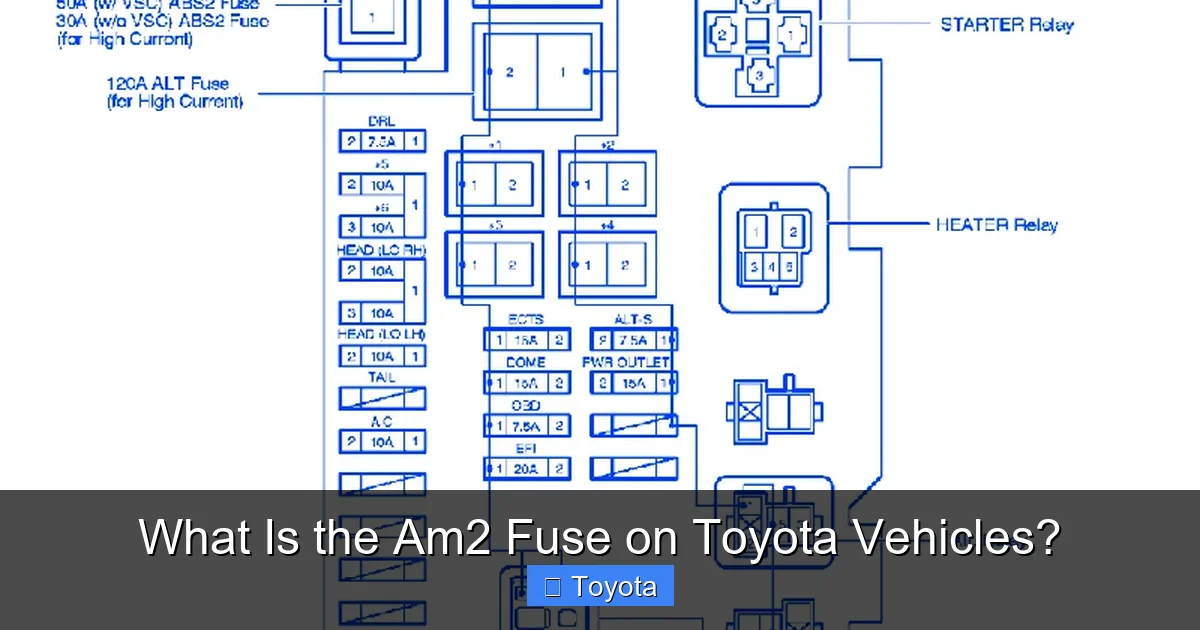
Visual guide about What Is the Am2 Fuse on Toyota Vehicles?
Image source: carfusebox.com
You might be wondering: “Why does one little fuse matter so much?” The answer lies in the complexity of modern Toyota vehicles. Today’s cars rely heavily on electronic systems to manage everything from fuel injection to emissions control. The AM2 fuse is directly linked to some of the most important of these systems.
For example, the engine control module (ECM)—often called the car’s “brain”—depends on a steady flow of power to monitor sensors, adjust fuel delivery, and manage ignition timing. If the ECM loses power or receives inconsistent voltage, your engine might not start, run roughly, or even shut down unexpectedly. The AM2 fuse ensures that the ECM and related components receive clean, protected power.
Similarly, the fuel pump—which delivers gasoline from the tank to the engine—relies on the AM2 circuit. Without it, the pump won’t activate, and your car simply won’t start. This is why a blown AM2 fuse is one of the first things mechanics check when diagnosing a no-start issue in a Toyota.
Beyond functionality, the AM2 fuse also plays a key role in safety. Electrical faults can cause overheating, sparks, or even fires if left unchecked. By blowing when current exceeds safe levels, the AM2 fuse acts as a sacrificial component, protecting more expensive and harder-to-replace parts. It’s a simple but effective way to prevent bigger problems.
Where Is the AM2 Fuse Located?
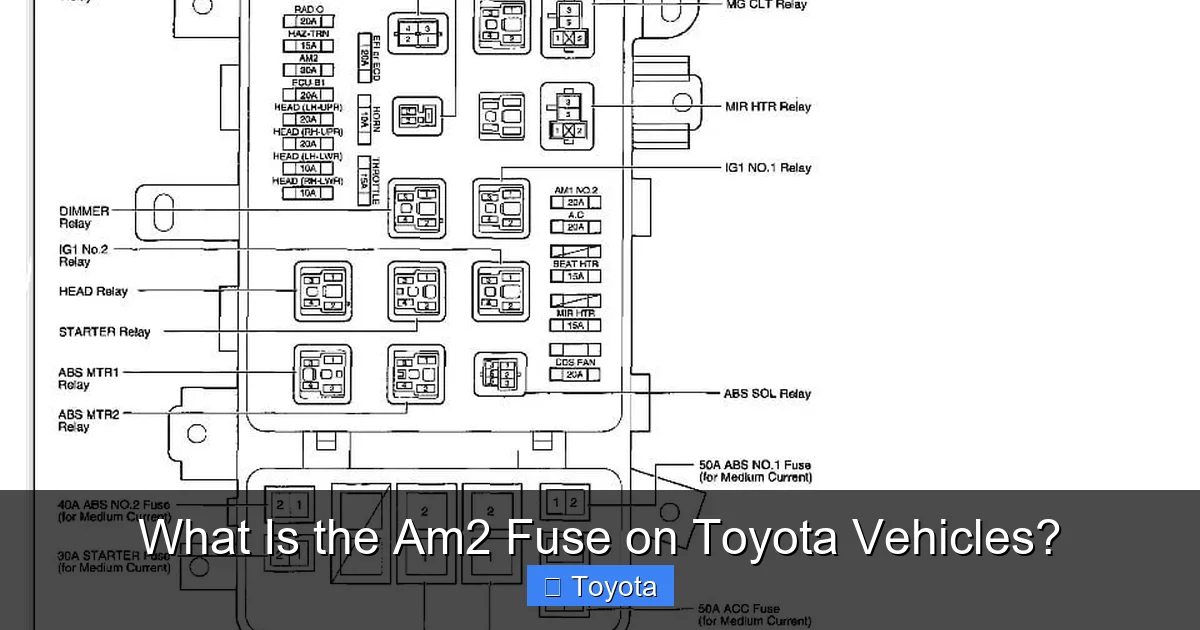
Visual guide about What Is the Am2 Fuse on Toyota Vehicles?
Image source: ww2.justanswer.com
Finding the AM2 fuse is usually straightforward, but it helps to know exactly where to look. In most Toyota models—including popular ones like the Camry, Corolla, RAV4, and Highlander—the AM2 fuse is located in the main under-hood fuse box. This box is typically mounted on the driver’s side of the engine compartment, near the battery.
To access it, open the hood and look for a black plastic cover labeled “FUSE BOX” or “ENGINE COMPARTMENT FUSE BOX.” Once you remove the cover, you’ll see a grid of fuses and relays. Each fuse is labeled with a number and sometimes a diagram on the inside of the cover. The AM2 fuse is usually clearly marked and positioned in the top or middle row.
For example, in a 2018 Toyota Camry, the AM2 fuse is the third fuse in the top row of the under-hood fuse box. It’s a small, orange-colored mini blade fuse (15 amps) and sits between the AM1 and AM3 fuses. In a 2020 RAV4, it’s similarly located but may be slightly offset depending on the engine layout.
If you’re unsure, consult your owner’s manual or look for a fuse diagram printed on the underside of the fuse box cover. These diagrams show the exact location, amperage, and function of each fuse. Some newer Toyotas even have digital fuse locators in the infotainment system, which can guide you step by step.
Pro tip: Always turn off the ignition and remove the key (or press the power button to shut down the system) before handling fuses. This prevents accidental short circuits or electrical shocks.
What Does the AM2 Fuse Protect?
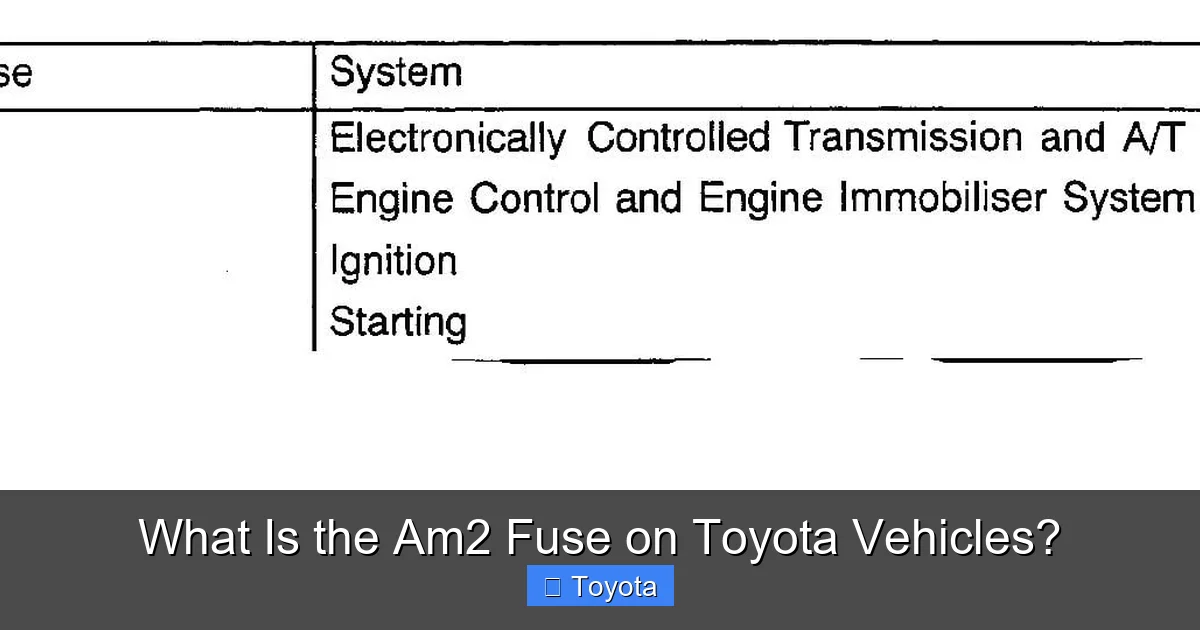
Visual guide about What Is the Am2 Fuse on Toyota Vehicles?
Image source: ww2.justanswer.com
Now that you know where to find it, let’s dive into what the AM2 fuse actually protects. This single fuse is responsible for powering several key systems that keep your Toyota running efficiently and safely.
Engine Control Module (ECM)
The ECM is the central computer that manages engine performance. It processes data from sensors like the mass airflow sensor, oxygen sensors, and throttle position sensor to adjust fuel injection, ignition timing, and emissions. The AM2 fuse supplies power to the ECM, ensuring it can operate continuously while the engine is running. If the fuse blows, the ECM may lose power, causing the engine to stall or fail to start.
Fuel Pump
The fuel pump is essential for delivering gasoline from the tank to the engine. In most Toyotas, the fuel pump receives power through the AM2 circuit. When you turn the key to the “ON” position, the pump primes for a few seconds—this is powered by the AM2 fuse. If the fuse is blown, the pump won’t activate, and the engine won’t get fuel, resulting in a no-start condition.
Ignition System
The ignition system includes components like the ignition coils and spark plugs. While not all ignition circuits are directly powered by the AM2 fuse, some Toyotas route ignition-related signals through this circuit. A failure here can lead to misfires, rough idling, or difficulty starting—especially in cold weather.
Emissions and Sensor Systems
Modern Toyotas are equipped with advanced emissions control systems, including the evaporative emissions (EVAP) system and exhaust gas recirculation (EGR) valves. These systems rely on electrical signals and solenoids that may be powered through the AM2 circuit. A blown fuse can trigger warning lights on the dashboard, such as the Check Engine light, even if the engine seems to run fine.
In short, the AM2 fuse is a linchpin in your Toyota’s electrical architecture. It doesn’t power everything, but it protects systems that are essential for starting, running, and maintaining your vehicle. Ignoring a blown AM2 fuse can lead to cascading failures, so it’s important to address the issue promptly.
Common Symptoms of a Blown AM2 Fuse
How do you know if the AM2 fuse has blown? While it’s not always obvious, there are several telltale signs that point to a problem with this critical component.
Engine Won’t Start
The most common symptom of a blown AM2 fuse is a complete failure to start. You’ll turn the key or press the start button, hear the starter crank, but the engine won’t fire. This happens because the fuel pump isn’t priming and the ECM isn’t receiving power. If your Toyota cranks but doesn’t start, the AM2 fuse should be one of the first things you check.
Engine Stalls While Driving
In some cases, a failing or intermittently blown AM2 fuse can cause the engine to stall while driving. This is especially dangerous on highways or busy roads. The engine may restart after a few minutes, but the problem will likely recur. This symptom suggests an electrical connection issue or a fuse that’s on the verge of failure.
No Fuel Pump Priming Sound
When you turn the key to the “ON” position (without starting the engine), you should hear a brief humming sound from the fuel tank—this is the fuel pump priming. If you don’t hear this sound, it could mean the AM2 fuse is blown and the pump isn’t receiving power.
Check Engine Light or Other Warning Lights
A blown AM2 fuse can trigger the Check Engine light, as the ECM detects a loss of power or communication failure. In some cases, you might also see the “Immobilizer” light or other electrical warnings. While these lights can indicate many issues, a blown AM2 fuse is a common culprit.
Intermittent Electrical Issues
If your Toyota experiences random electrical glitches—like the radio cutting out, dashboard lights flickering, or power windows not working—it could be related to a weak or damaged AM2 fuse. These symptoms often come and go, making them harder to diagnose, but they shouldn’t be ignored.
If you notice any of these signs, it’s worth checking the AM2 fuse as part of your troubleshooting process. It’s a quick and easy step that can save you a trip to the mechanic.
How to Check and Replace the AM2 Fuse
Replacing the AM2 fuse is a simple DIY task that most Toyota owners can handle with basic tools. Here’s a step-by-step guide to help you check and replace it safely.
Step 1: Locate the Fuse Box
Open the hood and find the under-hood fuse box on the driver’s side. Remove the cover by pressing the clips or unscrewing the fasteners, depending on your model.
Step 2: Identify the AM2 Fuse
Look for the fuse labeled “AM2” on the diagram inside the cover. It’s usually a small orange fuse (15 amps) in the top or middle row. If you’re unsure, refer to your owner’s manual.
Step 3: Inspect the Fuse
Use a fuse puller (often included in the fuse box) or a pair of needle-nose pliers to gently remove the AM2 fuse. Hold it up to the light and look for a broken metal strip inside—this indicates it’s blown. You can also use a multimeter to test for continuity.
Step 4: Replace with the Correct Fuse
Insert a new 15-amp mini blade fuse into the same slot. Make sure it’s seated firmly. Never use a higher-amp fuse (like 20A) as a replacement—this can cause damage or fire. Only use the exact same type and rating.
Step 5: Test the System
Close the fuse box cover, turn the ignition to “ON,” and listen for the fuel pump priming. Then try starting the engine. If it starts normally, the problem is solved. If not, there may be another issue.
Step 6: Monitor for Recurrence
If the new fuse blows immediately or soon after replacement, there’s likely an underlying electrical problem—such as a short circuit or faulty component. In this case, consult a professional mechanic.
Pro tip: Keep a few spare fuses in your glove box or under the hood. They’re inexpensive and can save you in an emergency.
Tips for Maintaining Your Toyota’s Electrical System
While the AM2 fuse is just one component, it’s part of a larger electrical system that requires regular care. Here are some tips to keep your Toyota’s electronics in top shape.
Inspect Fuses During Routine Maintenance
Make it a habit to check the AM2 fuse and other critical fuses during oil changes or tire rotations. A quick visual inspection can catch problems before they leave you stranded.
Keep the Fuse Box Clean and Dry
Dirt, moisture, and corrosion can damage fuses and connections. Periodically wipe down the fuse box with a dry cloth and ensure the cover seals properly.
Use a Multimeter for Accurate Testing
Instead of just looking at a fuse, use a multimeter to test for continuity. This gives you a more reliable diagnosis, especially with intermittent issues.
Avoid Overloading Electrical Accessories
Adding high-draw accessories like aftermarket stereos, lights, or chargers can strain the electrical system. Always use relays and proper wiring to avoid blowing fuses.
Address Warning Lights Promptly
If the Check Engine light or other warnings appear, don’t ignore them. Use an OBD2 scanner to read the codes and check related fuses like the AM2.
Consult the Owner’s Manual
Your Toyota’s manual has detailed diagrams and instructions for fuse locations and functions. It’s a valuable resource for DIY maintenance.
By taking these simple steps, you can extend the life of your vehicle’s electrical system and reduce the risk of unexpected failures.
Conclusion
The AM2 fuse may be small, but its role in your Toyota’s operation is anything but minor. From powering the engine control module to ensuring the fuel pump works correctly, this 15-amp fuse is a critical safeguard against electrical damage and system failure. Knowing where it’s located, what it protects, and how to check it can make a big difference in your driving experience.
Whether you’re dealing with a no-start condition or just performing routine maintenance, the AM2 fuse deserves your attention. It’s an easy and affordable component to inspect and replace, yet it can prevent costly repairs and inconvenient breakdowns. By understanding its function and staying proactive, you’ll keep your Toyota running smoothly for years to come.
So next time you pop the hood, take a moment to glance at that little orange fuse. It might just be the key to keeping your car on the road.
Frequently Asked Questions
What happens if the AM2 fuse blows?
If the AM2 fuse blows, your Toyota may not start because the fuel pump and engine control module lose power. You might also experience stalling or warning lights on the dashboard.
Can I drive with a blown AM2 fuse?
No, you should not drive with a blown AM2 fuse. It can cause the engine to stall unexpectedly, creating a safety hazard. Replace it as soon as possible.
What amp fuse should I use to replace the AM2?
Always use a 15-amp mini blade fuse to replace the AM2. Using a higher amp rating can damage electrical components or cause a fire.
Where is the AM2 fuse located in a Toyota Camry?
In most Toyota Camry models, the AM2 fuse is in the under-hood fuse box on the driver’s side, usually in the top row and labeled clearly on the cover diagram.
Why does my AM2 fuse keep blowing?
A repeatedly blown AM2 fuse indicates an underlying electrical issue, such as a short circuit, faulty fuel pump, or damaged wiring. Have a mechanic diagnose the problem.
Can I test the AM2 fuse without removing it?
Yes, you can use a multimeter to test the fuse in place by checking for continuity across the terminals. This avoids unnecessary handling and potential damage.
