How Much Is a Transmission for a 2011 Nissan Maxima?

Contents
- 1 Key Takeaways
- 2 📑 Table of Contents
- 3 Understanding the 2011 Nissan Maxima Transmission
- 4 How Much Does a Transmission Cost for a 2011 Nissan Maxima?
- 5 New vs. Remanufactured vs. Used: Which Option Is Right for You?
- 6 Labor and Installation: Why Professional Help Is Essential
- 7 Signs Your 2011 Maxima Needs a Transmission Replacement
- 8 Is It Worth Replacing the Transmission?
- 9 Tips to Extend the Life of Your Maxima’s Transmission
- 10 Conclusion
- 11 Frequently Asked Questions
Replacing the transmission in a 2011 Nissan Maxima can cost between $1,800 and $4,500, depending on whether you choose a new, remanufactured, used, or rebuilt unit. Labor, location, and warranty options also impact the final price, so it’s smart to compare quotes and consider long-term value over the lowest upfront cost.
If you’re the owner of a 2011 Nissan Maxima and your car is starting to slip gears, shudder during acceleration, or refuse to move when you shift into drive, you might be facing a transmission problem. The 2011 Maxima comes equipped with a continuously variable transmission (CVT), which, while designed for smooth performance and fuel efficiency, has been known to develop issues over time—especially as the vehicle ages and accumulates mileage. When that happens, one of the first questions that comes to mind is: How much is a transmission for a 2011 Nissan Maxima?
The short answer? It depends. Transmission replacement isn’t a one-size-fits-all expense. The total cost hinges on several factors, including the type of transmission you choose (new, remanufactured, rebuilt, or used), where you live, who does the work, and whether your car qualifies for any manufacturer support or extended warranty coverage. But don’t worry—we’re going to break it all down so you can make an informed decision without feeling overwhelmed.
In this guide, we’ll walk you through everything you need to know about transmission replacement for your 2011 Maxima. From understanding why CVTs can fail to comparing pricing options and knowing when it’s time to walk away from the car altogether, we’ve got you covered. Whether you’re planning to fix it yourself (spoiler: not recommended) or hire a professional, this article will help you navigate the process with confidence.
Key Takeaways
- Transmission replacement costs vary widely: Expect to pay $1,800 to $4,500 total, including parts and labor, for a 2011 Nissan Maxima.
- New vs. remanufactured vs. used: New transmissions are the most expensive but come with full warranties; remanufactured units offer a balance of cost and reliability; used transmissions are cheapest but carry higher risk.
- Labor costs matter: Installation typically takes 8–12 hours, with labor rates ranging from $80 to $150 per hour depending on your location and shop.
- DIY isn’t recommended: Transmission replacement is complex and requires specialized tools and expertise—professional installation is strongly advised.
- Check for recalls and TSBs: Nissan issued technical service bulletins related to CVT issues in early Maxima models, which may affect performance and longevity.
- Consider the car’s overall value: If your Maxima has high mileage or other major issues, investing in a costly transmission may not be financially wise.
- Warranty protection is key: Always choose a replacement with at least a 12-month/12,000-mile warranty to protect your investment.
📑 Table of Contents
- Understanding the 2011 Nissan Maxima Transmission
- How Much Does a Transmission Cost for a 2011 Nissan Maxima?
- New vs. Remanufactured vs. Used: Which Option Is Right for You?
- Labor and Installation: Why Professional Help Is Essential
- Signs Your 2011 Maxima Needs a Transmission Replacement
- Is It Worth Replacing the Transmission?
- Tips to Extend the Life of Your Maxima’s Transmission
- Conclusion
Understanding the 2011 Nissan Maxima Transmission
Before diving into costs, it’s important to understand what kind of transmission your 2011 Maxima actually has—and why it might be giving you trouble. The 2011 model year Maxima is powered by a 3.5-liter V6 engine paired with a continuously variable transmission, or CVT. Unlike traditional automatic transmissions that use fixed gear ratios, a CVT uses a belt and pulley system to provide an infinite range of gear ratios, allowing the engine to operate at its most efficient RPM for any given speed.
This design offers several benefits: smoother acceleration, improved fuel economy, and reduced engine noise. However, CVTs are also more complex and sensitive to wear, heat, and fluid contamination. Over time, the belt can slip, the pulleys can wear down, or the transmission control module (TCM) can malfunction—leading to symptoms like hesitation, jerking, whining noises, or even complete failure to move.
One of the most common issues reported by 2011 Maxima owners is premature CVT failure, often occurring between 80,000 and 120,000 miles. Some drivers have experienced problems as early as 60,000 miles. While not every Maxima will suffer a transmission failure, the risk is high enough that many owners consider their CVT a “ticking time bomb.” In fact, Nissan issued several technical service bulletins (TSBs) related to CVT performance in earlier Maxima models, acknowledging concerns about shuddering, delayed engagement, and overheating.
So why do these transmissions fail? Several factors contribute:
– **Heat buildup:** CVTs generate more heat than traditional automatics, and without proper cooling, internal components degrade faster.
– **Low or degraded fluid:** CVT fluid is specially formulated and must be changed regularly. Neglecting fluid changes accelerates wear.
– **Manufacturing defects:** Some early CVT units had design flaws that made them prone to belt slippage or pulley damage.
– **Driving habits:** Frequent towing, aggressive acceleration, or stop-and-go traffic can stress the transmission.
Understanding these factors helps explain why a transmission replacement might be necessary—and why it’s not just a simple fix.
How Much Does a Transmission Cost for a 2011 Nissan Maxima?
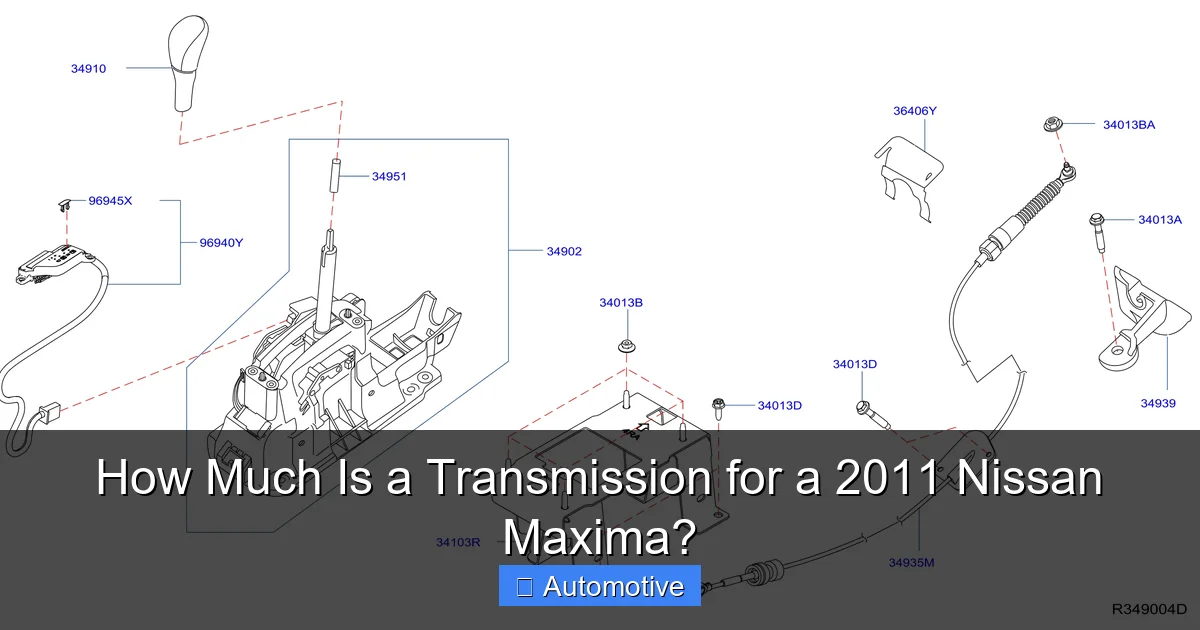
Visual guide about How Much Is a Transmission for a 2011 Nissan Maxima?
Image source: images.simplepart.com
Now, let’s get to the heart of the matter: how much will it actually cost to replace the transmission in your 2011 Maxima? The total expense includes both the price of the transmission itself and the labor required to install it. Here’s a detailed breakdown of what you can expect.
Transmission Part Costs
The cost of the transmission unit varies significantly based on its condition and origin. Here are the main options:
– **New OEM Transmission:** A brand-new, factory-direct transmission from Nissan will cost between $3,500 and $4,500. This is the most expensive option, but it comes with a full manufacturer warranty (typically 12 months or 12,000 miles, sometimes longer if purchased through a dealer). New units are built to exact specifications and offer the best reliability.
– **Remanufactured Transmission:** Remanufactured units are rebuilt to OEM standards using new or reconditioned parts. They typically cost between $2,200 and $3,200. These are a popular choice because they balance cost and quality. Most reputable rebuilders offer a 12- to 24-month warranty, and some even include free core returns.
– **Rebuilt Transmission:** A rebuilt transmission is one that has been taken apart, inspected, and repaired with new components as needed. Prices range from $1,800 to $2,800. The quality depends heavily on the rebuilder’s skill and standards. Be sure to choose a certified shop with good reviews.
– **Used (Junkyard) Transmission:** A used transmission from a salvage yard can cost as little as $800 to $1,500. While this is the cheapest option, it comes with significant risks. Used units may have unknown mileage, wear, or hidden damage. Most come with only a 30- to 90-day warranty, if any. This option is best for those on a tight budget who plan to sell the car soon.
Labor Costs
Labor is a major part of the total cost. Replacing a transmission is a complex job that typically takes 8 to 12 hours for a skilled mechanic. Labor rates vary by location and shop type:
– **Independent Mechanics:** $80 to $120 per hour
– **Dealerships:** $120 to $150 per hour
– **Specialty Transmission Shops:** $100 to $140 per hour
Using an average labor rate of $100 per hour and 10 hours of work, you’re looking at $1,000 in labor alone. Add that to the cost of the transmission, and your total can easily reach $2,800 to $5,500.
Here’s a quick example:
If you choose a remanufactured transmission at $2,500 and pay $1,000 in labor, your total cost is $3,500.
If you go with a used transmission at $1,200 and the same labor, your total drops to $2,200.
But if you opt for a new OEM unit at $4,000 plus labor, you’re looking at $5,000 or more.
Additional Costs to Consider
Don’t forget about extras that can add to the final bill:
– **Transmission Fluid:** A full fluid change is required during replacement. CVT fluid is expensive—expect to pay $150 to $250 for the correct type and quantity.
– **Gaskets and Seals:** These may need replacement and typically cost $50 to $100.
– **Torque Converter:** If it’s damaged, replacing it can add $200 to $400.
– **Diagnostic Fees:** Some shops charge $100 to $150 just to confirm the transmission is the problem.
– **Taxes and Shop Supplies:** Add 6% to 10% for taxes and miscellaneous fees.
All told, the complete cost to replace a transmission in a 2011 Nissan Maxima usually falls between $1,800 and $4,500. The lower end assumes a used transmission and lower labor rates; the higher end reflects a new OEM unit and dealership service.
New vs. Remanufactured vs. Used: Which Option Is Right for You?
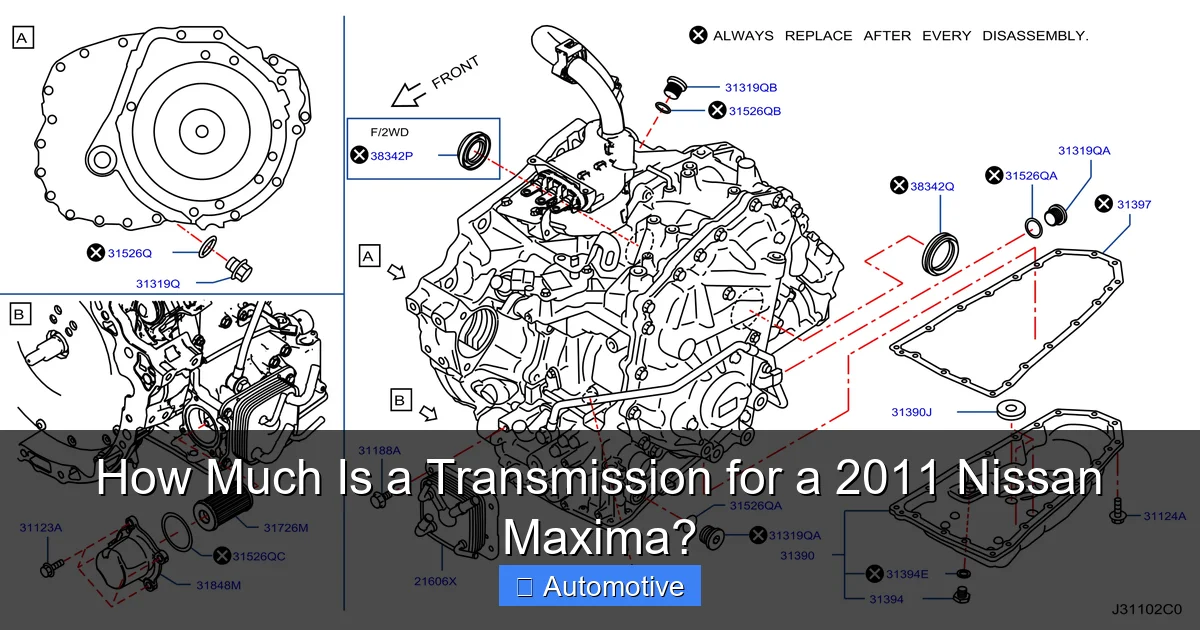
Visual guide about How Much Is a Transmission for a 2011 Nissan Maxima?
Image source: images.simplepart.com
Choosing the right type of transmission isn’t just about price—it’s about balancing cost, reliability, and how long you plan to keep the car. Let’s compare the pros and cons of each option.
New OEM Transmission
Pros:
– Highest reliability and performance
– Full manufacturer warranty
– Peace of mind knowing it’s brand new
Cons:
– Most expensive option
– May not be cost-effective for older, high-mileage vehicles
Best for: Owners who plan to keep their Maxima for many more years and want maximum reliability.
Remanufactured Transmission
Pros:
– High quality, often better than original due to upgraded components
– Strong warranty (12–24 months common)
– Significant savings over new
Cons:
– Slightly higher upfront cost than rebuilt or used
– Quality depends on the rebuilder
Best for: Most owners looking for a durable, long-term solution without breaking the bank.
Rebuilt Transmission
Pros:
– Lower cost than new or remanufactured
– Can be very reliable if done by a skilled technician
Cons:
– Warranty varies widely (some shops offer only 6 months)
– Quality depends heavily on the rebuilder’s expertise
Best for: Budget-conscious owners who trust their local transmission specialist.
Used (Junkyard) Transmission
Pros:
– Lowest upfront cost
– Quick availability from salvage yards
Cons:
– High risk of failure due to unknown history
– Short or no warranty
– May need additional repairs soon after installation
Best for: Owners planning to sell or trade in the car within a year or two.
Real-World Example
Let’s say you have a 2011 Maxima with 130,000 miles. You love the car, but the transmission is slipping. You plan to keep it for at least 3 more years. In this case, a remanufactured transmission with a 24-month warranty makes the most sense. It’s reliable, affordable, and gives you peace of mind. But if your car has 180,000 miles and needs new brakes, suspension work, and a timing belt, spending $4,000 on a new transmission might not be wise. You’re better off investing in a newer vehicle.
Labor and Installation: Why Professional Help Is Essential
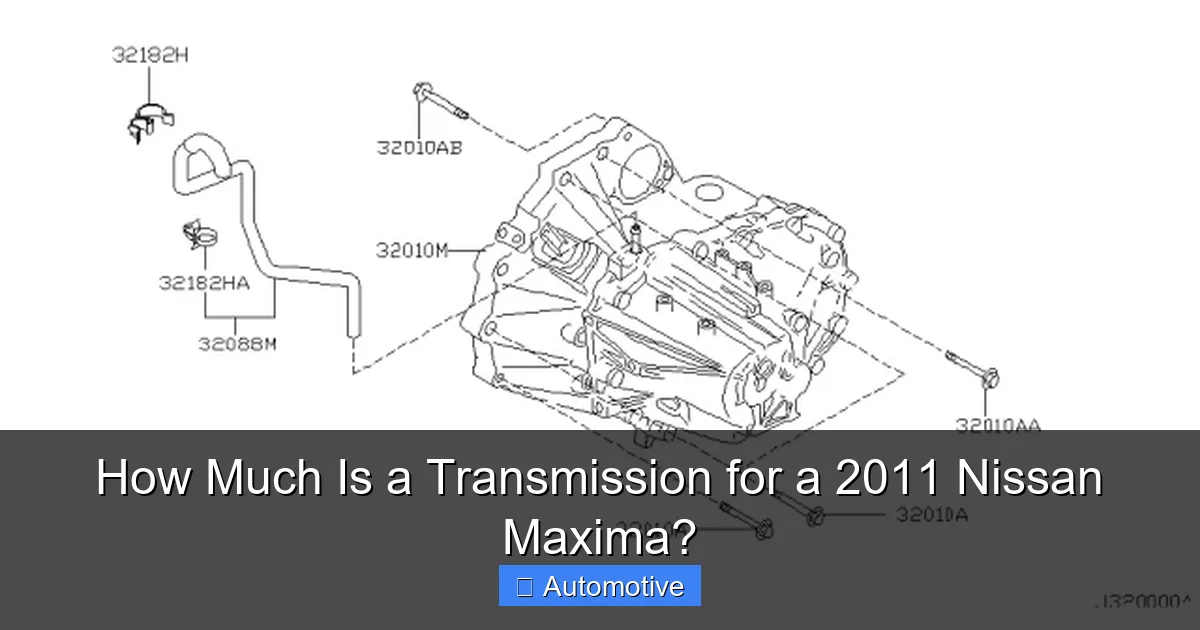
Visual guide about How Much Is a Transmission for a 2011 Nissan Maxima?
Image source: nissanpartsdeal.com
You might be tempted to save money by tackling the transmission replacement yourself. After all, there are plenty of YouTube tutorials and DIY forums that make it look straightforward. But here’s the truth: replacing a transmission is one of the most challenging jobs you can do on a car—especially on a front-wheel-drive sedan like the Maxima.
Why DIY Isn’t Recommended
– **Heavy and awkward:** The transmission weighs over 100 pounds and must be carefully aligned with the engine.
– **Specialized tools required:** You’ll need a transmission jack, torque wrench, and possibly a scan tool to reset the TCM.
– **Complex electrical connections:** Modern CVTs have multiple sensors and wiring harnesses that must be disconnected and reconnected correctly.
– **Fluid handling:** CVT fluid is hygroscopic (absorbs moisture) and must be handled carefully to avoid contamination.
– **Risk of damage:** One mistake—like over-tightening a bolt or misaligning the input shaft—can ruin the new transmission or engine.
Even experienced mechanics can spend a full day on this job. If you’re not certified and equipped, the risk of costly errors is high.
Choosing the Right Shop
When hiring a professional, don’t just go with the first name you find. Here’s how to choose wisely:
– **Look for ASE-certified technicians:** This ensures they have proven expertise.
– **Check reviews on Google, Yelp, and the BBB:** Look for consistent praise about honesty and quality.
– **Ask about warranties:** A good shop will offer at least a 12-month/12,000-mile warranty on parts and labor.
– **Get multiple quotes:** Compare prices from at least three shops—dealership, independent mechanic, and transmission specialist.
– **Ask about the transmission source:** Make sure they’re using a reputable remanufacturer or supplier.
A reputable shop might charge more upfront, but they’ll save you money in the long run by doing the job right the first time.
Signs Your 2011 Maxima Needs a Transmission Replacement
Not every transmission issue requires a full replacement. Sometimes, a simple fluid change or software update can fix the problem. But how do you know when it’s time for a major repair?
Common Symptoms of Transmission Failure
– **Slipping gears:** The engine revs but the car doesn’t accelerate.
– **Delayed engagement:** Hesitation when shifting from park to drive or reverse.
– **Shuddering or jerking:** Especially during acceleration or at highway speeds.
– **Whining or grinding noises:** Coming from under the car, particularly when shifting.
– **Check Engine Light:** Often accompanied by transmission-related trouble codes (e.g., P0700, P0720).
– **Burning smell:** Indicates overheating or burnt fluid.
– **Leaking fluid:** Red or brown fluid under the car near the front.
If you notice any of these signs, have your car inspected immediately. Continuing to drive with a failing transmission can cause further damage and increase repair costs.
Diagnostic Steps
A professional diagnosis usually includes:
1. **Scan for trouble codes:** Using an OBD2 scanner to check for transmission-related errors.
2. **Fluid inspection:** Checking the color, smell, and level of the CVT fluid.
3. **Test drive:** Evaluating shift quality, noise, and performance.
4. **Pressure testing:** Measuring hydraulic pressure to assess internal wear.
In many cases, a simple fluid and filter change can resolve minor issues. But if internal components are worn, replacement is the only solution.
Is It Worth Replacing the Transmission?
This is the million-dollar question—literally. Before spending thousands on a transmission, ask yourself: is my 2011 Maxima worth it?
Factors to Consider
– **Current market value:** A 2011 Maxima in good condition is worth $4,000 to $7,000, depending on mileage and location. If a transmission replacement costs $3,500, you’re investing half the car’s value into one repair.
– **Other needed repairs:** If your car needs new tires, brakes, or suspension work, the total cost could exceed its value.
– **Mileage:** High-mileage cars (over 150,000 miles) are more likely to have additional failures.
– **Emotional attachment:** Some owners love their Maxima and are willing to invest in keeping it running.
When to Repair
– The car is in good overall condition.
– You plan to keep it for 3+ years.
– You found a good deal on a remanufactured transmission.
– You’ve maintained the car well and believe it has more life left.
When to Walk Away
– The car has multiple major issues.
– You’re upside down on a loan.
– You can afford a newer, more reliable vehicle.
– The repair cost exceeds 50% of the car’s value.
Sometimes, the smartest financial move is to sell the car for parts or trade it in and upgrade to a newer model with a better transmission record.
Tips to Extend the Life of Your Maxima’s Transmission
If your transmission is still working, take steps to prevent future failure:
– **Change the CVT fluid every 30,000 to 60,000 miles.** Use only Nissan NS-2 or NS-3 fluid.
– **Avoid towing or hauling heavy loads.** The Maxima isn’t designed for it.
– **Let the car warm up in cold weather.** Cold fluid is thicker and less effective.
– **Don’t “rock” the car out of snow or mud.** This stresses the transmission.
– **Use the parking brake.** It reduces stress on the transmission parking pawl.
– **Get regular inspections.** Catch problems early.
Prevention is always cheaper than replacement.
Conclusion
So, how much is a transmission for a 2011 Nissan Maxima? The answer ranges from $1,800 to $4,500, depending on your choices and circumstances. While the cost is significant, understanding your options—new, remanufactured, rebuilt, or used—can help you make a smart decision that fits your budget and long-term goals.
Remember, the 2011 Maxima’s CVT has a reputation for early failure, so if you’re experiencing symptoms, don’t wait. Get it diagnosed and weigh the repair cost against the car’s value. In many cases, a remanufactured transmission from a trusted supplier offers the best balance of cost, reliability, and warranty protection.
And while it’s tempting to go the DIY route or choose the cheapest used unit, investing in professional installation and a quality part will save you headaches—and money—down the road.
Ultimately, whether you repair or replace your Maxima comes down to more than just dollars and cents. It’s about reliability, safety, and how much you value your ride. With the right information and a clear plan, you can make the best choice for your situation.
Frequently Asked Questions
How much does it cost to replace a transmission in a 2011 Nissan Maxima?
The total cost typically ranges from $1,800 to $4,500, including parts and labor. The final price depends on the type of transmission (new, remanufactured, rebuilt, or used) and the labor rates in your area.
Is it worth replacing the transmission in a 2011 Maxima?
It depends on the car’s overall condition, mileage, and your plans. If the vehicle is in good shape and you plan to keep it for several more years, a remanufactured transmission can be a worthwhile investment.
Can I drive my Maxima with a bad transmission?
It’s not recommended. Driving with a failing transmission can cause further damage, leave you stranded, or create safety hazards. Have it inspected as soon as possible.
How long does a 2011 Maxima transmission last?
With proper maintenance, a CVT can last 100,000 to 150,000 miles. However, many owners report issues between 80,000 and 120,000 miles, especially if fluid changes were neglected.
Does Nissan cover transmission repairs for the 2011 Maxima?
Nissan’s original warranty has expired, but some extended service plans or lemon law claims may apply if the failure occurred early and repeatedly. Check with a Nissan dealer or consumer protection agency.
Can I install a transmission myself?
Transmission replacement is extremely complex and not recommended for DIYers. It requires specialized tools, mechanical expertise, and proper alignment to avoid damage.