
What Year Toyota Sequoia Should You Avoid?

Not all Toyota Sequoia models are created equal—some years come with serious reliability concerns. While the Sequoia is known for its rugged capability and longevity, certain model years have recurring mechanical and electrical problems that can lead to costly repairs. This guide breaks down exactly which years to avoid and why, helping you make a smarter, safer purchase.
Key Takeaways
- Avoid the 2005–2007 Toyota Sequoia models: These years are plagued by excessive oil consumption, premature engine wear, and frequent timing belt failures.
- 2008–2011 models improved but still risky: While engine issues lessened, some still suffer from transmission problems and suspension wear.
- 2012–2017 models are more reliable: Toyota addressed many earlier flaws, making these years a safer bet for long-term ownership.
- Check for frame rust on older models: Especially in regions with snow and road salt, corrosion can compromise structural integrity.
- Always get a pre-purchase inspection: Even in good model years, a thorough inspection can uncover hidden issues.
- Higher mileage isn’t always a dealbreaker: Well-maintained Sequoias can last 250,000+ miles, but maintenance history is key.
- Consider certified pre-owned (CPO) options: These often come with extended warranties and rigorous inspections.
📑 Table of Contents
- Introduction: The Toyota Sequoia’s Reputation and Reality
- Why Model Year Matters When Buying a Used Sequoia
- The Most Problematic Years: 2005–2007 Toyota Sequoia
- 2008–2011: Slight Improvements, Lingering Problems
- 2012–2017: The Sweet Spot for Reliability
- 2018–2023: The Third Generation and Beyond
- How to Spot a Well-Maintained Sequoia
- Conclusion: Making the Right Choice
Introduction: The Toyota Sequoia’s Reputation and Reality
The Toyota Sequoia has long been a favorite among families and outdoor enthusiasts who need a full-size SUV with serious towing power, off-road capability, and Toyota’s legendary reliability. With its V8 engine, spacious interior, and rugged body-on-frame construction, the Sequoia promises to go the distance—literally. But like any vehicle, not every model year lives up to the hype.
While Toyota has a strong track record for building durable vehicles, the Sequoia’s history isn’t without its bumps. Certain years have developed reputations for recurring mechanical issues, from oil-guzzling engines to transmission troubles. If you’re shopping for a used Sequoia, knowing which years to avoid can save you thousands in repairs and countless headaches down the road.
This guide dives deep into the Toyota Sequoia’s model history, highlighting the specific years that have proven problematic and explaining why. Whether you’re a first-time buyer or upgrading from an older SUV, understanding these pitfalls will help you make a confident, informed decision. We’ll cover everything from engine performance and transmission reliability to common maintenance concerns and how to spot a well-cared-for vehicle.
Why Model Year Matters When Buying a Used Sequoia
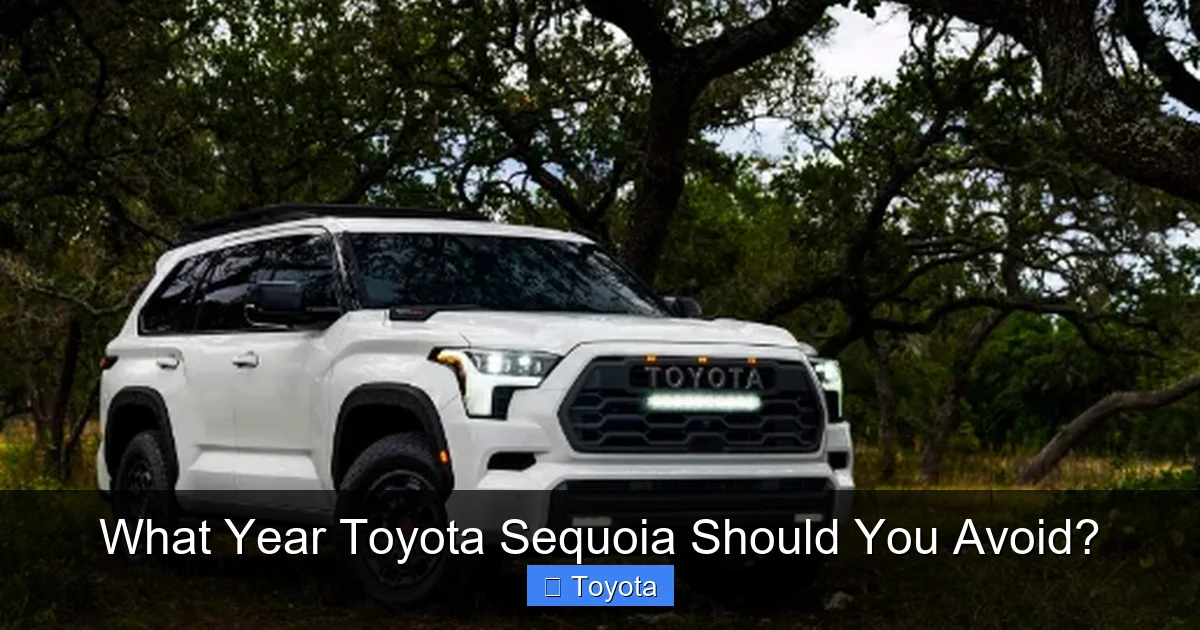
Visual guide about What Year Toyota Sequoia Should You Avoid?
Image source: dashlights.net
When it comes to used vehicles, the model year isn’t just a number—it’s a window into the vehicle’s engineering, design updates, and common failure points. Toyota made significant changes to the Sequoia over its three generations, and some of those changes were fixes for earlier problems. That means a 2005 Sequoia and a 2015 Sequoia, while similar in appearance, can be worlds apart in terms of reliability.
For example, early Sequoias (2001–2004) used a 4.7L V8 engine that, while powerful, was known for high oil consumption and timing belt issues. Then came the 2005 redesign, which introduced a new 4.7L engine with variable valve timing (VVT-i)—a step forward in efficiency and performance. But this update also brought new problems, especially in the 2005–2007 models, where excessive oil burning became a widespread complaint.
Later model years saw improvements in engine management, transmission tuning, and suspension design. By 2012, Toyota had refined the Sequoia into a much more reliable machine. But even then, certain components—like the rear differential or brake system—could still show wear if not properly maintained.
So why does this matter? Because buying the wrong year could mean inheriting a known defect that Toyota never fully resolved. And while some issues are minor, others—like engine failure or transmission slippage—can cost thousands to fix. That’s why it’s crucial to research not just the vehicle’s mileage and condition, but also its model year and generation.
The Most Problematic Years: 2005–2007 Toyota Sequoia
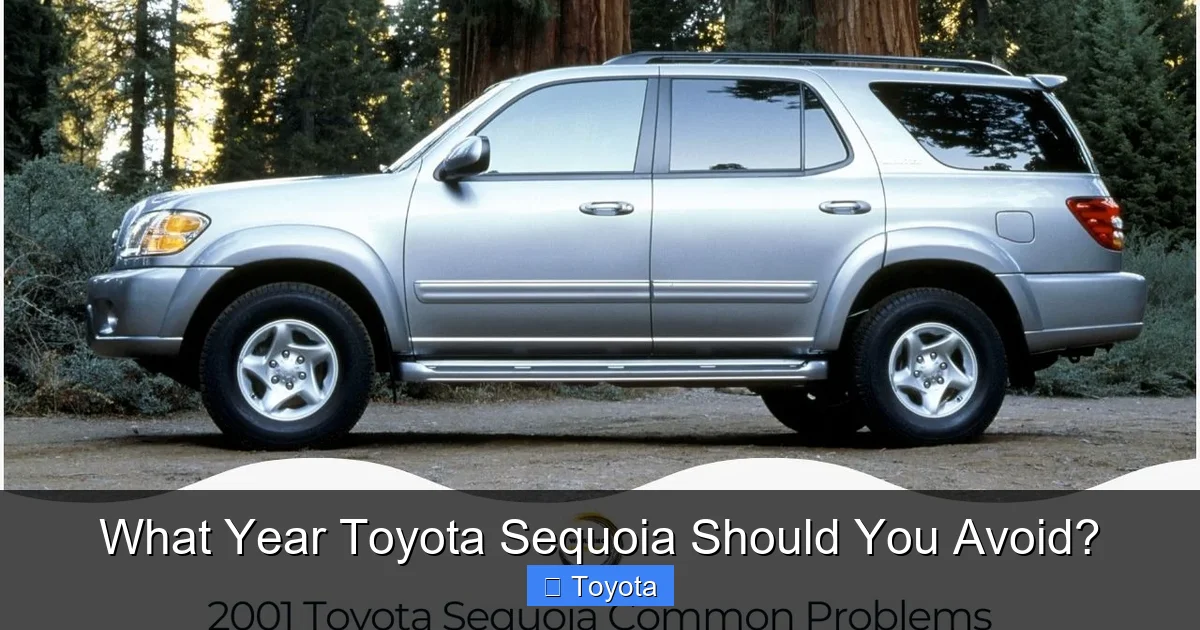
Visual guide about What Year Toyota Sequoia Should You Avoid?
Image source: warninglights.net
If there’s one range of years you should approach with extreme caution, it’s the 2005–2007 Toyota Sequoia. These models are often cited by mechanics, owners, and consumer reports as the most problematic in the Sequoia’s lineup. While they introduced modern features like stability control, improved safety ratings, and a more refined interior, they also came with a host of mechanical flaws that have plagued owners for over a decade.
Excessive Oil Consumption
One of the biggest issues with the 2005–2007 Sequoia is excessive oil consumption. Many owners report burning through a quart of oil every 1,000 to 1,500 miles—far beyond what’s considered normal. This isn’t just an inconvenience; it can lead to low oil levels, increased engine wear, and even catastrophic engine failure if not monitored closely.
Toyota acknowledged the problem and extended the powertrain warranty to 7 years or 100,000 miles for affected vehicles, but only if the owner could prove they had been regularly checking and topping off oil. However, many owners missed the fine print or didn’t realize the severity of the issue until it was too late. The root cause is believed to be worn piston rings or valve seals, which allow oil to seep into the combustion chamber and burn off.
Timing Belt and Water Pump Failures
Another major concern with these models is the timing belt system. The 4.7L V8 engine uses a timing belt (not a chain), which must be replaced every 90,000 to 100,000 miles. If it fails, the engine can suffer severe internal damage—especially since it’s an interference engine, meaning the pistons and valves can collide.
What makes this worse is that the water pump is driven by the timing belt. So when you replace the belt, you should also replace the water pump—otherwise, you risk overheating and engine damage down the line. Many owners skip this step to save money, only to face costly repairs later.
Suspension and Steering Wear
The 2005–2007 Sequoia also suffers from premature wear in the suspension and steering components. Common issues include worn ball joints, control arm bushings, and steering rack problems. These can lead to poor handling, uneven tire wear, and even safety concerns at high speeds.
In cold climates, these components can deteriorate faster due to road salt and moisture. Owners have reported clunking noises, loose steering, and a general “looseness” in the ride quality—signs that the suspension is nearing the end of its life.
Electrical and Sensor Issues
Electrical gremlins are another hallmark of these model years. Problems with the ABS system, airbag sensors, and dashboard warning lights are common. Some owners report false warnings or malfunctions that require dealership diagnostics to resolve.
While not always dangerous, these issues can be frustrating and expensive to fix. And because they often stem from aging wiring or faulty control modules, they may recur even after repairs.
2008–2011: Slight Improvements, Lingering Problems
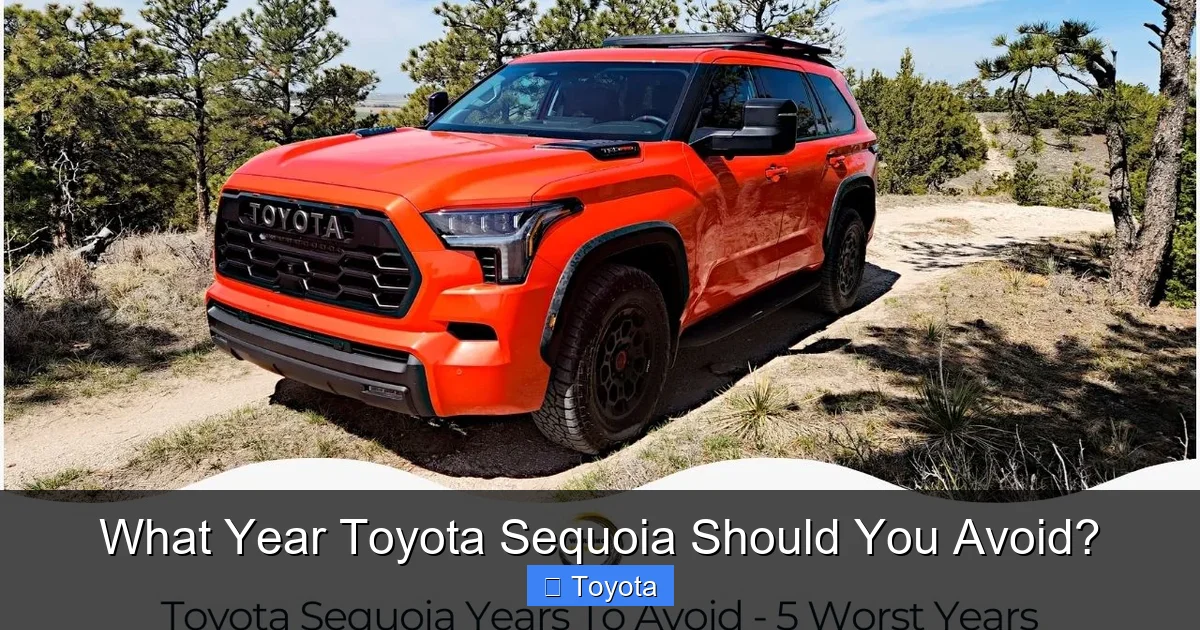
Visual guide about What Year Toyota Sequoia Should You Avoid?
Image source: warninglights.net
The 2008 model year brought a mid-cycle refresh for the Sequoia, including updated styling, a revised interior, and some mechanical tweaks. Toyota also made changes to the engine management system to address oil consumption. As a result, the 2008–2011 models are generally more reliable than their 2005–2007 predecessors—but they’re not without their own set of issues.
Transmission Concerns
One of the most common complaints about the 2008–2011 Sequoia is transmission performance. The 5-speed automatic transmission used in these models can exhibit rough shifting, hesitation, or slipping—especially when towing or driving in hot weather.
Some owners report that the transmission fluid overheats, leading to premature wear. Others note that the torque converter or valve body may fail, requiring a rebuild or replacement. While not as widespread as the oil consumption issue, transmission problems can still result in $2,000–$4,000 repair bills.
Continued Suspension Wear
Suspension components remain a weak point in these years. While Toyota made minor improvements to the front suspension geometry, the rear suspension—particularly the leaf springs and shock absorbers—still wears out quickly, especially in vehicles used for towing or off-roading.
Owners who frequently haul trailers or drive on rough terrain should inspect the rear suspension carefully. Signs of wear include sagging rear end, poor ride quality, and excessive bouncing over bumps.
Frame Rust and Corrosion
Frame rust is a growing concern for older Sequoias, especially those from the 2008–2011 era. While Toyota uses galvanized steel and undercoating, prolonged exposure to moisture, salt, and road debris can lead to corrosion—particularly around the rear wheel wells, rocker panels, and frame rails.
This isn’t just a cosmetic issue. Severe rust can compromise the structural integrity of the vehicle, making it unsafe in the event of a collision. If you’re buying a Sequoia from a snowy or coastal region, always inspect the frame thoroughly or have a mechanic do a rust check.
2012–2017: The Sweet Spot for Reliability
If you’re looking for the most reliable Toyota Sequoia, the 2012–2017 models are your best bet. These years represent the second generation of the Sequoia and include several key improvements that address many of the earlier flaws.
Engine Refinements
Toyota made significant updates to the 4.7L V8 engine in 2012, including better piston ring design and improved oil control. As a result, oil consumption issues dropped dramatically. While some owners still report minor oil use, it’s nowhere near the level seen in the 2005–2007 models.
Additionally, the engine received updated engine control software, which improved fuel economy and throttle response. The result is a smoother, more efficient powerplant that’s better suited for daily driving and long-distance travel.
Enhanced Transmission and Drivetrain
The 2012 refresh also brought a revised 5-speed automatic transmission with better shift logic and cooling. While not perfect, it’s far more reliable than earlier versions. Toyota also improved the transfer case and differential components, reducing the risk of failure under heavy load.
For those who tow frequently, the 2012–2017 Sequoia includes an integrated trailer brake controller and enhanced cooling systems, making it one of the most capable SUVs in its class.
Safety and Technology Upgrades
These models also received updated safety features, including standard stability control, side curtain airbags, and available blind-spot monitoring. The infotainment system was upgraded with a larger touchscreen, Bluetooth connectivity, and available navigation.
While not as advanced as modern SUVs, these features were competitive for their time and add to the overall value of a used Sequoia.
Common Maintenance Items
Even in the more reliable 2012–2017 models, certain components will wear out over time. Common maintenance items include:
– Brake pads and rotors (especially if towing)
– Suspension bushings and shocks
– Coolant system hoses and radiator
– Spark plugs (should be replaced every 100,000 miles)
Regular maintenance is key to keeping these vehicles running smoothly. A well-documented service history is a strong indicator of a well-cared-for Sequoia.
2018–2023: The Third Generation and Beyond
In 2018, Toyota introduced the third-generation Sequoia, built on the same platform as the Tundra pickup. This new model brought a host of improvements, including a more powerful 5.7L V8 engine, an 8-speed automatic transmission, and a modernized interior with advanced safety tech.
Improved Performance and Efficiency
The 5.7L V8 produces 381 horsepower and 401 lb-ft of torque—significantly more than the older 4.7L engine. Paired with the new 8-speed transmission, the Sequoia now offers smoother acceleration, better fuel economy, and improved towing capacity (up to 9,000 pounds).
The engine also features dual VVT-i and electronic throttle control, which enhance responsiveness and efficiency.
Advanced Safety Features
The 2018+ Sequoia comes standard with Toyota Safety Sense P (TSS-P), which includes:
– Pre-collision system with pedestrian detection
– Lane departure alert
– Automatic high beams
– Dynamic radar cruise control
These features were optional or unavailable on earlier models, making the newer Sequoia a much safer choice—especially for families.
Interior and Technology Upgrades
The third-generation Sequoia features a more refined cabin with higher-quality materials, improved sound insulation, and a user-friendly infotainment system. Available features include:
– 8-inch touchscreen with Apple CarPlay and Android Auto
– JBL premium audio system
– Heated and ventilated front seats
– Power-folding third-row seats
While the third row is still tight for adults, it’s more usable than in previous models.
Reliability and Common Issues
So far, the 2018–2023 Sequoia has proven to be highly reliable. There are no widespread mechanical issues reported, and owner satisfaction is high. However, some minor complaints include:
– Infotainment system glitches (rare)
– Rearview camera lag
– Third-row seat mechanism wear
These are relatively minor compared to the major engine and transmission issues of earlier years.
How to Spot a Well-Maintained Sequoia
Regardless of the model year, a well-maintained Toyota Sequoia can last well over 250,000 miles. But how do you know if a used Sequoia has been cared for? Here are some tips:
Check the Maintenance Records
Ask for a complete service history. Look for regular oil changes (every 5,000–7,500 miles), timing belt replacements (if applicable), and transmission fluid changes. A vehicle with consistent maintenance is far more likely to be reliable.
Inspect for Rust and Corrosion
Walk around the vehicle and look for signs of rust, especially on the frame, wheel wells, and undercarriage. Use a flashlight to check hard-to-see areas. Surface rust can be treated, but structural rust is a red flag.
Test Drive Thoroughly
Take the Sequoia for a test drive on various road types. Listen for unusual noises, feel for vibrations, and test the transmission under load. Pay attention to how the brakes feel and whether the steering is responsive.
Get a Pre-Purchase Inspection
Always have a trusted mechanic inspect the vehicle before buying. They can identify hidden issues like worn suspension components, engine leaks, or transmission problems that aren’t obvious during a test drive.
Check for Recalls and Service Campaigns
Visit the National Highway Traffic Safety Administration (NHTSA) website and enter the VIN to check for open recalls. Some older Sequoias may still be eligible for free repairs under extended warranty programs.
Conclusion: Making the Right Choice
The Toyota Sequoia is a capable, durable SUV that can serve your family for decades—if you choose the right model year. While the 2005–2007 models should be avoided due to excessive oil consumption, timing belt failures, and suspension wear, the 2012–2017 models offer a much better balance of reliability, performance, and value.
Newer models (2018–2023) are even more refined, with improved engines, transmissions, and safety features. However, they come at a higher price, which may not fit every budget.
Ultimately, the best Sequoia for you depends on your needs, budget, and willingness to perform regular maintenance. By avoiding the problematic years and focusing on well-maintained examples, you can enjoy all the benefits of this rugged SUV without the headaches.
Remember: a little research goes a long way. Take your time, inspect thoroughly, and don’t rush into a purchase. With the right Sequoia, you’ll have a trusted companion for years to come.
Frequently Asked Questions
What year Toyota Sequoia has the most problems?
The 2005–2007 Toyota Sequoia models are widely considered the most problematic due to excessive oil consumption, timing belt failures, and suspension wear. These issues can lead to expensive repairs if not addressed early.
Is the 2008 Toyota Sequoia reliable?
The 2008 Sequoia is more reliable than the 2005–2007 models, but it still has some transmission and suspension concerns. It’s a better choice than earlier years, but a pre-purchase inspection is strongly recommended.
How many miles can a Toyota Sequoia last?
With proper maintenance, a Toyota Sequoia can easily last 250,000 miles or more. Some owners report reaching 300,000+ miles, especially in the 2012–2017 model years.
Should I avoid a used Toyota Sequoia?
Not necessarily. Avoid the 2005–2007 models, but the 2012–2017 and newer Sequoias are solid choices. Focus on well-maintained vehicles with good service records.
What causes oil consumption in a Toyota Sequoia?
In the 2005–2007 models, oil consumption is often caused by worn piston rings or valve seals, allowing oil to burn in the combustion chamber. Regular oil top-offs are essential to prevent engine damage.
Can I tow with a used Toyota Sequoia?
Yes, the Sequoia is one of the best towing SUVs in its class. The 2012–2017 models can tow up to 7,400 pounds, while the 2018+ models can handle up to 9,000 pounds when properly equipped.
