
How Much Is a 2009 Toyota Highlander Worth

The 2009 Toyota Highlander is a reliable, family-friendly SUV with strong resale value. Depending on trim, mileage, condition, and location, it typically sells for $6,000 to $12,000 in today’s market. With proper maintenance, it remains a smart used car choice.
Key Takeaways
- Understanding How Much Is a 2009 Toyota Highlander Worth: Provides essential knowledge
📑 Table of Contents
- How Much Is a 2009 Toyota Highlander Worth?
- Factors That Influence the 2009 Toyota Highlander’s Value
- 2009 Toyota Highlander Trim Comparison and Pricing
- How to Determine the Fair Market Value
- Tips for Buying a 2009 Toyota Highlander
- Selling Your 2009 Toyota Highlander: How to Get Top Dollar
- Conclusion
How Much Is a 2009 Toyota Highlander Worth?
If you’re in the market for a reliable, spacious, and durable SUV from the late 2000s, the 2009 Toyota Highlander deserves serious consideration. Known for its strong build quality, smooth ride, and family-friendly design, this midsize SUV has stood the test of time. But how much should you expect to pay for one today? The answer isn’t one-size-fits-all—it depends on several key factors, including trim level, mileage, condition, location, and whether it’s a standard gasoline model or a hybrid.
The 2009 Toyota Highlander was part of the second generation, which ran from 2008 to 2013. This generation brought a more refined interior, improved safety features, and better fuel economy compared to its predecessor. It was available in both front-wheel drive (FWD) and all-wheel drive (AWD), with three main trim levels: LE, Sport, and Limited. There was also a hybrid version, which offered better fuel efficiency and a quieter ride—ideal for city driving and long commutes.
So, what’s the real-world value of a 2009 Highlander in 2024? On average, you can expect to pay between $6,000 and $12,000. That’s a broad range, but it reflects the wide variation in condition and features. A base-model LE with high mileage and minimal maintenance might go for as little as $5,500, while a well-kept Limited AWD with under 100,000 miles could fetch $11,500 or more. The hybrid models tend to sit at the higher end of the spectrum, often priced $1,000 to $2,000 above comparable gasoline versions.
In this guide, we’ll break down everything you need to know about pricing a 2009 Toyota Highlander. We’ll explore how trim levels affect value, the impact of mileage and condition, regional price differences, and tips for buying or selling. Whether you’re a buyer looking for a dependable family hauler or a seller aiming to get top dollar, this article will help you make an informed decision.
Factors That Influence the 2009 Toyota Highlander’s Value

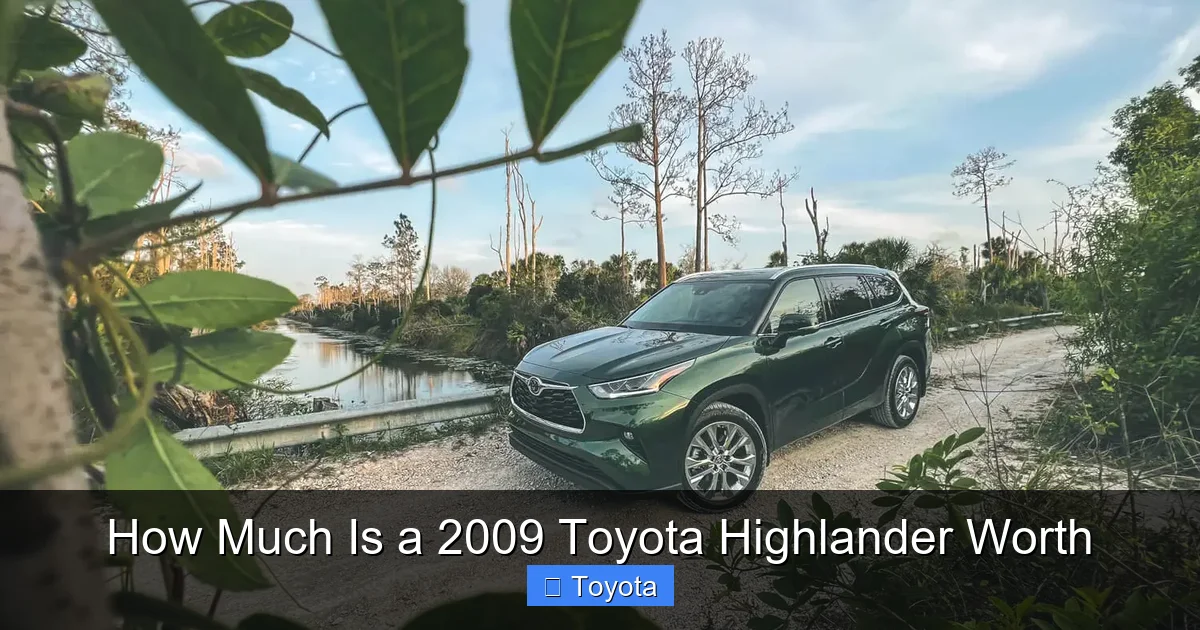
Visual guide about How Much Is a 2009 Toyota Highlander Worth
Image source: motorbiscuit.com
Several key factors determine how much a 2009 Toyota Highlander is worth. Understanding these will help you assess whether a listing is fairly priced or overpriced. Let’s dive into the most important variables.
Trim Level and Features
The 2009 Highlander came in three main trims: LE, Sport, and Limited. Each offered a different level of comfort, technology, and performance.
The base LE trim is the most affordable. It includes essentials like air conditioning, power windows and locks, and a six-speaker audio system. It’s powered by a 3.5-liter V6 engine producing 270 horsepower, paired with a five-speed automatic transmission. Most LE models are front-wheel drive, though AWD was available as an option.
The Sport trim adds sport-tuned suspension, larger wheels (19-inch vs. 17-inch on the LE), and a more aggressive exterior design. Inside, you get upgraded cloth seats, a leather-wrapped steering wheel, and optional navigation. The Sport trim appeals to drivers who want a more dynamic driving experience without stepping up to luxury features.
The Limited trim is the top-of-the-line model. It includes leather upholstery, heated front seats, a power moonroof, dual-zone automatic climate control, and a premium JBL audio system. The Limited also comes standard with AWD and offers optional third-row seating, making it ideal for larger families. Due to its premium features, the Limited typically commands the highest resale value.
The hybrid version, available in base and Limited trims, uses a 3.3-liter V6 engine combined with electric motors for a total output of 270 horsepower. It achieves around 27 mpg in the city and 25 mpg on the highway—significantly better than the gasoline model’s 18/24 mpg. The hybrid’s improved fuel economy and lower emissions make it more desirable in eco-conscious markets, which helps it retain value better over time.
Mileage and Vehicle Condition
Mileage is one of the biggest factors affecting a used car’s value. The average driver puts about 12,000 to 15,000 miles per year on a vehicle. So, a 2009 Highlander with 120,000 to 150,000 miles is considered average for its age.
Here’s a general rule of thumb:
– Under 100,000 miles: Higher value, often $9,000–$12,000.
– 100,000–150,000 miles: Mid-range value, $7,000–$9,500.
– Over 150,000 miles: Lower value, $5,500–$7,500.
But mileage isn’t the whole story. A well-maintained Highlander with 160,000 miles can be a better buy than a neglected one with 100,000 miles. Regular oil changes, timely transmission service, and documented repairs all contribute to longevity and resale value.
Look for signs of good maintenance: clean engine bay, no leaks, smooth shifting, and a clean interior. Rust, especially under the doors or wheel wells, can be a red flag—particularly in northern states where road salt is used in winter.
Service and Maintenance History
A complete service history can significantly boost a Highlander’s value. Buyers are willing to pay more for a vehicle with records showing regular oil changes, brake inspections, and major services like timing belt replacements.
Toyota recommends replacing the timing belt every 90,000 to 100,000 miles. If the belt hasn’t been replaced, it’s a major concern—failure can cause catastrophic engine damage. A seller who can prove the belt was changed will have a much stronger negotiating position.
Other important maintenance items include:
– Transmission fluid changes (every 30,000–60,000 miles)
– Brake pad and rotor inspections
– Tire rotations and alignments
– Air filter and cabin filter replacements
If the seller has receipts or a digital log (like through Toyota’s maintenance app or a third-party service), that’s a big plus. Even better if the car was serviced at a Toyota dealership—dealers often have more rigorous standards and better diagnostic tools.
Accident History and Title Status
Always check the vehicle’s history report using services like Carfax or AutoCheck. A clean title with no accidents is ideal. Even minor fender benders can affect resale value, especially if airbags were deployed or structural damage occurred.
Salvage or rebuilt titles drastically reduce value—often by 20% to 40%. These vehicles may have been severely damaged in accidents, floods, or fires. While they can be safe if properly repaired, they’re harder to insure and finance.
Geographic Location
Where you live plays a role in pricing. In warmer, drier climates like Arizona or Southern California, vehicles tend to have less rust and wear, so prices may be slightly higher. In contrast, northern states like Michigan or Minnesota may see lower prices due to salt-related corrosion.
Urban areas with high demand for used cars (like New York or Los Angeles) may have higher prices due to competition. Rural areas might offer better deals but fewer options.
Also consider demand. In areas with harsh winters, AWD models are more desirable and may command a premium. In cities with heavy traffic, the hybrid model’s fuel efficiency becomes a selling point.
2009 Toyota Highlander Trim Comparison and Pricing
Visual guide about How Much Is a 2009 Toyota Highlander Worth
Image source: motorbiscuit.com
Let’s take a closer look at how each trim level affects the price of a 2009 Highlander.
LE Trim (Base Model)
The LE is the most budget-friendly option. It’s ideal for buyers who want reliability without extra frills. With standard FWD and a 3.5L V6 engine, it’s capable and efficient for daily driving.
Average price range: $6,000–$8,500
Best for: First-time buyers, budget-conscious families, or those needing a dependable commuter vehicle.
Pros:
– Lower purchase price
– Good fuel economy for its class
– Simple, easy-to-use controls
Cons:
– Fewer comfort and tech features
– Cloth seats may wear faster
– No AWD standard (optional)
Sport Trim
The Sport trim adds a sportier feel with upgraded suspension, larger wheels, and a more aggressive stance. It’s a great middle ground between affordability and performance.
Average price range: $7,000–$9,500
Best for: Drivers who want a more engaging drive without luxury pricing.
Pros:
– Improved handling and ride quality
– Stylish exterior design
– Available AWD
Cons:
– Slightly lower fuel economy due to larger wheels
– Firmer ride may be less comfortable for some
Limited Trim
The Limited is the luxury version of the Highlander. It includes leather seats, premium audio, and advanced climate control. It’s the most expensive trim but offers the best long-term value for families.
Average price range: $8,500–$12,000
Best for: Families wanting comfort, space, and modern features.
Pros:
– High-end interior materials
– Standard AWD
– Optional third-row seating (seats up to seven)
– Advanced safety features for its time (like stability control and side airbags)
Cons:
– Higher upfront cost
– More complex systems may cost more to repair
Hybrid Models
The 2009 Highlander Hybrid combines a 3.3L V6 with electric motors for excellent fuel economy and smooth acceleration. It’s available in base and Limited trims.
Average price range: $8,000–$11,500
Best for: Eco-conscious drivers, commuters, and those looking to save on gas.
Pros:
– Outstanding fuel economy (27/25 mpg)
– Quiet, refined ride
– Lower emissions
– Often better maintained due to owner demographics
Cons:
– Higher repair costs if hybrid components fail
– Battery replacement can be expensive (though rare before 150,000+ miles)
How to Determine the Fair Market Value
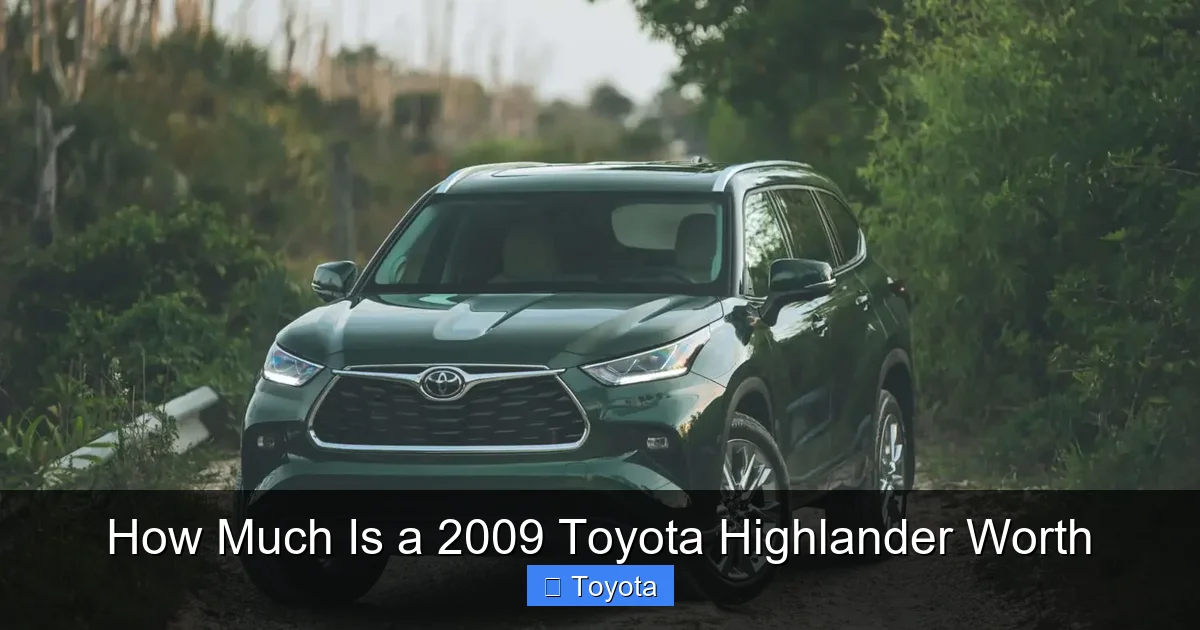
Visual guide about How Much Is a 2009 Toyota Highlander Worth
Image source: motorbiscuit.com
So, how do you figure out what a specific 2009 Highlander is worth? Here are some practical steps.
Use Online Valuation Tools
Start with trusted resources like:
– Kelley Blue Book (KBB)
– Edmunds
– NADA Guides
– Autotrader
Enter the VIN, trim, mileage, condition, and location. These tools will give you a “fair market value” range based on recent sales data.
For example, a 2009 Highlander Limited AWD with 110,000 miles in good condition might show a KBB value of $9,200 (private party) to $10,500 (dealer retail).
Check Recent Listings
Browse sites like Craigslist, Facebook Marketplace, and Cars.com to see what similar models are selling for in your area. Look for vehicles with comparable mileage, trim, and condition.
Tip: Filter out listings that are clearly overpriced or have major issues. Focus on realistic, active listings.
Get a Pre-Purchase Inspection
If you’re serious about buying, pay a trusted mechanic $100–$150 for a pre-purchase inspection. They’ll check the engine, transmission, suspension, brakes, and electrical systems. This can uncover hidden problems and give you leverage in negotiations.
Negotiate Based on Condition
Use any flaws—like worn tires, cracked dashboard, or minor body damage—to negotiate a lower price. For example, if the tires need replacing ($600), ask for $500 off the asking price.
Be polite but firm. Most private sellers expect some negotiation.
Tips for Buying a 2009 Toyota Highlander
Buying a used SUV requires careful consideration. Here are some tips to help you get the best deal.
Prioritize Maintenance Records
Ask for service records. A Highlander with a full history is worth more and will likely last longer. If the seller can’t provide records, consider it a red flag.
Test Drive Thoroughly
Take the car on a test drive that includes city streets, highways, and hills. Listen for unusual noises, feel for vibrations, and test the brakes and steering.
Pay attention to:
– Engine smoothness
– Transmission shifting (should be seamless)
– Suspension comfort
– Climate control performance
Check for Common Issues
While the 2009 Highlander is generally reliable, some issues are more common:
– **Oil consumption:** Some 3.5L V6 engines burn oil. Check the dipstick and ask about oil top-offs.
– **Transmission shudder:** Early models had occasional transmission issues. Ensure shifts are smooth.
– **A/C problems:** The compressor can fail. Test the A/C on a hot day.
– **Rust:** Inspect undercarriage, wheel wells, and door sills.
Consider Certified Pre-Owned (CPO)
If buying from a Toyota dealer, ask about CPO options. These vehicles undergo a 160-point inspection and come with a limited warranty (usually 12 months/12,000 miles). While more expensive, they offer peace of mind.
Finance Smartly
If you’re financing, shop around for the best auto loan rates. Credit unions often offer lower interest rates than banks. A lower rate can save you hundreds over the life of the loan.
Selling Your 2009 Toyota Highlander: How to Get Top Dollar
If you’re selling, here’s how to maximize your return.
Clean and Detail the Vehicle
First impressions matter. Wash, wax, and vacuum the interior. Clean the engine bay. Consider professional detailing ($100–$200) to make the car shine.
Fix Minor Issues
Replace burnt-out bulbs, fix small dents, and repair cracked trim. These small fixes can increase perceived value.
Gather Documentation
Compile service records, owner’s manual, and any warranties. This builds trust with buyers.
Price Competitively
Use KBB or Edmunds to set a fair price. Price slightly above your target to leave room for negotiation.
Advertise Effectively
Take high-quality photos in good lighting. Write a detailed description highlighting features, maintenance, and condition. Post on multiple platforms.
Conclusion
The 2009 Toyota Highlander remains a solid choice for buyers seeking a reliable, spacious, and well-built SUV. Its value today ranges from $6,000 to $12,000, depending on trim, mileage, condition, and location. Higher trims like the Limited and hybrid models hold their value better, especially with low mileage and a clean maintenance history.
Whether you’re buying or selling, doing your homework is key. Use online tools, inspect the vehicle thoroughly, and consider all factors before making a decision. With proper care, a 2009 Highlander can continue to serve your family for years to come.
Frequently Asked Questions
What is the average price of a 2009 Toyota Highlander?
The average price ranges from $6,000 to $12,000, depending on trim, mileage, and condition. Base models with high mileage are on the lower end, while well-maintained Limited or Hybrid models command higher prices.
Is the 2009 Toyota Highlander a reliable SUV?
Yes, the 2009 Highlander is known for its reliability and durability. With proper maintenance, many have exceeded 200,000 miles. It ranks highly in consumer reliability surveys and has a strong reputation for longevity.
Should I buy a 2009 Highlander with over 150,000 miles?
It depends on the vehicle’s condition and maintenance history. A well-cared-for Highlander with high mileage can still be a good buy, especially if major services like the timing belt have been completed. Always get a pre-purchase inspection.
How much more does the Hybrid model cost?
The 2009 Highlander Hybrid typically costs $1,000 to $2,000 more than a comparable gasoline model. However, it offers better fuel economy and may save money on gas over time, especially for city drivers.
Can a 2009 Highlander seat seven passengers?
Yes, some models—especially the Limited trim—offer optional third-row seating. However, the third row is best suited for children. Check the specific vehicle’s configuration before purchasing.
Where can I find the best deals on a 2009 Toyota Highlander?
Check private sellers on Craigslist, Facebook Marketplace, and Autotrader. Private sales often offer better prices than dealerships, but dealers may provide warranties or certified pre-owned benefits.
