
Does Toyota Recommend Fuel Injector Cleaner?

Yes, Toyota does recommend using fuel injector cleaner under certain conditions. While not required for every fill-up, it can help maintain optimal engine performance, especially in older vehicles or those using lower-quality fuel. Regular maintenance and high-quality gasoline remain the best defense against fuel system issues.
Key Takeaways
- Toyota supports fuel injector cleaner use: The automaker acknowledges that additives can help clean injectors, particularly when using lower-octane or ethanol-blended fuels.
- Not a substitute for proper maintenance: Cleaner isn’t a magic fix—regular oil changes, air filter replacements, and using quality fuel matter more.
- Best for older or high-mileage Toyotas: Vehicles with 60,000+ miles may benefit most from periodic cleaning to prevent clogging and rough idling.
- Use only top-tier detergent gas: Toyota recommends fuels with certified detergent additives to naturally clean injectors over time.
- Choose reputable brands: Look for cleaners meeting Top Tier standards, such as Chevron Techron or Sea Foam, to avoid engine damage.
- Frequency matters: Using cleaner every 3,000–5,000 miles is sufficient—overuse can harm fuel system components.
- Watch for symptoms: Hesitation, poor fuel economy, or rough starts may signal clogged injectors needing attention.
📑 Table of Contents
- Does Toyota Recommend Fuel Injector Cleaner?
- Understanding Fuel Injectors and Their Role in Toyota Engines
- Toyota’s Official Stance on Fuel Additives
- When Should You Use Fuel Injector Cleaner in Your Toyota?
- Choosing the Right Fuel Injector Cleaner for Your Toyota
- How to Use Fuel Injector Cleaner Safely and Effectively
- Myths and Misconceptions About Fuel Injector Cleaners
- Conclusion: Should You Use Fuel Injector Cleaner in Your Toyota?
Does Toyota Recommend Fuel Injector Cleaner?
If you own a Toyota—whether it’s a reliable Camry, a rugged Tacoma, or a fuel-efficient Prius—you’ve likely wondered about the best ways to keep your engine running smoothly. One common question that pops up in owner forums, service centers, and online searches is: “Does Toyota recommend fuel injector cleaner?” It’s a smart question, especially since modern engines rely heavily on precise fuel delivery, and even minor clogs can affect performance.
The short answer? Yes, Toyota does recognize the value of fuel injector cleaners in certain situations. However, it’s not a blanket recommendation for every driver, every tank of gas. Instead, Toyota views fuel system additives as a helpful maintenance tool—not a necessity for every fill-up. The key is understanding when and why to use them, what types are safe, and how they fit into your overall vehicle care routine.
In this guide, we’ll dive deep into Toyota’s stance on fuel injector cleaners, explore how fuel systems work in modern Toyotas, and give you practical advice on maintaining your engine’s health. Whether you’re a daily commuter, a weekend adventurer, or just someone who wants to extend the life of your Toyota, this article will help you make informed decisions about fuel additives.
Understanding Fuel Injectors and Their Role in Toyota Engines
Visual guide about Does Toyota Recommend Fuel Injector Cleaner?
Image source: carobjective.com
Before we get into whether Toyota recommends fuel injector cleaner, it helps to understand what fuel injectors do and why they matter. In simple terms, fuel injectors are tiny nozzles that spray gasoline (or diesel, in some models) directly into the engine’s combustion chamber or intake manifold. Their job is to deliver the right amount of fuel at the right time, ensuring efficient combustion and optimal performance.
Modern Toyota engines—like those in the Corolla, RAV4, or Highlander—use advanced direct or port fuel injection systems. These systems rely on precision. Even a small buildup of carbon deposits or varnish can disrupt the spray pattern, leading to poor fuel atomization. That means the fuel doesn’t burn as efficiently, which can cause a range of issues: reduced power, rough idling, increased emissions, and lower gas mileage.
Over time, especially if you use lower-quality gasoline or drive in stop-and-go traffic, deposits can form inside the injectors. These aren’t always visible, but they can gradually restrict fuel flow. Think of it like a clogged showerhead—the water still comes out, but not with the same force or pattern. The same principle applies to your engine.
Toyota designs its engines to be durable and low-maintenance, but no system is immune to wear and tear. That’s where fuel injector cleaners come in. They contain detergents and solvents that dissolve carbon buildup, helping restore proper fuel flow and combustion efficiency.
Toyota’s Official Stance on Fuel Additives
Visual guide about Does Toyota Recommend Fuel Injector Cleaner?
Image source: m.media-amazon.com
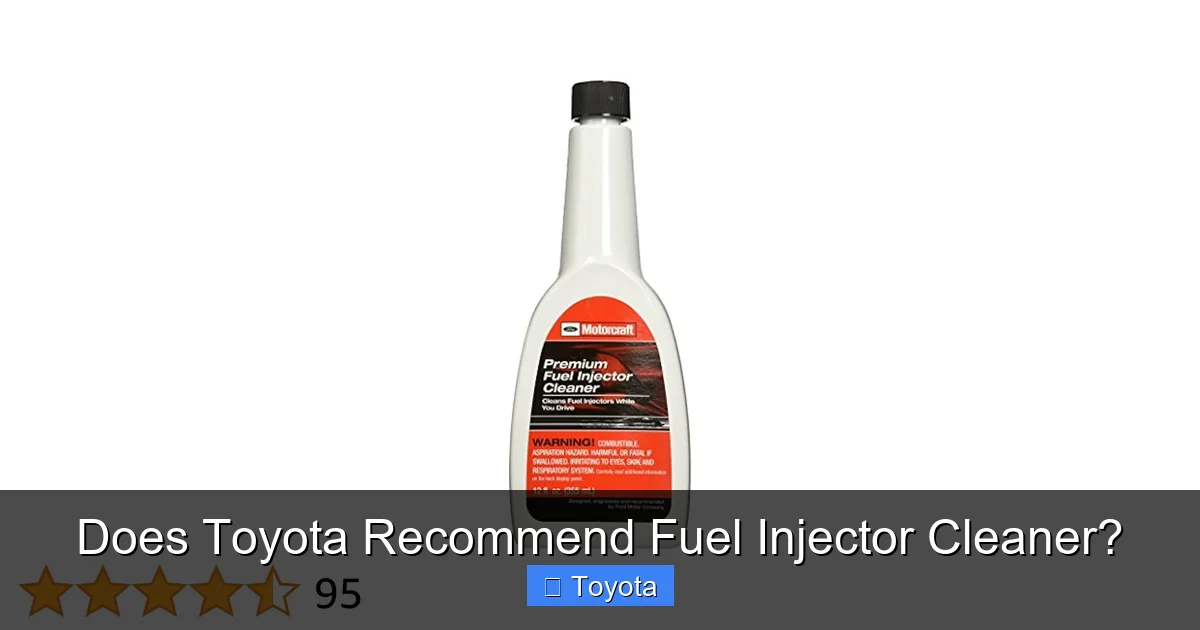
So, what does Toyota actually say about fuel injector cleaners? The answer isn’t always straightforward, because the company doesn’t publish a single, universal statement like “Use cleaner every 3,000 miles.” Instead, Toyota’s recommendations are more nuanced and context-dependent.
According to Toyota’s official owner’s manuals and technical service bulletins, the automaker does not require the use of aftermarket fuel additives for normal operation. In fact, Toyota emphasizes that using high-quality gasoline with sufficient detergent additives is the best way to prevent injector clogging in the first place.
That said, Toyota acknowledges that in certain situations—such as when using lower-octane fuel, ethanol-blended gasoline (like E10 or E15), or driving in extreme conditions—fuel system deposits can still form. In these cases, Toyota service technicians may recommend a fuel system cleaner as part of routine maintenance, especially during scheduled service visits.
For example, in some Toyota service guides, technicians are advised to use approved fuel system cleaners when diagnosing performance issues like hesitation or misfires that could be linked to dirty injectors. This doesn’t mean every Toyota needs a cleaner every month—it means the tool is available and recognized as useful when needed.
Additionally, Toyota has partnered with fuel retailers like Chevron and Shell to promote the use of Top Tier gasoline. These fuels contain higher concentrations of detergent additives than the minimum required by the EPA. Toyota explicitly recommends using Top Tier fuels to help keep injectors clean naturally, reducing the need for aftermarket additives.
When Should You Use Fuel Injector Cleaner in Your Toyota?
Visual guide about Does Toyota Recommend Fuel Injector Cleaner?
Image source: cartroubleshooters.com
Now that we know Toyota supports the use of fuel injector cleaners in specific scenarios, the next question is: When should you actually use one? The answer depends on several factors, including your driving habits, the age of your vehicle, and the type of fuel you use.
High-Mileage or Older Vehicles
If your Toyota has over 60,000 miles on the odometer, it’s more likely to benefit from periodic fuel injector cleaning. Over time, even with good fuel, carbon deposits can accumulate. Older engines may also have less efficient combustion, making them more prone to buildup.
For example, a 2010 Camry with 120,000 miles that’s been driven mostly in city traffic might start showing signs of rough idling or hesitation during acceleration. In this case, a fuel injector cleaner could help restore smoother operation.
Use of Lower-Quality or Ethanol-Blended Fuels
Not all gas is created equal. If you frequently fill up at discount stations or use ethanol-blended fuels (which are common in many regions), you may be introducing more contaminants into your fuel system. Ethanol, while cleaner-burning, can attract moisture and promote varnish formation.
Toyota recommends using fuels with at least 10% ethanol (E10), but higher blends like E15 can increase the risk of deposits. If you regularly use E15 or lower-grade gasoline, adding a fuel injector cleaner every few thousand miles can help counteract the effects.
Infrequent or Short-Distance Driving
If you only drive your Toyota a few miles at a time—say, for quick errands or school drop-offs—the engine may not reach optimal operating temperature consistently. This can lead to incomplete combustion and increased carbon buildup.
Short trips also mean the fuel system doesn’t get a chance to “clean itself” through high-speed driving or highway use. In these cases, a periodic fuel additive can help maintain injector cleanliness.
Symptoms of Clogged Injectors
Sometimes, the need for a cleaner becomes obvious. Watch for these signs that your fuel injectors might be clogged:
- Engine hesitation or stumbling during acceleration
- Rough idling or stalling
- Reduced fuel economy
- Check engine light (especially with codes like P0300 for random misfires)
- Hard starting, especially when the engine is warm
If you notice any of these symptoms, a fuel injector cleaner might be worth trying—especially if you haven’t used one in a while. However, it’s important to rule out other causes first, such as a faulty spark plug or oxygen sensor.
Choosing the Right Fuel Injector Cleaner for Your Toyota
Not all fuel additives are created equal. Some are little more than colored water, while others contain powerful detergents that can actually damage your engine if used improperly. So, how do you choose a safe and effective cleaner for your Toyota?
Look for Top Tier Certification
The best place to start is by choosing a fuel additive that meets Top Tier standards. Top Tier is a voluntary certification program created by automakers—including Toyota—to ensure that gasoline and additives contain high levels of detergent additives.
Brands like Chevron Techron, Shell V-Power, and Red Line Complete SI-1 are Top Tier certified and widely recommended by mechanics and Toyota owners alike. These products are formulated to clean injectors, intake valves, and combustion chambers without harming sensitive components.
Avoid “Miracle Cure” Products
Be wary of additives that promise dramatic results, such as “30% more power” or “instant fuel economy boost.” These claims are often exaggerated and can be a red flag for low-quality formulations. Stick to reputable brands with proven track records.
Check for PEA (Polyetheramine)
One of the most effective detergent chemicals in fuel additives is polyetheramine (PEA). Products containing PEA, like Techron, are known for their strong cleaning power and ability to dissolve stubborn carbon deposits.
While PEA-based cleaners are generally safe, they should be used as directed—typically one bottle per tank every 3,000 to 5,000 miles. Overuse can lead to excessive cleaning, which might dislodge large chunks of carbon and clog fuel filters or injectors.
Liquid vs. Bottle Additives
Most fuel injector cleaners come in small bottles that you pour directly into your gas tank. This is the most common and convenient method. Simply add the cleaner to a near-empty tank, then fill up with gasoline to mix it thoroughly.
Some products also come in aerosol cans or are designed for professional use with specialized equipment. For most Toyota owners, the bottle-in-tank method is sufficient and effective.
How to Use Fuel Injector Cleaner Safely and Effectively
Using a fuel injector cleaner is simple, but doing it correctly ensures the best results and protects your engine.
Step-by-Step Guide
- Check your owner’s manual: While Toyota doesn’t prohibit the use of additives, it’s always wise to confirm there are no specific warnings for your model.
- Choose the right product: Pick a Top Tier-certified cleaner with PEA, such as Chevron Techron or Sea Foam Motor Treatment.
- Add to a near-empty tank: Pour the entire bottle into your fuel tank when it’s about a quarter full. This ensures proper mixing.
- Fill up with gasoline: Top off your tank with high-quality, Top Tier gasoline to dilute the additive and begin the cleaning process.
- Drive normally: Take your Toyota for a drive, ideally including some highway miles to help the cleaner circulate and work effectively.
- Repeat as needed: Use a cleaner every 3,000 to 5,000 miles, or as recommended by the product instructions.
Tips for Best Results
- Don’t overuse cleaner—once every few thousand miles is plenty.
- Combine with regular maintenance, like oil changes and air filter replacements.
- If symptoms persist after using a cleaner, have your fuel system inspected by a Toyota-certified technician.
- Keep receipts and notes on when you used the additive to track its effectiveness.
Myths and Misconceptions About Fuel Injector Cleaners
Despite their popularity, fuel injector cleaners are surrounded by myths and misunderstandings. Let’s clear up some of the most common ones.
Myth: Cleaner Will Fix Any Engine Problem
Fuel injector cleaners are not a cure-all. While they can resolve issues caused by clogged injectors, they won’t fix problems related to spark plugs, oxygen sensors, fuel pumps, or mechanical wear. If your Toyota is running poorly, a proper diagnosis is essential.
Myth: You Need to Use Cleaner Every Tank
Overusing fuel additives can do more harm than good. Excessive cleaning can dislodge large carbon deposits, leading to clogged filters or even injector damage. Stick to the recommended frequency—every 3,000 to 5,000 miles is sufficient for most drivers.
Myth: All Gasoline Keeps Injectors Clean
While Top Tier gasoline contains more detergents than standard fuel, it’s not a guarantee against buildup—especially in older engines or under harsh driving conditions. That’s why periodic use of a dedicated cleaner can be beneficial.
Myth: Cleaner Will Damage Your Engine
When used correctly, high-quality fuel injector cleaners are safe for Toyota engines. In fact, many are formulated specifically for modern fuel systems and won’t harm seals, sensors, or catalytic converters.
Conclusion: Should You Use Fuel Injector Cleaner in Your Toyota?
So, does Toyota recommend fuel injector cleaner? The answer is a qualified yes. Toyota doesn’t require it for every driver, but it does recognize the value of fuel system additives in maintaining engine performance—especially in older vehicles, those using lower-quality fuel, or driven in challenging conditions.
The best approach is to focus on prevention: use Top Tier gasoline, follow your maintenance schedule, and drive your Toyota regularly to keep the engine warm and clean. When needed, a high-quality fuel injector cleaner can be a helpful tool to restore smooth operation and improve fuel efficiency.
Remember, cleaner isn’t a substitute for good habits. It’s a supplement—a way to give your Toyota a little extra care when it needs it most. By choosing the right product, using it wisely, and staying alert to your vehicle’s needs, you can keep your Toyota running like new for years to come.
Frequently Asked Questions
Does Toyota officially recommend fuel injector cleaner?
Yes, Toyota acknowledges that fuel injector cleaners can be beneficial in certain situations, especially when using lower-quality fuel or in high-mileage vehicles. However, it’s not a mandatory part of routine maintenance.
How often should I use fuel injector cleaner in my Toyota?
Most experts recommend using a quality fuel injector cleaner every 3,000 to 5,000 miles, or when you notice symptoms like rough idling or reduced fuel economy.
Can fuel injector cleaner damage my Toyota’s engine?
When used as directed and with a reputable brand, fuel injector cleaner is safe for Toyota engines. Avoid overuse and stick to Top Tier-certified products.
What are the signs that my Toyota needs a fuel injector cleaner?
Common signs include engine hesitation, rough idling, poor fuel economy, hard starting, or a check engine light related to misfires.
Is it okay to use fuel injector cleaner with every tank of gas?
No, using cleaner with every fill-up is unnecessary and can lead to over-cleaning. Stick to periodic use every few thousand miles.
What’s the best fuel injector cleaner for a Toyota?
Top choices include Chevron Techron, Sea Foam Motor Treatment, and Red Line Complete SI-1—all of which are Top Tier certified and safe for Toyota engines.
