
How to Check Oil Percentage in Toyota Tacoma

Checking the oil percentage in your Toyota Tacoma is essential for engine health and longevity. This guide walks you through the process using the vehicle’s onboard system, explains what the readings mean, and offers tips to maintain proper oil levels.
Key Takeaways
- Use the Multi-Information Display (MID): Most modern Toyota Tacomas feature a digital oil life monitor accessible through the dashboard screen.
- Check when the engine is cold: For accurate readings, allow the engine to cool for at least 10–15 minutes before checking oil percentage.
- Oil percentage reflects remaining life, not level: The percentage indicates how much usable life is left in the current oil, not how much oil is in the engine.
- Follow the maintenance schedule: Toyota recommends oil changes based on the oil life monitor, typically between 5,000 and 10,000 miles depending on driving conditions.
- Top off oil if low: If the oil level is low, add the recommended oil type gradually and recheck to avoid overfilling.
- Reset the oil life monitor after changes: Always reset the system after an oil change to ensure accurate future readings.
- Monitor driving habits: Frequent short trips, towing, or extreme temperatures can reduce oil life faster than normal.
📑 Table of Contents
- Why Checking Oil Percentage Matters in Your Toyota Tacoma
- Understanding the Oil Life Monitoring System
- How to Check Oil Percentage in Toyota Tacoma: Step-by-Step Guide
- When to Check Oil Percentage: Best Practices
- Common Mistakes to Avoid When Checking Oil Percentage
- DIY vs. Professional Oil Changes: What You Need to Know
- Maintaining Your Tacoma’s Engine Health Beyond Oil
- Conclusion: Stay Ahead with Regular Oil Checks
Why Checking Oil Percentage Matters in Your Toyota Tacoma
Your Toyota Tacoma is built for durability, reliability, and performance—whether you’re navigating city streets, hauling gear, or tackling off-road trails. But even the toughest trucks need regular maintenance to keep running at their best. One of the most critical aspects of that maintenance is monitoring your engine oil. While many drivers are familiar with checking oil levels using a dipstick, modern Tacomas come equipped with an advanced oil life monitoring system that displays oil percentage directly on the dashboard. Understanding how to check oil percentage in Toyota Tacoma models not only helps you stay on top of maintenance but also protects your engine from wear, overheating, and costly repairs.
Engine oil plays several vital roles: it lubricates moving parts, reduces friction, helps cool the engine, and keeps internal components clean by trapping dirt and debris. Over time, oil breaks down due to heat, contamination, and chemical changes. When oil degrades, it loses its effectiveness, which can lead to increased engine wear and reduced fuel efficiency. That’s where the oil percentage comes in. Unlike traditional dipstick checks that only tell you how much oil is present, the oil percentage in your Tacoma reflects the remaining useful life of the oil based on driving conditions, mileage, and engine performance data.
Understanding the Oil Life Monitoring System
Visual guide about How to Check Oil Percentage in Toyota Tacoma
Image source: driverlessrevolutions.com
Toyota introduced the oil life monitoring system to take the guesswork out of oil changes. Instead of relying solely on mileage or time intervals, this smart system uses real-time data to estimate how much life is left in your engine oil. The percentage you see on your dashboard—say, 40% or 15%—doesn’t mean you have 40% of the oil volume left. Instead, it indicates that 40% of the oil’s effective life remains before it needs to be changed.
This system takes into account various factors such as engine temperature, driving speed, trip duration, idle time, and load conditions. For example, if you frequently drive short distances or tow heavy loads, your oil may degrade faster, causing the percentage to drop more quickly. On the other hand, highway driving at consistent speeds tends to be gentler on oil, preserving its life longer.
The oil life monitor is especially helpful for Tacoma owners who use their trucks for diverse purposes. Whether you’re using your Tacoma as a daily commuter, a weekend adventure vehicle, or a work truck, the system adapts to your habits and provides personalized recommendations. This means you’re less likely to change oil too early (wasting money) or too late (risking engine damage).
How to Check Oil Percentage in Toyota Tacoma: Step-by-Step Guide
Visual guide about How to Check Oil Percentage in Toyota Tacoma
Image source: low-offset.com
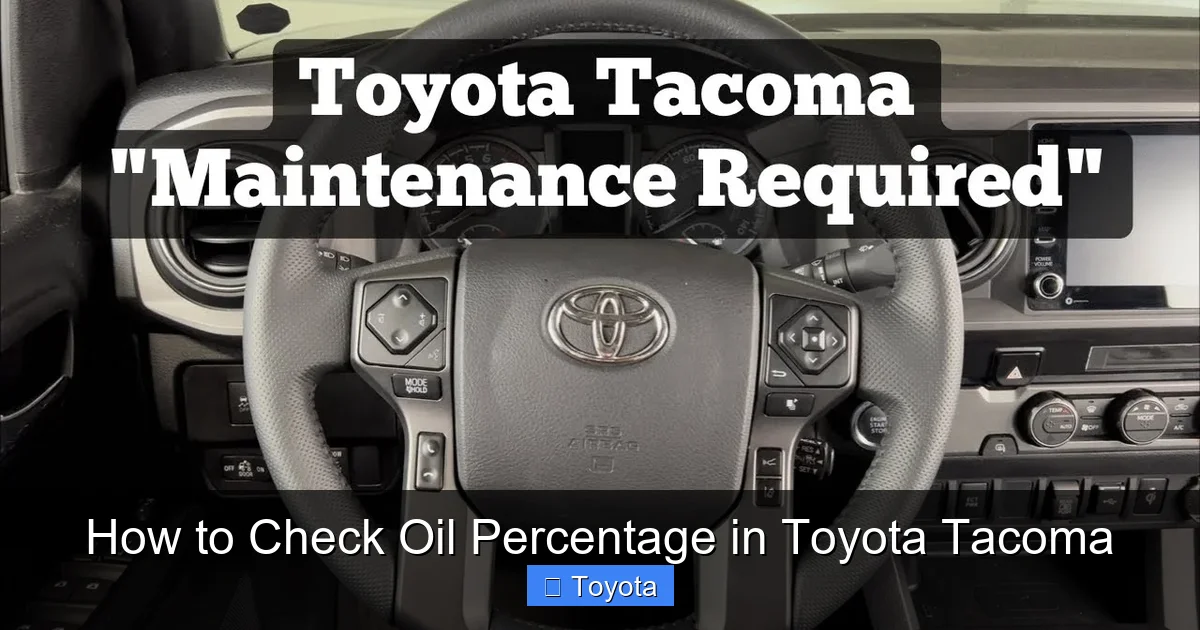
Checking the oil percentage in your Toyota Tacoma is quick and easy, thanks to the intuitive Multi-Information Display (MID) located in the instrument cluster. Here’s how to do it, whether you drive a 2016 or newer model with the digital display or an older version with slightly different controls.
Step 1: Turn on the Ignition (Without Starting the Engine)
Begin by sitting in the driver’s seat and turning the ignition to the “ON” position. You don’t need to start the engine—just flip the key or press the start button while holding the brake pedal. This powers up the dashboard and allows the system to display information. Wait a few seconds for all the gauges and lights to stabilize.
Step 2: Access the Multi-Information Display (MID)
Look at your instrument cluster. You’ll see a small screen between the speedometer and tachometer (or in the center, depending on your Tacoma’s trim). Use the steering wheel controls—usually buttons on the left side—to navigate the menu. Press the “DISP” or “INFO” button repeatedly until you see options like “Trip,” “Fuel Economy,” “Maintenance,” or “Oil Life.”
Step 3: Select “Oil Life” or “Maintenance”
Once you’ve cycled to the maintenance or oil life section, press the “Enter” or “OK” button (often labeled with a checkmark or arrow). The screen will display the current oil life percentage. For example, it might read “Oil Life: 65%.” This number updates automatically based on your driving patterns and engine data.
Step 4: Interpret the Reading
Now that you’ve found the oil percentage, what does it mean? Here’s a simple breakdown:
– 80%–100%: Your oil is in excellent condition. No action needed.
– 50%–79%: Oil is still good, but start planning for your next oil change.
– 20%–49%: Time to schedule an oil change soon. Don’t delay.
– Below 20%: Change your oil immediately. Continuing to drive with low oil life can harm the engine.
Keep in mind that the oil life percentage is not the same as oil level. Even if the percentage is high, you should still check the physical oil level with the dipstick periodically, especially if you notice warning lights or unusual engine noises.
Step 5: Reset the Oil Life Monitor (After an Oil Change)
After you’ve changed the oil—either at a dealership or DIY—you’ll need to reset the oil life monitor so it starts tracking from 100% again. Here’s how:
1. Turn the ignition to “ON” (do not start the engine).
2. Navigate to the “Oil Life” screen using the steering wheel controls.
3. Press and hold the “DISP” or “INFO” button for about 5–10 seconds.
4. The screen will prompt you to confirm the reset. Press “OK” or “Enter.”
5. The oil life percentage should now read 100%.
If the reset doesn’t work the first time, try repeating the process or consult your owner’s manual for model-specific instructions.
When to Check Oil Percentage: Best Practices

Visual guide about How to Check Oil Percentage in Toyota Tacoma
Image source: i.ytimg.com
While the oil life monitor does most of the work for you, it’s still important to check the oil percentage regularly—not just when the warning light comes on. Here are some best practices to keep your Tacoma’s engine in peak condition.
Check Monthly or Before Long Trips
Make it a habit to check the oil percentage at least once a month. This helps you stay ahead of maintenance and catch any unusual drops in oil life. If you’re planning a long road trip or off-road adventure, check the oil life beforehand. You don’t want to be stranded with degraded oil in the middle of nowhere.
Check After Extreme Driving Conditions
Certain driving conditions accelerate oil degradation. If you’ve recently towed a trailer, driven in heavy traffic, or traveled through extreme heat or cold, check the oil percentage sooner than usual. These conditions put extra stress on the engine and oil, reducing its effective life.
Use the Right Oil Type
Toyota recommends using Genuine Toyota Motor Oil or equivalent high-quality synthetic oil that meets ILSAC GF-6 standards. Using the wrong oil—or low-quality alternatives—can affect how the oil life monitor calculates degradation. Always refer to your owner’s manual for the correct viscosity (e.g., 0W-20) and specifications.
Don’t Ignore Warning Lights
If the “Maintenance Required” or “Oil Change” light comes on, don’t ignore it. This means the oil life has dropped to 15% or below. Schedule an oil change as soon as possible. Driving with degraded oil can lead to sludge buildup, reduced lubrication, and increased engine wear.
Common Mistakes to Avoid When Checking Oil Percentage
Even with advanced technology, drivers sometimes make mistakes when monitoring oil life. Here are a few common pitfalls and how to avoid them.
Confusing Oil Percentage with Oil Level
One of the biggest misconceptions is thinking that oil percentage equals oil volume. It doesn’t. You could have 100% oil life but a low oil level due to leaks or consumption. Always check the dipstick to ensure the oil level is between the “MIN” and “MAX” marks.
Checking Immediately After Driving
For the most accurate oil life reading, check the percentage when the engine is cold. If you’ve just driven the truck, wait at least 10–15 minutes for the oil to settle and the system to recalibrate. Hot oil can give misleading readings.
Skipping the Reset After an Oil Change
Failing to reset the oil life monitor after an oil change is a common oversight. If you don’t reset it, the system will continue to count down from the old percentage, giving you false alerts. Always reset it to 100% after every oil change.
Ignoring the Owner’s Manual
Every Tacoma model year may have slight differences in how the oil life monitor works. Your owner’s manual is the best source for accurate, model-specific instructions. Don’t rely solely on online guides—check the manual for your exact year and trim.
DIY vs. Professional Oil Changes: What You Need to Know
When it comes time for an oil change, you have two options: do it yourself or visit a professional service center. Both have pros and cons, and your choice may affect how you monitor oil percentage.
DIY Oil Changes
Changing your own oil can save money and give you more control over the process. You can choose the exact oil and filter, and you’ll know the job was done right. However, you must remember to reset the oil life monitor manually. Also, dispose of used oil responsibly—most auto parts stores accept used oil for recycling.
Professional Oil Changes
Taking your Tacoma to a Toyota dealership or trusted mechanic ensures the job is done correctly, and they’ll typically reset the oil life monitor for you. Many service centers also perform a full inspection, checking fluids, brakes, and tires. While more expensive, professional service offers peace of mind and may include warranties on parts and labor.
Hybrid Approach
Some owners prefer a hybrid approach: do the oil change themselves but visit a professional for the reset if they’re unsure how to do it. Alternatively, you can buy an OBD2 scanner that allows you to reset the monitor at home.
Maintaining Your Tacoma’s Engine Health Beyond Oil
While checking oil percentage is crucial, it’s just one part of overall engine care. To keep your Toyota Tacoma running smoothly for years to come, consider these additional maintenance tips.
Replace the Oil Filter Regularly
Every time you change the oil, replace the oil filter. A clogged filter restricts oil flow and reduces engine protection. Use a high-quality filter designed for your Tacoma’s engine.
Check Other Fluids
Don’t forget about coolant, transmission fluid, brake fluid, and differential oil. These fluids also degrade over time and need periodic checks and replacements.
Use a Fuel System Cleaner
Over time, carbon deposits can build up in the fuel system, reducing efficiency and performance. Using a quality fuel system cleaner every 5,000–10,000 miles can help keep injectors clean and combustion efficient.
Monitor Tire Pressure and Alignment
Proper tire maintenance improves fuel economy and reduces engine load. Underinflated tires make the engine work harder, which can indirectly affect oil life.
Drive Smart
Avoid aggressive driving, excessive idling, and short trips when possible. These habits increase engine stress and accelerate oil degradation. Whenever feasible, combine errands into one trip to reduce cold starts.
Conclusion: Stay Ahead with Regular Oil Checks
Learning how to check oil percentage in Toyota Tacoma is a simple yet powerful way to protect your investment and extend the life of your truck. The oil life monitoring system takes the guesswork out of maintenance, giving you real-time insights into your engine’s health. By checking the percentage regularly, resetting it after oil changes, and following best practices, you’ll keep your Tacoma running smoothly mile after mile.
Remember, the oil percentage isn’t just a number—it’s a reflection of your driving habits and engine condition. Treat it seriously, and your Tacoma will reward you with reliability, performance, and peace of mind. Whether you’re cruising down the highway or exploring rugged terrain, a well-maintained engine is your best companion. So grab your owner’s manual, check that oil percentage today, and drive with confidence.
Frequently Asked Questions
What does the oil percentage mean in a Toyota Tacoma?
The oil percentage indicates how much usable life remains in your engine oil, not the oil level. It’s calculated based on driving conditions, mileage, and engine performance data.
How often should I check the oil percentage in my Tacoma?
Check the oil percentage at least once a month or before long trips. Also check it after extreme driving conditions like towing or driving in heavy traffic.
Can I drive my Tacoma when the oil percentage is low?
You can drive for a short time, but it’s not recommended. When the percentage drops below 20%, schedule an oil change as soon as possible to avoid engine damage.
Do I need to check the dipstick if the oil percentage is high?
Yes. The oil percentage doesn’t reflect oil level. Always check the dipstick periodically to ensure the oil level is between the MIN and MAX marks.
How do I reset the oil life monitor after an oil change?
Turn the ignition to ON, navigate to the Oil Life screen, press and hold the DISP button for 5–10 seconds, then confirm the reset when prompted.
What oil should I use in my Toyota Tacoma?
Use Genuine Toyota Motor Oil or equivalent synthetic oil that meets ILSAC GF-6 standards. Refer to your owner’s manual for the correct viscosity, typically 0W-20.