
Should I Buy a Toyota Sienna with 200k Miles?

Buying a Toyota Sienna with 200,000 miles isn’t a dealbreaker—if it’s been well-maintained. Known for longevity, the Sienna can easily surpass 250,000 miles with proper care. But you must inspect it thoroughly and understand potential repair costs before signing on the dotted line.
Key Takeaways
- High mileage doesn’t equal a death sentence: Toyota Siennas are built to last, and many reach 250,000+ miles with routine maintenance.
- Maintenance history is everything: A detailed service record is more important than mileage alone—look for consistent oil changes, timing belt replacements, and transmission service.
- Watch for common wear items: At 200k miles, expect possible issues with suspension components, engine mounts, and the AWD system (if equipped).
- Hybrid models offer better fuel economy: The 2011–2020 Sienna Hybrid delivers 30+ mpg, making it a smart choice for high-mileage buyers.
- Get a pre-purchase inspection (PPI): Always have a trusted mechanic inspect the vehicle—especially the engine, transmission, and undercarriage.
- Negotiate based on condition: Use any needed repairs as leverage to lower the price—don’t pay top dollar for a high-mileage van without concessions.
- Consider long-term value: Even with 200k miles, a well-kept Sienna can serve your family for another 50,000–100,000 miles.
📑 Table of Contents
- Should I Buy a Toyota Sienna with 200k Miles?
- Why the Toyota Sienna Is Built to Last
- What to Look for in a High-Mileage Sienna
- Common Problems in High-Mileage Siennas
- Hybrid vs. Gas: Which Is Better at 200k Miles?
- How to Negotiate the Price
- Is It Worth It? Final Verdict
- Tips for Keeping Your High-Mileage Sienna Running
Should I Buy a Toyota Sienna with 200k Miles?
So you’ve found a Toyota Sienna with 200,000 miles on the odometer. It’s clean, the price looks fair, and the seller says it’s been “well taken care of.” But your inner skeptic is kicking in—should you really buy a minivan with that many miles?
Let’s be honest: 200,000 miles sounds like a lot. But when it comes to Toyota vehicles, especially the Sienna, high mileage isn’t always a red flag. In fact, many Siennas are just getting warmed up at this point. Toyota has a reputation for building durable, long-lasting vehicles, and the Sienna is one of their most reliable models. With proper maintenance, these minivans often cruise past 250,000 miles—and some even hit 300,000.
But here’s the catch: “proper maintenance” is doing a lot of heavy lifting in that sentence. A Sienna with 200k miles can be a fantastic buy—or a money pit—depending entirely on how it’s been cared for. That’s why it’s crucial to dig deeper than just the odometer reading. You need to look at service records, inspect the vehicle thoroughly, and understand what repairs might be lurking just around the corner.
In this guide, we’ll walk you through everything you need to know before buying a high-mileage Toyota Sienna. From common issues to inspection tips and negotiation strategies, we’ll help you make a smart, informed decision. Whether you’re a growing family needing space or a budget-conscious buyer looking for long-term value, this article will give you the confidence to move forward—or walk away.
Why the Toyota Sienna Is Built to Last

Visual guide about Should I Buy a Toyota Sienna with 200k Miles?
Image source: autozel.com
Toyota didn’t earn its reputation for reliability by accident. The Sienna, in particular, has been a standout in the minivan segment for decades. Since its debut in 1998, it’s consistently ranked among the most dependable family vehicles on the market. But what makes it so durable?
Robust Engine and Transmission Design
The Sienna has traditionally been powered by Toyota’s 3.5L V6 engine, known for its smooth power delivery and long lifespan. This engine, especially in models from 2007 onward, is built with strong internals, efficient cooling, and reliable timing systems. When properly maintained, it can easily run for 250,000 miles or more.
The transmission—typically a 6-speed or 8-speed automatic—is also well-engineered. Toyota’s automatics are known for their durability, and the Sienna’s unit is no exception. Regular fluid changes every 30,000 to 60,000 miles are key to keeping it running smoothly. Neglect this, and you could face costly rebuilds down the road.
All-Wheel Drive Capability
One unique feature of the Sienna is that it’s one of the few minivans offered with all-wheel drive (AWD). Introduced in 2004, the AWD system adds complexity but also enhances traction and stability in bad weather. While AWD components can wear out over time—especially at high mileage—they’re generally reliable if serviced regularly.
The AWD system uses a viscous coupling or electronic controls (depending on the model year) to send power to the rear wheels when needed. At 200k miles, you might notice minor shuddering during acceleration or hear unusual noises from the rear differential. These aren’t necessarily dealbreakers, but they do signal that the AWD system may need attention soon.
Hybrid Powertrain Longevity
Starting in 2011, Toyota introduced a hybrid version of the Sienna. This model uses a 2.5L four-cylinder engine paired with electric motors, delivering impressive fuel economy—up to 36 mpg on the highway. The hybrid system is built on Toyota’s proven Hybrid Synergy Drive, the same tech used in the Prius.
Hybrid Siennas are especially attractive for high-mileage buyers because the electric motors reduce strain on the gasoline engine. Regenerative braking also reduces wear on brake pads. As long as the hybrid battery is healthy (most last 150,000–200,000 miles), these models can be excellent long-term investments.
What to Look for in a High-Mileage Sienna

Visual guide about Should I Buy a Toyota Sienna with 200k Miles?
Image source: slashgear.com
Now that you know the Sienna is built to last, let’s talk about what to watch for when shopping for one with 200,000 miles. Not all high-mileage Siennas are created equal. Here are the key areas to inspect.
Maintenance Records: The Most Important Factor
Before you even look at the car, ask for maintenance records. A Sienna with 200k miles but a complete service history is far more valuable than one with lower mileage and no records.
Look for:
– Regular oil changes (every 5,000–7,500 miles)
– Timing belt replacement (typically at 90,000–100,000 miles; some models use a timing chain, which lasts longer)
– Transmission fluid changes
– Coolant flushes
– Brake inspections and replacements
If the seller can’t provide records, ask if they’re willing to get a pre-purchase inspection (PPI). This is non-negotiable for a high-mileage vehicle.
Engine and Transmission Health
Pop the hood and take a close look. Check for:
– Oil leaks around the valve cover, oil pan, or rear main seal
– Dirty or low engine oil (a sign of neglect)
– Excessive smoke from the exhaust (blue smoke = burning oil; white smoke = coolant leak)
– Rough idling or hesitation when accelerating
Start the engine and listen. It should run smoothly without knocking, ticking, or excessive vibration. Rev the engine gently and watch for hesitation or stalling.
Take it for a test drive. The transmission should shift smoothly without slipping, jerking, or delayed engagement. If you feel hard shifts or hear clunking noises, the transmission may need service.
Suspension and Steering Components
At 200k miles, suspension parts are likely worn. Walk around the vehicle and look for:
– Sagging or uneven ride height
– Worn-out struts or shocks (bounce the corners—if it bounces more than once, they’re shot)
– Loose or clunking steering (grab the front wheels and try to wiggle them)
Common wear items include:
– Struts and shock absorbers
– Control arm bushings
– Ball joints
– Sway bar links
Replacing these parts can cost $800–$1,500, so factor that into your budget.
Brake System and Tires
Check the brake pads and rotors. Worn pads will show less than 1/4 inch of material. Warped rotors may cause vibration when braking.
Also inspect the tires. Look for:
– Uneven wear (sign of alignment or suspension issues)
– Cracks or dry rot (indicates old tires)
– Tread depth (use a penny—if Lincoln’s head is visible, they’re too worn)
Tires can cost $600–$1,000 for a full set, so this is another potential expense.
Interior and Electronics
Slide into the driver’s seat and test everything:
– Power windows, locks, and mirrors
– Climate control (A/C and heat)
– Infotainment system (radio, navigation, Bluetooth)
– Dashboard warning lights
Look for signs of water damage—musty smells, stained carpets, or foggy windows—which could indicate leaks or flood damage.
Check the sliding doors. They should open and close smoothly. If they’re slow or make grinding noises, the motors or tracks may need repair.
Common Problems in High-Mileage Siennas
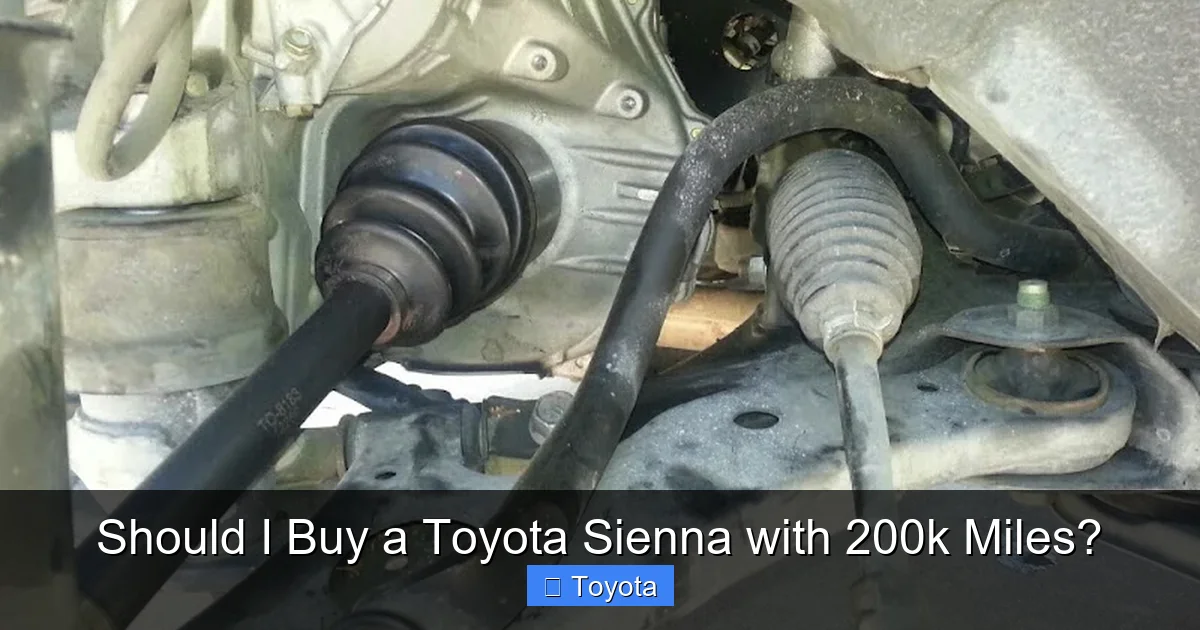
Visual guide about Should I Buy a Toyota Sienna with 200k Miles?
Image source: lh3.googleusercontent.com
Even the best vehicles have weak spots. Here are some common issues to watch for in a 200k-mile Sienna.
Timing Belt and Water Pump Failure
Models from 1998 to 2006 use a timing belt, which must be replaced every 90,000–100,000 miles. If it breaks, it can destroy the engine. Later models (2007+) use a timing chain, which lasts much longer.
The water pump is often replaced at the same time as the timing belt. If the previous owner skipped this service, you could be facing a $1,000+ repair soon.
Transmission Issues
While generally reliable, Sienna transmissions can develop problems if not serviced. Symptoms include:
– Slipping gears
– Delayed shifting
– Transmission fluid that’s dark or smells burnt
A transmission flush or rebuild can cost $1,500–$3,500. Ask if the fluid has been changed recently.
AWD System Wear
If the Sienna has AWD, the rear differential and transfer case may need service. Look for:
– Fluid leaks
– Whining or grinding noises from the rear
– Difficulty engaging AWD mode
Servicing the AWD system can cost $300–$600.
Hybrid Battery Degradation
For hybrid models, the battery is a critical component. Most last 150,000–200,000 miles, but degradation can start earlier.
Signs of a failing hybrid battery:
– Reduced fuel economy
– Frequent “check hybrid system” warnings
– Inability to drive in electric-only mode
A new hybrid battery can cost $2,000–$4,000, though used or refurbished units are cheaper.
Body and Rust Issues
Older Siennas (especially 2004–2006 models) can develop rust, particularly around the wheel wells, rocker panels, and undercarriage. Inspect the body carefully, especially if you live in a snowy or coastal area.
Hybrid vs. Gas: Which Is Better at 200k Miles?
If you’re choosing between a hybrid and gas-powered Sienna with high mileage, the hybrid often makes more sense—despite the higher upfront cost.
Fuel Economy Advantage
The hybrid Sienna delivers 30–36 mpg combined, compared to 18–24 mpg for the gas model. Over 50,000 miles, that’s a difference of 1,000+ gallons of gas—saving you $3,000–$4,000 at current prices.
Lower Engine Wear
The hybrid system reduces strain on the gasoline engine by using electric power at low speeds and during stops. This can extend engine life, especially in city driving.
Higher Maintenance Costs
The trade-off? Hybrid systems are more complex. If the battery or inverter fails, repairs are expensive. However, Toyota’s hybrid components are generally reliable, and many owners report trouble-free operation well past 200k miles.
Resale Value
Hybrid Siennas tend to hold their value better than gas models, especially in eco-conscious markets. This could make it easier to sell later.
How to Negotiate the Price
You’ve found a Sienna with 200k miles. Now it’s time to talk price. Here’s how to negotiate like a pro.
Use the Mileage as Leverage
Start by acknowledging the van’s strengths—Toyota reliability, space, features—but point out the high mileage. Say something like:
“I love the Sienna’s reputation, but 200k miles is a lot. I’m concerned about upcoming repairs.”
Highlight Needed Repairs
If the PPI reveals issues—worn suspension, low transmission fluid, cracked tires—use them to justify a lower offer. For example:
“The struts are shot, and the tires need replacing. That’s over $1,000 in repairs. I’d need to see a discount to cover that.”
Research Comparable Listings
Check Kelley Blue Book, Edmunds, and local listings for similar Siennas. Use this data to support your offer. If similar vans are listed for $8,000, don’t offer $10,000.
Be Ready to Walk Away
If the seller won’t budge, don’t be afraid to walk. There are plenty of Siennas out there. Patience pays off.
Is It Worth It? Final Verdict
So, should you buy a Toyota Sienna with 200k miles?
The short answer: Yes—if it’s been well-maintained and passes a thorough inspection.
The Sienna is one of the most reliable minivans ever made. With proper care, it can easily go another 50,000–100,000 miles. That’s years of school runs, road trips, and family adventures.
But don’t let the Toyota name lull you into complacency. High mileage means higher risk. You must do your homework—check the records, inspect the vehicle, and budget for potential repairs.
If you find a clean, well-documented Sienna with 200k miles, it could be one of the best used car buys you’ll ever make. Just remember: the best deal isn’t always the cheapest one. It’s the one that gives you peace of mind and long-term value.
Tips for Keeping Your High-Mileage Sienna Running
Once you buy it, keep it running strong with these tips:
- Stick to the maintenance schedule: Follow Toyota’s recommended service intervals—especially oil changes, transmission fluid, and coolant flushes.
- Use quality parts and fluids: Don’t skimp on synthetic oil or OEM filters. They cost a little more but protect your engine.
- Address small issues early: A $100 repair today can prevent a $1,000 repair tomorrow.
- Drive gently: Avoid hard acceleration and towing heavy loads unless necessary.
- Keep it clean: Wash the undercarriage regularly, especially in winter, to prevent rust.
With care, your Sienna can keep serving your family for years to come.
Frequently Asked Questions
Is 200,000 miles too much for a Toyota Sienna?
Not necessarily. Toyota Siennas are known for their longevity, and many exceed 250,000 miles with proper maintenance. The key is the vehicle’s condition and service history—not just the odometer reading.
What are the most common problems in high-mileage Siennas?
Common issues include worn suspension components, timing belt or chain wear, transmission fluid degradation, AWD system wear (if equipped), and hybrid battery degradation in hybrid models. Regular maintenance can prevent most of these.
Should I buy a hybrid or gas Sienna with high mileage?
The hybrid is often a better choice due to better fuel economy, lower engine wear, and higher resale value. However, hybrid battery replacement can be costly, so have it inspected by a specialist.
How much should I pay for a Sienna with 200k miles?
Prices vary by year, condition, and location, but expect to pay $6,000–$10,000 for a well-maintained model. Use needed repairs and market comparisons to negotiate a fair price.
Can a Sienna with 200k miles last another 50,000 miles?
Yes, absolutely. Many Siennas reach 300,000 miles or more. As long as it’s been well cared for and you continue regular maintenance, it can easily go another 50,000–100,000 miles.
Do I need a pre-purchase inspection for a high-mileage Sienna?
Yes. A pre-purchase inspection by a trusted mechanic is essential. It can reveal hidden issues and give you leverage in price negotiations. Never skip this step.
