
How Many Miles Can a 2006 Toyota Solara Last?

The 2006 Toyota Solara is known for its durability and can easily last 200,000 to 250,000 miles with proper care. With regular maintenance and timely repairs, some owners have even pushed their Solaras beyond 300,000 miles, making it a smart long-term investment.
Key Takeaways
- Typical lifespan: Most 2006 Toyota Solara models reach 200,000–250,000 miles with consistent maintenance.
- Engine reliability: The 2.4L 4-cylinder and 3.3L V6 engines are both robust and well-built when serviced regularly.
- Maintenance is key: Oil changes, timing belt replacements, and fluid flushes significantly extend the car’s life.
- Rust and body issues: Coastal or snowy regions may see rust; inspect undercarriage and wheel wells annually.
- Transmission care: Automatic transmissions last longer with regular fluid changes every 30,000–60,000 miles.
- High-mileage examples: Many owners report driving their Solara past 300,000 miles with only minor repairs.
- Resale value: Well-maintained models retain decent value due to Toyota’s reputation for reliability.
📑 Table of Contents
- How Many Miles Can a 2006 Toyota Solara Last?
- Understanding the 2006 Toyota Solara’s Design and Engineering
- Real-World Mileage: What Owners Are Saying
- The Role of Maintenance in Extending Solara’s Life
- Rust, Body, and Interior: What to Watch For
- Fuel Economy and Running Costs Over Time
- Is the 2006 Toyota Solara Worth Buying Today?
- Conclusion: A Reliable Partner for the Long Haul
How Many Miles Can a 2006 Toyota Solara Last?
When it comes to buying a used car, longevity is one of the top concerns. You want something that won’t leave you stranded after a few years—or worse, after a few months. If you’re eyeing a 2006 Toyota Solara, you’re likely wondering: How many miles can this car really go? The good news? The 2006 Toyota Solara is built on Toyota’s reputation for reliability, and with the right care, it can serve you well for a very long time.
The 2006 Solara comes in two body styles—a sleek coupe and a stylish convertible—both offering a comfortable ride, decent fuel economy, and a refined driving experience for their era. Under the hood, you’ll find either a 2.4-liter 4-cylinder engine or a more powerful 3.3-liter V6. Both engines are known for their durability, especially when maintained properly. While no car is immune to wear and tear, the Solara stands out as a solid choice for drivers who want a dependable vehicle that can rack up serious mileage without constant mechanical headaches.
So, what’s the real answer? Most experts and long-term owners agree that a well-cared-for 2006 Toyota Solara can easily hit 200,000 to 250,000 miles. In fact, many have surpassed that mark, with some even crossing the 300,000-mile threshold. That’s not just a number—it’s a testament to Toyota’s engineering and the car’s ability to endure years of daily driving, road trips, and everything in between. But like any vehicle, reaching those high-mileage goals depends heavily on how you treat it.
Understanding the 2006 Toyota Solara’s Design and Engineering
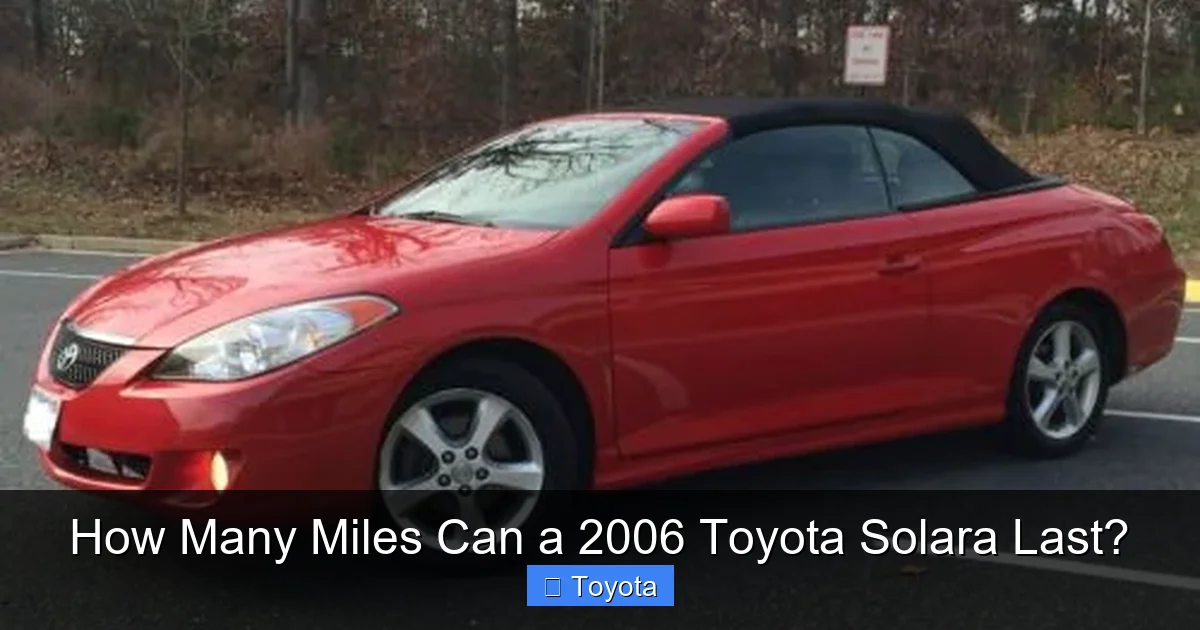
To understand how long the 2006 Toyota Solara can last, it helps to know what’s under the hood—and under the chassis. The Solara was designed as a mid-size coupe and convertible, sharing its platform with the Toyota Camry. That’s a big deal because the Camry is one of the most reliable cars ever made, and the Solara inherits much of that DNA. This shared engineering means the Solara benefits from proven components, a well-tested suspension system, and a focus on longevity.
Visual guide about How Many Miles Can a 2006 Toyota Solara Last?
Image source: 2040-cars.com
Engine Options and Their Durability
The 2006 Solara offers two engine choices: the 2.4L 2AZ-FE 4-cylinder and the 3.3L 3MZ-FE V6. The 4-cylinder produces around 157 horsepower and is known for its fuel efficiency and smooth operation. It’s a workhorse engine that, when maintained, can easily go 200,000+ miles. The V6, on the other hand, delivers a more spirited 225 horsepower and is often preferred by drivers who want a bit more power for highway merging or weekend drives.
Both engines are built with Toyota’s typical attention to detail. They feature aluminum blocks and heads, which reduce weight and improve heat dissipation. The 4-cylinder uses a timing chain, which typically lasts the life of the engine, while the V6 uses a timing belt that needs replacement every 90,000 to 100,000 miles. That’s a critical maintenance item—skip it, and you risk serious engine damage. But if you stay on top of it, both engines are incredibly reliable.
Transmission and Drivetrain Reliability
The 2006 Solara comes with a 5-speed automatic transmission (or a 5-speed manual on some 4-cylinder models). The automatic is a smooth-shifting unit that’s known for its durability. However, like all automatics, it needs regular fluid changes to stay healthy. Toyota recommends changing the transmission fluid every 30,000 to 60,000 miles, depending on driving conditions. Neglecting this can lead to slipping, rough shifts, and eventual failure.
The front-wheel-drive layout is simple and efficient, reducing mechanical complexity and wear. There are no driveshafts or differentials to worry about, which means fewer parts that can fail. The suspension uses a MacPherson strut setup in the front and a double-wishbone in the rear—both proven designs that offer a balance of comfort and handling. With regular inspections and timely replacements of shocks and struts, the Solara’s ride quality can remain smooth for hundreds of thousands of miles.
Real-World Mileage: What Owners Are Saying
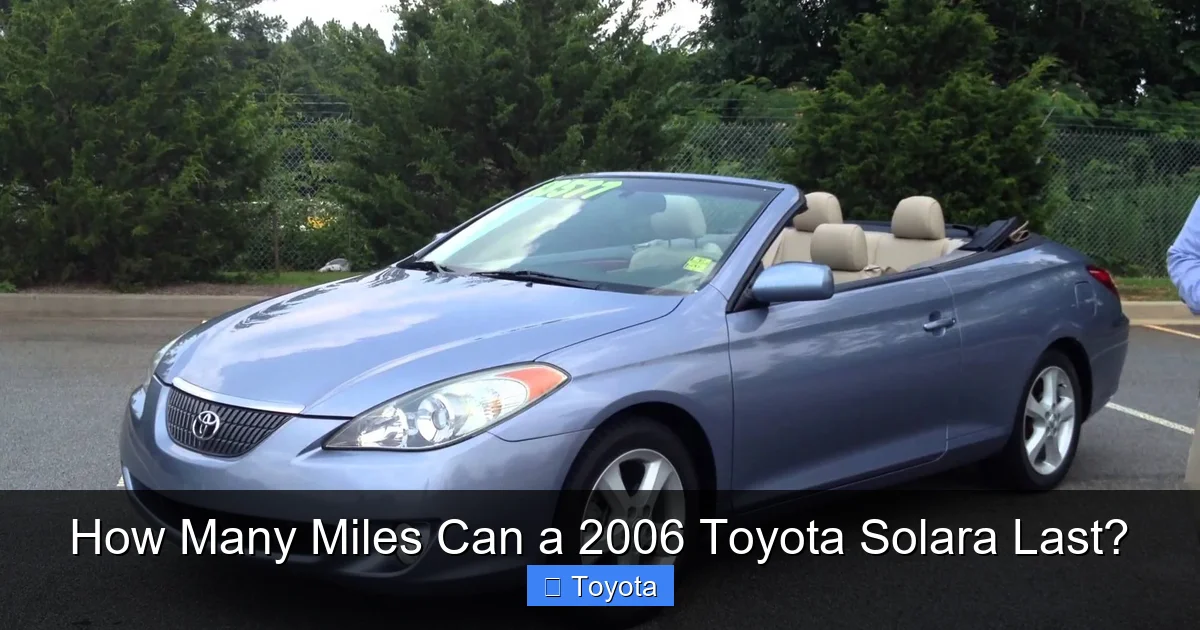
Numbers on a spec sheet are one thing, but real-world experiences tell the full story. Across online forums like Toyota Nation, Reddit’s r/Toyota, and CarTalk, 2006 Solara owners consistently report high-mileage success. Many drivers have shared stories of their cars crossing the 200,000-mile mark with only routine maintenance. Some have even posted photos of odometers showing 250,000, 280,000, or more.
Visual guide about How Many Miles Can a 2006 Toyota Solara Last?
Image source: hongliyangzhi.com
Case Study: A 280,000-Mile Solara
One owner on Toyota Nation shared that his 2006 Solara V6 convertible had reached 280,000 miles with only minor repairs. He followed the factory maintenance schedule religiously—oil changes every 5,000 miles, timing belt replaced at 90,000 and again at 180,000, and transmission fluid flushed every 50,000 miles. The only major repair was a water pump replacement at 210,000 miles, which is common for high-mileage engines. He still drives it daily and says it runs “like new.”
Common High-Mileage Issues
Even the most reliable cars have weak points. For the 2006 Solara, the most common high-mileage issues include:
- Strut mounts and suspension wear: After 150,000+ miles, the suspension components can start to wear, leading to noise and reduced ride quality.
- Door lock actuators: These often fail around 100,000–150,000 miles, causing doors to lock or unlock randomly.
- Convertible top mechanisms: On convertibles, the hydraulic pumps and motors can wear out, especially if the top is used frequently.
- Electrical gremlins: Some owners report issues with the dashboard lights or power windows, usually due to aging wiring or switches.
But here’s the key: most of these issues are manageable and don’t require engine or transmission rebuilds. They’re the kind of repairs you’d expect from any car with high mileage. The fact that the core mechanical systems—engine, transmission, drivetrain—remain solid is what makes the Solara stand out.
The Role of Maintenance in Extending Solara’s Life
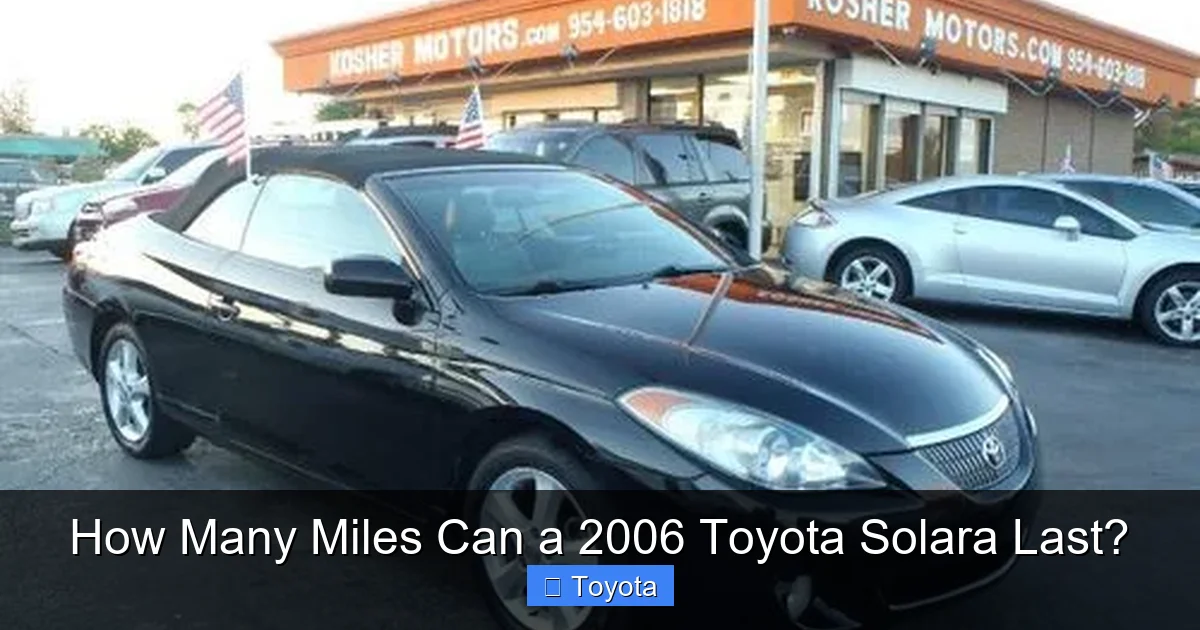
If there’s one truth about the 2006 Toyota Solara, it’s this: Maintenance is everything. You can’t just fill it with gas and hope for the best. But if you follow a consistent care routine, this car will reward you with years of trouble-free driving.
Visual guide about How Many Miles Can a 2006 Toyota Solara Last?
Image source: 2040-cars.com
Oil Changes: The Lifeline of Your Engine
Engine oil is the lifeblood of any car, and the Solara is no exception. Toyota recommends changing the oil every 5,000 miles or 6 months, whichever comes first. Using the right oil—typically 5W-30 synthetic blend or full synthetic—helps protect engine components from wear and sludge buildup. Skipping oil changes or using cheap oil can lead to premature engine wear, especially in the 2AZ-FE 4-cylinder, which is known to consume oil if not maintained.
One owner shared that his Solara started burning oil at 180,000 miles. After investigating, he found that he’d been stretching oil changes to 7,500–10,000 miles. Once he switched back to 5,000-mile intervals with high-quality synthetic oil, the oil consumption slowed significantly. It’s a simple lesson: don’t skip the oil changes.
Timing Belt and Water Pump Replacement
For V6 models, the timing belt is a critical maintenance item. Unlike timing chains, belts wear out and can snap without warning. If the belt breaks while the engine is running, it can cause catastrophic damage to the valves and pistons. Toyota recommends replacing the timing belt every 90,000 to 100,000 miles. Many mechanics also suggest replacing the water pump at the same time, since it’s driven by the belt and often fails around the same mileage.
The cost for a timing belt job typically ranges from $600 to $1,000, depending on labor rates. It’s not cheap, but it’s far less than an engine rebuild. For 4-cylinder models, the timing chain usually lasts the life of the engine, so you can skip this expense—but still keep an ear out for chain noise, which could indicate tensioner wear.
Transmission and Cooling System Care
The automatic transmission in the 2006 Solara is durable, but it needs regular fluid changes. Over time, transmission fluid breaks down and loses its ability to lubricate and cool internal components. Toyota recommends a fluid change every 30,000 to 60,000 miles. Some owners opt for a full flush, while others prefer a drain-and-fill. Either way, keeping the fluid clean helps prevent slipping, harsh shifts, and eventual failure.
The cooling system is another area that demands attention. The radiator, hoses, and thermostat should be inspected regularly. Coolant should be flushed every 60,000 to 100,000 miles to prevent corrosion and overheating. Overheating is one of the fastest ways to kill an engine, so don’t ignore warning lights or temperature spikes.
Rust, Body, and Interior: What to Watch For
While the 2006 Solara is mechanically sound, it’s not immune to the elements. Rust can be a problem, especially in regions with harsh winters or coastal climates. Salt on the roads accelerates corrosion, particularly on the undercarriage, wheel wells, and door sills. If you live in a snowy area, it’s wise to wash the underside of the car regularly during winter months.
Common Rust Areas
- Wheel wells: Moisture and salt collect here, leading to rust spots.
- Door bottoms: Water can seep into door seals and cause corrosion from the inside.
- Undercarriage: Frame rails and suspension components are vulnerable to rust if not protected.
Regular inspections and undercoating (if you live in a rust-prone area) can help extend the car’s life. Some owners apply rust-proofing treatments every few years to keep their Solara looking and performing well.
Interior Wear and Tear
The Solara’s interior is comfortable and well-appointed for its time, but it’s not immune to aging. Common issues include:
- Cracked dashboard: Sun exposure can cause the dashboard to crack, especially in convertibles.
- Worn seats: Leather seats may crack or tear over time; cloth seats can stain or fray.
- Fading trim: Plastic trim pieces may fade or become brittle.
These are mostly cosmetic issues, but they can affect resale value. Using sunshades, cleaning upholstery regularly, and conditioning leather can help preserve the interior.
Fuel Economy and Running Costs Over Time
One of the Solara’s strengths is its reasonable fuel economy. The 4-cylinder model averages around 22–25 mpg in the city and 30–33 mpg on the highway. The V6 is a bit thirstier, getting about 19–21 mpg city and 26–28 mpg highway. While not class-leading by today’s standards, these numbers are solid for a mid-2000s coupe or convertible.
Over 200,000 miles, fuel costs will add up, but the Solara remains affordable to operate. Regular maintenance helps keep efficiency high—dirty air filters, worn spark plugs, or low tire pressure can all reduce gas mileage. Keeping the car in good condition ensures you get the most miles per gallon possible.
Insurance and registration costs are also reasonable, especially as the car ages. Many insurers offer discounts for older, low-theft-risk vehicles like the Solara. Plus, with no major recalls or widespread issues, repair costs remain predictable.
Is the 2006 Toyota Solara Worth Buying Today?
If you’re in the market for a used car and want something reliable, stylish, and affordable, the 2006 Toyota Solara is a strong contender. It may not have the latest tech or the flashiest design, but it delivers where it counts: durability, comfort, and long-term value.
When shopping for a used Solara, look for one with a clean maintenance history. Ask for service records, check for rust, and have a trusted mechanic inspect it before buying. Avoid cars with salvage titles or signs of major accidents. A well-documented, low-mileage example (under 150,000 miles) can easily last another 100,000 miles or more with proper care.
Even high-mileage models can be good buys if they’ve been well maintained. A 200,000-mile Solara with a new timing belt, fresh fluids, and no major issues can still have plenty of life left. Just be prepared for the occasional repair—no car is perfect.
Conclusion: A Reliable Partner for the Long Haul
So, how many miles can a 2006 Toyota Solara last? The answer is clear: with proper care, this car can easily reach 200,000 to 250,000 miles—and many have gone even further. Its Toyota-built engines, solid transmission, and Camry-based platform give it a strong foundation for longevity. While it’s not without its quirks, the Solara remains a dependable choice for drivers who value reliability over flash.
The key to maximizing its lifespan is simple: stay on top of maintenance. Change the oil, replace the timing belt, flush the fluids, and keep an eye on rust and wear. Do that, and your Solara could be driving strong for years to come. Whether you’re commuting to work, taking weekend trips, or just enjoying the open road, this little coupe or convertible can keep up—mile after mile.
Frequently Asked Questions
How many miles can a 2006 Toyota Solara last?
Most 2006 Toyota Solara models can last between 200,000 and 250,000 miles with proper maintenance. Some well-cared-for examples have even surpassed 300,000 miles.
Is the 2006 Solara reliable?
Yes, the 2006 Solara is considered reliable, especially when maintained regularly. Its engines and transmissions are durable, and it shares components with the highly dependable Toyota Camry.
What maintenance is most important for longevity?
Key maintenance includes regular oil changes every 5,000 miles, timing belt replacement every 90,000–100,000 miles (V6 only), transmission fluid changes, and cooling system flushes.
Do 2006 Solaras have rust problems?
Rust can be an issue in snowy or coastal areas. Common spots include wheel wells, door sills, and the undercarriage. Regular washing and rust-proofing can help prevent it.
Can a high-mileage Solara still be a good buy?
Yes, if it has a solid maintenance history and no major mechanical issues. A well-documented 200,000-mile Solara can still have many reliable miles left.
Which engine is better: 4-cylinder or V6?
The 4-cylinder is more fuel-efficient and has a timing chain, while the V6 offers more power but requires a timing belt replacement. Both are reliable when maintained.