
How to Get Toyota 4runner Out of 4-wheel Drive

Getting your Toyota 4Runner out of 4-wheel drive is simple when you know the right steps. Whether you’re on pavement or switching back from off-roading, this guide covers every model and scenario to ensure a smooth transition without damaging your drivetrain.
Key Takeaways
- Know your 4Runner’s drivetrain system: Understand whether your model has part-time 4WD, full-time 4WD, or an automatic system, as each requires different procedures.
- Shift only when moving or at a complete stop: Most part-time 4WD systems require the vehicle to be in motion (under 5 mph) or completely stopped to disengage 4WD safely.
- Avoid shifting on dry pavement: Part-time 4WD should never be used on high-traction surfaces like asphalt, as it can cause drivetrain binding and damage.
- Use the correct gear and range: Always shift into 2WD (2H) from 4H or 4L using the proper sequence—typically Neutral first—to prevent grinding or mechanical stress.
- Listen for confirmation sounds: A slight clunk or shift sensation usually indicates successful disengagement; if it doesn’t engage smoothly, stop and retry.
- Consult your owner’s manual: Model years vary significantly—always refer to your specific 4Runner’s manual for exact instructions and warnings.
- Practice in a safe area: If you’re new to manual 4WD shifting, try the process in an empty parking lot before heading onto the road.
📑 Table of Contents
- Why Knowing How to Disengage 4WD Matters
- Understanding Your 4Runner’s 4WD System
- Step-by-Step: How to Get Your 4Runner Out of 4WD
- Common Mistakes and How to Avoid Them
- When Should You Use 4WD—And When Shouldn’t You?
- Maintenance Tips to Keep Your 4WD System Healthy
- Conclusion: Confidence Behind the Wheel
Why Knowing How to Disengage 4WD Matters
Owning a Toyota 4Runner means you’ve got one of the most capable SUVs on the road—built for adventure, rugged terrain, and everyday driving alike. But with great capability comes responsibility: understanding how to properly manage its 4-wheel drive system. Many 4Runner owners, especially those new to off-roading or manual drivetrains, find themselves confused about when and how to get their vehicle out of 4WD mode. Doing it incorrectly can lead to expensive repairs, premature wear, or even dangerous handling issues.
The good news? Once you know the basics, disengaging 4WD is straightforward. Whether you’ve just returned from a muddy trail, driven through snow, or accidentally left it engaged, this guide will walk you through the process step by step. We’ll cover all major 4Runner generations—from the early fifth-gen models to the latest 2024 versions—and explain the differences between part-time, full-time, and automatic 4WD systems. By the end, you’ll feel confident switching back to 2WD safely and efficiently.
Understanding Your 4Runner’s 4WD System
Before you even think about shifting out of 4WD, it’s crucial to know what kind of system your Toyota 4Runner has. Not all 4Runners are created equal when it comes to drivetrain design. The method for disengaging 4WD depends heavily on whether your vehicle uses a part-time, full-time, or automatic (A-TRAC) system.

Visual guide about How to Get Toyota 4runner Out of 4-wheel Drive
Image source: i.ytimg.com
Part-Time 4WD: The Classic Off-Road Setup
Most older 4Runners (especially pre-2010 models and base trims) come equipped with a part-time 4WD system. This is the traditional setup favored by serious off-roaders because it’s simple, robust, and fuel-efficient in 2WD mode. In part-time 4WD, power is sent equally to all four wheels—but only when you manually engage it. The key rule? Never use part-time 4WD on dry pavement. Doing so creates “drivetrain binding,” where the front and rear axles turn at slightly different speeds due to tire slip differences, causing stress on differentials, axles, and transfer case components.
Full-Time 4WD: Always On, But Adjustable
Some higher-trim 4Runners—particularly those with the Torsen® center differential—feature full-time 4WD. Unlike part-time systems, full-time 4WD can safely be used on all surfaces, including dry asphalt. That’s because it automatically distributes torque between front and rear axles based on traction needs. However, even in full-time mode, you may still want to switch to 2WD for better fuel economy or reduced drivetrain wear during normal highway driving. The process is usually simpler than part-time systems, often requiring just a button press or lever shift while driving under 50 mph.
Automatic 4WD (A-TRAC): Smart Engagement
Newer 4Runners (especially 2020+) often include an automatic 4WD mode, sometimes labeled “Auto” or controlled via the Multi-Terrain Select system. In this mode, the vehicle stays in 2WD most of the time but automatically engages 4WD when wheel slip is detected. To exit this mode, you typically just select “2H” (2-high) using the drive mode selector. No special procedure is needed—just make sure you’re not actively slipping wheels when making the change.
Step-by-Step: How to Get Your 4Runner Out of 4WD
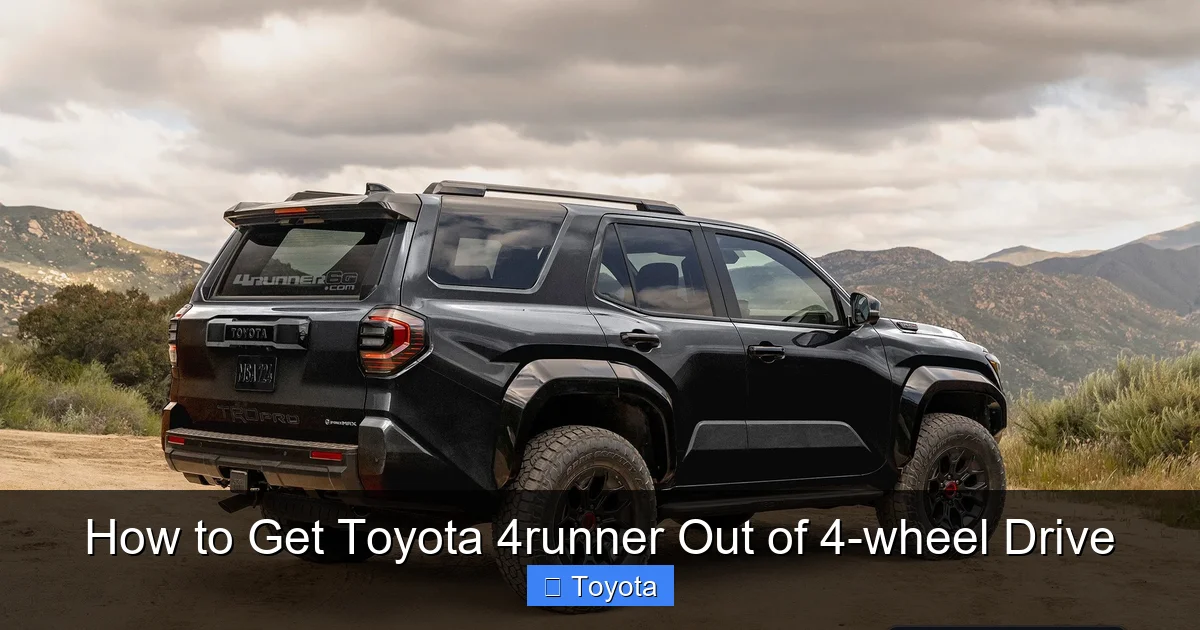
Now that you understand your system, let’s get practical. Below are detailed instructions tailored to the most common 4Runner configurations. Always prioritize safety: perform these steps on level ground, with the parking brake engaged if stopping, and never attempt a shift while accelerating or cornering sharply.
Visual guide about How to Get Toyota 4runner Out of 4-wheel Drive
Image source: s1.cdn.autoevolution.com
For Part-Time 4WD Models (Manual Shift Lever)
If your 4Runner has a physical transfer case shifter (usually a floor-mounted lever next to the gear shifter), follow these steps:
- Step 1: Come to a complete stop OR drive slower than 5 mph in a straight line. Shifting while moving slightly is often easier and reduces strain.
- Step 2: Shift the transmission into Neutral (N). This relieves pressure on the transfer case gears.
- Step 3: Move the 4WD lever from “4H” or “4L” to “2H.” You should feel a firm click or clunk—this means the system has disengaged.
- Step 4: Shift the transmission back into Drive (D) or your desired gear and continue driving.
Pro Tip: If the lever won’t move easily, don’t force it. Gently rock the steering wheel left and right while in Neutral—this can help align the gears. Also, avoid shifting directly from 4L to 2H without first going through 4H; always return to 4H before dropping to 2H.
For Electronic Shift-on-the-Fly Models (Button or Dial)
Many modern 4Runners (2010 and newer) use electronic controls instead of a mechanical lever. Look for buttons labeled “4H,” “4L,” and “2H” near the gear shifter or a rotary dial on the center console.
- Step 1: Ensure the vehicle is moving in a straight line at low speed (under 50 mph for 4H → 2H; under 5 mph for 4L → 4H).
- Step 2: Press the “2H” button (or turn the dial to 2H). The dashboard indicator should change from “4WD” to “2WD.”
- Step 3: You may hear a brief whirring sound—that’s normal as the electronic actuators disengage the front axle.
Note: Some models require you to be in Drive (not Neutral) when using electronic shifting. Check your owner’s manual—it’s the best source for your exact procedure.
Special Case: Getting Stuck in 4L
If you’ve been crawling over rocks or stuck in deep mud in 4L (low range), don’t panic. To get back to normal driving:
- Slow down to under 3–5 mph.
- Shift the transmission to Neutral.
- Move the 4WD lever or press the button to shift from 4L → 4H.
- Once in 4H, drive a short distance (10–20 feet) to allow the system to fully engage.
- Then follow the standard steps to shift from 4H → 2H.
Skipping the 4H step and trying to go directly from 4L to 2H can cause severe mechanical shock. Patience here saves your transfer case.
Common Mistakes and How to Avoid Them
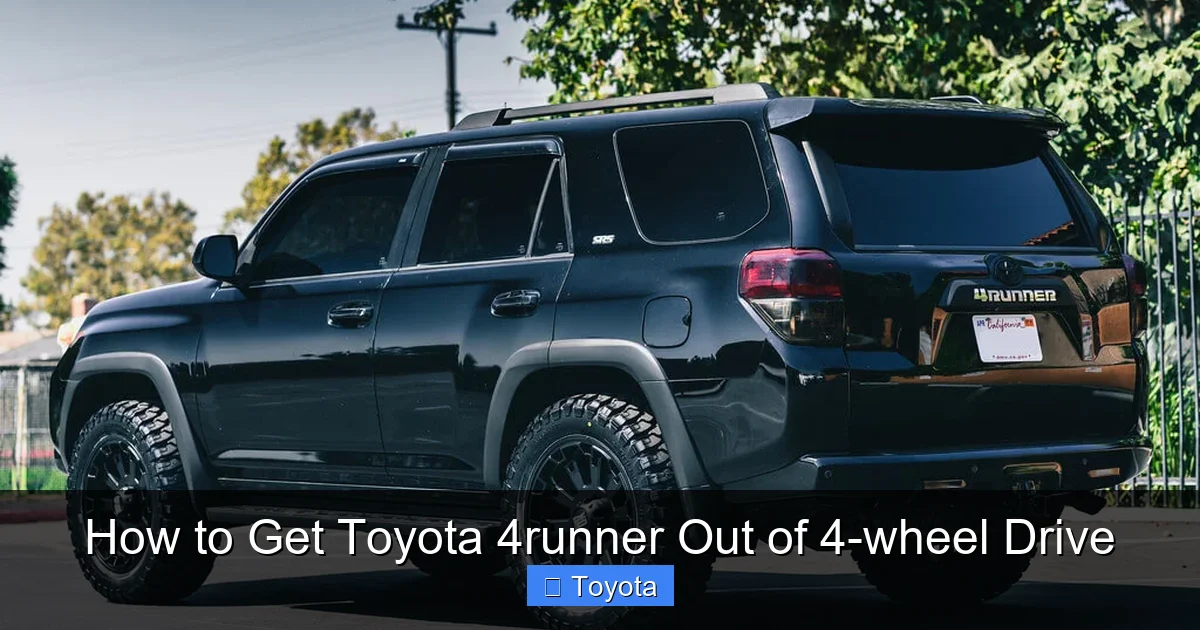
Even experienced drivers make errors when managing 4WD. Here are the top pitfalls—and how to steer clear of them.
Visual guide about How to Get Toyota 4runner Out of 4-wheel Drive
Image source: audiocityusa.com
Shifting on Dry Pavement in Part-Time 4WD
This is the #1 cause of 4Runner drivetrain damage. If you leave part-time 4WD engaged on asphalt or concrete, you’ll likely hear a “binding” sensation during turns—the tires skid instead of slipping, stressing components. Always disengage 4WD before returning to paved roads.
Forcing the Shift Lever
If your manual shifter won’t budge, don’t muscle it. Forcing it can strip gears or bend linkage. Instead, ensure you’re in Neutral, moving slowly, and not turning the wheels sharply. A little patience goes a long way.
Ignoring Dashboard Warnings
Modern 4Runners have indicator lights and messages (e.g., “4WD Not Engaged” or “Check 4WD System”). If you see these after shifting, stop safely and retry the process. Persistent warnings may indicate a faulty sensor or actuator—get it checked.
Assuming All Models Work the Same
A 2005 4Runner with a manual transfer case operates very differently from a 2023 Limited with electronic controls. Always verify your model year and trim level before attempting any shift. When in doubt, consult the owner’s manual—it’s free online from Toyota if you’ve misplaced yours.
When Should You Use 4WD—And When Shouldn’t You?
Understanding when to engage (and disengage) 4WD is just as important as knowing how. Using 4WD unnecessarily wastes fuel, increases wear, and can harm your vehicle.
Use 4WD When:
- Driving on loose surfaces (gravel, sand, mud, snow)
- Climbing steep, slippery inclines
- Towing heavy loads on low-traction terrain
- Off-roading on trails with uneven footing
Avoid 4WD When:
- Driving on dry, paved roads
- Highway cruising at steady speeds
- City driving with frequent stops and turns
- Parking or idling for extended periods
Remember: 4WD doesn’t improve braking or handling on ice—it only helps with acceleration. For icy conditions, consider winter tires instead of relying solely on 4WD.
Maintenance Tips to Keep Your 4WD System Healthy
Regular maintenance ensures your 4Runner’s 4WD system shifts smoothly and lasts for hundreds of thousands of miles.
Check and Change Transfer Case Fluid
Toyota recommends inspecting transfer case fluid every 30,000 miles and replacing it every 60,000–100,000 miles (check your manual). Dirty or low fluid can cause hard shifting or premature wear.
Inspect Front Axle Actuators
On electronic systems, the front axle actuators can fail over time—especially if exposed to water or mud. If your 4WD won’t engage or disengage, this could be the culprit. Listen for clicking sounds under the hood when shifting.
Lubricate Shift Linkages (Manual Systems)
If your 4Runner has a mechanical lever, spray a light lubricant (like WD-40 Specialist White Lithium) on the linkage joints annually. This prevents rust and ensures smooth operation.
Test Your System Regularly
Even if you don’t off-road often, engage 4H once a month for a few minutes on a gravel driveway. This keeps seals lubricated and confirms everything works when you need it.
Conclusion: Confidence Behind the Wheel
Getting your Toyota 4Runner out of 4-wheel drive doesn’t have to be intimidating. With the right knowledge, it’s a quick, safe process that protects your investment and keeps you rolling smoothly—whether you’re navigating city streets or mountain trails. The key is understanding your specific drivetrain, following the correct procedure for your model, and avoiding common mistakes like shifting on dry pavement or forcing a stubborn lever.
Your 4Runner is built for adventure, but it also deserves respect. Treat its 4WD system with care, maintain it regularly, and always refer to your owner’s manual for model-specific guidance. When in doubt, practice in a safe, open area before hitting the road. Soon, shifting in and out of 4WD will feel as natural as changing gears—and you’ll enjoy every mile of your 4Runner’s legendary capability without worry.
Frequently Asked Questions
Can I shift out of 4WD while driving?
Yes, but only under specific conditions. For part-time 4WD, shift while moving slowly (under 5 mph) in a straight line. For electronic systems, you can often shift from 4H to 2H at speeds up to 50 mph. Never shift from 4L to 2H while moving—always go through 4H first.
Why won’t my 4Runner shift out of 4WD?
This is usually due to being on high-traction surfaces (like dry pavement), not being in Neutral, or having misaligned gears. Try slowing down, shifting to Neutral, and gently rocking the steering wheel. If it still won’t budge, consult a mechanic—there may be a mechanical or electrical issue.
Is it bad to leave my 4Runner in 4WD all the time?
Only if it’s a part-time 4WD system. Leaving part-time 4WD engaged on dry roads causes drivetrain binding and damage. Full-time or automatic systems are designed for continuous use, but switching to 2H when not needed improves fuel economy.
How do I know if my 4Runner has part-time or full-time 4WD?
Check your owner’s manual or look for markings near the shifter. Part-time systems typically have a “2H/4H/4L” label and require manual disengagement on pavement. Full-time systems often say “Full-Time 4WD” and allow use on all surfaces.
What happens if I force the 4WD lever?
Forcing the lever can damage the transfer case gears, shift linkage, or synchronizers. This may lead to costly repairs. Always ensure the vehicle is in Neutral and moving slowly—or stopped—before attempting a shift.
Do I need to stop completely to shift out of 4WD?
Not always. Many part-time systems allow shifting while moving under 5 mph. However, stopping completely is safer and reduces stress on components. Electronic systems often permit shifts at higher speeds without stopping.
