
How Many Quarts of Oil Does a Toyota Corolla Take

Knowing how many quarts of oil your Toyota Corolla needs is essential for engine health and performance. Most models require between 4.2 and 5.5 quarts, depending on the engine size and year. Always check your owner’s manual for the exact amount and recommended oil type.
Key Takeaways
- Oil Capacity Varies by Model Year: Older Corollas (pre-2014) typically use 4.2–4.4 quarts, while newer models (2014–present) often require 4.4–5.5 quarts depending on engine size.
- Engine Size Matters: The 1.8L four-cylinder engine usually takes around 4.4 quarts, while the 2.0L Dynamic Force engine in newer models may need up to 5.5 quarts.
- Use the Right Oil Type: Most Corollas recommend 0W-20 synthetic oil for optimal fuel efficiency and engine protection, especially in modern models.
- Always Check the Dipstick: After an oil change, verify oil levels with the dipstick to ensure you haven’t overfilled or underfilled the engine.
- Follow the Maintenance Schedule: Toyota recommends oil changes every 10,000 miles or 12 months with synthetic oil, but driving conditions may require more frequent changes.
- Overfilling Can Damage the Engine: Adding too much oil can cause foaming, reduced lubrication, and potential engine damage—stick to the specified capacity.
- Consult Your Owner’s Manual: The most reliable source for oil capacity and type is your vehicle’s owner’s manual or Toyota’s official website.
📑 Table of Contents
How Many Quarts of Oil Does a Toyota Corolla Take?
If you own a Toyota Corolla—or you’re thinking about buying one—you’ve probably asked yourself: “How many quarts of oil does a Toyota Corolla take?” It’s a simple question, but the answer isn’t always straightforward. The amount of oil your Corolla needs depends on several factors, including the model year, engine size, and even the type of oil you’re using.
The Toyota Corolla is one of the most popular compact sedans in the world, known for its reliability, fuel efficiency, and low maintenance costs. But like any vehicle, it needs regular oil changes to keep the engine running smoothly. Oil lubricates the engine’s moving parts, reduces friction, prevents overheating, and helps keep contaminants out. Without the right amount of clean oil, your engine could suffer serious damage over time.
So, how much oil does your Corolla actually need? Most Toyota Corolla models require between 4.2 and 5.5 quarts of oil, including the oil filter. However, this number can vary. For example, a 2010 Corolla with a 1.8L engine might take 4.4 quarts, while a 2022 Corolla with a 2.0L engine could need up to 5.5 quarts. That’s why it’s so important to know your specific model and engine type.
In this guide, we’ll walk you through everything you need to know about the oil capacity of your Toyota Corolla. We’ll break down the differences between model years, explain why oil type matters, and give you practical tips for checking and changing your oil. Whether you’re a DIY enthusiast or you prefer to let a professional handle it, this information will help you keep your Corolla in top shape for years to come.
Understanding Oil Capacity in the Toyota Corolla
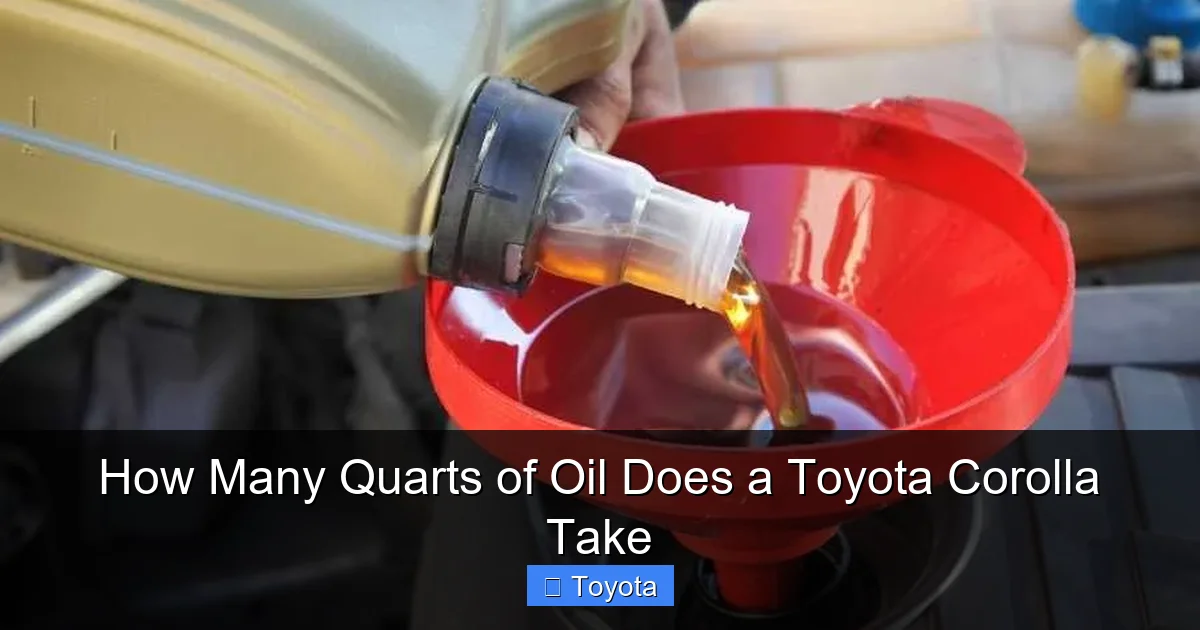
Visual guide about How Many Quarts of Oil Does a Toyota Corolla Take
Image source: trucksauthority.com
When it comes to engine oil, “capacity” refers to the total amount of oil the engine holds when it’s full—including the oil in the oil pan, oil filter, and engine passages. This is different from the amount you add during an oil change, which is typically slightly less because some oil remains in the engine.
For the Toyota Corolla, oil capacity is closely tied to the engine design. Most Corollas are equipped with either a 1.8L or a 2.0L four-cylinder engine. The 1.8L engine, found in models from 2009 to 2018, generally holds about 4.4 quarts of oil with a new filter. The newer 2.0L Dynamic Force engine, introduced in 2019 and used in models like the 2020–2024 Corolla, has a larger oil capacity—often around 5.5 quarts.
But why the difference? Larger engines have more internal components and generate more heat, so they need more oil to maintain proper lubrication and cooling. Additionally, modern engines are designed for higher efficiency and lower emissions, which often requires more precise oil management and higher oil volume.
It’s also worth noting that oil capacity can vary slightly between model years, even within the same engine family. For example, a 2015 Corolla with the 1.8L engine might take 4.4 quarts, while a 2018 model with the same engine could require 4.6 quarts due to minor design updates. That’s why it’s always best to consult your owner’s manual or a trusted Toyota service guide.
Why Oil Capacity Isn’t One-Size-Fits-All
You might be wondering why Toyota doesn’t just use the same oil capacity across all Corolla models. The truth is, engine technology evolves, and so do oil requirements. Over the years, Toyota has refined the Corolla’s engine to improve fuel economy, reduce emissions, and enhance performance. These improvements often come with changes in oil capacity.
For instance, the shift from conventional oil to synthetic blends and full synthetic oils has allowed Toyota to design engines that run hotter and more efficiently. Synthetic oils flow better at low temperatures and resist breakdown at high temperatures, which means engines can operate with tighter tolerances and less friction. But these benefits come with a need for more precise oil volume.
Additionally, modern Corollas are equipped with advanced oil filtration systems and variable valve timing (VVT-i), which rely on consistent oil pressure and clean oil to function properly. Too little oil, and these systems may not work correctly. Too much oil, and you risk foaming, which reduces lubrication and can damage engine components.
So, while it might seem like a small detail, getting the oil capacity right is crucial for your Corolla’s longevity and performance.
Oil Capacity by Model Year and Engine Type
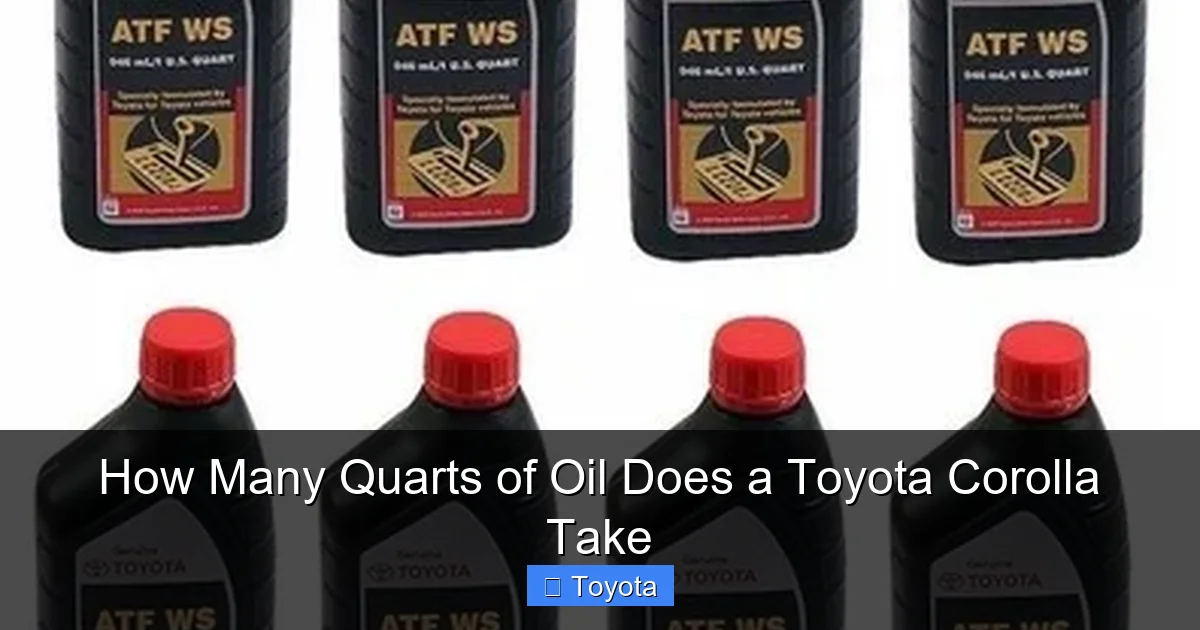
Visual guide about How Many Quarts of Oil Does a Toyota Corolla Take
Image source: i.ebayimg.com
To help you find the exact oil capacity for your Toyota Corolla, let’s break it down by model year and engine type. Keep in mind that these are general guidelines—always double-check with your owner’s manual or a Toyota dealership for your specific vehicle.
2009–2013 Toyota Corolla (1.8L 2ZR-FE Engine)
The 2009–2013 Corolla models are powered by the 1.8L 2ZR-FE four-cylinder engine. This engine is known for its durability and fuel efficiency, and it typically requires **4.4 quarts of oil** when including a new oil filter. If you’re doing an oil change at home, you’ll usually add about 4.2 quarts initially, then top it off after checking the dipstick.
These models were designed to use 5W-30 conventional oil, though Toyota later recommended switching to 0W-20 synthetic for improved fuel economy. If you’re using synthetic oil, make sure it meets the ILSAC GF-5 or GF-6 standard for compatibility.
2014–2018 Toyota Corolla (1.8L 2ZR-FE or 2ZR-FAE Engine)
The 2014–2018 Corolla continued using the 1.8L engine, but with some updates. The 2ZR-FAE version, introduced in 2014, features Valvematic technology for better fuel efficiency. Despite these improvements, the oil capacity remains similar—around **4.4 to 4.6 quarts** with a new filter.
Toyota began recommending 0W-20 synthetic oil for these models, especially in colder climates. Using the correct oil type is important because the Valvematic system relies on precise oil pressure to adjust valve lift.
2019–2024 Toyota Corolla (2.0L M20A-FKS Dynamic Force Engine)
The biggest change came in 2019, when Toyota introduced the new 2.0L M20A-FKS Dynamic Force engine. This engine is more powerful and efficient than its predecessor, and it requires more oil—typically **5.5 quarts** with a new filter.
This increase in oil capacity supports the engine’s higher performance and advanced technologies, such as direct injection and variable valve timing. The 2.0L engine also uses a more sophisticated oil pump and cooling system, which require consistent oil volume to operate correctly.
For these models, Toyota strongly recommends using 0W-20 full synthetic oil. This oil is designed to flow quickly at startup, reduce engine wear, and improve fuel economy. Using the wrong oil type—or the wrong amount—can void your warranty and lead to engine problems.
Hybrid Models (2020–2024 Corolla Hybrid)
The Corolla Hybrid, introduced in 2020, uses a 1.8L hybrid powertrain that combines a gasoline engine with an electric motor. Despite the hybrid system, the oil capacity for the gasoline engine remains similar to the standard 1.8L models—around **4.4 quarts** with a new filter.
However, because the engine doesn’t run continuously (it shuts off when the car is stopped or running on electric power), oil degradation can be different. Toyota still recommends 0W-20 synthetic oil and regular oil changes, but some owners report longer intervals between changes due to reduced engine runtime.
Choosing the Right Oil Type for Your Corolla

Visual guide about How Many Quarts of Oil Does a Toyota Corolla Take
Image source: psychoautos.com
Now that you know how many quarts of oil your Toyota Corolla takes, the next step is choosing the right oil type. Using the wrong oil can lead to poor engine performance, increased wear, and even engine damage.
Conventional vs. Synthetic Oil
Conventional oil is the traditional motor oil derived from crude oil. It’s been used in cars for decades and works well in older engines. However, it breaks down faster under high heat and doesn’t flow as well in cold weather.
Synthetic oil, on the other hand, is engineered in a lab to provide better performance. It resists breakdown, flows more easily at low temperatures, and offers superior protection against wear and sludge. For most modern Corollas, especially those with 1.8L or 2.0L engines, Toyota recommends **0W-20 full synthetic oil**.
The “0W” means the oil flows like a 0-weight oil in cold weather, ensuring quick lubrication at startup. The “20” refers to its viscosity at operating temperature—thinner than older oils like 5W-30, which helps improve fuel economy.
Why 0W-20 Is the Standard
Toyota switched to 0W-20 synthetic oil in most of its vehicles to meet stricter fuel economy and emissions standards. Thinner oil reduces internal engine friction, which means the engine doesn’t have to work as hard to move its parts. This translates to better gas mileage and lower CO2 emissions.
But thinner oil also means the engine must be designed to handle it. Modern Corollas have tighter tolerances and advanced oil pumps that rely on consistent oil pressure. Using a thicker oil like 10W-30 could increase pressure and strain the system, while using a thinner oil than recommended could lead to inadequate lubrication.
Can You Use Synthetic Blend?
Synthetic blend oil is a mix of conventional and synthetic oil. It offers some of the benefits of full synthetic at a lower cost. While it’s better than conventional oil, it’s not ideal for newer Corollas.
Toyota recommends full synthetic oil for most models, especially those with the 2.0L engine or hybrid systems. Synthetic blends may not provide the same level of protection or performance, particularly in extreme temperatures or under heavy driving conditions.
If you’re on a tight budget, a high-quality synthetic blend might work in a pinch, but for long-term engine health, stick with full synthetic 0W-20.
How to Check and Change Your Corolla’s Oil
Knowing how many quarts of oil your Corolla takes is only half the battle. You also need to know how to check and change it properly. Whether you’re a first-time DIYer or a seasoned mechanic, these steps will help you get the job done right.
Step 1: Gather Your Supplies
Before you start, make sure you have the following:
– The correct amount and type of oil (check your owner’s manual)
– A new oil filter (Toyota recommends OEM filters for best performance)
– An oil filter wrench
– A socket wrench and oil drain pan
– Funnel
– Gloves and safety glasses
– Jack and jack stands (or ramps) if needed
Step 2: Warm Up the Engine
Run your Corolla for about 5–10 minutes to warm up the oil. Warm oil flows more easily, which helps it drain completely. But don’t let the engine get too hot—working on a hot engine can cause burns.
Step 3: Drain the Old Oil
Park your car on a level surface and turn off the engine. Locate the oil drain plug underneath the engine (refer to your manual if needed). Place the drain pan beneath it and carefully remove the plug with a socket wrench. Let the oil drain completely—this can take 5–10 minutes.
Step 4: Replace the Oil Filter
While the oil is draining, remove the old oil filter using an oil filter wrench. Before installing the new filter, lightly coat the rubber gasket with fresh oil. Screw the new filter on by hand until it’s snug—don’t overtighten.
Step 5: Add New Oil
Once the oil has drained, replace the drain plug and tighten it securely. Use a funnel to pour in the recommended amount of oil—usually 4.2 to 4.4 quarts for older models, or 5.3 to 5.5 quarts for newer ones. Start with slightly less than the full capacity, then check the dipstick.
Step 6: Check the Oil Level
Start the engine and let it run for a minute to circulate the oil. Turn it off and wait a few minutes for the oil to settle. Pull out the dipstick, wipe it clean, reinsert it, and check the level. It should be between the “L” (low) and “F” (full) marks. Add more oil if needed, but don’t overfill.
Step 7: Dispose of Used Oil Properly
Never pour used oil down the drain or on the ground. Most auto parts stores and service centers accept used oil for recycling. Store it in a sealed container and drop it off when convenient.
Common Mistakes to Avoid
Even experienced drivers can make mistakes when changing oil. Here are some common pitfalls to watch out for:
Overfilling the Engine
Adding too much oil is a serious mistake. Excess oil can foam, reducing its ability to lubricate the engine. This can lead to increased wear, overheating, and even engine failure. Always check the dipstick after adding oil and never exceed the “F” mark.
Using the Wrong Oil Type
Using 10W-30 in a Corolla that requires 0W-20 can cause poor fuel economy, increased emissions, and engine damage. Always use the oil type specified in your owner’s manual.
Skipping the Oil Filter Change
The oil filter traps dirt and debris, so it needs to be replaced with every oil change. Reusing an old filter can lead to clogging and reduced oil flow.
Not Tightening the Drain Plug or Filter
A loose drain plug or oil filter can cause leaks, which can lead to low oil levels and engine damage. Make sure both are securely tightened—but don’t overtighten, as this can strip threads.
Ignoring the Maintenance Schedule
Even with synthetic oil, your Corolla needs regular oil changes. Toyota recommends changing the oil every 10,000 miles or 12 months, whichever comes first. However, if you drive in severe conditions—like extreme heat, cold, or stop-and-go traffic—you may need to change it more often.
Conclusion
So, how many quarts of oil does a Toyota Corolla take? The answer depends on your model year and engine size, but most Corollas require between 4.2 and 5.5 quarts, including the oil filter. Older models with the 1.8L engine typically use around 4.4 quarts, while newer models with the 2.0L engine may need up to 5.5 quarts.
Using the right oil type—usually 0W-20 full synthetic—is just as important as getting the quantity right. This ensures your engine runs smoothly, efficiently, and reliably for years to come. And whether you change the oil yourself or take it to a professional, always double-check the oil level with the dipstick to avoid overfilling or underfilling.
Regular oil changes are one of the simplest and most effective ways to maintain your Corolla’s performance and extend its lifespan. By following the guidelines in this guide and consulting your owner’s manual, you’ll keep your engine in top condition and enjoy the dependable driving experience that Toyota is known for.
Frequently Asked Questions
How often should I change the oil in my Toyota Corolla?
Toyota recommends changing the oil every 10,000 miles or 12 months when using synthetic oil. However, if you drive in severe conditions—such as extreme temperatures, frequent short trips, or heavy traffic—you may need to change it more often, around every 5,000 miles.
Can I use 5W-30 oil in my Corolla instead of 0W-20?
While 5W-30 may work in older Corolla models, it’s not recommended for newer ones. Modern engines are designed for 0W-20 synthetic oil to optimize fuel economy and performance. Using the wrong viscosity can reduce efficiency and potentially damage the engine.
What happens if I put too much oil in my Corolla?
Overfilling can cause oil to foam, which reduces its lubricating properties. This can lead to increased engine wear, overheating, and even engine failure. Always check the dipstick after adding oil and ensure the level is between the “L” and “F” marks.
Do I need to change the oil filter every time?
Yes, the oil filter should be replaced with every oil change. It traps contaminants and debris, and reusing an old filter can lead to clogging and reduced oil flow, which can damage the engine.
Can I mix synthetic and conventional oil in my Corolla?
While mixing oils won’t immediately damage your engine, it’s not recommended. Synthetic and conventional oils have different additives and properties. For best performance, use the full synthetic 0W-20 oil specified by Toyota.
Where can I find the exact oil capacity for my Corolla?
The most reliable source is your vehicle’s owner’s manual. You can also check Toyota’s official website or consult a certified Toyota service center. Be sure to include the oil filter in your total capacity calculation.