
Where to Buy Car Parts

Finding the right place to buy car parts can save you time, money, and hassle. From trusted online retailers like RockAuto and Amazon to local auto parts stores and salvage yards, your options vary by price, convenience, and part availability. For new OEM or aftermarket parts, online platforms offer wide selections and competitive pricing, while junkyards provide affordable used components for older vehicles.
Key Takeaways
- Compare prices online to find the best deals on car parts quickly.
- Buy OEM parts for guaranteed compatibility and reliability with your vehicle.
- Check return policies before purchasing to avoid hassle with wrong or defective parts.
- Use trusted retailers like AutoZone, Advance Auto Parts, or RockAuto for quality assurance.
- Consider used parts from salvage yards for affordable, eco-friendly options.
- Read customer reviews to assess part quality and seller credibility.
📑 Table of Contents
- Where to Buy Car Parts: Your Complete Guide to Finding the Right Components
- 1. Auto Parts Stores: The Go-To for Quick Fixes
- 2. Online Retailers: Convenience and Competitive Pricing
- 3. Dealerships: OEM Quality at a Premium
- 4. Salvage Yards and Junkyards: Hidden Gems for Used Parts
- 5. Specialty and Performance Shops: For Enthusiasts and Custom Builds
- 6. Comparing Your Options: A Quick Reference Guide
- Final Thoughts: Making the Smart Choice
Where to Buy Car Parts: Your Complete Guide to Finding the Right Components
Let’s be honest—car trouble is never convenient. Whether it’s that mysterious knocking sound under the hood or the check engine light that just won’t go away, dealing with car repairs can feel overwhelming. And when you finally figure out what’s wrong, the next challenge begins: where to buy car parts that are reliable, affordable, and actually fit your vehicle?
You’re not alone. Every year, millions of drivers face this exact dilemma. Some rush to the nearest dealership, others scour online marketplaces, and a few brave souls even try their local junkyard. But with so many options out there—each with its own pros and cons—it’s easy to make a costly mistake. Maybe you bought a part that looked right but didn’t work. Or worse, you paid top dollar for something you could’ve gotten for half the price elsewhere.
The good news? Finding quality car parts doesn’t have to be stressful. With the right knowledge and a little know-how, you can source everything from brake pads to alternators without breaking the bank or compromising on safety. In this guide, we’ll walk you through the best places to buy car parts, what to look for, and how to avoid common pitfalls. Whether you’re a DIY mechanic or just trying to save on labor costs, this is your go-to resource for smart, informed decisions.
1. Auto Parts Stores: The Go-To for Quick Fixes
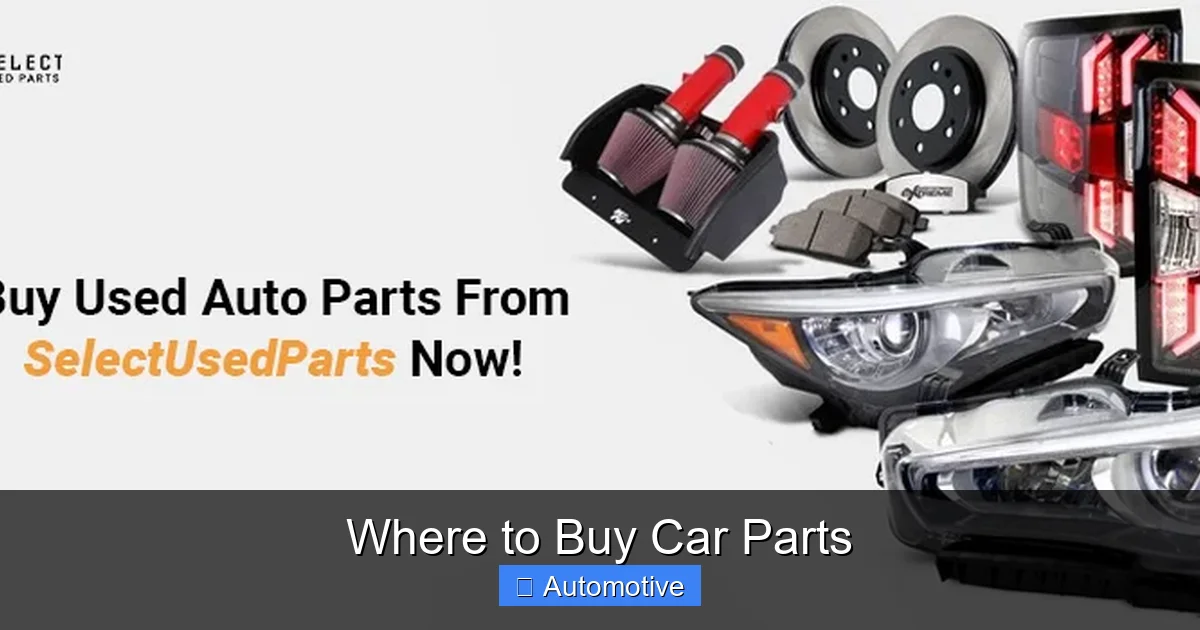
When your car breaks down and you need a replacement part fast, auto parts stores are often the first place people think of. Chains like AutoZone, Advance Auto Parts, O’Reilly Auto Parts, and NAPA are staples in nearly every town across the U.S. They’re convenient, well-stocked, and usually open late—perfect for those weekend repair projects.
Visual guide about Where to Buy Car Parts
Image source: selectusedparts.com
Why Auto Parts Stores Are Reliable
One of the biggest advantages of shopping at a physical auto parts store is instant access. Need a new air filter? Walk in, grab it, and install it the same day. Many stores also offer free services like battery testing, code reading (for that pesky check engine light), and even loaner tools. That’s a huge help if you don’t own a torque wrench or a serpentine belt tool.
Another perk? Knowledgeable staff. While not every employee is a certified mechanic, most are trained to help you find the right part for your make, model, and year. Just bring your vehicle info—or better yet, the old part itself—and they’ll cross-reference it in their system.
What to Watch Out For
That said, auto parts stores aren’t perfect. Prices can be higher than online retailers, especially for common items like spark plugs or wiper blades. Also, while they carry a wide range of parts, they may not stock specialty or high-performance components. If you drive a rare import or a modified vehicle, you might leave empty-handed.
And here’s a pro tip: always check the warranty. Most stores offer at least a one-year warranty on parts, and some even allow returns if the part doesn’t fit. But don’t assume—ask before you buy. I once bought a fuel pump that turned out to be the wrong voltage. Luckily, the store took it back no questions asked. Others might not be so flexible.
Best For: Everyday Repairs and Emergency Replacements
If you’re fixing something routine—like replacing brake pads, a thermostat, or a headlight bulb—an auto parts store is usually your best bet. They’re fast, local, and trustworthy for standard repairs. Just remember to compare prices online before you go. Sometimes, the same part is 20% cheaper on their website with in-store pickup.
2. Online Retailers: Convenience and Competitive Pricing
Thanks to the internet, buying car parts has never been easier. Online retailers like RockAuto, Amazon, eBay, and CarParts.com offer massive inventories, often at lower prices than brick-and-mortar stores. Plus, you can shop from your couch at 2 a.m.—no need to wait for store hours.

Visual guide about Where to Buy Car Parts
Image source: reliantautorepair.com
The Power of Online Shopping
One of the biggest advantages of online shopping is selection. Need a rare OEM (original equipment manufacturer) part for a 2003 Honda Civic? RockAuto might have it in stock when your local store doesn’t. Online platforms also make it easy to compare prices across multiple brands and sellers. A quick search for “alternator for 2015 Toyota Camry” can show you options ranging from $80 to $300—giving you full control over your budget.
Another benefit? Customer reviews. Before you buy, you can read real feedback from other drivers who’ve installed the same part. Did it last? Was it easy to install? Were there any compatibility issues? This kind of insight is invaluable, especially when you’re unsure about a lesser-known brand.
Shipping, Returns, and the Risk of Wrong Parts
Of course, online shopping isn’t without its challenges. Shipping times can vary—especially if you’re ordering from overseas. If your car is sitting in the driveway, waiting three days for a part might feel like an eternity. Some sites offer expedited shipping, but that adds to the cost.
And then there’s the risk of receiving the wrong part. Even with detailed fitment guides, mistakes happen. I once ordered a radiator for my Ford F-150, only to discover it was for the diesel version—completely incompatible. The return process took over a week, and I had to pay return shipping. Lesson learned: double-check the part number and vehicle specs before clicking “buy.”
Pro Tips for Safe Online Purchases
- Use the vehicle selector tool: Most reputable sites let you enter your car’s year, make, model, and engine type to filter compatible parts.
- Check seller ratings: On Amazon or eBay, stick to sellers with high feedback scores and verified reviews.
- Look for free returns: Sites like RockAuto and CarParts.com often offer hassle-free returns, which reduces your risk.
- Buy from trusted brands: Stick with names like Bosch, Denso, ACDelco, or Gates—even if they cost a bit more.
Online retailers are ideal if you’re comfortable waiting a few days and doing your homework. They’re especially great for non-urgent repairs or when you’re looking for a better deal on a major component like a transmission or catalytic converter.
3. Dealerships: OEM Quality at a Premium
When it comes to car parts, dealerships are the gold standard—for original equipment manufacturer (OEM) parts, that is. If you want a part that’s made by the same company that built your car, the dealership is the only place to get it.
Visual guide about Where to Buy Car Parts
Image source: aa1car.com
The Case for OEM Parts
OEM parts are designed specifically for your vehicle. They match the exact specifications, fit perfectly, and often come with a manufacturer’s warranty. For critical components like airbags, engine control modules, or suspension parts, many mechanics recommend OEM for safety and reliability.
For example, if your BMW needs a new water pump, the OEM part from the dealership will be identical to the one installed at the factory. Aftermarket versions might work, but they could have slight differences in material or design that affect performance over time.
The Downside: Cost and Convenience
Here’s the catch: OEM parts are expensive. A dealership might charge $400 for a radiator that an aftermarket brand sells for $150. And while some dealerships have parts departments open to the public, others only sell to their service centers—meaning you’ll pay labor on top of the part.
Also, dealerships aren’t always the fastest option. If they don’t have the part in stock, you could wait days or even weeks for it to arrive. And if you’re not near a dealership, shipping costs can add up.
When to Choose the Dealership
So when should you go the dealership route? Here are a few scenarios:
- Your car is still under warranty, and the repair is covered.
- You’re replacing a safety-critical part (like brakes or airbags).
- You drive a luxury or high-performance vehicle where fit and finish matter.
- You want the peace of mind that comes with a factory-backed part.
But if you’re on a budget or driving an older car, aftermarket parts from reputable brands are often just as good—and much more affordable.
4. Salvage Yards and Junkyards: Hidden Gems for Used Parts
Think junkyards are just piles of rust and regret? Think again. Salvage yards—also called auto recyclers or junkyards—can be treasure troves for used car parts. And with the rise of online salvage networks like Car-Part.com and eBay Motors, finding the right used part has never been easier.
The Pros of Buying Used
The biggest advantage? Price. A used alternator from a salvage yard might cost $50, compared to $200 for a new one. For older vehicles, used parts can be a lifesaver—especially when new ones are discontinued or hard to find.
Many salvage yards also offer warranties on used parts, sometimes up to 90 days. And because the parts are pulled from real vehicles, you know they’ve been tested in the field. If a used transmission worked in a 2010 Honda Accord for 100,000 miles, it’s likely to work in yours too.
What to Know Before You Go
Buying used isn’t without risks. The part might look good on the shelf but have hidden damage. That’s why it’s smart to ask about the vehicle it came from—mileage, accident history, and why it was scrapped. Some yards even let you inspect the part before buying.
Also, be prepared to get your hands dirty. Many salvage yards are self-service, meaning you’ll need tools and some mechanical skill to remove the part yourself. Bring gloves, a socket set, and a friend if you’re tackling something big like an engine or transmission.
Online Salvage Networks: The Game Changer
Thanks to websites like Car-Part.com, you can search hundreds of salvage yards across the country from your laptop. Enter your vehicle info and the part you need, and the site shows you available options with prices, conditions, and locations. Some even offer shipping.
I once needed a rear bumper for my 2008 Subaru Outback. Instead of driving to three different yards, I found one online from a yard 200 miles away. They shipped it for $50, and it arrived in perfect condition. Total cost: $120. A new one would’ve been over $600.
Salvage yards are best for non-critical parts like body panels, mirrors, or interior trim. For engine or electrical components, proceed with caution—and always ask about the return policy.
5. Specialty and Performance Shops: For Enthusiasts and Custom Builds
Not all car parts are created equal—especially if you’re into performance, off-roading, or custom builds. That’s where specialty shops come in. Whether you’re upgrading your Mustang’s exhaust or adding a lift kit to your Jeep, these retailers cater to enthusiasts who want more than just factory specs.
What Makes Specialty Shops Different
Specialty shops focus on specific types of vehicles or modifications. Think Summit Racing for muscle cars, 4WP for Jeeps and trucks, or Turner Motorsport for BMW performance parts. They carry high-quality aftermarket brands like Borla, Bilstein, and K&N—components designed for better performance, durability, or aesthetics.
These shops also offer expert advice. Unlike a general auto parts store, their staff often includes gearheads who’ve actually installed the parts they sell. Need help tuning your ECU or choosing the right suspension setup? They’ll walk you through it.
Higher Cost, Higher Performance
The trade-off? Price. Performance parts are rarely cheap. A cold air intake might cost $300, and a full coilover suspension system can run over $1,000. But for many enthusiasts, the improved handling, power, or sound is worth every penny.
Also, installation can be complex. Some performance upgrades require tuning, welding, or custom fabrication. If you’re not confident in your skills, you may need to hire a professional—adding to the total cost.
When to Go Specialty
Specialty shops are ideal if you’re:
- Modifying your car for track days or off-roading.
- Restoring a classic or vintage vehicle.
- Looking for unique or hard-to-find parts.
- Wanting to maximize performance beyond factory limits.
Just remember: not every upgrade is necessary. A high-flow air filter might sound cool, but it won’t make your daily commuter faster. Focus on mods that match your driving style and goals.
6. Comparing Your Options: A Quick Reference Guide
With so many places to buy car parts, it helps to compare them side by side. Below is a quick guide to help you decide where to shop based on your needs.
| Retailer Type | Best For | Average Price | Pros | Cons |
|---|---|---|---|---|
| Auto Parts Stores | Routine repairs, emergency fixes | $$ | Fast, local, free services | Higher prices, limited specialty parts |
| Online Retailers | Non-urgent repairs, price comparison | $ | Wide selection, competitive pricing | Shipping delays, risk of wrong part |
| Dealerships | OEM parts, warranty repairs | $$$ | Exact fit, manufacturer warranty | Expensive, limited availability |
| Salvage Yards | Used parts, older vehicles | $ | Very affordable, eco-friendly | Condition varies, may require DIY removal |
| Specialty Shops | Performance upgrades, custom builds | $$$ | Expert advice, high-quality parts | Expensive, complex installation |
This table isn’t exhaustive, but it gives you a clear starting point. Use it to match your repair needs with the right retailer.
Final Thoughts: Making the Smart Choice
So, where should you buy car parts? The answer depends on your situation. If you need something fast and simple, head to your local auto parts store. If you’re on a budget or driving an older car, check online retailers or salvage yards. For critical repairs or luxury vehicles, the dealership might be worth the extra cost. And if you’re modifying your ride, specialty shops are your best friend.
The key is to do your research. Read reviews, compare prices, and don’t rush into a purchase. A little homework can save you hundreds of dollars and a lot of frustration. And remember: the cheapest part isn’t always the best. Quality matters—especially when it comes to safety.
At the end of the day, fixing your car shouldn’t feel like a gamble. With the right knowledge and the right retailer, you can get back on the road with confidence. Whether you’re replacing a simple fuse or rebuilding an engine, knowing where to buy car parts is half the battle. Now go forth, fix that ride, and drive safe.
Frequently Asked Questions
Where can I buy car parts online?
You can buy car parts online from trusted retailers like RockAuto, AutoZone, and Amazon. These platforms offer a wide selection, competitive pricing, and convenient home delivery for most vehicle makes and models.
What’s the best place to buy car parts near me?
Local auto parts stores like Advance Auto Parts, O’Reilly Auto Parts, and NAPA Auto Parts are great options for in-person shopping and expert advice. Many also offer online ordering with in-store pickup for added convenience.
Are used car parts worth buying?
Used car parts can be a cost-effective solution, especially for older vehicles, and are often available at salvage yards or online marketplaces. Just ensure they’re inspected and come with a warranty when possible.
Where to buy car parts for rare or vintage cars?
Specialty retailers like Classic Industries, Year One, and eBay are ideal for finding car parts for rare or vintage vehicles. These sources often carry hard-to-find components and reproduction parts.
Can I buy OEM car parts directly from manufacturers?
Yes, you can buy OEM (Original Equipment Manufacturer) car parts directly from dealerships or authorized online portals like Toyota Parts Online or Ford Parts. OEM parts ensure compatibility and maintain your vehicle’s warranty.
Is it safe to buy car parts from auction sites?
Buying car parts from auction sites like eBay can be safe if you check seller ratings, read reviews, and verify part compatibility. Look for listings with return policies and detailed photos to reduce risk.
