
Can You Sell a Car for $1?

Selling a car for $1 might sound like a wild idea, but it’s actually possible under certain circumstances. Whether you’re gifting a vehicle, avoiding repair costs, or navigating legal loopholes, this guide breaks down when—and how—it makes sense.
Key Takeaways
- It’s legally possible to sell a car for $1 in most U.S. states, but you must follow proper title transfer procedures to avoid liability.
- Gifting a car to family or friends is one of the most common reasons people sell vehicles for a symbolic dollar.
- Tax implications vary by state—some treat $1 sales as gifts, while others may assess value-based taxes.
- Selling for $1 can help avoid costly repairs or towing fees, especially if the car is non-running or totaled.
- Scams and fraud risks exist—always document the transaction and ensure the buyer understands the vehicle’s condition.
- Insurance and registration must be updated immediately after the sale to prevent ongoing responsibility.
- Alternative options like donating or scrapping may offer better financial or tax benefits than a $1 sale.
📑 Table of Contents
Can You Sell a Car for $1?
Imagine this: your old sedan has been sitting in the driveway for months. It won’t start, the transmission is shot, and the repair estimate is more than the car is worth. You’re tired of paying insurance on a vehicle you can’t drive. One day, your cousin mentions he needs a project car. You think, “Why not just sell it to him for $1?” It sounds almost too simple—but is it really that easy?
The short answer? Yes, you can sell a car for $1. But the long answer involves legal steps, tax considerations, and practical realities that most people don’t think about. While a $1 car sale might seem like a quirky gesture or a way to offload a clunker, it’s not as straightforward as handing over the keys and a dollar bill. There are rules, paperwork, and potential pitfalls that could land you in hot water if you’re not careful.
In this guide, we’ll walk you through everything you need to know about selling a car for $1—from the legal requirements to the emotional and financial trade-offs. Whether you’re trying to help a friend, avoid repair bills, or simply get rid of a vehicle that’s more trouble than it’s worth, understanding the full picture will help you make a smart, informed decision.
Why Would Anyone Sell a Car for $1?
Visual guide about Can You Sell a Car for $1?
Image source: m.media-amazon.com
At first glance, selling a car for just one dollar seems irrational. After all, even a beat-up old hatchback has some scrap value, right? But when you dig deeper, there are actually several practical and emotional reasons why someone might choose this route.
One of the most common motivations is gifting. Many people sell cars to family members—like adult children, siblings, or parents—for a symbolic amount. It’s a way to transfer ownership without the full market price, especially if the recipient can’t afford to buy a car outright. For example, a grandparent might sell their reliable but aging SUV to their grandchild for $1 as a graduation gift. It’s a meaningful gesture that helps the younger generation get on the road without financial strain.
Another reason is avoiding costly repairs. If your car is broken down and the repair estimate exceeds its value, it might not make sense to fix it. Towing it to a mechanic could cost $200 or more, and repairs could run into the thousands. In that case, selling it for $1 to someone willing to tow it away and fix it themselves can save you money and hassle. It’s essentially a way of saying, “Here, take this problem off my hands—I’ll even throw in the title.”
Then there’s the emotional factor. Some people feel attached to their vehicles, even if they’re no longer functional. Letting go of a car that’s been part of family road trips or daily commutes can be hard. Selling it for $1 to someone who appreciates its history—like a car enthusiast or a neighbor who knows its story—can feel more satisfying than sending it to the scrapyard.
Finally, there are legal and financial strategies at play. In some cases, selling a car for $1 can be part of estate planning or asset transfer. It might help avoid probate or simplify the distribution of assets. While this requires careful legal guidance, it’s a legitimate use of a nominal sale.
Real-Life Example: The $1 Family Transfer
Take Sarah, a 68-year-old retiree from Ohio. Her 2005 Honda Civic had over 200,000 miles and needed a new transmission. The repair quote was $3,200—more than the car was worth. Instead of paying for repairs or towing, she decided to sell it to her nephew, Jake, who was starting college and needed reliable transportation.
She listed the car online for $1 with a note: “Runs great, needs transmission work. Perfect for a DIY mechanic.” Jake jumped at the chance. He paid the $1, arranged to tow it to his apartment, and spent the summer rebuilding the transmission with help from YouTube tutorials. Sarah saved money, Jake got a car, and the Civic got a second life.
This story shows how a $1 sale can be a win-win—when both parties understand the terms and are honest about the vehicle’s condition.
Is It Legal to Sell a Car for $1?
Now for the big question: Is it actually legal to sell a car for just one dollar? The answer is yes—but with important caveats.
In most U.S. states, there’s no law that sets a minimum sale price for a vehicle. You’re legally allowed to sell your car for $1, $100, or even nothing at all (a gift). However, the transaction must still follow state-specific rules for title transfer, registration, and liability.
The key requirement is completing a proper bill of sale and signing over the title. This document proves the transfer of ownership and protects you from future responsibility. If you skip this step, you could still be held liable if the car is involved in an accident or receives a ticket after the sale—even if you no longer own it.
Title Transfer Requirements
Every state has its own process for transferring a car title, but the basics are similar. You’ll need to:
– Sign the title over to the buyer (usually in the “seller” section).
– Provide a bill of sale that includes the vehicle’s VIN, make, model, year, sale price ($1), and both parties’ names and addresses.
– Notify the DMV of the sale, either online, by mail, or in person.
Some states, like California and Texas, require a smog check or safety inspection before transfer, even for low-value sales. Others, like Florida, allow you to transfer a non-running vehicle with a “junk” or “parts-only” title.
Liability and Insurance
One of the biggest risks of selling a car for $1 is ongoing liability. If you don’t properly transfer the title and cancel your insurance, you could still be on the hook for accidents, fines, or towing fees.
For example, if the new owner gets into a crash and the car is still registered in your name, you might be sued—even if you received only $1. That’s why it’s crucial to:
– Cancel your insurance policy immediately after the sale.
– Submit a release of liability form to your state’s DMV.
– Keep copies of all paperwork for your records.
In most states, filing a release of liability form online or by mail protects you from future claims. This form essentially says, “I no longer own this vehicle as of [date].”
Scams and Fraud Risks
While selling a car for $1 is legal, it can attract scammers. Some people use ultra-low sales to hide the true value of a vehicle—for example, to avoid paying taxes or to transfer a car to someone with a suspended license.
To protect yourself:
– Only sell to people you trust, especially for such a low price.
– Meet in a public place and bring a witness if possible.
– Never hand over the title without receiving payment and completing the bill of sale.
– Avoid cash transactions over $1,000 if possible—use a cashier’s check or bank transfer for larger amounts (though $1 sales are usually cash).
If something feels off, walk away. Your safety and legal protection are more important than a symbolic sale.
Tax Implications of a $1 Car Sale
Visual guide about Can You Sell a Car for $1?
Image source: thebalancemoney.com
You might think that selling a car for $1 means no taxes are involved—but that’s not always true. Tax treatment depends on your state and the nature of the sale.
Gift vs. Sale: How the IRS and States View It
The IRS generally treats a $1 car sale as a gift if the fair market value (FMV) of the car is significantly higher than the sale price. For example, if your car is worth $3,000 but you sell it for $1, the IRS may consider the $2,999 difference a taxable gift.
However, the federal gift tax exclusion for 2024 is $18,000 per recipient. That means you can gift up to $18,000 to one person without filing a gift tax return. So unless you’re gifting multiple high-value items to the same person, a f $1 car sale likely won’t trigger federal taxes.
But state rules vary. Some states, like New York and Illinois, assess sales tax based on the vehicle’s FMV, not the sale price. If you sell a car for $1 but it’s worth $5,000, the buyer might still owe $300–$400 in sales tax.
Other states, like Arizona and North Carolina, allow you to declare the sale price as the taxable amount—so a $1 sale means $1 in tax (or none at all).
Documenting the Transaction
To avoid tax headaches, keep detailed records:
– A signed bill of sale stating the $1 price.
– Photos of the car’s condition at the time of sale.
– Proof of title transfer and DMV notification.
– A written explanation if the sale is a gift (e.g., “Sold to nephew as a graduation gift”).
If the IRS or state tax agency questions the sale, these documents will support your case.
When a $1 Sale Might Cost You
In rare cases, a $1 sale could actually cost you money. For example:
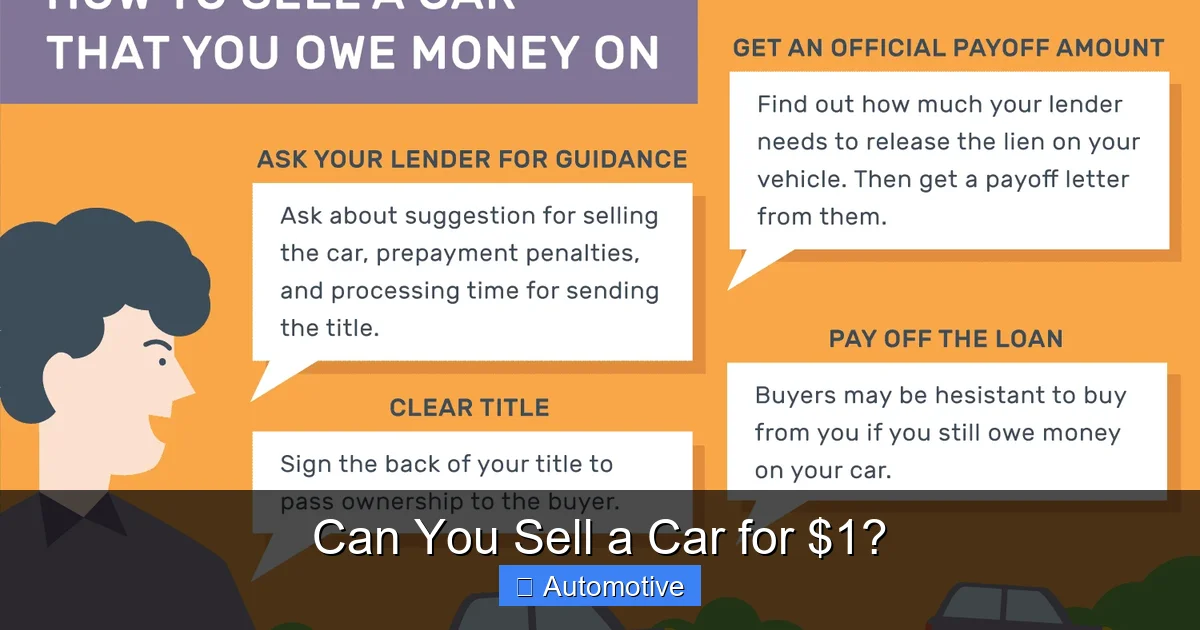
– If you’re upside-down on a car loan (owe more than the car is worth), selling it for $1 won’t eliminate the debt. You’ll still owe the remaining balance unless the lender agrees to a settlement.
– If the car is leased, you can’t sell it without the leasing company’s permission. Attempting to do so could result in penalties.
Always check your loan or lease agreement before attempting a $1 sale.
Practical Steps to Sell a Car for $1
If you’ve decided a $1 sale is right for you, here’s how to do it the right way.
Step 1: Assess the Car’s Condition
Be honest about what you’re selling. Is the car running? Does it have major mechanical issues? Is it safe to drive? Transparency builds trust and prevents disputes later.
If the car doesn’t run, make that clear in your listing or conversation. Say something like, “Car does not start—needs engine work. Sold as-is.”
Step 2: Find the Right Buyer
Look for someone who understands the risks and is willing to take on the project. Ideal candidates include:
– Family members or close friends.
– Mechanics or car enthusiasts.
– Students learning auto repair.
Avoid selling to strangers unless you’re comfortable with the risks. If you do, meet in a safe, public location and bring a friend.
Step 3: Prepare the Paperwork
You’ll need:
– The car’s title (signed over to the buyer).
– A bill of sale (download a free template from your state’s DMV website).
– A release of liability form (available online or at the DMV).
– Odometer disclosure (required in most states for vehicles under 10 years old).
Make sure both you and the buyer sign all documents. Keep copies for your records.
Step 4: Transfer the Title and Notify the DMV
Take the signed title and bill of sale to your local DMV or submit them by mail. Pay any required transfer fees (usually $10–$30). Once processed, the car is officially no longer yours.
Step 5: Cancel Insurance and Registration
Call your insurance company and cancel the policy effective the sale date. Also, return the license plates to the DMV if required by your state.
Step 6: Hand Over the Keys
Once everything is documented, give the buyer the keys, owner’s manual, and any spare parts. Congratulations—you’ve successfully sold your car for $1!
Alternatives to Selling for $1
While a $1 sale can work in certain situations, it’s not always the best option. Consider these alternatives:
Donate the Car
Many charities accept vehicle donations, even if they don’t run. You may qualify for a tax deduction based on the car’s fair market value. Organizations like Goodwill, the Salvation Army, and Vehicles for Veterans make the process easy—they often tow the car for free.
Sell to a Junkyard or Scrap Yard
If the car is beyond repair, scrap yards will pay $50–$500 for it, depending on weight and metal prices. It’s not much, but it’s more than $1—and they handle towing.
Trade It In
Some dealerships accept non-running cars as trade-ins, especially if you’re buying a new vehicle. The value will be low, but it’s applied directly to your purchase.
List It on Craigslist or Facebook Marketplace
Even broken cars can sell for $500–$1,500 if they have usable parts or are fixable. Be honest about the condition, and you might find a buyer willing to pay more than $1.
Final Thoughts: Is a $1 Car Sale Worth It?
Selling a car for $1 isn’t about the money—it’s about convenience, generosity, or necessity. When done correctly, it can be a smart way to transfer ownership, help a loved one, or avoid costly repairs.
But it’s not without risks. You must follow legal procedures, protect yourself from liability, and understand the tax implications. And always ask: Is this really the best option? Sometimes, donating, scrapping, or selling for a higher price makes more sense.
Ultimately, a $1 car sale is a symbolic gesture with real-world consequences. Treat it with care, document everything, and you’ll walk away with peace of mind—and maybe a story to tell.
Frequently Asked Questions
Can I legally sell my car for $1 in the U.S.?
Yes, in most states, you can legally sell a car for $1 as long as you properly transfer the title and notify the DMV. There’s no federal or state law requiring a minimum sale price.
Will I have to pay taxes if I sell my car for $1?
It depends on your state. Some states tax based on fair market value, not sale price, so you or the buyer might owe taxes. The IRS may treat the difference as a gift, but it’s usually below the taxable threshold.
Can I sell a non-running car for $1?
Yes, you can sell a non-running car for $1. Just be clear about the condition and ensure the buyer understands they’ll need to tow it. Some states allow “junk” or “parts-only” title transfers.
Do I need a bill of sale for a $1 car sale?
Yes, a bill of sale is essential. It proves the transaction, includes the VIN and sale price, and helps protect you from future liability. Most states require it for title transfer.
What happens if the buyer gets in an accident after I sell the car for $1?
If you’ve properly transferred the title and filed a release of liability with the DMV, you’re generally not responsible. But if the paperwork isn’t complete, you could still be held liable.
Is it better to sell for $1 or donate the car?
Donating may offer tax benefits and free towing, while a $1 sale gives the car to someone you know. Choose based on your goals—helping a friend or getting a tax deduction.
