
Can a Car Battery Kill You?

Car batteries are generally safe when handled properly, but they can pose serious risks if mishandled. While it’s extremely rare for a car battery to directly cause death, the combination of toxic chemicals, flammable gases, and high electrical current can lead to severe injury or even fatal accidents.
Key Takeaways
- Car batteries contain sulfuric acid and lead: These toxic substances can cause chemical burns, respiratory issues, and long-term health problems if exposed.
- Hydrogen gas is highly flammable: A spark near a charging battery can ignite the gas, leading to explosions and fires.
- High current can cause electric shock: Although the voltage is low (12V), the high amperage can cause muscle contractions, burns, or interfere with heart rhythm in rare cases.
- Improper handling increases risk: Using metal tools, smoking near batteries, or incorrect jump-starting can trigger dangerous reactions.
- Safety gear is essential: Always wear gloves, goggles, and work in well-ventilated areas when handling car batteries.
- Proper disposal prevents environmental harm: Never throw car batteries in the trash—recycle them at designated centers to avoid contamination.
- Education and caution save lives: Knowing the risks and following safety procedures drastically reduces the chance of injury or death.
📑 Table of Contents
- Can a Car Battery Kill You? The Shocking Truth
- How Car Batteries Work: The Science Behind the Power
- The Real Dangers: Chemical, Electrical, and Explosive Risks
- Common Scenarios Where Accidents Happen
- Safety Tips: How to Handle Car Batteries Safely
- What to Do If an Accident Happens
- Myths vs. Facts: Separating Truth from Fiction
- Conclusion: Respect the Power, Stay Safe
Can a Car Battery Kill You? The Shocking Truth
You’ve probably seen car batteries under the hood of nearly every vehicle—quiet, unassuming, and seemingly harmless. They sit there, doing their job day after day, powering your engine, lights, and electronics. But have you ever stopped to wonder: *Can a car battery kill you?* It’s not a question most people ask, but it’s an important one. While car batteries are designed to be safe under normal conditions, they contain powerful chemicals and electrical energy that, if mishandled, can lead to serious injury—or in extreme cases, death.
Most of us treat car batteries like any other car part—something to ignore until it fails. But beneath that plastic casing lies a mix of lead, sulfuric acid, and stored electrical energy that demands respect. The good news? Fatal accidents involving car batteries are extremely rare. The bad news? When things go wrong, they can go wrong fast. From chemical burns to explosions and electric shocks, the risks are real—and preventable.
In this article, we’ll break down the real dangers of car batteries, explain how they work, and give you practical tips to stay safe. Whether you’re jump-starting your car, replacing a battery, or just curious about automotive safety, this guide will help you understand the risks and how to avoid them. So let’s dive in—because knowing the facts could literally save your life.
How Car Batteries Work: The Science Behind the Power
Visual guide about Can a Car Battery Kill You?
Image source: m.media-amazon.com
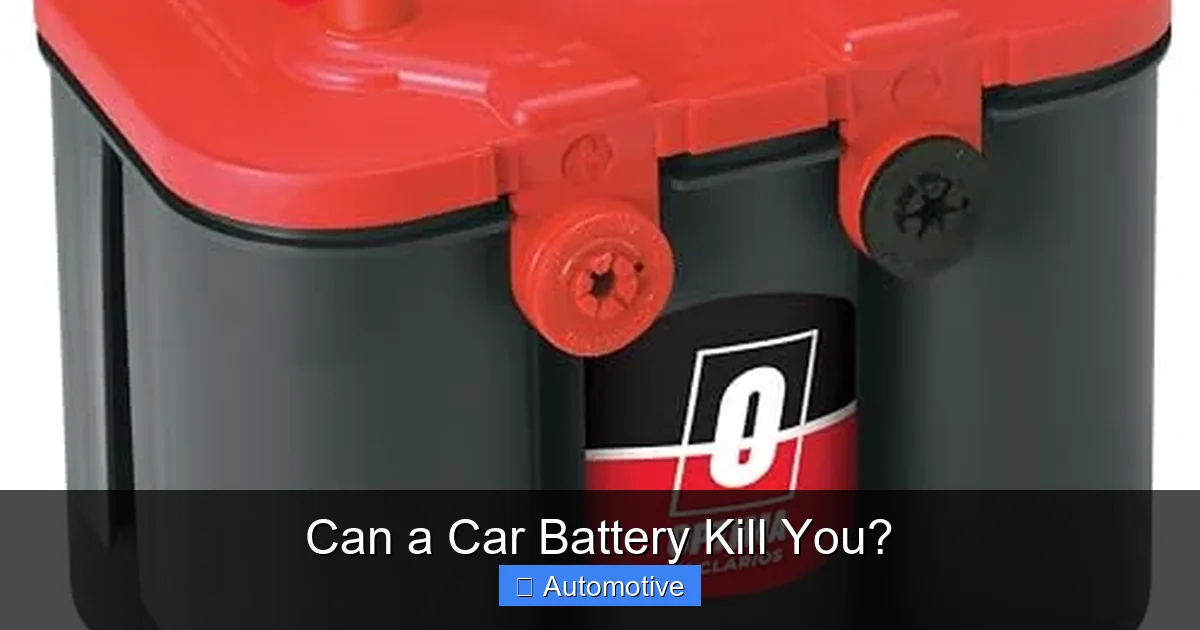
To understand the risks, it helps to know how car batteries function. At their core, car batteries are electrochemical devices that store and release energy through a chemical reaction. Most vehicles use a 12-volt lead-acid battery, which consists of six cells connected in series. Each cell produces about 2 volts, adding up to the standard 12 volts needed to start your engine.
Inside each cell, you’ll find lead plates submerged in a solution of sulfuric acid and water—called electrolyte. When the battery discharges (like when you start your car), a chemical reaction occurs between the lead plates and the acid, producing lead sulfate and releasing electrons. These electrons flow through the car’s electrical system, powering everything from the starter motor to the radio.
When you recharge the battery—usually via the alternator while the engine runs—the process reverses. The lead sulfate breaks down, and the lead plates return to their original state, ready for the next use. This cycle can repeat hundreds of times, which is why car batteries last several years under normal conditions.
But here’s the catch: this chemical process isn’t perfectly clean. It produces hydrogen gas as a byproduct, especially during charging. Hydrogen is invisible, odorless, and highly flammable. A single spark—from a cigarette, a metal tool, or even static electricity—can ignite it, causing a sudden explosion. That’s why ventilation is critical when working with batteries.
Additionally, the sulfuric acid in the electrolyte is highly corrosive. It can eat through metal, destroy clothing, and cause severe chemical burns on skin. Even small splashes can damage eyes or lungs if inhaled as fumes. And while the 12-volt system isn’t enough to stop your heart like high-voltage electricity, the high current (often hundreds of amps) can still cause painful shocks, burns, or muscle spasms.
Understanding these basics helps explain why car batteries aren’t just “dead weight” under your hood. They’re active, potentially hazardous components that require careful handling. The next time you pop the hood, remember: that quiet black box is packed with energy and chemicals that demand respect.
The Real Dangers: Chemical, Electrical, and Explosive Risks
Visual guide about Can a Car Battery Kill You?
Image source: m.media-amazon.com
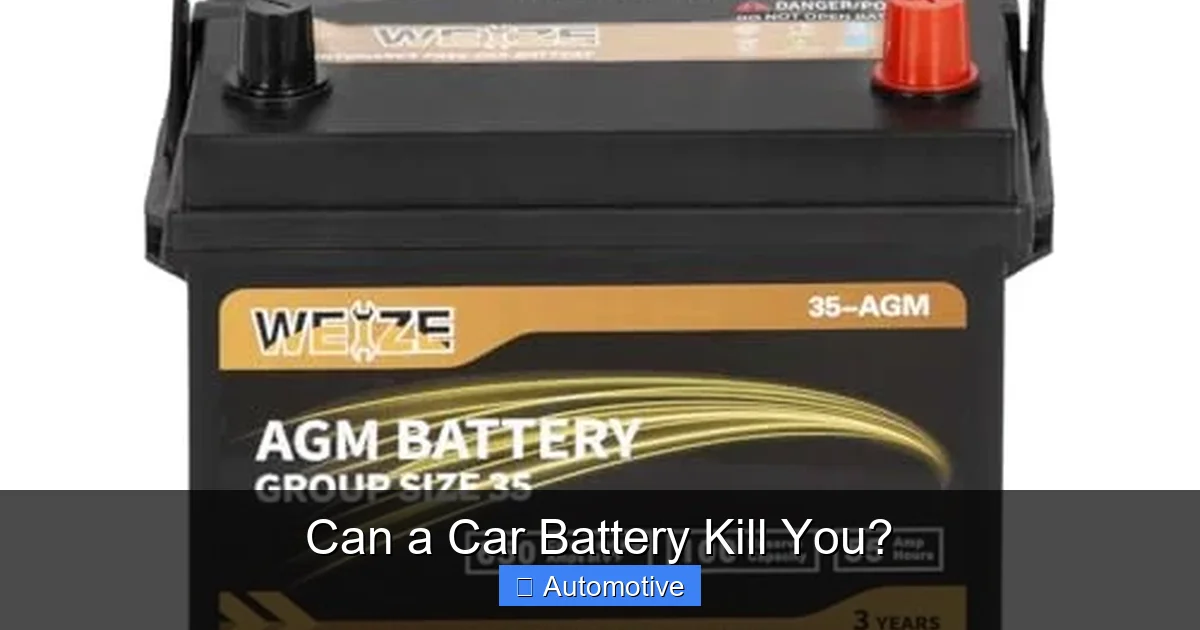
Now that we know how car batteries work, let’s talk about the real dangers they pose. While it’s unlikely a car battery will directly “kill you” in the way a gunshot or fall might, the combination of toxic chemicals, flammable gases, and high electrical current creates a perfect storm of potential hazards. Let’s break them down one by one.
Chemical Hazards: Sulfuric Acid and Lead Exposure
The most immediate danger comes from the battery’s internal chemicals. Sulfuric acid is a strong corrosive that can cause severe burns on contact with skin or eyes. Even brief exposure can result in redness, pain, and blistering. If acid splashes into your eyes, it can cause permanent vision damage or blindness. Inhaling acid fumes—especially in enclosed spaces like a garage—can irritate the respiratory tract, leading to coughing, shortness of breath, or chemical pneumonia.
Lead is another major concern. The lead plates inside the battery are toxic, and prolonged exposure can lead to lead poisoning. Symptoms include abdominal pain, fatigue, headaches, and in severe cases, neurological damage. While you’re unlikely to be exposed to lead under normal conditions, improper handling—like breaking open a battery or failing to wash hands after contact—can increase risk.
Children and pregnant women are especially vulnerable to lead exposure, which is why recycling centers and auto shops take special precautions when handling old batteries.
Electrical Risks: Shocks, Burns, and Muscle Contractions
You might think, “It’s only 12 volts—how dangerous can that be?” And you’re right—12 volts isn’t enough to cause fatal electric shock in most cases. Household outlets run at 120 volts, and even those don’t always stop a heart. But car batteries deliver *high current*, often 300 to 600 amps or more during startup. That’s a lot of power.
While the low voltage means you won’t get a life-threatening shock like from a power line, the high current can still cause serious harm. Touching both terminals with a metal tool or your bare hands can result in a painful jolt, severe burns at the contact point, or involuntary muscle contractions. In rare cases, if the current passes across the chest, it could interfere with heart rhythm—especially in people with pre-existing heart conditions.
Imagine trying to jump-start a car and accidentally touching the positive terminal with a wrench while the other end touches the engine block (which is grounded). That creates a short circuit, sending a massive surge of current through the wrench—and possibly through you if you’re holding it. The result? A loud pop, a shower of sparks, and potentially third-degree burns.
Explosion and Fire Hazards: The Hidden Danger of Hydrogen Gas
Perhaps the most underestimated risk is the buildup of hydrogen gas. As mentioned earlier, charging a lead-acid battery produces hydrogen—a gas that’s lighter than air and highly explosive. The explosive range for hydrogen in air is between 4% and 75%, meaning even a small spark can trigger a violent reaction.
This is why batteries can “explode” when mishandled. It’s not the battery itself blowing up like a bomb, but the ignition of trapped hydrogen gas inside the casing. The force can blow the top off the battery, sending acid and plastic shrapnel flying in all directions. There are documented cases of people losing eyesight or suffering facial injuries from such explosions.
Common causes include:
– Using a lighter or smoking near a charging battery
– Creating a spark with a metal tool
– Jump-starting with reversed cables
– Overcharging a battery with a faulty charger
Even static electricity from your clothes can be enough to ignite hydrogen in a poorly ventilated space. That’s why experts always recommend working in open areas and avoiding any potential ignition sources.
Thermal Risks: Overheating and Thermal Runaway
In rare cases, especially with older or damaged batteries, overheating can occur. This happens when the internal resistance of the battery increases, causing it to generate excess heat during charging. If the heat isn’t dissipated, it can lead to “thermal runaway”—a self-sustaining cycle where the battery gets hotter and hotter until it fails catastrophically.
Thermal runaway can cause the battery to swell, leak acid, or even catch fire. While this is more common in lithium-ion batteries (like those in electric vehicles), it can also happen in lead-acid batteries under extreme conditions.
Common Scenarios Where Accidents Happen
Visual guide about Can a Car Battery Kill You?
Image source: m.media-amazon.com
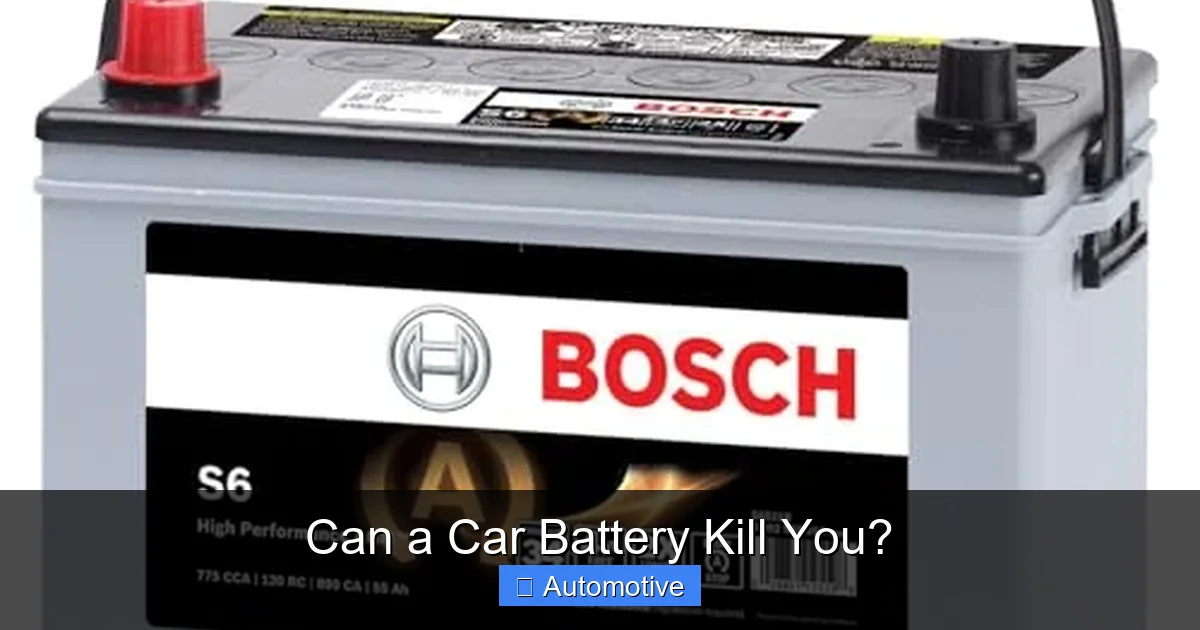
Now that we’ve covered the risks, let’s look at real-world situations where people get hurt—or worse—from car batteries. Most accidents aren’t random; they happen during routine tasks that seem harmless but are done incorrectly.
Jump-Starting a Dead Battery
Jump-starting is one of the most common causes of battery-related injuries. It’s also one of the most dangerous if done wrong. The correct sequence is crucial:
1. Connect the red (positive) clamp to the dead battery’s positive terminal.
2. Connect the other red clamp to the good battery’s positive terminal.
3. Connect the black (negative) clamp to the good battery’s negative terminal.
4. Connect the final black clamp to an unpainted metal surface on the dead car (not the battery terminal).
Why the last step? To avoid creating a spark near the battery, where hydrogen gas may be present. If you connect the final clamp directly to the dead battery’s negative terminal, a spark could ignite the gas and cause an explosion.
Many people skip this step or reverse the cables, leading to short circuits, blown fuses, or worse. There are countless YouTube videos showing jump-starts gone wrong—cars smoking, batteries exploding, and people running for cover.
Replacing or Removing a Battery
Changing a car battery seems simple, but it’s easy to make mistakes. Always disconnect the negative terminal first and reconnect it last. This reduces the risk of shorting the positive terminal to the chassis while working.
Using metal tools like wrenches or pliers near the terminals is risky. If the tool touches both the terminal and a grounded part of the car, it completes a circuit and can cause a spark or shock. Always use insulated tools and wear gloves.
Also, never tip or shake a battery. This can cause acid to leak or internal plates to short out. And never try to open a sealed battery—there’s no need, and it’s extremely dangerous.
Charging a Battery Indoors or in Enclosed Spaces
Charging a battery in a garage with the door closed is a recipe for disaster. Hydrogen gas has no place to escape, and even a small spark from a light switch or appliance can trigger an explosion. Always charge batteries in well-ventilated areas, preferably outdoors.
Improper Disposal or Recycling
Throwing a car battery in the trash isn’t just illegal in many places—it’s dangerous. Broken batteries can leak acid into the environment, contaminating soil and water. When recycling, take the battery to a certified center where it can be safely processed. Most auto parts stores will take old batteries for free.
Safety Tips: How to Handle Car Batteries Safely
The good news? Most battery accidents are completely preventable with the right knowledge and precautions. Here’s how to stay safe:
Wear Protective Gear
Always wear safety goggles and acid-resistant gloves when handling batteries. Long sleeves and closed-toe shoes are also recommended. If acid gets on your skin, flush it immediately with plenty of water and seek medical help.
Work in a Well-Ventilated Area
Never work on a battery in a closed garage or basement. Open windows and doors, or better yet, work outside. This helps disperse hydrogen gas and reduces the risk of explosion.
Use the Right Tools
Use insulated tools with rubber handles. Avoid metal jewelry, watches, or rings that could create a short circuit.
Follow the Correct Jump-Start Procedure
Remember the four-step process: positive to positive, negative to ground. Double-check cable connections before starting the engine.
Inspect Batteries Regularly
Look for cracks, bulges, or leaks. A damaged battery is more likely to fail or leak acid. If you notice any issues, replace it immediately.
Store Batteries Safely
If you’re storing a spare battery, keep it in a cool, dry place away from children and pets. Store it upright and on a non-conductive surface like wood or plastic.
Dispose of Batteries Responsibly
Take old batteries to a recycling center or auto parts store. Most places accept them for free and ensure they’re processed safely.
What to Do If an Accident Happens
Even with precautions, accidents can still occur. Here’s what to do in an emergency:
Chemical Exposure
– **Skin contact:** Rinse with cool, running water for at least 15 minutes. Remove contaminated clothing. Seek medical attention.
– **Eye contact:** Flush eyes with water for at least 15 minutes. Do not rub. Go to the emergency room immediately.
– **Inhalation:** Move to fresh air. If breathing is difficult, seek medical help.
Electric Shock or Burn
– Turn off the power source if safe to do so.
– Do not touch the person if they’re still in contact with the battery.
– Call emergency services.
– Treat burns with cool (not cold) water and cover with a sterile bandage.
Battery Explosion or Fire
– Get everyone away from the area immediately.
– Call the fire department.
– Use a Class B fire extinguisher (for flammable liquids) if trained to do so.
– Do not use water on a battery fire—it can react with acid and make things worse.
Myths vs. Facts: Separating Truth from Fiction
There are a lot of myths about car batteries. Let’s clear them up:
Myth: “Car batteries can electrocute you like a power line.”
**Fact:** No. The 12-volt system isn’t enough to cause fatal electric shock. But high current can still cause burns or muscle spasms.
Myth: “You can’t get hurt by a dead battery.”
**Fact:** Even a “dead” battery can hold enough charge to deliver a shock or short circuit. Always treat every battery as if it’s live.
Myth: “Batteries only explode if you drop them.”
**Fact:** Explosions are usually caused by sparks igniting hydrogen gas, not physical impact.
Myth: “It’s safe to smoke near a charging battery.”
**Fact:** Absolutely not. A single spark from a lighter or cigarette can trigger an explosion.
Conclusion: Respect the Power, Stay Safe
So, can a car battery kill you? The short answer is: it’s highly unlikely, but not impossible. While fatal accidents are rare, the combination of toxic chemicals, flammable gases, and high electrical current means that car batteries are not toys. They’re powerful tools that demand respect.
The key to staying safe is education and caution. By understanding how batteries work, recognizing the risks, and following proper safety procedures, you can avoid the vast majority of accidents. Whether you’re jump-starting your car, replacing a battery, or just doing routine maintenance, take the time to do it right.
Remember: safety isn’t about fear—it’s about awareness. A few extra minutes to put on gloves, check your connections, or work in a ventilated area can make all the difference. Your car battery powers your vehicle, but it shouldn’t put your life at risk.
So the next time you pop the hood, pause for a moment. Look at that battery not as just another car part, but as a piece of machinery with real power—and real danger. Treat it with care, and it will serve you well for years to come.
Frequently Asked Questions
Can a car battery explode?
Yes, a car battery can explode if hydrogen gas builds up and is ignited by a spark. This usually happens during charging or jump-starting if proper ventilation and safety steps aren’t followed.
Is it safe to touch a car battery with bare hands?
It’s generally safe to touch the plastic casing, but avoid contact with the terminals. Sulfuric acid can leak, and accidental short circuits can occur if metal touches both terminals.
Can you die from a car battery shock?
Direct fatal shock from a 12-volt car battery is extremely rare. However, high current can cause burns, muscle spasms, or interfere with heart rhythm in vulnerable individuals.
What should I do if battery acid gets on my skin?
Rinse the area immediately with cool, running water for at least 15 minutes. Remove contaminated clothing and seek medical attention, even if the burn seems minor.
Can a car battery give you lead poisoning?
Yes, prolonged exposure to lead from damaged or improperly handled batteries can lead to lead poisoning. Always wash hands after handling and recycle batteries safely.
Is it safe to charge a car battery indoors?
No, charging a battery indoors can allow hydrogen gas to accumulate, creating an explosion risk. Always charge batteries in well-ventilated areas, preferably outdoors.
