
What Makes a Car a Supercar?

Supercars are more than just fast vehicles—they’re engineering marvels built for performance, precision, and prestige. From jaw-dropping acceleration to handcrafted interiors, these machines represent the pinnacle of automotive innovation and style.
Key Takeaways
- Raw Power and Performance: Supercars boast high-horsepower engines, often exceeding 600 hp, enabling 0-60 mph times under 3 seconds.
- Lightweight Construction: Advanced materials like carbon fiber and aluminum reduce weight, improving speed, handling, and fuel efficiency.
- Aerodynamic Design: Sleek, aggressive styling isn’t just for looks—it’s engineered to maximize downforce and minimize drag.
- Precision Handling: Sophisticated suspension, all-wheel drive, and advanced braking systems ensure razor-sharp control at high speeds.
- Luxury and Craftsmanship: Interiors feature premium materials, custom stitching, and cutting-edge tech for a refined driving experience.
- Exclusivity and Brand Heritage: Limited production runs and iconic brand legacies add to a supercar’s allure and value.
- Cutting-Edge Technology: From hybrid powertrains to AI-assisted driving modes, supercars lead in automotive innovation.
📑 Table of Contents
- What Makes a Car a Supercar?
- Power and Performance: The Heart of a Supercar
- Lightweight Construction: Speed Starts with Less
- Aerodynamic Design: Form Follows Function
- Precision Handling: The Art of Control
- Luxury and Craftsmanship: The Human Touch
- Exclusivity and Brand Heritage: The Prestige Factor
- The Future of Supercars: Electrification and Beyond
- Conclusion
What Makes a Car a Supercar?
Imagine standing at a red light, and next to you rolls a low-slung, wide-bodied machine with a growl that vibrates through your chest. The engine roars to life as the light turns green, and in a blink, it’s gone—leaving you in awe. That’s the moment you’ve just witnessed a supercar. But what exactly makes a car a supercar? Is it just speed? Looks? Price? The truth is, it’s a combination of engineering brilliance, design mastery, and a certain intangible magic that sets these vehicles apart from the everyday.
Supercars aren’t just fast cars—they’re automotive art forms. They represent the peak of what manufacturers can achieve when cost is no object and innovation is the goal. From the roar of a naturally aspirated V12 to the silent surge of an electric motor, supercars push the boundaries of physics, technology, and human ambition. They’re built not just to get from point A to point B, but to do so with drama, precision, and style.
But beyond the glamour and the gasps, there’s a science to what makes a car a supercar. It’s not enough to have a big engine or a flashy paint job. True supercars are the result of meticulous engineering, cutting-edge materials, and a relentless pursuit of performance. Whether it’s a Ferrari, Lamborghini, McLaren, or a rising electric contender like the Rimac Nevera, each supercar shares a common DNA—one defined by power, precision, and passion.
Power and Performance: The Heart of a Supercar

Visual guide about What Makes a Car a Supercar?
Image source: supercars.net
At the core of every supercar is an engine that doesn’t just perform—it dominates. When we talk about what makes a car a supercar, power is often the first thing that comes to mind. But it’s not just about how much horsepower a car has; it’s about how that power is delivered, managed, and harnessed.
Horsepower and Torque: The Numbers That Matter
Supercars typically produce between 600 and over 1,000 horsepower, with torque figures that can exceed 700 lb-ft. For context, a typical family sedan might produce around 200 horsepower. This massive power output allows supercars to achieve 0-60 mph times in under 3 seconds—some even dipping below 2.5 seconds. The Bugatti Chiron, for example, rockets from 0 to 60 mph in just 2.3 seconds, thanks to its quad-turbocharged W16 engine producing 1,578 horsepower.
But horsepower alone isn’t enough. Torque—the twisting force that gets the car moving—is equally important. High torque at low RPMs means instant acceleration, which is why many modern supercars use turbocharging or hybrid systems to boost low-end grunt. The McLaren P1, for instance, combines a twin-turbo V8 with an electric motor to deliver over 900 horsepower and lightning-fast response.
Engine Types and Configurations
Supercars use a variety of engine layouts, each chosen for performance, sound, and balance. The most common configurations include:
- V8 and V12 Engines: Found in brands like Ferrari and Lamborghini, these engines offer a perfect blend of power, smoothness, and that iconic exhaust note. The Ferrari 812 Superfast uses a 6.5-liter V12 that revs to 8,900 RPM—a mechanical symphony.
- Flat-6 Engines: Porsche’s 911 GT3 RS uses a naturally aspirated flat-6 that delivers 518 horsepower with razor-sharp throttle response and a spine-tingling scream.
- Hybrid and Electric Powertrains: The future of supercars is electric. The Rimac Nevera produces 1,914 horsepower from four electric motors and hits 60 mph in 1.74 seconds—faster than most cars can even shift gears.
Acceleration and Top Speed
Acceleration is where supercars truly shine. The ability to go from a standstill to highway speeds in under three seconds is not just impressive—it’s transformative. It changes how you experience driving. The Koenigsegg Jesko Absolut, for example, is designed to exceed 300 mph, making it one of the fastest production cars ever conceived.
But top speed isn’t just about engine power. It’s also about aerodynamics, gearing, and tire technology. Supercars use active aerodynamics—like adjustable rear wings and underbody diffusers—to maintain stability at extreme speeds. The Aston Martin Valkyrie, co-developed with Red Bull Racing, uses Formula 1-inspired aerodynamics to generate massive downforce, allowing it to corner at speeds that would make other cars lose grip.
Lightweight Construction: Speed Starts with Less

Visual guide about What Makes a Car a Supercar?
Image source: eskipaper.com
If power is the heart of a supercar, then lightweight construction is its skeleton. Speed isn’t just about how much power you have—it’s about how efficiently you can use it. The lighter the car, the faster it accelerates, the sharper it handles, and the better it brakes. That’s why supercar manufacturers obsess over weight reduction.
Advanced Materials: Carbon Fiber, Aluminum, and Titanium
Traditional steel is too heavy for supercar use. Instead, manufacturers turn to advanced materials that offer strength without the bulk.
- Carbon Fiber: This lightweight, ultra-strong material is used for body panels, chassis, and even interior components. The McLaren 720S features a carbon fiber monocoque—the structural core of the car—that’s both incredibly rigid and remarkably light.
- Aluminum: Used in suspension components and body frames, aluminum reduces weight while maintaining durability. The Audi R8 uses an aluminum space frame to keep weight down without sacrificing safety.
- Titanium: Found in exhaust systems and fasteners, titanium is stronger than steel but nearly half the weight. It’s used in high-stress areas where every gram counts.
The Impact of Weight on Performance
Reducing weight has a ripple effect on performance. A lighter car needs less power to accelerate, which means better fuel efficiency and lower emissions—even in a high-performance machine. It also improves handling, as there’s less mass to control during cornering and braking.
For example, the Lamborghini Huracán Performante weighs just 3,135 pounds—lighter than many compact cars—thanks to extensive use of carbon fiber and forged composites. This allows it to lap the Nürburgring in under 7 minutes, a record at the time.
Weight Distribution and Balance
It’s not just about how much a car weighs, but where the weight is located. Supercars aim for a near-perfect 50/50 weight distribution—half the weight over the front axle, half over the rear. This balance improves cornering stability and reduces understeer or oversteer.
The mid-engine layout, used by brands like Ferrari and Lamborghini, places the engine behind the driver but ahead of the rear axle. This centralizes mass and improves agility. The Porsche 911, with its rear-engine layout, is an exception—but its engineering compensates with advanced suspension and electronic aids.
Aerodynamic Design: Form Follows Function
Visual guide about What Makes a Car a Supercar?
Image source: images.hgmsites.net
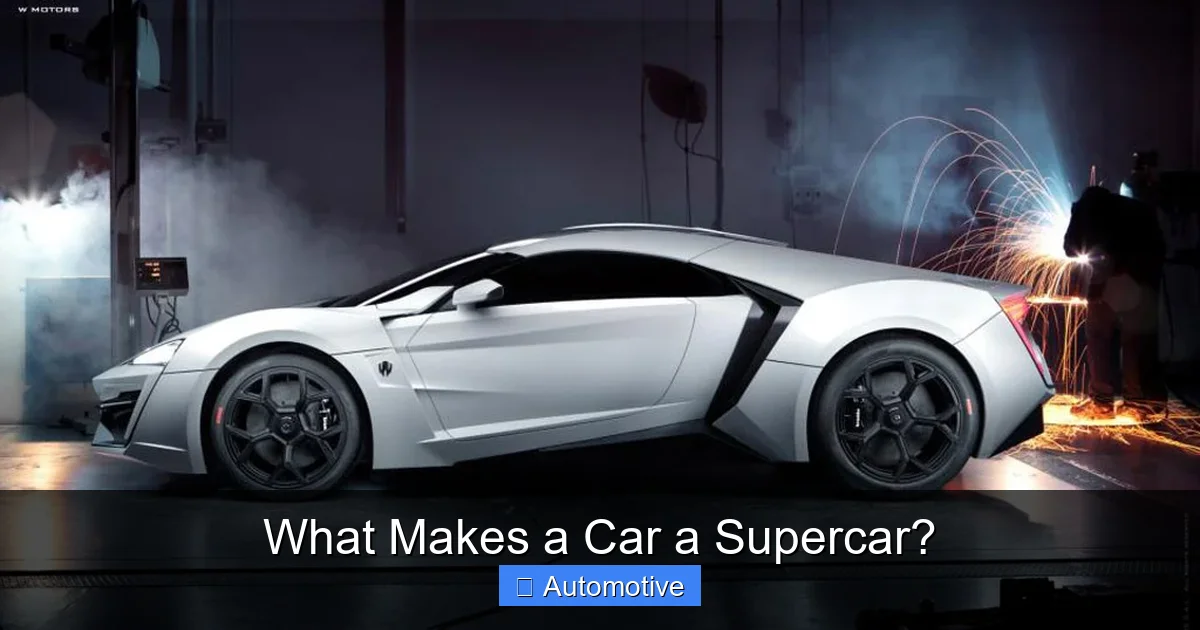
When you look at a supercar, you’re struck by its aggressive, sculpted appearance. But that design isn’t just for show—it’s deeply functional. Aerodynamics play a critical role in what makes a car a supercar, influencing speed, stability, and efficiency.
Downforce and Drag: The Aerodynamic Balance
At high speeds, air resistance becomes a major force. Supercars must overcome drag (air resistance) while generating downforce—the downward pressure that pushes the car into the road, improving grip.
- Drag Reduction: Sleek shapes, hidden door handles, and smooth underbodies help cut through the air. The Mercedes-AMG One, a road-legal F1 car, uses active aerodynamics to reduce drag on straights.
- Downforce Generation: Wings, diffusers, and vents channel air to create downforce. The Ferrari SF90 Stradale uses an active rear wing that adjusts angle based on speed and driving mode.
Too much downforce can increase drag, slowing the car. Too little, and it becomes unstable at speed. The best supercars strike a perfect balance.
Active Aerodynamics: Smart Wings and Vents
Modern supercars don’t rely on fixed wings. Instead, they use active aerodynamics—systems that adjust in real time. The McLaren 720S has a rear wing that deploys under braking to act as an air brake, increasing stopping power. The Lamborghini Aventador SVJ uses a system called Aerodinamica Lamborghini Attiva (ALA), which opens and closes vents to redirect airflow and optimize downforce.
The Role of Wind Tunnels and CFD
Designing a supercar’s aerodynamics isn’t guesswork. Engineers use wind tunnels and computational fluid dynamics (CFD) to simulate airflow and refine every curve. The Bugatti Chiron was tested in over 1,000 hours of wind tunnel time to ensure optimal performance.
Precision Handling: The Art of Control
Speed is useless without control. What makes a car a supercar isn’t just how fast it goes, but how confidently it corners, brakes, and responds to driver input. Precision handling is what separates a supercar from a straight-line speed demon.
Suspension Systems: Stiff, Responsive, and Adaptive
Supercars use advanced suspension systems to maintain tire contact with the road, even during aggressive maneuvers. Most use double-wishbone or multi-link setups, which offer superior geometry and adjustability.
- Adaptive Dampers: These adjust stiffness in real time based on road conditions and driving style. The Porsche 911 GT3 RS uses Porsche Active Suspension Management (PASM) to stiffen or soften the suspension on the fly.
- Magnetic Ride Control: Used in cars like the Ferrari 488 Pista, this system uses magnetorheological fluid in the shocks to change damping in milliseconds.
All-Wheel Drive and Traction Control
While some supercars are rear-wheel drive (like the Ferrari 488), many use all-wheel drive (AWD) to improve grip and acceleration. The Lamborghini Huracán and Audi R8 use AWD systems that send power to all four wheels, reducing wheel spin and improving launch control.
Traction and stability control systems are also essential. These electronics monitor wheel speed, steering angle, and throttle input to prevent loss of control. The McLaren P1 has a sophisticated system that blends mechanical grip with electric motor torque for seamless power delivery.
Braking Systems: Stopping Power Matters
Supercars don’t just go fast—they stop fast. High-performance braking systems use large carbon-ceramic discs, multi-piston calipers, and advanced cooling ducts.
The Ferrari LaFerrari can brake from 60 mph to 0 in just 96 feet—faster than many sports cars can accelerate. Carbon-ceramic brakes also resist fade, meaning they maintain performance even after repeated hard stops.
Luxury and Craftsmanship: The Human Touch
While performance is paramount, supercars are also symbols of luxury. The interior of a supercar is a blend of cutting-edge technology and handcrafted artistry.
Premium Materials and Customization
From hand-stitched leather to carbon fiber trim, every detail is designed for beauty and function. The Rolls-Royce Wraith, while not a traditional supercar, offers a level of craftsmanship that rivals any hypercar.
Many brands offer extensive customization. Ferrari’s “Tailor Made” program allows buyers to choose colors, materials, and finishes to create a one-of-a-kind vehicle. The Lamborghini Ad Personam program offers similar personalization.
Technology and Connectivity
Modern supercars are packed with tech. Touchscreen infotainment systems, digital dashboards, and smartphone integration are standard. The McLaren GT features a 7-inch touchscreen with navigation, Apple CarPlay, and a premium audio system.
But tech isn’t just for comfort—it enhances performance. The Porsche 911 GT3 RS has a track-focused display that shows lap times, G-forces, and tire temperatures.
The Driving Experience: Emotion and Engagement
Ultimately, what makes a car a supercar is the emotional connection it creates. The sound of the engine, the feel of the steering, the rush of acceleration—these are experiences that can’t be quantified.
Driving a supercar isn’t just about getting somewhere. It’s about feeling alive. It’s about the symphony of mechanical precision and human passion.
Exclusivity and Brand Heritage: The Prestige Factor
Supercars are rare. Limited production runs ensure that owning one is a statement of status. The Bugatti Chiron was limited to 500 units. The McLaren Speedtail—just 106 were made.
This exclusivity is part of what makes a car a supercar. It’s not just a vehicle—it’s a collector’s item, a piece of automotive history.
Brand heritage also plays a role. Ferrari’s racing legacy, Lamborghini’s rebellious spirit, and Porsche’s engineering excellence all contribute to their supercar status. These brands have decades of innovation and passion behind them.
The Future of Supercars: Electrification and Beyond
The supercar world is evolving. Electric powertrains, autonomous driving, and sustainable materials are shaping the next generation.
The Tesla Roadster (upcoming) promises 0-60 mph in under 2 seconds. The Lotus Evija uses electric motors to produce 1,972 horsepower. Even traditional brands are going electric—Ferrari’s first full EV is expected by 2025.
But the soul of the supercar remains: power, precision, and passion. Whether powered by gasoline or electricity, the supercar will always be a symbol of human achievement.
Conclusion
So, what makes a car a supercar? It’s not just one thing—it’s a perfect storm of power, design, technology, and emotion. From the roar of a V12 to the silent surge of an electric motor, supercars represent the pinnacle of automotive engineering. They’re built to thrill, to inspire, and to push the limits of what’s possible. Whether you’re behind the wheel or just watching one streak past, a supercar reminds us why we love cars in the first place.
Frequently Asked Questions
What is the difference between a sports car and a supercar?
A sports car is designed for performance and handling but typically has less power and lower price points. A supercar goes beyond—offering extreme speed, advanced materials, and exclusivity, often costing hundreds of thousands or even millions of dollars.
Can a supercar be practical for daily driving?
Some supercars, like the McLaren GT or Ferrari Roma, are designed with daily usability in mind, offering comfort and storage. However, most prioritize performance over practicality, with stiff suspensions and limited space.
Are electric cars considered supercars?
Yes. Electric vehicles like the Rimac Nevera and Lotus Evija produce over 1,900 horsepower and accelerate faster than many gasoline supercars, earning them a place in the supercar category.
What is the fastest production supercar?
The SSC Tuatara holds the record with a verified top speed of 295 mph, though the Koenigsegg Jesko Absolut and Bugatti Chiron Super Sport 300+ are also contenders for the title.
Do supercars hold their value?
Many supercars appreciate in value, especially limited-edition models like the Ferrari LaFerrari or Porsche 918 Spyder. Rarity, brand prestige, and condition play key roles in resale value.
Can anyone drive a supercar?
Yes, but insurance, maintenance, and fuel costs are extremely high. Additionally, supercars require skilled driving to handle their power and precision safely.