Is a Honda Civic a Sports Car

The Honda Civic is not a true sports car, but it offers sporty handling, responsive engines, and performance-focused trims that blur the lines. With models like the Civic Si and Type R, Honda delivers an engaging drive that appeals to enthusiasts without sacrificing daily usability.
Key Takeaways
- Honda Civic is not classified as a sports car: It’s a compact sedan or hatchback designed for efficiency and practicality, not pure performance.
- Sporty trims enhance driving dynamics: The Civic Si and Type R offer upgraded suspensions, turbocharged engines, and manual transmissions for a more engaging experience.
- Handling rivals some sports cars: The Civic’s precise steering and balanced chassis make it fun to drive on winding roads.
- Affordability and reliability set it apart: Unlike traditional sports cars, the Civic offers low ownership costs and excellent fuel economy.
- Daily usability is a priority: Spacious interiors, advanced tech, and safety features make it ideal for everyday driving.
- Enthusiast appeal is growing: The Civic Type R has earned a cult following and track-ready credentials, bridging the gap between commuter and sports car.
- It’s a sporty compact, not a sports car: Think of the Civic as a high-performance daily driver with sport-inspired DNA.
📑 Table of Contents
- Is a Honda Civic a Sports Car? Understanding the Debate
- What Defines a Sports Car?
- The Honda Civic Lineup: From Commuter to Performance Machine
- Driving Dynamics: How the Civic Compares to True Sports Cars
- Ownership Experience: Practicality vs. Performance
- The Enthusiast Appeal: Why the Civic Type R Is a Modern Classic
- Conclusion: The Civic Is a Sporty Compact, Not a Sports Car—But That’s Okay
Is a Honda Civic a Sports Car? Understanding the Debate
When you hear the words “sports car,” what comes to mind? Sleek designs, roaring engines, low-slung bodies, and the thrill of speed? You might picture a Porsche 911, a Chevrolet Corvette, or a Mazda MX-5 Miata. But what about the Honda Civic? It’s a compact car that’s been a staple on American roads for decades—known for reliability, fuel efficiency, and practicality. So, where does it fit in the performance spectrum?
The question “Is a Honda Civic a sports car?” sparks passionate discussions among car enthusiasts, engineers, and everyday drivers. On the surface, the answer seems simple: no, it’s not a sports car. But dig deeper, and you’ll find that the Civic—especially in its high-performance variants—challenges traditional definitions. It blends sporty driving dynamics with everyday usability in a way few other vehicles can match.
Honda has spent decades refining the Civic into a versatile platform. From the fuel-sipping base models to the track-capable Type R, the Civic lineup spans a wide range of needs and driving styles. While the average Civic LX isn’t built for autocross or weekend canyon runs, the Si and Type R trims come surprisingly close. They offer turbocharged power, sport-tuned suspensions, and driver-focused features that make them feel more like sports cars than typical compact sedans.
So, is the Honda Civic a sports car? The short answer is no—but it’s closer than you might think. Let’s explore why this compact car continues to blur the lines between practical transportation and performance driving.
What Defines a Sports Car?
Visual guide about Is a Honda Civic a Sports Car
Image source: motorbiscuit.com
Before we can answer whether the Honda Civic qualifies as a sports car, we need to understand what makes a car a sports car in the first place. There’s no official rulebook, but automotive experts and enthusiasts generally agree on a few key characteristics.
Performance and Power
Sports cars are built for speed and agility. They typically feature powerful engines—often naturally aspirated or turbocharged—that deliver strong acceleration. Horsepower and torque are prioritized over fuel economy, and many sports cars come with manual transmissions to give drivers more control.
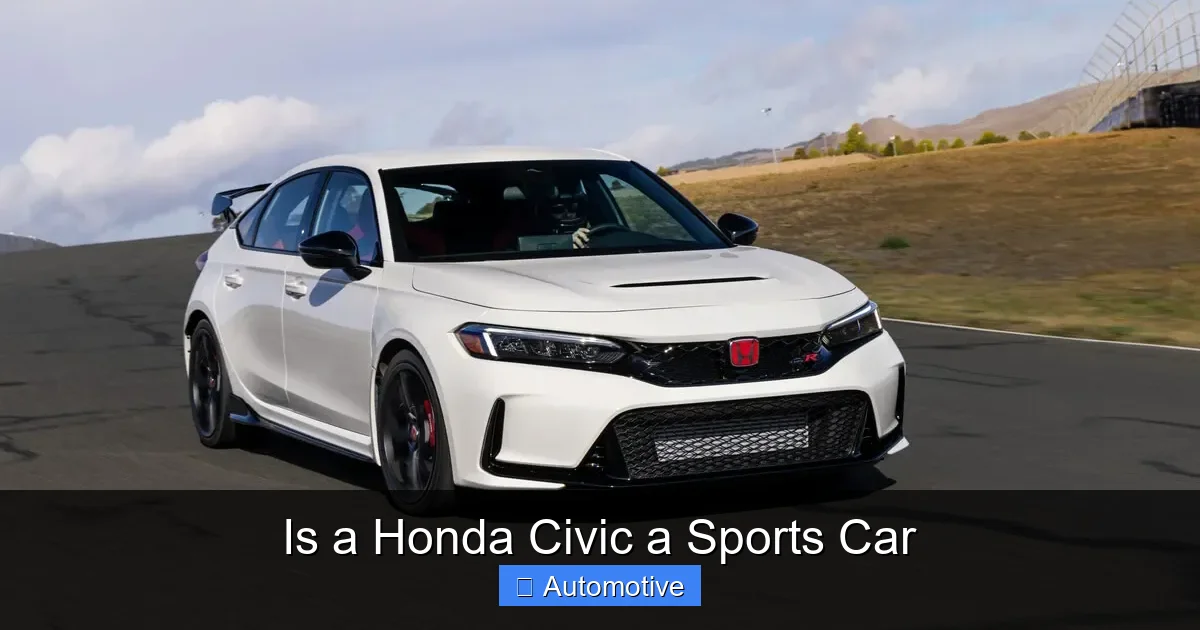
For example, the Mazda MX-5 Miata produces around 181 horsepower, which may not sound like much, but its lightweight design and rear-wheel drive make it incredibly nimble. In contrast, the Honda Civic Type R packs a 315-horsepower turbocharged engine, putting it in the same league as many entry-level sports cars.
Handling and Chassis Design
A true sports car emphasizes handling. That means a low center of gravity, responsive steering, and a suspension tuned for cornering rather than comfort. Many sports cars use rear-wheel or all-wheel drive to improve traction and balance during aggressive driving.
The Civic, especially in Si and Type R form, features a sport-tuned suspension, limited-slip differentials, and precise electric power steering. While it’s front-wheel drive—a limitation for some purists—Honda engineers have worked hard to minimize torque steer and maximize grip.
Two-Seat or Compact Layout
Traditionally, sports cars are small and lightweight, often seating only two people. This reduces weight and improves performance. The Miata, for instance, is a two-seater designed purely for driving enjoyment.
The Civic, on the other hand, is a four- or five-seater compact car. It’s built for families, commuters, and road trips. This practicality is one of the main reasons it doesn’t fit the classic sports car mold. However, the Civic Type R does offer a more driver-focused interior with supportive sport seats and a lower driving position, mimicking the feel of a true performance car.
Aesthetic and Design Language
Sports cars often have aggressive styling—wide stances, aerodynamic body kits, and bold lines. Think of the wide fenders on a Subaru WRX STI or the low profile of a Nissan Z.
The Civic Type R embraces this aesthetic with its large rear wing, triple exhaust tips, and aggressive front splitter. It looks fast even when standing still. Meanwhile, the standard Civic has a more understated design, though recent models have adopted a sleeker, more modern look.
Price and Market Positioning
Sports cars are often positioned as premium or niche vehicles. They’re not meant to be mass-market daily drivers. The Porsche 718 Cayman starts around $65,000, while the Civic Type R begins at just under $45,000. That’s a significant difference, but it also highlights how Honda has democratized performance.
In short, a sports car is defined by its focus on driving dynamics, performance, and driver engagement—often at the expense of comfort, space, and practicality. The Honda Civic, especially in its base form, prioritizes the opposite. But with the right trim, it comes surprisingly close.
The Honda Civic Lineup: From Commuter to Performance Machine
Visual guide about Is a Honda Civic a Sports Car
Image source: i.pinimg.com
To understand whether the Civic can be considered a sports car, it’s important to look at the full range of models available. The Civic isn’t a single car—it’s a platform with multiple personalities.
Base Models: Practical and Efficient
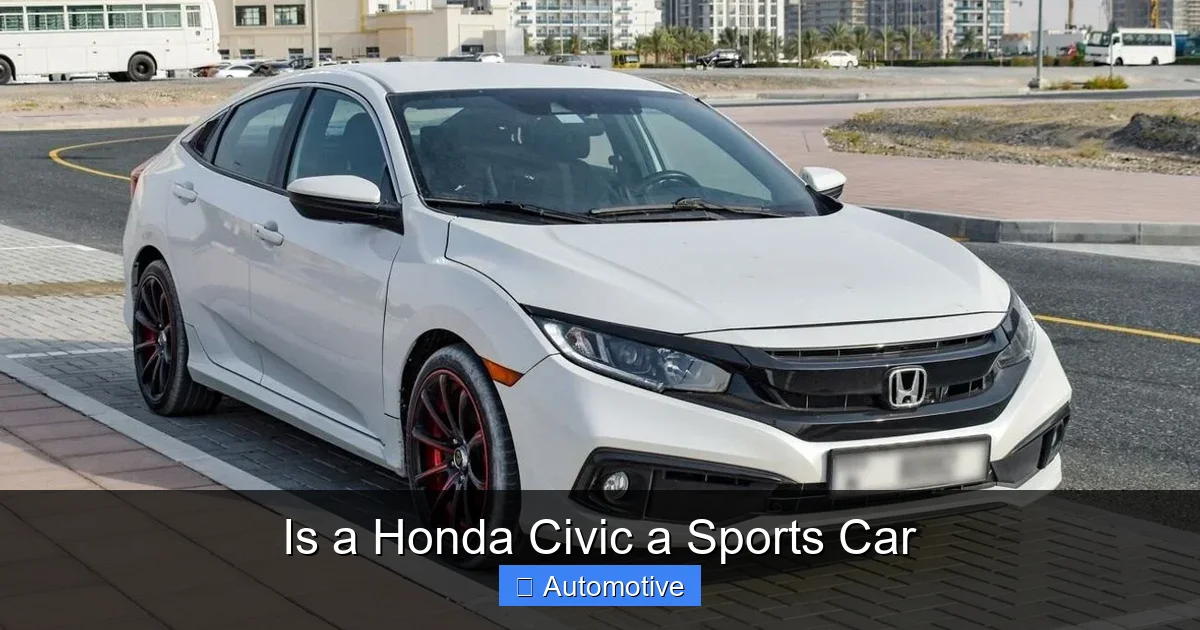
The standard Honda Civic LX, EX, and EX-L trims are designed for everyday driving. They come with a 2.0-liter naturally aspirated four-cylinder engine producing around 158 horsepower. Paired with a continuously variable transmission (CVT) or a manual (in some trims), these models emphasize fuel economy, comfort, and reliability.
With EPA ratings of up to 33 mpg city and 42 mpg highway, the base Civic is ideal for commuters and families. It’s not built for speed, but it handles well for a compact car, with a smooth ride and responsive steering. While it lacks the performance edge of a sports car, it’s a solid, well-rounded vehicle that excels in practicality.
The Civic Si: The Sporty Middle Ground
For drivers who want more excitement without sacrificing usability, the Civic Si is the sweet spot. Introduced in the 1980s, the Si (Sport injected) has evolved into a performance-oriented trim that balances power, handling, and daily drivability.
The current Civic Si features a 1.5-liter turbocharged four-cylinder engine producing 200 horsepower and 192 lb-ft of torque. It comes exclusively with a six-speed manual transmission—a rarity in today’s market—giving drivers full control over gear shifts. The Si also includes a sport-tuned suspension, larger brakes, and a limited-slip differential for improved cornering.
On the road, the Civic Si feels lively and engaging. It accelerates briskly, corners with confidence, and delivers a satisfying engine note. While it’s not as powerful as a true sports car, it offers a level of performance that’s rare in the compact segment. It’s also more affordable than most sports cars, with a starting price around $29,000.
The Civic Type R: The Track-Ready Flagship
If the Civic Si is the sporty cousin, the Type R is the full-blooded performance beast. First introduced in the late 1990s, the Type R has become a legend among hot hatch enthusiasts. The latest generation (FK8 and FL5) is a front-wheel-drive powerhouse that competes with cars twice its price.
Under the hood, the Type R boasts a 2.0-liter turbocharged four-cylinder engine tuned to deliver 315 horsepower and 310 lb-ft of torque. It’s paired with a six-speed manual transmission and a sophisticated suspension system with adaptive dampers. The Type R also features a reinforced chassis, Brembo brakes, and an aggressive aerodynamic package.
On the track, the Type R is a revelation. It holds corners with incredible grip, thanks to its limited-slip differential and sticky Michelin Pilot Sport Cup 2 tires (on higher trims). It’s capable of lap times that rival some entry-level sports cars, including the Subaru BRZ and Toyota GR86.
Despite its performance credentials, the Type R remains practical. It seats four, has a usable hatchback, and includes modern tech like Apple CarPlay, Android Auto, and Honda Sensing safety suite. It’s a true driver’s car that doesn’t force you to sacrifice daily usability.
Driving Dynamics: How the Civic Compares to True Sports Cars
Visual guide about Is a Honda Civic a Sports Car
Image source: dubicars.com
Now that we’ve covered the Civic’s performance specs, let’s talk about how it actually feels behind the wheel. Is it as engaging as a sports car?
Steering and Feedback
One of the hallmarks of a sports car is precise, communicative steering. The Civic, especially in Si and Type R trims, delivers just that. The electric power steering is well-weighted and responsive, giving drivers a clear sense of what the tires are doing.
In the Type R, the steering is particularly sharp. It turns in quickly and holds a line through corners with confidence. While it’s not as tactile as a Miata’s hydraulic steering, it’s among the best in the front-wheel-drive world.
Suspension and Ride Quality
Sports cars often have stiff suspensions to maximize handling, which can make them uncomfortable on rough roads. The Civic strikes a balance. The Si and Type R have firmer setups than the base model, but they’re still compliant enough for daily driving.
The Type R’s adaptive dampers allow drivers to switch between Comfort, Sport, and +R modes. In Comfort, it’s surprisingly smooth. In +R, it’s track-ready, with minimal body roll and excellent grip. This versatility is rare in the sports car world, where comfort is often sacrificed for performance.
Brake Performance
Strong brakes are essential for performance driving. The Civic Type R comes with Brembo front calipers and large ventilated discs, giving it excellent stopping power. It can handle repeated hard braking on the track without fading—something many sports cars struggle with.
The Si also has upgraded brakes compared to the base model, though they’re not as robust as the Type R’s. Still, they’re more than adequate for spirited driving.
Transmission and Drivetrain
The manual transmission is a dying breed, but Honda has kept it alive in the Civic Si and Type R. The six-speed gearbox in both models is smooth and precise, with short throws and a satisfying clutch feel.
Front-wheel drive is often seen as a limitation for performance cars, but Honda has engineered the Type R to minimize torque steer and maximize traction. The limited-slip differential helps send power to the wheel with the most grip, improving cornering stability.
Real-World Performance
On the road, the Civic Type R feels like a sports car. It accelerates from 0 to 60 mph in about 4.9 seconds—faster than many entry-level sports cars. It corners with confidence, brakes hard, and rewards skilled drivers.
That said, it’s not perfect. The front-wheel-drive layout means it can’t rotate as freely as a rear-wheel-drive car like the Miata. And while it’s quick, it doesn’t have the raw power of a V8-powered muscle car.
But for a compact car with four seats and a hatch, the Civic Type R is an astonishing achievement. It proves that you don’t need a low-slung coupe to have a thrilling driving experience.
Ownership Experience: Practicality vs. Performance
One of the biggest differences between the Civic and traditional sports cars is ownership. Sports cars are often expensive to buy, insure, and maintain. They’re also less practical for daily use.
Cost of Ownership
The Honda Civic is one of the most affordable cars to own. Even the Type R starts under $45,000—significantly less than a Porsche Cayman or a Corvette. Insurance is also more reasonable, especially compared to high-performance sports cars.
Maintenance is straightforward and affordable. Honda has a reputation for reliability, and the Civic’s turbocharged engines have proven durable with proper care. Parts are widely available, and service costs are lower than European or exotic brands.
Fuel Economy
Sports cars are rarely fuel-efficient. The Miata gets around 26 mpg combined, while the Cayman averages 24 mpg. The Civic Type R, by contrast, achieves 22 mpg city and 28 mpg highway—respectable for a 315-horsepower car.
The base Civic is even more efficient, with up to 42 mpg on the highway. That makes it a great choice for long commutes or road trips.
Interior Space and Comfort
Sports cars often sacrifice space for performance. The Miata has minimal cargo room and tight seating. The Civic, even in Type R form, offers a spacious cabin with comfortable seats and ample legroom.
The hatchback design adds versatility. You can fold down the rear seats to carry luggage, bikes, or furniture—something you can’t do in most sports cars.
Technology and Safety
Modern Civics come loaded with tech. The infotainment system is intuitive, with a crisp touchscreen, smartphone integration, and available wireless charging. The Honda Sensing suite includes adaptive cruise control, lane-keeping assist, and automatic emergency braking—features rarely found in sports cars.
This blend of performance and practicality is what sets the Civic apart. It’s a car you can drive every day, whether you’re commuting to work or attacking a mountain road.
The Enthusiast Appeal: Why the Civic Type R Is a Modern Classic
Despite not being a traditional sports car, the Civic Type R has earned a cult following. It’s been praised by critics, embraced by tuners, and even set lap records at the Nürburgring.
Track Credibility
In 2017, the FK8 Type R set a front-wheel-drive lap record at the Nürburgring, completing the 12.9-mile circuit in 7 minutes, 43.8 seconds. That’s faster than many rear-wheel-drive sports cars, including the BMW M2 and Ford Mustang GT.
This achievement proved that front-wheel drive could be competitive on the track—and that the Civic Type R was a serious performance machine.
Aftermarket Support
The Civic has always been a favorite among tuners. The Type R takes it to the next level. With a strong engine, robust transmission, and tunable suspension, it’s a blank canvas for performance upgrades.
Owners can add turbo kits, exhaust systems, and ECU tunes to push power beyond 400 horsepower. The aftermarket is full of parts designed specifically for the Type R, from aerodynamic kits to lightweight wheels.
Cultural Impact
The Civic Type R has become a symbol of accessible performance. It’s a car that delivers supercar-like thrills without the supercar price tag. It’s also a favorite among younger drivers who want a sporty car but can’t afford a Porsche or Ferrari.
In Japan, the Type R is a status symbol. In the U.S., it’s a badge of honor among car enthusiasts. It’s proof that you don’t need a luxury badge to have a thrilling driving experience.
Conclusion: The Civic Is a Sporty Compact, Not a Sports Car—But That’s Okay
So, is a Honda Civic a sports car? The answer is clear: no, it’s not. But that doesn’t mean it’s not special.
The Civic is a compact car designed for efficiency, reliability, and everyday use. But with trims like the Si and Type R, Honda has infused it with sporty DNA that rivals many traditional sports cars. It offers engaging handling, strong performance, and driver-focused features—all while remaining practical and affordable.
Think of the Civic as a high-performance daily driver. It’s not built for the track like a Miata or a Cayman, but it can hold its own on winding roads and even the occasional track day. It’s a car that proves you don’t need to sacrifice usability for excitement.
In a world where sports cars are often expensive, impractical, and out of reach, the Civic stands out as a refreshing alternative. It’s proof that performance can be accessible, and that driving fun doesn’t have to come at the cost of comfort or reliability.
So, while the Honda Civic may not wear the badge of a sports car, it certainly earns the spirit.
Frequently Asked Questions
Is the Honda Civic Type R considered a sports car?
The Honda Civic Type R is not classified as a traditional sports car, but it delivers performance and handling that rival many entry-level sports cars. With 315 horsepower, track-tuned suspension, and a manual transmission, it offers a driving experience closer to a sports car than a typical compact.
Can the Civic Si handle like a sports car?
Yes, the Civic Si offers sporty handling with a turbocharged engine, manual transmission, and upgraded suspension. While not as extreme as the Type R, it provides a fun and engaging drive that appeals to enthusiasts looking for performance in a practical package.
Why isn’t the Civic a true sports car?
The Civic is a front-wheel-drive compact car with four seats and a focus on practicality, fuel economy, and daily usability. True sports cars are typically rear-wheel drive, two-seaters, and prioritize performance over comfort and space.
How fast is the Honda Civic Type R?
The Civic Type R accelerates from 0 to 60 mph in approximately 4.9 seconds and has a top speed of 169 mph. These figures put it in the same performance range as many entry-level sports cars.
Is the Civic Type R good for daily driving?
Yes, despite its performance focus, the Type R is comfortable and practical for daily use. It has a spacious interior, modern tech, and adaptive suspension that can be softened for commuting.
What makes the Civic Type R special compared to other sporty cars?
The Type R combines high performance, track capability, and daily usability at an affordable price. Its front-wheel-drive layout, manual transmission, and cult following make it a unique and accessible performance car.