
Is a Honda Civic a Compact Car

The Honda Civic is officially classified as a compact car, but it often feels roomier than its category suggests. Thanks to smart design, efficient packaging, and consistent evolution, the Civic blends compact efficiency with near-midsize comfort, making it a standout in its class.
Key Takeaways
- Official Classification: The Honda Civic is recognized by the EPA and automotive industry as a compact car based on interior volume and dimensions.
- Spacious Interior: Despite its compact label, the Civic offers generous legroom, headroom, and cargo space, rivaling some midsize sedans.
- Fuel Efficiency: As a compact car, the Civic delivers excellent fuel economy, often exceeding 30 mpg combined, making it ideal for daily commuting.
- Trim and Model Variety: Available in sedan, coupe, and hatchback body styles, the Civic caters to diverse needs while staying within the compact segment.
- Performance Options: From efficient base engines to sporty turbocharged variants like the Civic Si and Type R, performance scales with the compact platform.
- Safety and Technology: The Civic comes equipped with advanced safety features and modern infotainment, common in higher-tier vehicles but rare in traditional compacts.
- Resale Value: Honda’s reputation for reliability helps the Civic retain strong resale value, a hallmark of successful compact cars.
📑 Table of Contents
- Introduction: What Defines a Compact Car?
- Understanding Vehicle Classifications: Compact vs. Midsize
- The Honda Civic: A Compact Car by Design
- Performance and Efficiency: Compact Car Strengths
- Technology and Safety: Compact Car, Premium Features
- Comparing the Civic to Other Compact Cars
- Real-World Practicality: Living with a Honda Civic
- Conclusion: The Civic Redefines the Compact Car
Introduction: What Defines a Compact Car?
When you hear the term “compact car,” what comes to mind? For many, it’s a small, fuel-efficient vehicle perfect for city driving, easy parking, and budget-friendly ownership. But as automotive design evolves, the lines between vehicle classes are blurring. The Honda Civic, one of the most popular cars in the world, sits right at the center of this conversation. Is it truly a compact car, or has it grown into something more?
The answer isn’t just about size—it’s about how the Civic balances efficiency, space, performance, and technology. Over the decades, Honda has refined the Civic to punch above its weight class. While it officially falls under the compact category, many drivers find it feels more like a midsize sedan in terms of comfort and usability. This article dives deep into what makes the Honda Civic a compact car, how it compares to rivals, and why it continues to be a top choice for millions of drivers worldwide.
Understanding Vehicle Classifications: Compact vs. Midsize
Before we can answer whether the Honda Civic is a compact car, we need to understand how vehicles are classified. In the United States, the Environmental Protection Agency (EPA) sets the standard for vehicle categories based on interior volume and cargo space. According to the EPA, a compact car has an interior volume between 100 and 109 cubic feet, with cargo space under 14 cubic feet for sedans.

Visual guide about Is a Honda Civic a Compact Car
Image source: bestgaddi.com
The Honda Civic sedan, for example, measures around 110 cubic feet of interior volume—just slightly over the EPA’s compact threshold. However, due to its overall dimensions and market positioning, it’s still widely considered a compact car. The hatchback and coupe variants are even smaller, firmly placing them in the compact segment. This classification isn’t just bureaucratic—it affects insurance rates, fuel economy expectations, and consumer perceptions.
How the EPA Defines Vehicle Size
The EPA uses a formula that combines passenger and cargo volume to determine a vehicle’s class. For sedans, passenger volume includes front and rear seat space, while cargo volume measures the trunk. If the total is between 100 and 109 cubic feet, it’s a compact. If it’s 110 cubic feet or more, it moves into the midsize category. The Civic sedan sits right on the edge, which is why some sources label it as “compact-plus” or “near-midsize.”
Despite this technicality, automakers and consumers still refer to the Civic as a compact car. Why? Because its exterior dimensions—length, width, and wheelbase—are consistent with other compacts like the Toyota Corolla and Hyundai Elantra. It’s designed to be maneuverable, fuel-efficient, and affordable, all hallmarks of the compact class.
Compact Car Characteristics
So, what makes a car “compact”? Generally, compact cars are:
- Under 185 inches in length
- Weigh less than 3,200 pounds
- Offer seating for four to five passengers
- Deliver fuel economy above 30 mpg combined
- Designed for urban and suburban driving
The Honda Civic checks all these boxes. Even the larger sedan version is only about 184 inches long, and the hatchback is shorter. It’s lightweight, agile, and built for efficiency—core traits of a compact car.
The Honda Civic: A Compact Car by Design
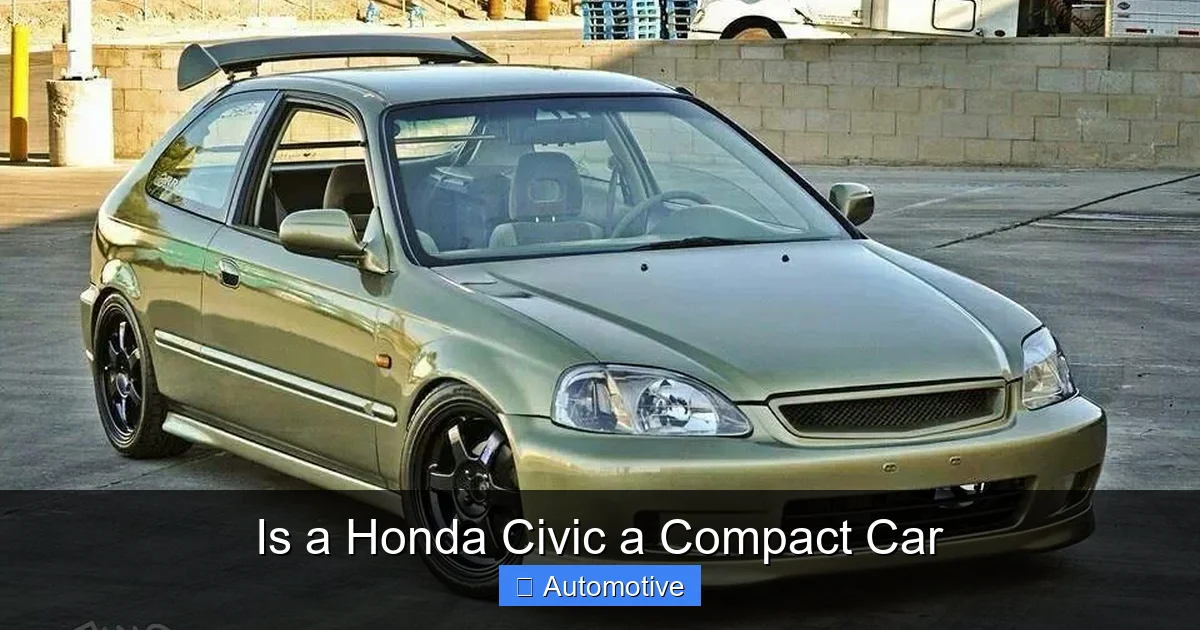
Since its debut in 1972, the Honda Civic has been a compact car through and through. Originally introduced as a two-door hatchback, it was designed to be affordable, reliable, and fuel-efficient—qualities that made it a hit during the oil crisis of the 1970s. Over the years, Honda has expanded the lineup to include sedans, coupes, and performance models, but the core identity remains rooted in the compact segment.
Visual guide about Is a Honda Civic a Compact Car
Image source: i.pinimg.com
Today’s Civic continues this legacy. The 2024 Honda Civic sedan measures 184.0 inches in length, 70.9 inches in width, and has a wheelbase of 107.7 inches. These dimensions are nearly identical to the Toyota Corolla (182.3 inches) and only slightly smaller than the Hyundai Elantra (181.9 inches). All three are considered compact cars, and the Civic fits comfortably within this group.
Exterior Dimensions and Practicality
One of the key advantages of a compact car is its ease of use in tight spaces. The Civic’s relatively short length and tight turning radius make it ideal for city driving, parallel parking, and navigating narrow streets. Despite its compact exterior, Honda engineers have maximized interior space through smart packaging. The use of a transverse engine layout and efficient cabin design allows for more room inside than you might expect.
For example, the Civic sedan offers 42.3 inches of front legroom and 37.4 inches in the rear—comparable to some midsize sedans. Headroom is generous at 39.5 inches in front and 37.3 inches in back. This level of comfort is rare in traditional compacts and helps explain why many drivers feel the Civic offers midsize-like space.
Interior Volume and Cargo Space
Interior volume is a key metric in vehicle classification. The 2024 Honda Civic sedan has a total interior volume of approximately 110 cubic feet, with 97.8 cubic feet for passengers and 15.1 cubic feet of trunk space. While the passenger volume nudges into midsize territory, the trunk is smaller than many midsize sedans, which typically offer 16–18 cubic feet.
The Civic hatchback, on the other hand, has a total interior volume of 109.1 cubic feet, with 97.2 cubic feet for passengers and 24.5 cubic feet of cargo space behind the rear seats. With the seats folded, cargo capacity jumps to 44.2 cubic feet—more than enough for weekend trips, grocery runs, or camping gear. This versatility is a major selling point for compact hatchbacks and reinforces the Civic’s practicality.
Performance and Efficiency: Compact Car Strengths
One of the defining traits of compact cars is their focus on fuel efficiency and efficient performance. The Honda Civic excels in both areas, offering a range of engines that balance power and economy. The base model comes with a 2.0-liter inline-4 engine producing 158 horsepower and 138 lb-ft of torque. Paired with a continuously variable transmission (CVT), it delivers an EPA-estimated 31 mpg city / 40 mpg highway / 35 mpg combined.

Visual guide about Is a Honda Civic a Compact Car
Image source: motorbiscuit.com
For those who want more performance, the Civic offers a 1.5-liter turbocharged engine with 180 horsepower and 177 lb-ft of torque. Available in the EX, EX-L, and Sport trims, this engine improves acceleration while maintaining excellent fuel economy—30 mpg city / 37 mpg highway / 33 mpg combined. The turbo engine gives the Civic a sporty edge without sacrificing efficiency, a rare combination in the compact class.
Sporty Variants: Civic Si and Type R
Honda takes the compact concept even further with performance-oriented models. The Civic Si, for example, features a tuned version of the 1.5-liter turbo engine, producing 200 horsepower and 192 lb-ft of torque. It includes a manual transmission, sport-tuned suspension, and enhanced brakes—features typically found in sport compacts or entry-level sports cars.
Then there’s the Civic Type R, a high-performance hatchback that blurs the line between compact and sports car. With a 2.0-liter turbocharged engine making 315 horsepower, it’s one of the fastest front-wheel-drive production cars ever made. While the Type R is still based on the compact Civic platform, its performance places it in a different league. Yet, it retains the practicality of a hatchback, proving that compact cars can be both fun and functional.
Hybrid Option: The Future of Compact Efficiency
In 2024, Honda introduced a hybrid version of the Civic, further enhancing its efficiency credentials. The Civic Hybrid combines a 2.0-liter Atkinson-cycle engine with two electric motors, delivering a total system output of 200 horsepower. More importantly, it achieves an estimated 50 mpg combined—making it one of the most fuel-efficient compact cars on the market.
The hybrid system uses Honda’s e:HEV technology, which operates primarily on electric power at low speeds and seamlessly switches to the gasoline engine during acceleration. This setup reduces emissions and fuel consumption without sacrificing performance. For eco-conscious drivers, the Civic Hybrid represents the next evolution of the compact car.
Technology and Safety: Compact Car, Premium Features
One of the reasons the Honda Civic feels more upscale than a typical compact car is its advanced technology and safety features. Even the base LX trim comes with a 7-inch touchscreen, Apple CarPlay, Android Auto, and a 4-speaker audio system. Higher trims add wireless connectivity, a 12-speaker Bose audio system, and a 9-inch touchscreen with navigation.
Honda Sensing, the brand’s suite of driver-assistance technologies, is standard on all Civic models. This includes:
- Collision Mitigation Braking System
- Road Departure Mitigation
- Adaptive Cruise Control
- Lane Keeping Assist System
- Traffic Sign Recognition
These features are often found in luxury or midsize vehicles, but Honda includes them across the entire Civic lineup. This commitment to safety and technology elevates the driving experience and reinforces the Civic’s value proposition.
Infotainment and Connectivity
The Civic’s infotainment system is intuitive and responsive. The touchscreen is easy to use, with clear menus and quick response times. Wireless Apple CarPlay and Android Auto are available on most trims, allowing drivers to stay connected without fumbling with cables. The available wireless phone charger and USB-C ports add convenience for modern smartphone users.
For audiophiles, the Bose premium sound system delivers rich, immersive audio. With 12 speakers strategically placed throughout the cabin, it transforms the Civic into a mobile concert hall. This level of audio quality is rare in compact cars and further distinguishes the Civic from competitors.
Safety Ratings and Reliability
The Honda Civic consistently earns top safety ratings. The 2024 model received a 5-Star Overall Safety Rating from the National Highway Traffic Safety Administration (NHTSA) and was named a Top Safety Pick+ by the Insurance Institute for Highway Safety (IIHS). It earned “Good” ratings in all crash tests and superior ratings for front crash prevention.
Reliability is another strong suit. According to J.D. Power and Consumer Reports, the Civic ranks among the most reliable compact cars. Honda’s reputation for durability means lower maintenance costs and higher resale value over time. For buyers looking for a long-term investment, the Civic is a smart choice.
Comparing the Civic to Other Compact Cars
To truly understand where the Honda Civic stands, it’s helpful to compare it to other popular compact cars. The Toyota Corolla, Hyundai Elantra, and Mazda3 are its main competitors. Each offers a slightly different take on the compact formula.
The Toyota Corolla is known for its reliability and fuel efficiency. The 2024 Corolla offers up to 35 mpg combined and comes with standard Toyota Safety Sense. However, its interior feels more basic, and the ride is softer, prioritizing comfort over sportiness.
The Hyundai Elantra stands out with its bold styling and long warranty. It offers a 10-year/100,000-mile powertrain warranty and available hybrid and N-Line performance models. The Elantra’s interior is modern and spacious, but some drivers find the ride quality less refined than the Civic’s.
The Mazda3 emphasizes driving dynamics and upscale design. With available all-wheel drive and a premium interior, it feels more like a luxury compact. However, rear seat space is tighter, and cargo capacity is smaller than the Civic’s.
Civic vs. Corolla: Efficiency and Driving Feel
The Civic and Corolla are often compared as the two titans of the compact segment. Both are reliable, efficient, and affordable. But the Civic edges ahead in driving dynamics. Its suspension is more tuned for sportiness, offering better handling and a more engaging drive. The Corolla feels more relaxed, which some drivers prefer, but the Civic appeals to those who enjoy a bit of excitement behind the wheel.
In terms of technology, the Civic offers a more modern infotainment system and better available audio. The Corolla’s system is functional but less intuitive. Safety features are comparable, with both offering standard driver-assistance suites.
Civic vs. Elantra: Style and Value
The Hyundai Elantra has made huge strides in recent years, offering bold styling and a long warranty. The Civic, however, still holds an edge in resale value and brand reputation. Honda’s global presence and decades of reliability give it an advantage in long-term ownership costs.
The Elantra’s interior is flashier, with dual 10.25-inch screens on higher trims. The Civic’s design is more understated but equally modern. Both offer good space, but the Civic’s rear seat is slightly more comfortable for taller passengers.
Civic vs. Mazda3: Driving Enthusiasts’ Choice
The Mazda3 is the sportiest compact car on the market, with sharp handling and a premium feel. The Civic matches it in driving fun, especially in Si and Type R forms. The Mazda3 offers all-wheel drive, which the Civic lacks, but the Civic has more rear seat and cargo space.
For buyers who prioritize driving enjoyment, both are excellent choices. The Mazda3 feels more upscale, while the Civic offers more practicality and a wider range of models.
Real-World Practicality: Living with a Honda Civic
So, is the Honda Civic a compact car in real life? The answer is yes—but it’s a compact car that exceeds expectations. Whether you’re a daily commuter, a college student, or a small family, the Civic offers a blend of efficiency, space, and reliability that’s hard to beat.
For city dwellers, the Civic’s compact size makes parking a breeze. Parallel parking in tight spots is stress-free, and the high seating position provides good visibility. The fuel economy means fewer trips to the gas station, saving time and money.
For road trips, the Civic’s comfortable seats and quiet cabin make long drives enjoyable. The available adaptive cruise control reduces driver fatigue, and the spacious trunk or hatchback cargo area handles luggage with ease.
Family-Friendly Features
Despite its compact label, the Civic is a great family car. The rear seats accommodate two adults or three children comfortably. LATCH anchors and top tethers make installing child seats simple. The available rearview camera and blind-spot monitoring add peace of mind when driving with kids.
The Civic’s safety record and reliability mean parents can trust it for school runs, soccer practice, and weekend adventures. It’s not as large as an SUV, but it offers more than enough space for most families.
Cost of Ownership
One of the biggest advantages of a compact car is affordability. The Honda Civic starts around $24,000 for the base LX sedan, making it accessible to a wide range of buyers. Insurance costs are lower than for larger or performance vehicles, and maintenance is straightforward thanks to Honda’s widespread service network.
Fuel costs are minimal, especially with the hybrid model. Over five years, the Civic can save thousands in fuel compared to larger vehicles. Depreciation is also slower than average, meaning you’ll get more back when it’s time to sell or trade in.
Conclusion: The Civic Redefines the Compact Car
The Honda Civic is, without a doubt, a compact car. It meets all the technical criteria set by the EPA and automotive industry. But it’s also so much more. Through thoughtful design, advanced technology, and a commitment to performance and safety, Honda has created a compact car that feels like a step above.
It’s spacious enough for families, efficient enough for commuters, and fun enough for driving enthusiasts. Whether you choose the practical sedan, versatile hatchback, or high-performance Type R, the Civic delivers value, reliability, and driving enjoyment. In a world where vehicle classes are increasingly fluid, the Civic proves that compact doesn’t have to mean compromised. It’s a compact car that thinks big.
Frequently Asked Questions
Is the Honda Civic considered a compact car by the EPA?
Yes, the Honda Civic is classified as a compact car by the EPA, though its interior volume slightly exceeds the typical threshold. It remains in the compact segment due to its overall dimensions and market positioning.
How does the Honda Civic compare to the Toyota Corolla in size?
The Honda Civic and Toyota Corolla are nearly identical in size, with the Civic being just a few inches longer. Both are classified as compact cars and offer similar interior space and fuel efficiency.
Does the Honda Civic have enough space for a family?
Yes, the Honda Civic offers generous rear legroom and headroom, making it suitable for small families. The hatchback model provides even more cargo space for strollers, groceries, or luggage.
What is the fuel economy of the Honda Civic?
The 2024 Honda Civic achieves up to 35 mpg combined with the base engine and 50 mpg combined in the hybrid version, making it one of the most fuel-efficient compact cars available.
Are safety features standard on all Honda Civic models?
Yes, Honda Sensing, a comprehensive suite of driver-assistance technologies, is standard on all Civic trims, including collision mitigation, lane keeping, and adaptive cruise control.
Can the Honda Civic handle long road trips?
Absolutely. The Civic offers a comfortable ride, quiet cabin, and advanced safety features like adaptive cruise control, making it an excellent choice for long-distance driving.
