
How Long Can a Car Idle Safely?

Idling your car for too long can harm your engine, waste fuel, and damage the environment. While brief idling is normal, extended periods—especially in modern vehicles—are rarely necessary and often unsafe. This guide breaks down safe idling times, risks, and smarter alternatives.
Key Takeaways
- Most cars should idle no longer than 30 seconds to 1 minute in normal conditions. Modern engines warm up faster while driving than when stationary.
- Extended idling wastes fuel—up to half a gallon per hour—and increases emissions. This costs money and harms air quality.
- Prolonged idling can cause engine wear, carbon buildup, and oil contamination. Moisture and unburned fuel accumulate in the exhaust and oil system.
- In cold weather, limit idling to 30 seconds before driving gently. Driving warms the engine more efficiently than idling.
- Electric and hybrid vehicles handle idling differently. They often shut off automatically or use battery power, reducing wear.
- Idling laws exist in many cities and states. Fines may apply for leaving your car running unattended or for too long.
- Use alternatives like remote starters with timers or block heaters. These reduce the need for long idling, especially in winter.
📑 Table of Contents
How Long Can a Car Idle Safely?
You’ve probably done it—started your car on a cold morning and let it run for five, ten, even twenty minutes while you finish your coffee or check your phone. It feels harmless, even helpful. But how long is too long? And what’s really happening under the hood while your car sits there, humming away?
The truth is, idling—running your engine while the car is stationary—is a common habit, but it’s often misunderstood. While a brief idle is normal and sometimes necessary, leaving your car running for extended periods can do more harm than good. From wasting fuel to damaging your engine and polluting the air, the risks add up quickly.
So, how long can a car idle safely? The short answer: in most cases, no more than 30 seconds to 1 minute under normal conditions. Modern vehicles are designed to warm up efficiently while driving, not while sitting still. Letting your car idle for long periods—especially in mild weather—is unnecessary and can lead to a host of problems.
In this guide, we’ll explore the science behind safe idling, the risks of overdoing it, and practical tips to keep your car running smoothly without wasting fuel or harming the environment. Whether you’re dealing with winter cold, summer heat, or just curious about best practices, this article will give you the facts you need.
Understanding Engine Idling: What Happens When Your Car Sits?
Visual guide about How Long Can a Car Idle Safely?
Image source: thevehiclelab.com
Before we dive into safe idling times, it’s important to understand what’s actually happening when your engine is running but your car isn’t moving.
When you start your car, the engine begins burning fuel to generate power. This process creates heat, exhaust gases, and mechanical movement. In an ideal scenario, that power is used to move the car forward. But when you’re idling, the engine is working without doing useful work—like a treadmill that’s on but no one’s running.
During idling, the engine operates at a low RPM (revolutions per minute), typically between 600 and 1,000. This keeps essential systems like the alternator, power steering, and air conditioning running, but it’s not efficient. Fuel is burned, but very little mechanical energy is produced. Most of the energy is lost as heat or used to power auxiliary systems.
One key issue with idling is incomplete combustion. At low speeds, the engine doesn’t reach optimal operating temperature quickly, especially in cold weather. This means fuel doesn’t burn completely, leading to the buildup of carbon deposits in the engine and exhaust system. Over time, this can reduce performance and increase emissions.
Another concern is oil contamination. When the engine isn’t under load, moisture and unburned fuel can seep past piston rings and mix with the engine oil. This dilutes the oil, reducing its lubricating properties and potentially causing corrosion. In extreme cases, this can lead to sludge formation, which clogs oil passages and damages internal components.
Modern engines are designed with fuel efficiency and emissions in mind. Many now feature start-stop technology, which automatically shuts off the engine when the car is stopped (like at a red light) and restarts it when you press the accelerator. This reduces unnecessary idling and saves fuel.
So while idling keeps your car “ready to go,” it’s not doing your engine any favors. The longer you let it run without moving, the more strain you’re putting on critical systems—without getting anywhere.
The Risks of Extended Idling

Visual guide about How Long Can a Car Idle Safely?
Image source: upgradedvehicle.com
Letting your car idle for too long might seem harmless, but the consequences can be serious—both for your vehicle and the environment. Here are the main risks associated with prolonged idling.
Fuel Waste and Increased Costs
One of the most obvious downsides of idling is fuel consumption. A typical gasoline-powered car can burn between 0.2 and 0.5 gallons of fuel per hour while idling. That might not sound like much, but it adds up quickly.
For example, if you idle your car for 10 minutes every morning during a 5-day workweek, that’s 50 minutes per week—over 4 hours per month. At 0.4 gallons per hour, that’s nearly 1.6 gallons of wasted fuel each month. Multiply that by 12 months, and you’ve burned nearly 20 extra gallons of gas just from idling. At $3.50 per gallon, that’s $70 down the drain—money that could have been saved by simply turning off the engine.
Diesel engines are even less efficient at idle, sometimes burning up to 1 gallon per hour. Commercial trucks and delivery vehicles are especially prone to long idling periods, making fuel costs a major concern for fleet operators.
Engine Wear and Carbon Buildup
Engines are built to operate under load—when the car is moving. Idling keeps the engine running, but without the cooling effect of airflow from driving. This can cause components to run hotter than intended, especially in summer.
More importantly, low-speed operation leads to incomplete combustion. When fuel doesn’t burn completely, it leaves behind carbon deposits on spark plugs, fuel injectors, and exhaust valves. Over time, these deposits can reduce engine efficiency, cause misfires, and even lead to costly repairs.
Carbon buildup is especially problematic in direct-injection engines, which are common in modern cars. These engines spray fuel directly into the combustion chamber, which can lead to more carbon accumulation on intake valves since there’s no fuel wash to clean them (as in older port-injection systems).
Oil Degradation and Contamination
As mentioned earlier, idling allows moisture and unburned fuel to mix with engine oil. This process, known as fuel dilution, reduces the oil’s viscosity and lubricating ability. Thinner oil can’t protect engine parts as effectively, leading to increased wear on pistons, bearings, and camshafts.
Additionally, condensation forms inside the engine and exhaust system when it cools down after running. If the car isn’t driven long enough to evaporate this moisture, it can lead to rust and corrosion. This is especially true for short trips followed by long idling periods.
Over time, contaminated oil can form sludge—a thick, gel-like substance that clogs oil passages and restricts flow. Sludge can cause engine overheating, reduced performance, and even complete engine failure if not addressed.
Environmental Impact and Emissions
Idling contributes to air pollution. Even modern, clean-burning engines emit harmful pollutants like carbon monoxide (CO), nitrogen oxides (NOx), and particulate matter when idling. These emissions contribute to smog, respiratory issues, and climate change.
According to the U.S. Department of Energy, idling vehicles release over 11 million tons of carbon dioxide annually—just in the United States. That’s equivalent to the emissions from 2.3 million cars driving for a full year.
Children, the elderly, and people with asthma are especially vulnerable to the effects of vehicle emissions. Schools, hospitals, and urban areas often have anti-idling policies to protect public health.
Battery Drain and Electrical System Stress
While idling keeps the alternator charging the battery, it’s not the most efficient way to maintain charge. If you’re using accessories like the heater, air conditioning, or infotainment system while idling, you’re drawing power from the battery without the engine running at optimal RPMs.
This can lead to a net loss of charge over time, especially in older vehicles or those with weak batteries. In extreme cases, prolonged idling with high electrical loads can drain the battery enough to prevent the car from starting later.
Safe Idling Times: What the Experts Recommend
Visual guide about How Long Can a Car Idle Safely?
Image source: carfromjapan.com
Now that we’ve covered the risks, let’s get to the core question: how long can a car idle safely?
The answer depends on several factors, including weather, vehicle type, and engine condition. But in general, most automotive experts and manufacturers agree on a few key guidelines.
Normal Conditions (Mild Weather)
In temperatures between 40°F and 80°F (4°C to 27°C), you should limit idling to **30 seconds to 1 minute** after starting the engine. This is enough time for the oil to circulate and reach critical components.
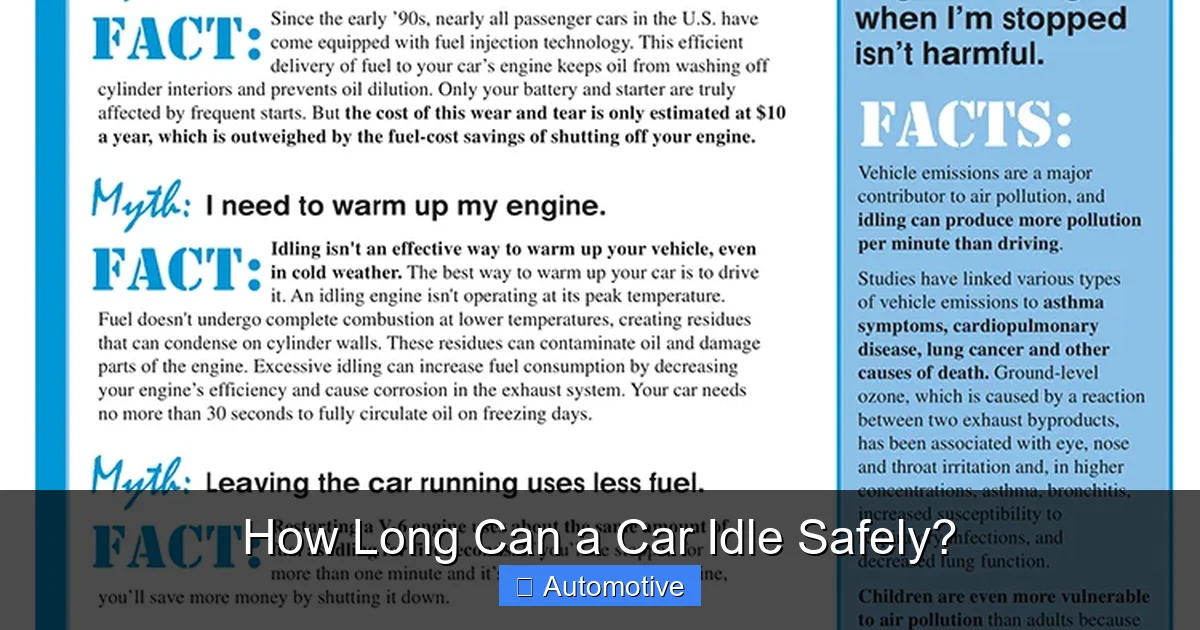
Modern engines are designed to warm up quickly. In fact, driving gently—avoiding high RPMs—is the fastest way to bring the engine to operating temperature. Idling for 10 minutes won’t warm the engine as effectively as driving for 5 minutes.
For example, if you start your car on a spring morning and let it idle for 10 minutes, the engine may still be cooler than if you had driven slowly for half that time. Movement creates friction and heat, which helps the engine warm up faster.
Cold Weather Idling
Winter is when idling habits tend to go into overdrive. Many drivers believe they need to “warm up” their car for 10, 15, or even 20 minutes before driving. But this is largely a myth left over from older carbureted engines.
Today’s fuel-injected engines don’t need long warm-up periods. In fact, idling in cold weather can actually delay warming because the engine isn’t under load.
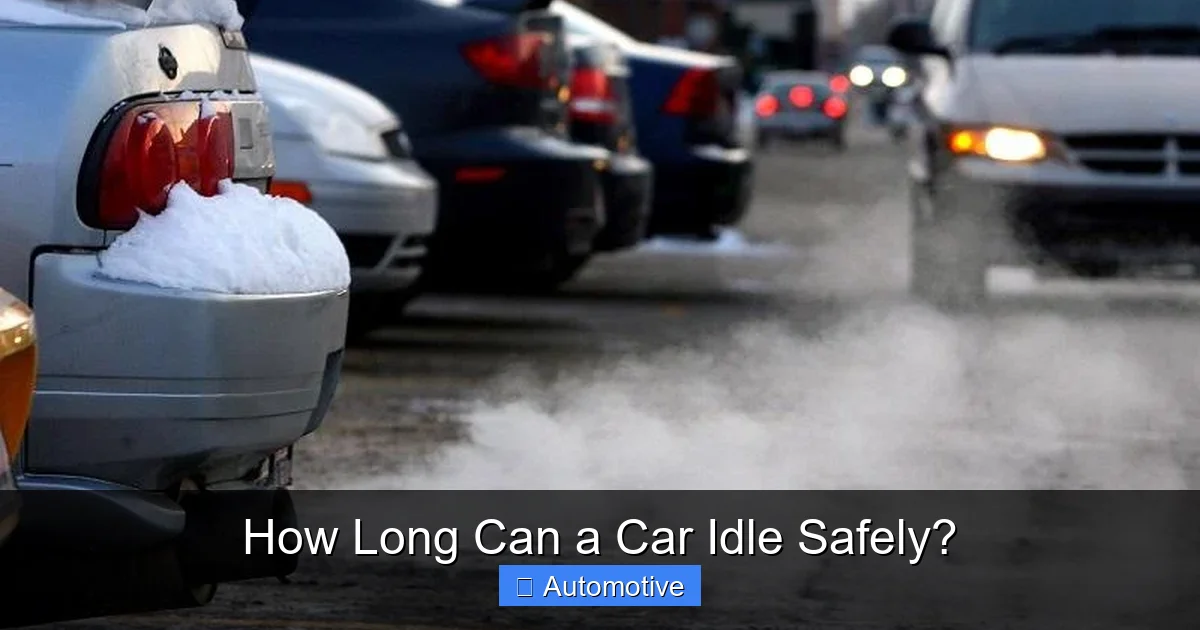
The general rule for cold weather (below 32°F or 0°C) is to **idle for no more than 30 seconds**, then drive gently until the engine reaches normal operating temperature. This usually takes 5 to 10 minutes of driving.
Driving warms the engine faster because the coolant circulates more effectively and the engine generates more heat under light load. Plus, your cabin heater won’t blow warm air until the engine is warm—so idling won’t make you more comfortable anyway.
If you’re concerned about frost or ice on your windshield, use a scraper or defroster instead of idling. Some drivers use remote starters with timers to run the engine for just a few minutes before they leave, which is more efficient than long idling.
Hot Weather and Air Conditioning
In summer, some drivers idle to cool the cabin before getting in. While this might seem logical, it’s often unnecessary and inefficient.
Modern air conditioners work best when the engine is under load. Idling keeps the compressor running, but at low RPMs, it may not cool effectively. Plus, the car’s interior will cool faster once you start driving and increase airflow.
If you must idle to cool the car, limit it to **2 to 3 minutes maximum**. Use sunshades, park in the shade, or crack the windows to reduce heat buildup. Some vehicles have remote climate control systems that run the AC for a set time without idling the engine for long.
Hybrid and Electric Vehicles
Hybrid and electric vehicles handle idling differently. Many hybrids, like the Toyota Prius, automatically shut off the gasoline engine when stopped and restart it when needed. This reduces fuel use and emissions.
Electric vehicles (EVs) don’t idle at all in the traditional sense. The motor only runs when the car is moving or when accessories are used. The climate control system runs on battery power, so there’s no engine wear from idling.
However, using climate control in an EV while parked can drain the battery. It’s best to precondition the cabin while the car is still plugged in, using grid power instead of battery power.
Alternatives to Long Idling
If you’re used to letting your car idle, you might be wondering: what’s the alternative? The good news is, there are several smarter, more efficient ways to manage your vehicle’s temperature and readiness.
Remote Starters with Timers
Remote starters are a popular solution for cold mornings. These devices allow you to start your car from inside your home or office, so it’s ready to go when you walk out.
The key is to use a remote starter with a **timer function**. Set it to run for only 2 to 3 minutes before you plan to leave. This gives the engine enough time to circulate oil and begin warming up, without wasting fuel.
Some advanced systems even monitor engine temperature and only run the engine if it’s below a certain threshold. This prevents unnecessary idling on milder days.
Block Heaters and Engine Blankets
In extremely cold climates, consider using a block heater. These devices plug into an electrical outlet and warm the engine coolant overnight, making cold starts easier and reducing the need for idling.
Engine blankets or insulating covers can also help retain heat. They’re especially useful for cars parked outside in winter.
Using a block heater for just 2 to 3 hours before driving can reduce cold-start wear by up to 50%, according to the U.S. Department of Energy.
Park Smart: Use Shade and Sunshades
In summer, parking in the shade or using a reflective sunshade can significantly reduce cabin temperature. This means you’ll need less time with the AC running—whether idling or driving.
Cracking the windows slightly can also help hot air escape, making the interior more comfortable when you return.
Plan Your Trips
If you know you’ll be stopping for a short time—like picking up coffee or dropping off a package—consider turning off the engine instead of idling.
Most experts agree that if you’re stopped for more than 10 seconds (and not in traffic), it’s more fuel-efficient to turn off the engine—unless you’re in a start-stop system that does it automatically.
Modern engines are designed to handle frequent starts. The wear from starting is minimal compared to the fuel saved by avoiding idling.
Idling Laws and Regulations
Did you know that idling your car for too long could get you a ticket? Many cities, states, and even countries have laws limiting how long you can leave your engine running.
These regulations are designed to reduce air pollution, noise, and fuel waste. Penalties vary, but fines typically range from $50 to $500, depending on the location and duration.
For example:
– In New York City, idling is limited to **3 minutes** in most areas, and **1 minute** near schools.
– In California, the limit is **5 minutes** for most vehicles, with stricter rules for diesel trucks.
– In Canada, several provinces have anti-idling bylaws, with limits ranging from 3 to 10 minutes.
Some laws also prohibit idling in certain zones, such as near hospitals, schools, or residential areas. Commercial vehicles often face stricter rules due to their higher emissions.
Even if there’s no law in your area, consider the ethical and environmental impact. Idling unnecessarily contributes to climate change and harms public health.
Conclusion: Idle Smart, Not Long
So, how long can a car idle safely? The answer is clear: **no more than 30 seconds to 1 minute in most situations**. Modern engines don’t need long warm-up periods, and idling wastes fuel, harms the engine, and pollutes the air.
Instead of letting your car run while you wait, consider smarter alternatives like remote starters, block heaters, or simply turning off the engine for short stops. Your wallet, your car, and the planet will thank you.
Remember, the goal isn’t to eliminate idling entirely—brief idling is normal and sometimes necessary. But by being mindful of how long you let your engine run, you can extend the life of your vehicle, save money on fuel, and reduce your environmental footprint.
Next time you’re tempted to let your car idle for “just a few more minutes,” ask yourself: is it really worth it? In most cases, the answer is no. Drive smart, idle less, and keep your car running smoothly for years to come.
Frequently Asked Questions
Is it bad to let your car idle for 10 minutes?
Yes, idling for 10 minutes is generally unnecessary and can waste fuel, increase emissions, and contribute to engine wear. Modern engines warm up faster while driving, so it’s better to drive gently after a short 30-second idle.
Can idling damage your car’s engine?
Prolonged idling can lead to carbon buildup, oil contamination, and incomplete combustion, all of which may reduce engine performance and lifespan over time. It’s best to limit idling to under a minute.
How long should you idle your car in winter?
In cold weather, idle for no more than 30 seconds before driving gently. Driving warms the engine faster than idling and helps the cabin heater work more efficiently.
Do hybrid cars idle like regular cars?
Most hybrids automatically shut off the gasoline engine when stopped and restart it when needed, reducing unnecessary idling and saving fuel.
Is it illegal to idle your car?
In many cities and states, yes. Anti-idling laws limit how long you can leave your engine running, with fines for violations. Check local regulations to avoid penalties.
What’s the best way to warm up your car in winter?
The best way is to drive gently after a short 30-second idle. Use a block heater or remote starter with a timer to reduce the need for long idling.