
Can Car Insurance Cover Repairs?

Yes, car insurance can cover repairs—but only under certain conditions and coverage types. Understanding your policy is key to knowing what’s included, from collision and comprehensive to roadside assistance and rental reimbursement.
[FEATURED_IMAGE_PLACEOLDER]
Key Takeaways
- Not all car insurance covers repairs: Only specific coverage types like collision and comprehensive pay for vehicle repairs after accidents or damage.
- Liability insurance does not cover your car: It only pays for damage or injuries you cause to others, not your own vehicle.
- Deductibles affect out-of-pocket costs: You’ll pay a set amount before insurance kicks in, so choose your deductible wisely.
- Comprehensive covers non-collision damage: This includes theft, vandalism, weather, and animal collisions.
- Collision covers accident-related repairs: Whether you hit another car or object, this coverage helps pay for fixes.
- Regular maintenance isn’t covered: Oil changes, brake pads, and wear-and-tear repairs are your responsibility.
- Filing a claim may raise premiums: Weigh the cost of repairs against potential rate increases before claiming.
📑 Table of Contents
Can Car Insurance Cover Repairs?
So, your car just got dinged in a parking lot, or maybe a tree branch fell on your hood during a storm. You’re staring at the damage, wondering: “Will my car insurance cover repairs?” It’s a question millions of drivers ask every year—and the answer isn’t always straightforward.
The short version? Yes, car insurance can cover repairs—but only if you have the right type of coverage. Most basic policies, like state-required liability insurance, won’t pay a dime for fixing your own vehicle. But if you’ve added collision, comprehensive, or other optional coverages, you might be in luck.
Understanding how car insurance works for repairs means knowing what each part of your policy does. It’s not just about having insurance—it’s about having the right insurance. And let’s be honest: no one wants to pay thousands out of pocket for a repair that their policy was supposed to handle.
In this guide, we’ll walk you through everything you need to know about car insurance and repairs. From the types of coverage that actually pay for fixes to real-life examples and tips for filing claims, we’ve got you covered. Whether you’re dealing with a fender bender, hail damage, or a stolen catalytic converter, this article will help you navigate the process with confidence.
What Types of Car Insurance Cover Repairs?
Not all car insurance is created equal—especially when it comes to repairs. While every state requires some form of liability coverage, that alone won’t help you fix your own car. To get repair coverage, you’ll need one or more of the following:
Collision Coverage
Collision coverage pays for damage to your vehicle when you collide with another car or object—like a guardrail, pole, or even a pothole. It doesn’t matter who’s at fault; this coverage steps in to help cover the cost of repairs.
Visual guide about Can Car Insurance Cover Repairs?
Image source: edge.sitecorecloud.io
For example, imagine you’re driving home from work and accidentally rear-end the car in front of you at a red light. The bumper is cracked, the headlight is shattered, and the hood is bent. If you have collision coverage, your insurer will pay for the repairs (minus your deductible). This applies even if you’re the one who caused the accident.
Collision is especially valuable for newer or more expensive vehicles, where repair costs can run into the thousands. However, it comes with a monthly premium increase, so it’s often dropped on older cars where the repair cost might exceed the car’s value.
Comprehensive Coverage
Comprehensive coverage—sometimes called “other than collision”—protects your car from damage that doesn’t involve a crash. This includes theft, vandalism, fire, falling objects (like tree branches), hail, floods, and even hitting an animal.
Let’s say a hailstorm rolls through your town and leaves dents all over your roof and hood. Or maybe someone breaks into your car and steals your stereo. Comprehensive coverage would help pay for those repairs or replacements.
It’s also useful for unexpected events like a rock flying up from the road and cracking your windshield. Many insurers will even cover full windshield replacement with no deductible under comprehensive, depending on your policy.
Liability Coverage (What It Doesn’t Cover)
Liability insurance is required in almost every state, but it only covers damage or injuries you cause to others—not your own vehicle. If you rear-end someone and their car is damaged, liability pays for their repairs. But if your car is also damaged, you’re on the hook unless you have collision or another applicable coverage.
This is a common misconception. Many drivers assume that because they have “full coverage,” everything is taken care of. But “full coverage” is just a term used by lenders—it usually means liability plus collision and comprehensive, but it’s not a formal insurance category.
Uninsured/Underinsured Motorist Coverage
This coverage helps if you’re in an accident caused by a driver who has no insurance or not enough to cover the damage. In some states, this can include property damage, meaning it might pay for your car repairs if the at-fault driver can’t.
For instance, if a hit-and-run driver sideswipes your car and flees the scene, uninsured motorist property damage (UMPD) could cover the cost of fixing your door and mirror—depending on your state and policy.
Optional Add-Ons That Help With Repairs
Beyond the basics, some insurers offer add-ons that can help with repair-related expenses:
- Rental Reimbursement: Pays for a rental car while your vehicle is being repaired after a covered claim.
- Roadside Assistance: Covers towing, jump-starts, and lockout services—helpful if your car breaks down and needs towing to a repair shop.
- Gap Insurance: If your car is totaled and you owe more than it’s worth, gap insurance covers the difference. While it doesn’t pay for repairs directly, it prevents you from paying out of pocket for a car you can’t drive.
What Repairs Are Typically Covered?
Now that you know which coverages can help, let’s look at the types of repairs that are usually included—and which ones aren’t.
Accident-Related Repairs
If you’re in a collision—whether it’s with another vehicle, a parked car, or a fixed object—collision coverage will typically pay for the repairs. This includes bodywork, paint, glass replacement, and mechanical fixes related to the accident.

Visual guide about Can Car Insurance Cover Repairs?
Image source: consumercoverage.com
For example, if you skid on ice and hit a curb, damaging your suspension and front bumper, collision coverage would help cover those repairs. The insurer will assess the damage, approve the repair shop (or let you choose one), and pay the shop directly—minus your deductible.
Weather and Environmental Damage
Comprehensive coverage handles repairs from weather events like hail, floods, windstorms, and falling trees. If a tornado rips through your neighborhood and a tree falls on your car, comprehensive will cover the damage.
Even something as simple as a bird dropping a hard seed on your windshield and cracking it could be covered—especially if the crack impairs visibility and needs replacement.
Theft and Vandalism
If your car is stolen and later recovered with damage, comprehensive coverage will pay for repairs. Similarly, if someone breaks in and smashes your windows or slashes your tires, those repairs are typically covered.
One growing concern is catalytic converter theft. These parts are valuable due to the precious metals inside, and thieves often target them. Replacing a stolen catalytic converter can cost $1,000–$3,000. Fortunately, comprehensive coverage usually includes this type of theft-related repair.
Animal Collisions
Hitting a deer, raccoon, or other animal is covered under comprehensive. This includes damage to the front end, grille, and even internal components if the animal causes significant impact.
These incidents are more common than you might think—especially in rural or wooded areas. Having comprehensive coverage can save you from a hefty repair bill after an unexpected encounter with wildlife.
What’s Not Covered?
While insurance covers many repair scenarios, there are important exceptions:
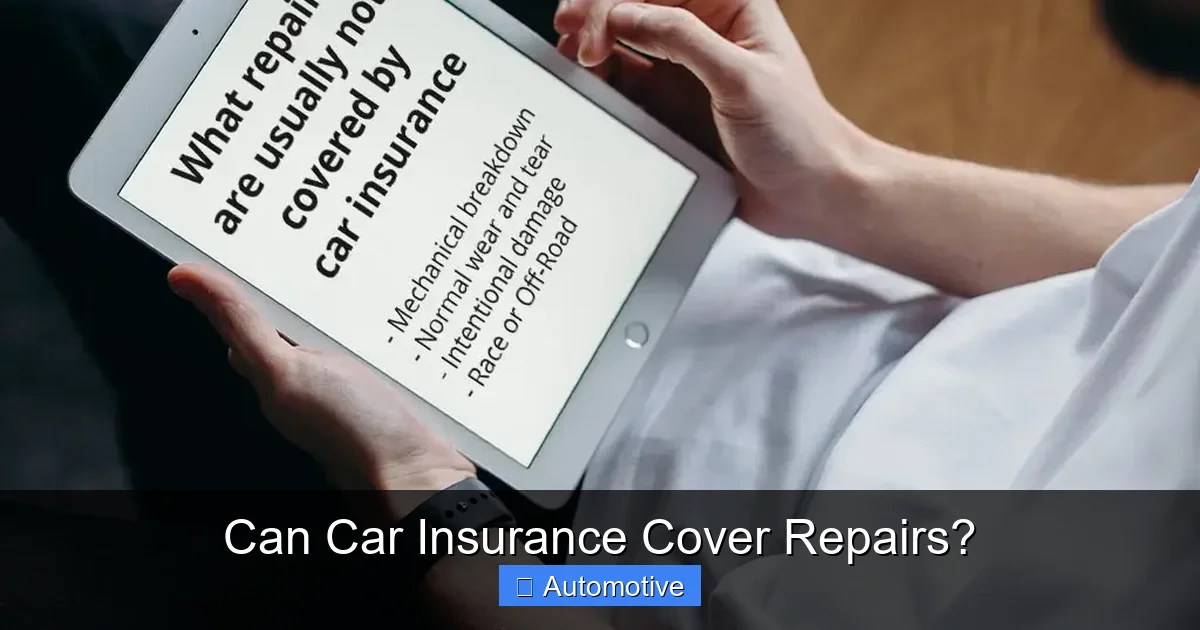
- Wear and Tear: Regular maintenance like oil changes, brake pad replacements, tire rotations, and engine tune-ups are not covered. Insurance is for sudden, unexpected damage—not gradual deterioration.
- Mechanical Breakdowns: If your transmission fails due to age or lack of maintenance, that’s not covered. However, some insurers offer mechanical breakdown insurance (MBI) as an add-on, similar to an extended warranty.
- Intentional Damage: If you damage your own car on purpose, the insurer won’t pay.
- Modifications: Custom parts or performance upgrades may not be covered unless you’ve added specific coverage for them.
- Driving Under the Influence: If you cause an accident while intoxicated, your insurer may deny the claim.
How to File a Claim for Car Repairs
So, you’ve got damage and the right coverage—now what? Filing a claim doesn’t have to be stressful. Here’s a step-by-step guide to make the process smooth.
Step 1: Assess the Damage and Ensure Safety
First, make sure everyone is safe. If the car is drivable and the damage is minor, move it to a safe location. Take photos of the damage from multiple angles—this will help when you file your claim.
Visual guide about Can Car Insurance Cover Repairs?
Image source: finfoldtimes.com
If the car isn’t safe to drive, call for a tow. Many insurers include roadside assistance, so check your policy before calling a private tow company.
Step 2: Contact Your Insurance Company
Report the incident as soon as possible. Most insurers have 24/7 claim lines or online portals. Be ready to provide:
- Your policy number
- Date, time, and location of the incident
- Description of what happened
- Photos of the damage
- Names and contact info of other drivers (if applicable)
The insurer will assign you a claims adjuster who will guide you through the process.
Step 3: Get a Repair Estimate
Your insurer may ask you to get an estimate from a repair shop. Some companies have preferred shops (often called “direct repair programs”) that they work with regularly. These shops are pre-approved and can start repairs quickly.
You’re usually allowed to choose your own shop, but using a preferred one may speed up the process and ensure direct payment from the insurer.
Step 4: Pay Your Deductible
Once the claim is approved, you’ll need to pay your deductible—the amount you agreed to pay out of pocket when you set up your policy. For example, if your deductible is $500 and the repair costs $2,000, the insurer pays $1,500 and you pay $500.
The deductible is typically paid directly to the repair shop when you pick up your car.
Step 5: Get Your Car Repaired
After approval, the repair shop will begin work. Most insurers will pay the shop directly, so you don’t have to front the full amount. Once repairs are complete, inspect the work before driving off.
If you’re not satisfied, contact your insurer or the shop to resolve the issue.
Step 6: Keep Records
Save all receipts, repair invoices, and communication with your insurer. These records can be helpful if there are disputes or if you need to file another claim in the future.
Does Filing a Claim Raise Your Premium?
This is one of the biggest concerns drivers have: “Will filing a claim increase my insurance rate?”
The short answer: It depends.
When Claims May Increase Premiums
If you’re at fault in an accident, especially a serious one, your insurer may raise your premium at renewal. This is because you’re now seen as a higher risk. The increase can range from 10% to 50%, depending on the severity and your driving history.
Even if you’re not at fault, some insurers may still adjust your rate—especially if the claim is large or if you’ve filed multiple claims in a short period.
When Claims Usually Don’t Affect Rates
Small claims, like a cracked windshield or minor hail damage, often don’t lead to rate increases—especially if you have a good driving record. Comprehensive claims (like theft or weather damage) are less likely to affect your premium than collision claims.
Some insurers offer “accident forgiveness” programs, where your first at-fault accident won’t increase your rate. Check if your policy includes this benefit.
When It Might Be Better to Pay Out of Pocket
If the repair cost is close to or less than your deductible, it usually doesn’t make sense to file a claim. For example, if your deductible is $1,000 and the repair is $1,100, you’d only get $100 from the insurer—and you might face a rate hike.
Similarly, if you have a clean record and the claim is minor, paying out of pocket could save you money in the long run.
Tips to Maximize Your Repair Coverage
Getting the most out of your car insurance for repairs means being proactive and informed. Here are some practical tips:
Review Your Policy Annually
Insurance needs change over time. If you’ve paid off your car loan or your vehicle has significantly depreciated, you might not need collision or comprehensive anymore. Conversely, if you’ve added custom parts or drive in a high-theft area, you may need to adjust your coverage.
Choose the Right Deductible
A higher deductible lowers your premium but increases your out-of-pocket cost when you file a claim. A lower deductible means higher monthly payments but less to pay when repairs are needed. Balance your budget and risk tolerance when choosing.
Use OEM vs. Aftermarket Parts
Some insurers use aftermarket or refurbished parts to save money. While these are often safe and functional, original equipment manufacturer (OEM) parts match your car exactly. Ask your insurer or repair shop about part options—some policies allow you to request OEM parts.
Document Everything
Take photos before and after repairs. Keep receipts, estimates, and communication records. This helps if there’s a dispute or if you need to prove the condition of your car later.
Consider Adding Rental Reimbursement
If you rely on your car daily, rental reimbursement can be a lifesaver. It typically costs just a few dollars a month and covers a rental while your car is in the shop.
Real-Life Examples: When Insurance Paid for Repairs
Let’s look at a few real-world scenarios to see how car insurance covers repairs in practice.
Example 1: Hail Damage in a Storm
Sarah lives in Oklahoma, where hailstorms are common. One spring afternoon, a severe storm rolls through, leaving dime-sized hail that dents her sedan’s roof, hood, and trunk. She files a claim under her comprehensive coverage. The repair estimate is $2,800. Her deductible is $500, so the insurer pays $2,300. Her car is repaired at a preferred shop, and she’s back on the road in a week.
Example 2: Rear-End Collision
Mike is stopped at a red light when the driver behind him fails to brake and hits his car. The bumper is damaged, and the trunk won’t close. Mike has collision coverage with a $1,000 deductible. The repair costs $3,200. He files a claim, and the insurer pays $2,200. Since the other driver was at fault, Mike’s insurer may subrogate (seek reimbursement from the other driver’s insurance), potentially preventing a rate increase.
Example 3: Catalytic Converter Theft
Jen parks her car on a quiet street overnight. In the morning, she discovers her catalytic converter has been stolen. The repair quote is $2,500. She has comprehensive coverage with a $250 deductible. She files a claim, and the insurer covers $2,250. Without comprehensive, she’d have to pay the full amount.
Conclusion
So, can car insurance cover repairs? Absolutely—but only if you have the right coverage in place. Liability insurance won’t help you fix your own car, but collision and comprehensive coverage can save you thousands in repair costs after accidents, weather events, theft, or vandalism.
Understanding your policy, knowing what’s covered, and filing claims correctly are key to getting the most out of your insurance. And while filing a claim might affect your premium, sometimes it’s worth it—especially for major repairs.
The best approach? Review your coverage regularly, choose deductibles wisely, and don’t hesitate to ask your insurer questions. A little knowledge goes a long way in protecting your wallet—and your wheels.
Frequently Asked Questions
Does car insurance cover engine repairs?
Generally, no. Engine repairs due to mechanical failure or wear and tear are not covered by standard car insurance. However, some insurers offer mechanical breakdown insurance as an add-on, which can cover certain repairs.
Will my insurance pay for a rental car during repairs?
Only if you have rental reimbursement coverage. This optional add-on pays for a rental while your car is being repaired after a covered claim. Without it, you’ll need to pay for a rental out of pocket.
Can I choose my own repair shop?
Yes, in most cases. While insurers may recommend preferred shops, you usually have the right to choose any licensed repair facility. Just make sure they provide a detailed estimate for the insurer to approve.
What if my car is totaled?
If repair costs exceed a certain percentage of your car’s value (usually 70–80%), the insurer will declare it a total loss. They’ll pay you the actual cash value of the car, minus your deductible, and you’ll surrender the vehicle.
Does insurance cover windshield repairs?
Yes, under comprehensive coverage. Many policies even waive the deductible for windshield repair or replacement, especially if it’s done by a preferred provider.
Can I file a claim if I’m not at fault?
Yes. You can file a claim with your own insurer (using collision coverage) or with the at-fault driver’s insurer. Your insurer may then seek reimbursement from the other party through subrogation.