
Should I Get Rental Car Insurance

Deciding whether to get rental car insurance can save you money or cost you more—depending on your coverage. This guide breaks down what’s included, what’s not, and how to make the right choice for your trip.
Key Takeaways
- Check your existing coverage first: Your personal auto insurance or credit card may already include rental protection, making extra insurance unnecessary.
- Understand what rental car insurance covers: It typically includes collision damage waiver (CDW), liability, personal accident insurance (PAI), and personal effects coverage (PEC).
- Credit cards offer limited protection: Many premium cards provide secondary CDW coverage, but it often excludes certain vehicle types and countries.
- Liability coverage is critical: Rental companies usually include basic liability, but it may fall short in serious accidents—consider supplementing it.
- International rentals require extra caution: U.S. policies rarely cover overseas rentals, so you may need to purchase local or third-party insurance.
- Declining insurance isn’t always risky: If you’re fully covered elsewhere, skipping rental insurance can save $20–$50 per day.
- Document everything before driving off: Take photos, note pre-existing damage, and read the rental agreement carefully to avoid disputes.
📑 Table of Contents
- Should I Get Rental Car Insurance? A Complete Guide to Making the Right Choice
- What Is Rental Car Insurance and What Does It Cover?
- Do You Already Have Coverage? Check Before You Buy
- When Should You Consider Buying Rental Car Insurance?
- How Much Does Rental Car Insurance Cost?
- Tips to Avoid Overpaying and Stay Protected
- Final Thoughts: Make the Choice That’s Right for You
Should I Get Rental Car Insurance? A Complete Guide to Making the Right Choice
So, you’ve booked your flight, packed your bags, and reserved a rental car for your upcoming trip. You’re excited—until you reach the rental counter and the agent hits you with that all-too-familiar question: “Would you like to add rental car insurance?” Suddenly, your travel budget feels a little tighter, and your confidence wavers. Do you really need it? Or are you about to pay for something you already have?
You’re not alone. Millions of travelers face this dilemma every year. The truth is, rental car insurance isn’t always necessary—but it’s also not always a waste of money. The right decision depends on your personal situation, existing coverage, and where you’re driving. In this guide, we’ll walk you through everything you need to know to make a smart, informed choice. No jargon, no pressure—just clear, practical advice to help you protect yourself without overspending.
Whether you’re road-tripping across the country, visiting family for the holidays, or traveling internationally for business, understanding your options can save you hundreds—or even thousands—of dollars in the event of an accident, theft, or damage. Let’s dive in.
What Is Rental Car Insurance and What Does It Cover?
Visual guide about Should I Get Rental Car Insurance
Image source: blog.rentcars.com
Before deciding whether to buy rental car insurance, it’s important to understand exactly what it includes. Rental car insurance isn’t a single policy—it’s actually a bundle of different coverages offered by rental companies, often at the counter when you pick up your vehicle. These options go by different names depending on the company, but they generally fall into four main categories:
Collision Damage Waiver (CDW) or Loss Damage Waiver (LDW)
This is the most common and often most expensive add-on. CDW (sometimes called LDW) isn’t technically insurance—it’s a waiver that relieves you of financial responsibility if the rental car is damaged or stolen. If you decline CDW and the car gets into an accident, you could be on the hook for the full cost of repairs or replacement, which can run into the tens of thousands of dollars.
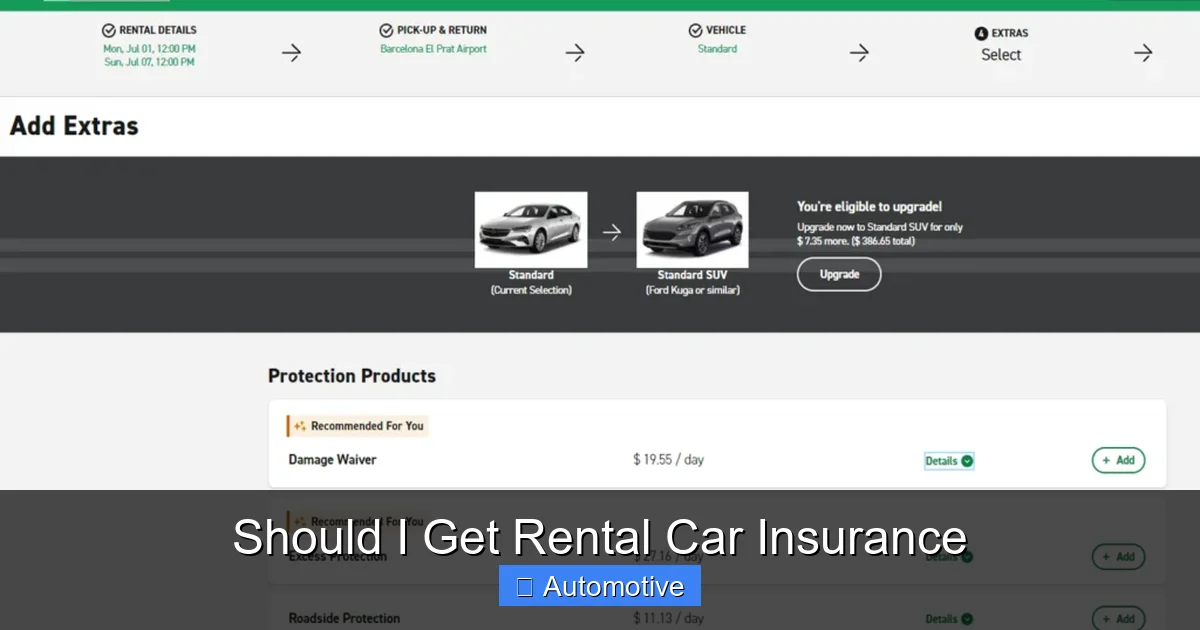
For example, if you rent a mid-size SUV for $50 a day and decline CDW, and then accidentally back into a pole, causing $8,000 in damage, you’ll likely be charged that full amount—unless you have other coverage. With CDW, you pay a daily fee (usually $10–$30), and the rental company covers the repair costs, minus any deductible (which varies by company and location).
One important note: CDW doesn’t cover everything. It typically excludes damage from reckless driving, driving under the influence, off-road use, or unauthorized drivers. Always read the fine print.
Liability Insurance
Liability coverage protects you if you cause injury to someone else or damage to another person’s property while driving the rental car. In most states, rental companies are required to provide a minimum level of liability coverage, but it’s often very low—sometimes as little as $15,000 per person for bodily injury and $5,000 for property damage.
That might sound like enough, but in a serious accident, medical bills and vehicle repairs can quickly exceed those limits. If you’re found at fault and the damages surpass your coverage, you could be personally sued for the difference. That’s why many experts recommend carrying higher liability limits—either through your personal auto policy or by purchasing supplemental coverage from the rental company.
Personal Accident Insurance (PAI)
PAI covers medical expenses for you and your passengers if you’re injured in a crash. It typically includes ambulance fees, hospital stays, and sometimes even death benefits. While this might seem helpful, most people already have health insurance or travel insurance that covers medical costs—even for car accidents. If you’re traveling internationally, your regular health plan may not apply, so PAI could be more valuable in that context.
Personal Effects Coverage (PEC)
This protects your personal belongings—like luggage, electronics, or cameras—if they’re stolen from the rental car. Again, this is something your homeowner’s or renter’s insurance policy may already cover. If you have a $500 deductible on your renter’s policy and your laptop gets stolen, you’d pay the first $500, but your insurance would cover the rest. PEC from the rental company might offer similar protection, but for a daily fee.
Do You Already Have Coverage? Check Before You Buy
Visual guide about Should I Get Rental Car Insurance
Image source: carinsurent.com
One of the biggest mistakes travelers make is automatically accepting rental car insurance without checking what they already have. In many cases, you’re already covered—and paying for duplicate protection is just wasted money.
Your Personal Auto Insurance Policy
If you own a car and have auto insurance, your policy likely extends to rental vehicles. Most standard policies cover liability, collision, and comprehensive damage for rentals, just as they would for your own car. However, there are important caveats:
– Coverage may be limited to rentals in your home country.
– Some policies exclude certain vehicle types, like luxury cars, SUVs, or trucks.
– If you only have liability coverage on your personal policy, you won’t be protected against damage to the rental car itself.
To be sure, call your insurance agent before your trip and ask: “Does my policy cover rental cars? What are the limits and exclusions?” Get it in writing if possible.
Credit Card Rental Car Protection
Many premium credit cards—especially travel rewards cards like the Chase Sapphire Reserve, American Express Platinum, or Capital One Venture—offer rental car insurance as a benefit. This is usually secondary coverage, meaning it only kicks in after your personal auto insurance (if you have any) has paid out.
Here’s how it typically works: If you use the eligible credit card to pay for the entire rental (including taxes and fees), and you decline the rental company’s CDW, your card may cover damage or theft up to the card’s limit (often $50,000–$100,000). But again, there are limitations:
– The coverage is usually secondary, not primary.
– It often excludes certain vehicle types (e.g., exotic cars, motorcycles, RVs).
– Some countries are excluded (e.g., Australia, Ireland, Israel, Jamaica, and others).
– You must decline the rental company’s CDW to activate the benefit.
– The card must be used for the full rental cost.
For example, if you rent a Toyota Camry in Florida using your Chase Sapphire Preferred card and decline CDW, you’re likely covered for collision damage. But if you rent a Land Rover in Ireland, your card probably won’t cover it—even if you paid with the same card.
Always check your credit card’s terms and conditions or call the number on the back of the card to confirm coverage details.
Travel Insurance Policies
If you’ve purchased a comprehensive travel insurance plan, it may include rental car coverage as an add-on or built-in benefit. Some policies offer primary collision coverage, which means they pay first—no need to file with your auto insurer. Others include emergency roadside assistance, trip interruption due to car trouble, or coverage for personal belongings stolen from the car.
However, not all travel insurance includes rental car protection, and those that do often require you to decline the rental company’s CDW. Be sure to read your policy documents carefully.
When Should You Consider Buying Rental Car Insurance?

Visual guide about Should I Get Rental Car Insurance
Image source: cdn2.ramseysolutions.net
Even if you have some coverage, there are situations where purchasing rental car insurance makes sense. Here are the most common scenarios:
You Don’t Own a Car or Have Auto Insurance
If you’re a rideshare driver, live in a city and rely on public transit, or simply don’t own a vehicle, you likely don’t have personal auto insurance. In that case, you have no existing coverage for liability or damage to a rental car. Declining the rental company’s insurance could leave you financially exposed.
For example, imagine you’re visiting Chicago for a conference and rent a car to explore the city. If you get into an accident and cause $20,000 in damage to another vehicle, and you have no insurance, you’ll be personally responsible for paying that bill. That’s a huge risk.
In this situation, buying the rental company’s liability and CDW coverage is a smart move—even if it costs $25 a day. It’s far cheaper than a five-figure repair bill.
You’re Renting Internationally
U.S. auto insurance policies almost never cover rentals outside the country. Even credit card benefits are often limited or excluded in foreign countries. If you’re traveling abroad—say, to Italy, Japan, or Costa Rica—you’ll likely need to purchase insurance locally or through a third-party provider.
In many countries, liability insurance is mandatory, and the rental company may require you to buy it. Even if it’s not required, it’s highly recommended. Medical costs and vehicle repairs can be expensive, and legal systems abroad may favor local plaintiffs.
Tip: Some international rental companies offer “full coverage” packages that include CDW, liability, and theft protection. These can be pricey, but they offer peace of mind. Alternatively, you can buy a standalone international rental car insurance policy from companies like Allianz or World Nomads before your trip.
You’re Renting a High-Value or Specialty Vehicle
If you’re renting a luxury car, sports car, SUV, or van—especially for a special occasion like a wedding or road trip—your personal insurance or credit card may not cover it. Many policies exclude vehicles over a certain value (e.g., $50,000) or those with high horsepower.
For instance, if you rent a Porsche 911 for a weekend getaway, and your credit card excludes “exotic vehicles,” you’ll need to rely on the rental company’s CDW. The same goes for large passenger vans or trucks, which are often excluded from standard coverage.
In these cases, the rental company’s insurance may be your only option—or at least the most reliable one.
You Want Primary Coverage Without Filing a Claim on Your Personal Policy
Even if you have auto insurance, filing a claim for rental car damage could raise your premiums or count against your no-claims bonus. If you’d rather avoid that hassle, purchasing the rental company’s CDW gives you primary coverage—meaning they handle the claim directly, and your personal policy remains untouched.
This is especially useful if the damage is minor, like a scratched bumper or broken side mirror. Paying $20 for CDW might be cheaper and easier than paying a $500 deductible on your own policy.
How Much Does Rental Car Insurance Cost?
Rental car insurance isn’t cheap. Prices vary by location, rental company, vehicle type, and coverage level, but here’s a general breakdown:
– **Collision Damage Waiver (CDW):** $10–$30 per day
– **Liability Insurance Supplement:** $10–$15 per day
– **Personal Accident Insurance (PAI):** $5–$10 per day
– **Personal Effects Coverage (PEC):** $3–$7 per day
On a week-long trip, that can add $100–$300 to your rental cost. For a family on a budget, that’s a significant expense.
But remember: this is often less than the deductible on your personal auto policy. If your deductible is $1,000 and you cause $3,000 in damage, you’d pay $1,000 out of pocket. With CDW, you pay $150 for the week and owe nothing.
Still, if you’re already covered through your credit card or personal policy, paying for duplicate coverage is unnecessary. The key is knowing what you have—and what you don’t.
Tips to Avoid Overpaying and Stay Protected
Now that you understand the options, here are some practical tips to help you make the best decision without overspending:
1. Do Your Homework Before You Arrive
Don’t wait until you’re at the rental counter. Call your insurance company and credit card issuer a few days before your trip. Ask specific questions like:
– “Does my policy cover rental cars in [destination]?”
– “Is the coverage primary or secondary?”
– “Are there any vehicle exclusions?”
– “Do I need to decline the rental company’s CDW to activate my credit card benefit?”
Having this information in advance will help you decide confidently at the counter.
2. Take Photos and Document the Car
Before you drive off, inspect the car thoroughly. Take timestamped photos of the exterior, interior, tires, and any existing damage (dents, scratches, stains). Note the fuel level and mileage. This documentation can protect you if the rental company claims you caused damage that was already there.
Pro tip: Use a free app like “Rental Car Inspection” or “CarRentals” to log your inspection with photos and notes.
3. Read the Rental Agreement Carefully
The rental agreement is a legal contract. It outlines your responsibilities, the coverage you’ve accepted or declined, and any restrictions (like no off-road driving). Don’t just sign it—read it. If something isn’t clear, ask the agent to explain.
4. Consider Third-Party Insurance
Instead of buying insurance from the rental company, you can purchase a standalone policy from a third-party provider like:
– **Insurance Providers:** Allianz, Liberty Mutual, or Progressive offer rental car insurance plans.
– **Travel Insurance Companies:** World Nomads, SafetyWing, or Allianz Travel Insurance often include rental car coverage.
These policies can be cheaper and offer broader protection, especially for international rentals. They may also provide primary coverage, eliminating the need to file with your personal insurer.
5. Know When to Say No
If you’ve confirmed that your personal auto insurance and credit card fully cover the rental—including liability, collision, and theft—then declining the rental company’s insurance is usually the smart financial move. You’ll save $20–$50 per day and still be protected.
Just remember: you must decline the CDW at the counter to activate your credit card benefit. If you accept even partial coverage, your card’s protection may be voided.
Final Thoughts: Make the Choice That’s Right for You
So, should you get rental car insurance? The answer isn’t a simple “yes” or “no.” It depends on your existing coverage, where you’re driving, what kind of vehicle you’re renting, and how much risk you’re comfortable taking.
If you’re fully covered through your personal auto policy and a premium credit card, you can likely skip the rental company’s insurance and save money. But if you’re uninsured, traveling abroad, or renting a high-value vehicle, purchasing coverage is a wise investment.
The most important step? Do your research ahead of time. A quick phone call to your insurer or credit card company can save you hundreds of dollars and a lot of stress. And when in doubt, lean toward protection—especially when the cost of a mistake could be devastating.
At the end of the day, rental car insurance isn’t about fear—it’s about smart planning. With the right information, you can hit the road with confidence, knowing you’re protected no matter what happens.
Frequently Asked Questions
Is rental car insurance required by law?
No, rental car insurance is not required by law in most places. However, you are legally required to have liability insurance when driving, and rental companies typically provide a minimum amount. You may need to purchase additional coverage depending on your situation.
Can I use my credit card’s rental car insurance if I have personal auto insurance?
Yes, but it usually acts as secondary coverage. That means your personal auto insurance pays first, and the credit card benefit covers any remaining costs up to its limit. You must still decline the rental company’s CDW to activate the card’s protection.
Does my health insurance cover injuries from a rental car accident?
Most health insurance plans cover medical treatment for injuries sustained in a car accident, regardless of whether it’s your car or a rental. However, they may not cover ambulance fees or lost wages, so check your policy details.
What happens if I decline rental car insurance and get into an accident?
You could be responsible for paying for all damage to the rental car, as well as any liability claims from other parties. If you have other coverage (like personal auto insurance or credit card protection), those policies may cover the costs—but only if you meet their terms.
Can I buy rental car insurance after I’ve already picked up the car?
Generally, no. Rental companies require you to purchase insurance at the time of rental. Some third-party providers may offer policies you can buy in advance, but once you’ve driven off, your options are limited.
Is rental car insurance worth it for short trips?
It depends on your existing coverage. For a one-day rental, paying $25 for CDW might seem steep—but if you have no other protection, it could save you thousands in repair costs. Evaluate your risk and coverage before deciding.
