
Does Car Insurance Cover Repairs?

Car insurance may cover repairs depending on your policy type and the cause of damage. Collision and comprehensive coverage typically pay for repairs after accidents, theft, or natural disasters, while liability-only plans do not. Understanding your coverage helps you avoid unexpected out-of-pocket costs.
[FEATURED_IMAGE_PLACEOLDER]
Key Takeaways
- Not all car insurance covers repairs: Only certain coverage types like collision and comprehensive pay for vehicle repairs.
- Liability insurance does not cover your car: It only pays for damage or injuries you cause to others.
- Comprehensive covers non-collision damage: This includes theft, vandalism, fire, hail, and animal collisions.
- Collision coverage handles accident-related repairs: It pays for damage from hitting another vehicle or object, regardless of fault.
- Deductibles affect your out-of-pocket cost: You pay the deductible amount before insurance kicks in for repairs.
- Regular maintenance isn’t covered: Oil changes, brake pads, and tire rotations are your responsibility.
- Filing a claim may raise your premiums: Consider the cost of repairs versus potential rate increases before claiming.
📑 Table of Contents
- Does Car Insurance Cover Repairs? A Complete Guide
- Understanding the Basics: What Car Insurance Actually Covers
- When Does Car Insurance Cover Repairs? Common Scenarios
- What Car Insurance Does NOT Cover
- How to File a Claim for Car Repairs
- Tips to Maximize Your Coverage and Minimize Costs
- Final Thoughts: Be Prepared, Not Surprised
Does Car Insurance Cover Repairs? A Complete Guide
So, your car just got dinged in a parking lot, or maybe a tree branch fell on your windshield during a storm. Your first thought? “Will my car insurance cover the repairs?” It’s a fair question—and one that millions of drivers ask every year. The short answer? It depends. Car insurance doesn’t automatically cover all repairs. What it covers—and what it doesn’t—depends entirely on the type of coverage you have, how the damage occurred, and the terms of your policy.
Many people assume that having car insurance means they’re protected against any car problem. But that’s not quite right. Basic liability insurance, which is required in most states, only covers damage you cause to other people’s vehicles or property. It doesn’t pay a dime for repairs to your own car. To get coverage for your vehicle’s repairs, you need additional coverage like collision or comprehensive. These optional add-ons are what actually help foot the bill when your car needs fixing after an accident, theft, or weather event.
Understanding what your policy includes can save you from surprise expenses and help you make smarter decisions when something goes wrong. In this guide, we’ll break down exactly when car insurance covers repairs, what types of damage are included, and how to navigate the claims process like a pro. Whether you’re a new driver or just reviewing your current plan, this information will help you drive with confidence—knowing you’re prepared for the unexpected.
Understanding the Basics: What Car Insurance Actually Covers

Visual guide about Does Car Insurance Cover Repairs?
Image source: americaninsurance.com
Before diving into repairs, it’s important to understand the different types of car insurance coverage. Most policies are made up of several components, each designed to protect you in specific situations. The three main types are liability, collision, and comprehensive coverage. Let’s break them down.
Liability insurance is the foundation of most auto policies. It’s also the only type required by law in nearly every state. This coverage pays for bodily injury and property damage that you cause to others in an accident. For example, if you rear-end another car and their bumper is damaged, liability insurance will cover the cost of repairing their vehicle—but not yours. That’s a key point: liability does not cover repairs to your own car, no matter how extensive the damage.
Collision coverage, on the other hand, is specifically designed to pay for repairs to your vehicle after a collision—whether you hit another car, a guardrail, or even a pothole. It doesn’t matter who was at fault. If you have collision coverage, your insurer will pay for the repairs (minus your deductible) after an accident. This is especially valuable if you drive a newer or more expensive vehicle, where repair costs can run into the thousands.
Comprehensive coverage handles non-collision-related damage. Think of it as your “everything else” protection. It covers repairs due to theft, vandalism, fire, flooding, hail, falling objects, and even hitting a deer. If a tree falls on your car during a storm or someone breaks your window to steal your stereo, comprehensive coverage steps in to pay for the repairs. Like collision, it comes with a deductible that you’ll need to pay out of pocket.
It’s also worth noting that some policies include additional protections like rental reimbursement or roadside assistance. These don’t directly cover repairs but can help with related costs—like paying for a rental car while yours is in the shop. Knowing what’s included in your policy helps you understand your options when damage occurs.
How Coverage Types Affect Repair Costs
The type of coverage you have directly impacts how much you’ll pay for repairs. If you only have liability insurance and get into an accident, you’ll be responsible for all repair costs to your own vehicle. That could mean paying $3,000 or more out of pocket for a new bumper, alignment, and paint job. On the other hand, if you have collision coverage with a $500 deductible, your insurer will cover the remaining $2,500 after you pay the deductible.
Let’s look at a real-world example. Sarah has a 2020 Honda Accord and carries liability, collision, and comprehensive coverage. She accidentally backs into a pole in a parking garage, damaging her rear bumper and trunk. She files a claim with her insurer. After assessing the damage, the repair shop quotes $1,800. Sarah pays her $500 deductible, and her insurance covers the remaining $1,300. Without collision coverage, she’d have to pay the full $1,800 herself.
Now consider Mike, who only has liability insurance. He hits a deer on a rural road, shattering his headlights and damaging the hood. The repairs cost $2,200. Since he doesn’t have comprehensive coverage, he must pay the entire amount. This scenario highlights why many financial experts recommend adding collision and comprehensive coverage, especially if your car is worth more than a few thousand dollars.
State Requirements vs. Recommended Coverage
Every state sets minimum requirements for car insurance, but these are often just the bare minimum. For example, in California, drivers must carry at least $15,000 in bodily injury liability per person and $5,000 in property damage liability. That’s enough to cover minor fender benders but won’t protect your own vehicle in any way.
If you want your car insurance to cover repairs, you’ll need to go beyond state minimums. Adding collision and comprehensive coverage increases your premium, but it can save you thousands in repair costs down the line. Many lenders and leasing companies actually require these coverages if you’re financing or leasing a vehicle. They want to protect their investment, so they won’t let you drive off the lot without them.
Even if you own your car outright, it’s wise to consider these add-ons. A good rule of thumb: if your car is worth more than $4,000, collision and comprehensive coverage are usually worth the extra cost. You can check your car’s value using tools like Kelley Blue Book or Edmunds to make an informed decision.
When Does Car Insurance Cover Repairs? Common Scenarios
Visual guide about Does Car Insurance Cover Repairs?
Image source: lemonade.com
Now that you understand the basics, let’s explore specific situations where car insurance may cover repairs. The key is knowing which type of coverage applies to each scenario. Here are the most common cases where your policy might pay for repairs.
Accidents and Collisions
If you’re involved in a car accident—whether it’s a minor fender bender or a major crash—collision coverage is what pays for repairs to your vehicle. This includes hitting another car, a stationary object like a tree or mailbox, or even rolling your car. It doesn’t matter if you were at fault or not. As long as you have collision coverage, your insurer will cover the repair costs after you pay your deductible.
For example, let’s say you’re driving home from work and accidentally run into the back of another car at a stoplight. Both bumpers are damaged, and the other driver’s tail lights are cracked. Your liability insurance will cover the other driver’s repairs, but your collision coverage will handle the cost of fixing your own car. If the repair estimate is $2,500 and your deductible is $1,000, you pay $1,000 and your insurer pays $1,500.
Keep in mind that if the other driver is clearly at fault and has insurance, their liability coverage should pay for your repairs. In that case, you wouldn’t need to use your collision coverage. However, if they’re uninsured or underinsured, your collision coverage becomes essential.
Theft, Vandalism, and Natural Disasters
Comprehensive coverage steps in when your car is damaged by something other than a collision. This includes theft, vandalism, fire, flooding, hail, falling trees, and even animal strikes. If your car is stolen and later recovered with damage, comprehensive will cover the repairs. If someone spray-paints your car or smashes your windows, that’s also covered.
Natural disasters are another big one. If a hurricane floods your garage and your car is submerged, comprehensive coverage will pay for water damage repairs. Similarly, if a hailstorm dents your roof and hood, your insurer will cover the cost of bodywork and paint.
Let’s say a severe thunderstorm hits your area, and hail the size of golf balls falls for 20 minutes. Your car is parked outside and ends up with dozens of dents. You file a comprehensive claim, and the repair shop quotes $3,200 for paintless dent repair and repainting. After your $500 deductible, your insurance pays $2,700. Without comprehensive coverage, you’d be stuck with the full bill.
Animal Collisions
Hitting a deer, raccoon, or other animal is surprisingly common—especially in rural or wooded areas. These incidents can cause serious damage to your front end, including the grille, headlights, and radiator. Comprehensive coverage handles these repairs because they’re considered “acts of nature” rather than collisions with another vehicle.
For instance, if you’re driving at night and a deer jumps into the road, causing $4,000 in damage, your comprehensive coverage will pay for the repairs after your deductible. This is one of the most valuable aspects of comprehensive insurance, particularly if you live in an area with high wildlife activity.
Falling Objects and Weather Damage
Sometimes, damage comes from above. A tree branch breaks during a windstorm and lands on your car. A construction crane drops a piece of metal onto your roof. A neighbor’s satellite dish flies off during a tornado. These are all covered under comprehensive insurance.
Even something as simple as a heavy snowfall causing your roof to collapse onto your parked car can be covered. As long as the damage isn’t due to wear and tear or lack of maintenance, comprehensive will typically pay for repairs.
What Car Insurance Does NOT Cover
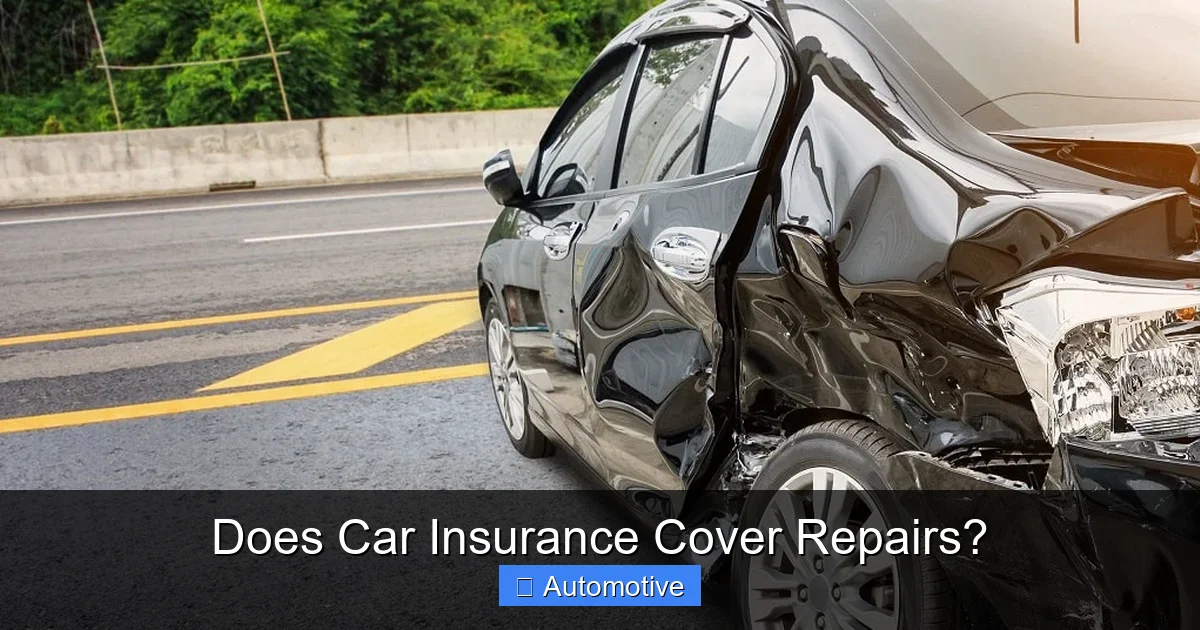
Visual guide about Does Car Insurance Cover Repairs?
Image source: clovered.com
While car insurance can be a lifesaver when repairs are needed, it’s not a catch-all solution. There are several common situations where your policy won’t cover repairs—even if you have full coverage. Understanding these exclusions can prevent frustration and unexpected bills.
Regular Maintenance and Wear and Tear
Car insurance does not cover routine maintenance or repairs due to normal wear and tear. This includes oil changes, brake pad replacements, tire rotations, battery replacements, and timing belt repairs. These are considered part of owning and operating a vehicle, and they’re your responsibility—not your insurer’s.
For example, if your brakes start squeaking and you need new pads and rotors, that’s not covered. Similarly, if your engine fails because you skipped oil changes for two years, insurance won’t pay for the repair. These are maintenance issues, not sudden accidents or covered events.
Mechanical Breakdowns
If your car breaks down due to a mechanical failure—like a blown transmission, engine seizure, or electrical problem—insurance won’t cover it. These issues are typically the result of aging, poor maintenance, or manufacturing defects, not a covered event like an accident or storm.
Some drivers confuse mechanical breakdowns with collision damage. For instance, if your engine overheats and seizes while driving, that’s not covered. But if you overheat because you hit a pothole that damaged your radiator, that might be covered under collision—because the root cause was a collision.
Intentional Damage or Negligence
If you intentionally damage your own car—or allow someone else to do so—insurance won’t pay. This includes vandalism you commit yourself or letting a friend “test drive” your car and crash it on purpose. Insurance is designed to cover accidental damage, not deliberate acts.
Negligence can also void coverage. For example, if you leave your car unlocked in a high-crime area and it’s stolen, some insurers may reduce or deny your claim if they determine you didn’t take reasonable precautions. Similarly, driving under the influence and causing an accident could lead to a denied claim.
Modifications and Custom Parts
If you’ve made aftermarket modifications to your car—like a custom paint job, performance exhaust, or upgraded stereo system—standard insurance may not cover these additions. Most policies only cover factory-installed equipment. If you want coverage for custom parts, you’ll need to add a special endorsement or rider to your policy.
For example, if you install a $2,000 sound system and your car is broken into, your standard comprehensive coverage might only pay for the factory radio. To get full reimbursement, you’d need to declare the custom equipment when setting up your policy.
Damage from Unapproved Drivers
Most policies cover repairs if someone else drives your car with your permission—like a family member or friend. But if an unauthorized driver causes damage, your claim could be denied. Always make sure anyone who drives your car is listed on your policy or has your explicit permission.
How to File a Claim for Car Repairs
If your car is damaged and you believe it’s covered, the next step is filing a claim. The process is usually straightforward, but doing it correctly can help you get repairs faster and avoid delays.
Step 1: Assess the Damage and Ensure Safety
First, make sure everyone is safe. If the damage is minor and the car is drivable, move it to a safe location. Take photos of the damage from multiple angles, including close-ups and wide shots. This documentation will help support your claim.
Step 2: Contact Your Insurance Company
Call your insurer as soon as possible. Most companies have 24/7 claim lines. Provide your policy number, describe what happened, and share the photos you took. The agent will guide you through the next steps, which may include getting a repair estimate or visiting a preferred repair shop.
Step 3: Get a Repair Estimate
Your insurer may ask you to get an estimate from a repair shop. Some companies have partnerships with certain shops and may direct you to one of their approved providers. These shops often have direct billing with the insurer, so you only pay your deductible at pickup.
Alternatively, you can choose your own shop. Just make sure they’re reputable and provide a detailed estimate. The insurer will review the estimate and approve the repairs.
Step 4: Pay Your Deductible and Get Repairs
Once the claim is approved, you’ll pay your deductible—either directly to the repair shop or to your insurer. Then, the shop begins work. Most repairs take a few days to a week, depending on the damage and parts availability.
Step 5: Pick Up Your Car
After repairs are complete, inspect the work before driving off. Make sure everything looks right and functions properly. If you’re not satisfied, talk to the shop or your insurer.
Tips to Maximize Your Coverage and Minimize Costs
Getting repairs covered is one thing—keeping your costs down is another. Here are some smart tips to help you get the most from your car insurance.
Choose the Right Deductible
Your deductible is the amount you pay out of pocket before insurance kicks in. Higher deductibles mean lower premiums, but more upfront cost when you file a claim. If you have a good emergency fund, a $1,000 deductible might save you money over time. But if you’re on a tight budget, a $250 or $500 deductible could be smarter.
Bundle Policies for Discounts
Many insurers offer discounts if you bundle auto insurance with home, renters, or life insurance. You could save 10–25% on your premiums, making comprehensive and collision coverage more affordable.
Maintain a Clean Driving Record
Safe drivers often qualify for lower rates. Avoiding accidents and traffic violations can keep your premiums down and make it easier to add coverage without breaking the bank.
Review Your Policy Annually
Your car’s value and your driving habits change over time. Review your policy each year to make sure you’re not over-insured or under-insured. If your car is older and worth less than $4,000, you might consider dropping collision and comprehensive to save money.
Consider Usage-Based Insurance
Some insurers offer programs that track your driving habits through a mobile app or device. If you drive safely and infrequently, you could qualify for significant discounts—freeing up money for better coverage.
Final Thoughts: Be Prepared, Not Surprised
So, does car insurance cover repairs? The answer is: it can—but only if you have the right coverage. Liability insurance won’t help you fix your own car, but collision and comprehensive coverage can save you thousands after an accident, theft, or natural disaster. The key is understanding what your policy includes and making informed decisions about your level of protection.
Don’t wait until your car is damaged to find out what’s covered. Take time now to review your policy, talk to your agent, and consider whether you need additional coverage. A little preparation today can prevent a major financial headache tomorrow. After all, peace of mind is priceless—especially when you’re behind the wheel.
Frequently Asked Questions
Does car insurance cover repairs after a minor fender bender?
Yes, if you have collision coverage. This type of coverage pays for repairs to your vehicle after a collision, regardless of fault. You’ll need to pay your deductible first.
Will my insurance cover repairs if my car is stolen and recovered damaged?
Yes, comprehensive coverage typically covers repairs if your car is stolen and later found with damage. This includes vandalism or collision damage that occurred during the theft.
Does car insurance cover windshield repairs?
Many comprehensive policies include windshield repair or replacement with little or no deductible. Some insurers even offer free windshield repair as part of their coverage.
Can I use my insurance for routine maintenance like oil changes?
No, car insurance does not cover routine maintenance or wear-and-tear repairs. These are considered part of normal vehicle ownership and are your responsibility.
Will filing a claim increase my insurance rates?
It might. Filing a claim, especially for at-fault accidents, can lead to higher premiums. Consider the cost of repairs versus potential rate increases before claiming.
What if the other driver is at fault? Do I still need collision coverage?
Not necessarily. If the other driver is at fault and has insurance, their liability coverage should pay for your repairs. However, collision coverage protects you if they’re uninsured or underinsured.