
How Much Do Race Car Drivers Make?

Race car driver salaries vary wildly—from six figures in lower-tier series to tens of millions in Formula 1. Earnings come from base pay, race winnings, performance bonuses, and massive sponsorship deals. Success on the track directly impacts income, with top drivers earning more than most professional athletes.
Key Takeaways
- Top-tier drivers earn millions: Elite Formula 1 and IndyCar drivers can make $10M–$50M+ annually, including sponsorships.
- Lower-tier racers often earn modestly: Drivers in regional or developmental series may make $50,000–$200,000, sometimes relying on outside jobs.
- Sponsorships are a major income source: Brand partnerships often surpass race winnings, especially for high-profile drivers.
- Performance bonuses matter: Wins, podiums, and championships trigger significant payouts from teams and sponsors.
- NASCAR and Formula 1 pay differently: NASCAR drivers earn more from winnings and endorsements, while F1 drivers have higher base salaries.
- Career longevity affects total earnings: Long-term success and brand building lead to higher lifetime income.
- Amateur and semi-pro drivers rarely profit: Many pay to race, treating it as a costly hobby rather than a career.
📑 Table of Contents
How Much Do Race Car Drivers Make?
So, you’ve always wondered—how much do race car drivers actually make? It’s a question that sparks curiosity in fans, aspiring racers, and even casual observers of motorsports. The short answer? It depends—a lot. From roaring engines on Sunday afternoons to high-speed duels under the European sun, racing is as diverse in style as it is in pay.
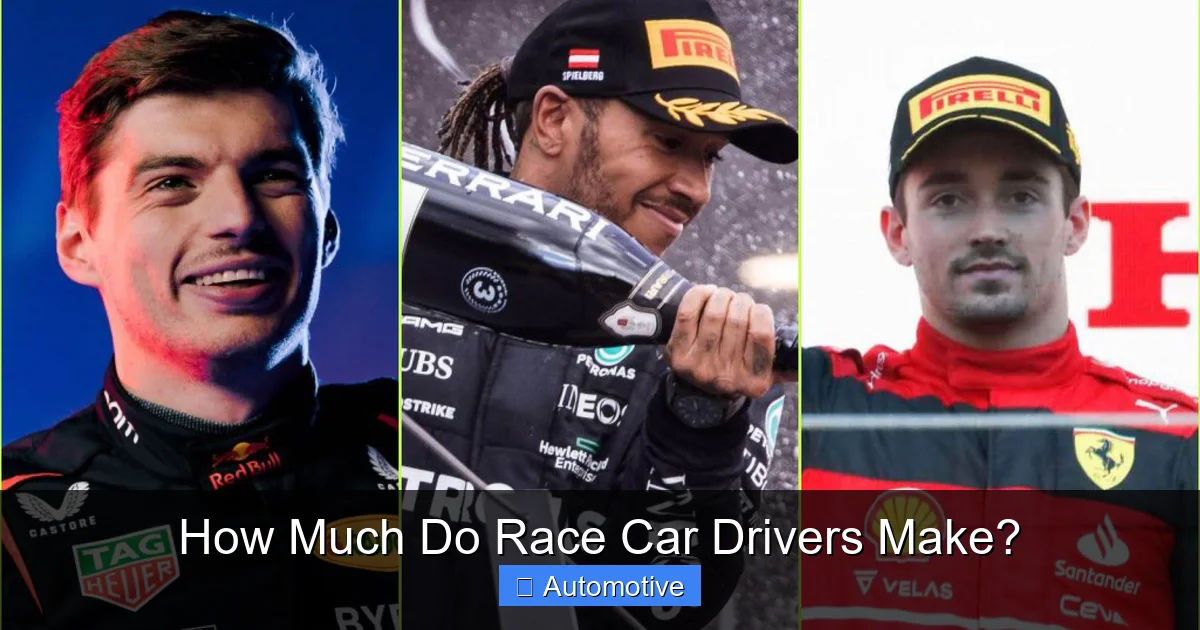
But let’s be real: when most people think of race car drivers, they picture someone like Lewis Hamilton or Max Verstappen—glamorous, globe-trotting, and rolling in cash. And yes, the top-tier drivers do earn life-changing money. However, the vast majority of racers aren’t driving for Ferrari or Red Bull. They’re grinding in regional circuits, paying their own way, and hoping for a breakthrough. The truth is, racing is a sport of extremes: a few superstars earn more than most CEOs, while many others struggle to break even.
In this article, we’ll break down how much race car drivers make across different levels of competition. We’ll explore salaries in Formula 1, NASCAR, IndyCar, and grassroots racing. You’ll learn where the money comes from—base pay, winnings, bonuses, and sponsorships—and why some drivers make millions while others barely scrape by. Whether you’re dreaming of a racing career or just curious about the economics of speed, this guide will give you the full picture.
Understanding the Racing Pay Structure

Visual guide about How Much Do Race Car Drivers Make?
Image source: thedailyautomotive.com
Before diving into specific numbers, it’s important to understand how race car drivers get paid. Unlike traditional jobs with fixed salaries, racing income is highly variable and performance-driven. Most drivers don’t earn a steady paycheck like a teacher or engineer. Instead, their income comes from a mix of sources, each playing a role in their total earnings.
Base Salary from Racing Teams
Some drivers, especially in top-tier series like Formula 1 and IndyCar, receive a base salary from their racing team. This is the guaranteed money they earn just for being on the roster. For example, a mid-tier F1 driver might earn a base salary of $2 million to $5 million per year, regardless of how they perform. Top drivers like Lewis Hamilton or Max Verstappen command much higher figures—reportedly $40 million to $50 million annually, including salary and bonuses.
In contrast, NASCAR drivers often have lower base salaries but make up for it with performance-based pay. A Cup Series driver might earn a base of $1 million to $3 million, but that can balloon with winnings and bonuses. Meanwhile, drivers in lower series like Xfinity or Truck may earn little to no base salary at all, relying entirely on race pay and sponsorships.
Race Winnings and Performance Bonuses
A major portion of a driver’s income comes from race winnings. In NASCAR, for instance, the winner of a Cup Series race can take home $500,000 or more, depending on the event and sponsorship. Second and third place also earn substantial sums, with the total purse often exceeding $2 million per race. These payouts are distributed based on finishing position, with bonuses for leading laps or winning stages.
Formula 1 doesn’t pay prize money in the same way. Instead, teams receive a share of the sport’s revenue based on their performance over the season. The top teams get the biggest slices, and some of that money trickles down to drivers as bonuses. For example, winning the Constructors’ Championship can trigger multi-million-dollar bonuses for the team and its drivers.
IndyCar operates somewhere in between. Drivers earn appearance fees and race winnings, with the Indianapolis 500 offering one of the biggest paydays in motorsports—over $2 million for the winner in recent years. But regular season races pay far less, often in the $50,000 to $150,000 range for top finishers.
Sponsorships and Endorsements
If there’s one thing that separates the rich from the rest in racing, it’s sponsorships. For most drivers, especially outside of Formula 1, sponsorships are the real money-maker. A driver with a strong personal brand can earn millions from brand deals, even if their race winnings are modest.
Take Dale Earnhardt Jr., for example. During his NASCAR career, he earned far more from sponsorships than from racing. Brands like Budweiser, AMP Energy, and National Guard paid him millions just to wear their logos and appear in ads. Today, even retired, he still earns from endorsements and his media ventures.
In Formula 1, sponsorships are often bundled into the driver’s contract. A driver like Charles Leclerc might have a base salary of $10 million, but with sponsorships from brands like Richard Mille or Ray-Ban, his total earnings could easily double. For younger or less prominent drivers, landing a major sponsor can be the difference between financial stability and bankruptcy.
Appearance Fees and Promotional Work
Many drivers also earn money through appearance fees—getting paid to show up at events, autograph sessions, or corporate functions. Top drivers can command $50,000 or more for a single appearance. This is especially common in NASCAR and IndyCar, where drivers are local celebrities in certain regions.
Additionally, drivers often participate in promotional work for their sponsors. This might include filming commercials, attending product launches, or appearing on talk shows. These activities are usually part of the sponsorship deal and can add tens or hundreds of thousands to a driver’s annual income.
Salaries by Racing Series

Visual guide about How Much Do Race Car Drivers Make?
Image source: thedailyautomotive.com
Now that we understand the income streams, let’s break down how much drivers make in different racing series. The gap between the top and bottom is staggering, so it’s important to look at each level separately.
Formula 1: The Pinnacle of Racing Pay
Formula 1 is widely considered the highest-paying motorsport in the world. The combination of global exposure, massive TV deals, and corporate sponsorships creates a financial ecosystem where top drivers earn more than most athletes.
The average F1 driver salary is around $10 million per year, but that number is skewed by the top earners. Lewis Hamilton, for instance, has reportedly earned over $50 million annually in recent years, including salary, bonuses, and endorsements. Max Verstappen, the 2021, 2022, and 2023 World Champion, is believed to earn a similar amount, with a contract worth $50 million per season.
Even mid-tier F1 drivers earn well. A driver like Pierre Gasly or Esteban Ocon might make $5 million to $8 million per year. Reserve or test drivers earn less—typically $500,000 to $2 million—but still far more than most professional racers.
It’s worth noting that F1 drivers often have performance clauses in their contracts. Winning races, scoring podiums, or helping the team win the Constructors’ Championship can trigger bonuses of $1 million or more. Additionally, drivers may receive equity or profit-sharing from their team, especially if they’re a long-term asset.
NASCAR: The American Racing Powerhouse
NASCAR is the most popular motorsport in the United States, and its top drivers are household names. However, the pay structure is different from F1. While base salaries are lower, race winnings and sponsorships play a bigger role.
The average NASCAR Cup Series driver earns between $1 million and $5 million per year. Top drivers like Kyle Larson, Denny Hamlin, or Chase Elliott can earn $10 million or more when you include winnings and endorsements. Larson, for example, won over $7 million in race winnings alone in 2021, plus millions more from sponsorships with Hendrick Motorsports and brands like Coca-Cola and Valvoline.
In the Xfinity Series (NASCAR’s second tier), drivers earn significantly less. Salaries range from $100,000 to $500,000, with top performers making closer to $1 million. Many Xfinity drivers are also Cup drivers filling in part-time, so their income comes from multiple sources.
The NASCAR Truck Series pays even less. Most drivers earn under $200,000, and many pay to race, relying on sponsorships to cover costs. It’s not uncommon for Truck Series teams to charge drivers $50,000 or more per race just to participate.
IndyCar: High Risk, High Reward
IndyCar sits somewhere between F1 and NASCAR in terms of pay. The series features high-speed racing on ovals and road courses, with the Indianapolis 500 as its crown jewel.
The average IndyCar driver earns between $500,000 and $2 million per year. Top drivers like Josef Newgarden, Scott Dixon, or Alexander Rossi can earn $3 million to $5 million, especially with sponsorships. Newgarden, a two-time IndyCar champion, reportedly earns over $4 million annually from his team and endorsements.
The Indianapolis 500 is where the big money is. The winner in 2023 took home over $2.5 million, with the total purse exceeding $15 million. Even drivers who don’t win can earn $500,000 or more just for participating. However, regular season races pay far less—often $50,000 to $150,000 for top finishers.
Many IndyCar drivers also compete in other series, such as endurance racing or sports cars, to supplement their income. This diversification helps them stay financially stable during the off-season.
Grassroots and Amateur Racing
Now, let’s talk about the reality for most racers: grassroots and amateur racing. This is where the dream begins for many, but the financial rewards are minimal—if they exist at all.
In local short-track racing, drivers often pay to compete. Entry fees can range from $200 to $1,000 per race, and that doesn’t include travel, tires, fuel, or repairs. Prize money, if any, might be $500 for first place—barely covering costs.
In series like ARCA or late-model stock cars, drivers might earn $1,000 to $5,000 per race if they win, but many finish mid-pack and take home nothing. Some drivers rely on family support or day jobs to fund their racing careers.
The path to professional racing is expensive. A single season in a developmental series can cost $100,000 or more. Many drivers take out loans, max out credit cards, or rely on crowdfunding to stay competitive. It’s not uncommon for aspiring racers to go into debt just to keep their dreams alive.
Factors That Influence a Driver’s Earnings
Visual guide about How Much Do Race Car Drivers Make?
Image source: d3cm515ijfiu6w.cloudfront.net
So, what determines how much a race car driver makes? It’s not just about speed. Several key factors influence a driver’s income, from their skill level to their marketability.
Performance and Results
At the end of the day, results matter. Winning races, scoring podiums, and contending for championships directly impact a driver’s value. A driver who consistently finishes in the top five is more likely to earn a higher salary, attract sponsors, and receive performance bonuses.
For example, when Kyle Larson won the 2021 NASCAR Cup Championship, his value skyrocketed. He landed new sponsorships, earned millions in bonuses, and became one of the highest-paid drivers in the sport. Conversely, a driver who struggles to finish races may see their salary reduced or lose their seat entirely.
Marketability and Personal Brand
In today’s sports world, personality matters as much as performance. Drivers with strong personal brands—charismatic, media-savvy, and socially active—can command higher sponsorship deals.
Think of drivers like Bubba Wallace or Daniel Ricciardo. Both have large fan bases and strong social media presence, which makes them attractive to sponsors. Ricciardo, known for his humor and “honeybadger” persona, has endorsement deals with brands like Puma and Tag Heuer, even during less successful seasons.
Young drivers who build their brand early—through YouTube, Instagram, or Twitch—can gain a financial edge. Fans love authenticity, and sponsors love reach.
Team and Manufacturer Support
The team a driver races for plays a huge role in their earnings. Top-tier teams like Mercedes, Red Bull, or Hendrick Motorsports have deeper pockets, better equipment, and stronger sponsorship networks. Drivers with these teams earn more and have more opportunities to win.
In contrast, smaller or underfunded teams may not be able to pay their drivers well, if at all. Some teams even charge drivers to race, especially in lower series.
Manufacturer support also matters. Drivers aligned with brands like Toyota, Chevrolet, or Honda often receive additional funding, technical support, and marketing exposure.
Geographic and Cultural Factors
Where a driver races can affect their income. Formula 1 drivers benefit from global exposure, while NASCAR drivers are stars in the U.S. but less known internationally. This affects sponsorship potential.
Additionally, cultural trends influence earnings. In Europe, motorsport is a major industry with strong corporate backing. In the U.S., NASCAR dominates, but open-wheel racing has a smaller audience. Drivers who can cross over—like when F1 returns to the U.S. with races in Miami and Las Vegas—can boost their earnings significantly.
The Real Cost of a Racing Career
While we’ve focused on earnings, it’s important to acknowledge the costs. Racing is one of the most expensive sports to pursue, and many drivers spend more than they make—especially early in their careers.
Equipment and Maintenance
A race car isn’t just a car—it’s a high-performance machine that costs hundreds of thousands of dollars. A NASCAR Cup car can cost $500,000 to $1 million to build and maintain. Tires, fuel, and spare parts add up quickly.
Even in lower series, costs are steep. A late-model stock car might cost $50,000 to $100,000, and that doesn’t include repairs after crashes.
Travel and Logistics
Racing is a mobile sport. Drivers and teams travel to events across the country—or the world. Flights, hotels, meals, and transportation for crew and equipment can cost tens of thousands per season.
For amateur drivers, this often means missing work or school to race, further impacting income.
Insurance and Safety
Racing is dangerous, and insurance is essential. Driver insurance can cost $10,000 to $50,000 per year, depending on the series and risk level. Teams also carry liability and equipment insurance.
Safety gear—helmets, suits, harnesses—must be top-tier and replaced regularly, adding to the expense.
Tips for Aspiring Race Car Drivers
If you’re dreaming of a racing career, here are some practical tips to improve your chances—and your income potential.
Start Local and Build a Record
Begin at the grassroots level. Compete in karting, autocross, or local short tracks. Winning consistently builds your reputation and attracts sponsors.
Keep detailed records of your results, lap times, and improvements. This data is valuable when pitching to teams or sponsors.
Seek Sponsorships Early
Don’t wait to get sponsored. Start small—local businesses, car shops, or family friends. Offer visibility in exchange for support: logo on your car, social media shoutouts, or event appearances.
As you progress, aim for regional or national brands. A strong sponsorship portfolio can fund your career and increase your marketability.
Develop a Personal Brand
Be active on social media. Share behind-the-scenes content, training routines, and race-day experiences. Engage with fans and respond to comments.
Consider starting a YouTube channel or podcast. Content creation can generate ad revenue and attract sponsors looking for influencers.
Network and Learn
Attend races, join racing clubs, and connect with drivers, crew members, and team owners. Many opportunities come through relationships, not just speed.
Take driving schools seriously. Programs like Skip Barber or Bondurant can improve your skills and open doors to professional teams.
Plan for the Long Term
Racing careers are short. Most drivers peak in their 30s and retire by 40. Plan for life after racing—consider broadcasting, coaching, or starting a business.
Diversify your income. Many drivers earn from merchandise, sim racing, or automotive ventures.
Conclusion
So, how much do race car drivers make? The answer is as varied as the sport itself. At the top, drivers like Lewis Hamilton and Max Verstappen earn more than most athletes, with total compensation reaching $50 million or more. In NASCAR and IndyCar, top performers can make $5 million to $10 million annually, thanks to winnings, bonuses, and sponsorships.
But for every superstar, there are hundreds of drivers grinding in lower series, earning modest incomes or even paying to race. The path to financial success in motorsports is steep, requiring talent, luck, and relentless hustle.
Ultimately, racing is a high-risk, high-reward career. The financial rewards are real—but so are the costs and challenges. For those who make it, the thrill of speed and the roar of the crowd are priceless. For everyone else, it’s a reminder that behind every checkered flag is a story of sacrifice, passion, and perseverance.
Whether you’re dreaming of a racing career or just curious about the economics of speed, one thing is clear: in the world of motorsports, the finish line is just the beginning.
Frequently Asked Questions
Do all race car drivers get paid?
No, not all race car drivers get paid. Many amateur and semi-pro drivers pay to race, covering their own expenses in hopes of attracting sponsors or moving up to higher series. Only drivers in professional series like Formula 1, NASCAR Cup, or IndyCar typically earn salaries.
Can a race car driver make a living?
Yes, but it depends on the level of competition. Top-tier drivers can earn millions and live comfortably, while lower-tier or amateur racers often struggle to break even. Success, sponsorships, and consistent performance are key to making a sustainable living.
Do race car drivers get paid per race?
Some do, especially in NASCAR and IndyCar, where drivers earn appearance fees and winnings based on finishing position. In Formula 1, drivers receive annual salaries and bonuses, not per-race pay.
How do race car drivers get sponsors?
Drivers attract sponsors by building a strong personal brand, winning races, and engaging with fans on social media. Sponsors look for visibility, audience reach, and alignment with their brand values.
Is racing a profitable career?
For a small number of elite drivers, yes—racing can be extremely profitable. For most, it’s a costly pursuit that requires significant financial investment. Long-term success and smart financial planning are essential.
Do female race car drivers earn less?
Historically, female drivers have faced pay disparities due to fewer sponsorship opportunities and less media exposure. However, drivers like Danica Patrick and Jamie Chadwick have broken barriers, and the gap is slowly closing as diversity in motorsports grows.