
Haval Car Safety Features Explained

Haval cars are built with cutting-edge safety technology to keep drivers and passengers protected. From collision avoidance to intelligent driver assistance, Haval integrates top-tier safety features across its lineup.
When it comes to choosing a vehicle, safety isn’t just a nice-to-have—it’s a must. Whether you’re commuting to work, taking a family road trip, or navigating busy city streets, you want to know that your car has your back. That’s where Haval comes in. Known for their rugged SUVs and modern crossovers, Haval has made safety a cornerstone of their design philosophy. But what exactly makes Haval cars stand out in the crowded automotive safety space?
Haval doesn’t just meet safety standards—they aim to exceed them. From the moment you step inside a Haval, you’re surrounded by technology and engineering designed to protect you, your passengers, and even pedestrians. Whether it’s through intelligent sensors that detect potential collisions or a reinforced chassis that absorbs impact, Haval vehicles are built with real-world safety in mind. And it’s not just about surviving a crash—it’s about avoiding one altogether.
In this article, we’ll dive deep into the Haval car safety features that make these vehicles some of the safest on the road today. We’ll explore everything from passive safety systems like airbags and seatbelts to active technologies that help you stay in control. You’ll learn how Haval uses smart engineering and cutting-edge tech to reduce risk, respond to danger, and give you peace of mind every time you drive.
Key Takeaways
- Comprehensive Airbag Systems: Haval vehicles come equipped with multiple airbags, including front, side, and curtain airbags, ensuring full-body protection during collisions.
- Advanced Driver Assistance Systems (ADAS): Features like adaptive cruise control, lane departure warning, and automatic emergency braking help prevent accidents before they happen.
- Robust Body Structure: High-strength steel frames and crumple zones absorb impact energy, enhancing passenger safety in crashes.
- Intelligent Parking Assistance: 360-degree cameras and ultrasonic sensors make parking safer and reduce the risk of low-speed collisions.
- Electronic Stability Control (ESC): This system helps maintain vehicle control during sudden maneuvers or slippery conditions.
- Child Safety Features: ISOFIX anchor points and rear door child locks ensure young passengers travel securely.
- Real-Time Monitoring: Tire pressure monitoring and driver fatigue alerts keep you informed and proactive on the road.
📑 Table of Contents
- Haval’s Commitment to Safety: A Brand You Can Trust
- Advanced Driver Assistance Systems (ADAS) in Haval Vehicles
- Passive Safety Features: Protection When You Need It Most
- Intelligent Parking and Visibility Systems
- Child and Family Safety Features
- Electronic Stability and Traction Control
- Driver Monitoring and Fatigue Detection
- Tire Pressure Monitoring System (TPMS)
- Conclusion
Haval’s Commitment to Safety: A Brand You Can Trust
Haval, a subsidiary of China’s Great Wall Motors, has rapidly gained a reputation for building reliable, feature-packed SUVs. But beyond performance and style, Haval has consistently prioritized safety in every model they produce. Their commitment is evident in their rigorous testing, high safety ratings, and the integration of advanced safety technologies across their lineup.
One of the ways Haval demonstrates this commitment is through third-party safety assessments. Many Haval models, such as the Haval H6 and Haval Jolion, have earned high scores from global safety organizations like ANCAP (Australasian New Car Assessment Program) and ASEAN NCAP. These ratings are based on a range of crash tests and safety feature evaluations, giving consumers confidence in the brand’s reliability.
But Haval doesn’t stop at meeting standards. They actively innovate to improve safety. For example, they’ve developed their own intelligent safety platform, which combines hardware and software to deliver real-time protection. This platform includes everything from radar-based collision detection to AI-powered driver monitoring. It’s this forward-thinking approach that sets Haval apart from many competitors.
Global Safety Ratings and Recognition
Haval vehicles have consistently performed well in international safety tests. The Haval H6, for instance, received a 5-star ANCAP rating, scoring highly in adult occupant protection, child occupant protection, and safety assist categories. Similarly, the Haval Jolion earned a 5-star ASEAN NCAP rating, praised for its strong body structure and comprehensive ADAS suite.
These ratings aren’t just numbers—they reflect real-world performance. They mean that in the event of a crash, Haval vehicles are designed to protect occupants effectively. But they also indicate that Haval is proactive in preventing accidents through technology. This dual focus on passive and active safety is what makes Haval a smart choice for safety-conscious drivers.
Safety as a Core Design Principle
From the drawing board to the assembly line, safety is embedded in every stage of Haval’s vehicle development. Engineers use computer simulations and physical crash tests to refine designs. They analyze data from real accidents to improve crumple zones, airbag deployment, and structural integrity.
Haval also invests in research and development to stay ahead of emerging safety trends. For example, they’ve been early adopters of pedestrian detection systems and automatic emergency braking, technologies that are becoming standard in modern vehicles. By integrating these features early, Haval ensures their cars are not only safe today but ready for the roads of tomorrow.
Advanced Driver Assistance Systems (ADAS) in Haval Vehicles
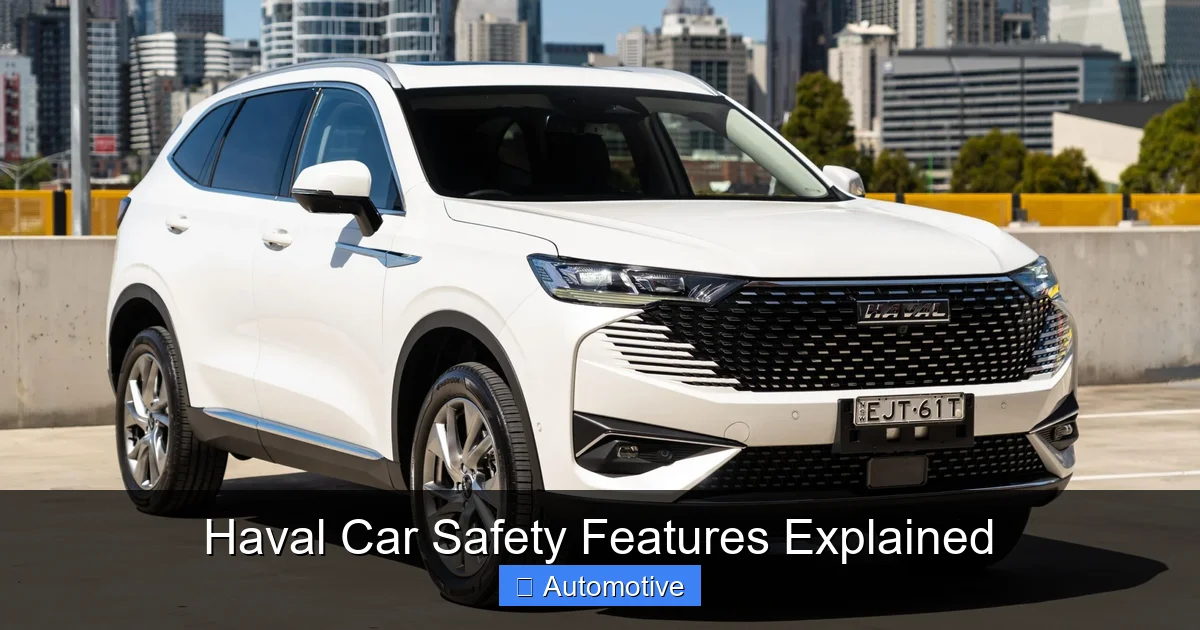
Visual guide about Haval Car Safety Features Explained
Image source: car-bon.com.au
One of the most impressive aspects of Haval car safety features is their suite of Advanced Driver Assistance Systems (ADAS). These technologies act like a co-pilot, helping you stay alert, maintain control, and avoid dangerous situations. ADAS isn’t just a luxury—it’s a game-changer for everyday driving.
Haval’s ADAS suite includes a wide range of features, many of which are standard across their newer models. These systems use a combination of cameras, radar, and ultrasonic sensors to monitor your surroundings and respond to potential hazards. The goal? To reduce human error—the leading cause of road accidents.
Adaptive Cruise Control (ACC)
Adaptive Cruise Control is one of the most useful ADAS features in Haval vehicles. Unlike traditional cruise control, which maintains a fixed speed, ACC adjusts your speed based on traffic conditions. It uses radar to detect the vehicle ahead and automatically slows down or speeds up to maintain a safe following distance.
Imagine you’re driving on the highway, and the car in front suddenly brakes. With ACC, your Haval will detect the slowdown and apply the brakes for you, preventing a rear-end collision. This feature is especially helpful in stop-and-go traffic or long road trips, where driver fatigue can set in.
Most Haval models with ACC also include stop-and-go functionality, meaning the system can bring the car to a complete stop and resume driving when traffic moves again. This makes commuting in heavy traffic much less stressful.
Automatic Emergency Braking (AEB)
Automatic Emergency Braking is a life-saving feature that detects imminent collisions and applies the brakes if the driver doesn’t respond in time. Haval’s AEB system works at both low and high speeds, making it effective in city driving and highway scenarios.
The system uses forward-facing cameras and radar to monitor the road ahead. If it detects a potential collision with a vehicle, pedestrian, or cyclist, it first issues a visual and audible warning. If the driver doesn’t react, the system automatically applies the brakes to reduce speed or stop the car entirely.
Studies show that AEB can reduce rear-end collisions by up to 50%. In Haval vehicles, this feature is often paired with pedestrian and cyclist detection, making it even more effective in urban environments.
Lane Departure Warning and Lane Keeping Assist
Drifting out of your lane is a common cause of accidents, especially on long drives or when drivers are distracted. Haval addresses this with Lane Departure Warning (LDW) and Lane Keeping Assist (LKA).
LDW alerts you with a visual or audible signal if you unintentionally drift out of your lane without signaling. LKA goes a step further by gently steering the car back into the lane if you don’t correct the drift.
These features are particularly helpful on highways or poorly marked roads. They act as a second set of eyes, ensuring you stay on track even when you’re not fully focused.
Blind Spot Monitoring and Rear Cross-Traffic Alert
Changing lanes can be risky if you can’t see vehicles in your blind spot. Haval’s Blind Spot Monitoring system uses radar sensors to detect vehicles in adjacent lanes and alerts you with a light on the side mirror.
Rear Cross-Traffic Alert is another smart feature, especially useful when backing out of parking spaces. It detects approaching vehicles from the side and warns you before you reverse into their path. Some models even include automatic braking in these situations.
Together, these systems significantly reduce the risk of side collisions and parking accidents.
Passive Safety Features: Protection When You Need It Most
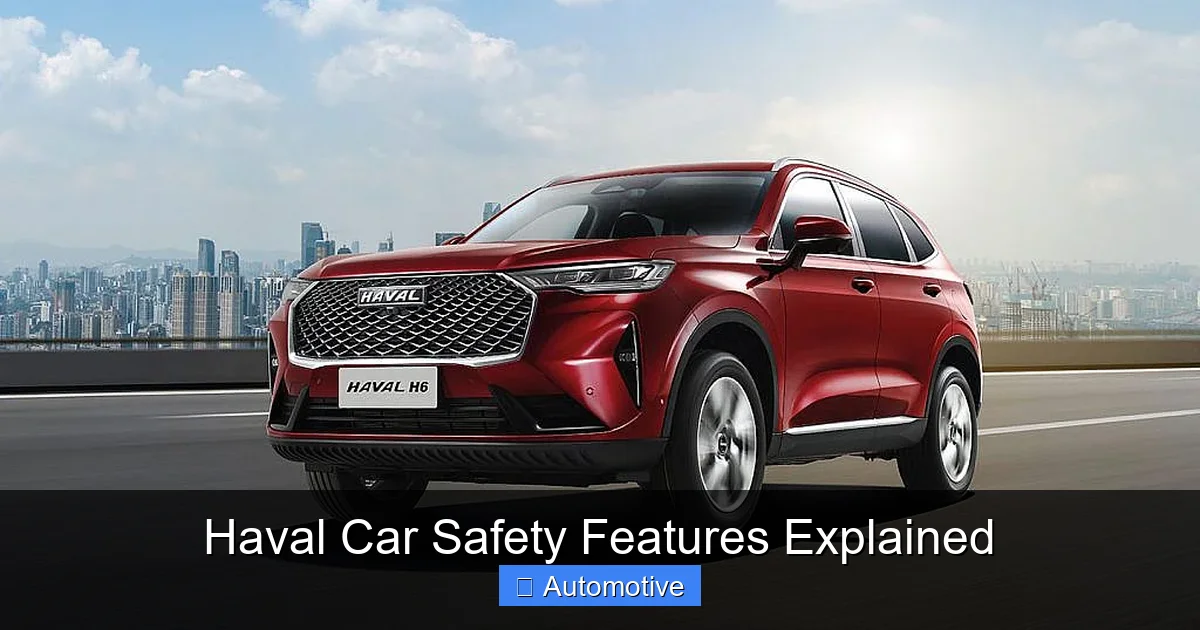
Visual guide about Haval Car Safety Features Explained
Image source: d2hucwwplm5rxi.cloudfront.net
While active safety features help prevent accidents, passive safety features are designed to protect you when a crash is unavoidable. Haval vehicles are equipped with a comprehensive suite of passive safety systems that work together to minimize injury.
These features include airbags, seatbelts, crumple zones, and a reinforced body structure. They’re engineered to absorb impact energy, distribute forces away from occupants, and keep the passenger cabin intact.
Multi-Stage Airbag System
Haval vehicles come with a multi-stage airbag system that deploys with varying force depending on the severity of the crash. This helps reduce the risk of airbag-related injuries, especially for smaller passengers or those sitting close to the steering wheel.
The system typically includes:
– Front airbags for the driver and front passenger
– Side airbags to protect the torso
– Curtain airbags that deploy from the roof to protect heads in side impacts
Some models also feature knee airbags for the driver, providing additional lower-body protection.
Seatbelt Technology
Seatbelts are your first line of defense in a crash, and Haval ensures they’re as effective as possible. Many Haval models feature:
– Pretensioners that tighten the belt instantly during a collision
– Load limiters that reduce belt force to prevent chest injuries
– Height-adjustable seatbelts for optimal fit
Rear seats often include three-point seatbelts for all passengers, not just lap belts, which are safer in a crash.
High-Strength Body Structure
Haval vehicles are built with a high-strength steel frame that provides excellent protection. The body uses a mix of ultra-high-strength and hot-formed steel in key areas like the A-pillars, B-pillars, and door beams.
Crumple zones at the front and rear are designed to absorb and dissipate crash energy, reducing the force transferred to the passenger cabin. This helps keep the interior space intact, giving occupants more room to survive.
Intelligent Parking and Visibility Systems
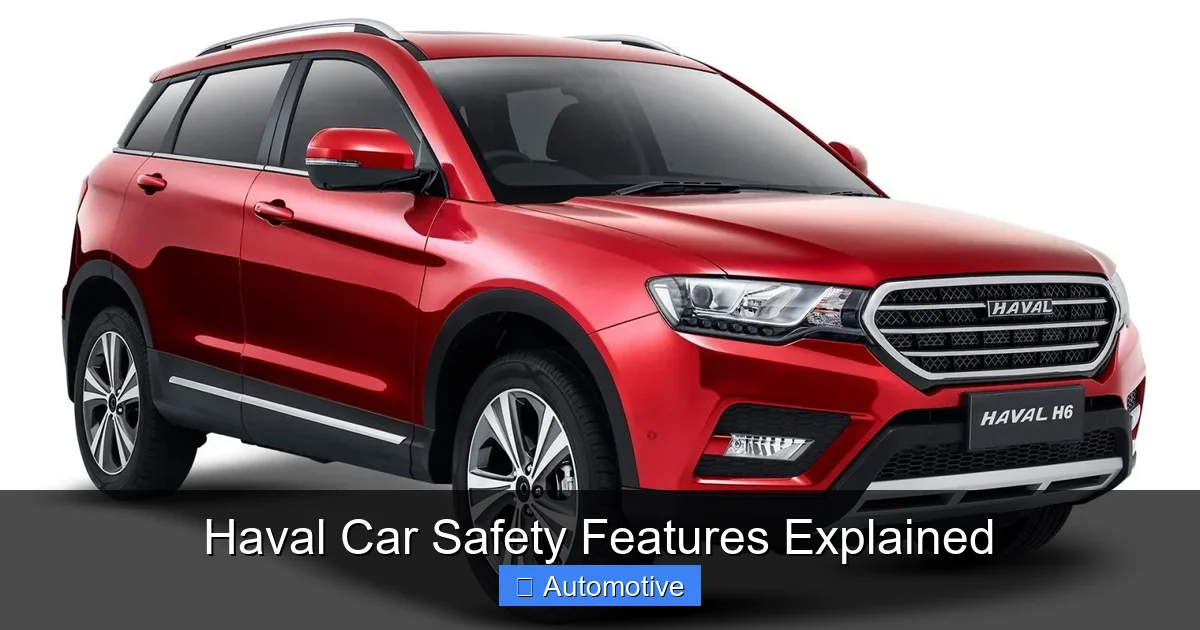
Visual guide about Haval Car Safety Features Explained
Image source: images.carexpert.com.au
Parking can be one of the most stressful parts of driving, especially in tight spaces or crowded lots. Haval makes parking safer and easier with a range of intelligent systems that enhance visibility and control.
360-Degree Camera System
The 360-degree camera system gives you a bird’s-eye view of your vehicle and surroundings. Four cameras—front, rear, and two side mirrors—combine to create a seamless image on the infotainment screen.
This is incredibly helpful when parking in tight spots, navigating narrow driveways, or avoiding curbs. You can see obstacles that would otherwise be hidden, reducing the risk of scratches, dents, or collisions.
Some Haval models also include dynamic guidelines that show the predicted path of the vehicle as you turn the steering wheel.
Ultrasonic Parking Sensors
Ultrasonic sensors are placed around the vehicle to detect nearby objects. They emit sound waves and measure the time it takes for the echo to return, calculating the distance to obstacles.
When you’re within a certain range, the system alerts you with beeps that increase in frequency as you get closer. This helps prevent low-speed collisions, especially when reversing.
Automatic High Beams and Adaptive Lighting
Good visibility at night is crucial for safety. Haval vehicles often come with automatic high beams that switch between high and low beams based on traffic. This ensures you have maximum visibility without blinding other drivers.
Adaptive headlights adjust the beam direction based on steering input, illuminating curves and corners more effectively. This improves night driving safety, especially on winding roads.
Child and Family Safety Features
For families, child safety is a top priority. Haval understands this and equips their vehicles with features designed to protect young passengers.
ISOFIX Child Seat Anchors
ISOFIX is a standardized system for securely attaching child seats to the vehicle. Haval vehicles include ISOFIX anchor points in the rear seats, making it easy to install child seats correctly.
Proper installation is critical for child safety, and ISOFIX reduces the risk of incorrect setup. Many Haval models also include a top tether anchor for added stability.
Rear Door Child Locks
Child locks prevent rear doors from being opened from the inside, keeping curious kids safe. These can be activated manually or electronically, depending on the model.
Some Haval vehicles also feature window controls that disable rear window operation from the back seats, preventing accidental opening.
Rear Seat Reminders
It’s easy to forget a child in the back seat, especially during busy days. Some Haval models include a rear seat reminder system that alerts you to check the back seat when you turn off the engine.
This simple feature can prevent tragic accidents and give parents peace of mind.
Electronic Stability and Traction Control
Maintaining control of your vehicle is essential, especially in adverse weather or emergency maneuvers. Haval vehicles are equipped with advanced electronic systems that help keep you stable and on track.
Electronic Stability Control (ESC)
ESC monitors your steering input and compares it to the vehicle’s actual direction. If it detects a loss of control—such as oversteer or understeer—it automatically applies brakes to individual wheels and reduces engine power to help you regain control.
This is especially helpful on wet or icy roads, where skidding is more likely. ESC has been shown to reduce single-vehicle crashes by up to 49%.
Traction Control System (TCS)
TCS prevents wheel spin during acceleration, especially on slippery surfaces. It works by reducing engine power or applying brakes to spinning wheels, helping you maintain grip.
This feature is particularly useful when starting on snow, mud, or gravel. It ensures smooth, controlled acceleration without losing traction.
Driver Monitoring and Fatigue Detection
Driver fatigue is a major cause of accidents, especially on long trips. Haval addresses this with intelligent monitoring systems that keep an eye on your behavior.
Driver Attention Monitoring
This system tracks your driving patterns, such as steering input, lane position, and braking behavior. If it detects signs of drowsiness or distraction—like erratic steering or prolonged lane drifting—it issues a warning.
The alert may be a visual message on the dashboard, a sound, or even a suggestion to take a break. Some models integrate with navigation systems to recommend nearby rest stops.
Fatigue Detection Alerts
In addition to real-time monitoring, some Haval vehicles use time-based fatigue detection. If you’ve been driving for an extended period without a break, the system will remind you to rest.
This proactive approach helps prevent fatigue-related accidents and promotes safer driving habits.
Tire Pressure Monitoring System (TPMS)
Underinflated tires can lead to poor handling, increased braking distance, and even blowouts. Haval vehicles come with a Tire Pressure Monitoring System that alerts you when tire pressure is too low.
The system uses sensors in each wheel to monitor pressure in real time. If pressure drops below a safe level, a warning light appears on the dashboard.
Maintaining proper tire pressure not only improves safety but also enhances fuel efficiency and tire lifespan.
Conclusion
Haval has made significant strides in vehicle safety, combining intelligent technology with robust engineering to protect drivers, passengers, and pedestrians. From advanced driver assistance systems that prevent accidents to passive safety features that minimize injury, Haval vehicles are designed with safety at their core.
Whether you’re looking for adaptive cruise control, automatic emergency braking, or a reinforced body structure, Haval delivers. Their commitment to safety is evident in their high global ratings, innovative features, and family-friendly design.
If you’re in the market for a safe, reliable SUV or crossover, Haval is definitely worth considering. With their comprehensive safety suite, you can drive with confidence, knowing that your vehicle is built to protect you on every journey.
Frequently Asked Questions
What safety rating do Haval cars have?
Many Haval models, such as the Haval H6 and Jolion, have earned 5-star safety ratings from organizations like ANCAP and ASEAN NCAP. These ratings reflect strong performance in crash tests and safety feature evaluations.
Does Haval have automatic emergency braking?
Yes, most modern Haval vehicles come equipped with Automatic Emergency Braking (AEB). This system detects potential collisions and applies the brakes if the driver doesn’t respond in time.
Are Haval cars safe for families?
Absolutely. Haval vehicles include child safety features like ISOFIX anchors, rear door child locks, and rear seat reminders, making them ideal for families with young children.
What is Haval’s ADAS suite?
Haval’s ADAS suite includes features like adaptive cruise control, lane keeping assist, blind spot monitoring, and automatic emergency braking. These systems help prevent accidents and improve driving safety.
Do Haval cars have a 360-degree camera?
Yes, many Haval models feature a 360-degree camera system that provides a bird’s-eye view of the vehicle, making parking and low-speed maneuvers safer and easier.
How does Haval’s safety compare to other SUV brands?
Haval competes strongly with other SUV brands in terms of safety, offering a comprehensive suite of active and passive safety features. Their high safety ratings and advanced ADAS technology place them among the top choices for safety-conscious buyers.
